10 Ingredients That Instantly Make Nudelsalat Taste Better

Classic Nudelsalat is already pretty good—but sometimes all it takes is one extra ingredient to make it genuinely exciting. Small tweaks—crunchy veg, fragrant herbs, or a punchier dressing—can completely change the vibe of a pasta salad.
A lot of home cooks add little “boosters” to Nudelsalat to improve texture and aroma. Some ingredients make it fresher, others add creaminess or a gentle tang. The result: an everyday pasta salad turns into something brighter, more balanced, and way more satisfying.
Nudelsalat (German-style pasta salad) is the kind of thing that saves the day when you need something fast: for lunch at work, a picnic, a casual get-together, or just to have something in the fridge you can grab with a fork between errands. And it almost always turns out “fine”—edible, filling, totally okay. But not the kind of okay that makes you think, Wow, I really made something delicious.
Most of the time, the problem isn’t the pasta—and it’s definitely not that you “can’t cook.” It’s usually one of two little things: either the salad tastes flat (no depth), or it turns heavy and kind of rubbery fast (the dressing disappears into the pasta and everything else gets lost). And honestly? We often toss in whatever’s around instead of what actually works.
That’s what I love about Nudelsalat: you can level it up with two spoonfuls or a quick handful of something simple. No standing at the stove for hours. You just need to understand the mechanics—what brings acidity, what adds saltiness, what gives crunch, and what builds a creamy dressing with some “body.”
Below are ten ingredients I keep in mind when I want to make a pasta salad more interesting immediately. No magic—just very specific results: how it should smell, how it should feel when you bite into it, and why it works.
What makes Nudelsalat ‘wow’: the quick mechanics of flavor and texture
When Nudelsalat turns out “meh,” I almost always see the same thing: the pasta has soaked up the dressing, the vegetables have released water, and the aroma is basically gone. Your fork picks up a decent-looking bite, but in your mouth it feels… empty.
To feel alive, a pasta salad needs four pillars. I call them in the simplest, most home-kitchen way: acid, salt/umami, fat, and crunch. Pasta is a neutral base—it likes being “guided.”
Why pasta “steals” the dressing
Hot (or even warm) pasta acts like a sponge: the surface is starchy and porous, so it happily absorbs fat and moisture. At first, that’s great—the dressing clings to every little piece. But 20–30 minutes later you open the bowl and it’s suddenly dry, like it’s begging for more.
In a home kitchen it often goes like this: you mix everything at once, put it in the fridge, and an hour later you’ve got a dense “pasta brick.” Not because you ruined anything—pasta is just doing what pasta does.
Kitchen tip: keep back 10–20% of the dressing. Once the salad has sat for a bit, add the rest and toss again—it perks right up.
Why without acid everything feels greasy and heavy
Acid doesn’t just “make it sour.” It brightens flavor, sharpens saltiness, and makes fat feel lighter. That’s why a mayo-based Nudelsalat without something tangy often reads as heavy—even if it’s packed with vegetables.
One more thing: acid helps aromas pop. Dill, pepper, garlic—everything becomes clearer.
Texture is half the fun
If everything in the bowl is soft (pasta + cooked bits + mayo), your brain gets bored quickly. You need crunch—something that snaps when you bite, adds contrast, and makes each forkful more interesting.
Now that the “why” is clear, let’s talk about the “what.”
Acid to the rescue: pickles, capers, olives
If you told me, “You’ve got 30 seconds to make this Nudelsalat taste better,” I’d reach for something pickled. It’s the fastest way to add acidity, salt, and personality.
1) Pickles (and a splash of brine)
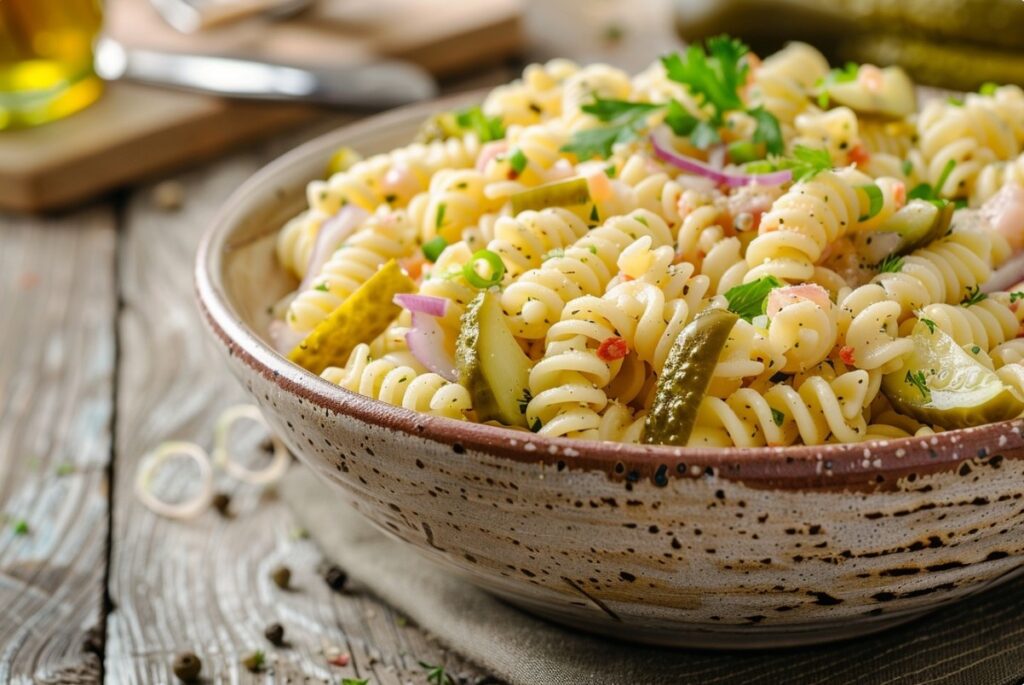
Pickles don’t just bring tang. They bring crunch and that deli-style pickle aroma that many of us associate with old-school salads—in the best way. The key is using pickles that are truly crisp, not limp.
I often add just 1–2 teaspoons of pickle brine straight into the dressing. It works like a quick seasoning: it tightens up the flavor and makes the dressing taste more “salad-y.” Just don’t pour with a heavy hand—brines vary a lot (more vinegar here, more salt there).
Kitchen tip: if your pickles are super juicy, chop them and let them sit on the cutting board for 5 minutes, then blot lightly—your salad will be less watery.
2) Capers
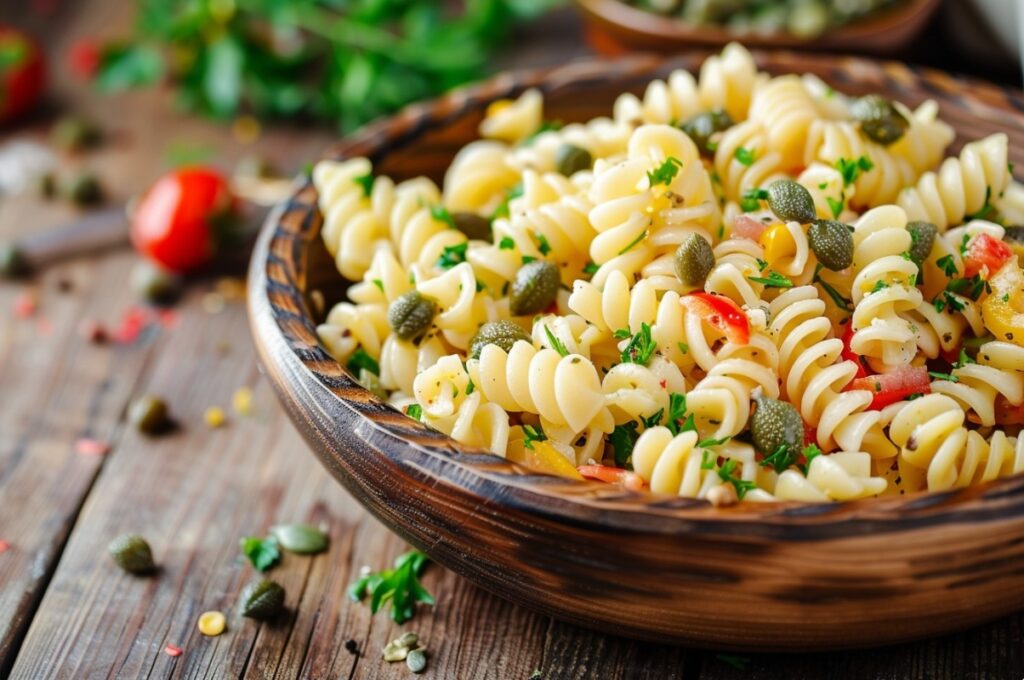
Capers are tiny “flavor buttons.” Salty, tangy, with a faint bitterness. Add them and Nudelsalat instantly tastes more grown-up—like you planned it—when really you just opened a jar.
I like to keep them whole and just gently crush them with the side of a knife. That way they perfume the dressing but still stay noticeable.
3) Olives
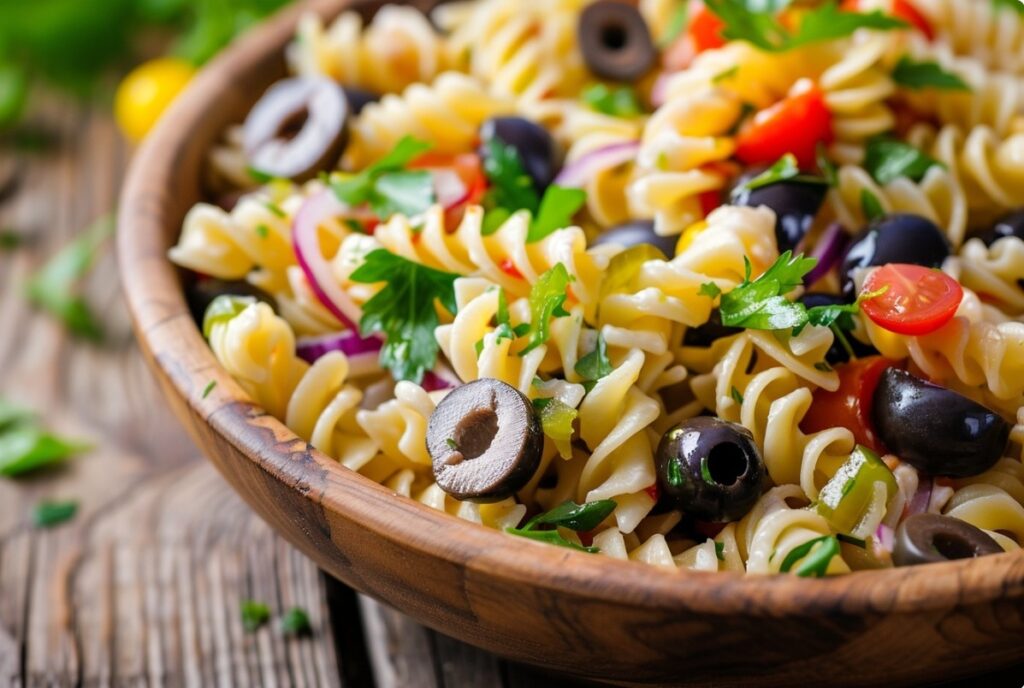
Olives aren’t just salty. They bring richness, aroma, and that little bitter edge. If your Nudelsalat tastes “empty,” olives give it dimension. I like slicing them into rings or tearing them by hand—looks more rustic, and the texture is more interesting.
Quick kitchen story: once I made a big bowl of pasta salad for a crowd and completely forgot the acid. It was filling, but it ate like mush. I tossed in a handful of olives and a couple spoonfuls of pickle brine—and suddenly people started asking what my “secret ingredient” was. Nothing fancy, just the right accent.
Creamy without feeling heavy: Greek yogurt, sour cream, soft cheese
A lot of people think Nudelsalat lives and dies by mayonnaise. Mayo absolutely works—but sometimes you don’t want that particular heaviness. There are other options that stay creamy while leaving room for the other ingredients to shine.
4) Greek yogurt (or any thick plain yogurt)
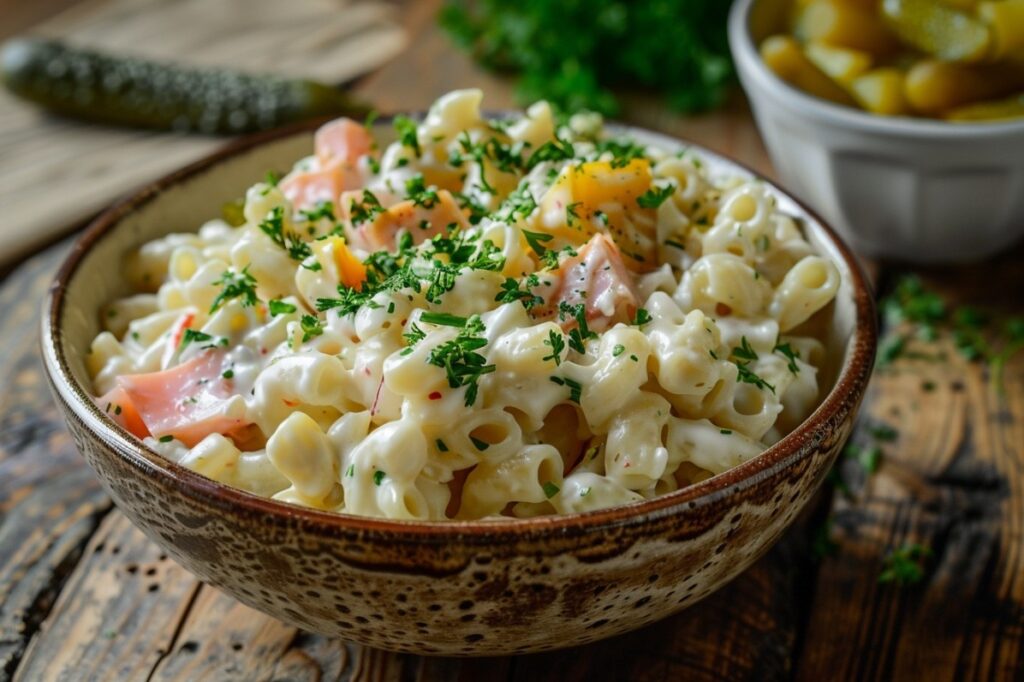
Thick yogurt gives you creaminess plus a gentle tang. That’s a double win: body in the dressing and built-in balance. The only catch is that yogurt needs salt and aromatics—otherwise it can taste like “plain dairy sauce with no personality.”
I usually boost it with something salty (olives/capers/a little mustard) and something fragrant (dill, scallions, black pepper). Then it stops being “just yogurt” and starts tasting like a real dressing.
5) Soft cheese: cream cheese or feta
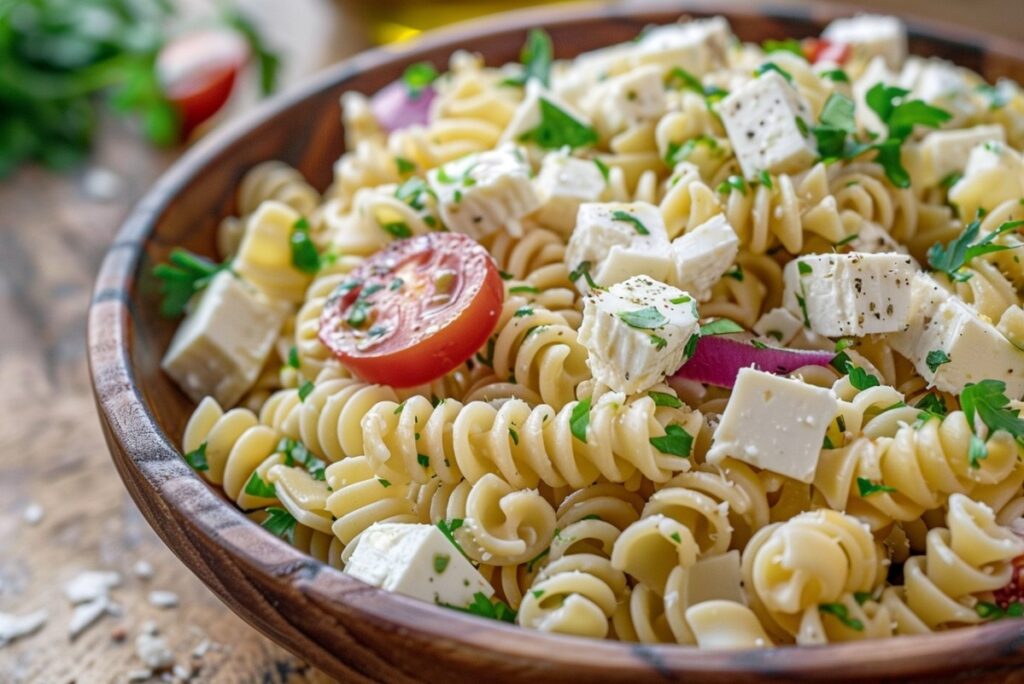
Cream cheese adds a smooth, deli-salad kind of richness, without the sharpness you can get from some aged cheeses. Just don’t drop it in as lumps—stir it into part of the dressing first so it turns silky and uniform.
Feta is a different story: it brings salt and a crumbly texture. It scatters through the salad like little “salty clouds.” If your Nudelsalat tastes bland, feta often fixes it without you needing extra salt.
Kitchen tip: if your cheese is very salty, don’t salt the dressing right away. Mix everything, let it sit for 5 minutes, then adjust.
Another quick story: I once made Nudelsalat at a summer cottage where the “spice rack” was basically salt, pepper, and a bay leaf. But there was a chunk of feta in the fridge. I crumbled it in, added a little greenery and a splash of pickle brine—and even the people who “don’t get pasta in salads” went back for seconds.
Umami in a minute: sun-dried tomatoes, anchovies, soy sauce (careful)
Umami is what makes flavor feel deeper. Not spicier, not necessarily saltier—just fuller. In Nudelsalat it matters a lot, because pasta and many vegetables are pretty neutral on their own.
6) Sun-dried tomatoes (and a little of the jar oil)
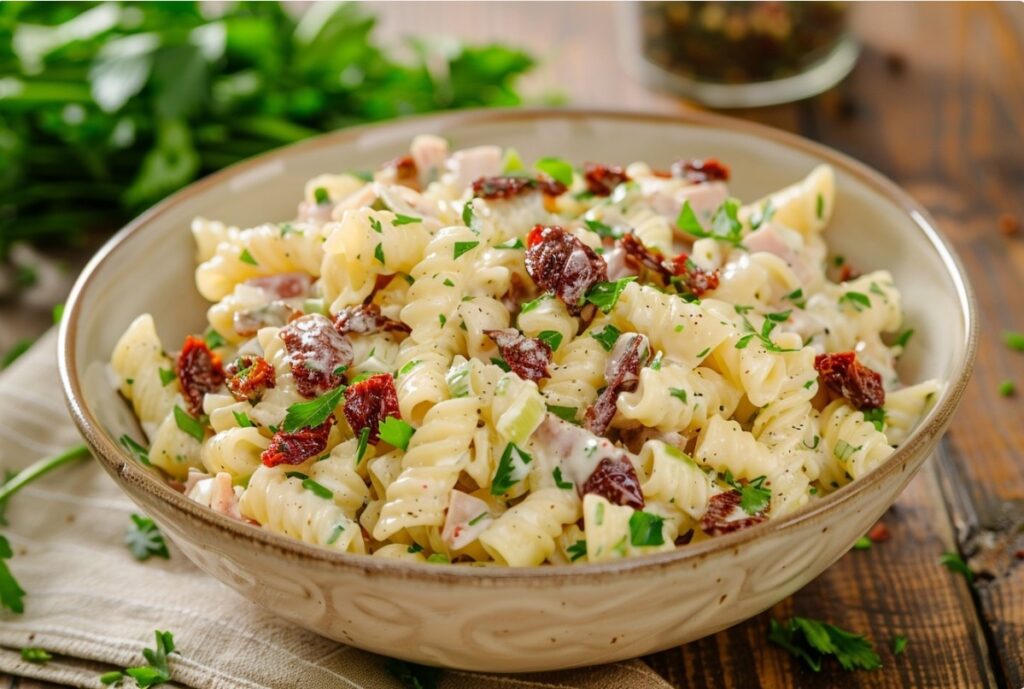
Sun-dried tomatoes are pure concentration. The aroma is sweet-tomatoey, often with garlic and herbs. The texture is chewy and meaty. They make the salad taste more “adult” and a bit more special—even if you only add a few pieces.
The oil in the jar is its own tool. It’s already infused, and it’s great as part of your dressing. Just don’t overdo it—this oil can be intense.
7) Anchovies (yes, even if you think you don’t like them)
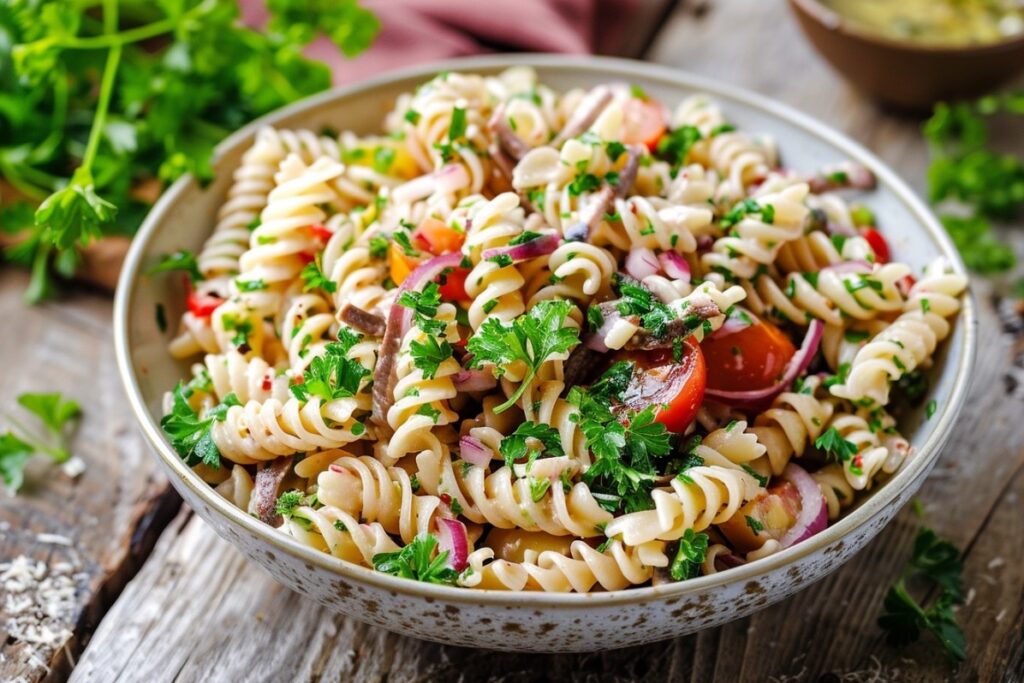
Anchovies in a pasta salad don’t automatically make it a “fish salad.” Used properly, they melt into the dressing and add a savory depth that’s closer to a rich stock than anything overtly fishy. The smell in the tin can be intimidating, but in the finished dish it becomes a quiet background note.
My method: take 1–2 fillets, mash them into a paste with a knife, then mix into the fatty base of your dressing (oil/yogurt/mayo). Add acid (pickle brine or lemon) and black pepper. That’s it—you’ve got a “secret ingredient.”
8) Soy sauce—like a drop of shadow
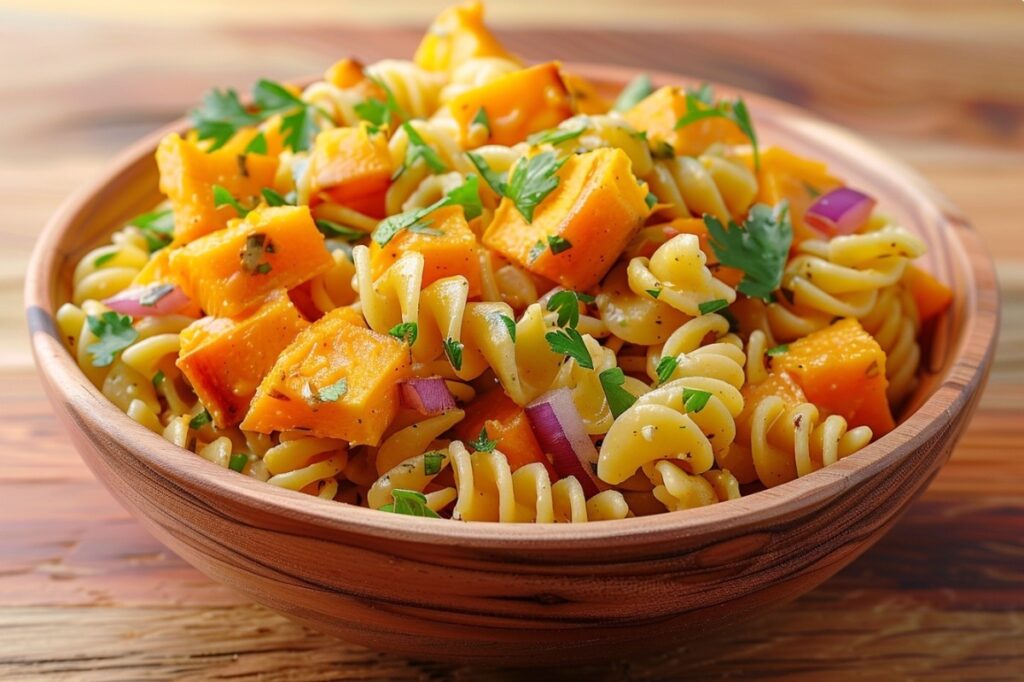
Soy sauce can sound odd in Nudelsalat, but sometimes it really works. It brings salt and umami, and it’s especially good in salads with something crisp and fresh (cucumber, scallions) or with a yogurt-based dressing.
The key word is drop. Pour too much and the flavor goes in the wrong direction—and the dressing turns dark. I add a tiny splash, toss, taste. Think of it like turning up contrast on a photo, not repainting the whole picture.
Kitchen tip: when you add strong umami ingredients, hold back on salt at first. It’s easier to salt at the end than to rescue an over-salted salad.
Crunch and freshness: radishes, celery, scallions, apple
This is where Nudelsalat most often falls short. We add soft components, and everything blends into one. Crunch isn’t decoration—it’s structure.
9) Scallions (or chives)
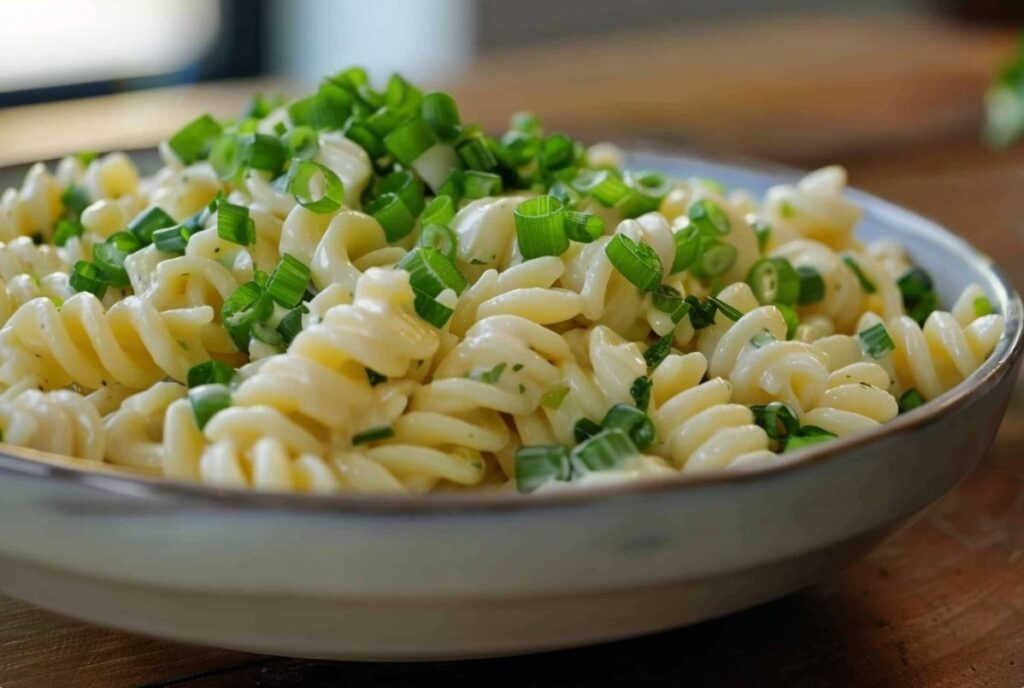
Scallions bring a fresh, slightly sharp aroma. They lift even the simplest dressing. I like slicing them thin and adding them at the end so they keep that “green” smell.
If your scallions are too punchy, here’s a tiny trick: slice them, soak in cold water for 2 minutes, drain, and pat dry. The bite softens, the crunch stays.
10) Radishes or celery (or even apple)
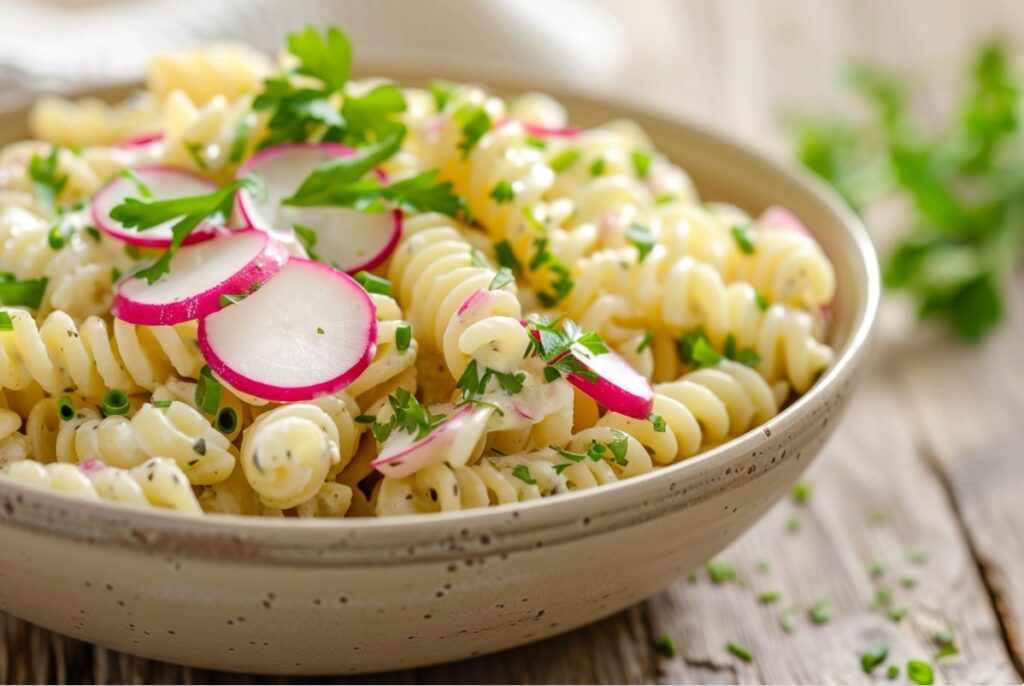
Radishes are pure crunch with a faint peppery bitterness. They add that just-made freshness—even if the salad has been sitting in the fridge.
Celery is more aromatic and distinctive—you either love it or you don’t. But if you do, it’s one of the best ways to make the salad feel lighter. I slice it very thin so it doesn’t dominate.
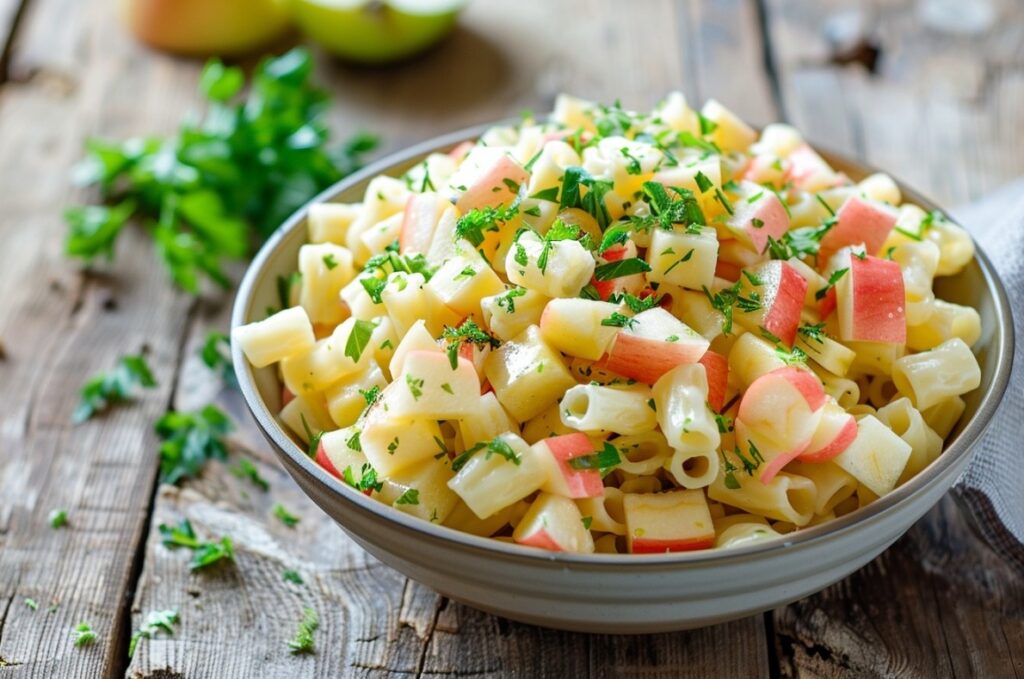
And apple is my backup plan when I need crunch plus a little sweetness—fast. It’s especially good if the salad has something salty (feta, olives, capers). That sweet-salty contrast makes the flavor feel bigger.
Quick story: I once had a Nudelsalat that felt heavy, and guests were eating it politely. I sliced a few radishes into thin half-moons, tossed them in, and the salad basically woke up—suddenly it crunched, smelled fresher, and had rhythm.
Common mistakes that make even great ingredients fall flat
You can buy the best olives and the fanciest sun-dried tomatoes and still end up with a so-so Nudelsalat. I’ve seen it dozens of times—and I’ve done it myself, until I started noticing patterns.
Mistake 1: mixing everything with hot pasta
Hot pasta drinks the dressing instantly. It also wilts herbs and makes crunchy vegetables warm and sad. I like the pasta at least lukewarm-to-neutral—no steam. Then the dressing coats more evenly.
Mistake 2: one flavor running the whole salad
Sometimes the salad tastes only “mayo” or only “vinegar.” That means one element is drowning everything else. When that happens, I don’t think “what should I add?”—I think “what’s missing for balance?” Too fatty: add acid and herbs. Too sharp: add a bit of fat or something salty-creamy.
Mistake 3: chopping everything too small
When everything is minced into oblivion, the salad turns uniform. No surprises. I like some components to stay distinct: olive rings, chunks of pickle, feta crumbles. Then each forkful tastes a little different.
Mistake 4: not letting it rest—or leaving it overnight without adjusting
Pasta needs time to “make friends” with the dressing. But after that time, you almost always need a small adjustment: another drop of acid, another spoonful of dressing, a bit more pepper. If you leave it as-is, the next day the flavor will be muted.
Kitchen tip: always taste your Nudelsalat again right before serving. 20 seconds of tasting saves you from a whole bowl of “well… we’ll eat it anyway.”
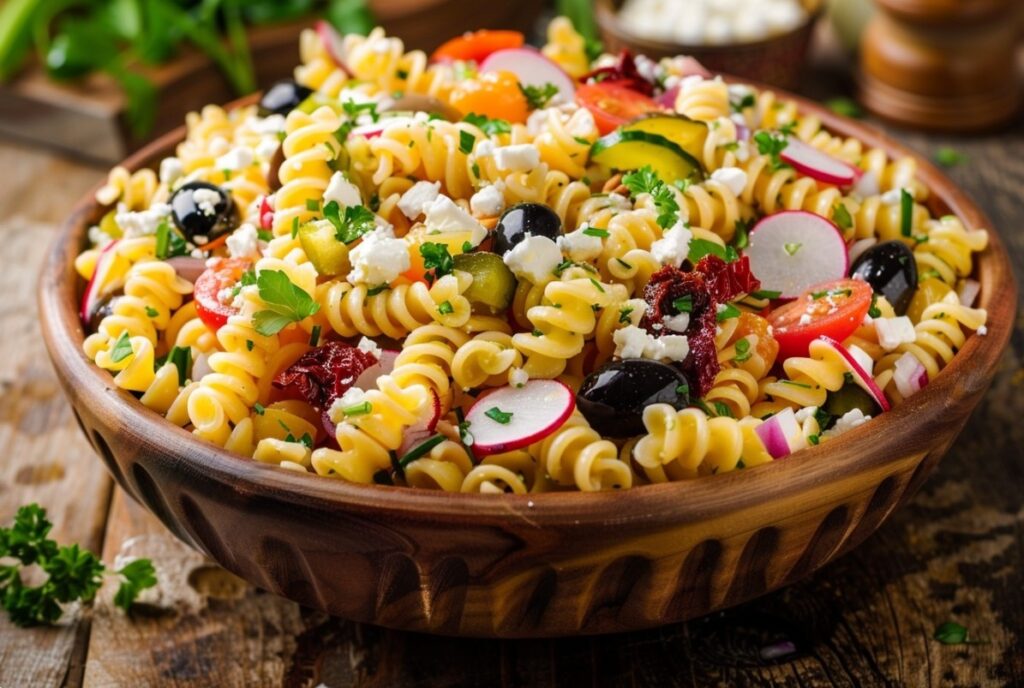
What to do if your Nudelsalat is dry, watery, or just ‘meh’
This is my favorite part, because it’s where confidence is born. Pasta salad is rarely a lost cause. It’s just sending you a message: “I’m missing this.”
If the salad is dry and clumped together
Classic situation: the pasta absorbed the dressing. Add a little creamy base (yogurt/sour cream/mayo—whatever you like) and обязательно a pinch of acid (pickle brine, lemon, a little vinegar). Toss and let it sit for 5 minutes.
If you have oil from sun-dried tomatoes or olives, a few drops add aroma like you planned it that way from the start.
If the salad is watery
Water usually comes from fresh vegetables—or from salting them too early. Balance is the fix: add something that binds moisture (soft cheese, a bit of thick yogurt), or even just more pasta (if you have some cooked). Then boost the flavor: capers, olives, pepper.
Sometimes it’s enough to simply pour off the liquid sitting at the bottom of the bowl, then add 1–2 spoonfuls of dressing. Not “perfect,” but it works in a real-life kitchen.
If “everything seems there” but it still tastes off
I go step by step:
- Salt: add a pinch, toss, taste again.
- Acid: a drop of brine/lemon, then taste again.
- Aroma: black pepper, scallions, dill—something fresh.
- Umami: a piece of sun-dried tomato, a few capers, or a tiny splash of soy sauce.
- Texture: add crunch (radish/celery/cucumber)—sometimes that’s what flips the appetite switch.
Kitchen tip: don’t change five things at once. Add one small tweak, taste, then decide. That’s how you learn to control flavor instead of guessing.
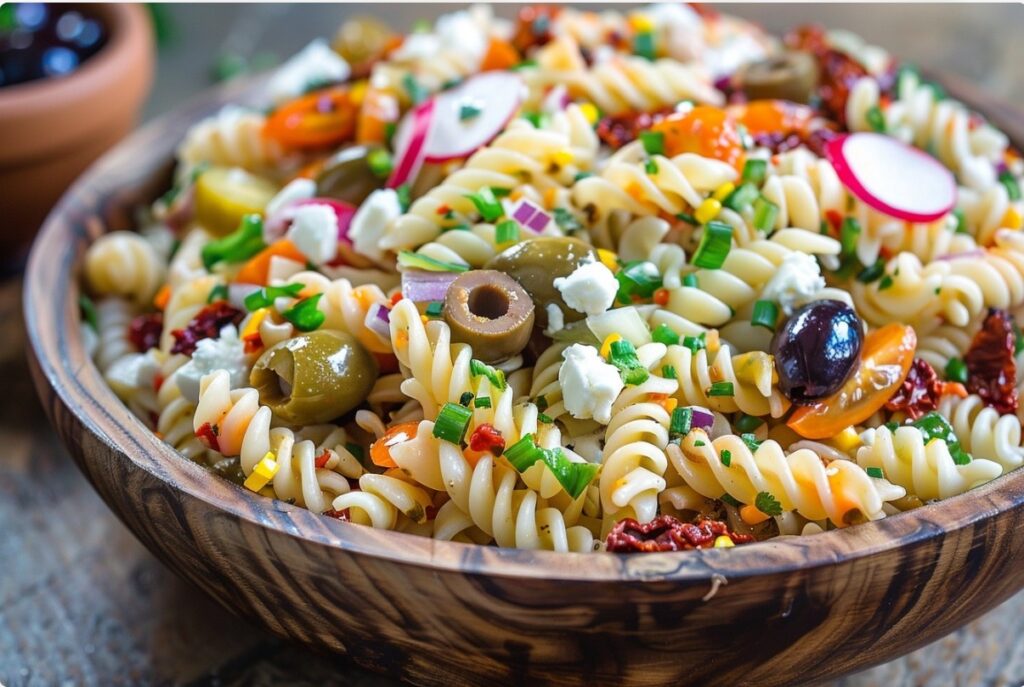
How to build a Nudelsalat ‘rescue kit’ to save time
I love having a few things in the fridge and pantry that don’t spoil quickly and can make food more interesting in 2 minutes. For Nudelsalat it’s especially handy: pasta is cooked, and you already know exactly how to lift it.
This is how I think when I put that kit together: I want tangy, salty, aromatic, and crunchy elements. Some are long-lasting (jars), some are fresh (herbs/veg).
My everyday minimum
- 1 jar of pickles (and the brine counts as an ingredient).
- 1 jar of capers or olives—for that “grown-up” flavor.
- 1 jar of sun-dried tomatoes—for umami and aroma.
- Thick yogurt or soft cheese—a base for a quick dressing.
- Scallions or dill—even a small bunch makes a difference.
- Radishes/celery—when you want crunch (or an apple if there’s nothing else).
Quick story: I had a stretch where I worked late constantly, and food at home turned into “whatever, just eat something.” That’s when this kit saved me. Boil pasta, open two jars, slice scallions—and suddenly you’ve got a bowl that smells good, crunches, and doesn’t feel like a compromise.
One more trick about time and control
I often keep the “strong” ingredients separate and add them at the end: capers, olives, herbs, radishes. It’s easier not to overdo it, and the salad looks fresher. Plus, if someone hates olives, they can skip them—without turning the whole bowl into a compromise.
Nudelsalat becomes truly delicious not when you find the one “correct recipe,” but when you learn to add and balance: a little acid, a little umami, something creamy, something crunchy. That’s the whole trick—simple, but incredibly reliable.
What are your go-to “rescue” add-ins? Is there one ingredient you add almost automatically—and it’s never let you down?
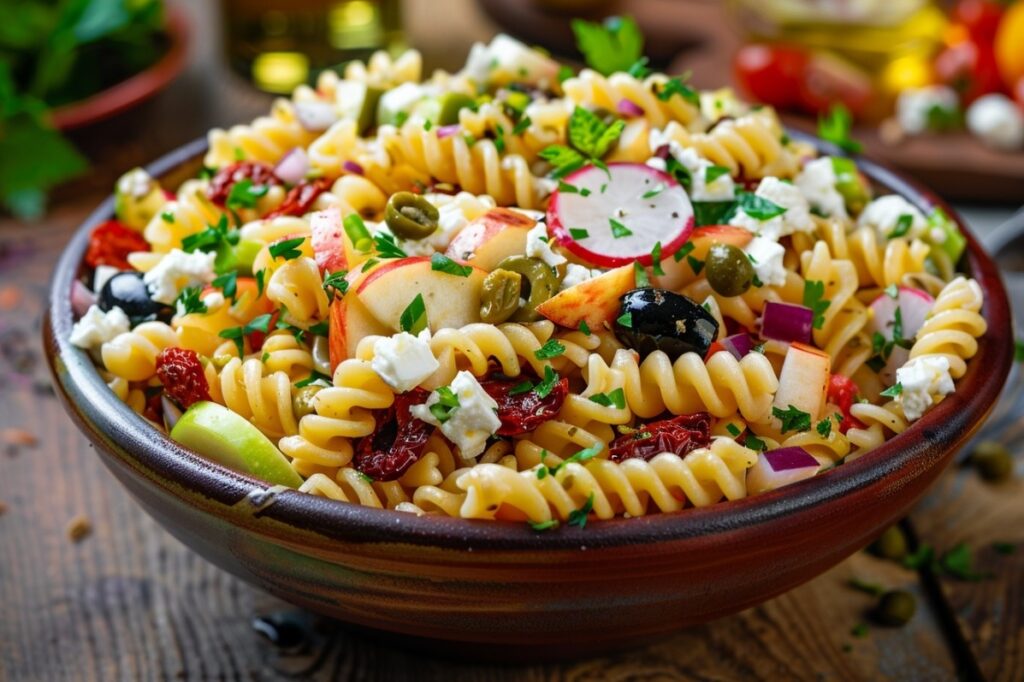
If you enjoy trying different pasta salad variations, it’s worth playing with ingredients and dressings. For more ideas, check out this recipe collection with the tastiest pasta salads and plenty of homemade pasta-salad options.
Questions & answers
Can you tweak a classic Nudelsalat without ruining it?
Yes—classic Nudelsalat is great for experimenting. The pasta plus creamy dressing base is fairly neutral, so new add-ins often make it better, not worse. The main thing is keeping the balance between creaminess, tang, saltiness, and a crunchy texture.
What ingredients improve Nudelsalat the fastest?
The quickest way to make Nudelsalat more interesting is to add bold, high-impact ingredients: pickles, capers, olives, or sun-dried tomatoes. They bring acidity, salt, and aroma, so even a simple pasta salad tastes much more flavorful.
Why does Nudelsalat sometimes turn dry after a while?
Pasta has a porous surface and gradually absorbs the dressing. That’s why Nudelsalat can feel drier 20–30 minutes after mixing. To prevent this, hold back part of the dressing and add it right before serving, once the salad has had time to sit.
What adds crunch to a pasta salad?
For crunch, add ingredients that stay crisp: radishes, celery, scallions, or even diced apple. Crunch makes the salad feel more lively and balances the soft texture of pasta and a creamy dressing.
How do you make Nudelsalat creamy but not too heavy?
To keep it creamy without feeling overly rich, swap part of the mayonnaise for thick Greek yogurt or sour cream. You still get a smooth texture, plus a little tang that makes the salad taste fresher.
Can you add cheese to Nudelsalat?
Absolutely. Cheese works really well in pasta salads. Feta, for example, adds saltiness and a crumbly texture that contrasts nicely with pasta. In Nudelsalat, cheese is often used as an accent ingredient to boost the overall flavor.
What ingredients add deeper flavor to Nudelsalat?
For more depth, add umami-rich ingredients like sun-dried tomatoes, anchovies, or even a few drops of soy sauce. These make the pasta salad taste more savory and help the dressing’s aroma come through.
Can you make Nudelsalat ahead of time?
Yes—Nudelsalat is perfect for making ahead. After a few hours in the fridge, the flavors meld and the pasta absorbs some dressing. Before serving, toss again and add a little extra dressing if needed to freshen it up.