Gas or Electric Oven: The Difference in Baking Potatoes

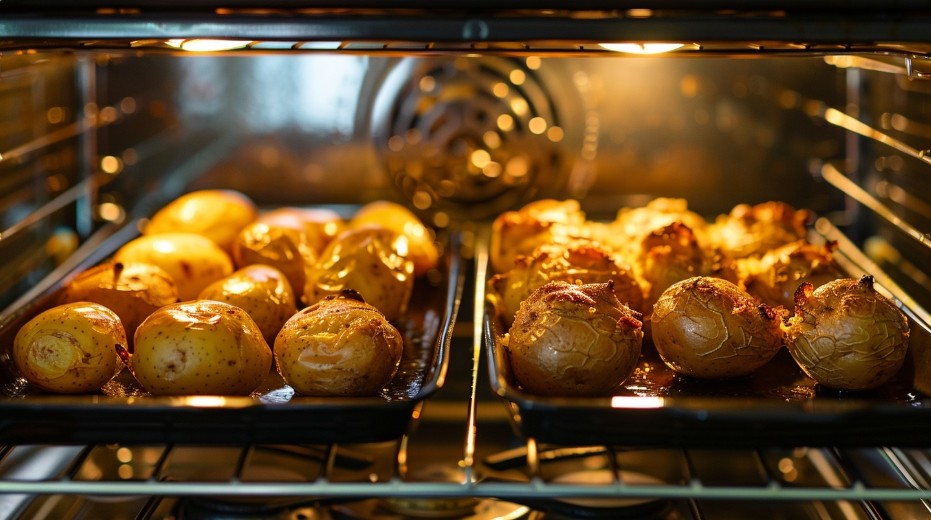
You know that smell — potatoes roasting in the oven, filling the kitchen with warmth and an irresistible aroma. I’ve often found myself standing by, listening to the sizzle of oil, waiting for that perfect crispy crust. But let’s be real: it doesn’t always turn out as expected. Sometimes the potatoes are soggy, sometimes too dry, or the crust is there, but the inside is still raw. Ovens can be tricky, and choosing between gas or electric can make a bigger difference than you’d think. It’s not about which is better, but which delivers the result you crave. Sometimes it’s not even a choice, but a matter of working with what you’ve got at home.
If you have the chance to choose — or at least understand why potatoes turn out differently in various ovens — it’s worth diving into the details. The difference isn’t just in taste but also in the whole process: time, convenience, even maintenance. I’ve tried both in different kitchens and learned that it’s not just about what’s in the manual but in the little nuances you notice through hands-on experience. Let’s break down what’s a win and what’s just a myth.
How Gas and Electric Ovens Work: A Brief Overview
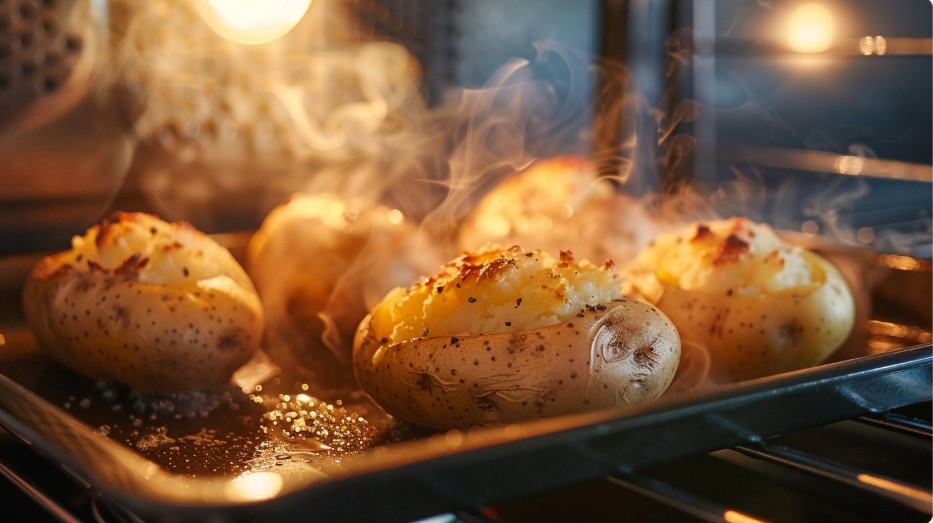
Open the door of a running gas oven, and you’ll feel a distinctive warmth — it gathers from the bottom, with the air moving upward in waves. Electric ovens, on the other hand, provide more even heating. I’ve noticed they maintain a stable temperature, without the fluctuations you get with gas. This isn’t just about minor details. How heat is distributed determines everything from the crust to whether your potatoes end up baked or more like boiled.
In a gas oven, the heat source is a burner at the bottom. Warm air rises but doesn’t always spread evenly throughout the oven. So, potatoes on the lower rack might brown faster on the bottom, leaving the top pale. Electric ovens have heating elements on the top and bottom (sometimes with a fan for convection), so the heat wraps around the food. The difference is especially noticeable if you love a crispy crust all around, not just on one side.
Another thing to consider is temperature control. It’s tricky to hit the exact temperature in a gas oven: the dial markings are always approximate. In an electric oven, you set 350°F, and usually, that’s what you get. This matters when dealing with sensitive ingredients — and potatoes, while simple, also react to such changes.
Why Choosing the Right Oven for Potatoes Matters
Baking potatoes isn’t just about taste. It’s about texture, consistency, and appearance. How many times have I heard friends complain: “Everything burns in my oven,” or “It always comes out undercooked.” Often, it’s not about the recipe or even skill, but the type of oven. Gas ovens can make potatoes too dry on the bottom and nearly boiled on top. Electric ovens provide an even crust, but if you don’t set the right mode, you might end up with too “steamed” a texture.
I set out to achieve a simple goal: a crispy crust with a soft, but not watery, interior. This is where the difference comes into play. I’ve tested both types multiple times, adjusting not just the temperature, but the rack position and the thickness of the potato layer. Sometimes, it’s better to tweak your approach than to try to “outsmart” the appliance.
Choosing the right oven or adapting to the one you have helps avoid disappointment: no more tossing out burnt layers or eating half-raw centers. It also saves time: no need to check ten times if “it’s done yet.”
Result Differences: How Oven Type Affects Potato Taste and Texture
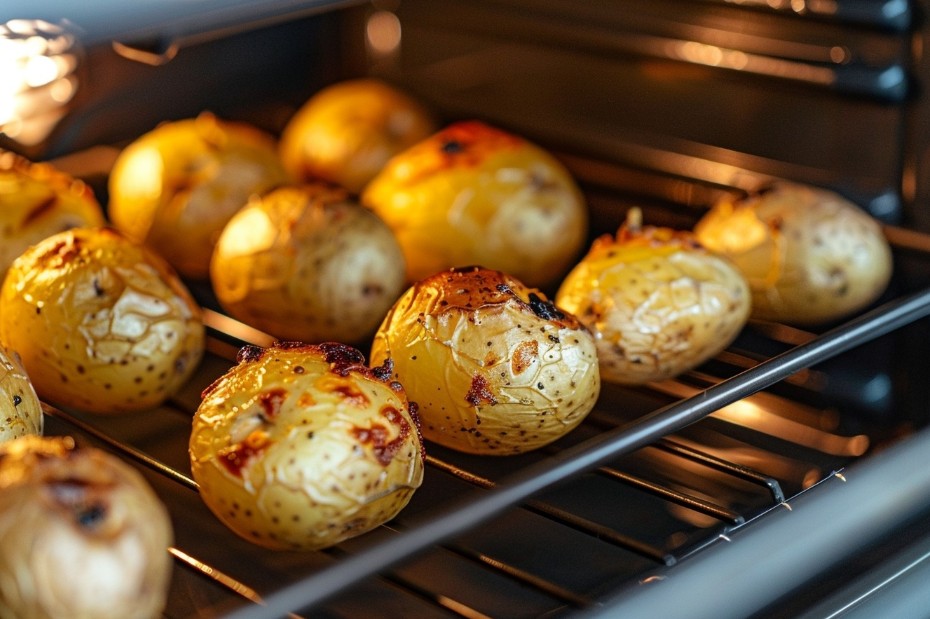
My first encounter with “perfect” baked potatoes was in a friend’s kitchen back in college. It was an electric oven, and I was amazed: the potatoes were golden, crispy on the outside, soft as a soufflé inside. Tried to replicate it at home with a gas oven — ended up with something more like fried at the bottom, pale on top, with an unevenly cooked center. That’s when my experiments began.
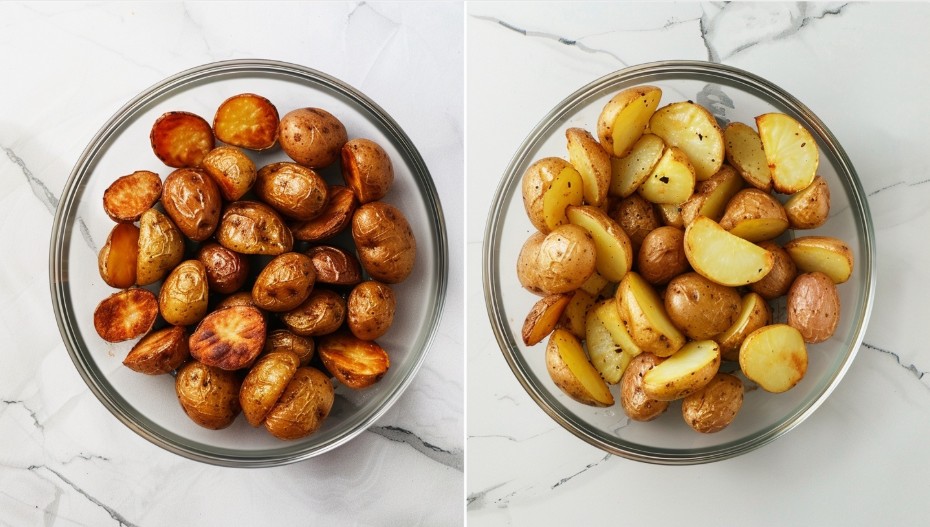
In a gas oven, potatoes brown faster at the bottom, even risking burning if you don’t move the tray. The top stays pale, and the crust is one-sided. If you want an even color, you have to move the tray higher, open the door, let some heat in — which messes with the temperature each time. Sometimes, you even have to flip the potato chunks to get a somewhat even look.
Electric ovens deliver a different effect: with heat from both the top and bottom, plus convection, the crust forms all over. The key is not to overdo the temperature, or you might dry them out. But find that sweet spot, and the potatoes come out golden, with a delightful crunch, and the inside remains tender and not dry.
There’s another thing: gas ovens often create moisture due to poor ventilation, so potatoes “boil” at the bottom if you cover them with foil or set a thick layer. In an electric oven, especially with a fan, this is less of an issue — moisture evaporates faster, creating a drier structure and a clearer crust.
Practicality: What’s More Convenient in the Kitchen
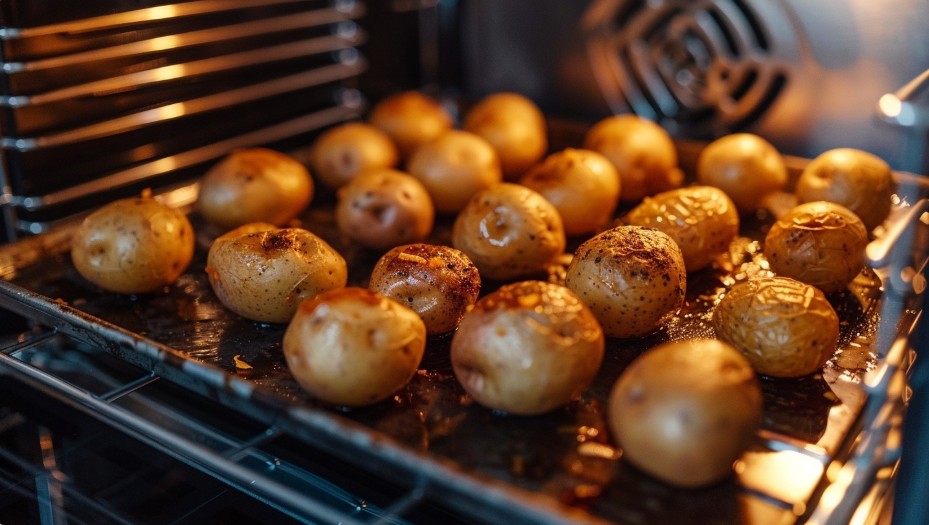
It’s all about pace — whether you like experimenting or just want to whip up dinner quickly. I’ve noticed that gas ovens require more attention. You set the potatoes, and if you forget to check, you can easily end up with a burnt bottom. Adjusting the temperature is tricky: you turn the knob, and only the oven knows what it’s really at. Sometimes, you need to add an extra sheet or move the tray higher to avoid burning everything within half an hour.
Electric ovens are more convenient for those who want a “set-it-and-forget-it” result. Set the temperature, the timer — and you can do other things. The fan helps distribute heat evenly, so you don’t have to worry about consistency. But there are nuances: if you don’t keep an eye on the process, you can dry out the potatoes, especially if you leave them in the oven after it turns off (electric ovens retain heat for a while).
Another point is size and placement. Gas ovens are often larger, but the effective baking area is essentially the middle and upper levels. Electric ovens offer more options: you can bake on multiple levels simultaneously, especially with convection. This is handy when cooking for a crowd.
A little story: once I was cooking potatoes at a friend’s place with an old gas oven. Used to electric, I thought everything would go smoothly. But 15 minutes in, the smell was off — the bottom started burning while the top barely warmed. I had to manually flip everything and move the tray to save dinner. With an electric oven, this happens less often, but it has its own pitfalls.
Common Mistakes When Choosing an Oven for Baking Potatoes
Mistakes abound here, and most aren’t obvious. A common one is choosing based solely on price or brand, forgetting about actual needs. I see this a lot: people opt for a large gas oven because “they’re used to it,” even though they cook maybe twice a week, and not always for the whole family. Or they buy an expensive electric model with tons of features used maybe once a year.
- Not considering kitchen size. Gas ovens often require more space and need a gas connection, while electric ones fit more easily into cabinets but might need a separate electrical line.
- Confusing heating types: not all electric ovens have convection, which is crucial for an even potato crust.
- Ignoring ventilation: without good ventilation in a gas oven, moisture builds up — and potatoes can get soggy.
- Choosing an oven without a thermometer or with inaccurate scales — making it hard to regulate the temperature for perfect baking.
- Overlooking ease of cleaning: gas ovens often have uneven surfaces that accumulate grease, while electric models are easier to clean, especially with a self-cleaning function.
Another mistake is overvaluing multifunctional modes. If you’re baking potatoes, you don’t need a dozen programs. The main thing is for the oven to hold temperature and not “overcook” just on one side. Those grills, “pizza modes” — nice bonuses, but not essential.
Tip: When buying a new oven, pay attention to temperature stability and the presence of a fan (convection). This truly changes the outcome.
Here’s an article about: The Best Baking Sheets and Pans for Potatoes
Space, Convenience, and Maintenance: What’s Important at Home
When choosing an oven, you want it to be functional and fit into your space. I’ve had experience with both types: the old gas oven took up half the kitchen, and its gas hookup determined where it could go. Electric ones offer more freedom: you can mount them in cabinets, even at a convenient height, no more bending down every time.
From a usability standpoint, electric ovens are more convenient, especially with touch controls and timers. You can set the potatoes and go about your business: the oven turns off on its own, no need to check every five minutes. Gas ovens require more attention: timers, if present, don’t always work correctly, and you have to manually turn off the gas. Sometimes the flame goes out, and everything cooks in a “cold” oven.
As for maintenance — electric wins again. Surfaces are smooth, easy to wipe down. With a self-cleaning mode, grease and soot come off almost effortlessly. In gas ovens, soot collects in hard-to-reach places, and cleaning them is quite the task. Safety is also worth mentioning: gas ovens carry more risks, if you don’t maintain the burners or seals — gas smells can appear, soot can accumulate.
A cleaning story: once after roasting potatoes in a gas oven, I had to scrub the bottom with a metal brush — oil spilled, burned, and the smell lingered for days. In electric ovens, this happens less often, and even if something burns, it’s easier to remove.
Alternatives: When You Have No Choice or Need to Replace Your Oven
You can’t always install the oven you want. Sometimes you have to compromise. If you only have a gas oven but want more even baking, there are tricks: place the tray higher, cover the potatoes with foil for the first 15 minutes, then remove it to form a crust on top. Choosing a thinner layer of potatoes can also help them cook faster and more evenly.
If you don’t have an oven at all, there are other options. Modern multicookers with baking functions, air fryers, or even microwaves with grill settings can achieve a similar result, though not identical. I’ve tried baking potatoes in an air fryer — crispy crust, but smaller capacity, not ideal for a large group. In a multicooker, it’s more like stewing, but if you add “baking” at the end, a crust can form.
For a result closest to oven baking but only having a stovetop, use a thick-bottomed skillet with a lid. Slice the potatoes, add a bit of oil, low heat — and keep it covered longer. The taste will be slightly different, but the texture can remind you of an oven.
Tip: Don’t be afraid to experiment with what’s at hand. In the kitchen, the main thing is the approach, not the gadgets.
Care and Longevity: What to Watch Out For
When choosing an oven, I always consider not just how it bakes now, but how long it will remain easy to use. Gas ovens are durable but require regular cleaning and seal checks to prevent gas leaks. It’s important to periodically check if the burner holes are clogged, as this affects even heating.
Electric models are less demanding but have their weak spots: the heating element can wear out over time, and the electronics can fail. However, if used carefully and cleaned regularly, they’ll last for years. It’s crucial not to leave grime and grease on surfaces — it’s not just about hygiene, but taste: old grease can give off odors during the next bake.
My cleaning hack: after each use, let the oven cool, then quickly wipe it down with a damp cloth. It takes a minute but helps avoid major cleanings every month. Another tip — don’t leave potatoes in a turned-off oven for long: in gas, they dry out; in electric, they can become rubbery.
Remember, any appliance lasts longer if not overloaded — and not trying to bake “everything at once.” A smart approach to quantity and regular care ensures a long service life.
When Choice Matters and When It Doesn’t
There are situations where choosing an oven truly matters. If you often bake large volumes, love experimenting with different modes, value precision and predictable results — an electric oven with convection is a worthy investment. But if your style is quick, simple cooking without much fuss, and you already have a gas oven — you can adapt to it, knowing its quirks and limitations.
Often, it’s not the technical side that defines the choice but habits. I know people for whom the taste of potatoes from a gas oven is a childhood memory that no electronics can replace. And there are those who value accuracy and predictability — and aren’t ready for gas’s constant “surprises.”
Sometimes there’s no choice at all — then it’s better not to worry but to make the most of what you have. Proper distribution of potatoes on the tray, attentiveness to temperature, experimenting with layers — sometimes these yield more than a new oven. But if you’re standing before a choice and want to simplify the process and stabilize the result — an electric oven can indeed make life easier.
Tip: Even in a gas oven, you can achieve an even crust by periodically opening the door to release steam and moving the tray between levels. The key is not to be lazy about monitoring the process.
3 Practical Tips for Different Ovens
- Gas oven: place the tray higher than seems logical, and put an empty sheet underneath to prevent burning. Flip the potatoes and don’t forget to let out steam.
- Electric oven: don’t overcrowd the tray — even with convection, potatoes can become “steamed.” It’s better to cook in one layer, or if you need more, use two trays.
- Universally: experiment with time and temperature. Sometimes it’s enough to lower the temperature by 10°C and give the potatoes another 10 minutes for a completely different result.
A little story at the end: once I was cooking potatoes at a friend’s place where electricity was scarce — had to use the gas oven on an old burner. The result wasn’t perfect, but with a bit of creativity, even in that situation, you can make the most of it. In the kitchen, there are no hopeless scenarios — just a desire and a bit of experience.
Sometimes, appliances are just tools, and delicious potatoes are a result of attention to detail. Whatever type of oven you have, the key is not to fear trying, making mistakes, and finding your ideal method. How do your potatoes turn out in different ovens? Share your observations — I’m curious about what people have come up with, and what result you find best.