Restaurant-Style Meatballs: The Forming Technique Chefs Know


The key to good meatballs is not the number of spices, but how you work with the ground meat. The texture should be fine, cohesive, without being rubbery. For this, the temperature of the meat, the moisture of the mixture, and the method of kneading are crucial.
There are dishes that seem simple until you try to cook them yourself — and suddenly something goes wrong. Meatballs seem like a beginner’s dish, but why do they often fall apart at home, become dry or rubbery, while in a restaurant they are juicy, tender, and hold their shape? I’ve heard this question dozens of times from friends, students, and colleagues. And honestly, I too have puzzled over it.
It’s all about the details: the temperature of your hands, the texture of the ground meat, even the mood you approach the process with. Meatballs are not about an exact recipe, but about understanding how the meat behaves, why it sometimes doesn’t cooperate, and how to master this simple dish. Once you feel the difference, there’s no going back. Today, I want to share what really works — not from books or videos, but from long trials, errors, and small victories in the home kitchen.
Why Meatballs Turn Out Differently: A Brief on Mechanics
Most people think meatballs are just balls of ground meat. But there are more nuances than it seems. Meat is a “living” product: it reacts to the warmth of your hands, moisture, air, and even what it’s mixed with. The same mixture in different hands yields different results. Why? It all comes down to protein structure, temperature, and processing method.
In a restaurant, you’re rarely surprised by a meatball that falls apart or has a hard crust. They know the key is to maintain a balance between softness and firmness. It’s not magic, but physics: when you press the ground meat too hard, the proteins bind too tightly, and the meat becomes tough and dry. If you form it too gently, the meatball falls apart in water or on the pan.
I remember my first experience well: the ground meat was tender, even a bit runny, and I tried to shape perfect balls. They stuck to my hands, and then half of them fell apart in the pot. I thought I was just unlucky. But the issue wasn’t the ground meat; it was that I didn’t feel the texture and didn’t know when to stop.
Temperature: How It Affects Structure
Temperature is the biggest hidden player in this story. Meat straight from the fridge behaves very differently from meat that’s been sitting on the counter. When you form meatballs from cool ground meat, the proteins haven’t started to bind yet, the structure holds better, and the balls are easier to shape. If the ground meat is warm, it becomes sticky, and when heated, the proteins coagulate too quickly, resulting in a dry and brittle texture.
I always recommend keeping the ground meat in the fridge until you’re ready to start. Even if it’s already seasoned, let it sit for another 20 minutes before forming. Another thing: your hands should be clean and cool. In restaurants, they often have a bowl of cold water nearby to quickly cool their hands before shaping.
If you feel the ground meat starting to “pull” and stick, take a break, put it back in the fridge for 10 minutes, and it will go more smoothly.
One common mistake is forming meatballs from warm ground meat that has already become sticky. Such balls hold their shape only until the cooking process, then fall apart or become tough.

Texture of Ground Meat: How to Understand and Feel It
When forming meatballs, the main thing is to listen to your senses. The ground meat should not be too dry or too wet. If it crumbles, it lacks liquid or fat. If it flows through your fingers, there’s too much moisture or filling. I always check like this: take a bit of ground meat, squeeze it in your hands — it should easily form a shape and not crack at the edges.
Here’s a simple hack: if the mixture seems dry, add a tablespoon of cold water or milk. If it’s too runny, add some breadcrumbs or bread crumbs. The main thing is not to overdo it with additives, as they can overpower the meat flavor.
I’ll recall a situation from one dinner: I was making meatballs for the kids, but the ground meat was very “light” because the meat was lean. I added a spoonful of oil, and the texture became perfect, the balls held their shape even in the broth.
- The ground meat should be cool and pliable
- Don’t make it too wet or too dry
- Listen to how it “responds” to squeezing
Don’t be afraid to test the texture with different fingers — it’s not chemistry, but a craft.
Forming: Which Movements Work Best
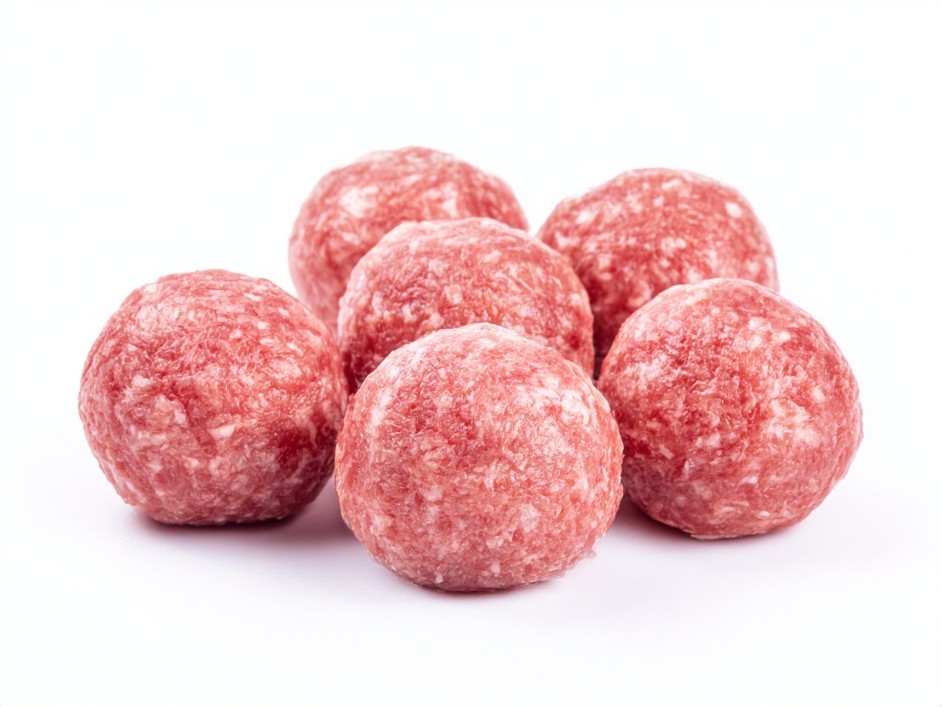
There are a few small things that change everything. First, don’t press the ground meat like clay. It’s better to quickly and confidently gather a portion in your hands, make a few light movements between your hands, and that’s it. Long rolling makes the ball too dense, and the meat — tough.
In restaurants, they often work with ground meat like clay: they take a spoonful of the mixture, place it on the palm, and gently bend the fingers, forming a ball. Then a few movements between the palms, and they set it aside immediately. I’ve noticed that it takes no more than 5-7 seconds per meatball.
Another tip: if the ground meat starts to stick, moisten your hands in cold water or grease them with a drop of vegetable oil. It doesn’t affect the taste but helps avoid sticking, especially when working with a large batch.
It’s important to stop when the shape is already there — don’t try to make the ball perfectly round, it’s not a sculpture.
Very often, I see people trying to roll meatballs to absolute smoothness — and end up with “rubbery” meatballs instead of tenderness. Light movements are enough for them to hold their shape and not fall apart.
Safety: How to Avoid Risks When Working with Meat
Working with ground meat is always a matter of safety. Meat quickly absorbs bacteria, especially if it sits in the heat for too long or comes into contact with dirty hands. I always follow three rules:
- Prepare the ground meat right before forming, don’t leave it on the counter for more than 30 minutes
- Hands and tools (spoons, boards) should be clean, separate from everything else
- After forming, immediately wash hands and the work surface
I’ve seen a couple of times how on home kitchens, the ground meat sits by the stove while something else is being cooked — that’s a risk. It’s better to put the bowl in the fridge, even if only for 10 minutes. Especially in summer. And another thing: don’t keep raw meat and ready-to-eat products nearby. It sounds trivial, but this mistake happens even to the experienced.
Regarding temperature treatment: meatballs should be fully cooked or boiled. To the touch, they should be firm, without a “raw” center. If in doubt, cut one open and look: the color should be uniform, without a pink center.
If you’re making a lot of meatballs, work in batches so the rest stays cold.
Common Mistakes and How to Avoid Them
Most mistakes are not about ignorance but about haste or lack of confidence. Here’s what often happens in the kitchen:
- The ground meat is too warm — meatballs stick and fall apart
- Too much pressing of the ground meat — balls become tough
- Adding too many additives (eggs, breadcrumbs, vegetables) — texture becomes “spongy”
- Large size of balls — they don’t cook through inside
- Frying on low heat — meatballs absorb a lot of oil
Once, I was in a hurry before a holiday, made the ground meat in advance, and left it on the counter. When I returned, it was already warm, the balls didn’t hold their shape well, and some fell apart. Conclusion: it’s better to do everything in small portions, and put the excess in the fridge right away.
Another common mistake is making meatballs too large. They look nice at first, but inside they remain half-raw, and outside they’re already tough. The optimal size is slightly larger than a walnut.
What to Do If Something Goes Wrong
Even experienced cooks face failures. Meatballs fall apart, stick, become dry or too dense. It’s not a disaster, but a reason to draw conclusions and try again.
- If meatballs fall apart during boiling — the ground meat was too runny or warm. Add some breadcrumbs, cool the mixture, and try again.
- If the balls are tough — next time, form them more lightly, don’t press the ground meat hard, work with a cold mass.
- If they stick to your hands — moisten your palms in cold water or grease with oil.
- If meatballs are raw inside and already done outside — make them smaller, or lower the temperature and cook longer.
There was a case during a master class when everyone’s meatballs started falling apart in the pot. It turned out the water was too hot — they didn’t have time to set, immediately falling apart. Now I always recommend: lower the meatballs into hot but not boiling water, and don’t stir immediately.
Don’t be afraid to experiment with the texture of the ground meat, but always start with a small test ball — it will save your nerves and the product.
How to Sense the Perfect Moment: Visual and Aromatic Clues
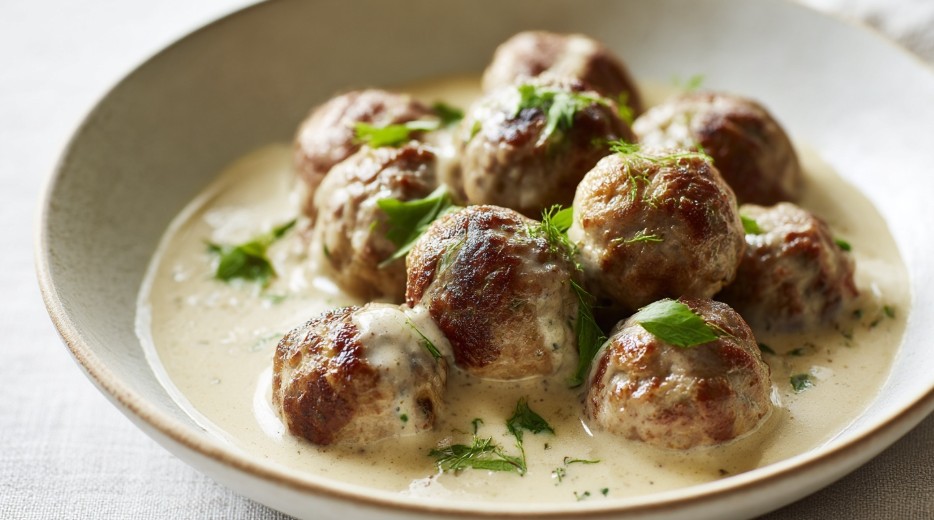
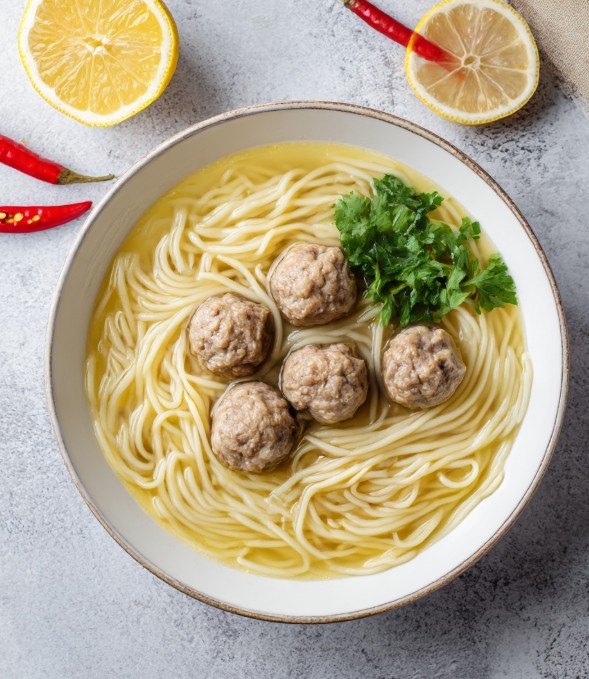
Sometimes words can’t replace feelings. When a meatball is formed correctly, it’s firm but not hard, smooth but not perfectly even. If you bring it to your nose, you can smell a light meat aroma without any foreign odors. When frying or boiling, a light crust appears on the surface, and the ball retains its shape.
I rely not only on appearance but also on sound: when meatballs fry, they quietly “sizzle” but don’t “shoot” with fat. If in broth, the water should only lightly bubble, not boil. And another thing: when you cut a ready meatball, it should be juicy, without dryness at the edges.
I remember when I first felt this difference — friends came over for dinner, and one of the girls said, “They’re like in a restaurant, but at home!” That’s when I realized — the main thing is not the recipe, but attention to detail.
A Few Hacks for Consistent Results
- Always work with cold ground meat, even if you have to take breaks
- Don’t make meatballs too large — better smaller but higher quality
- Shape quickly and confidently, don’t linger on one ball
- Test the texture by touch — it’s the best indicator
- For more juiciness, add a bit of fat (oil, cream, a piece of lard)
- After forming, cook immediately or put in the fridge
Don’t get hung up on perfection — cooking loves experimentation and live imperfection.
Feeling Confident: How to Stop Being Afraid of Ruining Them
With meatballs, as with many dishes, the fear of ruining them is the biggest enemy. I don’t know anyone who made them perfectly right away. But every attempt, every mistake is another step toward your perfect taste and texture.
Allow yourself not to rush, feel the ground meat with your hands, listen to how it behaves. Don’t try to replicate someone else’s perfect picture — find your own. And even if something didn’t work out — it’s not a failure, but an experience that will make you stronger in the kitchen.
I always say: the best way to learn is from your own mistakes and small victories, not from someone else’s templates. Meatballs are a space for creativity, trials, and the joy of the process. And when you feel that moment when the ball fits in your hands and you know it will be delicious — that’s a true victory you can’t buy in a restaurant.
And how about you: what’s your biggest victory or fail with meatballs? Share your story in the comments — it’s interesting to read and support each other.