What Fat Content of Cheese is Best for Syrniki and Why It Matters

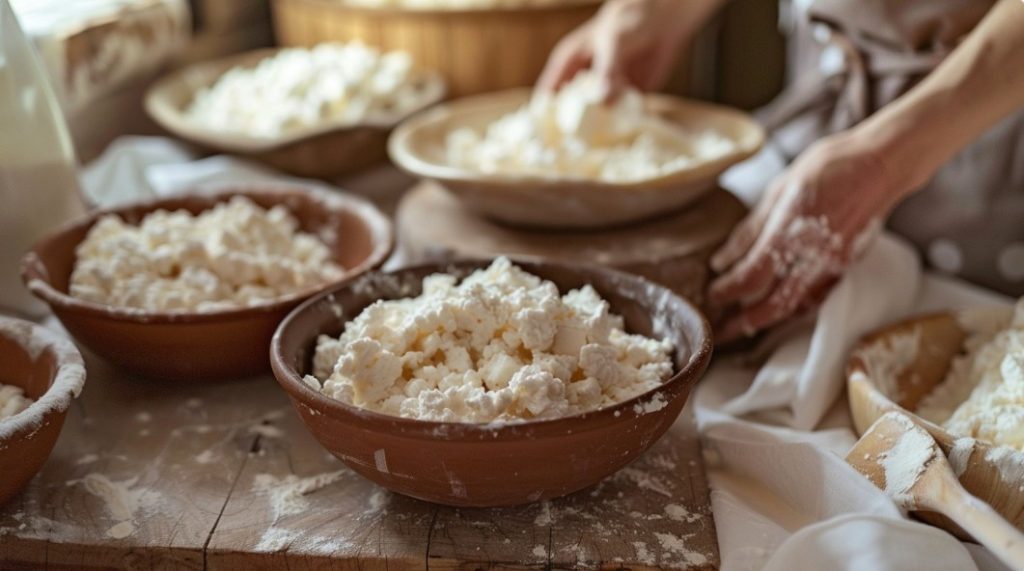
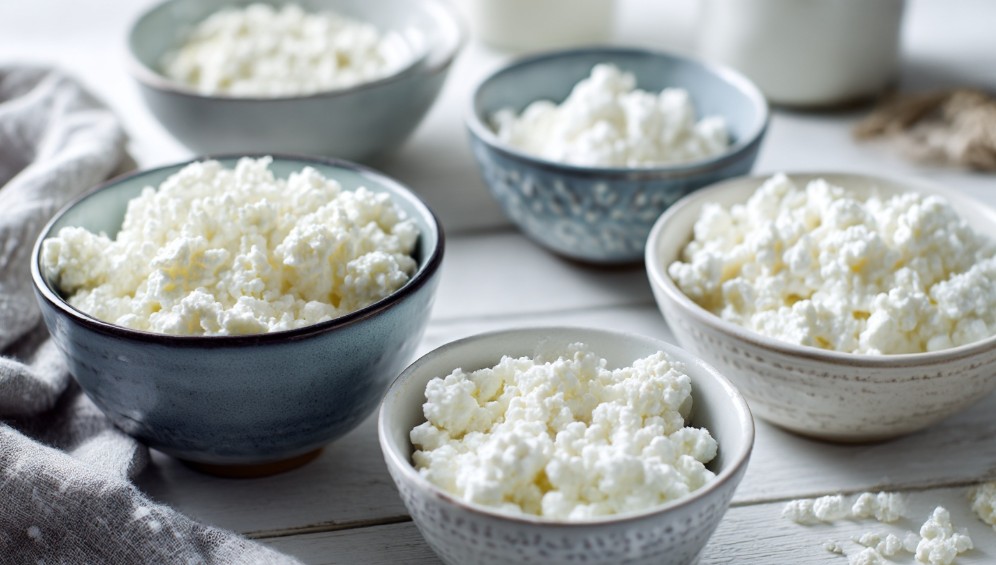
Sometimes you stand at the market looking at that pile of homemade cheese — white chunks, crumbly, and the seller is already asking how much to cut. Your hand reaches out, and in your head, you wonder: ‘Will this cheese be suitable for syrniki? Should I take a fattier one, or the one that looks lighter?’ Experience tells me: even the best recipe won’t save you if the cheese is chosen randomly. Everything depends on it: the taste, the tenderness, and even whether the syrniki will spread on the pan.

Why Cheese Fat Content Matters for Syrniki
Cheese is the heart of syrniki. Its fat content determines not just the taste, but also the texture, moisture, and even the appearance of the finished dish. Syrniki made from low-fat cheese turn out dry, sometimes even ‘sandy’. If you take cheese that’s too fatty, the mixture becomes sticky, and the syrniki can spread on the pan. I know this not from books, but from my own kitchen, when I once skimped on cheese and then had to scoop up the crumbled dough with a spoon.
What cheese is considered fatty and which is not? The label usually shows percentages: 5%, 9%, 15%, and even 18%. The most common for syrniki is 9%, as it holds its shape but doesn’t make the syrniki too dense. However, this is not a dogma. It’s important how the cheese looks and behaves in your hands. More on this later.
How to Recognize Quality Cheese for Syrniki: Color, Smell, Texture
Good cheese smells like milk, not sour yogurt or, heaven forbid, yeast. The color is white or with a slight creamy tint. If the cheese is yellowish or has an unnaturally bright color, there’s a risk that it’s either old or has additives. I hold a piece of cheese in my hand: quality cheese is elastic but not rubbery, slightly crumbly but not turning to dust. If the cheese sticks to your fingers like clay or releases water, it’s better to avoid it.
The smell is another clue. If there’s a slight freshness, all is well. If it smells of mold, ammonia, or has a sour note, the cheese is far from fresh. Once at the market, I was given cheese to try that smelled of vinegar — the seller insisted it was supposed to be like that, but I already knew: this was cheese that had been ‘refreshed’.
Cheese Fat Content: How to Read Labels and Avoid Traps
In the supermarket, it’s simple: there are numbers on the label. 5% — low-fat, 9% — medium, 15-18% — high-fat. But there’s a nuance: fat content can be ‘in dry matter’ or ‘in the product’. For syrniki, I choose cheese with 9% fat content in the product, not in dry matter — these are fundamentally different things. If you see two numbers on the package, don’t be lazy to figure it out.
Marketing tricks are another story. Many manufacturers write ‘Homemade’, ‘Peasant’, ‘Eco’, but this is not a guarantee of quality. Even a beautiful box or the label ‘100% natural’ means nothing if the cheese is gray, sticky, or has a strange smell. My advice: don’t look at the design, but at the composition: real cheese should contain nothing but milk and starter culture.
Market Cheese: How to Choose from Farmers and Not Make Mistakes
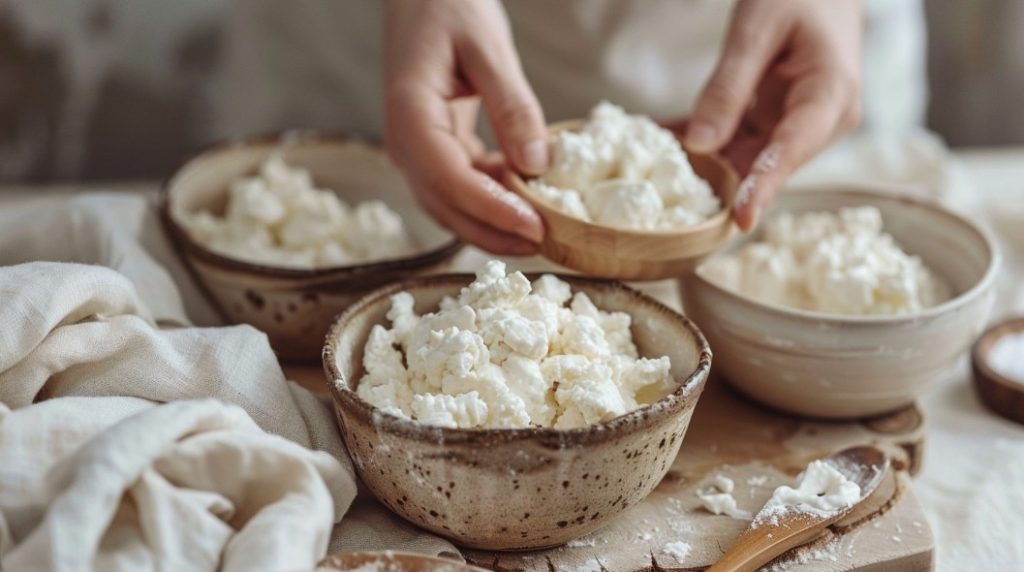
At the market, the choice is wider, but so is the risk. There are no labels here, just the words of sellers and your own feelings. I always ask for a sample — good cheese is immediately felt by the tongue: it should not be watery, musty, or sticky. If the cheese easily rubs between your fingers, is not too dry, and doesn’t turn into mush, it’s a good sign.
Another habit of mine is to look at the seller’s hands and the container. If the cheese is on plastic wrap and not in an enamel bowl, I’m not as comfortable. True farmers often take pride in their cheese and don’t let it come into contact with foreign smells.
Tip: if in doubt, buy a small portion. Better to make fewer syrniki with good cheese than many with bad.
Common Mistakes When Choosing Cheese for Syrniki
The first and most common is buying fat-free cheese, hoping for diet benefits. In syrniki, it often behaves poorly: it gives a dry, tasteless mass that also crumbles. Another extreme is overly fatty, ‘buttery’ cheese. It may taste good, but in syrniki, it often spreads, stretches, and the dough becomes sticky.
The second mistake is taking cheese that has been sitting for a long time. It may look fine, but on the pan, such cheese starts to release a lot of water, and the syrniki ‘float’ and fall apart. Another problem is cheese with foreign additives (starch, stabilizers). I once bought such ‘homemade’ cheese in a store. I barely mixed it with an egg when the mass became wet and slimy, and the syrniki turned rubbery. Since then, I always read the composition, even if it’s ‘homemade’!
Lifehack: if the cheese is too moist, let it sit on a sieve or wrap it in cheesecloth and leave it in the fridge for a couple of hours. Excess moisture will go away, and the syrniki will hold their shape.
Price and Common Sense: When It’s Worth Paying More
Cheese is a product you shouldn’t skimp on. Cheap cheese is often either too ‘light’ (diluted with water) or has additives that mask poor raw materials. I tend to go by the average market price: if cheese is much cheaper than others, it’s a signal to be cautious.
Sometimes I see people choosing the cheapest cheese because ‘any will do for syrniki’. Then no one eats those syrniki because they are completely tasteless. My advice: better to buy less cheese, but good quality. The taste, aroma, even the color of syrniki — everything changes if the cheese is of quality.
- Don’t be afraid to ask where the cheese is from — a good seller won’t hide behind general phrases.
- Look for uniformity: the cheese should be without lumps of old milk, without watery layers.
- Real cheese doesn’t smell of chemicals or acetone, even if it’s from a store.
Cheese Storage: How Long It Lasts and How to Extend Freshness
Cheese loves coolness. I always put it in a glass or ceramic container with a lid, but not tightly: cheese needs to ‘breathe’. Plastic packaging is not the best option; cheese quickly turns sour in it. If the cheese is homemade, from the market — I store it for a maximum of 3 days, store-bought — up to 5 days, but I always smell it before use.
To prevent the cheese from drying out, you can cover it with a clean damp cloth — an old farmer’s trick. If you see that the cheese has started to release liquid or become slimy, it’s better not to risk it — even for syrniki, it’s no longer suitable.
Tip: if you bought a lot of cheese and can’t use it in time, freeze it in portions. After defrosting, the cheese will slightly change texture, but it will be suitable for syrniki.
Cheese in Cooking: How Choice Affects Syrniki
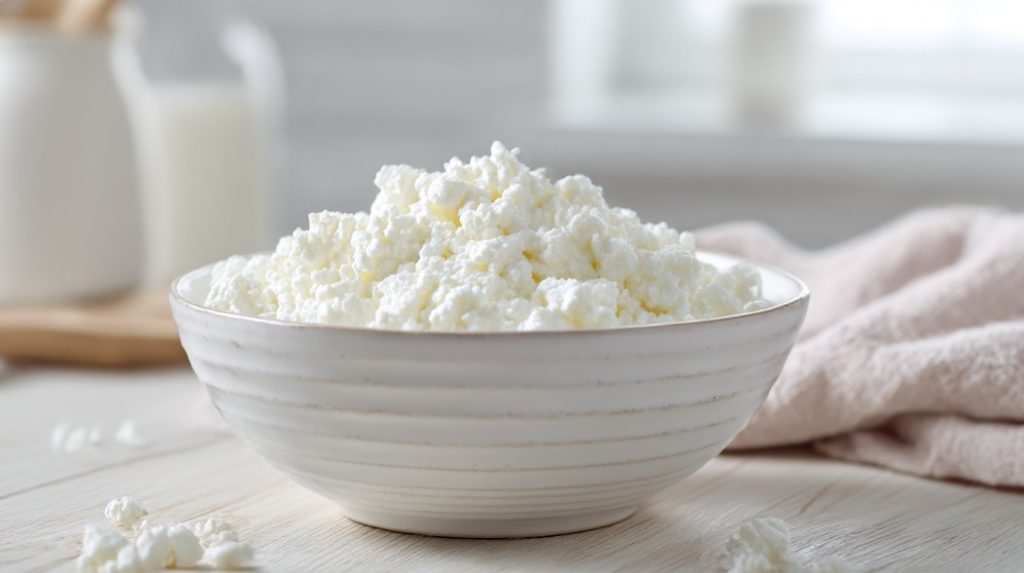
Syrniki are not just a dessert, but a test of cheese quality. If the cheese is good, the syrniki turn out tender, elastic, with a light creamy taste. I like it when they remain slightly moist inside, but not ‘wet’. For this, it’s important to choose cheese of medium fat content — the same 9%.
Too dry cheese makes syrniki hard, like rubber pucks. Too fatty — makes them liquid and spread like cream. Once I experimented with 15% cheese: the mixture stuck to my hands, and during frying, the syrniki lost shape and almost melted. I also tried with 5% cheese — I had to add more eggs and flour, and they turned out more like pancakes than syrniki.
Lifehack: if the cheese is a bit fattier than needed, add a spoonful of semolina and let it sit for 10 minutes. The semolina will absorb excess moisture, and the syrniki will become more elastic.
Seasonality: When Cheese is Best for Syrniki
In spring and summer, cheese is tastier — the milk is fresh, the grass is green, and even factory cheese has a different shade. I always catch the moment when the first cheese from summer milk appears at the market — it’s more aromatic, tender, not as ’empty’ as winter cheese. In winter, cheese can be denser, sometimes even drier — this is normal, there are no ideals.
If you’re making syrniki in winter, pay more attention to the texture of the cheese — it may be dry, and you’ll need to add a spoonful of sour cream or a little milk. In summer, sometimes the cheese is too moist, so let it drain a bit on cheesecloth before using.
How to Choose Cheese for Syrniki in the Supermarket
In the supermarket, the choice is larger, but there are plenty of traps. I don’t buy cheese in transparent plastic boxes where you can see a lot of whey — it’s almost always ‘poplava’. Look for cheese in vacuum, but not in soft packages where the mass is gathered into one lump. Read the composition: ideally — only milk and starter culture. Stabilizers and thickeners are signs of cheap raw materials.
To the touch, the cheese should be crumbly, not sticky, and not too moist. If possible, press your finger on the package: good cheese holds its shape, doesn’t spread under pressure, and doesn’t leak. The color should be white, without yellowness or grayish spots. If there’s a choice between a local producer and a big brand, I prefer the former — less chance of ‘chemistry’.
- Don’t trust labels saying ‘homemade’ — it’s just marketing.
- Try not to take cheese with a long shelf life.
- If the cheese in the store smells sour — move on, don’t risk it.
My Personal Hacks and Little Stories
I remember the first time I bought cheese at the market from a grandma who kept it in a clean towel, not a bag. The cheese was amazing: tender, with a light creamy note. Since then, I always pay attention to what the cheese is lying on at the counter. Another story is how I once ‘fell for’ a beautiful label in the supermarket. The cheese looked perfect, but in syrniki, it was like cotton. Now I always look for cheese that smells and looks alive, even if the packaging is simple.
Another tip: if you’re unsure about the fat content, take a bit of cheese and try to roll it into a ball. If it holds its shape but doesn’t stick to your hands, the cheese is perfect for syrniki. If it spreads — too much moisture. If it crumbles — too little fat.
- Add a spoonful of semolina or a pinch of flour if the cheese is too moist.
- Cheese with 9% fat content is best for syrniki.
- Don’t chase cheap cheese — the savings won’t pay off.
- Store market cheese in cheesecloth and for no more than 3 days.
- Always smell the cheese before using it in syrniki.
If you want to delve deeper into the topic, check out our comprehensive guide on syrniki — it includes different types, tested recipes, practical tips, and answers to popular questions so you can cook confidently and with consistently delicious results.
What to Do If You’ve Already Bought Imperfect Cheese
It happens: you bought cheese, and it’s not quite right. If the cheese is too moist, you can dry it — wrap it in several layers of cheesecloth and leave it overnight in the fridge. If the cheese is dry, mix in a bit of sour cream or milk and let it sit. For completely fat-free cheese, add a piece of butter. It’s not ideal, but better than wasting the product.
The main thing is not to rush. Syrniki ‘feel’ the quality of the cheese. Over the years, I’ve learned to trust my hands and nose more than the labels on the package. Real cheese for syrniki is the one that smells like milk and holds its shape. Everything else is details that can be adjusted with small tricks.
Syrniki are one of those pleasures that start at the market or store, with the choice of good cheese. If you choose correctly, everything else is a matter of technique and mood. Do you have your favorite places where you buy cheese for syrniki? Or maybe you have your secret to the perfect choice? Share in the comments — I’d love to know how you do it.