

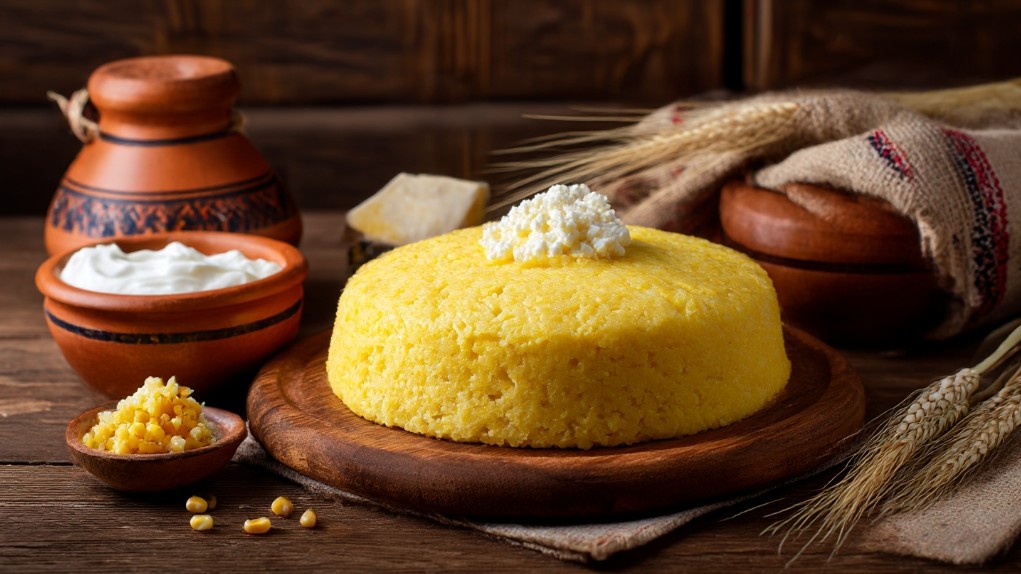
Mamalyga needs patience and precision. It’s all about getting the water-to-flour ratio just right and keeping a close eye on it while it cooks. Make a mistake at the start, and there’s no going back.
The Hutsul version is a thick, firm mixture you can cut with a string or knife. It shouldn’t be a runny porridge or fall apart. It’s served as a base for cheese, crispy bacon, and sour cream.
This isn’t a dish for experimenting on the fly. It works when you stick to the technique and give it time.
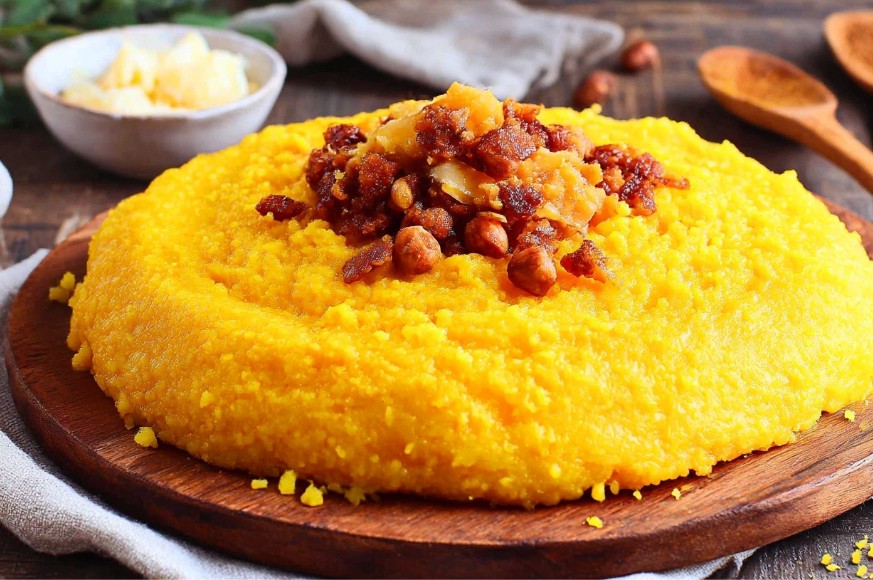
Hutsul-style Mamalyga
Ingredients
- 2 cups Cornmeal Use high-quality cornmeal for the best flavor.
- 4 cups Water You can substitute part of the water with milk for a creamier texture.
- 1 tsp Salt Enhances the flavor of the dish.
- 200 g Bryndza cheese Can be replaced with another cheese of your choice.
- 50 g Butter For serving, adds creaminess.
Method
- Preparing the Water. In a saucepan or heavy-bottomed pot, bring the water to a boil and salt it immediately to ensure even distribution. Reduce the heat to medium for a steady simmer, not a vigorous boil. Too much heat at this stage can lead to burning later. The water should be active but not overly turbulent.
- Adding the Cornmeal. Slowly pour the cornmeal in a thin stream, stirring constantly. Move the spoon from the bottom to the top to break up any potential lumps early on. Avoid dumping it all in at once — this will ruin the texture. It's better to spend an extra minute here than to fix a ruined batch.
- Thickening and Monitoring. When the mamalyga starts to thicken noticeably, reduce the heat to low. At this point, it easily sticks to the bottom, so don't leave it unattended. Stir regularly, but gently. The consistency should become smooth and stretchy.
- Finishing the Cooking. Continue cooking the mamalyga on low heat, stirring occasionally, until it becomes dense and pulls away easily from the sides of the pot. It should come together into a cohesive mass. This typically takes about half an hour, but judge by texture, not time. A finished mamalyga holds its shape and doesn't spread out.
- Final Touches and Serving. Remove the pot from heat and let the mamalyga sit under a lid for a few minutes to stabilize its structure. Gently turn it out onto a wooden board or large plate. Slice with a string or a thin, wet knife. Serve hot with bryndza cheese, crispy bacon, sour cream, or mushroom sauce.

Notes
- For authentic flavor, use fine or medium-grind cornmeal.
- Stir the mamalyga constantly, especially at the beginning, to prevent burning.
- Don't rush the cooking process — slow cooking is key to achieving the right texture.
- If you prefer a creamier consistency, add a pat of butter at the end.
- It's best enjoyed immediately after preparation, while hot and fragrant.
Private Notes
Tried this recipe?
Let us know how it was!Mamaliga in the Hutsul style is more than just a porridge; it’s a part of the Carpathian culinary tradition. It’s simple, nourishing, and versatile, making it suitable for both everyday meals and family gatherings.
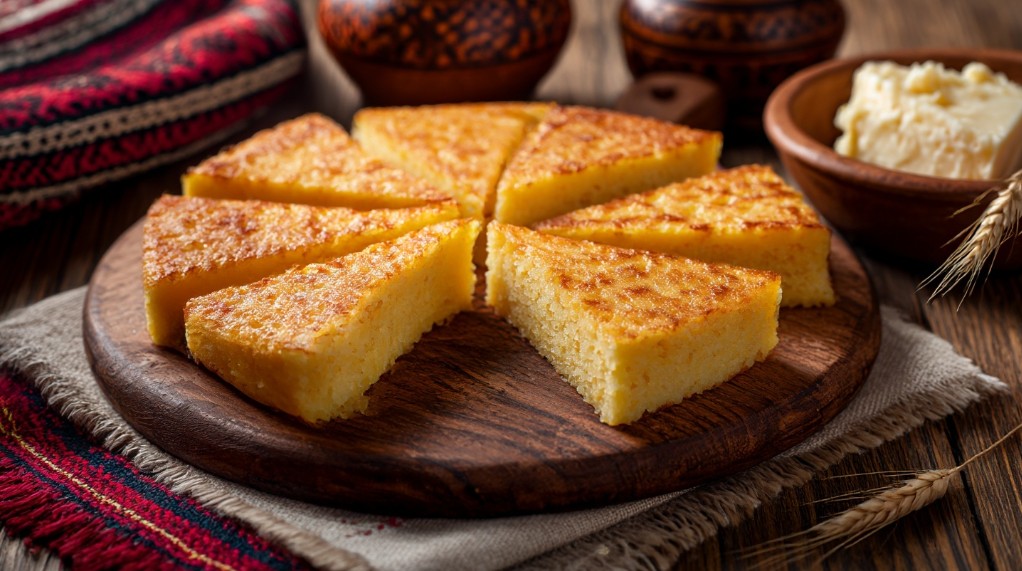
This is one of those recipes where technique and patience are key. Mamaliga comes out perfectly if you don’t get distracted while it’s cooking. Here, the texture is more important than the flavor — the taste comes from how you serve it. I love that it can be made with just a few basic ingredients, feeding several people without complicated steps. It holds heat well and doesn’t spoil right after cooking. This is a working dish, not just a pretty plate. When done right, it doesn’t need any embellishments.
In the western regions of Ukraine, there is a noticeable trend towards modernized local cuisine — where traditional dishes are served in a lighter, more stylish format without losing their authenticity. The menu increasingly features dishes made from local ingredients: corn mamaliga, banosh, roasted vegetables, wild mushrooms, brynza, and artisanal cheeses. Combinations of simple bases with vibrant accents are becoming popular — mamaliga or potato dishes are enhanced with mushroom sauces, caramelized onions, green oils, or smoked elements.
Stylish menus also actively embrace seasonality and minimalism: less heavy sauces, more texture and flavor from the ingredients themselves. You often see local meats, slow-cooked or roasted, game dishes, pickled vegetables as sides, homemade sauces, and fermented additions. Presentation plays a crucial role — natural materials, wooden boards, and handcrafted ceramics that emphasize the connection to the region, making the menu contemporary yet distinctly Ukrainian.
Responses