

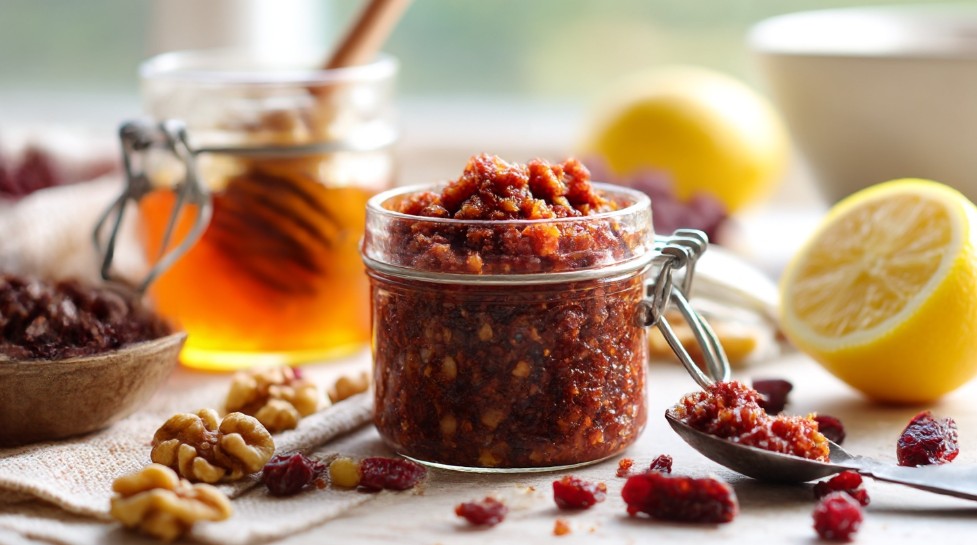
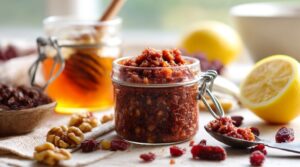
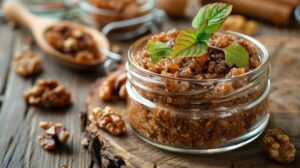
Amosov’s paste with cranberries is your go-to energy booster for the entire day. The combination of paste and cranberries creates a unique and intriguing dish. Cranberries add a vibrant flavor and aroma, while the paste itself provides a perfect foundation for a light and wholesome start to your morning.
After using the grinder, the mixture becomes fibrous and slightly sticky. If the dried fruits have varying moisture levels, the mass forms clumps, making it harder to mix with honey.
Dried cranberries behave differently than apricots or raisins. They tend to be denser, more tart, and are sometimes sweetened. They offer a sharper taste and slightly increase the thickness.
It’s best to keep the acidity within limits — don’t go overboard with lemon. Otherwise, the mass becomes thinner and watery, which can separate in the jar.
A common mistake is using too runny honey with moist dried fruits. This results in a paste that spreads out, is difficult to spread, and spoils faster.
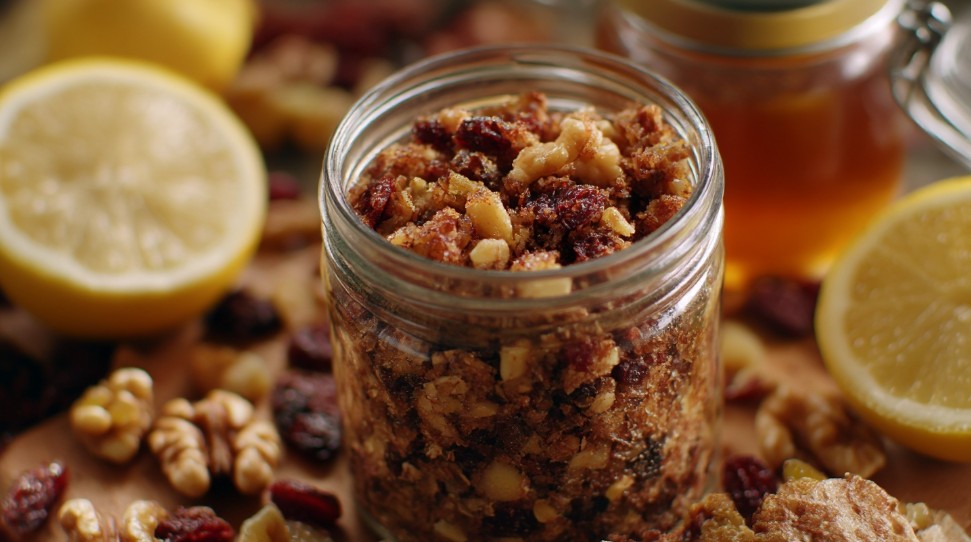
Things to Consider When Choosing Ingredients
Dried Apricots
Soft, without a glassy shine. Over-dried apricots create a crumbly mass. Too moist makes the paste runny.
Raisins
Not oily. If they stick to your fingers, rinse and dry them well. A moist surface immediately affects the thickness.
Prunes
Preferably fleshy, without a smoky aroma. Dry prunes are hard to grind and create tough fibers.
Cranberries (additional ingredient)
Only dried. Without syrup on the surface. If too sweet, the balance of acidity is lost, and the paste becomes dull.
Nuts
Fresh, without bitterness. Old nuts give a musty taste and a greasy film in the mixture.
Honey
Thick, without a sharp aroma. Acacia honey is too runny — the mass spreads out.
Lemon
If added — only the zest and a little juice. Excessive acidity separates the paste.
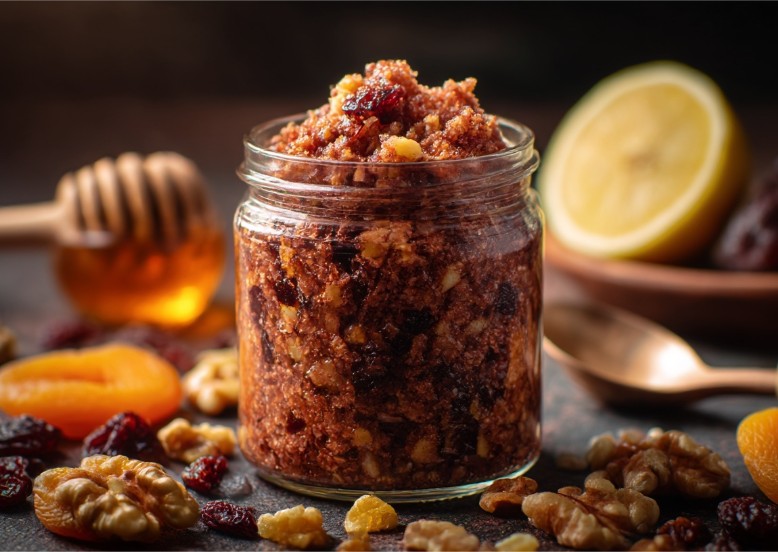
Amosov's Paste with Cranberries
Ingredients
- 200 g dried apricots
- 150 g raisins
- 200 g prunes
- 150 g dried cranberries
- 200 g walnuts
- 200 g natural honey
- 1 pc lemon
Method
- Prepare the dried fruits. Sort through the apricots, raisins, prunes, and cranberries — remove any stems, pits, or random hard bits. If the dried fruits are sticky or dusty, give them a quick rinse in a colander with warm water. It's important to wash off the surface, not soak them. Then spread them out in a single layer on a towel to dry completely: if they are wet on the outside, the paste will become watery and separate in the jar later.
- Balance the moisture if the dried fruits are too dry. If the apricots or prunes are as hard as shoe leather, the grinder will pull them apart in fibers rather than cutting. In this case, it's better to do a quick 'softening' rather than a long soak: pour very warm water over the dried fruits for 3–5 minutes, then drain immediately and dry well. The goal is to make the core more pliable, but without adding extra water to the mass.
- Prepare the nuts. Check and smell the walnuts — any bitterness or mustiness will come through in the finished paste. If the nuts are raw and soft, toast them for 8–10 minutes in the oven (don't roast to color) or on a dry pan, then let them cool completely. Warm nuts in honey act like a sponge: they release fat, making the mixture greasy.
- Cut large pieces before grinding. It's better to cut the apricots and prunes into 2–3 pieces. This way, the grinder works more evenly, doesn't 'chew' one lump for too long, and avoids overheating the mixture. Overheating isn't dramatic, but it makes the texture stickier and darker, and the taste flatter.
- Grind everything in the right order. Here's how I do it: start with some nuts, then part of the dried fruits, more nuts, more dried fruits. The nuts act like a 'brush' — they grab sticky bits and help the knife cut rather than drag. Mix the cranberries with raisins or apricots before grinding, as they can sometimes clump together on their own.
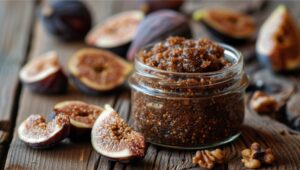
- Check the texture immediately after grinding. The mixture should be fibrous, grainy, but cohesive. If it crumbles like wet sand, the dried fruits were too dry or there were too many nuts. If it looks shiny and stringy, the dried fruits were too moist or be careful adding honey later.
- Add honey gradually, don't pour it all at once. Transfer the ground mixture to a large bowl. Add ⅔ of the honey first and start mixing. Don't just 'stir a couple of times' — really mix: lift from the bottom, press down, break up any clumps. The honey should coat the fibers but not turn the mixture into a creamy paste. After 2–3 minutes of mixing, you'll see if more is needed: if the mixture is dry and crumbly, gradually add more; if it's already sticky and shiny, stop.
- Let the mixture sit for 10–15 minutes, then come back to it. This little step determines the thickness. During this time, the dried fruits will absorb the honey, and the consistency will thicken. After the pause, mix again for a minute. Often at this point, you'll realize no more honey is needed.
- If adding lemon, do it technically right. If you want a lighter, 'lifted' flavor, add only the zest (using a fine grater) — it gives aroma without water. Use the juice very sparingly: start with 1 teaspoon, mix, and see. Lemon quickly thins the mixture, and liquid can separate in the jar later. It's easier to be cautious with lemon than to overdo it.
- Adjust the thickness if something goes wrong (immediately, in the bowl). If too runny: add a bit more ground nuts or grind a handful of nuts and mix in — they absorb excess stickiness.If too dry and crumbly: add 1–2 tablespoons of honey and mix, then let it sit.If clumps and doesn't want to combine: the dried fruits have different moisture levels — just keep mixing, sometimes pressing with a spoon against the sides of the bowl helps.
- Pack into a jar without air pockets. The jar should be dry. Transfer the paste in portions, pressing each layer down with a spoon. This isn't just for appearance — without air inside, the mass is more stable, doesn't dry out on top, and keeps its moisture balance better. Smooth the top, but don't aim for gloss — just make sure there are no voids.
- Let the paste mature in the fridge. Place it in the fridge for at least 6–8 hours, preferably overnight. During this time, the structure 'sets': the fibers swell, the honey distributes, and the acidity of the cranberries becomes more balanced. The next day, the paste is almost always thicker and more composed in taste than immediately after mixing.
Notes
Private Notes
Tried this recipe?
Let us know how it was!I love this version for its texture — it’s denser than the classic one. The cranberries add a slight graininess, making it not completely homogeneous. This is perfectly fine; in fact, it enhances the overall structure.
It’s best to use thick honey. Liquid honey dilutes the flavor and makes the mixture slippery. I always adjust the proportions by feel, not by a chart.
A blender isn’t necessary for this. It can overheat the dried fruits, causing excess juice to release. This leads to the paste darkening faster and becoming sticky.
Using a meat grinder yields a more stable texture. The flavor also becomes more consistent.

Responses