Christmas Table Without Overeating: How to Lighten Traditional Dishes

There’s something special about festive evenings when the house smells of fresh baking, the air is filled with laughter, and someone somewhere asks for another bowl of Olivier salad. I remember waiting for this moment as a child: a huge table where you can barely see the surface for all the dishes, and everyone, from young to old, eats, savors, and shares stories. But over the years, I’ve noticed that after such celebrations, you often feel not festive lightness, but heaviness and fatigue. Honestly, there were times when I wanted to lock myself in the kitchen and never see salads or meat rolls again. And this moment — when you’re sitting among family but can’t rejoice because your body can’t take it anymore — is familiar to many.
We all want the holiday to leave a pleasant mark: not only in memories but also in the body. But how do we ensure that both taste and habits remain alive without becoming a burden? How not to lose the main pleasure of traditional dishes but also not wake up on January 7th thinking, “Why did I do that”? I searched for the golden mean for a long time and am sharing what works for me and many in my kitchens.
Traditional Table: Why It’s So Abundant
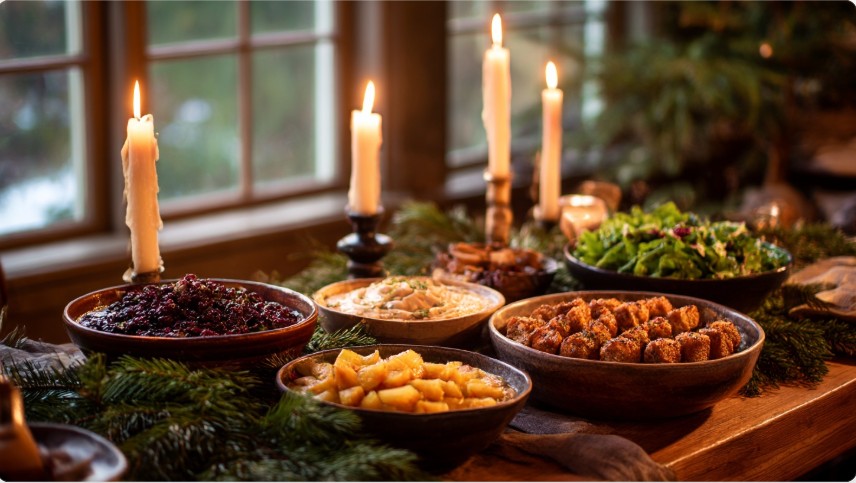
During the festive period, it is especially noticeable that food is not just food. It’s a ritual, a meeting, an emotion. At Christmas, everything seems to scale up: portions, the number of dishes, and variety. Some want to surprise the family, others want to recreate childhood memories and make syrnyky. Tables are overflowing: kutia, dumplings with potatoes or cabbage, aspic, jellied meat, herring under a fur coat, pies, honey cakes. There are even older traditions — for example, 12 fasting dishes prepared on the night before the holiday. And even if you don’t follow all the customs, you still want the table to be “like everyone else’s” — a rich selection so that everyone has enough of everything.
Here’s where the trap lies: we cook with a reserve, everyone brings something of their own, and as a result, there’s often a mountain of food left. And there’s also the feeling that you have to try every dish, especially if someone put effort into it. So the question arises: can it be done differently? Because traditions are wonderful, but health and lightness after the holidays are also a nice bonus.
Substitutions Without Losing Flavor: How Not to Scare Relatives
My experience suggests: the scariest thing for many is that if it’s “healthier,” then it’s no longer tasty and not “ours.” I once thought that if you reduce the mayonnaise in Olivier salad, it’s no longer Olivier, but some sad copy. However, over time I realized: changes don’t have to be radical. Small moves — and the dish is already lighter, but the taste doesn’t disappear.
- Instead of traditional mayonnaise, try mixing natural yogurt with a spoonful of mustard — it turns out light, and the salad doesn’t lose its character.
- Dumplings can be made with coarser flour or even with a portion of whole grain. The dough becomes more interesting in taste and more filling.
- For jellied meat, add more vegetables — carrots, celery, greens. It turns out brighter and not as heavy for the stomach.
- Make the herring under a fur coat with a thinner layer — less mayonnaise, more vegetables.
- Roasts or rolls can be made from lean cuts, such as fillet or turkey.
I’ve noticed that these substitutions go “unnoticed” if you don’t make a show of it. Once I made Olivier with yogurt and just labeled it “Olivier” on the table. No one suspected anything until I said it (and by then it was too late to bring the mayonnaise back!).
Portion Sizes: How to Tame Appetite Without Restrictions
One of the main traps of the holiday is the desire to try everything at once. A simple thing helps here: small portions. You don’t have to heroically refuse your favorite dish, just take a spoonful or two instead of a full plate. I often ask the family to first take a piece of everything and then decide what they want more of. It’s not a rule — it’s a habit that becomes natural over time.
Another trick is not to cook too much. It sounds banal, but if the dishes run out, there’s even a certain charm in it. I remember once our dumplings were gone before the end of the dinner. At first, everyone was a bit upset, but then we laughed for a long time — it even brought us closer. And no one was left hungry.
- Serve dishes on small plates — it helps not to overeat.
- Try not to automatically take seconds: feel if you’re really still hungry.
- Allow yourself to leave something on the plate — it’s not a sin.
Over time, the family gets used to it, and the holidays don’t turn into a marathon of eating everything in one evening.
Food Isn’t the Only Joy: How to Shift Focus
I’m familiar with that moment when everyone is already full, but the hand reaches for another piece of cake — not because you’re hungry, but because “it’s a holiday.” Sometimes it helps to honestly tell yourself: food is just part of the joy. I specifically come up with rituals for Christmas besides the feast. For example, together with the children, we take out old toys and tell where they came from; or we sing carols with a guitar. It’s not a replacement for food, but another thread to warm memories.
After dinner, you can simply take a walk together or with the whole family. I’ve noticed that even a short walk helps you feel light, and you no longer want another serving. It’s a simple step, but it really works.
- Plan not only food but also small joint activities: games, conversations, reading postcards.
- Discuss with the family what everyone expects from the holiday — sometimes it has nothing to do with food.
- Add a bit of movement to the evening: go outside, help with cleaning, dance.
Once, my family and I got so carried away with a board game after dinner that we remembered the dessert only in the morning. No one suffered, and everyone was truly happy.
How to Avoid Guilt and “Breakdowns”
Holidays are not a time for self-flagellation. I’ve often heard from acquaintances: “Oh, I ate too much again,” “Now I won’t eat for a week.” But the truth is that strict prohibitions work poorly. If you allow yourself a bit of flexibility, it’s much easier to maintain balance and not break down.
I allow myself everything I want, but not all at once and not in large quantities. If I really want something “heavy,” I eat it, but without guilt and not at night. Sometimes it’s enough to just honestly tell yourself: “Today is a holiday, tomorrow will be a regular day, and everything will be fine.”
- Don’t plan “cleanses,” “detoxes,” or punitive diets after the holidays.
- Allow yourself a favorite dish, but listen to yourself: do you really want it now?
- Ask yourself: “Why is this so important to me?” — often the answer is not about food.
There was a time when I tried to control everything, and nothing good came of it. Only when I accepted that food is a way to please myself, not to punish, did it become easier.
Common Mistakes: Why We Overeat During Holidays
Over the years of working in the kitchen, I’ve seen the same picture: at the end of the evening, some people can’t get up from the table, and someone jokes, “I’ll go roll away.” But behind this are simple reasons that can be corrected.
- We cook “with a reserve” because we’re afraid there won’t be enough. In reality, there’s always a lot left over.
- We sit at the table for a long time and eat not out of hunger but out of habit. Especially if the table is always full.
- We start dinner hungry because we haven’t eaten all day (to “leave room” for festive dishes).
- We don’t listen to ourselves: we eat because everyone else is eating or not to offend the hosts.
- We feel guilty if something is left uneaten.
I’m not perfect, and I’ve fallen into these traps more than once. But with experience, I realized: it’s better to eat a little less than to regret every bite. And by the way, leftovers can be saved and enjoyed the next day — it doesn’t mean someone cooked poorly.
Micro-Stories from the Kitchen: How Small Changes Work
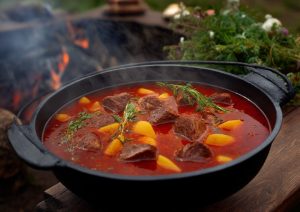
I have a friend who always asked for “more sour cream” in borscht because “it’s tastier that way.” Once, I suggested he try it with a mixture of yogurt and greens. He looked skeptically but agreed. The result: “I thought it would be tasteless, but it turned out even more interesting.” Now he cooks it that way himself and doesn’t return to the old habit.
Another example is my mom, who always fried fish in a lot of oil. Once, we baked fish in foil with lemon and herbs together. It turned out more aromatic than I expected, and my mom admitted that it’s even easier to clean up after cooking — fewer splashes and smells.
Last year, for Christmas, I made kutia with cranberries instead of candied fruits for the first time. I like it when there’s a slight sourness, and surprisingly, half the family said it was even better that way. Small changes — and the festive atmosphere remains.
Life Hacks for Easy Celebrations
- Before the festive dinner, have a light snack (an apple, a handful of nuts). It’s easier to control appetite.
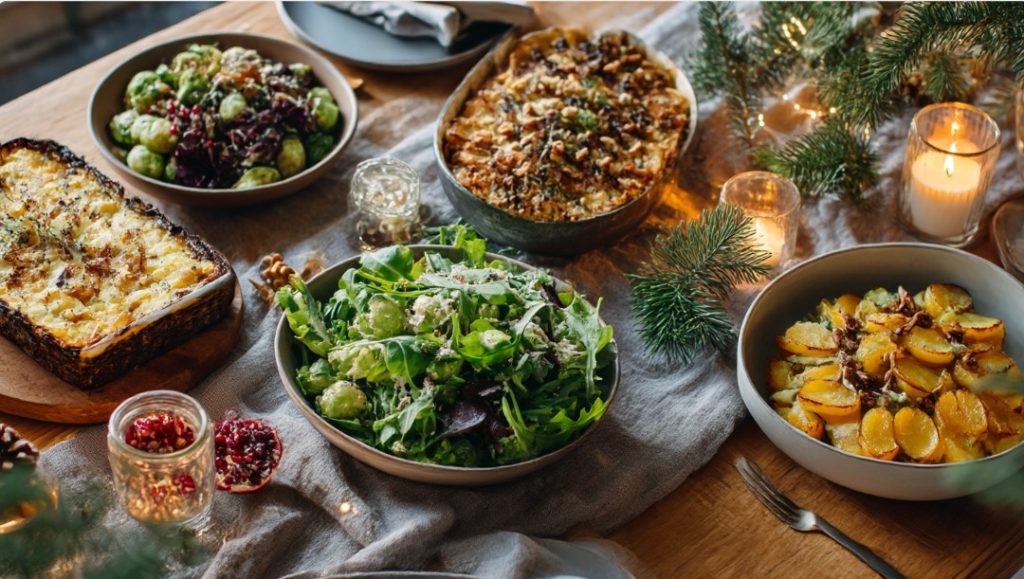
- Put more greens and fresh vegetables on the table — let them be at hand next to the main dishes.
- Prepare dishes in advance and in parts: it’s easier not to “slice” extra at the last moment.
- Use aromatic herbs and spices instead of excess salt, cream, or butter — the taste will be brighter.
- Don’t be afraid to change familiar recipes to suit yourself, but do it gradually, without stress.
Don’t compete with neighbors in the number of dishes — it’s better to make fewer but with soul.
I remember once we decided to celebrate with a simple dinner: a few different salads, baked meat, and instead of a cake — a fruit platter. No one was hungry, and the evening turned out warmer than ever.
Habits That Remain After the Holidays
The holiday is always a bit of chaos, but small changes in diet then remain in everyday life. I’ve noticed: if during the holidays you don’t set strict limits for yourself but just try something new, some habits remain automatically. For example, more greens on the table, less sweet tea, fewer spontaneous snacks.
When the family gets used to the festive table being lighter, it no longer raises questions. Children start asking for not only pies but also salad, and the husband praises “that salad with yogurt.” It’s not a revolution — it’s evolution through practice.
I’m not perfect and don’t strive to be. But after a few years of small changes, celebrating has become much easier — both for the body and the soul.
Christmas evening is not a survival marathon for the stomach but a time for warmth and joy. You don’t need to punish or force yourself — just give yourself a bit of flexibility and self-love. What small changes have helped you feel the holiday lighter? Share your experience — I’m curious what works in your family.
Frequently Asked Questions and Answers
Replace frying with baking or stewing, use more vegetables and greens, reduce the amount of fatty sauces. Even traditional dishes can be made lighter without changing their main flavor.
The easiest to adapt are meat and vegetable dishes: baked poultry, potatoes, salads. Just change the cooking method and reduce the amount of oil.
No. It’s better to reduce portions and balance the menu with lighter dishes. A Christmas table without overeating is about moderation, not prohibitions.
Vegetables, fish, poultry, grains, legumes, and light sauces based on yogurt or olive oil. They pair well with traditional dishes and don’t overload the body.
Serve smaller portions, take breaks between dishes, and don’t try to taste everything at once. The festive atmosphere and communication are more important than the amount of food.