Christmas Dinner from Scratch: What to Cook If You Have No Experience


Christmas is when the air smells of pine, and your mind is buzzing with thoughts of what to put on the table if you have little experience. I know this feeling: looking at festive photos while in reality, the kitchen is empty, hands in pockets, and the fear of ruining something is stronger than the desire to try. I remember my first Christmas kitchen well: an old electric stove, two pots, no confidence. The table is still empty, but you already want it to be cozy and special. And there you sit, choosing what not to do to avoid embarrassment. But in reality, even if you only made tea yesterday, a Christmas dinner can turn out well. The main thing is not to be afraid to start and to give yourself some freedom for mistakes, laughter, and improvisation.
Simple Menu for a Stress-Free Christmas Dinner
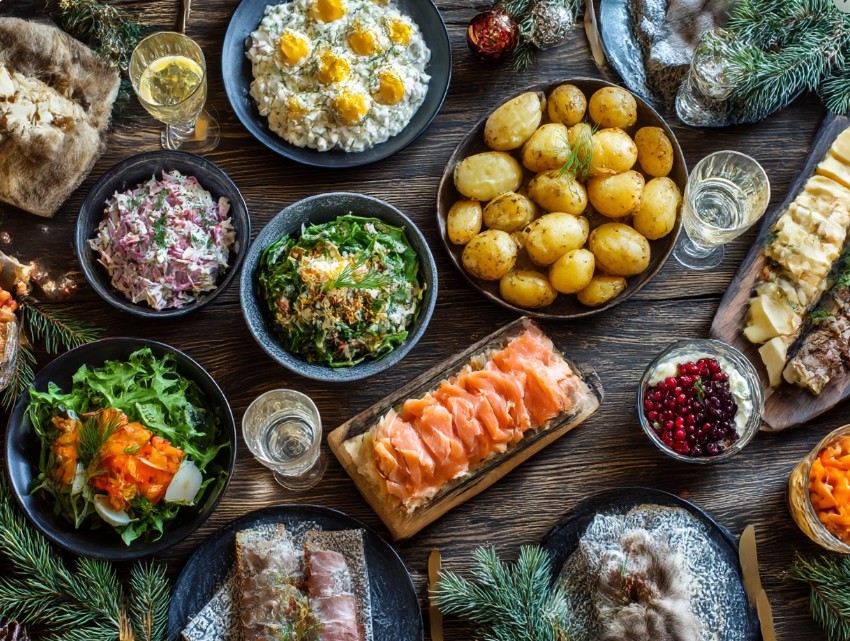
Christmas dinner doesn’t have to be complicated or require culinary experience. If you’re cooking for the first time, the best decision is to choose simple, understandable dishes that are easy to prepare at home without special skills or expensive ingredients. Below is a selection of real options from which you can create a full Christmas dinner from scratch and enjoy the process.
🥗 1. Baked Potatoes with Herbs
Why you should cook it:
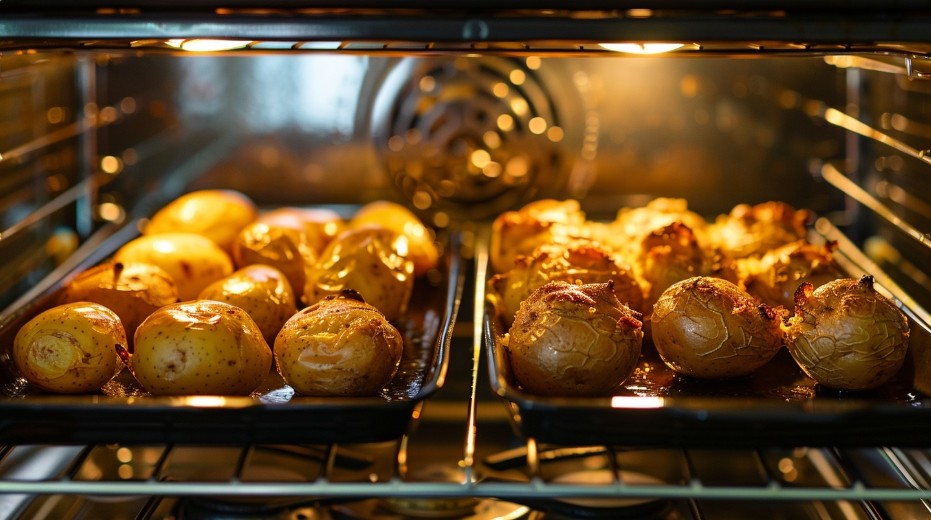
It’s hard to ruin potatoes. Just cut them, add oil, salt, and bake in the oven. They work as a side dish for any meal and look festive. Or if you have leftover boiled potatoes, you can make delicious snacks for the festive table.
🍗 2. Oven-Baked Chicken
Why you should cook it:
It’s one of the simplest meat dishes. You can marinate the chicken in 15 minutes and just put it in the oven. It’s hearty, aromatic, and hassle-free.
🐟 3. Fish Baked in Foil
Why you should cook it:
Foil “forgives” mistakes: the fish doesn’t dry out. Just add lemon, salt, and spices. A great option for those who want a lighter dish.
🥗 4. Fresh Vegetable Salad
Why you should cook it:
Vegetables don’t require complex processing. Cucumbers, tomatoes, greens, and a simple dressing — quick, healthy, and always appropriate on the Christmas table.
🧀 5. Canapés or Sandwiches
Why you should cook it:
The perfect snack for beginners. Cheese, bread, ham, fish, or vegetables — minimal actions, maximum results. They easily look festive with a beautiful presentation.
🍞 6. Homemade Bread or Purchased Baguette
Why you should cook/serve it:
If you have no experience — it’s better not to bake, but to serve a quality baguette. Bread complements any dish and makes the table more complete.
🍰 7. No-Bake Dessert (Cookies, Fruits, Cream Cheese)
Why you should cook it:
No need for an oven or complex recipes. Fruits, cookies, or a simple cream cheese dessert — safe and quick even for the first time.
☕ 8. Tea, Cocoa, or Non-Alcoholic Mulled Wine
Why you should cook it:
Beverages complete the dinner and create coziness. Even simple tea with spices will make the atmosphere Christmassy.
🍲 9. Homemade Stew
Why you should cook it:
Homemade stew is a hearty and understandable dish that doesn’t require culinary experience. Everything is cooked in one pot: meat, potatoes, and vegetables slowly stew, soaking up the aromas. It’s a convenient option for Christmas dinner, as the dish is hard to ruin, and it looks truly festive. A detailed recipe for a delicious dish in pots is here, explaining the entire cooking process step by step.
✅ Main Tip for Beginners
Better 3–4 simple dishes than many complex ones. Christmas dinner is not about perfect cooking but about warmth, peace, and a homely atmosphere.
Why the Fear of Ruining is the Worst Guest in the Kitchen
This is all very familiar: the desire for it to be tasty, and also “like others have.” But as soon as you start, a whole choir of thoughts about what might go wrong appears in your head. You imagine the dish turning into mush, guests looking sideways, and you already regret not ordering pizza.
Where does this come from? Most often, from the insecurity that you don’t understand how the kitchen works. Recipes are intimidating, videos seem like magic. But in reality, the kitchen obeys very simple laws: products react to heat, time, and your attention. If you understand these three things, even the first experience becomes more like a game than an exam.
A friend of mine, who was afraid to even boil an egg, cooked her first Christmas dinner for five people. She didn’t know where to start, but she managed to create a warm, cozy, albeit imperfect dinner. Everyone laughed, and the baked potatoes, although a bit dry, became the main star. The main thing is not to let fear become the chef in your kitchen.
Here’s a detailed guide on how to prepare a New Year’s table 2026: a light menu without “heavy classics”
How to Understand What Really Works in a Home Kitchen
Most “kitchen horror stories” come from trying to replicate someone else’s ideas without understanding the process. In reality, there is no single right way: there’s you, your stove, time, and mood. What almost always works is observation. Watch how the food behaves: does it sizzle in the pan, does the water steam, how does the room smell.
Recently, I cooked for a friend who was holding a knife for the first time. We chopped vegetables together, and he kept asking, “Am I cutting it right?” I said, “As long as it’s comfortable for you, it’s good. The main thing is to be interested in the process.” It turned out that even unevenly cut carrots cook and smell as they should.
The kitchen is not an exam, but a place for experimentation. If it doesn’t work out the first time, there will be a second. Important: it’s better to watch the product than the stopwatch. If the potato is soft, it’s ready, even if it’s been 25 minutes instead of 20.
Temperature: Your Main Tool
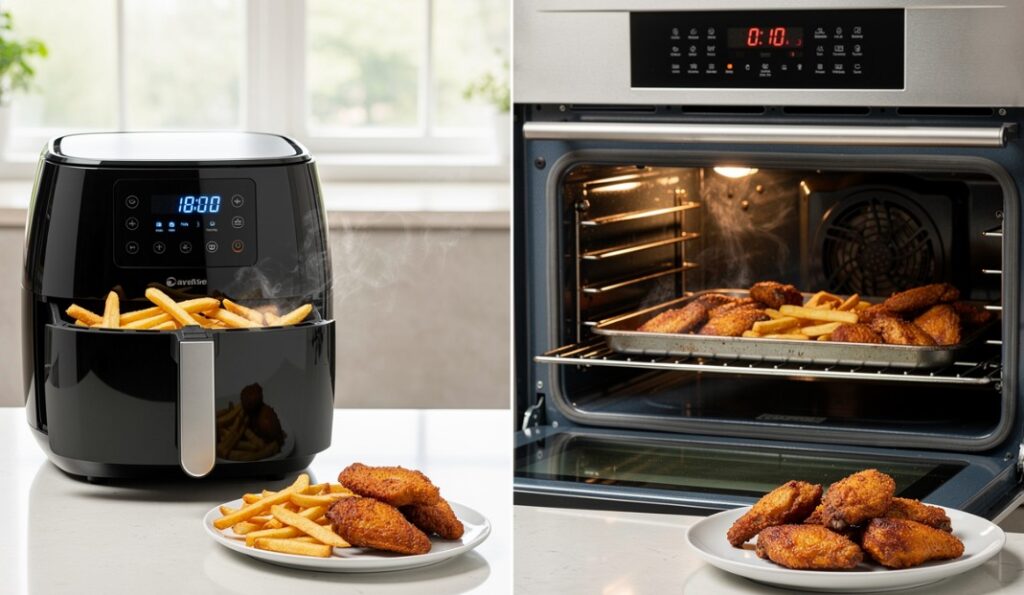
Temperature is the main driver in the kitchen. It determines everything: from whether a vegetable will be crispy to whether the meat will become rubbery. At home, people often fear giving the stove “full power,” or conversely, cook everything on the lowest heat so it doesn’t “burn.”
Once, my toast burned because I got distracted by a phone call. And that’s a classic example: the temperature was right, but the attention was zero. Another time, I cooked on low heat, and the dish turned out “bland” — no crust, no aroma.
Signs of the Right Temperature
- The food in the pan sizzles but doesn’t smoke
- The water for boiling not only heats but “plays” with bubbles
- The oven smells, not “burns”
If unsure, start with medium heat. Smell and color will tell you whether to add heat or reduce it.
Tip: Before frying something, heat the pan without oil. A drop of water should “dance” on the surface — that’s the signal to add ingredients.
Time: Not by Recipe, but by Feel
Time is not just minutes on the clock, but also your eyes, nose, and even ears. In home conditions, the same product can cook differently: it depends on the size of the pieces, the type of vegetables, humidity, even the mood of the stove.
I often see beginners holding food “as long as it’s written,” and as a result, either overcooking or undercooking. I had a case: a friend boiled beets for an hour and a half because that’s what the internet said, and the beets turned to mush. But you could have just tried with a knife — soft? Ready.
Visual and Tactile Clues
- A fork easily goes into the potato
- Vegetables are bright but not “swimming”
- The smell has become more intense, not raw
It’s better to check several times than to blindly trust the timer.
Texture and Appearance: How to Know Everything is Going Right
The first successes in the kitchen are often not about taste but about impression: if it looks appetizing, half the battle is already won. Texture is when something is crispy, soft, chewy, or crumbly. It helps not to ruin the dish.
When I was learning to fry vegetables, I thought the longer, the better. But then I realized: if the carrot is no longer crispy and has become “cottony,” it’s a signal to take it off. The same with meat: if it has become “gray” on the outside but is firm, it’s still raw inside.
Tip: When boiling vegetables, don’t cover the pot tightly with a lid — this way, they retain more color and don’t overcook.
Appearance is not about perfection, but about naturalness. If the dish looks “alive,” smells, and shines, it’s a good sign.
What to Do If Something Goes Wrong
The main thing in the kitchen is not to panic. Most “failures” can be turned into a new dish or at least a funny story. A friend once cooked Christmas kutia but forgot about the wheat, and it turned into porridge. Everyone laughed, but they ate even more than usual.
- Too salty? Add some water or vegetables to dilute the taste.
- Something burned? Change the dish, don’t scrape the bottom — otherwise, the bitterness will spread throughout the dish.
- Something fell apart? Serve it as a salad or bake it in the oven with cheese.
- Taste “bland”? Add spices gradually, relying on aroma.
Even if the appearance suffered, the main thing is calm and creativity. Sometimes the most unexpected combinations become the “highlight” of the dinner.
Common Beginner Mistakes and How to Avoid Them
Most beginners are afraid of doing it “wrong,” and this often prevents them from enjoying it. Here’s what I see most often:
- Blind faith in recipes and minutes — ignoring their own feelings
- Excessive fear of temperature — cooking on minimum and getting “boiled” food
- Too many ingredients “just in case” — dishes lose their taste
- Constant stirring — the food doesn’t have time to brown
- Lack of confidence — and as a result, constant worry
I always say: if in doubt, try it. Taste doesn’t lie. Over time, confidence will come, and the kitchen will stop being a battlefield.
Here we’ve gathered a convenient daily selection of dishes for the evening menu.
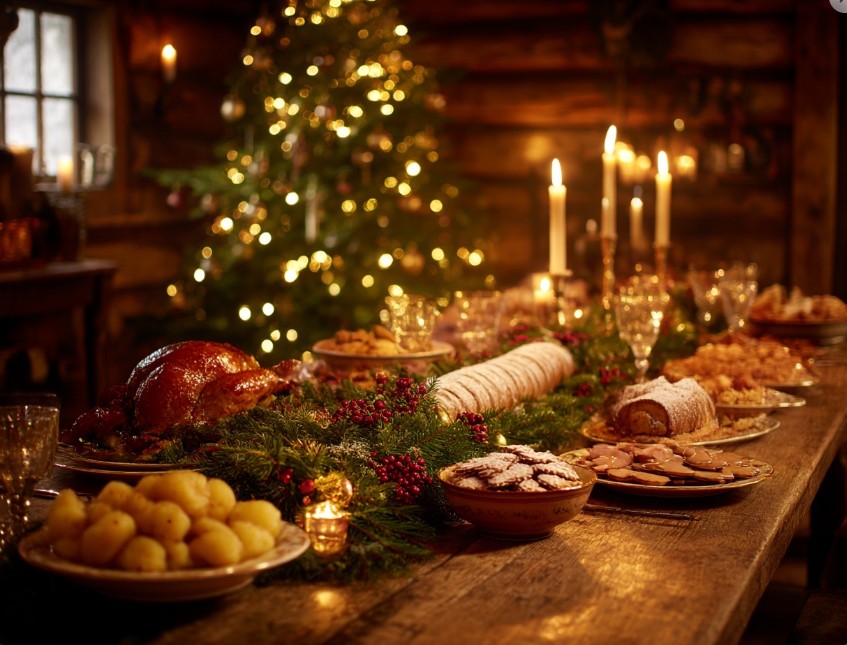
Life Hacks for Your First Christmas Dinner
Here are a few simple things that really help not to get caught up in the details and enjoy the process.
- Cook less, but more attentively. Better two or three dishes, but with soul.
- Use familiar products — no need for exotic experiments right now.
- Prepare everything in advance: cut, arrange, think about the dishes.
- Involve someone in the process — it’s less scary and much more fun together.
- Don’t be afraid to improvise — sometimes an ingredient added on a whim makes the dinner special.
Tip: if something doesn’t work out, don’t beat yourself up. Christmas is about warmth, not perfect photos in the feed.
How to Create a Festive Atmosphere Even Without Experience
Christmas dinner is not just food. It’s smells, music, light, mood, and greetings with Merry Christmas and Happy New Year. Even if the table is simple and the dishes are far from “gourmet,” you can make it cozy. I often put small candles on the table, add a sprig of pine, and play favorite music. That’s enough to feel the holiday. And cool Christmas cards with greetings in your own words will help lift the mood.
I remembered how once we celebrated Christmas in a dormitory with friends. On the table — a simple salad, toast, tea. But we laughed, sang, and it was the warmest dinner. Atmosphere is created not with money, but with your mood.
When you cook something for the first time, don’t try to impress — try to be in the moment. That’s what real Christmas is.
How to Learn to Trust Yourself in the Kitchen
After a few successful (and not so successful) dinners, it becomes clear: the main tool is your own intuition. You can’t buy it or read about it in a book. It appears when you stop being afraid and start trying.
I still sometimes worry when I try a new technique. But every time I tell myself: “If it doesn’t work out, we’ll laugh, and it will become a story.” The main thing is not to dwell on mistakes. They are part of the journey. And they make the kitchen alive.
Don’t be afraid to ask, try, experiment. Every dish you make is already a success. Because you made it with your own hands, and that means it’s special.
When you first cook a Christmas dinner, it seems complicated. But if you give yourself a little freedom, the kitchen starts to play with new colors. The main thing is not perfection, but the mood you put into the food. That’s all you need to remember. What is most important to you in your first festive dinner? Maybe there’s a story where something went wrong but was unforgettable? Share in the comments — I’m interested in reading about your kitchen adventures.
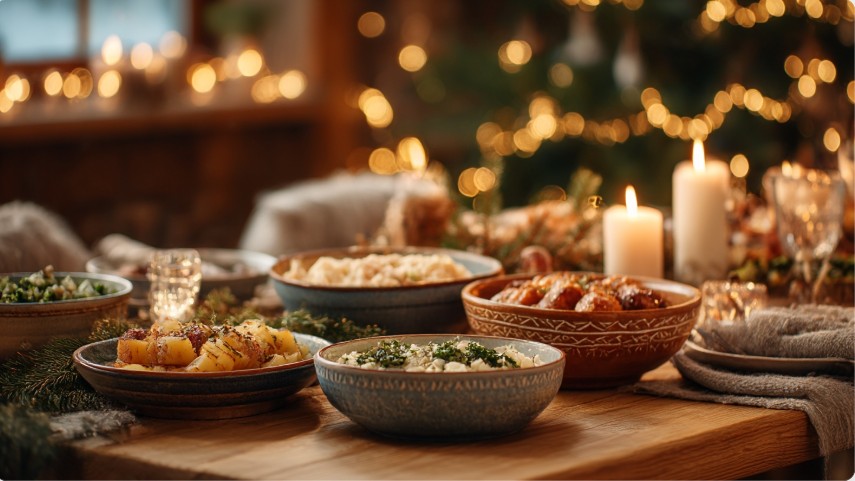
Frequently Asked Questions: FAQ
Start with simple dishes: baked chicken or fish, potatoes in the oven, a simple salad with fresh vegetables, and a light no-bake dessert. It’s important to choose recipes with minimal ingredients and clear steps.
Yes, it’s entirely possible. Just choose 3–4 simple dishes and plan the preparation in advance. Some preparation (chopping, marinating) can be done a few hours before serving.
The simplest options are baked meat or vegetables, salads without complex sauces, canapés, sandwiches, and no-bake desserts. Such dishes are hard to ruin even without experience.
For a home Christmas dinner, 3–5 dishes are enough. It’s better to make fewer but delicious and stress-free dishes than to overload yourself with complex recipes.
A festive atmosphere is created by details: candles, warm light, beautiful table setting, Christmas decor, and calm music. Even simple dishes will look festive in a cozy setting.