Children’s Birthday Menu

A child’s birthday is not just about food. It’s the smell of balloons that you arrange in the corners in the morning, the patter of bare feet running down the hallway, the moment when the kitchen smells both sweet and slightly burnt, but everyone is laughing. On such days, you want to preserve not only the dishes but also the peace. Because nothing spoils a celebration like an exhausted host with a nervous gleam in their eyes.
I’ve seen many such celebrations: perfect tables, tired moms, children playing with balloons instead of plates. It’s normal. But it can be different — when everything is simple, sincere, and calm. I’ll share what really helps make a children’s menu not a source of stress, but part of an atmosphere where both adults and children feel like guests, not kitchen workers. And I’ll offer delicious birthday menus for children to choose from.
The Atmosphere of a Children’s Party — Why It’s More Important Than Food
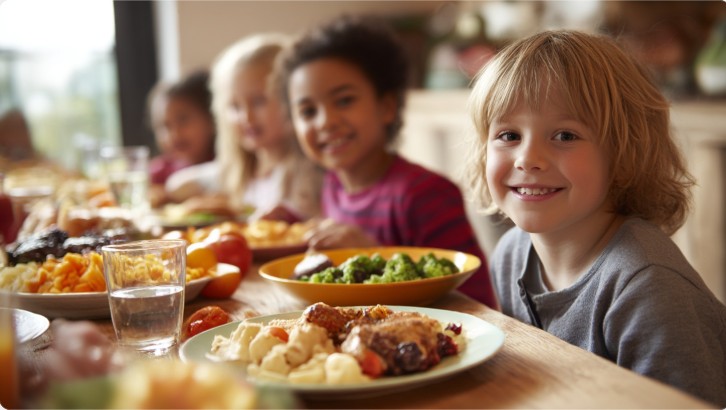
Imagine a room decorated with drawings, a table that isn’t perfectly symmetrical but cozy. Children run in, laughing, and the host isn’t running around with a towel but is also participating in the fun. I’ve seen how atmosphere affects appetite: when children are happy, they reach for food faster, but when adults are tense, everything goes awry. Food becomes background. Sometimes we get too caught up in presentation but forget: kids will remember how much fun they had, not how many salads were on the table.
I’ve noticed that even the simplest treat can become a celebration if there’s lightness in the air. I remember a friend’s daughter’s birthday with just tea, a few cookies, and fruits. But the atmosphere was relaxed, with laughter and drawing right on the tablecloth. The children ate enthusiastically, and the parents were surprised that they didn’t have to stand by the stove all night.
🧸 Children’s Menu ‘For Toddlers’ (2–5 years)
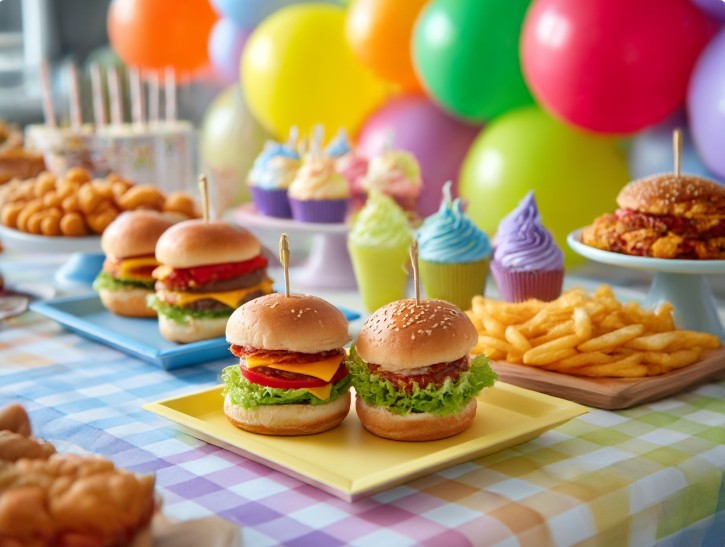
The children’s birthday menu for toddlers should be not only tasty but also as safe as possible. This menu includes simple, familiar dishes with a gentle taste, well-suited for young children. Soft textures, minimal spices, and understandable ingredients help avoid overloading the little ones.
This festive menu is ideal for home celebrations or small children’s parties. Special emphasis is placed on fruits, light snacks, and simple hot dishes.
This is a solution that children love and parents trust.
Snacks
- Fruit skewers
- Cheese cubes
- Cookies or biscuits
- Mini cheese sandwiches
Hot Dishes
- Chicken meatballs
- Mashed potatoes
- Pasta with butter or cheese
Sweets
- Children’s cake
- Fruits and berries
- Chocolate or berry sauce
Drinks
- Compote
- Water
Children’s Menu ‘For School Kids’ (6–10 years)
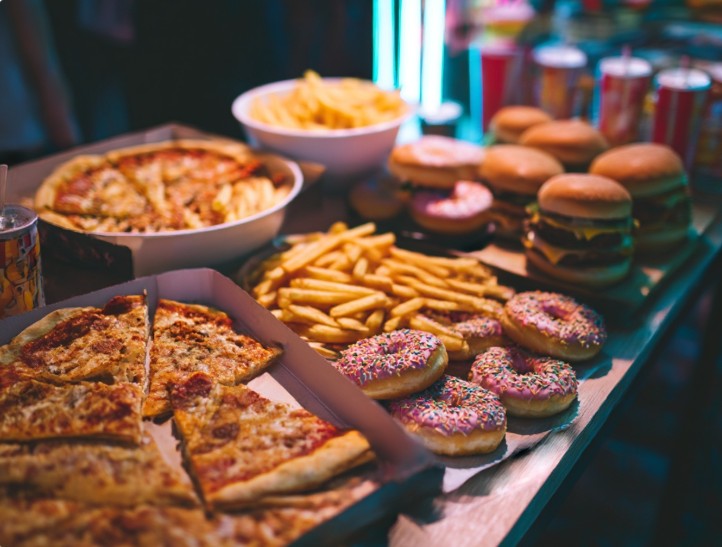
The children’s birthday menu for school kids is a balance between nutrition, taste, and festive atmosphere.
This format includes dishes that children love the most, but in a neat and thoughtful presentation.
The menu includes hearty hot dishes, a variety of snacks, and a vibrant sweet table.
This festive menu is well-suited for birthdays at home, in cafes, or children’s rooms.
Special attention is paid to convenience — dishes are easy to eat without utensils.
This is a popular choice for active children who want to celebrate and play without pauses.
Cold Snacks
- Mini burgers
- Cheese sticks
- Fruit plates
- Chicken canapés
Hot Dishes
- Chicken nuggets
- French fries or country-style potatoes
- Macaroni with cheese
Sweet Table
- Cake
- Cupcakes
- Marshmallows
- Sweet sauces
Drinks
- Juices
- Water with fruits
🎧 Children’s Menu ‘Teen Party’ (11–14 years)
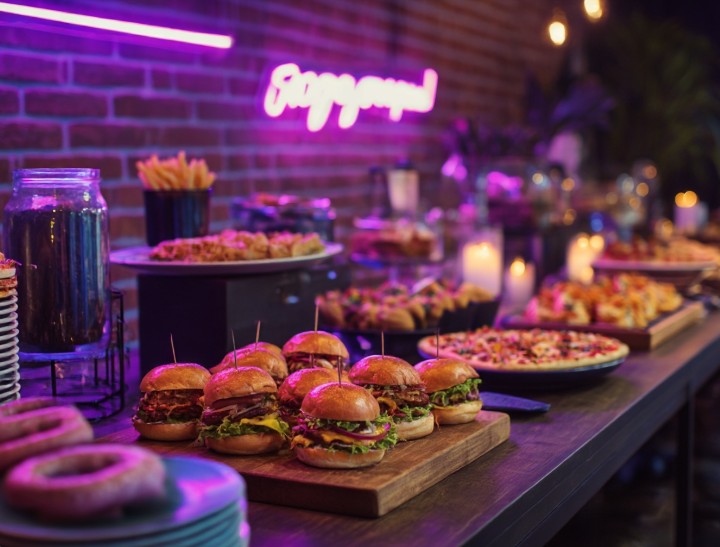
The children’s birthday menu for teens should be stylish, modern, and as convenient as possible.
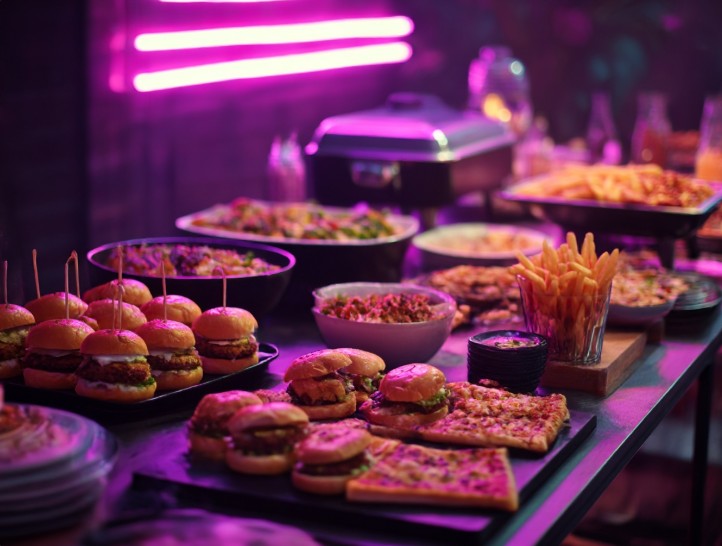
The Teen Party format focuses on fast food, snacks, and a vibrant sweet bar.
This menu creates the atmosphere of a real party, where food becomes part of the entertainment.
Mini burgers, pizza, fries, and desserts are perfect for a group of friends.
The sweet table plays a special role — it always becomes the center of attention.
This is the perfect option for celebrating a teenager’s birthday in an informal style.
Snacks and Appetizers
- Burgers or hot dogs
- Pizza (mini portions)
- Chicken strips
- Nachos with sauces
Hot Dishes
- French fries
- Chicken wings or nuggets
Sweet Bar
- Cake
- Macarons
- Donuts
- Chocolate fountain
Drinks
- Lemonades
- Milkshakes
- Water
🖤 Teen & Young Party (15–18 years)
The birthday menu for teens 15–18 years old is no longer a classic children’s celebration but a real youth party.
Here, not only tastes are important, but also atmosphere, presentation, and convenience.
Dishes should be trendy, street food format, and easy for socializing with friends.
This menu is perfect for a home party, loft space, or celebration in a cafe.
Special attention is paid to snacks, fast casual dishes, and a large sweet bar.
This format looks grown-up, modern, and very ‘wow’.
Stress-Free Planning: Where to Start
To avoid burning out in the kitchen, I start not with the menu but with questions: how many children will there be, how many adults, are there any allergies or special preferences? These are small things, but they remove 70% of unnecessary panic. I always advise hosts: spend 5 minutes with a notebook before running to the store. Imagine how it will be — how many children at the table, who likes what, who will run around, and who is shy. This will determine how to arrange the food, whether it should be eaten at the table, or if it’s better to have a “buffet” option so everyone can take what they want when they want.
Once, I didn’t consider that one of the guests had a milk allergy. I had to improvise right during the party. So now I always clarify such things in advance — and it relieves stress for both me and the parents.
Tip: Make a small chart — who eats what, what can’t be eaten, what flavors the kids like. It takes 10 minutes but saves you hours in the kitchen.
The Format of the Celebration Determines the Menu
Before creating a children’s menu, it’s worth deciding on the celebration format. It sets the rhythm for the entire event and helps understand which dishes will be appropriate and which should be avoided.
🎉 Birthday at Home
A home celebration usually takes place in a more relaxed atmosphere, so you can afford a slightly more diverse menu. Portion dishes that are easy to eat at the table work well: cutlets, casseroles, cheesecakes, mini sandwiches. It’s important not to overload the table and leave time for children to play, not just eat.
🌳 Celebration in Nature
For a picnic or backyard party, the main thing is convenience and mobility. The menu should consist of dishes that are easy to hold in hands and don’t require utensils. Rolls, canapés, fruits, baked potatoes, and cookies are appropriate here. It’s also important to consider the air temperature and choose products that transport well.
🎈 Party with Animators or in a Play Space
When children are actively moving and hardly sitting still, food should be as simple as possible. The best fit are small portions that can be quickly eaten between games. The menu shouldn’t be complex or too filling — light snacks and drinks work much better here.
🏡 Combined Format
Sometimes a celebration combines several formats — for example, active games and a shared table. In such cases, it’s worth dividing the menu into two parts: light snacks for the active phase and more substantial dishes for the calm moment. This helps avoid fuss and makes the celebration comfortable for everyone.
✅ Why It’s Important
When the celebration format is thought out in advance, the menu is composed logically and without unnecessary worries. You don’t buy extra, you don’t worry that the children will be left hungry, and you can focus on the main thing — the atmosphere and joy of the celebration.
Examples of Children’s Menus Based on the Celebration Format
To make planning even easier, it’s worth immediately imagining not abstract dishes but specific menu options. Below are examples that can be easily adapted to the children’s age, the number of guests, and your own capabilities.
🍽️ Menu for a Birthday at Home
For a home celebration, a balanced menu with a few simple dishes works well:
- chicken or turkey cutlets
- mashed potatoes or baked potatoes
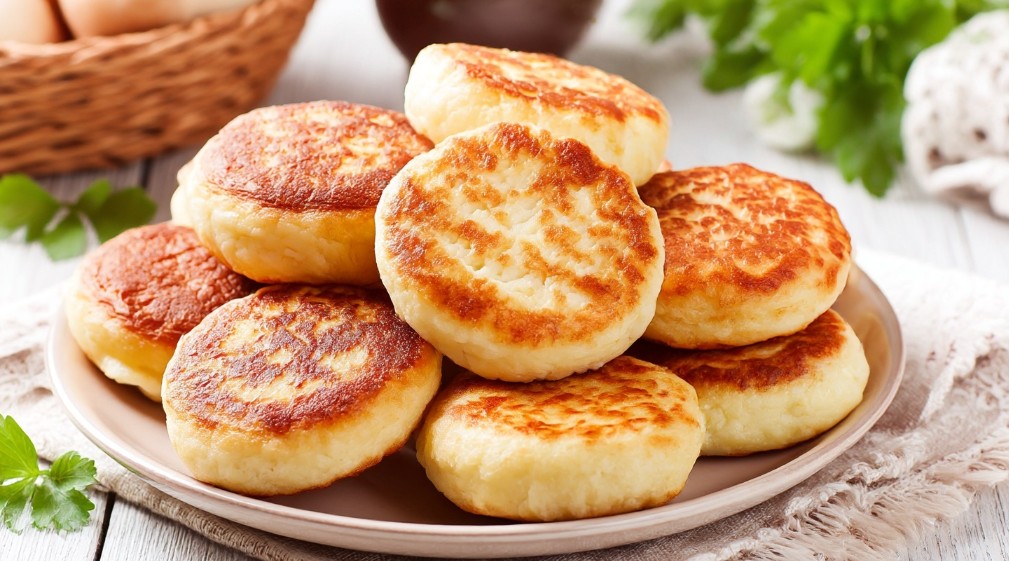
- cheese casserole or cheesecakes
- cut fruits
- compote or uzvar
This menu is not overloaded but at the same time hearty and understandable for children.
🌳 Menu for a Celebration in Nature
Here it’s better to focus on dishes that are convenient to eat without utensils:
- mini burgers or canapés
- lavash rolls with simple fillings
- baked country-style potatoes
- seasonal fruits
- homemade cookies or muffins
Everything is easy to pack and doesn’t create unnecessary mess.
🎈 Menu for a Party with Animators
When children are constantly on the move, food should be quick and easy:
- fruit skewers
- mini cheesecakes or pancakes
- small sandwiches
- juices or water
- small sweet snacks
The main thing is that the child can quickly eat and return to the game.
🏡 Menu for a Combined Format
If the celebration combines activities and a shared table, the menu can be conditionally divided into two parts:
For snacks:
fruits, cookies, sandwiches, drinks
For the main meal:
cutlets, garnish, casserole or pasta
This approach avoids rush and makes the celebration more organized.
A Small but Important Nuance
A children’s menu doesn’t have to be perfect or too complicated. The best work are simple familiar dishes, served neatly and with love. When food doesn’t distract from the celebration, children eat with pleasure, and adults feel more at ease.
How Not to ‘Burn Out’ in the Kitchen: Host Comfort
I’ve seen many times how hosts try to do everything at once. As a result — fatigue, irritation, and the celebration turns into a marathon. I’ve learned to approach the children’s menu from a different angle: I prepare some things in advance, trust some to the guests (sometimes they are happy to help), and leave the simplest for the last minute. It’s important not to try to be perfect. Children don’t notice if there are five kinds of canapés or three salads on the table. They care about the process itself — putting something on their plate, choosing, trying something new.
Once, a simple thing saved me — I put a box of fruits in the middle of the table, and it became the center of attention. The children took turns choosing their favorite pieces, and I calmly continued setting the table. You don’t have to cook everything at once. Let go of this control, and you’ll notice that you have more time and energy for the small joys of the celebration.
Tip: Plan the menu so that half an hour before the guests arrive, you still have the energy and desire to celebrate. Useful details and life hacks on how to make the perfect birthday menu.
Balance: Not ‘Everything at Once’, But What Is Really Needed
When you start planning a children’s menu, it’s easy to fall into extremes — either make too much or too monotonous. I’ve developed a rule for myself: less, but better. Children don’t eat adult portions, and often don’t even sit at the table for long. So there’s no point in cooking many different dishes — a significant part will be left over. It’s better to think of a few understandable, simple items that are easy to grab with hands, that don’t spread and don’t stain everything around. Another observation: children eat more when they are interested in choosing on their own. Give them a choice, but don’t overload them.
I remember a friend’s party with seven different snacks — but the kids only ate delicious chebureks and banana slices. Since then, I don’t chase variety. I focus on what will definitely work. That’s where balance is born — not everything at once, but what supports the mood and doesn’t drain your energy.
Tip: Better a few favorite dishes than many “just in case”. Leave room for surprises — children can surprise with preferences for dishes from the adult table.

Features of Children’s Appetite: How Choice Works
Children’s appetite is unpredictable. Today’s favorite is tomorrow’s “yuck”. It’s normal. I’ve encountered that children can leave even the most beautiful dish if it’s unfamiliar to them. It works well when there’s something simple and something new. But don’t experiment too boldly — a birthday isn’t the best time for gastronomic discoveries.
Another interesting point — children love to be involved in the choice. Sometimes my son and I would choose together what to put on the table, and it created a sense of involvement. Children are happy to share their ideas — and then proudly show guests: “I chose this”. This approach not only makes planning easier but also creates a special atmosphere. You feel like you’re doing something together, not just for someone.
Tip: Ask the child what they want to see at their party. It takes some responsibility off you and adds joy to the child.
Table Organization: How to Avoid Chaos
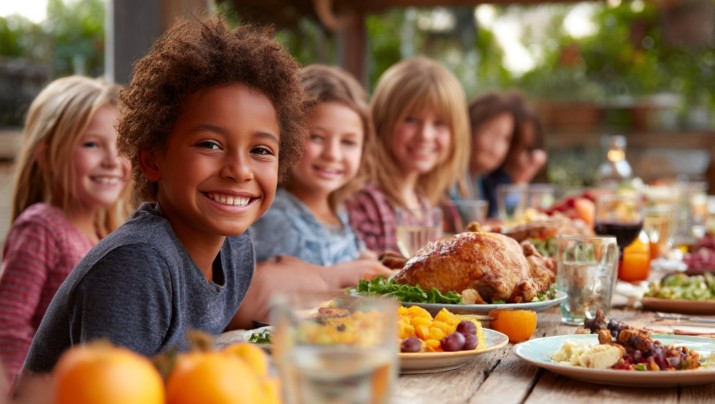
The best children’s table isn’t perfectly set plates, but a space where everyone can take what they want without bumping elbows. I often abandon classic serving. It’s better to put everything in the center so children can approach and take — this way there’s less chance something will spill or fall. Moreover, in an atmosphere of choice, children feel more grown-up.
In my practice, there was a case where too tightly arranged plates led to constant “accidents” — drinks were spilled, several dishes fell. Since then, I leave more space, divide food into several smaller plates, and pour drinks into small glasses so that in case of anything, there isn’t a big mess. And don’t forget about napkins — they save in all situations.
Tip: Divide food into several portioned plates and arrange them on the table. This way all children can reach the food, and there won’t be a crush.
Common Holiday Mistakes: How to Avoid Them
The most common mistake is making the menu too complicated. It seems that if you cook a lot and varied, everyone will be delighted. In reality, it just adds hassle. Another trap is trying to please every guest. It’s much more important to create a simple, understandable atmosphere. Children often don’t even notice if a dish was on the table or not.
One of the biggest mistakes I’ve seen is when the host tries to control everything. As a result, they don’t rest but just run between the stove and the table. Sometimes it’s better to let go of the situation and accept that something might not go as planned. It’s part of the celebration. Another detail is forgetting about special diets or allergies. This can spoil the mood not only for one child but for the whole party.
Sometimes we overestimate children’s appetite. It seems that they need to be fed to the full, but in reality, most leave their plates half-full. It’s not a big deal. It’s better to make less, but with love.
Practical Life Hacks for a Calm Celebration
Simplicity is your best friend. Even if the table seems modest, children will appreciate the ease and the ability to choose. It always helped me to prepare part of the menu the day before. Some dishes can be put in containers and just laid out before the guests arrive. Another tip is to prepare a few spare napkins and towels. They always come in handy.
I love involving children in serving. They happily lay out napkins, decorate the table, sometimes even help cut something simple. This not only makes my work easier but also makes the celebration even more “theirs”.
Another secret is not to be afraid to delegate. Sometimes a neighbor or friend will happily help set the table or bring something of their own. The main thing is not to turn the celebration into a “who’s better” contest. The atmosphere of coziness and sincerity is more important than any perfect menu.
Tip: Think not only about the dishes but also about the details: plates, cups, napkins with favorite characters. They create the mood just as well as food.
How to Maintain the Atmosphere When Things Go ‘Wrong’
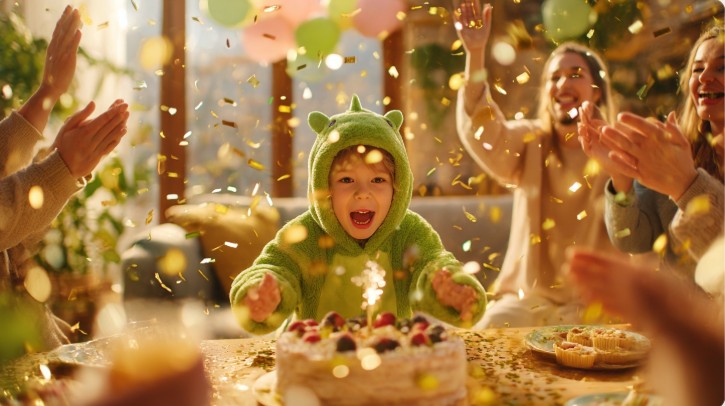
I’ve had parties where something burned, something spilled, and one of the kids suddenly refused to eat. It’s normal. The main thing is not to lose lightness. Children always pick up the host’s mood. If you’re calm, they won’t pay attention to minor mishaps.
Once, at a party, my fridge broke. Some of the dishes didn’t survive. Instead of getting upset, I brought out what was left and suggested the children arrange the food on the plates themselves. It turned into a game, and everyone forgot about the failure. Since then, I know: atmosphere is more important than perfection.
When something doesn’t go as planned, use humor. Children appreciate sincerity. If something falls — pick it up together, if something doesn’t work out — come up with a new game. A celebration is not about control, but about shared joy.
Remember Yourself: How Not to Lose the Sense of Celebration
Very often, hosts get so immersed in preparation that they don’t even notice how the celebration goes by. I always set aside a few moments for myself that I definitely want to remember: the first smiles of the children, the moment I managed to sit down and have tea with friends, a quick photo for memory. Don’t be afraid to take breaks. The celebration is for you too.
My favorite trick is when everything is ready, just stop for a few minutes, take a deep breath, and watch the children rejoice. That’s the main thing. Food is just a reason to gather together. And the festive atmosphere is born from your mood.
Tip: Don’t forget to celebrate with the guests. Your calmness and smile are the best decoration for any table.
❓ Popular Questions About Children’s Birthday Menu
What is the best menu for a children’s birthday?
The menu should be chosen based on the children’s age. For toddlers, simple dishes with a mild taste are suitable,
for school kids — a variety of snacks and hot dishes, and for teens — a party format with snacks
and street food. The best solution is a menu adapted to the specific age group.
What must be on a children’s festive table?
The children’s festive table must have hot dishes, light snacks,
fruits, desserts, and drinks. It’s important that the food is convenient for children
and doesn’t require complex utensils.
Is a separate sweet table necessary for children?
Yes, a sweet table or candy bar is one of the most beloved parts of a children’s party.
It creates a birthday atmosphere and becomes the center of attention.
It’s better to place it separately from the main table.
How many dishes should be in a children’s menu?
Ideally — 5–7 items for toddlers and 7–10 items for school kids and teens.
It’s important not to overload the table but to focus on favorite and understandable dishes.
What dishes are not recommended for a children’s menu?
For children, spicy, too fatty dishes are not recommended,
products with alcohol, coffee, a large number of spices
and small nuts for toddlers.
Can children’s and adult menus be combined?
Yes, but it’s better to make separate zones: a children’s table and an adult one.
It’s convenient for guests and allows everyone to feel comfortable.
What drinks are best served to children at a party?
The best options are water, homemade lemonades, compotes, and juices.
Carbonated drinks are better limited or served in minimal quantities.
Should allergies be considered in a children’s menu?
Yes, it’s very important. Before the party, it’s worth checking with the parents of the guests
about possible allergies and adjusting the menu if necessary.
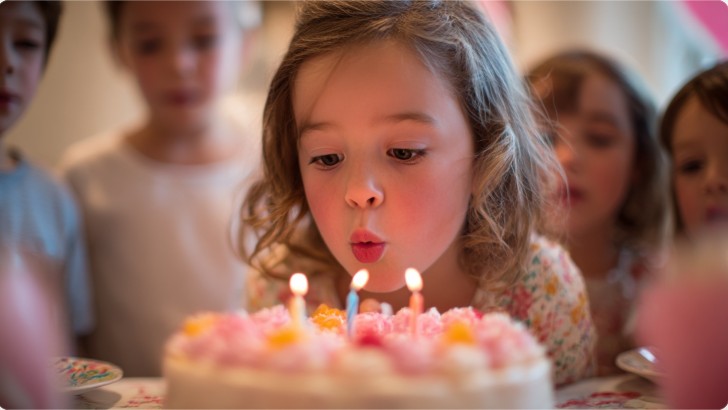
Sometimes the best memories aren’t about perfect dishes, but about shared laughter, spilled juice, and the moment when everyone stops together to blow out the candles on the cake. Don’t chase perfection. A children’s party is about lightness, sincerity, and warmth. And balance is when everyone is happy, and no one is left hungry or tired. What are your secrets to calm celebrations? Share in the comments — it’s always interesting to hear other people’s stories and tips.