The History of Borscht: From Traditions to Modern Interpretations

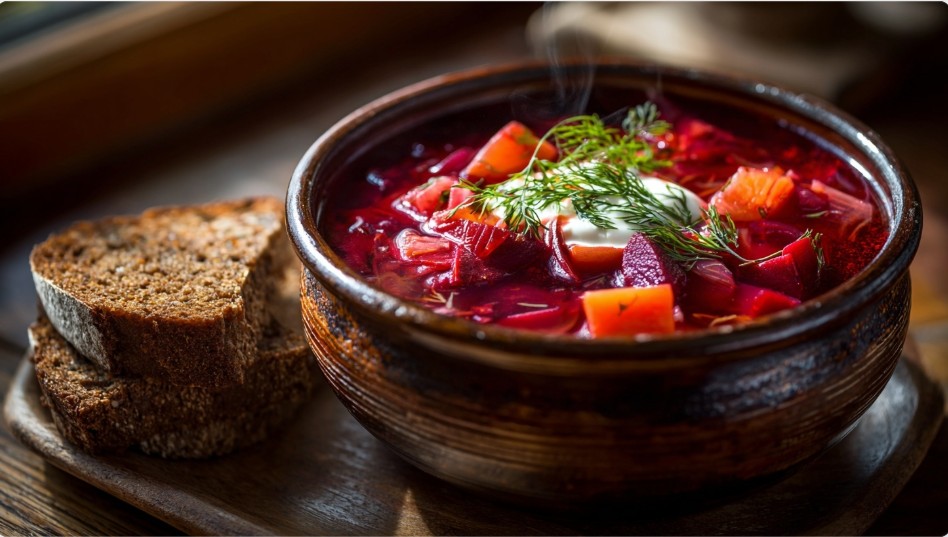
Imagine an evening in a cozy Ukrainian house — a large grandfather sharing memories, a grandmother with a smile pouring hot borscht with pampushky into a bowl, and children eagerly awaiting the first spoonful. This moment is familiar to many of us because borscht is not just a dish; it’s a part of the soul, national identity, and the taste of home. No matter how many years pass, borscht always united generations at the table, evoking warm memories and inspiring new culinary feats.
But what do we really know about this red soup? Why has borscht become a symbol of Ukrainian cuisine, and how did it transform from a simple dish for a rural family into a polyphonic gastronomic phenomenon? Often, when trying to recreate borscht at home, we encounter difficulties: the taste isn’t right, the color isn’t pleasing, or the ingredients seem too complex or unnecessary.
Deciding to delve into this, I’ll show you how borscht lives not only in history but also in our modern kitchens, how to preserve its essence while giving free rein to creativity. I’ll talk about the main principles of preparation, typical mistakes, and, of course, the secrets that will help make your borscht a true masterpiece — one that gathers friends and family around the table, just like many generations before us.
🍳 Recipes You Will Love:
What is Borscht and Why Has It Become a Symbol of Ukrainian Cuisine
Borscht is not just beet soup. It’s a complex culinary system where each ingredient carries its own history and function. Imagine borscht as a small kitchen-theater stage, where each hero has their role and importance. That’s why it’s forbidden to ‘shuffle’ ingredients or ignore basic principles.
Although borscht is spoken of as a national dish of Ukraine, its roots go much deeper, and it has many regional variations. This doesn’t make it any less Ukrainian; on the contrary, it becomes richer and more diverse in sound. This dish lives in every home in its own way, but there are things that unite all recipes: beets, garlic, cabbage, meat broth, tomato tang, and, of course, garlic pampushky.
Why has borscht become a symbol? Firstly, it is a concentrate of Ukrainian life: it reflects seasonality, product availability, the hostess’s generosity, and love for the family. Secondly, borscht was often on the festive table, meaning it’s part of traditions and culture. Thirdly, borscht is a universal platform for experiments, where simplicity and complexity, traditions and modernity can be combined.
The Cultural Context of Borscht
In popular culture, borscht is not just food but a symbol of hospitality. It brings people together, inspires communication, and unites different generations. I often recall how my grandmother used to say in childhood: ‘Borscht without pampushky is like a holiday without guests.’ This simplicity and depth are the keys to understanding why borscht has become so popular and recognizable.
Regional Features
In Ukraine, each region has its own version of borscht: in the western regions, mushrooms are added, in Poltava — more meat, in Chernihiv — an original sauce from beet greens. These differences do not contradict but complement the overall picture, making borscht lively and interesting even today.
The Basics of Borscht Preparation: From Choosing Ingredients to the Right Cooking Process
Before taking up the pot, it’s worth understanding the foundation of the dish. I often say: borscht begins not even on the stove but at the market, where the products are chosen. It is from them that the true taste of your dish depends.
First of all, the beet. It is the heart of borscht, but its quality should not be underestimated. Sweet and firm beets will give a beautiful color and a light natural tang. If the beet is old or spoiled, the borscht will turn out dull and tasteless. Similarly with meat: fresh beef on the bone or pork ribs are best for the broth. Fat and bones will give richness and aroma.
Cabbage is another important element. Juicy but not overcooked, it adds texture and a light freshness. When choosing cabbage, I prefer medium-sized heads — they are more tender and not bitter.
Water and Broth
I often notice that many stop at the simple ‘pour water and boil.’ But the quality of the water and the right cooking time is half the battle. It’s better to use filtered or spring water. I cook the broth over a slow fire so that it has time to give all the depth of taste, doesn’t become cloudy, and doesn’t flatten.
How to Properly Cook Borscht: Step-by-Step Tips from a Chef’s Experience
To make borscht tasty and beautiful, you need not just a recipe but a system. Here are a few rules I’ve built over the years that save from disappointments.
- Sautéing vegetables separately: don’t throw beets, carrots, and onions directly into the pot with broth. Sauté them in a pan with a little oil — this reveals the taste and aroma.
- The order of adding ingredients: first, the meat is cooked, then cabbage is added, and only then sautéed vegetables. This way, borscht acquires the right texture and flavor depth.
- Acidifying the borscht: it’s important not to overdo it. For this, I use fresh tomatoes or tomato paste with a little vinegar or lemon juice. The tang should be soft and balanced.
- Cooking time: don’t rush. Borscht is cooked over slow fire for at least an hour, ideally one and a half. During this time, all flavors harmoniously mix.
- Adding greens: I throw greens at the end so they retain freshness and aroma.
- The dish’s rest: borscht tastes best on the second day when it ‘matures’ and becomes rich.
- Serving: with pampushky or black bread and garlic sauce — a classic that shouldn’t be broken.
Personally, I always pay attention to the smell during cooking — it hints if everything is going right. If I feel a ‘flat’ smell, it means more vegetables or a little acid is needed.
Common Mistakes in Borscht Preparation and How to Avoid Them
Borscht is not only about ingredients but also about the process. Mistakes at every step can spoil even the best set of products. Here’s what often happens:
- Overcooking vegetables: beets and cabbage become too soft and lose texture. The solution is to add vegetables in turn and not overcook them.
- Insufficient sautéing of vegetables: if onions and carrots are not sautéed, borscht comes out without smell and taste. The advice is not to skimp on time for the pan.
- Excessive acidity: many throw a lot of vinegar or lemon juice, and the borscht becomes ‘sour,’ even bitter. It’s better to add acid gradually and taste.
- Using old beets: they don’t give the necessary sweetness and color. Choose fresh, firm beets.
- Pouring cold water: this slows down the cooking process and the dissolution of flavors. I always recommend warm water and slow fire.
If a mistake still happens, don’t panic — for example, too sour borscht can be ‘smoothed’ by adding a little sugar or cream, and overcooked vegetables can be served with crispy bread to balance textures.
Life Hacks and Secrets to Make Your Borscht Special
Over the years of practice, I’ve accumulated a few tricks that help borscht become a true star of the table:
- Add beet juice at the end: it enhances color and taste without overcooking the beet.
- Use smoked meat or lard: this adds depth and aroma that cannot be replicated otherwise.
- Cook vegetables separately for different textures: then the borscht won’t be monotonous and ‘fall apart.’
- Sauté garlic separately: and add it to the borscht in ready form — the aroma becomes more intense.
- Add a little beans or legumes: this makes the borscht more filling and interesting.
- Don’t forget about garlic and greens when serving: this makes the taste fresher and livelier.
- Let the borscht rest overnight: like many other dishes, borscht becomes tastier when it ‘matures.’
One of my favorite techniques is to add a little beet kvass or homemade tomato sauce without sugar. They add natural tang and a lively aroma that cannot be bought in a store.
Advanced Nuances: Regional Variations and Modern Experiments with Borscht
If you’ve already mastered the basic recipe, you can dive deeper and look at borscht as a field for creativity. After all, it is thanks to experiments that it has remained relevant for centuries.
In western Ukraine, mushrooms are often added, enriching the borscht with an earthy taste. In central regions, they like to add more meat, sometimes even smoked ribs, to give the broth a special richness. In the south — borscht with the addition of pepper and even eggplants.
Modern chefs and home cooks are not afraid to introduce new ingredients: for example, replacing part of the cabbage with kohlrabi, adding sweet pepper, or even apples for unexpected tang. Some make cold borscht with kefir, which is perfect for refreshing in the heat.
Another trend is vegan borscht, without meat, where the focus is on vegetables and mushrooms, as well as the right combination of spices and plant-based broths.
For those who want to delve deeper, I recommend trying to make borscht with the addition of fermented vegetables — this gives a unique taste and improves the dish’s digestibility.
Questions and Answers About Borscht
Can beets be replaced with something else?
No, beets are the heart of borscht, and without them, it’s impossible to get that classic taste and color. Of course, there are variations without beets, but that’s no longer borscht in our understanding.
How to keep the bright red color of borscht after cooking?
To keep borscht bright red, beets should be added after other vegetables are almost ready, or sauté beets separately and add them with tomato paste. Adding acid at the end of cooking — vinegar or lemon juice — also helps to fix the color.
Why does my borscht come out cloudy?
Cloudiness often arises from too intense boiling or improperly prepared broth. To avoid this, cook borscht over slow fire, don’t stir it too much, and skim off the foam during meat cooking.