

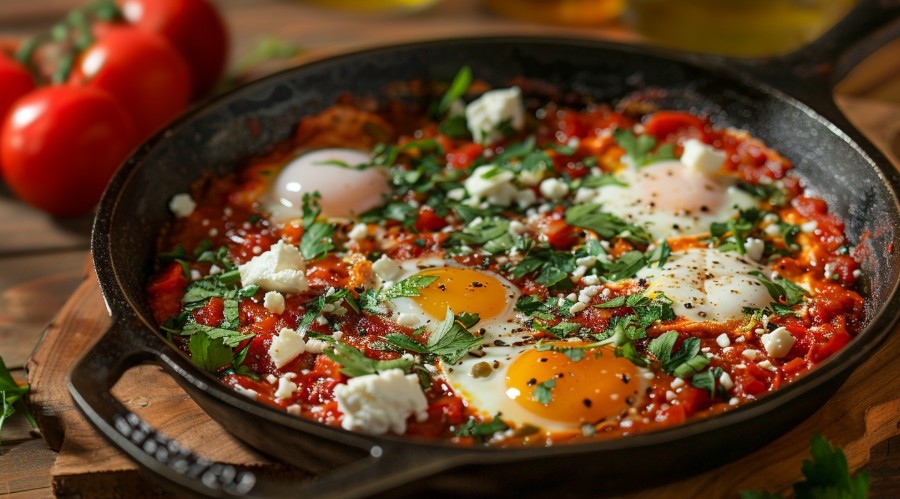
Spring green shakshuka with herbs and feta isn’t the kind of breakfast you forget five minutes later. It’s bright, a little tangy, and feels like someone opened a window in the kitchen. I first had a version of shakshuka while traveling in Israel (where it’s basically a breakfast icon), and ever since then I’ve loved playing around with it at home. This green-leaning, herb-packed take is my go-to when I want something fresh but still properly satisfying. Bring it to the table with good bread and you’ll see what I mean.
In this recipe, you’ll learn
- Why you’ll love this recipe
- Tips before you start
- What to look for when choosing ingredients
- Secrets to perfect spring green shakshuka with herbs and feta
- How to serve spring green shakshuka with herbs and feta
- Nutritional benefits
- Recipe variations
- Questions & answers
- Common mistakes
Why you’ll love this spring green shakshuka with herbs and feta
Light enough for a spring breakfast, but still hearty thanks to the eggs and feta. The herbs do most of the heavy lifting here—fresh, fragrant, and a little peppery—while feta brings that creamy, salty punch. And the best part: it comes together fast, even on a busy morning.
- loads of fresh herbs and greens
- creamy, tangy feta in every bite
- quick, no-fuss cooking
- made for breakfast (or brunch, or breakfast-for-dinner)

Spring Green Shakshuka with Fresh Herbs and Feta
Ingredients
- 4 pcs Eggs As fresh as possible
- 400 g Tomatoes Ripe and juicy
- 150 g Feta Ideally made with simple, natural ingredients
- 50 g Fresh herbs (parsley, coriander/cilantro) Fresh herbs for aroma
- 2 tbsp Olive oil For frying
- 1 pc Onion Medium
- 2 tsp Garlic Fresh, minced
Method
 Dice the onion and sauté it in olive oil in a deep frying pan over medium heat. Cook until it turns translucent and lightly golden, about 5–7 minutes.
- Add the minced garlic and chopped tomatoes to the pan. Simmer together for 10–15 minutes, until the tomatoes soften and release their juices.
- Add the chopped herbs (parsley and coriander/cilantro) to the tomato mixture. Cook for another 2–3 minutes so everything turns fragrant.
- Carefully crack the eggs straight into the pan over the vegetables. Cook on low heat until the whites are set but the yolks are still runny, about 5–7 minutes.
- Sprinkle the feta over the top, distributing it evenly. Let it sit on the heat for 2–3 minutes so the feta softens and starts to melt.
- Take the shakshuka off the heat and let it rest for 2–3 minutes. Finish with extra fresh herbs before serving.




Notes
Private Notes
Tried this recipe?
Let us know how it was!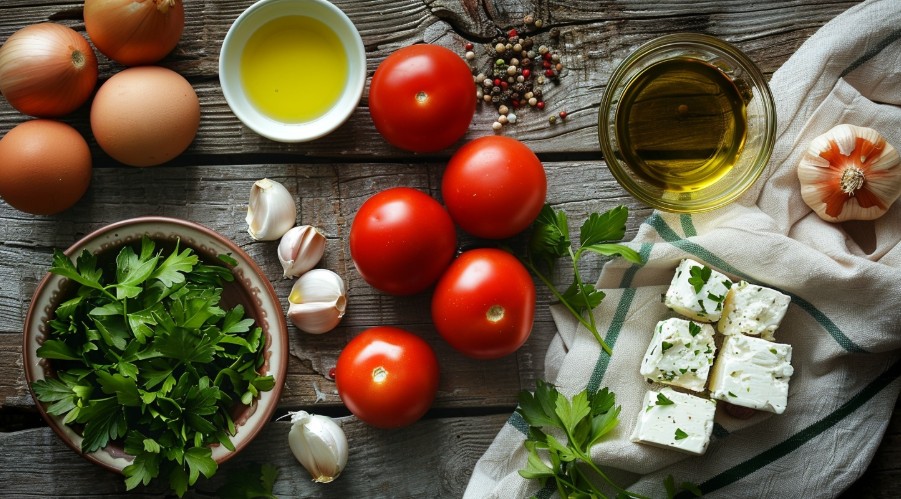
Tips before making spring green shakshuka with herbs and feta
A little prep makes this feel effortless. Chop everything first (seriously—this cooks quickly), and pay attention to freshness, especially with the herbs. Also, keep the heat under control: shakshuka is at its best when the eggs are tender, not rubbery.
- use only fresh veg and herbs if you can
- prep (and measure) everything before the pan goes on
- watch your heat—medium is your friend
- add seasoning gradually and taste as you go
What to look for when choosing ingredients for spring green shakshuka with herbs and feta
The ingredient list is short, so quality really shows. Go for ripe tomatoes, proper feta (not the bland, overly dry kind), and herbs that actually smell like something. The fresher everything is, the more “spring” this tastes.
Eggs
Choose the freshest eggs you can—they’re the centerpiece.
Tomatoes
Ripe and juicy is the goal. If they’re watery and pale, the sauce will taste flat.
Feta
Look for feta made with simple ingredients for the best tang and creaminess.
Fresh herbs
Fresh parsley and coriander (cilantro) make the whole pan smell amazing.
Secrets to perfect spring green shakshuka with herbs and feta
A few small moves make a big difference. Let the onions actually soften and sweeten, season early so the base tastes like something, and don’t rush the eggs. The goal is set whites with jammy yolks—pull it off the heat a touch sooner than you think.
- add spices early so they bloom in the oil
- use a heavy-based pan for steadier heat
- stick to medium heat (then low for the eggs)
- don’t overcook the eggs—tender is the whole point
How to serve spring green shakshuka with herbs and feta
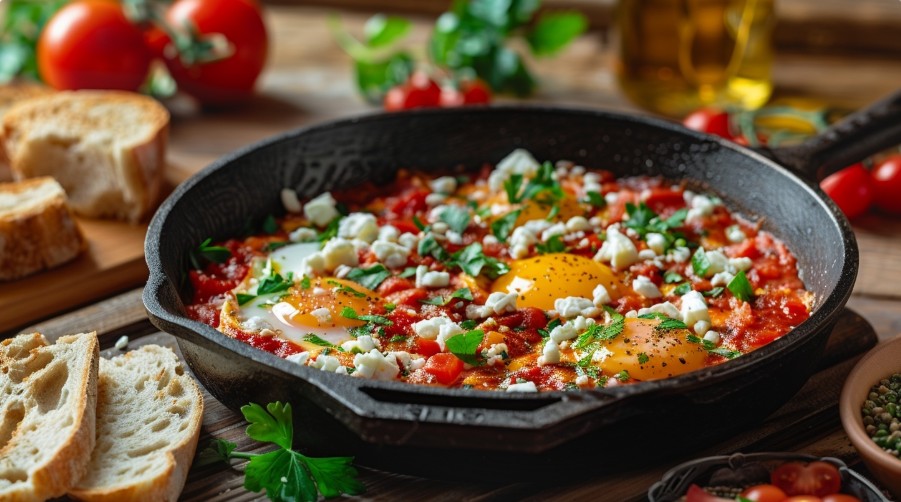
Serve it straight from the pan while it’s still bubbling a little. Bread is non-negotiable in my house—something to scoop up the sauce and runny yolk. Warm flatbread works too, and a spoonful of Greek yogurt on the side makes it extra creamy.
- with fresh crusty bread
- with warm flatbread
- with Greek yogurt
- with olives
Nutritional benefits of spring green shakshuka with herbs and feta
It tastes comforting, but it’s also pretty balanced. Eggs bring protein, tomatoes and herbs add vitamins and minerals, and feta adds calcium (plus that salty bite that makes the whole dish pop).
- high in protein
- packed with vitamins from fresh produce
- a source of calcium
- supports heart health (especially with olive oil and plenty of herbs)
Recipe variations for spring green shakshuka with herbs and feta
This is the kind of recipe that loves a little improvisation. Swap herbs, add extra veg, or change the cheese depending on what’s in the fridge. A handful of greens or mushrooms turns it into a completely different breakfast.
- shakshuka with spinach
- shakshuka with mushrooms
- shakshuka with avocado (served on top)
- shakshuka with green beans
Questions & answers
A few quick answers to the things people usually ask before they crack the first egg.
Can I use frozen vegetables?
It’s better to use fresh vegetables here—frozen can water the sauce down and the flavour won’t be as bright.
How long does shakshuka take to cook?
Plan on about 30–40 minutes total, including simmering the tomatoes and setting the eggs.
Can I make shakshuka without feta?
Yes. Swap in another cheese you like, or simply leave it out.
Common mistakes when making spring green shakshuka with herbs and feta
Most shakshuka mishaps come down to heat and timing. Overcooked eggs go firm and sad, and a sauce that hasn’t simmered long enough can taste thin. Keep an eye on the pan and you’ll be fine.
Why did my eggs turn out tough?
They were likely overcooked—keep a close eye on the timing and take the pan off the heat a bit earlier.
What if my shakshuka is too watery?
Let it simmer a little longer to reduce, or use meatier, riper tomatoes next time.
Why doesn’t it smell/taste aromatic?
Fresh herbs and fresh spices matter here—older ones can taste dull. Also, season in layers as you cook.





Responses