

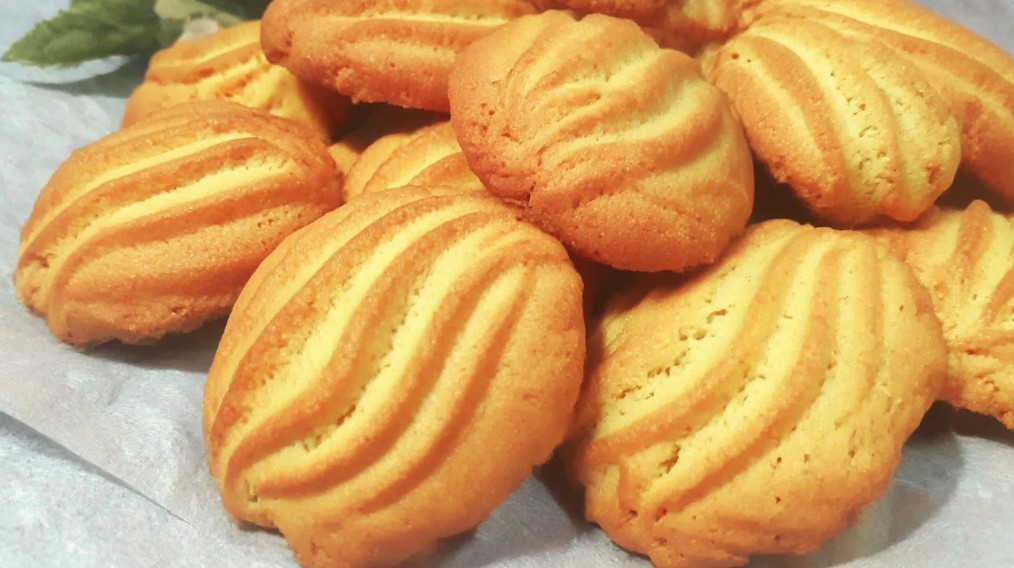
Meat-grinder cookies aren’t about speed. The shape comes from a properly mixed dough—not some fancy attachment. When the dough is soft but still has a bit of “tension,” the pattern comes out crisp and it won’t slump in the oven.
Lard acts like a stabiliser in this dough. It keeps the crumb tender without turning it sandy, and it doesn’t “weigh down” the texture the way butter sometimes can when it gets too warm. That’s exactly why the dough feeds through the grinder smoothly, without tearing.
The baking powder (or baking soda) isn’t there to make these puff up. It simply takes the edge off the density and helps the cookies stay soft after baking. Keep the amount sensible and the pattern will look the same on the tray as it does coming out of the grinder.
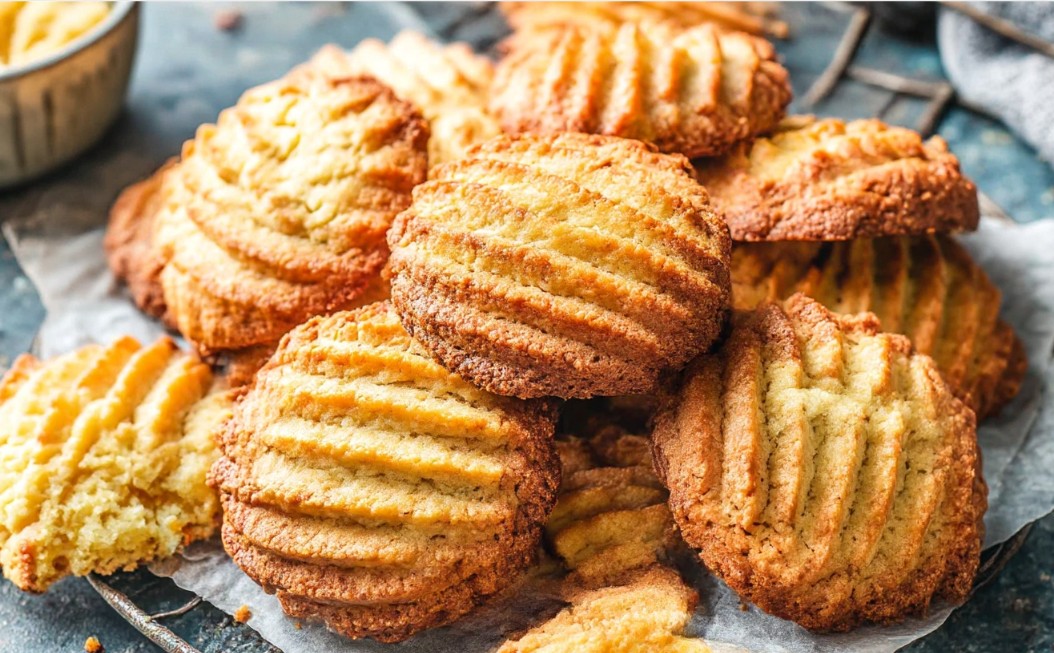
Homemade Vanilla Lard Cookies Shaped Through a Meat Grinder
Ingredients
- 200 г lard For a tender cookie texture.
- 100 г sugar Can be swapped for brown sugar.
- 1 шт. egg Helps bind everything together.
- 400 г flour Plain wheat flour works best.
- 1 ч.л. baking powder Takes the edge off the density.
- 1 ч.л. vanilla sugar For aroma.
Method
- Take the lard out of the fridge ahead of time so it’s cold but workable. Cut into pieces and put into a bowl. Add the sugar and start rubbing it in with a spatula, pressing the mixture against the sides of the bowl. Don’t rush. You want it smooth and matte. If it turns glossy, it’s getting too warm—pause for a minute.
- Add the egg (or eggs, if scaling up) and mix briefly each time to combine with the fat base. Don’t whip. The texture should stay dense, not airy. Add the vanilla sugar and give it one quick mix.
- In a separate bowl, mix the flour with the baking powder (or baking soda) and a pinch of salt. Add the dry mix in portions. After each addition, bring the dough together with short movements. Stop as soon as the dough is soft but not sticky and holds its shape well.
- Gather the dough into a ball, cover, and chill for 30–40 minutes. This firms it up and helps it come out of the meat grinder cleanly.
- Set up a meat grinder with a medium plate. Work without forcing it. Feed the dough steadily—don’t push it through with your hands. The strands should come out defined, without breaks. Cut to length right away and place on a baking tray lined with parchment paper.
- Bake in a preheated oven at 170 °C for about 15–18 minutes. Watch the bottoms: they should look dry and lightly golden. The tops will stay pale, and that’s normal.
- Let the cookies sit on the tray for a few minutes, then move to a wire rack and cool completely.
Notes
- The dough for a meat grinder should be cool.
- If the pattern spreads, the dough is warm or too soft.
- If it’s hard to crank, you’ve added too much flour.
- A medium plate gives the sharpest pattern.
- Don’t pull the dough with your hands—let it come out on its own.
- Parchment paper matters more than greasing the tray.
- A pale top is the expected result.
- Cooling completely evens out the texture.
Private Notes
Tried this recipe?
Let us know how it was!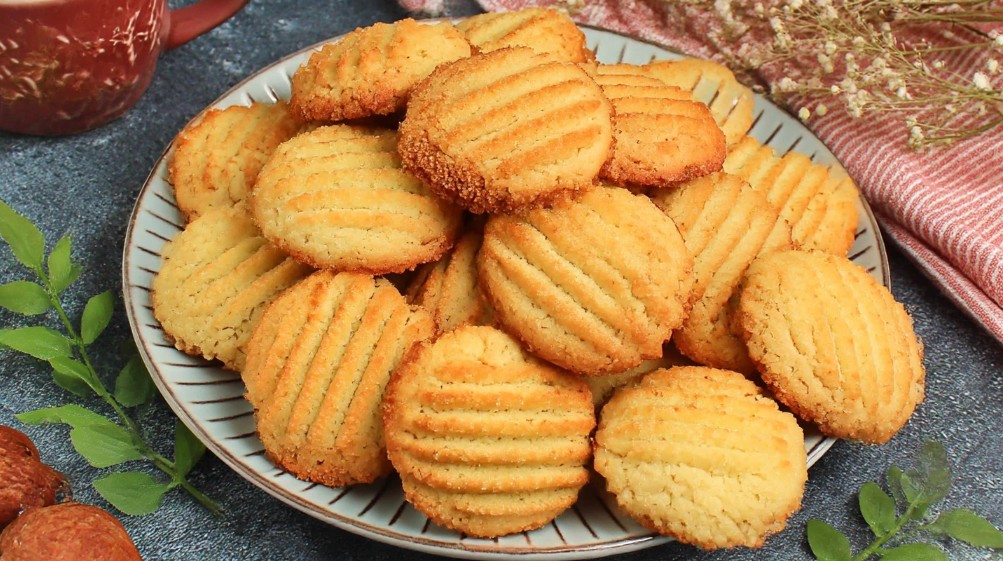
Ingredients that affect the pattern and texture
Lard.
Lard should be neutral in flavour and pliable. Too soft and the pattern smears. Too firm and the dough tears in the grinder. The sweet spot: cold, but easy to cut with a knife. I always check it with my fingers first—it shouldn’t melt straight away.
Flour.
Flour decides whether the dough holds its shape after it comes out of the grinder. Too little and the pattern “settles.” Too much and it cranks heavily and can tear. Add it in stages and watch how the dough behaves rather than chasing an exact number.
Eggs.
Eggs bind everything and help the dough pass through the plate evenly. Cold eggs can make the mixture split and look patchy. Room temperature is non-negotiable here. They’re not for fluffiness—they’re for stability.
Baking powder or baking soda.
Baking powder is gentler and more predictable. Baking soda gives a slightly different bite, but it works too. The key is not overdoing it—you’re easing the density, not trying to “lift” the cookies.
Vanilla.
Vanilla is the base note. It shouldn’t be sharp. Better a little less, but clean and pleasant. In this recipe the aroma doesn’t try to hide the lard—it sits alongside it.
This is one of the most reliable ways I know to make homemade cookies. The moment you start feeding the dough through the grinder, you can tell if you nailed the mix. If it moves smoothly, you’re good. If it tears or smears, it’s not the machine’s fault.
I also like that there’s no guessing thickness. The pattern forms on its own, and the cookies come out consistent batch after batch. Handy when you’re baking for a proper cookie tin, not a one-off experiment.
The texture is pleasantly firm but not dry. They hold up in your hand, don’t crumble for no reason, and they don’t turn rock-hard the next day. For this style, that’s exactly what I’m after.



Responses