Cooking Asian Food at Home: Where to Start

There’s a moment I see over and over: someone walks into an Asian grocery store (or opens a delivery app), stares at the wall of sauces and noodles… and their brain just goes blank. It all looks familiar (rice, soy sauce, ginger), but it doesn’t click into an actual dinner. And there’s that very real fear of buying “the wrong thing” and then keeping a jar of mysterious paste in the fridge for the next three years.
Cooking Asian food at home often feels like either magic or a sport for hardcore fans. Some people get stuck chasing “authenticity” and drown in details. Others go the opposite direction, make “something kind of similar,” and end up disappointed because it’s salty, flat, or smells… off. The annoying part is that it’s usually not about talent. It’s about the starting point. You just began in the wrong place.
What helps me is thinking of Asia not as one cuisine, but as a whole continent of approaches: how people build flavor, how they treat ingredients, how food lives at home and out on the street. Once you grab those principles, cooking at home gets easier. You’re not “copying a dish” — you’re cooking in an Asian style with your own hands, your own fridge, and a lot less stress.
And yes, Asian home cooking isn’t about stocking 40 jars and memorizing every sauce name. It’s a few sturdy pillars: flavor balance, the right “building blocks,” respect for texture, and a little discipline with prep. Let’s start there.
Asian cuisine isn’t one cuisine: how not to get lost in the differences
When people say “Asian cuisine,” they can mean totally different things. For one person it’s sushi and soy sauce. For another it’s wok noodles with vegetables. For someone else it’s a spicy coconut soup. The key is not trying to find the one “correct” picture. Asia is huge, and even neighboring countries can eat very differently — not better or worse, just different.
I like explaining it with a very everyday example. Back home, borscht can be “like Mom makes it,” “like Grandma makes it,” or “like the neighbor’s because she uses more beet.” All three are still borscht — just different habits. Same idea here: in one place the sour note comes from lime and fish sauce, in another it’s vinegar and soy, and somewhere else it’s fermentation and time.
Two lenses that save beginners
First: geography. Very roughly (very), you can think like this: East Asia often leans on soy, rice, noodles, broths, cleaner flavors, and a lighter kind of saltiness. Southeast Asia leans on herbs, lime, heat, coconut, fish sauce, and those punchy contrasts of salty–sour–sweet. South Asia leans on spices, longer braises, and layered aromatic blends. It’s not a rule — it’s a compass.
Second: the everyday table. In many Asian cultures, food isn’t “one main dish on a plate.” It’s a set of elements on the table: rice/noodles + something protein + vegetables + a sauce/seasoning + something sour/spicy on the side. You build your own balance as you eat. It’s a very home-friendly way to serve dinner — it takes the pressure off having to make one perfect, all-in-one dish.
A tiny story from my kitchen: I once tried to recreate a Vietnamese dish “exactly like the restaurant.” It didn’t work, and I was annoyed. Then I simplified: hot rice on its own, quick-seared meat with sauce on its own, a plate of herbs and cucumber on its own, and a little bowl of a sour-spicy dressing. Suddenly it had the same mood. Because I caught the principle of the table, not the exact recipe.
Where that “Asian flavor” starts: balance, not exotic ingredients
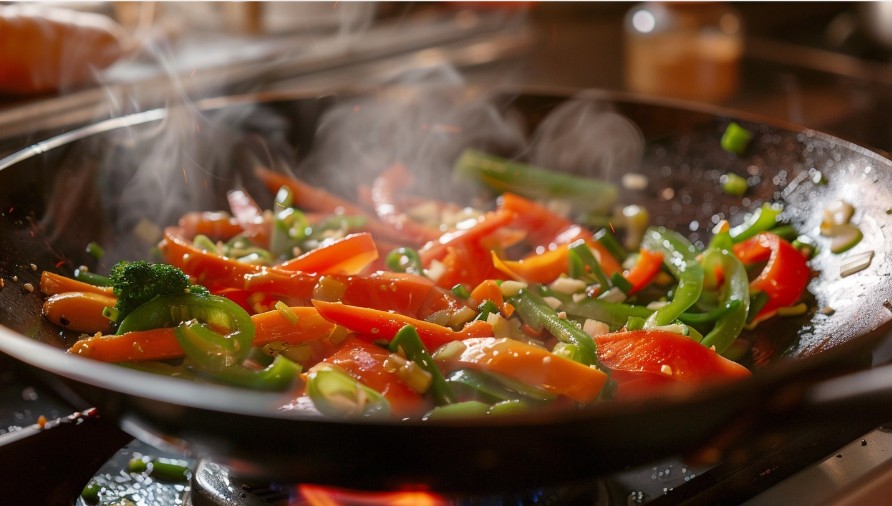
The most common mistake is thinking Asian flavor comes from “weird ingredients.” Most of the time, it comes from balance. That balance can be gentle or loud, but it’s usually intentional.
I keep a simple framework in my head: salt/umami + sweet + sour + heat + aroma. Not every dish has all five in equal volume, but when something’s missing, the whole thing tastes flat.
What it feels like when you taste
Picture a spoonful of sauce you just mixed. First you get saltiness, then sweetness, then a clean sour note, and at the end there’s a warm burn plus aroma (garlic, ginger, sesame, citrus zest, herbs). If you only taste one thing — say, only soy sauce — that’s your signal: you need a counterweight.
Kitchen tip: when a sauce doesn’t come together, don’t automatically add more soy. Pause and ask: what’s missing — sour (vinegar/lime), sweet (sugar/honey), aroma (garlic/ginger/sesame oil), or “body” (a splash of broth/water)?
The traditions behind the balance
This balance didn’t appear out of nowhere. It grew out of everyday life: making rice and noodles more exciting, stretching a small amount of meat to feed a lot of people, preserving food in warm climates (fermentation, pickling), building flavor fast for street food. Sauce was a way to lift a simple base.
Another home memory: I worked in a kitchen where the chef insisted you taste a sauce three times — before heating, during, and at the end. I used to grumble, and then it clicked: acidity cooks off, sweetness gets louder, and salt “pops” as things reduce. Balance isn’t theory. It’s a process.
A basic pantry without going overboard: what to buy without cluttering your kitchen
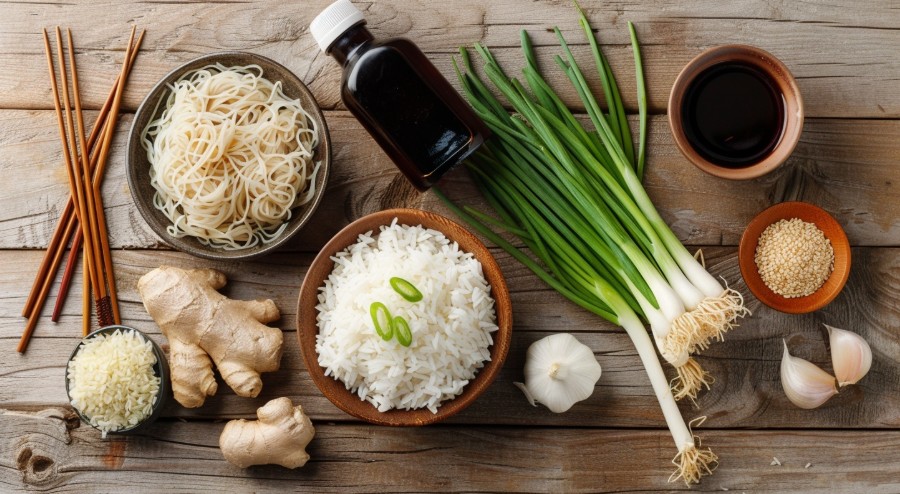
I’m firmly in the “start small” camp. Not because it’s morally superior — because otherwise you’ll drown in jars and stop cooking. Asian home cooking works beautifully when you have a few versatile staples that mix and match.
Here’s what I consider the skeleton. It’s not a one-time shopping list — more like a map of what gradually shows up on your shelf.
Sauces and saltiness
- Soy sauce (ideally one all-purpose bottle — and don’t pour it everywhere by the litre). It brings salt and umami, but it can easily bulldoze other flavors.
- Rice vinegar or another mild vinegar. It gives you a clean sour note without that harsh smell.
- Fish sauce (optional, if you’re okay with it). Used carefully, it doesn’t taste “fishy” — it tastes deep. I add it drop by drop.
Aromatics
- Ginger (fresh, or frozen in chunks). It adds warmth and brightness.
- Garlic — basic, but without it half of these dishes just don’t sing.
- Toasted sesame oil (the dark, fragrant kind) — a finishing touch. Not for frying, for aroma at the end.
Heat and pastes
- Chili in whatever form works for you: flakes, sauce, paste. The point is controllable heat.
- One paste of your choice: miso, gochujang, or a curry paste, for example. Not all at once. Pick one and get to know it.
The base: rice, noodles, seaweed — without collecting everything
- Rice (any kind you genuinely like eating). At the beginning, you don’t need to chase the “perfect” variety.
- Noodles, 1–2 types: wheat or rice. Texture matters more than the label.
- Nori/wakame — optional, if you like that sea note.
Kitchen tip: if you’re not sure you’ll like a paste or sauce, buy the smallest pack. And immediately plan three uses: a marinade, a dressing, and something to stir into soup/broth. That way the jar won’t become a “museum of good intentions.”
One more note about tradition: in many Asian households, the pantry isn’t about dozens of spices — it’s a few fermented basics. They last for ages because you use them a little at a time, like salt and pepper. In other words: “not much, but often.”
Technique matters more than ingredients: heat, knife work, prep
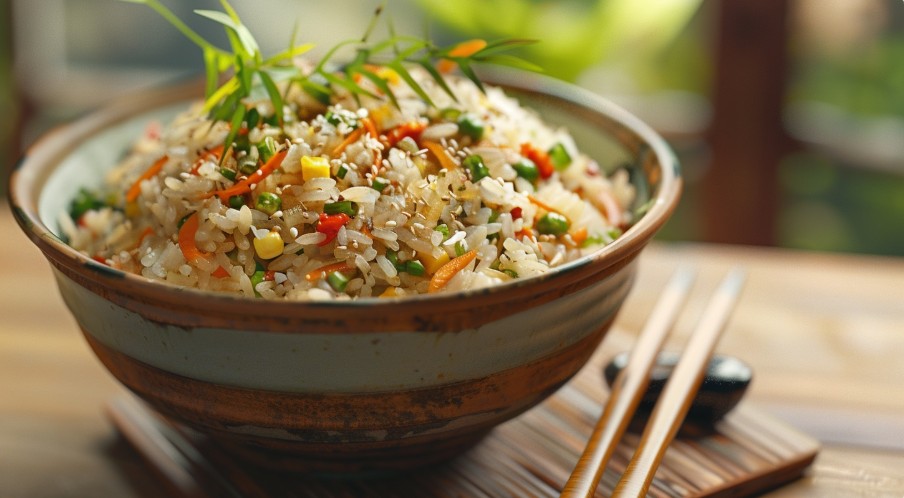
Some things give you that “Asian cooking” feel even with very ordinary ingredients. And it’s not a secret sauce. It’s technique: how you slice, how you heat the pan, when you add the sauce, how much water you leave on your vegetables.
Prep (mise en place) isn’t just for show
A lot of Asian cooking happens fast: high heat, short time. If you start peeling garlic after the oil is already sizzling, you’ll either burn the garlic or pull the pan off the heat and lose temperature.
I keep it simple: slice everything, put it into little bowls, mix the sauce separately. It takes 10 minutes, and then the actual cooking takes 5. Way fewer nerves.
Kitchen tip: it’s almost always better to mix your sauce ahead of time in a cup. On a hot pan you won’t have time to “adjust” — things evaporate in seconds.
Knife work is how you experience the food
Thin slices of meat cook quickly and stay juicy. Vegetables cut to the same thickness finish at the same time. Long strips feel different than cubes. It sounds small, but these small things are exactly what makes it taste “like a café.”
Quick story: I used to make stir-fry at home and couldn’t figure out why it tasted “boiled.” Then I noticed I was slicing carrots into thick half-moons and tossing in broccoli still wet from washing. Water hits the pan and that’s it — you’re steaming instead of searing. I changed the cut and started drying the veg, and the whole dish improved without changing the sauce.
Heat and the pause
High heat doesn’t mean “burn everything.” It means: the pan should be hot, the food should be dry, and your movements should be quick. And also: sometimes you need to stop stirring. Let the surface brown, listen for that light crackle, catch the smell of caramelization — then flip.
- Dry ingredients: pat meat/tofu/vegetables dry with paper towel — less steam, more browning.
- Don’t overcrowd the pan: two batches are better than one soggy pile.
- Sauce goes in at the end: pour it in too early and it boils, “cooking” everything around it.
Rice, noodles, broth: three pillars that make it feel like home
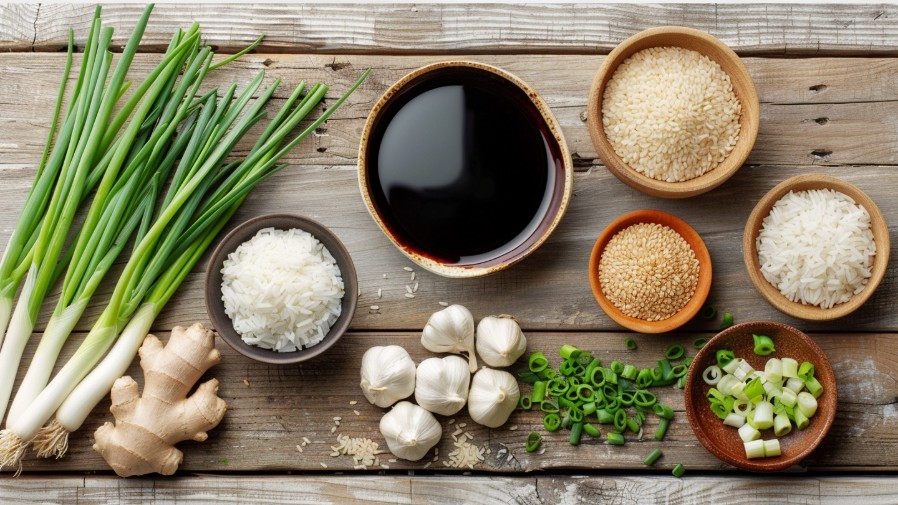
In many Asian cultures, the “base” isn’t a side dish — it’s the center of the table. Rice is bread. Noodles are comfort and quick food. Broth is care. At home you feel it especially: when a pot is quietly breathing on the stove and a bowl of rice is on the table, the kitchen instantly feels alive.
Rice as a ritual
I love how, in many families, rice is daily discipline. Not a heroic project, not a “special occasion” — just stability. That’s where the respect for texture comes from: rice shouldn’t be porridge and shouldn’t be dry grains either. It should be something you’d happily eat even plain.
A tip that saves a lot of people: don’t rush to lift the lid. Let the rice sit for a few minutes after it’s done — it “finishes,” evens out, and smells warmer. Small thing, big difference.
Noodles are about time and water
Noodles love precision. Not because you “have to,” but because the difference between springy and mushy is literally a minute. I always set a timer and save a little cooking water: it helps the sauce cling and turn silky instead of sitting in patches.
Kitchen tip: save 3–4 spoonfuls of noodle water. Add it to the pan with the sauce and it coats instead of sliding off.
Broth isn’t only for soup
In Asian home cooking, broth is like a spare key. It saves you when you need something warm fast: loosen a sauce, perk up vegetables, build a simple noodle bowl. And you don’t have to simmer it for hours. Even a light broth or a carefully made base gives you that sense of depth.
Quick story: I had a stretch where I worked late and came home hungry but exhausted. I kept portions of broth in the freezer. Five minutes — and I had a warm bowl I could build from whatever was around: herbs, an egg, leftover chicken. It’s not “a dish.” It’s taking care of yourself.
How people eat (and why it matters): family-style tables, street food, small plates and big bowls
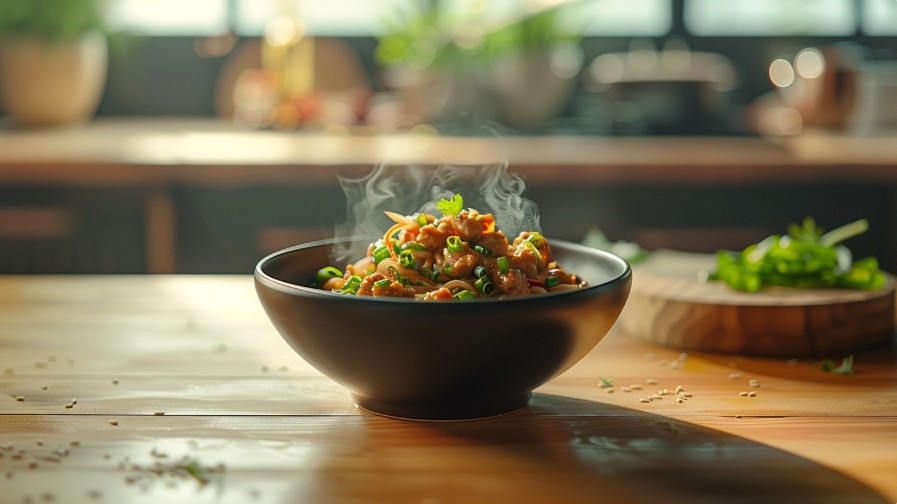
If you want Asian food to feel right at home, it helps to look not only at ingredients, but also at how people actually eat. The format often explains the flavor.
Shared dishes and the “center bowl”
In many places it’s normal to have several dishes on the table and everyone takes a bit of each. That creates a different cooking mindset: dishes are made to complement one another. One is saltier, another is more sour, a third is neutral. Together, it makes sense.
In a lot of Western home cooking, we want one dish to “do it all”: starch, sauce, veg, salad, everything. In an Asian logic, it can be the opposite: simple rice plus one bold topping is better than one complicated tower of food.
Street food as a school of simplicity
Street food isn’t “fast food” in the insulting sense — it’s a way to feed a city. It taught cooking to be quick, concentrated, and clear. One broth, but dialed in. One noodle, but with a precise sauce. One seasoning, but exactly where it belongs.
I’ve noticed that when people start cooking at home with that street-food mindset, they stop overcomplicating. Fewer ingredients, more attention to timing. And weirdly, that makes the flavor feel richer.
Texture as part of culture
Another big difference is how texture is treated. Crunchy next to soft, slippery next to seared, hot next to cool. Some people are wary of that (“what is that texture?”), but in many Asian cuisines it’s a normal, enjoyable game.
If you want to try it without stress, start with one simple contrast: crunchy cucumber or radish next to warm rice and meat/tofu. The whole bowl suddenly feels “assembled.”
Common beginner mistakes — and how to avoid them without heroics
I’ve seen dozens of kitchens and hundreds of attempts at “making something Asian.” The mistakes are almost always the same. Good news: you don’t fix them with talent — you fix them with small habits.
Mistake 1: “I’ll drown it in soy sauce and it’ll be right”
Soy sauce is powerful. If it becomes the main flavor, everything tastes the same. Think of it like salt: a little gives you a base. Then you build with sour, sweet, aroma, and heat.
Mistake 2: Wet vegetables and a cold pan
You want searing, you get stewing. The pan can’t hold temperature, water comes out, and everything turns slippery. Pat dry, preheat, cook in batches — it sounds boring, but it works every time.
Mistake 3: Too many ingredients at once
When a sauce has everything in it, it stops having a personality. For your first few tries, keep it to 4–6 components max. You’ll understand what each one actually does.
Mistake 4: Heat without flavor
Chili isn’t “fire for the sake of fire.” Heat should support everything else. If you just add a lot of hot sauce, it’ll burn but it won’t be delicious. Give heat something to lean on: a little sweet, a little sour, a little fat (for example, a drop of sesame oil).
Mistake 5: Expecting restaurant results without restaurant conditions
Restaurants have different stoves, more oil, more prep, a different pace. At home, aim for your own working version: clean flavor, clear texture, good balance. That’s the power of home cooking.
Kitchen tip: if a dish tastes “not Asian,” the fix is often not a new sauce but a finishing touch — a little acidity (a drop of vinegar/lime) and aroma (a drop of sesame oil or a handful of sliced scallions).
How to start without stress: three paths into Asian home cooking
When people ask me “where do I start,” I always ask back: do you want quick, everyday meals — or do you want a deeper dive? They’re different kinds of fun. Both are valid.
Path 1: “Everyday bowls”
This is the most home-friendly route. Make a base (rice or noodles), add a quick protein (chicken, egg, tofu, fish), add vegetables (fresh or quickly stir-fried), and pull it together with a sauce. The point isn’t “a dish” — it’s a habit: having a structure in your head.
Quick story: I have a friend who hates cooking for long. He started with bowls: rice + egg + cucumber + soy sauce + a drop of vinegar + chili. A month later he bought miso and started playing with broth. Not because he “should,” but because it got interesting.
Path 2: “One sauce, many dinners”
Pick one basic dressing/sauce and learn to control it. Today it goes on vegetables, tomorrow on meat, the day after on noodles. You’ll quickly feel how tiny changes in ratios change the whole personality.
- Want it lighter? Add more sour and a splash of water/broth.
- Want it deeper? Add a drop of fish sauce or a fermented paste (carefully).
- Want it sticky and glossy? Add a little sweet and reduce it over heat.
Path 3: “Themed nights without perfection”
If you’re after the cultural mood, do a “Japanese night” or “Thai night” not by cooking 10 dishes, but by choosing a few details: the bowls/plates, the way you serve, a couple of small add-ons on the table. In a lot of families, that’s how food works — not as a show, but as a ritual.
For example: a warm bowl of broth, rice, something salty-umami, something sour on the side. Suddenly it feels like you didn’t just eat — you stepped into a different logic for a moment.
Kitchen tip: if you’re short on time, make an “add-on table”: sliced cucumber, scallions, something spicy, a wedge of lime/lemon. Even a simple meal becomes more interesting.
Modern Asian home cooking: how to adapt without guilt (and without turning it into a caricature)
I want to say this calmly, because it matters: cooking “in an Asian style” at home with the ingredients you have is normal. Cuisines have always changed. People moved, swapped ingredients, adapted to season and budget. Tradition isn’t a museum — it’s a living habit.
The problem starts when we either dismiss it (“whatever, splash in a sauce and done”), or fall into perfectionism (“if I don’t have the exact vinegar, I’m not allowed”). I prefer a third option: respect + practice.
How to adapt smartly
- Substitutions should keep the function. No lime? Use lemon — it’s still acidity. No specific herb? Use something that brings freshness and aroma.
- Don’t do everything at once. Add one new thing at a time: today rice vinegar, next time miso. That’s learning, not gambling.
- Listen to texture. Even with local vegetables you can build great contrast: crunchy/soft, hot/cool, juicy/seared.
About “authenticity” without fights
I’ve seen people argue about what’s “correct.” And then eat with the same happiness when there’s balance and warmth on the table. Authenticity matters if you’re studying a culture — and that’s a beautiful path. But home cooking has another mission too: feeding people on the days you don’t even know what to put on the table, gathering everyone together, creating rituals.
Quick story: I once cooked for a group with very different “Asia” experiences. One person wanted “like Tokyo,” another “like Bangkok,” and a third simply didn’t like spicy food. We made a simple table: a neutral base and a few sauces/toppings. Everyone was happy because each person built their own bowl. That’s a very home approach to me.
If I had to sum it up: start with principles, not perfection. Learn to taste balance. Get comfortable with heat and prep. Build a small pantry that actually works, not one that just looks pretty. And let yourself move in small steps — that’s how this kind of cooking becomes part of life instead of a one-off project.
I’m curious: what stops you most at the beginning — unfamiliar ingredients, fear of wasting food, or the feeling that “it won’t work at home”? Tell me in the comments and we’ll unpack it like normal people.