Holiday Hosting: Finding the Sweet Spot Between “Delicious” and “Easy to Pull Off”

It happens like this: the birthday is basically tomorrow, your brain is a jumble of ideas, and your phone is full of endless notes titled “what should I cook?” And for some reason it feels like if the table isn’t groaning under the weight of food, the celebration “doesn’t count.” I’ve seen it hundreds of times—at restaurants, in home kitchens, and (yes) in my own life. Most people are exhausted before guests even take their coats off.
The problem isn’t that you “can’t plan.” The problem is that holiday menus are often built for an imaginary picture: everyone must love it, it has to look “proper,” it can’t be embarrassing. And then—overheating, a mountain of dishes, the birthday person/host disappears into the kitchen, and the joy gets lost somewhere between the oven and the sink.
I like a different approach: a menu that supports the mood. Delicious, but not a marathon. Festive-looking, but you’re not living by timers. And the center of it isn’t a list of dishes—it’s people: their habits, tastes, pace, even the way they eat and talk.
Let’s put together a menu that works for you: personal, warm, with that “I’m really welcome here” feeling—and without the familiar post-party “never again.”
Start with the vibe of the evening—not the food
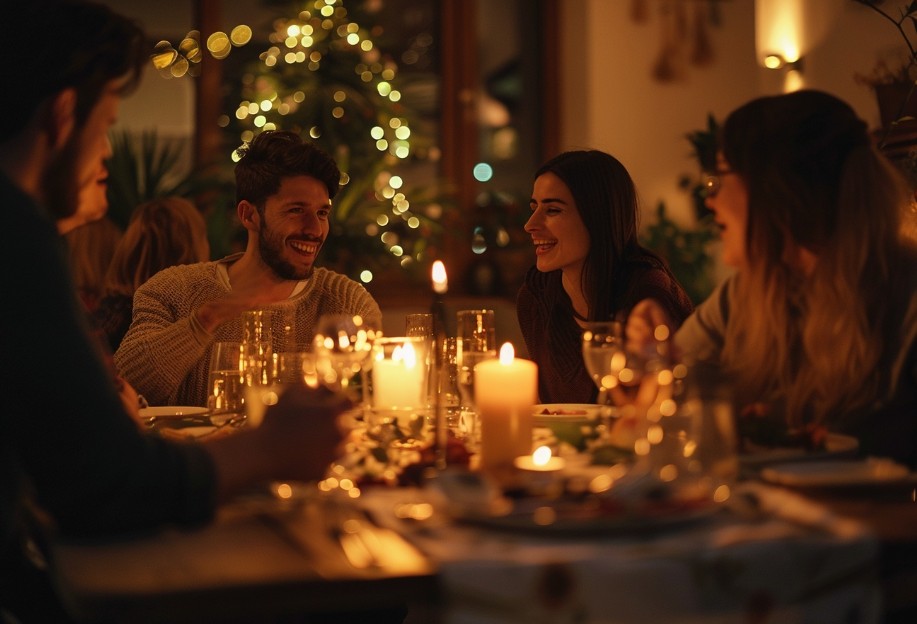
When someone asks me to help with a party menu, I almost always ask a slightly odd question: “What kind of night is it—loud or low-key?” Because that decides everything. Not just the food, but how you move around the kitchen, how often you get up from the table, whether there’s time for toasts, whether everyone drifts into different rooms—or, on the contrary, sticks together in one big laughing pile.
Picture the moment when guests have arrived. What do you want to be doing? Sitting with them and listening to stories? Conducting the whole thing—plating, refilling, hovering? Or do you want everything to be so self-sufficient that you’re basically just topping up drinks and occasionally winking at the birthday person?
Here’s my go-to trick: I grab a sheet of paper (or a note on my phone) and write down three things:
- Pace: slow and chatty, or fast and lively.
- Format: everyone at the table, or people migrating between rooms.
- Your role as host: I want to be with people, or I’m okay “working.”
This isn’t psychology—it’s practical. If the night is lively, you need food that’s easy to grab, easy to finish, easy to clear. If it’s intimate, you can lean into slower food—things that taste even better while you talk.
Quick story: I once helped a friend host a birthday for 12 people in a small apartment. She planned a “serious” sit-down table, but the guests turned out to be the kind who stand in the kitchen laughing while someone slices a lemon. We changed the logic on the fly: ditched anything that needed constant serving and focused on food you can put out and forget. The evening instantly felt lighter—and for the first time in years, she didn’t miss her own toast.
Tip #1: if you can’t picture the vibe, think back to the last celebration you genuinely enjoyed. Not what you ate—how you felt. Calm? Free? Lots of laughter? That’s your direction.
Personalization: build a menu for people, not for “a special occasion”
“Personalization” sounds trendy, but in the kitchen it’s very simple: don’t make guests squeeze themselves into your menu. Do the opposite—set the table so people recognize themselves in it. That’s the real joy: someone thought of you, without making a big show of it.
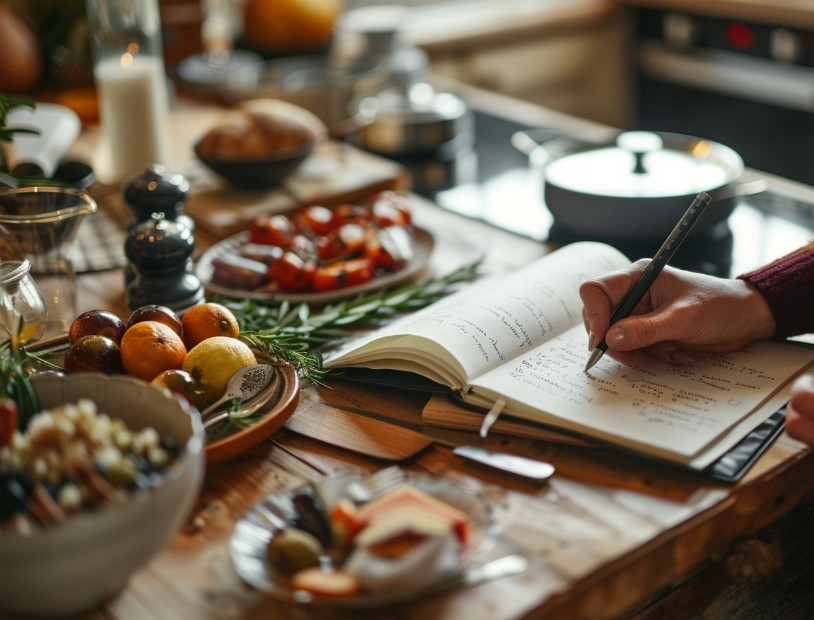
I start with three mental lists: who’s coming, what they love, and what they absolutely don’t eat. The key is not turning it into an interrogation. A few observations are enough: someone doesn’t eat meat, someone can’t handle spicy food, someone loves anything tangy, and someone wants “something simple, no surprises.”
How to gather info without making it awkward
If it’s a birthday, there’s usually a group chat. I send one short message: “Friends—so everyone’s comfortable: any allergies or dietary restrictions? And are you more in the mood for light food or something hearty?” People answer happily because it reads as care, not control.
No chat? Quiet разведка still works: ask two close guests who know the group well. It’s saved me more than once—like the time I found out half the guests didn’t eat fish right as I was about to make it the main focus.
Give people options—without turning the table into a build-your-own bar
Personalization doesn’t mean cooking a separate meal for everyone. That’s the fastest route to burnout. Instead, I like this principle: one base, a few variations. Guests can build a plate that suits them, and you’re not juggling ten pots.
Quick story: I once hosted a birthday with two vegetarians, one gluten-free guest, and two people who said, “I’ll eat anything, just no mayo, please.” I didn’t make “four menus.” I built one overall structure with choices—and suddenly everyone was happy, and I even got to sit down.
Tip #2: think in “neutral joy points”—things almost everyone likes (crunchy, aromatic, bright and fresh, warm and spiced). It’s not about specific recipes; it’s about sensations. Crunch feels festive. Fresh citrus in the air does too.
The menu skeleton: balance so no one’s hungry—and no one needs to unbutton their jeans
A party menu works best when it has rhythm. Not just “a lot,” but the right spread of feelings: something light, something more filling, something refreshing, something warm. Then people eat with pleasure, not out of obligation “so I don’t offend the host.”
I think of a menu like the story of the evening. First, an easy start so people loosen up. Then the “oh wow, that’s good” moment once everyone’s settled. After that, a pause to breathe and sip. And only then—something more substantial, if the format calls for it.
What keeps the balance
A few simple axes never let me down:
- Textures: crunchy + tender + juicy. If everything is soft and creamy, it gets tiring. If everything is crunchy and dry, same story.
- Temperature: don’t make everything hot. Hot food is lovely, but it chains you to the stove.
- Acidity: something bright (lemon, fermented veg, berries, a small splash of vinegar) keeps people reaching for “one more bite,” not begging to be stopped.
- Heft: one or two truly filling items is enough. The rest can be lighter, but still interesting.
Quick story: I once went to a home celebration with five heavy salads, two baked mains, and a pie on top. The table looked rich, but people ate cautiously, stopped halfway through, and at some point everyone just leaned back in their chairs. Not because it was “so delicious,” but because it was simply too much. The host later admitted, “I was so scared there wouldn’t be enough.” In reality, half would’ve been plenty—and the dinner would’ve felt more alive.
Tip #3: if you’re unsure, cut one item. Seriously. Less food, more attention to details: clean plates, a normal pace, and you actually present at your own party.
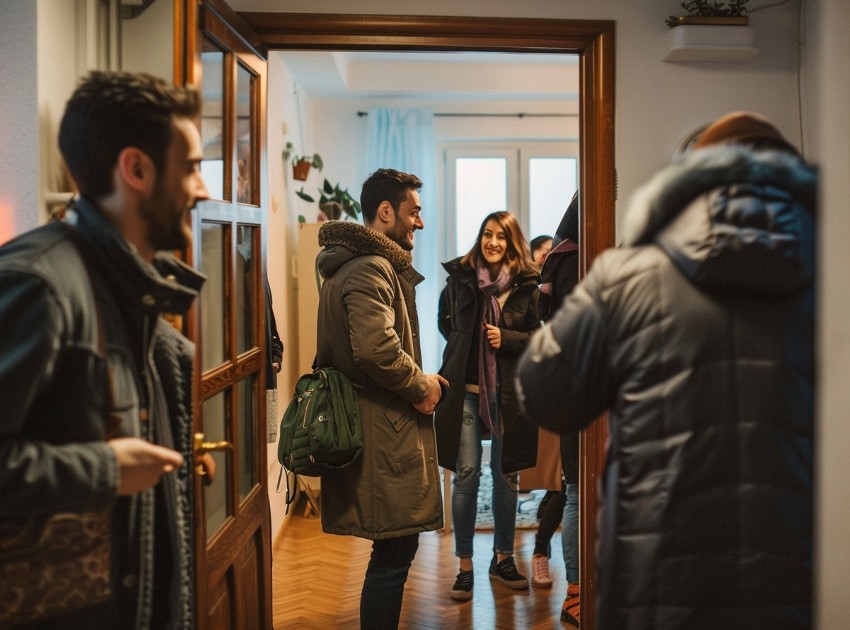
Stress-free planning: a timeline that saves your nerves
The calmest parties aren’t the “perfect” ones. They’re the ones where you have a plan that doesn’t squeeze the life out of you. I like a timeline with two parts: what you can do ahead, and what’s left for the last few hours.
If you’ve ever chopped something tiny at 02:00 the night before a birthday—you get it. I’ve done it too. And every time I thought, “Why am I doing this?” The answer is simple: no structure.
What to do ahead of time (and why it works)
I’m not giving you a fixed menu, but I will share a prep logic that works with almost any set of dishes:
- Shopping: do it in two rounds. First—everything that keeps (drinks, grains, canned goods, spices, napkins). Second—fresh stuff (herbs, fruit, anything that wilts fast).
- Plates and serving: pull out platters/bowls/boards the day before. You’ll often discover you’re missing something—and that’s the worst surprise one hour before guests arrive.
- Ingredient prep: wash, dry, chop into larger pieces, marinate—whatever you can do the day before, do it. When herbs are dry and crisp, they smell different. And your nerves are in a different place, too.
- Sauces and dressings: they’re often the “glue” of flavor. Made ahead, they also settle and smooth out—the taste becomes more balanced.
Tip #4: the night before, set the table as a “draft”—no food, just the basics. You’ll wake up to a half-ready celebration. Psychologically, it’s a huge support.
What to save for the last minute
Save only what truly benefits from being last-minute: final touches that bring aroma and freshness. Think: chopping herbs, adding citrus zest, taking something to peak crispness. Anything that requires long, hands-on stove time—I either cut it or redesign it so it doesn’t need attention every minute.
Quick story: once I decided to “make it a bit fancier” and added an element that needed constant temperature control. At some point I heard laughter in the other room and realized I was missing the whole reason we were doing this. Since then I always ask myself: “Will this add joy, or add work?” If it’s the second one, I look for another way.
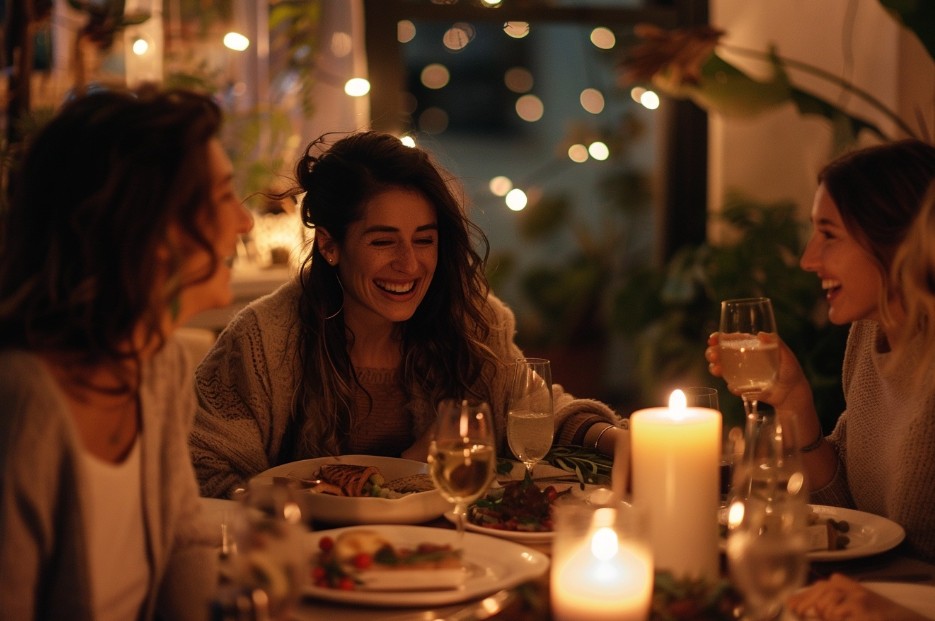
Host comfort: how not to burn out in the kitchen
The tastiest menu in the world won’t save a party if the host is exhausted and irritated. No moralizing here—I’ve seen people literally shaking from fatigue and still pushing one more idea because “that’s what you do.” You don’t have to. A celebration isn’t an exam.
There are a few things I do almost automatically when I’m cooking for something at home.
Set your limits before you start
Limits sound strict, but they’re actually gentle. For example:
- I don’t cook more than X hours on the day of the party.
- I don’t start a new “brilliant” idea after 20:00 the night before.
- I leave myself 30–40 minutes for a shower/change/rest.
These rules seem small, but they change your whole state. You enter the evening not as someone who “worked a shift,” but as a host welcoming people you care about.
Delegate without feeling weird about it
A lot of people are afraid to ask for help because they don’t want to look “disorganized.” In reality, guests often want to be useful—it feels good to contribute. Give someone a simple task: bring ice, set out napkins, keep an eye on drinks, take out the trash. That’s not a failure of hospitality; it’s normal teamwork.
Tip #5: appoint one “10-minute helper”—a person who can pick up small tasks right at the peak moment. Not all night, just briefly. It removes the worst pressure.
A pause is part of the menu too
I always plan one pause where nothing needs doing. Food is on the table, people are eating, and you sit down. Even if it feels like “I still need to bring…” Let someone else bring it, or let it wait. Guests will remember your eyes and your laughter—not whether you placed one more plate at the perfect second.
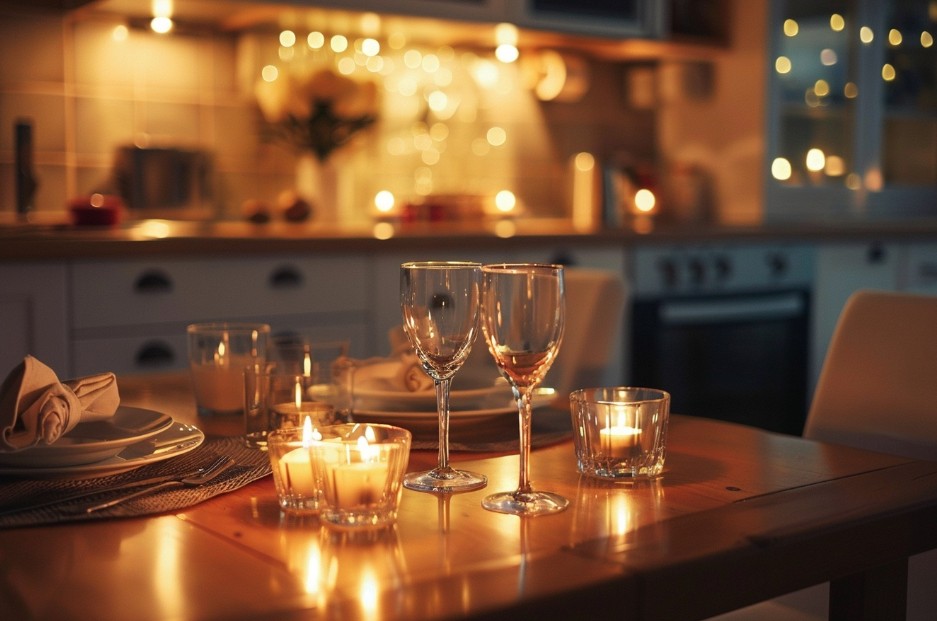
Common holiday hosting mistakes (and how to avoid them without drama)
Mistakes at a party are normal. We all want to do our best. But there are a few classic scenarios that repeat so often I can recognize them from the first sentence: “I’ll just add one more little thing…”
Mistake 1: “Too much”
This is the most common one. It’s born from fear: what if it’s not enough, what if someone’s still hungry, what if they think I didn’t try. But “too much” steals the lightness. The table gets heavy—and so do you.
What I do: I leave space. Literally—on the table and in the plan. When there’s room for plates, glasses, hands, conversation, people feel more comfortable. So do you.
Mistake 2: “Too complicated”
Complexity isn’t about “fine dining.” It’s about how many processes you’re running at once. If, at one moment, you have to control the oven, the stovetop, a sauce, and something else you can’t leave alone—you’re guaranteed to be frazzled.
Tip #6: count not dishes, but active minutes. If an idea costs you 40 active minutes on party day, that’s a serious investment. If it costs 5–10, it’s almost free.
Mistake 3: everything hot and “I’ll serve it right now”
When everything has to be hot, you become a hostage to timing. Guests haven’t finished their drinks and you’re already tense because “it’ll get cold.” People rush, and you never sit down.
It’s better to have part of the spread at room temperature, or food that doesn’t suffer from waiting. Then the evening can breathe.
Mistake 4: ignoring your kitchen’s real limits
A small oven, one burner, a weak fridge, not much counter space—these aren’t “details,” they’re your boundaries. I once tried to pull off a big home celebration with one decent knife and one cutting board. It worked, but what I remember isn’t joy—it’s my fingers going numb from endless chopping.
The fix is simple: adapt the menu to the equipment. Not the other way around. Small oven? Don’t plan lots of baking. Little space? Don’t plan processes that require ten bowls.
Mistake 5: “I’ll do it all myself”
That’s not heroism—it’s a trap. A celebration is about people. If you’re “on your own” all evening, who was this for?
If you have to choose between one more dish on the table and the chance to sit with your guests—choose the people. The food tastes better then too. Tested and confirmed.
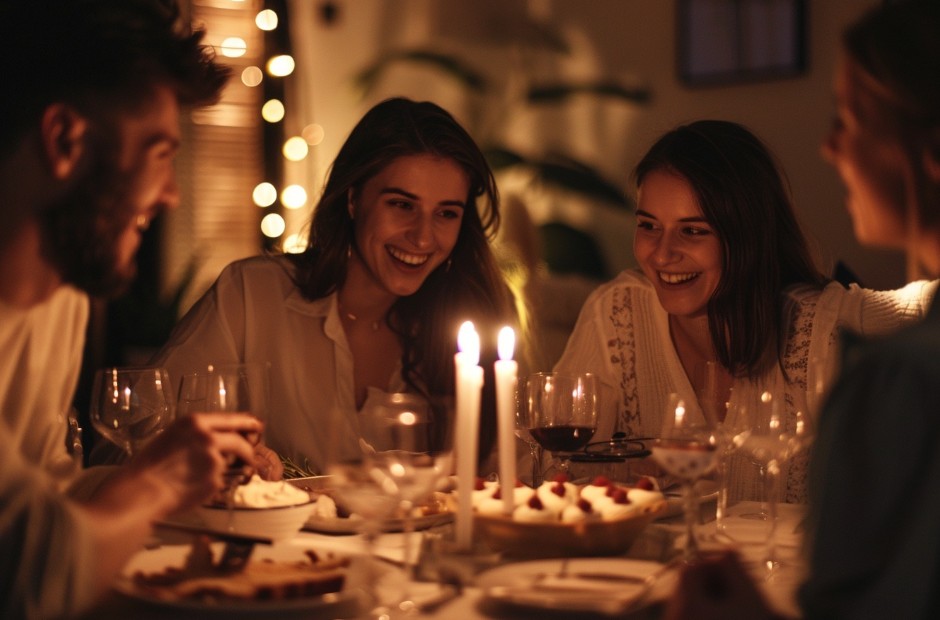
How to add joy: small touches that beat “wow-level complexity” every time
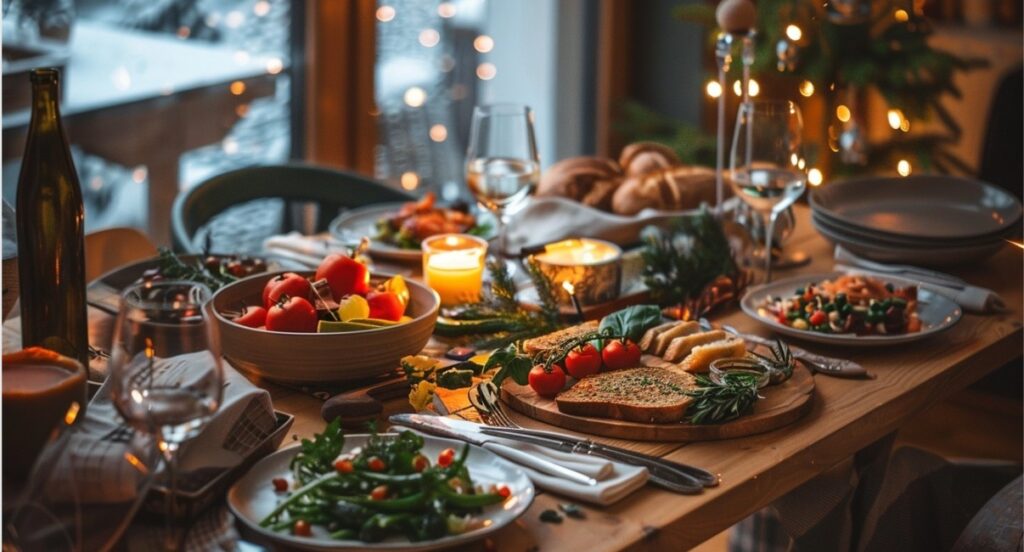
Joy in a menu isn’t fireworks of technique. It’s small things people feel instantly: smell, light, crunch, a warm plate, a cold drink, a pretty lemon wedge on the rim, a napkin that doesn’t fall apart in your hands.
I love touches that add almost no work, but make the whole thing feel festive.
Use aroma on purpose
When guests walk in and it smells good, they relax immediately. It can be very simple: citrus zest, warm spices, fresh herbs. The main thing is not overdoing it so the aroma doesn’t bulldoze everything else.
Quick story: at one birthday I just grated a little orange zest into one element of the spread. People couldn’t pinpoint what was lifting the mood, but everyone said, “It smells so good in here.” And it took almost no effort.
Give them one “moment”
Not ten. One. Something you do in front of guests: a final garnish, a quick slice, a toss, a pour. One moment creates a sense of occasion without turning you into a performer on stage all night.
Tip #7: choose a “moment” that won’t be ruined if you get pulled into conversation. Then it works for you, not against you.
Light and breathing room on the table
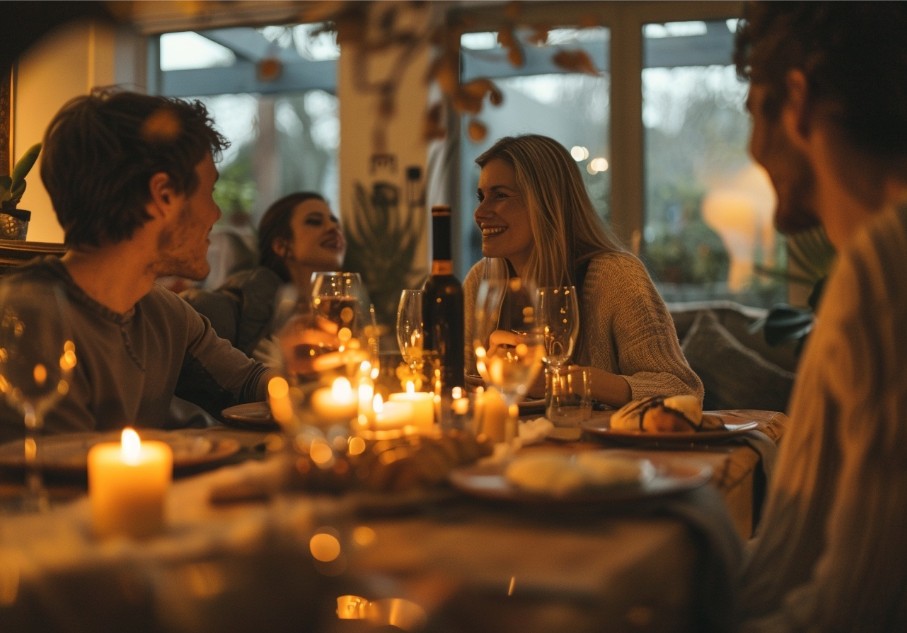
I know this isn’t exactly “menu,” but in real life it absolutely is. When the table is cramped, people reach awkwardly, spill things, and get tired faster. Leave space for hands, glasses, plates. And think about lighting: warm, soft, not clinical. Even a basic lamp with a warm bulb changes everything.
A serving rhythm without bossing people around
I don’t love it when a host runs around announcing, “Okay, now we eat this.” People aren’t in kindergarten. But you can set a rhythm gently: put out what’s meant for the start, and bring the rest a little later when the group has warmed up. It creates a wave of interest without pressure.
The after-party part: making tomorrow feel manageable
There’s one more thing people don’t talk about much, but it really affects how you feel during the party: the thought of “and then I have to clean all this up.” If you’re already picturing a mountain of dishes, you’re tense before the first toast.
Here’s what I do: I plan a soft landing. Not perfect—realistic.
Fewer small bowls, more peace
When every little thing gets its own tiny dish, the washing-up multiplies like rabbits. Choose serving pieces that don’t create dozens of separate items. It’s not about being “cheap”—it’s about comfort.
Trash and packaging: the invisible stress
It sounds unglamorous, but it works: set up a trash spot ahead of time, have an extra bag ready, keep paper towels/napkins handy for quick “accidents.” When something spills and you’re not hunting around the apartment for a roll, you don’t spiral.
Leftovers aren’t a failure
I’m not a fan of the “we ate everything, so it was a success” mindset. Not always. Sometimes people eat less because they talk more—and that’s wonderful. If there are leftovers, fine. Just make sure you have containers and something to cover dishes. That’s part of the menu too: it should end normally, not in chaos.
Quick story: I once packed leftovers into whatever I could find, grumbling and getting stressed. Then a friend quietly came over and said, “Sit down. I’ll do it.” That was the first time I really understood: guests are often happy to help—we just don’t give them the chance. Now I treat the end of the night much more calmly.
A holiday menu isn’t about proving something to yourself or your guests. It’s about making one specific evening feel warm and delicious for specific people—while you can still breathe. Start with the vibe, add personalization, keep the balance, and stop chasing complexity, and the celebration comes together almost on its own.
A birthday menu doesn’t have to be a long list of complicated dishes. What matters more is that it fits the format of the evening and the group you’re hosting. Pick a few thoughtful items: something light to start, one or two more filling dishes, and something refreshing to balance the flavors. That approach keeps the table from feeling overloaded and saves you from unnecessary kitchen chaos. When the menu is simple, balanced, and planned around your guests’ tastes, the whole celebration feels easier—and the host actually gets to enjoy the night.
How is it for you—are you the “make extra, just in case” type, or more “keep it minimal, but make it pretty”? And what most often steals your joy in the kitchen before a birthday?