

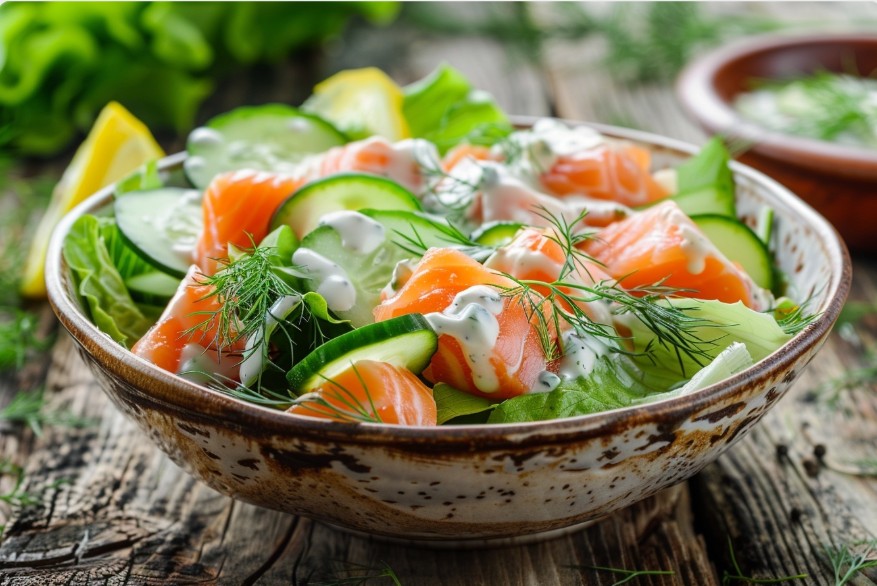
In my kitchen there’s a very specific moment: coats are off, someone’s already poured a drink… and the hob is still cold. That’s when a chilled, no-cook salad saves the day. I cut the salmon into 1–1.5 cm cubes so you actually get a proper bite of it instead of it disappearing into the dressing. Then I whisk the cream cheese with yogurt, lemon, and a pinch of pepper until it turns smooth and glossy. Salad leaves get dried properly (seriously)—extra water will break the dressing in about 2 minutes. Add cucumber in thin half-moons, a little dill, and the whole thing tastes clean and fresh. It looks simple, but the mixing order is what makes the texture. Serve it right away while everything is cold and snappy.
In this recipe, you’ll learn
- Why you’ll love this recipe
- Tips before you start
- What to look for when choosing ingredients
- Secrets to the perfect salmon & cream cheese salad
- How to serve salmon salad with cream cheese
- Nutritional perks
- Recipe variations
- Questions & answers
- Common mistakes
Why you’ll love this salmon salad with cream cheese dressing
I love this one because it tastes fresh from the very first forkful—cool, tidy, and not heavy. Compared to a classic mayo-based party salad, there’s less “dense creaminess” and more clean texture: salmon, cucumber, crisp leaves. The practical bonus: you can genuinely pull it together in about 15 minutes while you’re setting the table.
- Cool, light finish
- Soft, creamy cream-cheese dressing
- Crunch from cucumber and greens
- Fast, no-hob assembly
- Looks elegant on the plate
Tips before making salmon salad with cream cheese
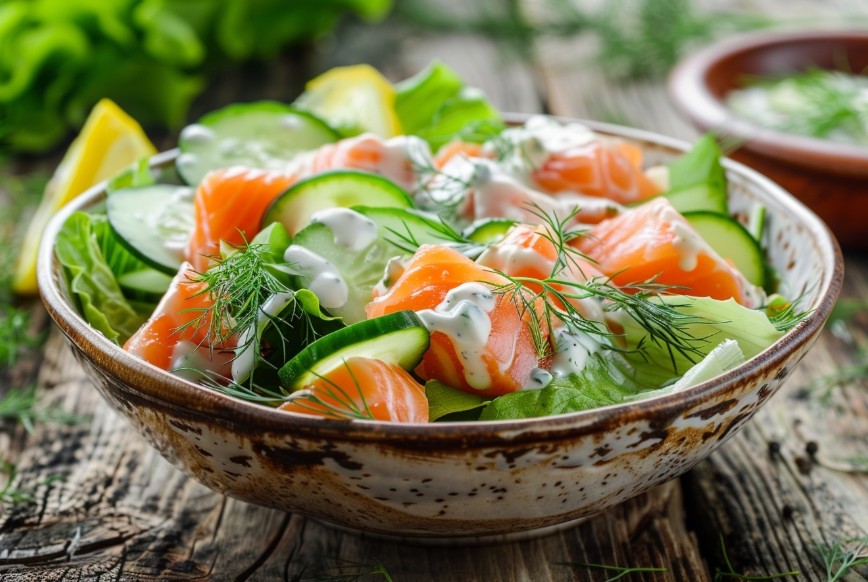
Want the salad to stay perky and not turn watery after 10 minutes? It’s doable—just keep your eye on moisture. The leaves need to be dry, the cucumber shouldn’t be swimming in juice, and the cream cheese should be softened a bit so it whisks smoothly. I also like to chill the mixing bowl for 10 minutes; the dressing coats more evenly. One more small thing: salt at the very end, otherwise the cucumber starts releasing water too soon.
- Dry the greens in a salad spinner
- Slice the cucumber, then blot it lightly
- Chill the bowl before mixing
- Salt the dressing at the end
- Cut the salmon into 1–1.5 cm cubes
What to look for when choosing ingredients for salmon salad with cream cheese
For the salmon, go for neat slices with no grey patches and no sharp smell—the colour should look clean and glossy. The cream cheese needs to be smooth (not grainy): a curdled or gritty one gives you a “torn” dressing after about 3 minutes of mixing. And skip very runny yogurt in a big bottle— it thins the sauce and the salad loses its shape fast.

Lightly salted salmon
Pick salmon that’s firm and springy, with no excess liquid in the pack; save the thin ragged edges for sandwiches.
Cream cheese
Plain, classic works best. Let it sit out for 10 minutes so it whisks easily.
Thick plain yogurt
Greek yogurt or any thick natural yogurt is ideal. Runny yogurt makes the dressing too loose and it won’t cling to the leaves.
Cucumber
Go for a short, crunchy one; if the seeds are watery, scoop out the centre with a spoon.
Lemon
Zest a little with a fine grater, but avoid the white pith—it turns bitter.
Secrets to the perfect salmon salad with cream cheese
When dough stops sticking, you know your hands are doing the right thing; salad has the same kind of “tell.” The moment the dressing turns smooth and holds the whisk marks, stop. Add the leaves and toss quickly—about 1 minute—so they stay crisp.
- Whisk the dressing until glossy
- Add lemon a few drops at a time
- Salt only right before serving
- Fold the salmon in gently
- Don’t crush the leaves with a spoon
How to serve salmon salad with cream cheese
On a Friday night I’ll bring it out in one big chilled bowl once everyone’s settled at the table. For a buffet, portion it into glasses—do it about 5 minutes before guests arrive and it looks really neat.
- Pressed into serving rings on a plate
- In glasses as a buffet-style salad
- On rye toast
- With boiled baby potatoes on the side
- With an extra lemon wedge
Nutritional perks of salmon salad with cream cheese
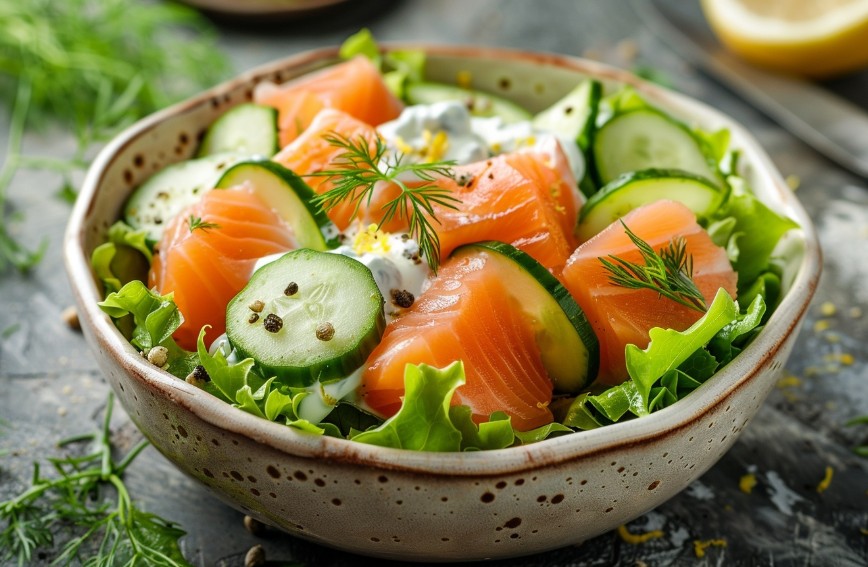
Perfect for a light dinner when you want to feel satisfied but not weighed down. Salmon, greens, and a cultured dairy dressing give you a balanced mix of macros, and you can control the salt easily right at the end.
- Protein from salmon
- Gentle, satisfying fats
- Less sugar than many bottled sauces
- Veg adds volume and crunch
Salmon salad with cream cheese: variations
For a kid-friendly version, keep the flavour softer: use baked salmon with no extra spices, skip onion entirely, cut the lemon in half, and serve it with tiny star-shaped pasta.
- Use baked salmon instead of lightly salted
- Add avocado in 1 cm cubes
- Stir in capers for a salty pop
- Swap cucumber for celery stalk
- Add a boiled egg for extra staying power

If you’re putting together a party spread, it’s worth browsing a round-up of salads that work beautifully for special occasions. You’ll find everything from light, fresh options to more filling, celebration-worthy bowls. Have a look at the best holiday salad collection for new menu ideas and crowd-pleasing ingredient combos.
Questions & answers
Once a guest asked for the recipe in the tiny gap between a toast and coffee—so here are the quick, straight answers.
Common mistakes when making salmon salad with cream cheese
Three things will reliably ruin this salad: wet leaves, a too-thin dressing, and overly salty salmon. It happens because water dilutes the sauce, so instead of coating the ingredients it just slides to the bottom of the bowl. Another culprit is chopping too small: the fish starts to crumble and gets “lost” in the greens. Fixing it is usually simple—control moisture, texture, and salt.
Why did the dressing turn watery?
The yogurt was runny, or the leaves/cucumber released a lot of juice. Use thick yogurt, dry the greens well, blot the cucumber with paper towel, and toss everything 1 minute before serving.
Why did the salad “weep” in the bowl so quickly?
Salt went in too early, or the bowl was warm. Salt at the end, and chill the bowl in the fridge for 10 minutes.
Why does the salmon taste bitter or smell strong?
The fish wasn’t fresh, or the fat had started oxidising. Choose firm slices with no grey edges, store at  4 °C (39 °F) and use within 24 hours of opening.
Why did it end up too salty?
The salmon is already salty, and then the dressing got salted too. Balance it with extra salad leaves plus 1–2 tbsp yogurt, and next time skip the salt altogether.






Responses