

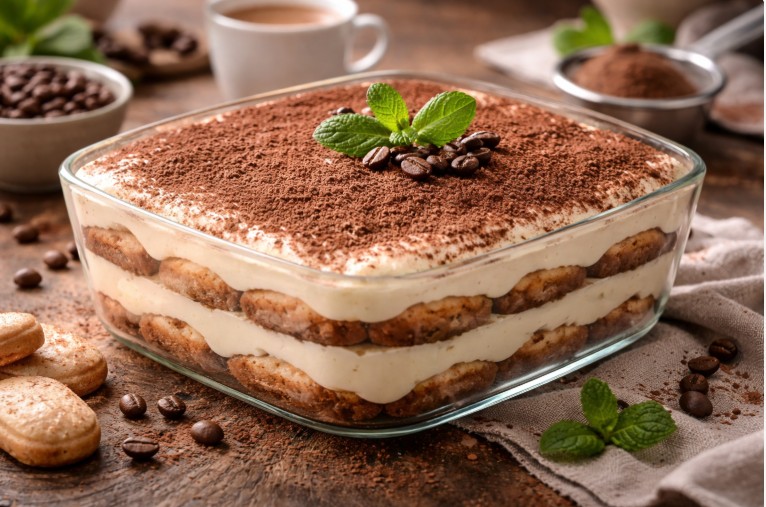
This isn’t a sponge cake buried under a heavy layer of cream, and it’s definitely not “coffee and biscuits in a bowl” you can spoon up right away. The magic here is balance: a light mascarpone cream, a quick dip of ladyfingers in espresso, and the patience to let it set. You end up with tiramisu that feels airy but still slices cleanly—assuming your cream is the right thickness. Your coffee needs to be strong and completely cooled, otherwise the biscuits turn to mush. Alcohol is optional, but a splash of amaretto or dark rum adds a deeper, warmer aroma. That final dusting of cocoa keeps the finish crisp and grown-up, not overly sweet.
In this recipe, you’ll find
- Why you’ll love this recipe
- Tips before you start
- What to look for when choosing ingredients
- Secrets to perfect tiramisu
- How to serve tiramisu
- Nutritional perks
- Recipe variations
- Questions & answers
- Common mistakes
Why you’ll love this tiramisu recipe
Like desserts that don’t feel heavy, but still leave that lingering coffee-and-cocoa finish? The cream comes together in 10 minutes, and then the fridge does the real work. The layers slice neatly, so it looks polished even in a basic home baking dish. Team classic-with-amaretto, or keeping it alcohol-free?
- Silky no-bake mascarpone cream
- Bold espresso flavour
- Clean layers and a tidy slice
- Make-ahead friendly
- Works brilliantly in glasses, too
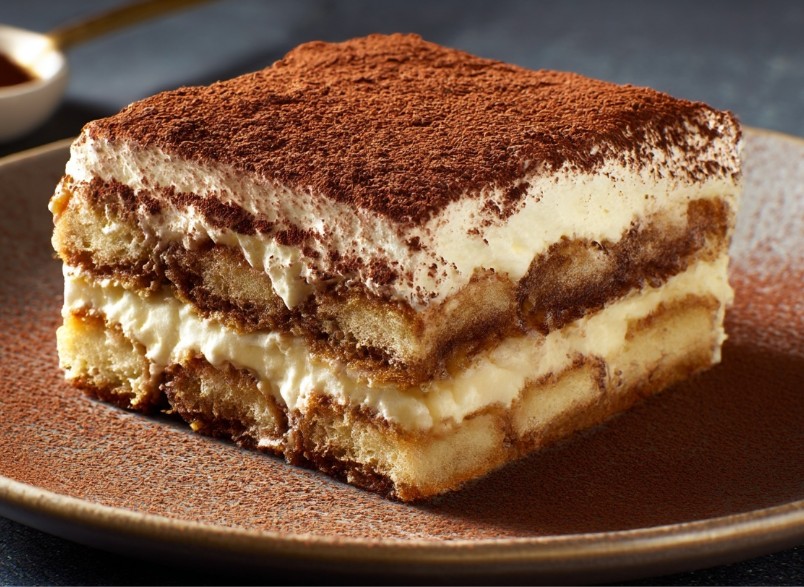
Silky No-Fuss Tiramisu
Ingredients
- 250 ml Espresso (strong coffee) cooled
- 30 ml Amaretto or dark rum optional
- 250 g Ladyfingers (savoiardi)
- 500 g Mascarpone thick, 80% fat
- 4 pcs Eggs large
- 100 g Sugar
- 1 pinch Salt
- 2 tbsp Unsweetened cocoa powder for dusting
- 20 g Dark chocolate shavings, optional
Equipment
- Міксер або планетарний міксер
- Миска для водяної бані
- Кухонний термометр
- Силіконова лопатка
- Сито для какао
- Форма 20×20 см
Method
- Brew strong espresso—about 250 ml, no milk, with a proper punchy aroma. Cool it to
 20 °C (68 °F) and mix in 1–2 tbsp amaretto or rum (optional). Pour into a wide bowl—the dip should take seconds, not minutes.
 - Separate 4 yolks and 4 whites; chill the whites, and whisk the yolks with 100 g sugar. Set the bowl over a gently simmering bain-marie and warm, stirring, to63 °C (145 °F) for about 5 minutes, until pale and thick.
- Remove the yolk mixture from the heat and cool for 10 minutes, stirring now and then so a skin doesn’t form. Add 500 g mascarpone (cool, but not rock-hard cold) and mix quickly on low speed for 20–30 seconds until smooth—don’t overbeat.If your mascarpone is lumpy, press it through a sieve with a spoon before mixing.
- Whip the egg whites in a clean, dry bowl to soft peaks on medium speed for about 2 minutes, then add a pinch of salt and whip to stiff peaks for another 2 minutes. Fold the whites into the mascarpone cream in 3 additions using a spatula, lifting from the bottom to keep the mixture airy.
- Prep a 20×20 cm dish (or similar); you can line the base with baking parchment. Dip each ladyfinger in the cooled espresso for 1–2 seconds per side and immediately arrange in a snug layer. Spread about half the cream on top (roughly 1.5–2 cm thick) and level it out.
- Repeat with a second layer of ladyfingers (same quick dip), then cover with the remaining cream, smoothing the top with an offset spatula. Cover with cling film pressed directly onto the surface and chill at4 °C (39 °F) for at least 6 hours, preferably overnight, for the neatest texture.
- Before serving, let the dish sit out for 10 minutes so it slices cleanly, but stays cold. Sift 1–2 tbsp cocoa in a thin layer (~1 mm) and add dark chocolate shavings if you like.For sharp, even portions, warm the knife in hot water and wipe it dry between cuts.
Notes
 4 °C (39 °F). Don’t mix cocoa with sugar—the sweetness is already in the cream, and that dry cocoa top is what gives the right balance. If your ladyfingers are very thin, you can do three biscuit layers, but shorten the dip to about a second.
Private Notes
Tried this recipe?
Let us know how it was!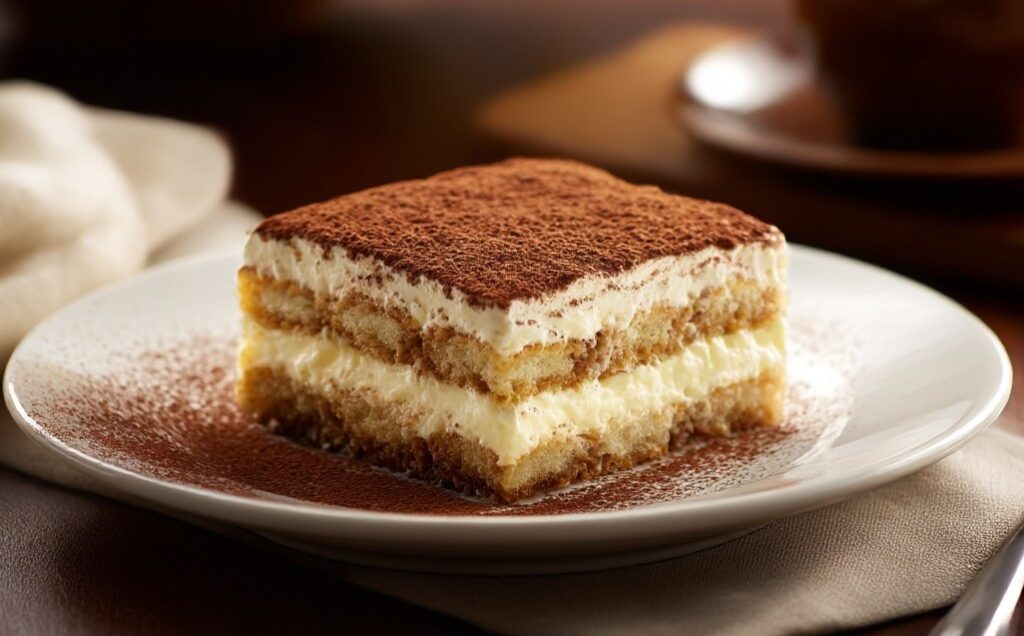
Tips before you start making tiramisu
Tiramisu assembles fast, but the order matters: coffee first, then cream, then biscuits. Keep an eye on temperature—mascarpone should be cool, eggs at room temp, and your cream will stay smooth instead of splitting or going slack. Dip the ladyfingers in espresso for 1–2 seconds per side: longer and you’ll get mush, shorter and the middle stays dry. After assembling, give it at least 6 hours in the fridge, otherwise the layers won’t properly set together. Sift the cocoa right before serving so the top stays velvety instead of damp.
- Chill the bowl you’ll whip the egg whites in
- Take mascarpone out of the fridge for 5 minutes
- Cool the espresso completely
- Line the dish with baking parchment
- Dust cocoa through a fine sieve
What to look for when choosing ingredients for tiramisu
Mascarpone sets the whole mood of the cream: you want it thick, neutral (no tang), and without a puddle of whey in the tub. Aim for around 80% fat and do the quick spoon test—the mascarpone should hold a little “peak,” not slump. That’s what gives you that smooth, restaurant-style texture after 6 hours in the fridge.
Mascarpone
Go for thick mascarpone, about 80% fat; no excess liquid in the packaging.
Ladyfingers (savoiardi)
Dry and airy—crisp and fragile, not soft to the touch.
Espresso
Strong and fully cooled; warm coffee soaks the biscuits instantly.
Eggs
Fresh and at room temperature; the whites whip up more reliably.
Cocoa
Unsweetened, finely ground; sift in a thin layer.
👉 more cottage cheese desserts—see the “Syrnyky (cottage cheese pancakes)” collection
👉 try this coconut chia pudding with pineapple next
Secrets to perfect tiramisu
Want to know why it tastes better at restaurants? They don’t rush the soaking, and they keep the cream thick—fluffy, yes, but not whipped into a loose foam.
- Whip the egg whites to stiff peaks
- Warm the yolks over steam to 63°C
- Dip ladyfingers for 1–2 seconds
- Fold the cream with a spatula, not a mixer
- Chill for at least 6 hours
How to serve tiramisu
Serve it cold, when the cream is set and the coffee has properly worked its way into the biscuits. For contrast, I like a warm espresso on the side—or a little crunchy crumble on top.
- Cut into squares in the dish, dusted with cocoa
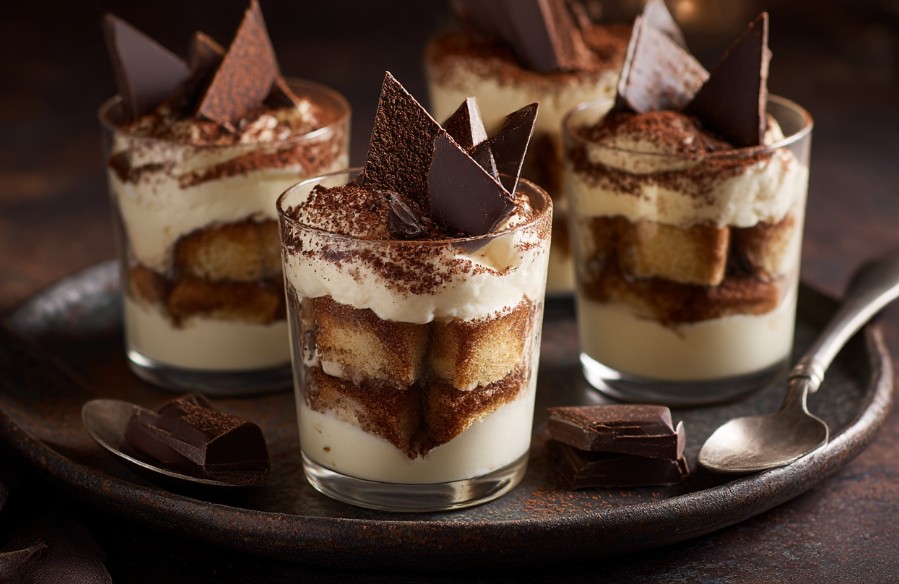
- Individual 200 ml glasses
- Finished with grated dark chocolate
- Ladyfinger crumbs for crunch
- A little drip of amaretto on the plate
Nutritional perks of tiramisu
Perfect for a dessert table when you want a smaller portion but a big, satisfying flavour. Between the egg protein and the rich dairy fat in mascarpone, it’s the kind of sweet that feels filling faster than a couple of plain biscuits.
- Easier portion control for something sweet
- Protein from eggs
- Energy from dairy fat
- Coffee brings a bold aroma
Tiramisu recipe variations
For a different vibe, tweak the coffee and the finish without messing with the cream base. If you’re making it for a party, go for tall glasses and add fine chocolate curls and a touch of gold sugar dust over the cocoa.
- No alcohol: espresso + a little vanilla
- Chocolate: whisk a bit of cocoa into the cream
- Berry: a layer of raspberries between the layers
- Citrus: orange zest in the coffee
- Party-style: glasses + chocolate flakes
Questions & answers
Got half left—how do you keep tiramisu without ruining the texture?
Common mistakes when making tiramisu
My first attempt was a total mess: the biscuits turned to porridge and the cream slid down the sides of the dish. That’s what happens when the espresso is warm or the ladyfingers sit in coffee longer than a couple of seconds. Another culprit is watery mascarpone—or overmixing, which knocks the air out of the whites. The fix is boring but real: temperature, timing, and gentle folding.
Why does tiramisu “slump” after slicing?
The cream was too warm, the mascarpone was runny, or it simply didn’t chill long enough. Refrigerate for at least 6 hours, and don’t beat mascarpone for ages—just mix until smooth.
Why did the ladyfingers turn into mush?
The espresso was warm, or the dip lasted longer than 1–2 seconds. Cool the coffee to 20 °C (68 °F) and dip quickly—just wet the surface.
Why is the cream lumpy?
The mascarpone was too cold and got mixed too abruptly with warmer yolks. Let the mascarpone sit out for 5 minutes, then fold the yolk mixture in gradually with a spatula.
Why can I taste raw egg?
The yolks weren’t warmed through, or the eggs were extra-large without enough sugar to balance. Warm the yolks with sugar over steam to 63 °C (145 °F) and whisk until pale and thick, like a ribbon.




Responses