How to Cook Pasta for Pasta Salad (So It Doesn’t Turn Sticky)

It happens: you want a quick pasta salad—something filling but still fresh, and easy to pack for later. You boil the pasta, rinse it under cold water, toss it with whatever’s in the fridge… and end up with a sticky clump. The dressing seems to vanish, the flavor falls flat, and the pasta turns into little glued-together nuggets you have to pry apart with a fork.
I’ve been there more times than I’d like to admit. Especially on a regular home-kitchen day—phone buzzing, someone asking you “just for a second,” and the pot is already boiling over. The trap is that pasta for pasta salad looks easier than hot pasta: boil, cool, done. In reality, the little details matter a lot here: doneness, the starch sitting on the surface, how you cool it, and exactly when you add oil or dressing.
Once you understand what’s actually happening, the “I’m going to ruin it” feeling goes away. The pasta stays springy, doesn’t clump, the dressing actually sticks, and the salad tastes good even the next day. Let’s break it down—no magic, just kitchen logic: water, starch, temperature, and a bit of attention.
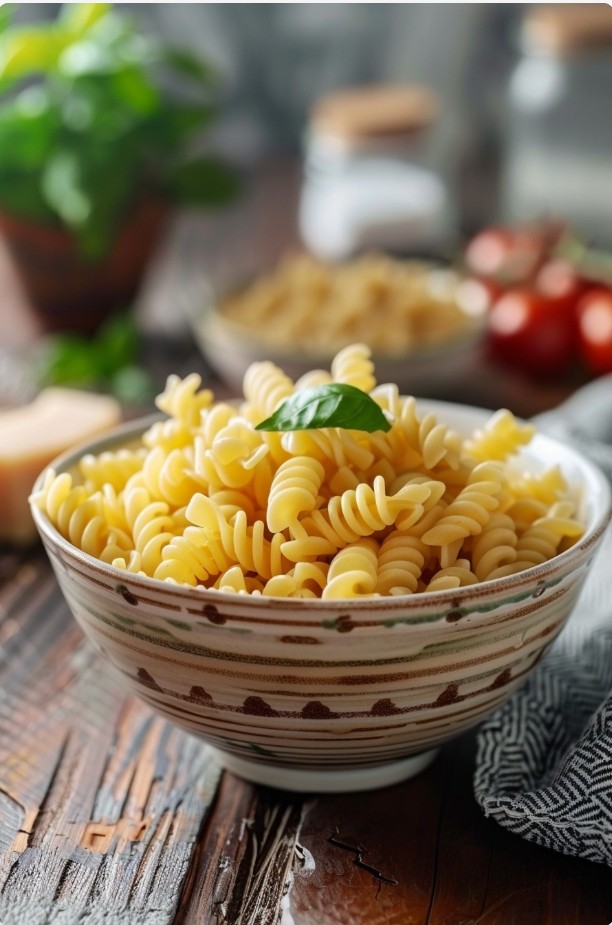
Which pasta shapes work best in a cold pasta salad
For pasta salad, it’s not about “what looks cute in a photo.” It’s about how well the pasta holds its shape once it’s cold—and how well it grabs onto the dressing. Hot pasta is forgiving: heat and sauce can hide a lot. Cold pasta isn’t. You’ll notice everything right away: a slippery surface, mushy edges, a dry center… or the opposite.
My simple rule: the more ridges and a bit of thickness, the better for pasta salad. Ridges cling to dressing; a thicker shape keeps a nice bite after chilling.
Shape: what works (and what often lets you down)
At home, short shapes are the most reliable. They cook more evenly, they’re easy to toss, and they don’t snap and tangle the way long noodles do.
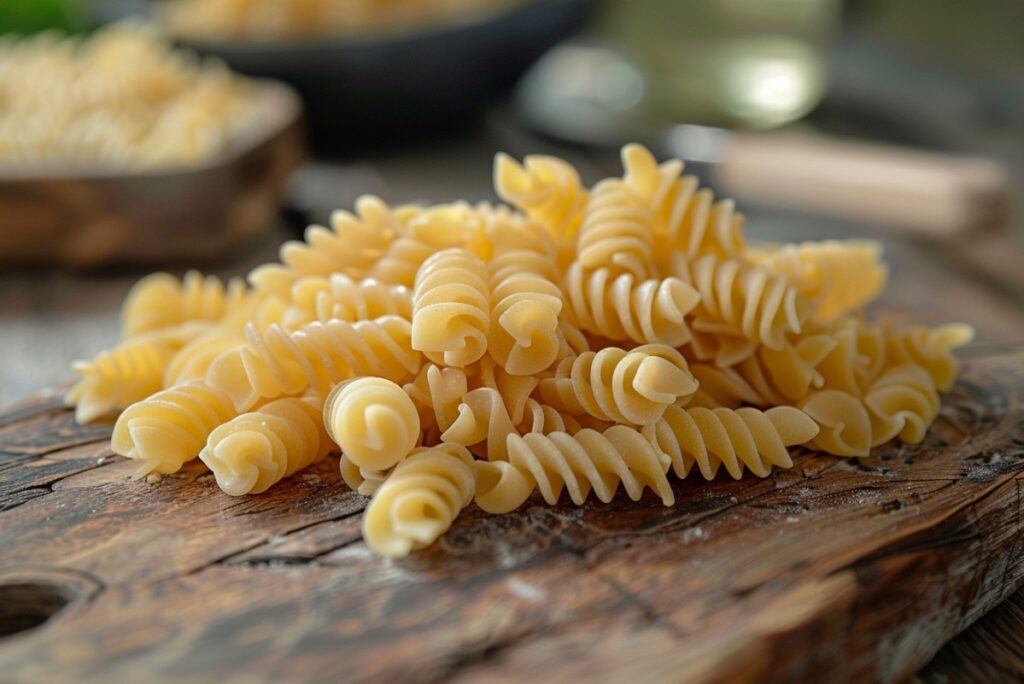
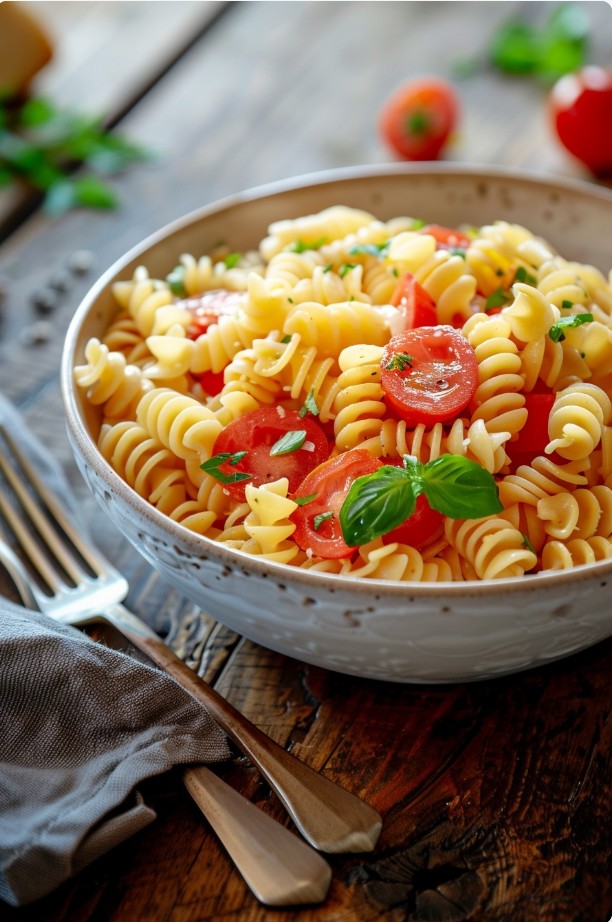
- Fusilli, rotini, spirals — the MVPs: all those grooves hold onto dressing, and the shape helps prevent one big clump.
- Penne, rigatoni — great if you don’t overcook them: dressing can get inside, but if the pasta goes soft, the tubes turn a bit “cottony.”
- Farfalle — tasty, but fussy: the “bowtie” has different thicknesses, so the center can stay firm while the edges go soft.
- Orzo — a fun option, but easy to overcook into something between porridge and risotto. Timing matters here.
Long shapes (spaghetti, linguine) can work too, but they clump more easily, they’re harder to cool evenly, and in a salad they tend to behave like a “nest.” If you really want them, you can cut them after cooking—but that’s a different vibe altogether.
Quality: why cheap pasta can be sneaky
I’m not going to pretend you need the fanciest pasta on the shelf for a good salad. You don’t. But it helps to understand the difference. Pasta made from durum wheat usually holds its shape better and keeps that pleasant, springy bite. Softer pasta tends to go mushy faster—especially after a night in the fridge.
A quick story from my kitchen: once I made a big “for tomorrow” pasta salad and grabbed the first bag I saw. Day one: perfect. Day two: the pasta had puffed up like little sponges and the dressing basically disappeared. Since then, if the salad needs to last more than a few hours, I pick pasta that stays firm and I’m a bit more precise with the cook.
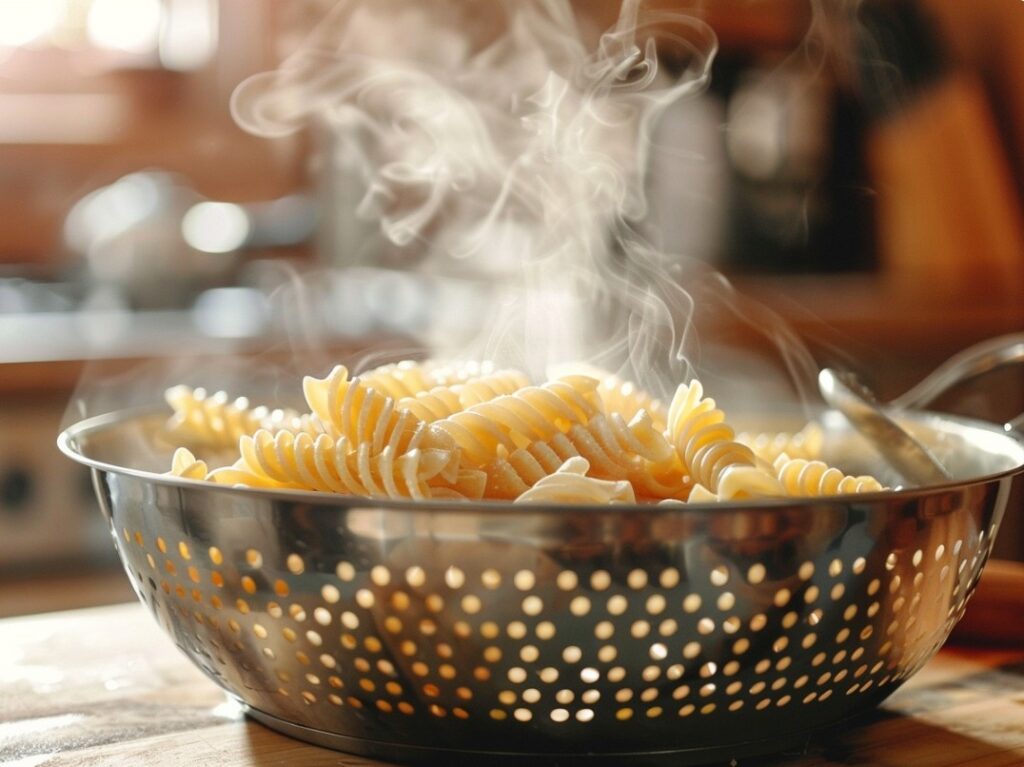
What happens to pasta after boiling: starch, a film, and stickiness
Cold pasta for salad is basically a test of how well you manage starch. While pasta cooks, some starch goes into the water and some stays on the surface. Once you drain it, a thin starchy film remains. That film can be your best friend or your worst enemy—it all depends on what you do next.
Why pasta clumps—especially in salad
After draining, moisture evaporates fast. The starch on the surface dries and acts like glue. Add the fact that chilled pasta is less “mobile,” and you’ve got clumps.
On a busy home stove it usually looks like this: you drain the pasta, leave it in the colander “for a minute,” go chop vegetables, come back—and it’s already one solid mass. Then you start tearing it apart, the pasta breaks, releases even more starch… and the stickiness gets worse.
To rinse or not to rinse: the no-drama answer
For hot pasta, I almost never rinse—starch helps sauce cling and gives that silky texture. Pasta salad is different. Here, we don’t want clumping, and we often don’t need that starchy “silkiness.”
My favorite compromise: don’t rinse it until it squeaks—just cool it quickly and remove the excess starch. If you’re making a salad with a light dressing (oil, lemon, vinegar), rinsing or a quick cold-water cool-down really helps prevent stickiness. If your dressing is thicker (yogurt- or mayo-based), you can skip rinsing—but then you need to toss the pasta quickly with a small amount of dressing while it’s still warm.
The key idea: starch isn’t the enemy. The enemy is starch that dries on the surface while you get distracted.
Cooking pasta for salad: how to hit the sweet spot without overcooking
This is where a lot of people make the same mistake: they cook pasta “like always,” then wonder why it tastes soft and sad in a salad. Cold temperatures highlight flaws. What feels tender and lovely in a hot bowl can turn cottony after chilling.
Why pasta for salad should be a touch firmer
After you drain it, pasta keeps cooking for a bit from its own heat. Then as it cools, the structure tightens—and any softness feels more obvious. If you cook it to “perfectly soft right now,” it’ll read as “overcooked” once it’s cold.
I don’t rely on minutes alone—I go by feel: the pasta should be springy, with no raw core. If you bite and feel a little resistance, you’re good. If there’s a hard white dot in the center, it’s too soon. If there’s zero resistance, it’s risky for salad.
Salt and water: it’s not about rules, it’s about flavor
In a salad, pasta flavor isn’t masked by a hot sauce. So the water needs to be properly salted—not “a little,” but enough that the pasta tastes good on its own. If you under-salt the water, you’ll end up over-salting the dressing, and the whole thing gets weird: the vegetables taste fine, the pasta tastes bland.
One more thing: if you use too little water and it turns cloudy fast, there’s more starch in the pot—and pasta is more likely to stick. In a cramped pot, pieces rub against each other and the surface gets tackier.
- Tip 1: for short pasta shapes, stir actively for the first 30–40 seconds. That’s when it’s most eager to stick.
- Tip 2: a timer is fine, but start tasting 2 minutes before the package says. Different stoves and pots have different personalities.
A quick story about “I turned away for a second”
Once I had pasta boiling while I was heating a pan for chicken. Doorbell rings—and that’s it, three minutes of attention gone. I came back and the pasta was already soft and kind of slippery. In a hot dish I could’ve saved it with sauce. In a salad? Not really. Since then I set a timer and I’m not shy about draining a minute early if I can tell it’s close.
Cooling: how to stop the cooking without turning pasta into glue
Cooling is half the battle. You have two jobs: stop the cooking and keep starch from gluing everything together. Sometimes those goals pull in opposite directions.
Two solid approaches: cool with water or toss while warm
Option A: cool it fast. Drain, rinse quickly under cold water (or at least give it a cold-water splash), shake well, let it drain. This washes off some starch and stops the heat quickly. The pasta ends up drier on the surface and behaves well with light dressings.
Option B: toss warm pasta with a little fat/dressing. Drain, return it to the pot right away, add a small drizzle of oil or a bit of the dressing, and toss. The fat coats the surface and helps prevent clumping. Just don’t overdo it: if you drown it in oil, the final dressing won’t cling as nicely.
I pick the option based on the salad: light citrus/vinegar dressing—more often a quick rinse; creamy dressing—more often a warm toss.
Why “just leave it in the colander” is a bad idea
In a colander, pasta sits in a pile. The bottom stays warmer and wetter; the top dries out faster. The result: some pieces clump, others dry out and won’t take dressing later. Once you drain it, move immediately—rinse, toss with a touch of fat/dressing, or spread it out in a thin layer.
Cooling tips that actually help
- Tip 3: if you don’t want to rinse but you need it to cool quickly, spread the pasta in a thin layer on a large plate or baking tray. It cools much faster and won’t clump as aggressively.
- Tip 4: don’t put steaming-hot pasta straight into the fridge “as is.” It releases heat for a long time, condensation forms, and the surface turns slippery. Cool it closer to room temperature first, then refrigerate.
- Tip 5: if the pasta has already started to stick, don’t rip it apart. Add a spoonful of water or a bit of dressing, wait 1 minute, then gently separate.
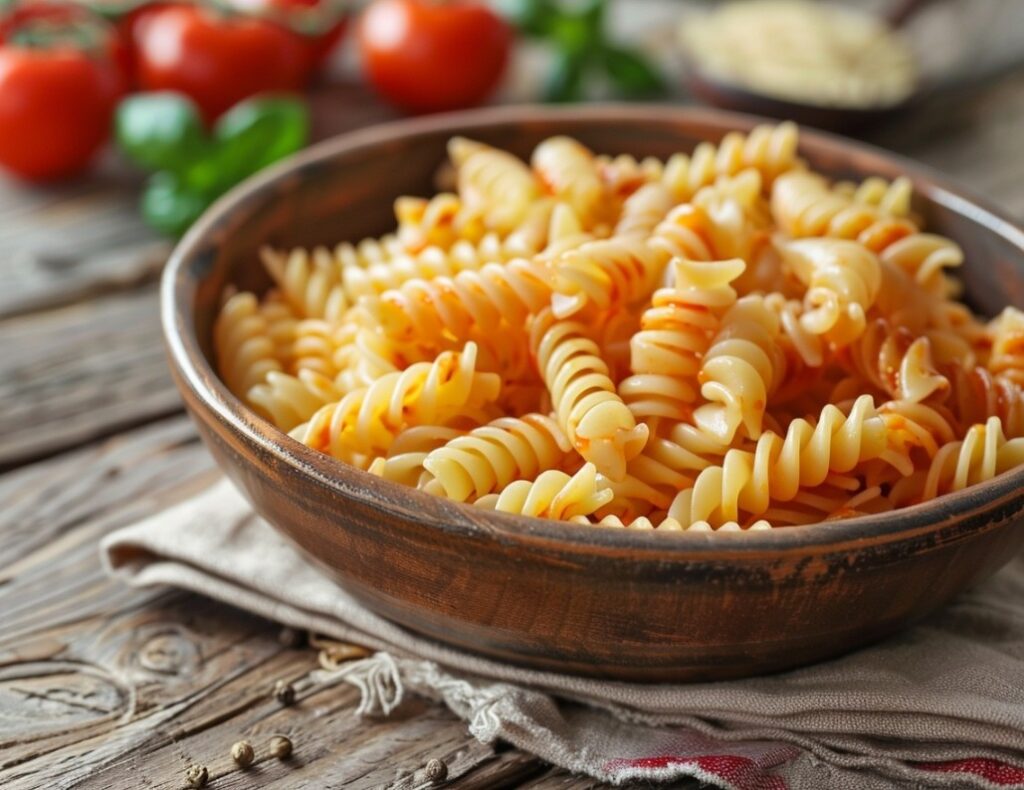
Dressing and timing: why the sauce “disappears” and how to prevent it
One of the most common complaints: “I added dressing, and 10 minutes later the pasta is dry.” It’s not magic. Pasta acts like a sponge—it absorbs moisture and flavor, especially if you toss it while it’s still warm or if it’s slightly overcooked.
How pasta absorbs dressing (and what to do about it)
When pasta is warm, its structure is more open. It happily soaks up liquid—which can be great if you want flavor to get “inside.” But if the dressing is light and you don’t use much, it can simply vanish and leave the surface feeling dry.
What works for me is a two-step approach:
- first, give the pasta a small amount of dressing (or a few drops of oil) so it won’t stick and it gets a base layer of flavor;
- right before serving, add a little more dressing and toss quickly to refresh the texture.
This is especially helpful if the salad sits in the fridge. Cold dulls aroma, and that second splash of dressing brings everything back to life.
Oil: it prevents clumping, but it can hurt dressing adhesion
There’s a popular tip: “add oil after cooking so it won’t stick.” It works, with a catch. Oil creates a film, and then watery or acidic dressings can slide off instead of coating the pasta evenly.
So if you add oil, keep it very minimal—just enough to make the pasta loose and “alive,” not shiny like it came out of a deep fryer. Or use a bit of your actual dressing if it contains fat (oil, yogurt, mayo). That way the coating matches the final flavor.
A quick story about the salad that “drank” everything
Once I made a picnic pasta salad: pasta, vegetables, a light lemon dressing. At home it was perfect. Outdoors we opened the container—dry pasta, like I’d added nothing. The reason was simple: I tossed the dressing with still-warm pasta and didn’t keep any extra. Now I either hold back a couple spoonfuls of dressing or I just know I’ll need to “feed” the salad right before serving.
Common beginner mistakes: what people do vs. what actually works
I like talking about mistakes not to call anyone out, but so you recognize yourself and stop stressing. Most cold pasta problems aren’t “you can’t cook”—they’re just habits that don’t show up as much in hot dishes.
Mistake 1: overcooking “so it’s definitely not hard”
What people do: cook it until very soft because they’re afraid of a raw center.
What works: pasta for salad should be springy. Catch the moment when it’s cooked through but still holds its shape. If you’re unsure, drain earlier and cool quickly—that stops the cooking.
Mistake 2: letting pasta sit still after draining
What people do: leave it in the colander while they prep everything else.
What works: cool it right away or toss it right away with a touch of fat/dressing. Pasta doesn’t like waiting.
Mistake 3: rinsing until the pasta feels “glassy”
What people do: rinse long and thoroughly until the pasta is cold and totally stripped of starch.
What works: quick cooling—yes. But if you wash everything off, dressing has a harder time clinging and the salad can taste slippery and bland. Rinse briefly, let it drain well.
Mistake 4: refrigerating without a final finish
What people do: toss everything, close the container, forget about it.
What works: right before serving, pasta salad almost always wants a tiny “final touch”: a pinch more salt, a spoonful of dressing, a quick toss, then 5 minutes to settle. That’s normal—it doesn’t mean you failed.
Mistake 5: mixing components at very different temperatures
What people do: warm pasta + fridge-cold ingredients.
What works: either cool the pasta first, or let the other ingredients lose their chill. When hot meets very cold, you get condensation, extra water, and dressing that slides off. I like everything roughly the same temperature—at least not from opposite poles.
If something goes wrong: how to rescue cold pasta
Even when you know all the rules, some days pasta has its own plans. Don’t toss it immediately. Most of the time you can bring the salad back.
If the pasta clumped into one mass
Don’t yank it apart—you’ll just break it and make a starchy mess.
- Add a little warm water (literally a few spoonfuls) or some of the dressing.
- Cover for 1 minute so the moisture softens the surface starch.
- Then separate gently with a spatula or two forks—no aggression.
And yes, sometimes patience is the whole fix: give it a minute or two and the pasta will loosen on its own.
If the pasta is dry and the dressing seems “gone”
That just means the pasta absorbed the liquid. Fix it by adding a bit more dressing, or make a quick emergency splash from what you have: a drizzle of oil + acid (lemon/vinegar) + a pinch of salt. Add gradually and toss, so you don’t turn the salad greasy.
Another trick that’s saved me more than once: add something juicy. The liquid from a juicy ingredient “wakes up” the salad and helps distribute flavor.
If the pasta is overcooked and too soft
Honestly, this one is the hardest. But you can make it less annoying by leaning into texture contrast: add something crunchy, chill the salad so everything is evenly cold, and don’t overmix (so you don’t destroy the shape completely).
I also do this: if I can tell the pasta is already soft, I don’t “torture” it with a long marinating time. Toss it and eat it. The longer it sits, the more it collapses.
If the salad is watery
Usually it’s either condensation from mixing hot and cold, or ingredients releasing water. The fix is simple: let the salad sit for 10 minutes, then toss gently and, if needed, add a little more of the thicker part of the dressing (no overdoing it). Also: if you salt too early, some ingredients start dumping water fast. It’s better to fine-tune salt closer to serving.
How I prep pasta for pasta salad: a no-stress workflow
I like having a simple order of operations in the kitchen. Not as a “ritual,” just as a way to not drown in the details. Here’s the sequence that gives me the most consistent results.
1) Set up your cooling station before you drain
Colander in the sink, and next to it a big bowl or a tray where you can spread the pasta. If you plan to rinse, have cold water ready. It’s a tiny thing, but it prevents the classic “it sat for a minute and glued itself together.”
2) Drain on time—and don’t leave it “for later”
Once pasta is done, it won’t wait for you. I drain it and immediately do one of the two cooling options we talked about above. If I suspect the salad will have a light dressing, I usually go with the quick cold-water cool-down.
3) Let it drain and “catch its breath”
After rinsing, it’s important that the pasta isn’t wet. Water pooling at the bottom of the bowl is the enemy—it dilutes the dressing. I let the pasta sit for 1–2 minutes, shake it well, and sometimes even transfer it to a dry bowl.
4) A first light seasoning
I don’t like pasta sitting “naked” until the final toss. So I add just a little dressing or a tiny drizzle of fat, toss—and only then combine it with the other ingredients. That way it won’t clump and it won’t steal all the flavor at the end.
5) Finish right before serving
Even if you did everything perfectly, cold dulls flavor. Before serving, I always taste and adjust: a pinch of salt, a touch of acid, another spoonful of dressing—and suddenly the salad tastes “alive.” That’s not extra work; it’s just how cold dishes behave.
Small story: I have a friend who hates “tossing it again” because it feels like unnecessary fuss. But after I showed him how 20 seconds can bring back aroma and juiciness, he does it every time now. And every time he says, “Yep—much better.”
Pasta for pasta salad turns out consistently when you control three things: doneness, surface starch, and the moment the pasta meets the dressing. You don’t have to be a “perfect cook.” Just don’t abandon the pasta after draining, and remember that in the cold, everything feels stronger: too salty, too bland, too soft.
How do you usually cool pasta for salad—do you rinse it, or toss it warm with dressing? And what goes wrong most often for you: clumping, dryness, or mushiness?
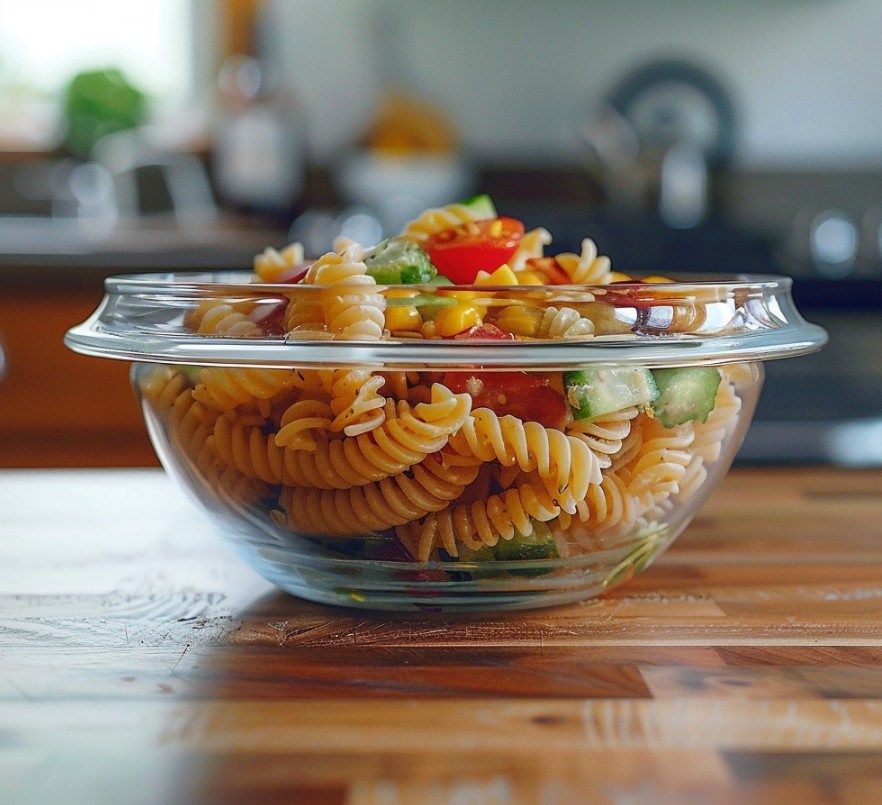
If you’re into quick, no-fuss meals, take a look at our roundup 10 dinner salad ideas. It’s packed with easy salads with vegetables, pasta, cheese, and other everyday ingredients that fit right into a weeknight routine.
Questions & answers
<!– wp:rank-math/faq-block {"questions":[{"id":"faq-question-1773271300799","title":"Which pasta is best for pasta salad?","content":"For pasta salads, the best choice is usually short pasta shapes that hold onto dressing and mix easily with other ingredients. For example:fusilli
penne
farfalle
rigatoni
small shells
These shapes toss well with vegetables and dressing.”,”visible”:true},{“id”:”faq-question-1773271312408″,”title”:”How long should you cook pasta for pasta salad?”,”content”:”Cook pasta to al dente—tender, but still a little firm. As a rule of thumb, that’s about 1 minute less than the package directions. This helps it stay firm after it’s mixed with dressing and chilled.”,”visible”:true},{“id”:”faq-question-1773271322074″,”title”:”Do you need to rinse pasta for pasta salad?”,”content”:”Often, yes. For cold salads, pasta is frequently rinsed with cold water to stop the cooking and cool it down quickly so it can be mixed with the other ingredients.”,”visible”:true},{“id”:”faq-question-1773271335666″,”title”:”How do you keep pasta from sticking together?”,”content”:”After cooking, you should:
drain it well
let it cool slightly
add a small amount of olive oil
A gentle toss helps prevent clumping.”,”visible”:true},{“id”:”faq-question-1773271351068″,”title”:”Can you cook pasta for pasta salad ahead of time?”,”content”:”Yes. You can cook the pasta a few hours before assembling the salad. Cool it, lightly coat it with oil, and store it in the fridge in an airtight container.”,”visible”:true},{“id”:”faq-question-1773271365661″,”title”:”Why does pasta in salad sometimes turn dry?”,”content”:”Pasta can absorb dressing as it sits. Before serving, add a little extra dressing or a drizzle of olive oil to bring back moisture and shine.”,”visible”:true},{“id”:”faq-question-1773271380903″,”title”:”When should you add dressing to pasta salad?”,”content”:”You can add some dressing right after the pasta cools so it absorbs flavor. It’s best to add the rest right before serving so the salad stays fresh and juicy.”,”visible”:true}]} –>
Which pasta is best for pasta salad?
fusilli
penne
farfalle
rigatoni
small shells
These shapes toss well with vegetables and dressing.
How long should you cook pasta for pasta salad?
Do you need to rinse pasta for pasta salad?
How do you keep pasta from sticking together?
drain it well
let it cool slightly
add a small amount of olive oil
A gentle toss helps prevent clumping.