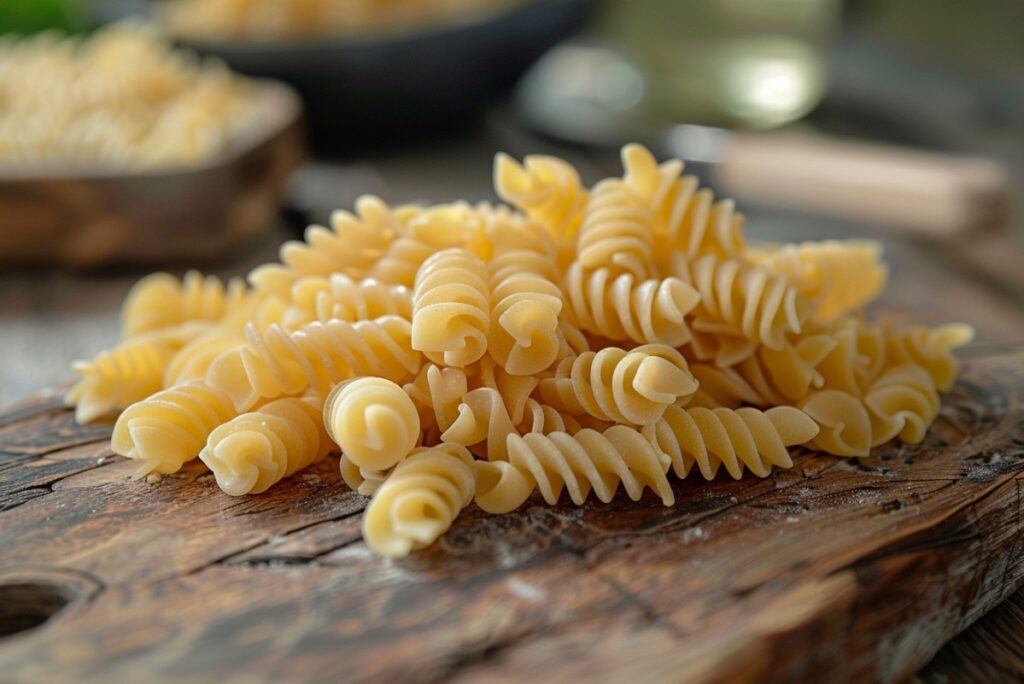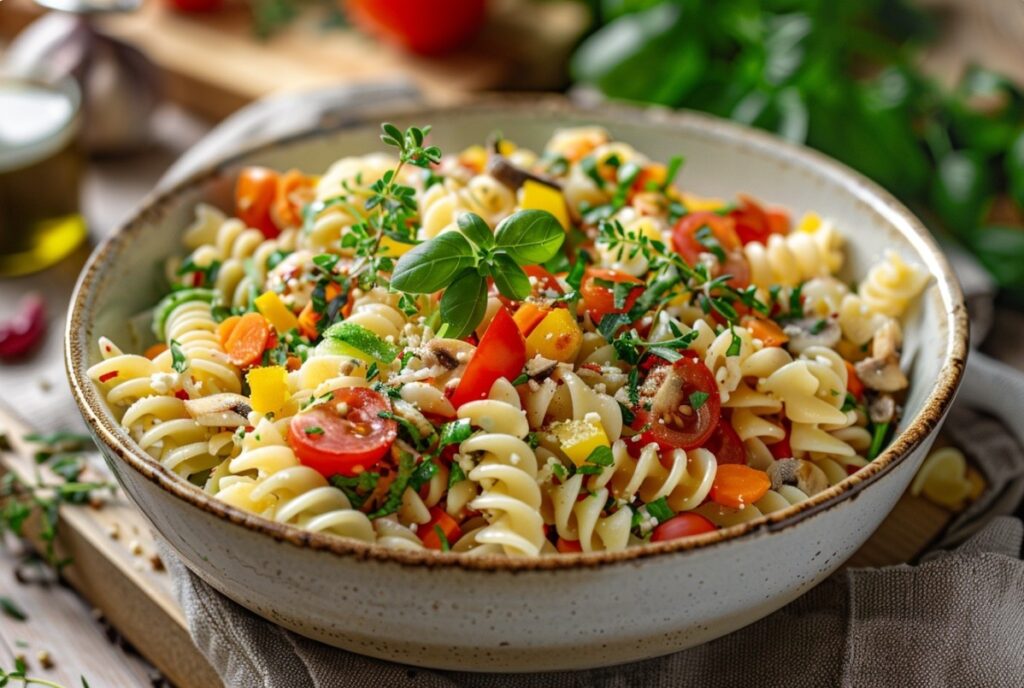
How to Add Ham to Pasta Salad (So It Stays Firm and Tastes Fresh)

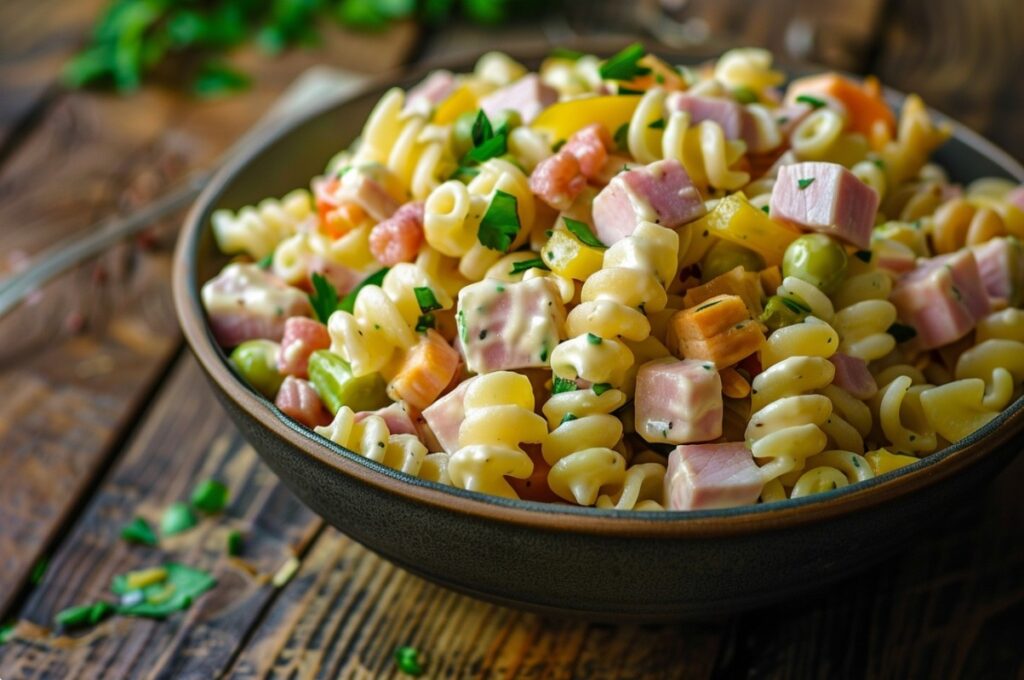
Some dishes feel totally foolproof. Boil pasta, toss in whatever’s in the fridge, stir it up—done, right? Then you open the container the next day and it’s… depressing: the pasta has clumped together, the ham is wet and kind of slimy, the smell is a little “off,” and the flavor tastes like everything is fine on its own—but together it just doesn’t click.
Most of the time, the problem isn’t the ham or the pasta. It’s the moment you bring them together: temperature, moisture, how you cut it, and even how long the bowl sits out. Ham is fully cooked, but it’s sensitive to heat and extra water. Pasta, on the other hand, comes out hot, steamy, and ready to soak up everything around it.
I once had to make a big bowl of pasta salad for a family-style spread, and on autopilot I tossed the ham into pasta that was still warm. It looked great for about 10 minutes. Then the ham lost its bounce, turned into something like a boiled rag, and a weird little “broth” collected at the bottom of the bowl. Ever since, I pay close attention to when and how I add sliced meats to cold salads.
If you want a pasta salad where the ham stays firm, smells good, and stays at a safe temperature—without the whole thing turning into mush—there are a few simple choices that make all the difference. No fancy tricks. Just control.
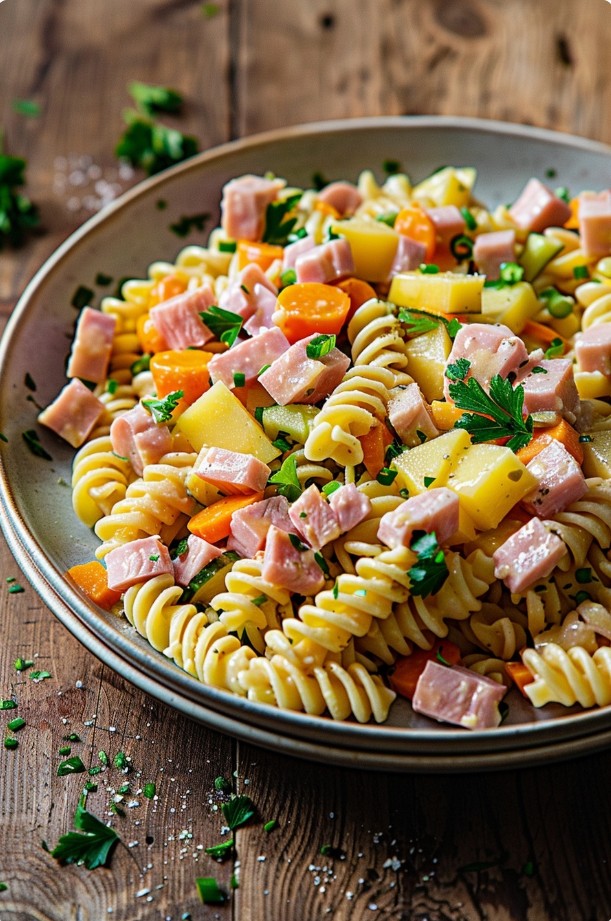
Which ham to choose: not all of it behaves the same
“Ham” on a label can mean wildly different things. In a salad, you’ll feel it: one kind holds its shape and flavor, another falls apart, leaks water, and picks up random fridge smells overnight.
I think of ham as a ready-to-eat product with a certain moisture level, saltiness, and density. In pasta salad, those details matter more than you’d expect.
Texture: firm vs “wet”
Firm ham (the kind that springs back under the knife, doesn’t crumble, and doesn’t smear your cutting board) usually handles mixing with pasta and dressing much better. It doesn’t release moisture as quickly and keeps a nicer bite for longer.
Very soft, very moist ham often acts like a sponge: first it releases juices, then it absorbs the dressing, and the pieces end up slippery. The flavor might be fine, but the mouthfeel… not so much.
Cut: a whole piece or pre-sliced
Pre-sliced ham is convenient, but it’s not always ideal for salad: thin slices “go soft” faster when they hit salt and acid in the dressing. If I can, I buy ham as a single piece and cut it myself—then the thickness and shape match what I’m making.
If you do buy slices, don’t tear them up with your hands into chaos. Stack a few slices and cut neat strips or small squares—less damage, cleaner look.
Smell as a test
Before I even start cutting, I always pause: open the package and take a normal sniff. It should smell meaty and clean—no sour note, no weird sweet “suspicious” aroma, and no stale, damp vacuum-pack smell.
A slight packaging smell can happen, especially with vacuum-sealed ham. But it should fade within a minute or two. If it doesn’t—or it gets worse—that’s your sign not to gamble.
Tip: if vacuum-packed ham smells like “packaging,” leave it uncovered on a plate in the fridge for 3–5 minutes. The smell often settles down, and the surface moisture dries a bit.
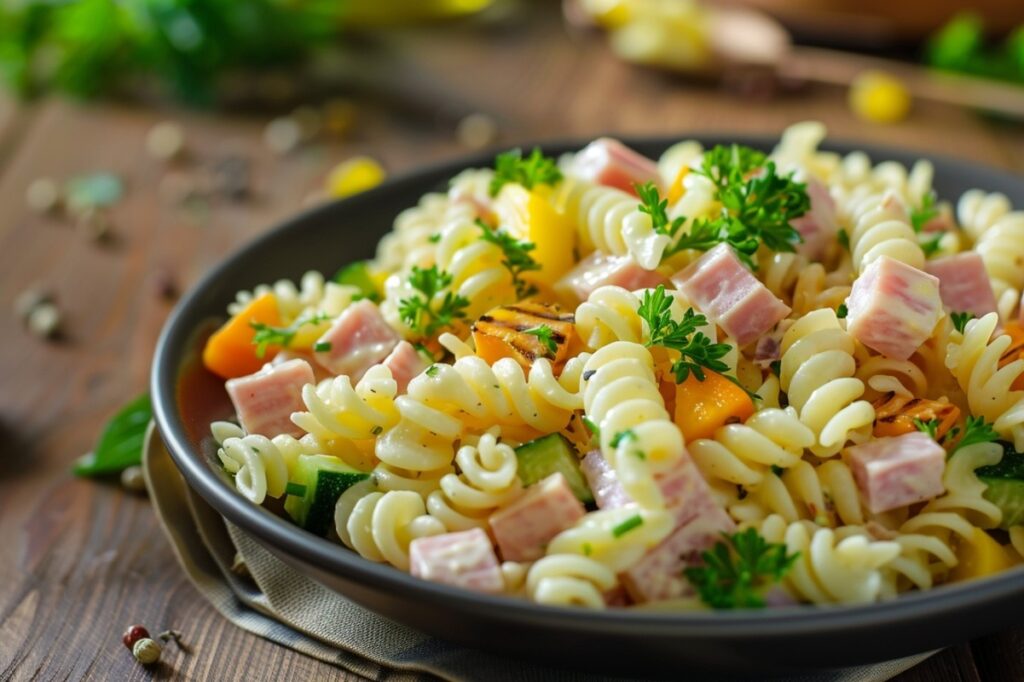
Temperature: the one thing that ruins both flavor and food safety
Pasta salad often “breaks” in a single second—the second you toss ham into warm pasta. It’s such an easy mistake: you want to finish quickly, everything’s on the counter, the bowl is huge, your hands are busy. But that moment decides whether the salad will still be appetizing an hour later.
Why you shouldn’t add ham to hot pasta
Hot pasta carries steam and heat you can’t always see. Ham is already cooked. With heat, its fat starts to melt, the proteins tighten at the edges, and the pieces lose that nice springy bite. Then there’s condensation: steam turns into water on the cooler ham—so you end up with wet pieces and extra liquid in the salad.
One more thing: if you’re planning to store the salad, warm ingredients keep the whole bowl in that “warm zone” for longer. No scare tactics—just the simple idea that heat + moisture + time is never your friend when ready-to-eat meat is involved.
How it should be: cool with cool (or almost cool)
My working rule: ham goes in only when the pasta no longer feels warm to the touch. Not “just slightly warm,” not “it’ll be fine”—actually cooled down. That’s how the ham keeps its aroma, and the dressing coats everything instead of turning into a puddle.
At home it often looks like this: you drain the pasta, it’s hot, you toss it around, and it seems “fine” already. But the center of the pile is still holding heat. If you’re unsure, touch a few pieces from the middle of the bowl with the back of your finger—not just the top layer.
Quick cooling without the drama
I’m not a fan of extremes like “rinse the pasta under the tap.” Sometimes it’s appropriate, but often it washes off surface starch so the dressing doesn’t cling as well. A gentler approach works better.
- Spread the pasta out in a thin layer on a large plate or a baking tray so it releases heat faster.
- Toss it lightly 2–3 times with short pauses so steam can escape instead of getting trapped in the pile.
- If you’re in a rush, set the plate near an open window or under the range hood on low. It’s simple, but it works.
Tip: don’t cover the pasta while it cools. The steam has nowhere to go, and it comes back as water.
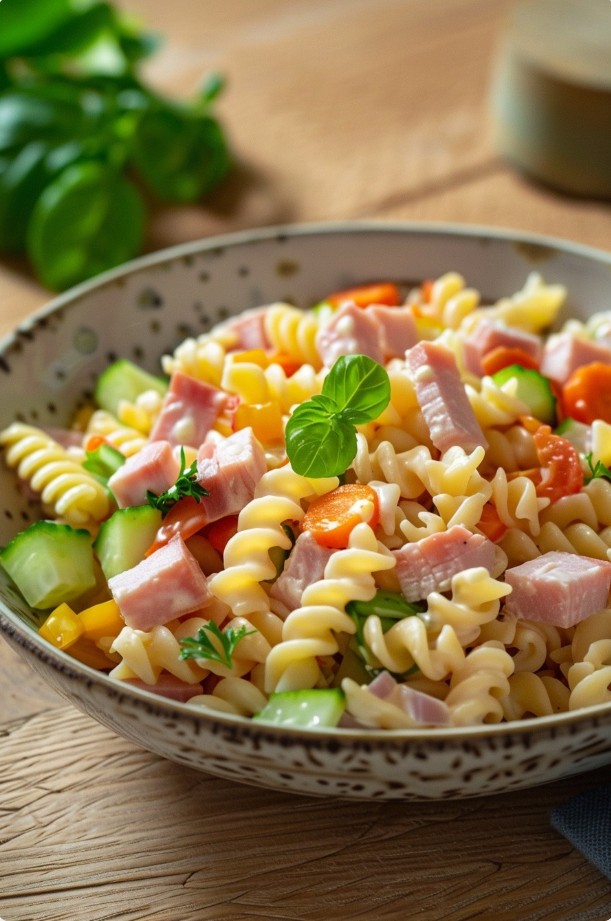
How to cut the ham: size changes how it eats in the salad
There’s a little nuance here: in pasta salad, you’re not eating “ham by itself.” You’re getting a bite of ham with a piece of pasta, a vegetable, and dressing. If the cut is wrong, you’ll either be chewing ham separately or chasing it around the bowl with your fork.
Cubes, strips, or tiny bits—what each one does
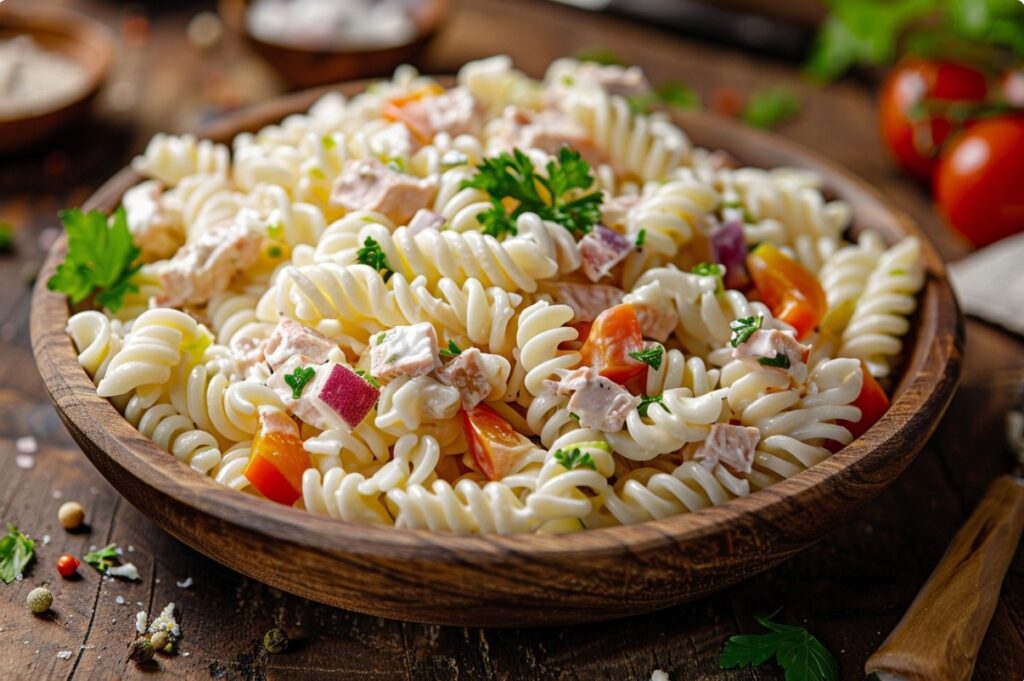
Medium cubes give you that satisfying “meaty bite.” They work especially well with short pasta shapes (penne, shells). Just don’t go huge—big chunks steal the spotlight and make the salad feel clunky.
Strips are my favorite for longer pasta or when I want the salad to feel lighter. Strips get coated with dressing more evenly and distribute better through the bowl.
Very small dice can save you if the ham isn’t great quality or is overly salty: tiny pieces spread out and don’t hit your palate as hard. The downside is texture—after the salad sits, it can start to feel a bit pasty.
How to cut it so it doesn’t tear or “leak”
Ham usually tears not because it’s bad, but because it’s being cut with a dull knife—or while it’s warm. Here’s what I do:
- Make sure the ham is chilled. Cold ham slices cleaner.
- Use a well-sharpened knife. It doesn’t have to be fancy—just sharp. A dull knife presses instead of slicing.
- Use a long, smooth slicing motion. Don’t chop straight down—draw the blade through.
One more home-kitchen trick: if the ham is very soft, I sometimes pop it in the freezer for 10 minutes (not to freeze solid—just to firm it up). The difference in how neatly it cuts is night and day.
Tip: if the ham sticks to the knife, wipe the blade with a paper towel and make a few cuts using a long stroke. The stickiness is often surface moisture, not “too much fat.”
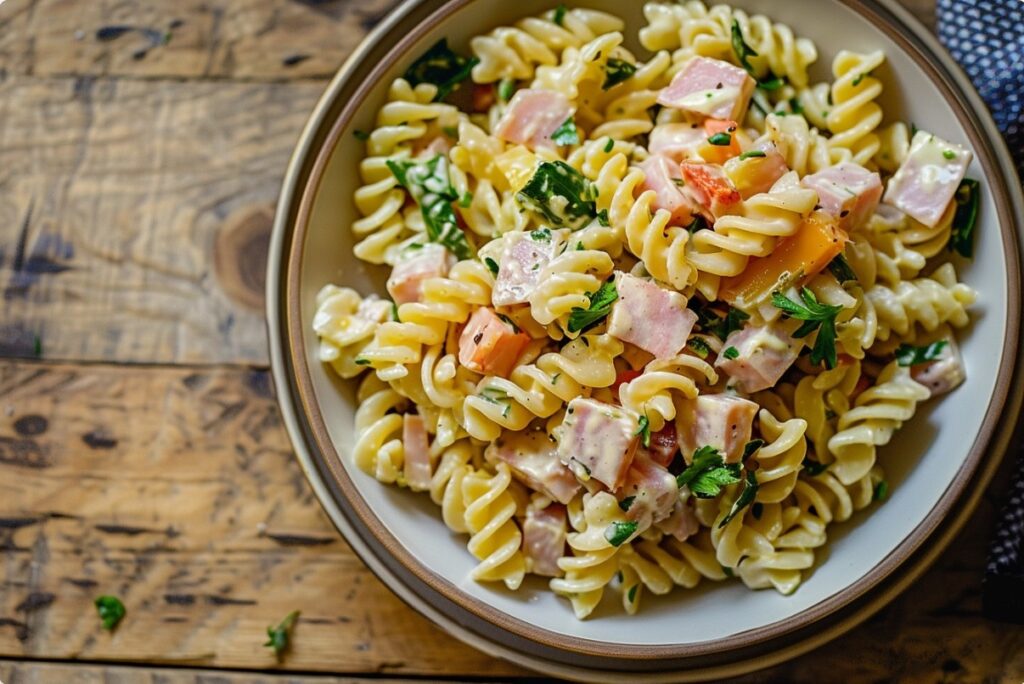
Mixing order: how not to turn ham into a ‘boiled napkin’
Salad isn’t just “everything into a bowl.” The order genuinely affects how long it stays tasty—especially when you’ve got pasta (which absorbs) and ham (which releases moisture and aroma).
How people usually do it vs what works better
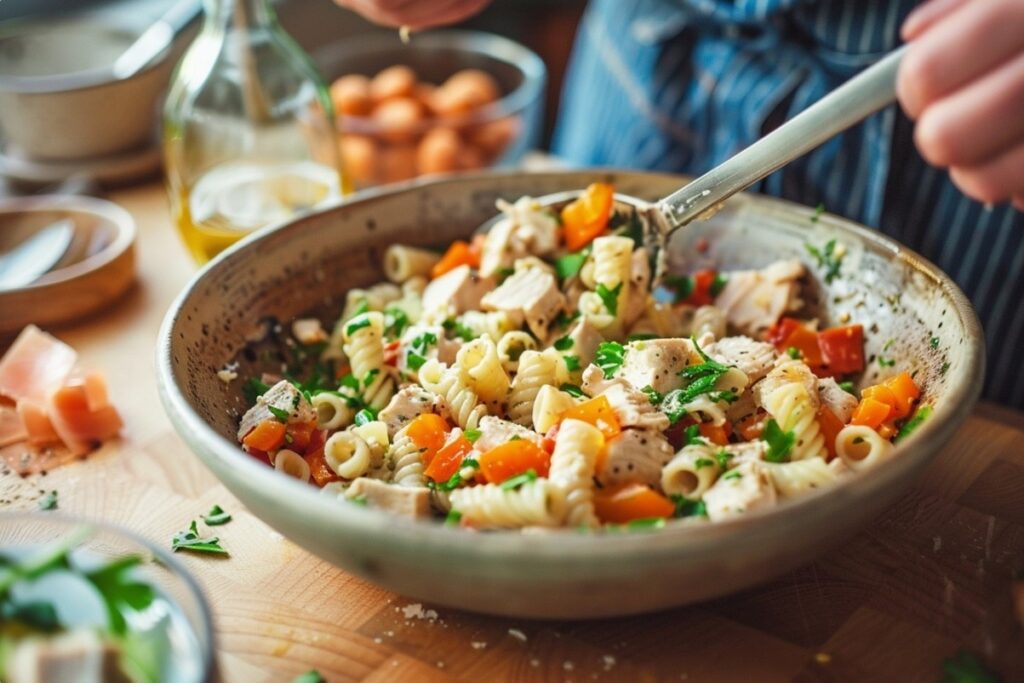
How people usually do it: drain the pasta, toss ham straight into the same pot, add dressing, stir. Convenient—one pot, minimal effort. But the result is unpredictable: heat, steam, uneven dressing, and ham that “floats” into softness.
What works better: cool the pasta until it’s truly not warm, prep the ham separately, then combine. It’s not extra fuss for the sake of fuss—it’s letting each ingredient enter the salad in its best condition.
Use the dressing as a “buffer” between pasta and ham
Here’s a technique that saves texture: mix the pasta with a small portion of the dressing first, then add the ham. That thin coating helps the pasta pull less moisture from the meat.
This matters even more if your dressing is on the salty or acidic side—both can draw juices out of ham quickly. When the ham meets pasta that’s already lightly coated, the contact is gentler.
How much to mix
Pasta salad is easy to overmix. I’ve watched people stir hard for a minute or two, and cubes of ham turn into ragged shreds while the pasta breaks.
My rule: mix only until it’s evenly combined. Two or three big, gentle folds from the bottom up, pause, check—one more fold if needed. Done.
Tip: if the bowl is huge and you’ve made a lot, mix with two spoons like salad tongs. Less pressure on the ham and pasta.
Storage and safety: ham pasta salad doesn’t like hanging out on the table
No panic here—just honesty: pasta salad with ham loses quality quickly if it sits at room temperature for too long. Not because it “goes bad in 10 minutes,” but because moisture plus protein is a very comfortable environment for things we don’t want.
And even if safety isn’t the issue, flavor and texture definitely suffer. Ham in a warm salad smells stronger, but not always better; fat can rise to the surface, and creamy dressings can split.
How to handle it before serving
- If you’re making it ahead, keep it in the fridge and pull it out closer to serving time—not an hour early “so it won’t be cold.”
- For a long gathering, put out smaller bowls and refill as needed instead of letting one big bowl warm up for hours.
- Don’t leave the salad in the metal pot you cooked the pasta in. Even after draining, metal holds heat for a long time.
Containers and fridge smells
Ham picks up other smells easily. If the salad sits uncovered, by morning it can taste like “fridge”—and that’s not the seasoning we’re going for.
A sealed container (or at least a bowl with a lid) isn’t a luxury—it’s the difference between “still good tomorrow” and “why does this taste weird?” One more thing: if the lid is tight and the salad was even slightly warm, you’ll get condensation inside. So cooling before sealing isn’t just a formality.
A quick real-life story
Once at my place, we made a salad and left it on the counter “for later” because everyone drifted off and nobody wanted to clean up. A couple of hours later it still looked okay, but the smell had turned heavy and the ham felt tacky. Nobody got sick, but nobody wanted to finish it either. That’s the most common outcome—not a disaster, just wasted food and a bad mood.
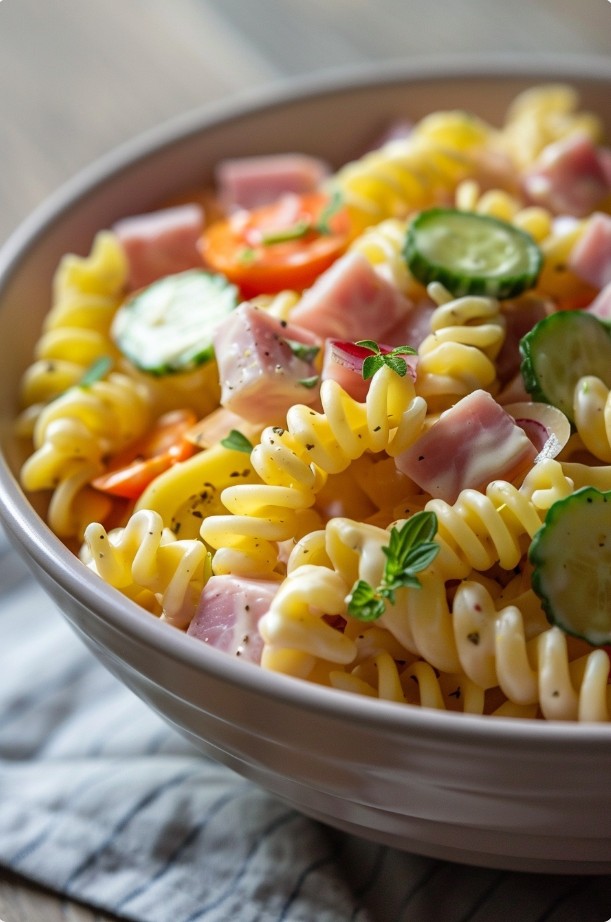
Common mistakes that make ham dry, slimy, or bland
This list isn’t here to shame anyone—I’ve done all of it myself. It’s just helpful to recognize the pattern: “Oh, that’s exactly where I mess up every time.”
Mistake 1: adding ham to warm pasta
Result: the ham loses its bounce, extra liquid appears, and the salad goes downhill faster in both smell and taste.
Do this instead: pasta cooled, ham cold, bowl not hot.
Mistake 2: cutting it too thin
Result: the pieces “disappear” or turn into wet ribbons, especially with a punchy dressing (salty/acidic).
Do this instead: cut it fork-friendly. You should feel like you’re eating ham—not its shadow.
Mistake 3: mixing too long and too hard
Result: the ham tears, the pasta breaks, and the salad looks tired.
Do this instead: a few gentle folds, pause, assess, one more fold—stop.
Mistake 4: using ham that smells questionable “because it’s a shame to toss it”
Result: you spend time making a salad, and it still doesn’t make you happy. This isn’t only about safety—it’s about enjoyment.
Do this instead: if you don’t like the smell, don’t try to hide it in a salad. Swap the filling or skip the idea.
Mistake 5: storing the salad uncovered
Result: fridge odors, a dried-out surface, uneven texture.
Do this instead: cool it first, then store it in a sealed container.
Tip: if the salad has been in the fridge and seems a bit dry, don’t rush to drown it in dressing. Mix it first and let it sit for 5 minutes—pasta often absorbs unevenly, and a short rest helps the texture even out.
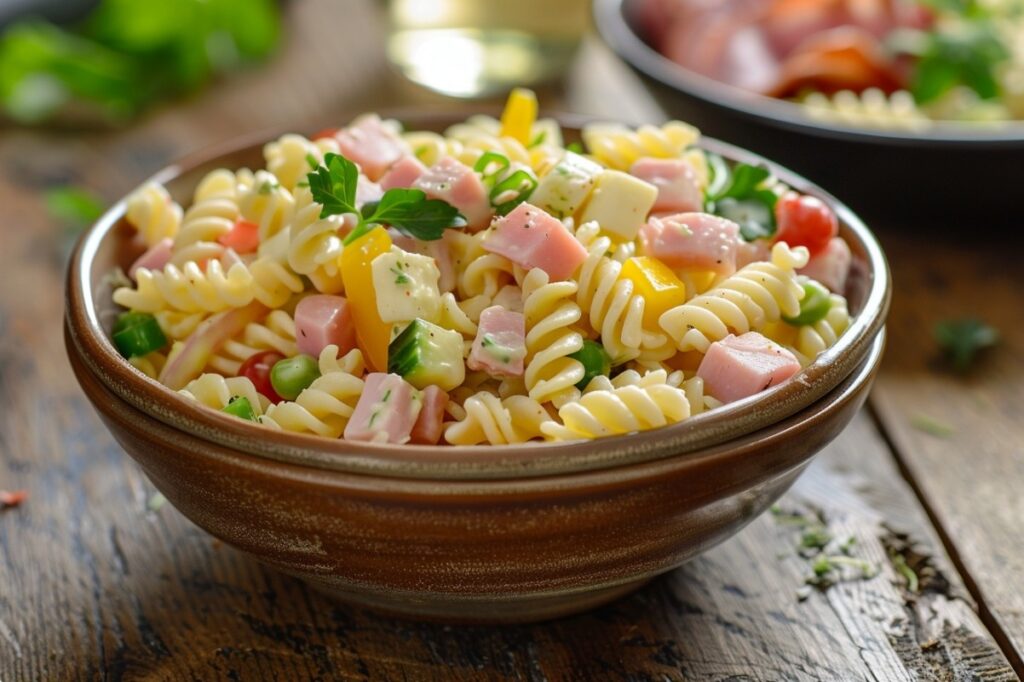
If something goes wrong: quick fixes without starting over
Salad is a living thing. Sometimes you do everything “right,” and it still goes its own way: the pasta was warmer than you thought, the ham was wetter, the dressing was heavy-handed. I like having a few repair moves in my back pocket so I don’t have to toss a whole bowl and get annoyed.
If the ham turned slimy and liquid collected in the bowl
This happens when things were warm or the dressing hit with a lot of salt/acid at once. Try this:
- Carefully pour off the extra liquid from the bottom (hold the salad back with a spoon).
- Chill the salad for 20–30 minutes—cold helps the texture tighten up a bit.
- Mix very gently. After chilling, the slippery feel often calms down.
If it’s very slimy and the smell is odd, I wouldn’t try to be a hero. That’s where I’d stop.
If the ham became dry and tough
This is usually from heat, or from ham that was too lean and cut too thin. Try this:
- Let the salad sit for 10 minutes after mixing—sometimes the ham softens a bit as moisture redistributes.
- Next time, cut slightly thicker or choose a denser ham with better “bounce.”
I don’t love “reviving” dry ham by adding lots of dressing—it makes the salad heavy and greasy, and only half-solves the problem.
If the salad is too salty
Ham is salty on its own, and it’s easy to forget that. If it happens:
- Let it sit for 15 minutes—sometimes the flavor evens out as the salt disperses.
- Add a neutral “base”—a portion of cooled pasta with no extra salt, if you have some.
- Avoid adding more salty ingredients, and go easy on extra acidity: acid makes salt taste sharper.
If the salad turned to mush
Honestly, it’s hard to fully bring the texture back. But you can make it more pleasant:
- Chill it well—cold makes mush feel less obvious.
- Add something crunchy (not as a “recipe,” just as a principle). Crunch distracts and brings freshness.
- Next time, mix less and don’t leave pasta sitting in a warm pot after draining.
Tip: if the salad has “gone watery,” sometimes it’s enough to tip it into a colander for 1–2 minutes (no pressing) to drain excess liquid. Then return it to a dry bowl and fold gently.
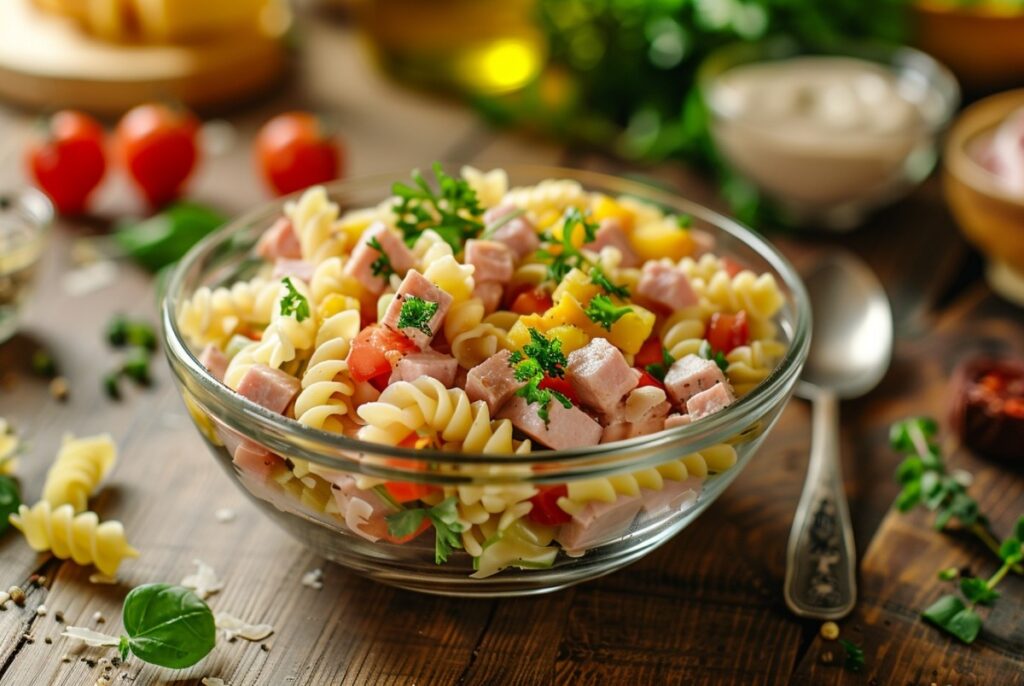
Flavor mechanics: how to make the ham stand out instead of disappearing
No “secret spice” here. What matters is this: in pasta salad, ham flavor is easy to mute—starch, rich dressing, and fridge-cold temperature can all dull it. Then you end up eating something filling, but without that meaty character you wanted in the first place.
Why cold mutes aroma
When a salad is very cold, aromas don’t rise as much. It’s just physics—volatile compounds stay quiet. That’s why people sometimes add more salt or more dressing and end up making it worse.
I like to take pasta salad out of the fridge 10–15 minutes before serving so it’s cool, not icy. The ham smells better, and the flavor feels fuller without extra tinkering.
Texture balance so the ham doesn’t feel rubbery
Ham in salad should be springy or tender—but not rubbery. “Rubbery” usually happens when:
- the pieces are too big and you chew them forever;
- the ham dried out from heat;
- the salad sat uncovered and the surface dried out.
The fix is often simple: the right cut size + properly cooled pasta + decent storage. It sounds basic, but that’s cooking—small things make the flavor.
A quick story about “disappearing ham”
I went through a phase where I diced ham super small because I thought it would distribute more evenly. It did… so evenly that you couldn’t taste it. The salad was filling, but it had no personality. I switched to slightly thicker strips, and suddenly that meaty accent came back—the whole reason you add ham at all.
If I had to sum it up: ham likes cold, a clean cut, and as little extra heat as possible. Pasta likes cooling without condensation and gentle mixing. And pasta salad likes it when you don’t rush at the exact moment you usually want to “just finish already.”
How do you usually add ham to pasta salad—cubes or strips? And do you let the pasta cool completely, or do you toss it in “while it’s still warm”? I’m curious what works best for you in real life.
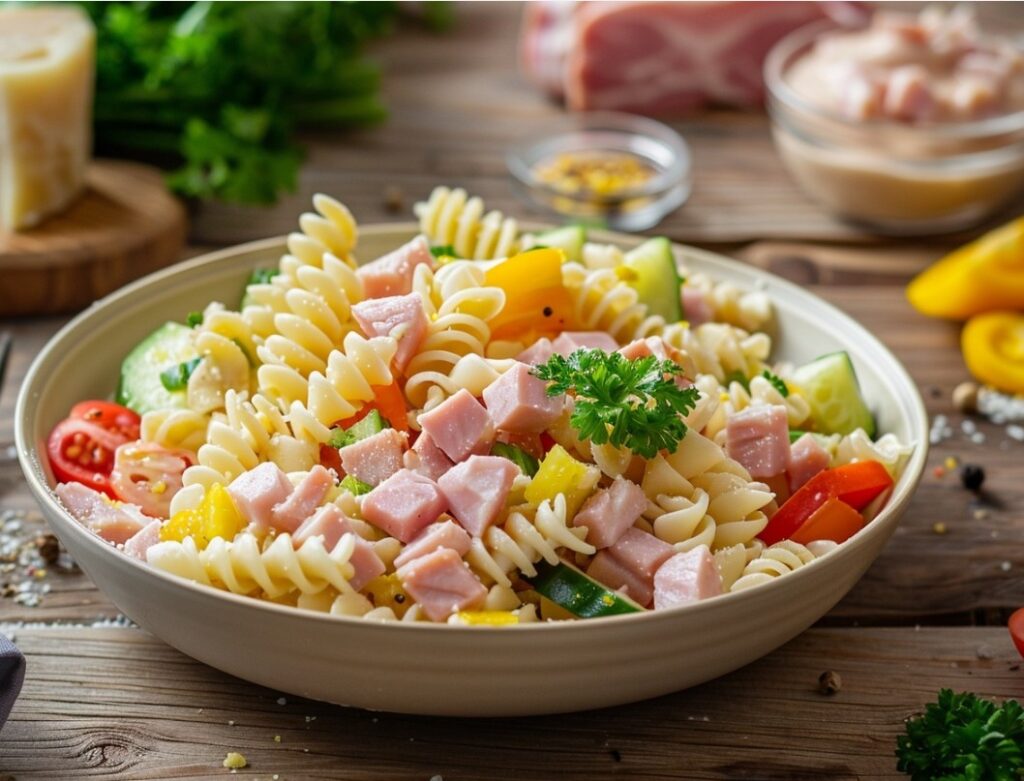
Questions & answers
Which ham is best for pasta salad?
The best choice is lean cooked ham or turkey ham. It has a mild flavor and pairs well with pasta, vegetables, and creamy dressings. The key is using ham that’s fresh and not overly smoky.
How should I cut ham for pasta salad?
The easiest option is to cut the ham into small cubes, about 1 cm. That size matches the pasta well and helps the ham distribute evenly throughout the salad.
Can I use smoked ham?
Yes—smoked ham works in pasta salad and adds a deeper aroma. Just use it in a smaller amount so the smoky flavor doesn’t overpower the other ingredients.
When should I add ham to the salad?
Add the ham after the pasta has cooled. If you mix it into hot pasta, the texture can change and the salad won’t taste as fresh.
What ingredients pair well with ham in pasta salad?
Ham goes well with:
cheese
corn
cucumber
sweet pepper
green onion
eggs
Together they make a balanced, crowd-pleasing flavor.
What dressing works best with ham pasta salad?
Most often, a creamy dressing works best:
mayonnaise
yogurt
sour cream
mustard
lemon juice
It pairs nicely with ham and keeps the salad tender and cohesive.
Can I make ham pasta salad ahead of time?
Yes, you can make it a few hours ahead. After chilling, the ingredients meld and the flavor becomes more rounded. Before serving, you can add a little extra dressing if it needs loosening up.