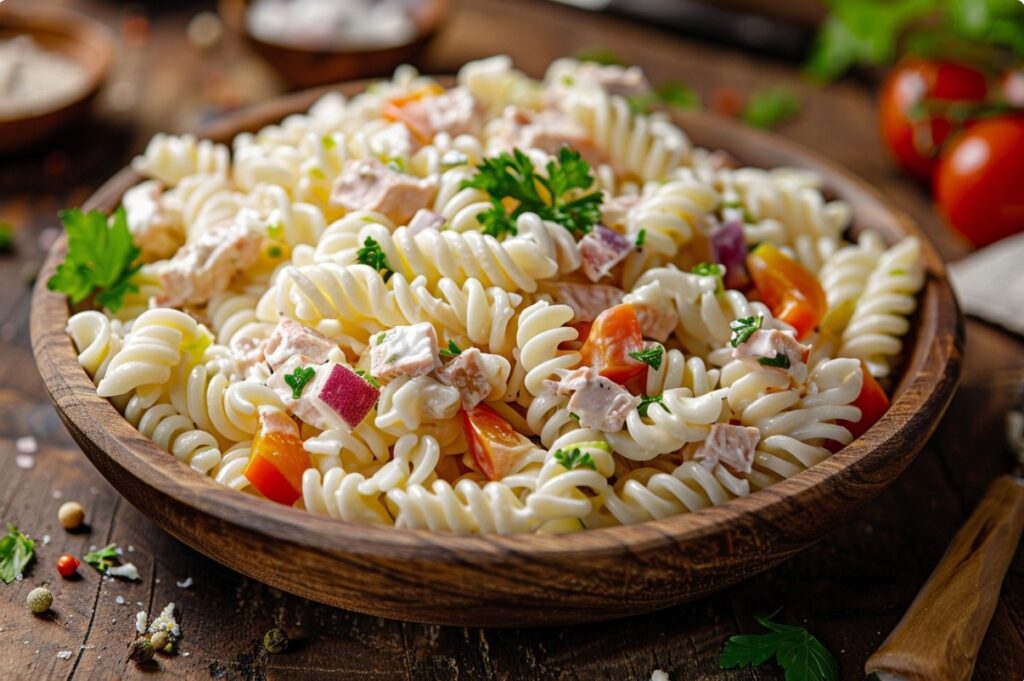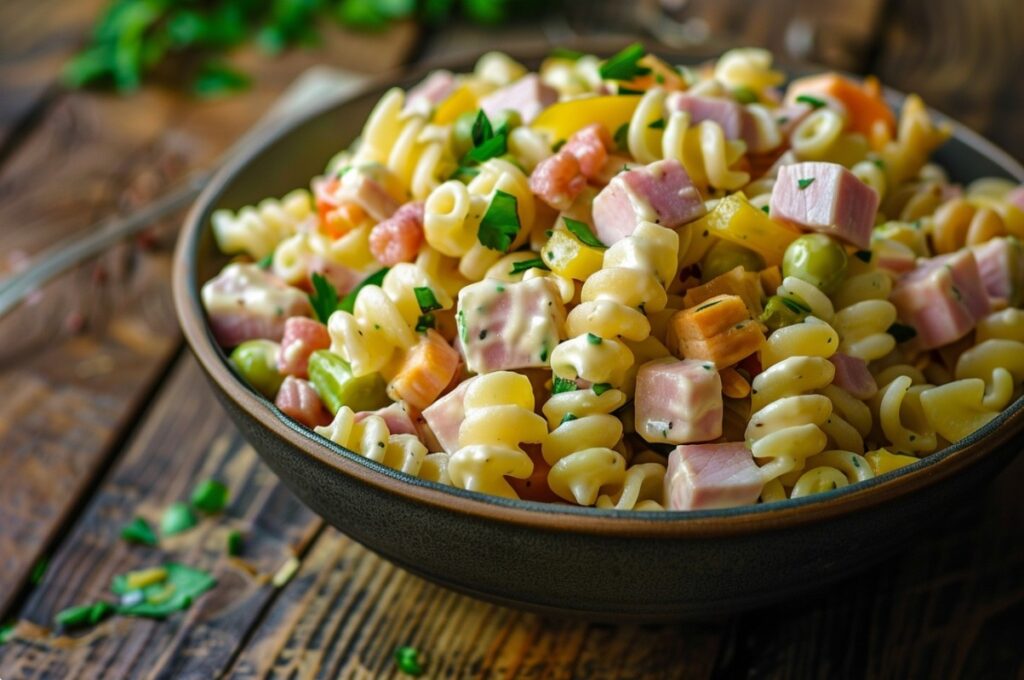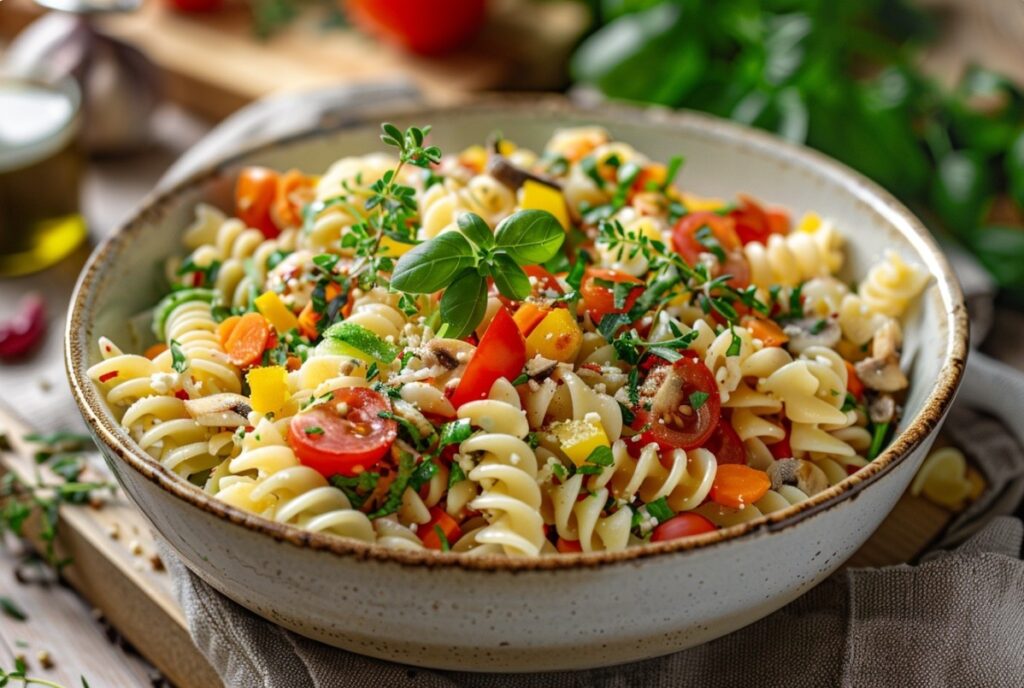
How to Prep Chicken for Pasta Salad (So It Stays Juicy, Not Watery)

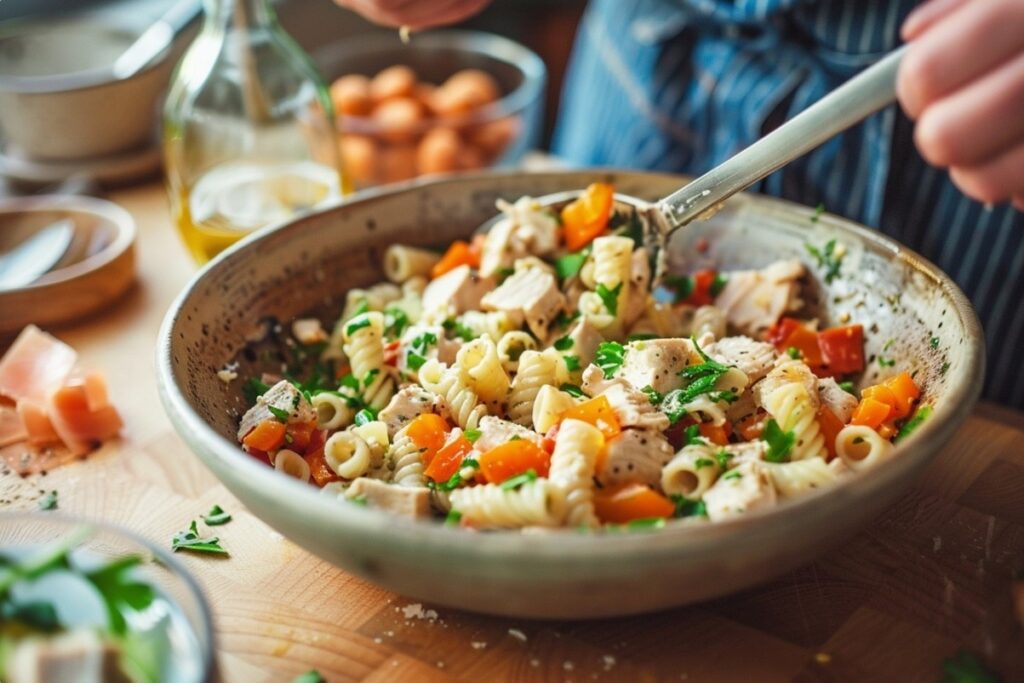
Here’s a very familiar home-kitchen scenario: you’ve boiled the pasta, chopped the veggies, cracked open a can of corn—and there’s just one “little thing” left: the chicken. Sounds easy, but it’s the part that most often ruins the whole salad. The meat turns out dry and stringy, or watery and bland, or somehow suspiciously pink (even when there wasn’t a bone in sight). Or the salad starts “swimming” because the chicken releases its juices right in the bowl.
I’ve seen it a hundred times: people are afraid of drying chicken out—so they undercook it. Then they’re afraid of it being raw—so they cook it into sawdust. And there’s a special kind of frustration when the chicken seems fine, but an hour in the fridge later the salad turns heavy, sticky, and just… not great-smelling. At that point, the mood is gone.
Truth is, prepping chicken for pasta salad isn’t about hunting for the “right recipe.” It’s about control: temperature, timing, safety, texture—and a few small choices that keep the meat juicy without making it wet. I’ll walk you through how I do it at home on a regular stove, no tricks and no chef-speak, so you can cook calmly and stop second-guessing everything.
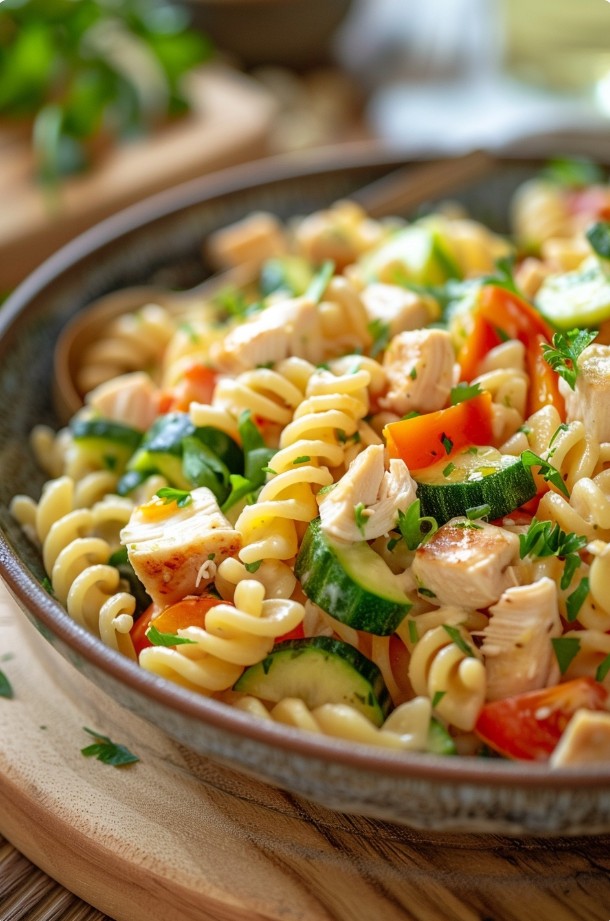
Which chicken to use (and why that’s already half the win)
In pasta salad, chicken has two jobs: add protein and give you a satisfying bite—firm, but still tender. That’s why the cut matters. I’m not saying there’s a strict “right vs wrong,” but there is a logic to it.
Breast, thigh, or leftover roast chicken: how it changes the salad
Chicken breast is the most popular option because it’s quick and “clean.” The downside: it dries out easily. The upside: mild flavor, plays nicely with dressings, and doesn’t make the salad feel heavy.
Boneless chicken thigh is my favorite when I want guaranteed juiciness. It has more fat, so it forgives mistakes and stays tender even after chilling. The downside: the flavor is more pronounced, and if your salad dressing is delicate, thigh can steal the spotlight.
Store-bought rotisserie chicken or yesterday’s roasted chicken is super convenient, but there’s a catch: the seasoning, salt, and fat are already “set,” so the salad can suddenly taste too salty or oddly smoky. If you’re using cooked chicken, taste a small piece first and decide if it actually fits the rest of your ingredients.
Fresh vs frozen: not snobbery—it’s about water
Frozen chicken is totally fine. The problem isn’t the freezing—it’s the thawing. Thaw it on the counter and the outside warms up while the center stays icy, so you end up cooking “two chickens in one”: the edges dry out while the middle lags behind. It’s also a food-safety risk.
My simple rule: thaw in the fridge (overnight or during the day). If you’re short on time, put it in a sealed bag and thaw in cold water, changing the water a few times. You’ll get a more even thaw and the meat won’t soak up extra water.
A quick story from my kitchen
Once I was rushing and tossed a half-frozen breast into a pan. The outside seized up, turned white, and looked done—then I sliced it and the center was cold and semi-translucent. I had to keep cooking it, and the edges ended up paper-dry. Ever since, I’d rather spend 15 minutes thawing properly than spend an hour trying to rescue a salad.
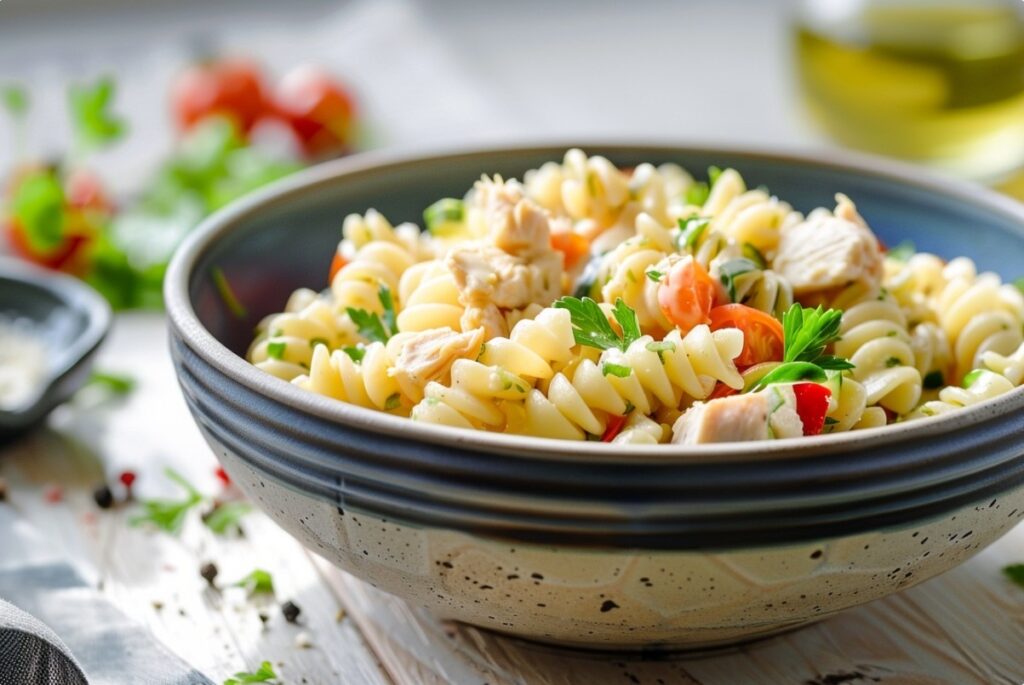
Food safety: how to stop guessing and avoid turning salad into a gamble
With chicken, the goal isn’t bravery—it’s predictability. Pasta salad often isn’t eaten right away: it sits on the table, then goes into a container, then lives in the fridge. So we’re not only thinking “tastes good right now,” but also “still fine 6–24 hours later.”
Internal temperature: the most honest guide
If you have a kitchen thermometer, it’s not a “pro gadget”—it’s a way to stop stressing. For chicken, the target is simple: at least 74°C in the center. Not on the surface, not “somewhere around there,” but in the thickest part.
No thermometer? You can use visual cues, but they’re less precise:
- the juices run clear (no pink) when you pierce it;
- the meat looks opaque inside, not glossy;
- the fibers separate, but don’t crumble.
One important note: sometimes a pink tint isn’t rawness—it can come from the meat itself or from a marinade. But at home, I’m not into playing detective. A thermometer (or a method that leaves no doubt) is the calmer option.
Cleanliness and cross-contamination: the small things that actually matter
The most common home mistake isn’t “you cooked it wrong,” it’s mixing raw and cooked without noticing. Knife, board, plate, hands, fridge handle—and suddenly bacteria are going on a little tour.
This simple system helps me:
- a separate board (or at least a separate side) for raw chicken;
- one plate for raw, a different plate for cooked;
- wash the knife right after raw chicken—hot water + dish soap, not “later”;
- don’t dip a spoon into mayo/yogurt dressing if it touched raw chicken.
It sounds fussy, but in real life it takes 30 seconds and removes a lot of risk.
Cooling: why hot chicken in salad is a bad idea
When you toss hot chicken into a bowl with pasta and vegetables, two things happen. First: condensation—steam turns into water and the salad gets wet. Second: you create a temperature danger zone where a big bowl of “warm salad” cools down slowly, which is not what you want if you plan to store it.
What I do: cook chicken to a safe doneness, let it rest for 5–10 minutes, then cool it down to warm/room temp before mixing.
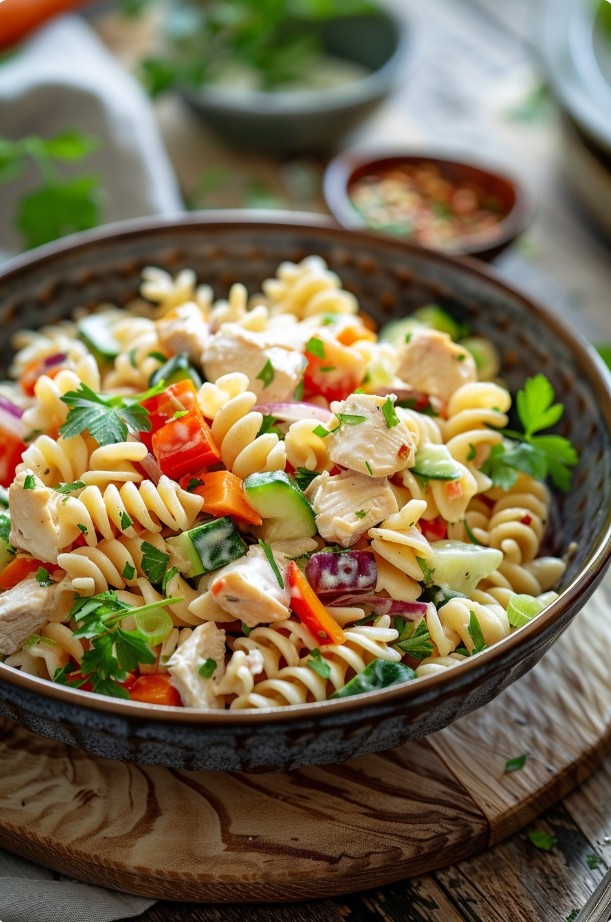
How to keep chicken juicy but not watery: the texture mechanics
This is where people usually sigh: “How is it juicy for everyone else and dry for me?” No magic here. Just protein, water, and temperature.
What happens to chicken on heat
As chicken heats up, proteins tighten and contract. The higher the temperature and the longer you cook, the more they squeeze—and the more moisture gets pushed out. At a certain point you’re not “making it more done,” you’re just pressing the juices out.
So the key isn’t “cook faster,” it’s cook evenly: the center reaches a safe temperature before the outside turns into a dry shell.
Thickness matters more than marinade
On a home stove it often goes like this: the pan is hot, the breast is thick like your palm. You cook and cook—outside is browned, inside is still underdone. So you add time. And the edges go dry.
A genuinely useful trick: even out the thickness. You don’t need to pound it into schnitzel territory. Just butterfly the thick end or gently flatten so the piece is more uniform. Heat travels more evenly, and you’re much less likely to overcook.
Resting after cooking isn’t optional
If you pull chicken off the heat and slice immediately, it often “cries” juices. That doesn’t mean it’s bad—there’s just still a lot of moisture movement inside, and the juices take the easiest exit route: onto your cutting board.
Give it 5–10 minutes. I usually cover it loosely—like a little roof—so it doesn’t steam. After that, slicing is easier, the meat holds its shape, and you won’t flood your salad with extra liquid.
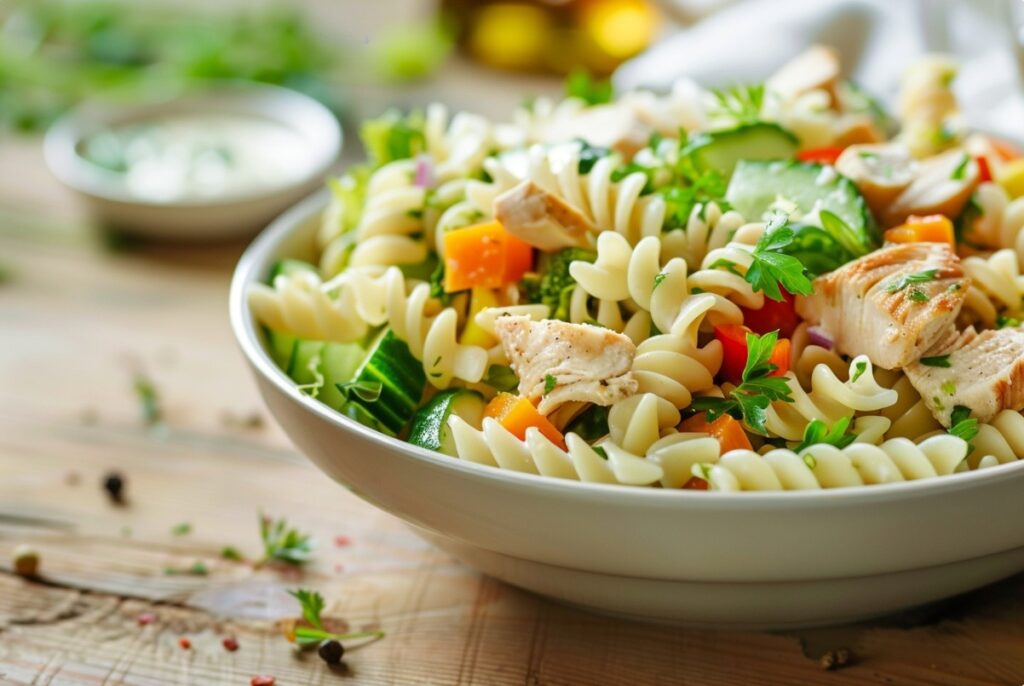
Three reliable ways to cook chicken for pasta salad (and when to choose which)
For pasta salad, I want chicken that’s easy to cube or shred, and that won’t smell aggressively “fried” if the salad is meant to be light. These are the three methods I use most often.
1) Gentle poaching/simmering: when you want softness and a clean flavor
This method gets a bad reputation because “boiled chicken is sad.” But it’s not about boiling—it’s about temperature. If chicken is rolling around in a hard boil, it turns dry and stringy. Keep it in hot water without an aggressive boil and it cooks evenly and stays tender.
Signs you’re doing it right: the water barely moves, with a few lazy bubbles—not a storm. The smell is clean and chicken-y, not harshly “brothy.” The cooked meat feels springy, not rubbery.
Tip: if you’re afraid of drying out chicken breast, it’s better to cook it longer at a very gentle simmer than quickly at a hard boil. The result is almost always more tender.
2) Baking: when you want a firmer bite and a light roasted aroma
Baked chicken is great for salad because it comes out a bit firmer and is easy to cut neatly. But it’s easy to overdo it—especially with breast. I like to bake it so the surface just barely browns, without forming a thick, tough crust.
Signs it’s baked well: the surface looks dry, but the meat springs back when pressed; the aroma is warm, not burnt; when you slice it, there’s no puddle of juice, but it also doesn’t crumble into dryness.
3) Quick sear + finish: when you want cubes with a little attitude
If your salad is on the heartier side (say, with a thicker dressing), a light sear adds great flavor. The trick is not turning the chicken into croutons. I do it like this: brown quickly over medium-high heat, then finish on lower heat or under a lid so the center catches up.
You can even listen for it: when the pan is hissing loudly, moisture is evaporating fast. When the sound gets quieter and steadier, you’re getting close to the point where overcooking becomes the real risk.
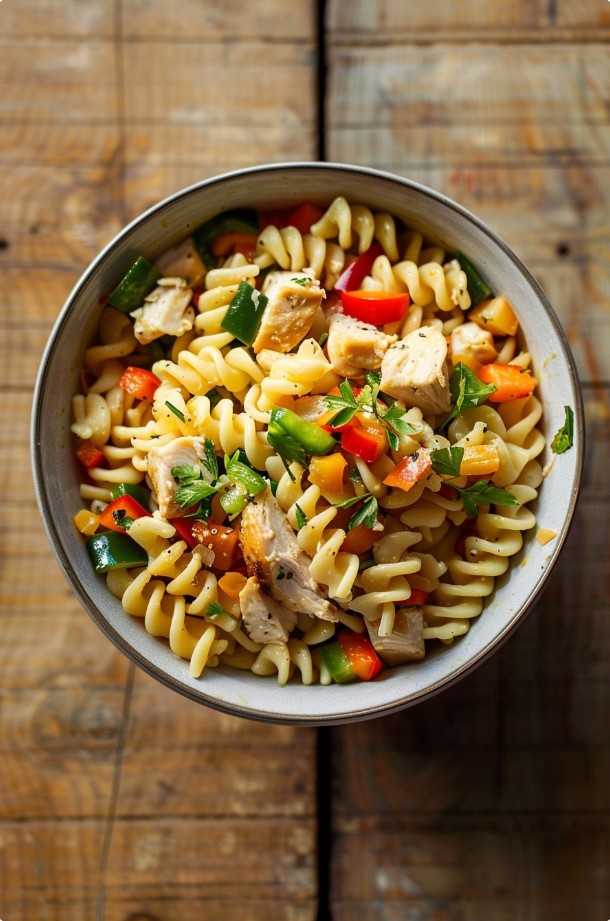
Salt, seasoning, and aroma: how to flavor chicken without making the salad shout
Pasta salad is surprisingly delicate. You’ve got starch, dressing, something salty (cheese, pickles, olives), and often something sweet (corn, peas). If the chicken is too spicy or too salty, it takes over the whole bowl.
When to salt: before or after
I usually salt chicken during cooking, but lightly. Why? Salt, given a bit of time, slightly changes protein structure and helps the meat hold onto moisture. But oversalting a salad is a real problem—and it’s hard to fix.
If you’re unsure how salty your dressing and other ingredients will be, the safest move is to slightly under-salt the chicken and adjust the salad as a whole at the end. In pasta salad, chicken is part of the band, not the lead singer.
Gentle flavors that work
I like chicken to smell appetizing, but not like a full-on barbecue assault. Softer seasonings work best: a little black pepper, a pinch of sweet paprika, mild dried herbs. If you love garlic, it’s often better in the dressing or used very sparingly—garlic tastes louder in a cold salad than it does in a hot dish.
A quick story: once I went heavy on smoked paprika because I thought it would be “wow.” The salad ended up smelling like a smokehouse, and everything else became background noise. Now I either use smoked spices in tiny amounts, or I add them elsewhere (not directly on the chicken) so it’s easier to control.
Marinade and “wet” chicken: how not to drown the salad
If you marinate chicken in something liquid (yogurt, soy sauce, etc.), remember: some of that liquid will end up either in the pan or in the salad. For pasta salad, I like chicken that’s dry on the outside before I cut it.
Tip: after cooking, let the chicken rest, then pat the surface dry with a paper towel if you see moisture. It’s a small step, but the salad holds its texture much better.
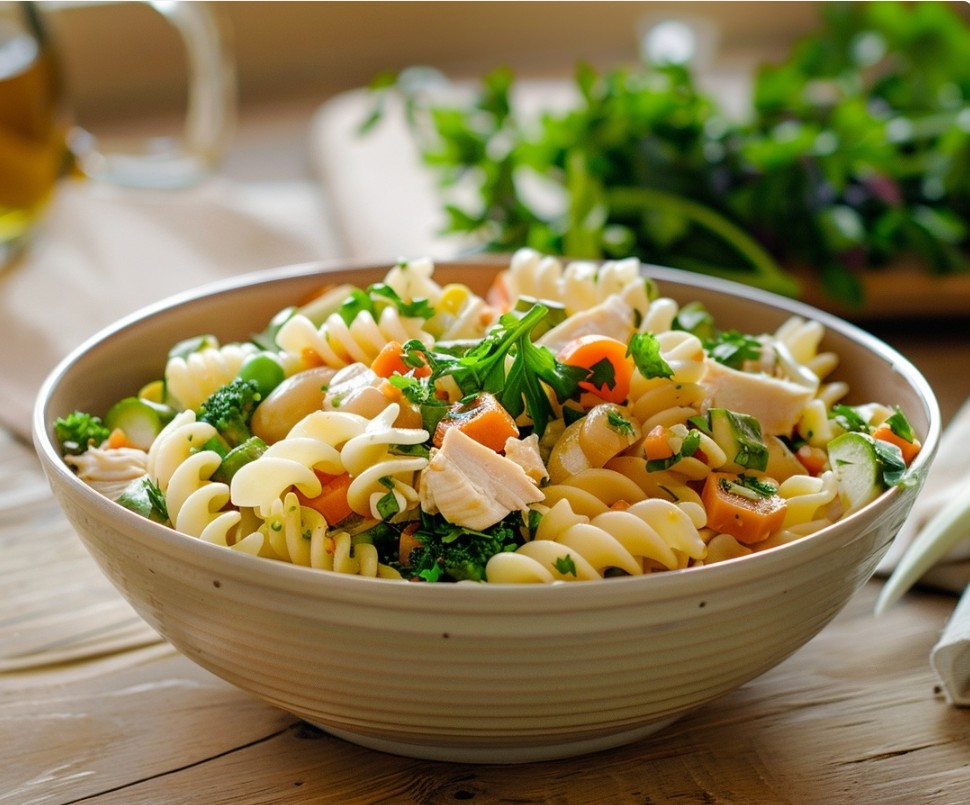
Cutting and cooling: how to get a nice bite instead of crumbs
How you cut the chicken affects the salad just as much as how you cooked it. Especially with pasta: pieces that are too big make you “hunt” for chicken with your fork. Too small, and it disappears—and tastes drier.
Cubes or shreds: which is better for pasta salad
Cubes give you consistency: everything looks neat, it’s easy to eat, and the chicken distributes evenly. I like medium cubes—big enough to feel, not so big they read like “steak bites.”
Shredded chicken gives a softer vibe and holds onto dressing well, but it can make the salad feel a bit fluffy and chaotic. Shreds are especially good with thigh meat—it stays tender and doesn’t fall apart into dry threads.
Cutting across the grain isn’t a myth
Chicken has a grain direction too. Slice with the grain and the piece pulls into long strings and feels tougher. Slice across the grain and the bite is shorter and more tender. It’s a small thing, but in a cold salad it’s even more noticeable.
Cooling properly before mixing
Here’s the rhythm I like: while the chicken rests, I prep the other ingredients. Then I cut it, spread it on a plate in a thin layer, and let it cool a bit more. Don’t put a big hot piece straight into the fridge—it stays warm in the center for ages.
Signs it’s ready to mix: it’s no longer warm to the touch, there’s no steam, and the pieces are dry on the outside. The smell is clean—no “wet boiled” aroma.
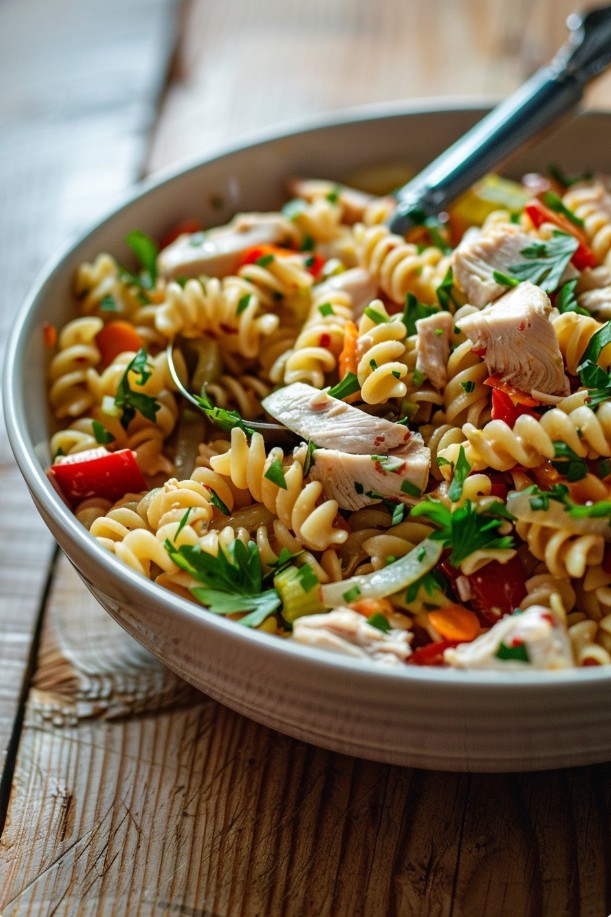
Common mistakes that make chicken dry, unsafe, or rubbery
I’ve collected this list over the years—not as theory, but as real-life pitfalls that perfectly normal people hit in perfectly normal kitchens.
Mistake 1: cooking straight from the fridge in a screaming-hot pan
Cold meat + very hot pan = the surface dries out fast while the center is still cold. Easy fix: let the chicken sit at room temperature for 10–15 minutes (not hours—just a bit), or cook over medium heat a little longer so it heats through more evenly.
Mistake 2: slicing right away
This is almost a guaranteed path to dryness and a “puddle” on the cutting board. Let it rest—otherwise you’re pulling the juices out yourself.
Mistake 3: overcooking “just in case”
I get the fear. But “just in case” often makes things worse: you end up with dry meat, then try to save it with extra dressing, and the salad turns heavy. Better to use control—a thermometer or clear visual cues—than to add random minutes.
Mistake 4: mixing hot and cold
Hot chicken melts the dressing, softens the pasta, and creates condensation. The salad loses structure. Let everything be roughly the same temperature before you mix.
Mistake 5: cutting it too small
Tiny pieces feel convenient, but in a cold salad they taste dry faster. Slightly bigger, evenly cut pieces are usually better.
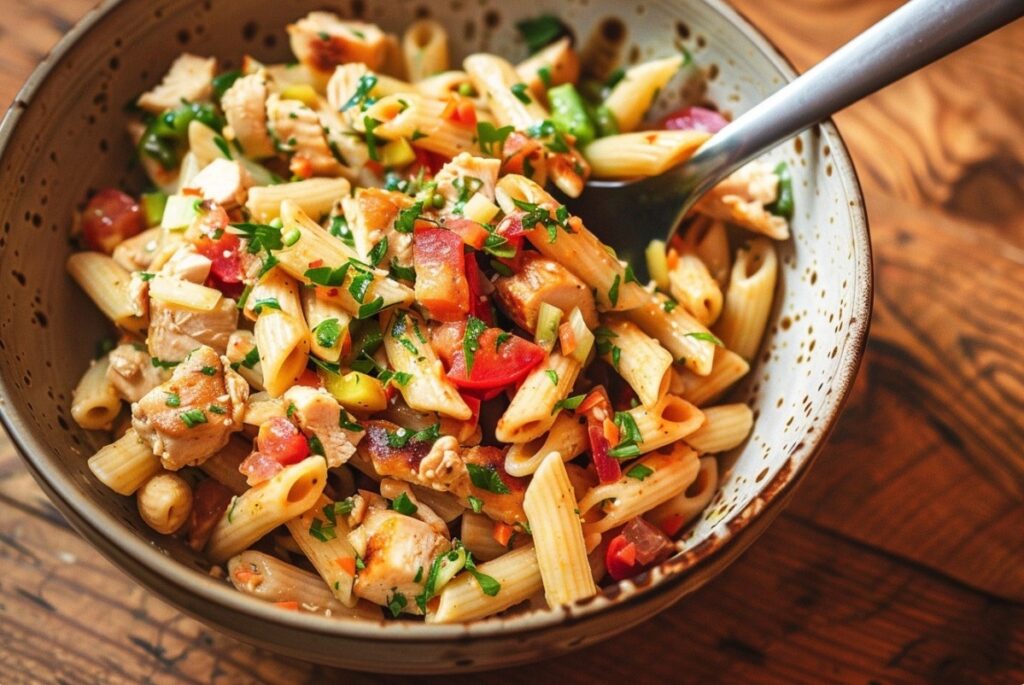
If something goes wrong: saving the chicken (and the salad) without panicking
Even when you’re careful, chicken isn’t always perfect. I hate wasting food, and most of the time you can get things back on track—you just need to identify the actual problem.
If the chicken turned out dry
Dryness isn’t only flavor—it’s mouthfeel: the meat feels rough, the fibers pull, you want to chase it with water. Here’s what I do:
- Cut it a bit smaller (but not into crumbs) so dressing coats more surface area.
- Mix a little dressing into the chicken separately and let it sit for 10 minutes, then fold it into the salad. That way the chicken won’t drink all the dressing from the whole bowl.
- Add something juicy (like crunchy cucumber), but carefully—so you don’t turn it into soup.
Quick story: once I overbaked a chicken breast because I got distracted by a phone call. I tossed the diced chicken with a spoonful of dressing on its own, let it sit, then added it to the salad. It didn’t become “freshly cooked,” but it stopped tasting like sawdust—which is a win.
If the chicken seems undercooked
Here I’m strict: if you’re not sure, cook it more. Don’t try to “fix” it with dressing or hide it under mayo. The easiest way is to return the pieces to a pan with a splash of water under a lid, or warm in the oven until you hit the right internal temperature. Then: rest, cool, and only then add to the salad.
Important: if the chicken is already mixed into the salad and you notice it’s underdone, don’t gamble. Pull the chicken out and finish it separately. Yes, it’s annoying. Safety is more important.
If the chicken is watery and “leaks” juice
This can happen after poaching, or if the meat was very wet/treated. Fixes:
- cool the chicken on a plate in a single layer;
- pat the surface dry;
- don’t mix it into the pasta right away—let it sit separately for 5–10 minutes so excess moisture can drain off.
Tip: if the chicken is “swimming” and the salad is almost done, add the chicken at the very end—so it has less time to soften the pasta.
If the chicken turned rubbery
Rubbery chicken usually means too much heat: a hard boil, overheating, or cooking too long at a high temperature. It’s hard to fully bring tenderness back, but you can still make the salad pleasant:
- slice thinner across the grain;
- let it sit with dressing separately for a bit;
- add a crunchy element (vegetables) to balance the textures.
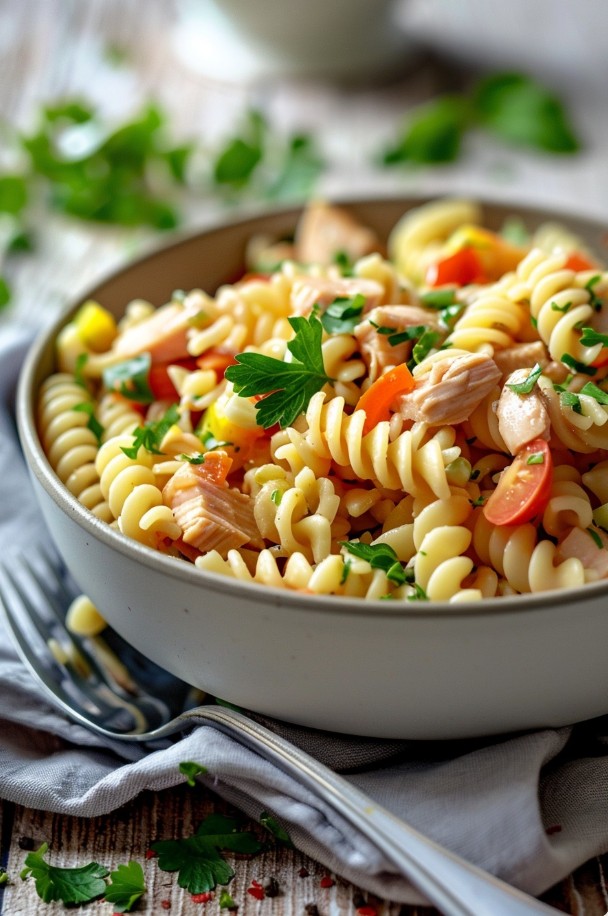
Storage and prep-ahead tips so the chicken is still good tomorrow
Pasta salad is often a “make it for two days” kind of meal. And that’s where chicken either stays juicy—or turns dry and starts smelling a little off. I like to plan in a way that protects texture.
When to cook the chicken: same day or ahead
Either works. If you cook ahead, cool it quickly and pack it well. If I know the salad will sit for a while, I usually store the chicken separately from the pasta and dressing. That way the pasta doesn’t go soft, and the chicken doesn’t soak up all the dressing.
Containers and fridge smells
Chicken picks up fridge odors easily. If your container isn’t very airtight, the next day your salad can taste vaguely “refrigerator.” I’m not obsessed with fancy containers, but airtight matters here.
Also: don’t leave chicken sitting at room temperature for ages while “everyone gathers.” Better to keep it chilled and take it out shortly before serving.
A quick story about “perfect… but not tomorrow”
I went through a phase where I mixed the entire salad at once and felt very pleased: tasty, juicy, great. Then the next day—soft pasta, chicken that somehow felt drier, and the dressing had vanished into the starch. Now, if I’m prepping ahead, I keep components separate or at least add the dressing in stages. The salad lasts longer and doesn’t turn into “chicken pasta mush.”
When the chicken for pasta salad is done right, you notice immediately: the pieces are springy but tender, the aroma is clean, there’s no puddle at the bottom of the bowl, and the dressing doesn’t disappear into thin air. Best part—you’re not thinking “is this safe?” because you know you did it properly: even thickness, doneness under control, resting, cooling, and clean boards and knives.
How do you usually cook chicken for this kind of salad—poach, bake, or pan-sear? And what trips you up most often: dryness, watery chicken, or the fear of undercooking?
Questions & answers
Which part of the chicken is best for pasta salad?
The easiest choice is chicken breast: it’s tender, easy to cut into neat pieces, and works well with pasta and vegetables. You can also use boneless chicken thigh if you want a juicier, richer result.
How should I cut chicken for pasta salad?
Most of the time, small cubes around 1 cm work best. That size matches the pasta nicely and helps the chicken distribute evenly throughout the salad.
Can I use baked chicken?
Yes—baked chicken is great in pasta salad. It has a slightly deeper aroma and gives the salad a more pronounced flavor.
Do I need to cool the chicken before adding it to the salad?
Yes. It’s best to cool the chicken completely before mixing it with pasta and vegetables. Hot meat can change the texture of the other ingredients and make the salad feel less fresh.
What seasonings work well for chicken in pasta salad?
Good options include:
black pepper
paprika
garlic powder
oregano
basil
They add aroma without overpowering the salad.
What ingredients pair well with chicken in pasta salad?
Chicken pairs well with:
cheese
corn
cucumber
sweet bell pepper
green onions
eggs
Together they make a balanced, filling salad.
Can I make pasta salad with chicken ahead of time?
Yes, you can make it a few hours ahead. After chilling, the flavors meld and taste more rounded. Before serving, add a little extra dressing if needed to keep it juicy.