How to Choose the Right Cheese for Pasta Salad

It happens: you cook the pasta, cool it down, chop the veggies, the dressing turns out great—and the salad still falls flat. Everything seems “right,” but the flavor is kind of one-note, the texture is boring, and after an hour in the fridge it somehow turns heavy. In 8 cases out of 10, it’s not the sauce and it’s not the pasta. It’s the cheese.
Cheese in pasta salad isn’t just “extra protein.” It either holds the whole thing together or it makes it fall apart: it brings saltiness, creaminess, a bit of bounce, sometimes a gentle tang. The wrong cheese can weep, make the pasta slick, bulldoze the vegetables—or disappear so completely you barely notice it’s there.
I remember this clearly from catering kitchens: same exact salad base, different cheese—and people either go back for seconds or leave half the tray untouched. So let’s talk about it like normal humans: what to buy, how to spot quality fast in a store or at a market, what’s worth paying extra for (and what isn’t), and how to make sure the cheese behaves the way you expect once it hits the bowl.
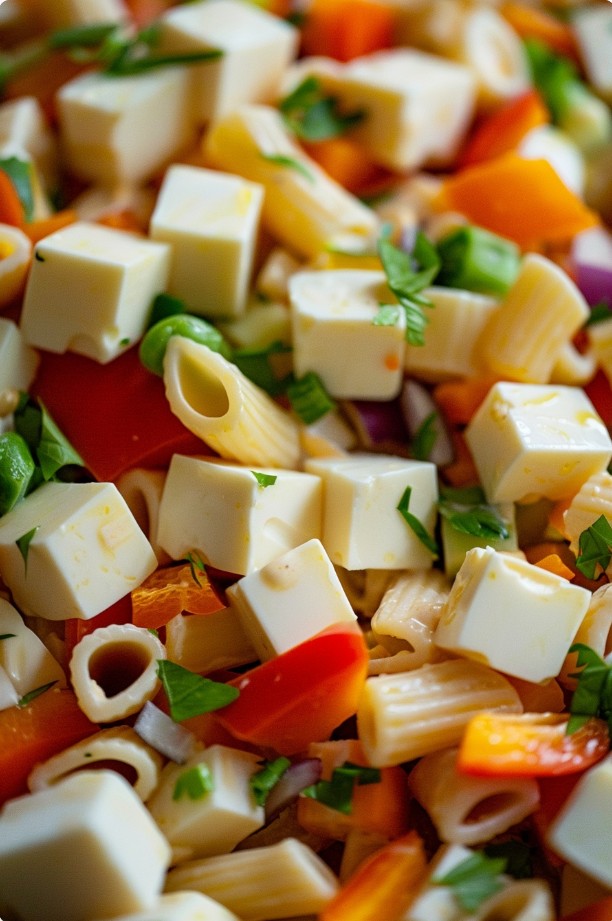
What cheese actually does in pasta salad (and why it matters when you’re choosing)
Pasta salad is sneaky. Pasta is neutral, it loves grabbing onto dressing and aromas—but it also soaks up salt and fat fast. Cheese is doing double duty here: flavor booster and texture builder.
I always start with one question: what vibe do you want? Light and fresh—or rich and creamy? Crunchy (cucumber, bell pepper)—or soft (tuna, chicken, egg)? That’s what tells you if you need a cheese that crumbles, one that melts, or one that cuts into neat little cubes.
Three ways cheese “behaves” in pasta salad
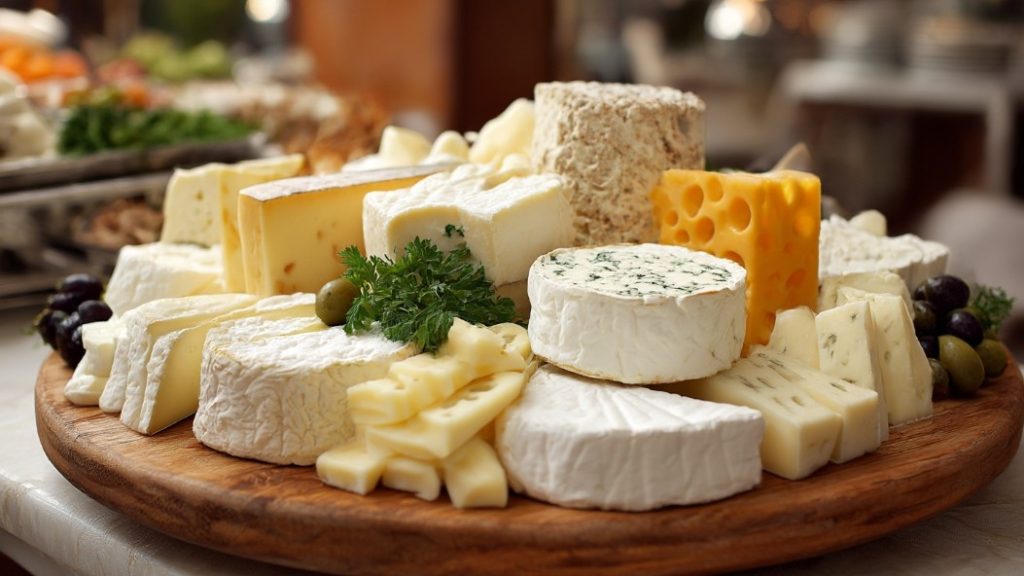
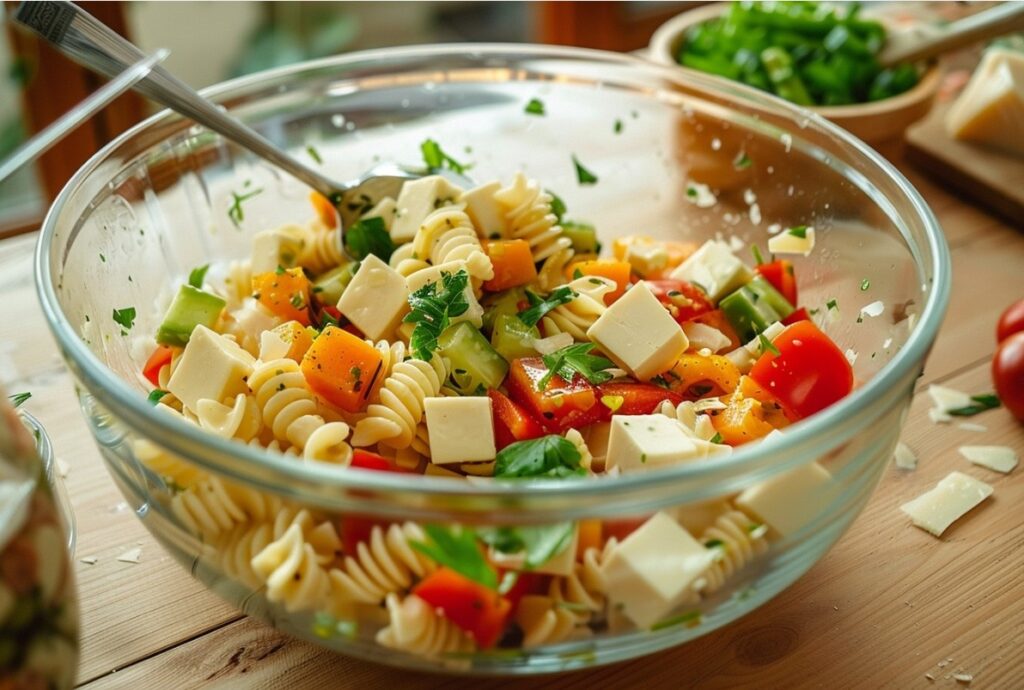
- Cubes/chunks — holds its shape and you get a piece in every bite. Think mozzarella (not all types), young semi-hard cheeses, Gouda-style cheeses, cheddar.
- Crumbles — gives salty little “pops” and a slight dryness that balances creamy dressings. Feta/bryndza, goat cheese, sometimes blue cheese.
- Melts/coats — partially softens from warm pasta or reacts to acidic dressing and turns the salad creamy. That’s soft cheeses, cream cheese-style options, and sometimes grated Parmesan/Grana-style cheeses (carefully).
And here’s the first classic mistake: people grab “whatever cheese is in the fridge,” then wonder why the salad turns into mush—or, on the flip side, feels dry. Pick the cheese based on how you want it to behave.
Tip: if you’re making pasta salad for tomorrow, choose a cheese that holds its shape or crumbles. The “coating” cheeses often make pasta feel heavy on day two.
The cheeses people reach for most—and how to tell if they’ll actually work
I’m not giving recipes here—I’m giving you the logic. The most common directions are Mediterranean-ish (veg, olives, herbs), “classic deli” style (mayo-based dressings, bacon/chicken), and light summer bowls (greens, cucumber, lemon).
For those, people usually go for:
- Mozzarella — when you want something mild, milky, and not aggressively salty. But the type of mozzarella matters a lot (more on that below).
- Feta/bryndza — for a salty accent and crumbles that cling to pasta and vegetables.
- Semi-hard cheeses (Gouda, Edam, Maasdam-style, cheddar) — for cubes that don’t fall apart.
- Parmesan/Grana-style — when you want a drier umami hit, but it’s easy to overdo it.
- Soft goat cheese — adds personality and a gentle tang, but it’s not everyone’s favorite.
- Blue cheese — very much a “know your crowd” situation, and always about the dose.
Quick story from real life: we once made a huge tray of pasta salad for a corporate lunch. Someone on the shopping run grabbed “pizza mozzarella” instead of the little balls in brine. Looked fine—white, smelled milky, seemed okay. But in the salad it cut crumbly, then dried out, and in your mouth it was basically rubber. People couldn’t put their finger on what was wrong, and I learned the lesson the hard way: mozzarella can be wildly different, and the name alone won’t save you.
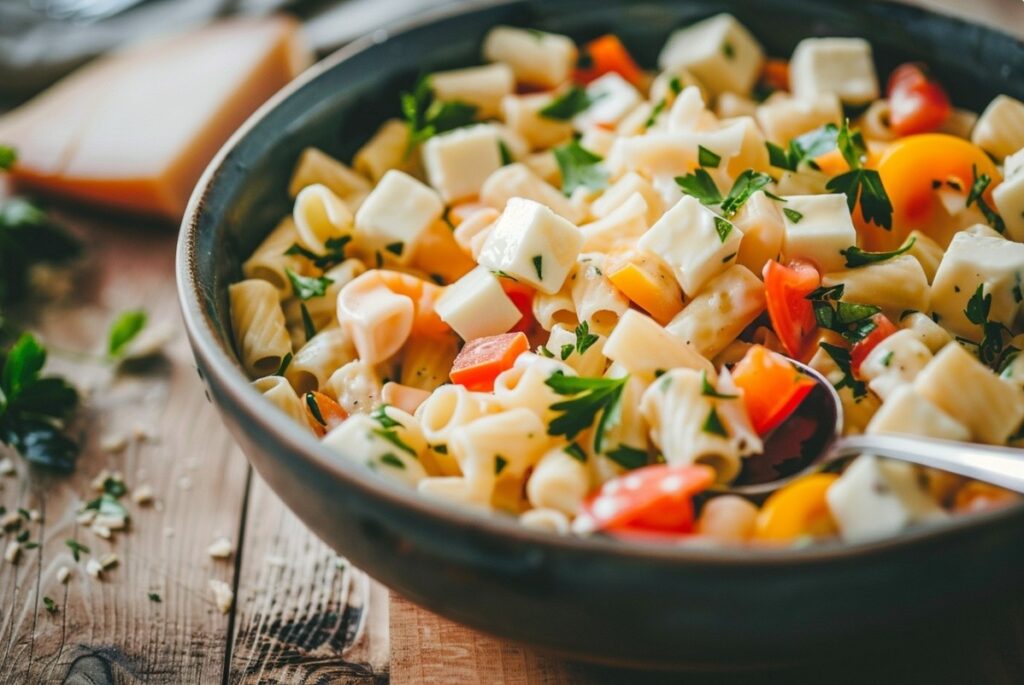
Quality cues: color, smell, texture, packaging—what to check right at the shelf
In a supermarket you don’t have much time to think. At an open-air market, you can chat, ask for a taste, take a sniff. But the basic markers are the same: freshness and an honest product.
Color: it’s not always “the whiter, the better”
Pasta salads often use white cheeses, and that’s where it’s easy to get fooled. Here’s how I look at it:
- Mozzarella in brine should be evenly white or slightly creamy, without yellowing around the edges. Dry edges usually mean it’s past its prime.
- Feta/bryndza should be white to cream-colored, but not grey. Grey often points to age or poor storage.
- Semi-hard cheeses can range from pale cream to yellow—that’s normal. But spots, dark “marbling,” or a dried-out rind under plastic wrap are bad signs.
One more thing: that unnaturally “plastic white” color you sometimes see in very cheap cheese makes me suspicious. It often comes with a plastic-y taste, too.
Smell: milky, tangy, nutty—just not “basement”
Smell is the most honest test. If you can smell it (market, deli counter, or once you open it at home), do it. Good cheese smells like:
- milk, cream, yogurt (fresh cheeses);
- nuts, caramel, a light “dry” aroma (aged hard cheeses);
- grass/milk (goat cheeses have their own character, but they shouldn’t punch you in the face with ammonia).
Bad smells for pasta salad: sharp ammonia, “wet rag,” “basement,” overly sour notes, or a yeasty smell where it doesn’t belong. If mozzarella smells like sour milk, I’m not putting it in a salad.
Texture: how it cuts and how it chews
Texture is half the pleasure in pasta salad. I pay attention to:
- Mozzarella should slice cleanly, feel springy but not rubbery. Inside it should be juicy, with a slight layered structure.
- Feta/bryndza should break into larger flakes, not turn into wet paste. If it smears like a spread, it’s either extremely young, overly wet, or full of additives.
- Semi-hard cheeses should cut into cubes without crumbling or cracking. If it snaps like chalk, it’s often dried out or poorly stored.
Another little lesson I learned: I went through a phase of buying discounted cheese for home salads. Felt like a win—until I’d slice it and it would crumble into dusty bits, and in the salad it tasted like dry sand. My rule now is simple: for salad, the cheese has to be in good shape—no compromises. This isn’t a baked dish where you can hide flaws.
Packaging and brine: small details that save you
In a store, I look at the packaging just as much as the name:
- Vacuum packs should cling tightly to the cheese. If there’s lots of air inside or big bubbles, the cheese dries out and oxidizes.
- Brine in mozzarella/feta should be clear or slightly milky—not cloudy with flakes and weird sediment (exceptions exist, but usually it’s a sign the product is aging).
- Mold on cheese that isn’t supposed to be moldy is a hard no. Even if it’s “just a little on the edge.”
- Pre-cut trays: if pieces are stuck together, there’s moisture, or the cheese is “sweating,” it’s already losing texture.
Tip: if you’re buying mozzarella in brine, choose a pack where the balls aren’t pressed against the plastic and don’t have dry spots. It usually means it hasn’t overheated or sat around opened.
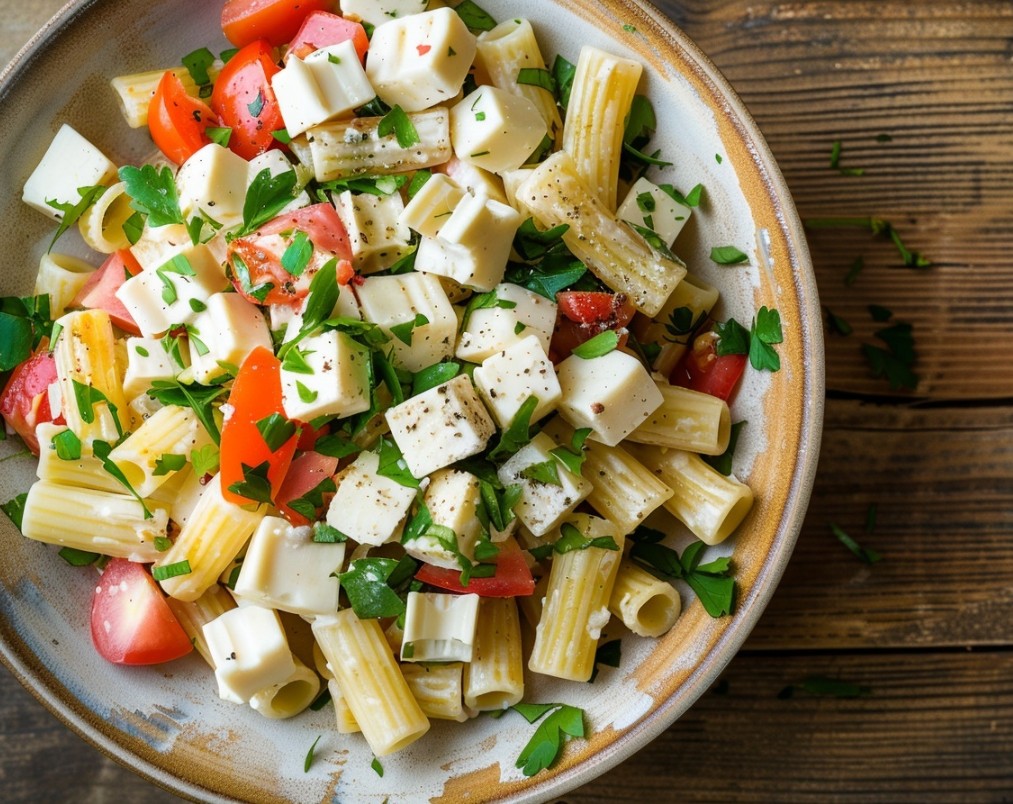
Common buying mistakes: marketing traps and “fake cheeses” that ruin the salad
I’m going to be blunt here, because this is where people lose the most money and the most patience. In pasta salad, you can see and taste the cheese. If it’s mediocre, it won’t hide.
Trap #1: “cheese product” instead of real cheese
Labels can look very convincing: a perfect wedge of cheese, herbs, all the right vibes. Then you read the ingredients and it’s vegetable fats. I’m not here to lecture—just the practical part: in a salad, these products often melt strangely, smear, leave a waxy film on your tongue, and make the dressing feel heavy.
How to spot it fast: suspiciously low price for a “hard” cheese, an unnaturally uniform color, and that Play-Doh slicing feel. If you have a second, check that it’s labeled as cheese—not a “cheese product.”
Trap #2: “pizza mozzarella” in a salad
It’s a different product with a different job. It’s made to melt and stretch, not to be juicy and tender in a cold dish. In pasta salad it often:
- turns rubbery;
- doesn’t give you that fresh, milky flavor;
- doesn’t play nicely with acidic dressings (lemon/vinegar).
If you want mozzarella in pasta salad, look for balls/pearls in brine or other fresh, soft versions—not the “block for shredding.”
Trap #3: overly salty feta/bryndza with no prep
Some feta is fantastic—just so salty the whole salad tastes like seawater. Then people try to “save” it by adding more vegetables, more pasta, more sauce… and everything gets diluted and messy.
Tip: if the cheese is a bit too salty, I sometimes soak it for 10–15 minutes in cold water or milk (depending on the type), then pat it dry. Not magic, but it often smooths things out.
Trap #4: buying the most expensive cheese and assuming it’s automatically better
Some expensive cheeses simply won’t shine in pasta salad. A very aged hard cheese can overpower a delicate dressing and vegetables, leaving you with sharp saltiness and a dry finish. Paying more makes sense when you know what you’re paying for: better milk, proper aging, the right texture, a clean flavor.
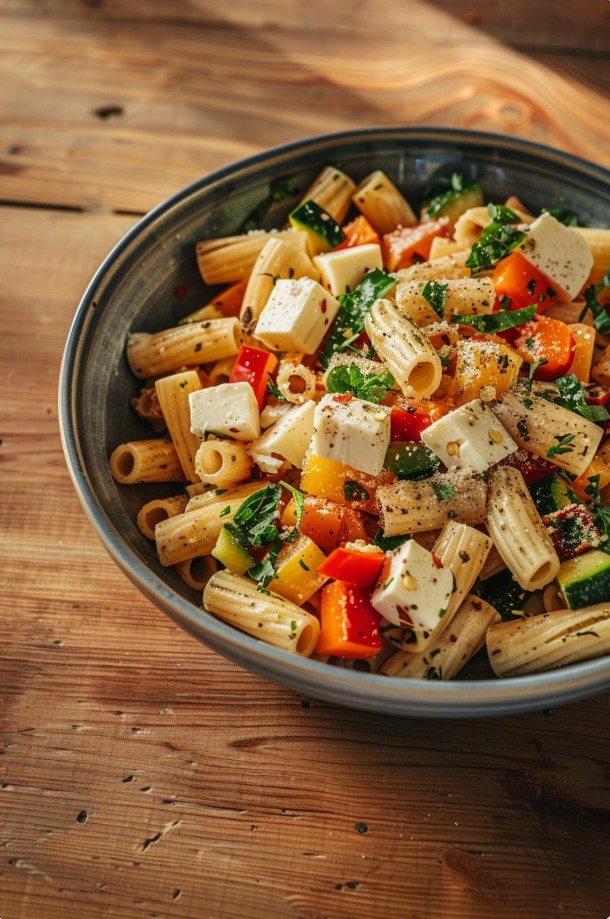
Price vs. common sense: when it’s worth paying more—and when it isn’t
I love good ingredients, but I love a smart purchase even more. In pasta salad, cheese is one of the main accents—but it doesn’t always have to be “premium.”
When I pay more
- When the cheese is the main flavor. Few ingredients, a light dressing, lots of pasta—quality shows immediately.
- When I need a specific texture: tender mozzarella in brine, a neat feta, good cheddar for cubing. Cheaper versions usually lose on mouthfeel.
- When it’s for guests and the salad will sit out for a bit. Cheaper cheeses tend to “weep” faster and look less appetizing.
When you can go simpler
- When the cheese isn’t the star, just support—like in a very bold dressing or with punchy ingredients (pickled, smoked, spicy).
- When it’s going in small (crumbled/grated) and its job is background, not big chunks.
- When you know the brand and it’s consistent. Consistency is a kind of quality.
Quick confession: I once bought a very expensive aged hard cheese and added it generously to pasta salad for a “wow” moment. It wasn’t wow—it was “why is this so salty and dry?” I had to balance it with more dressing, and the salad got heavier. Now I do it differently: pricey hard cheeses are either a small finishing touch, or they go into dishes where they truly get to play.
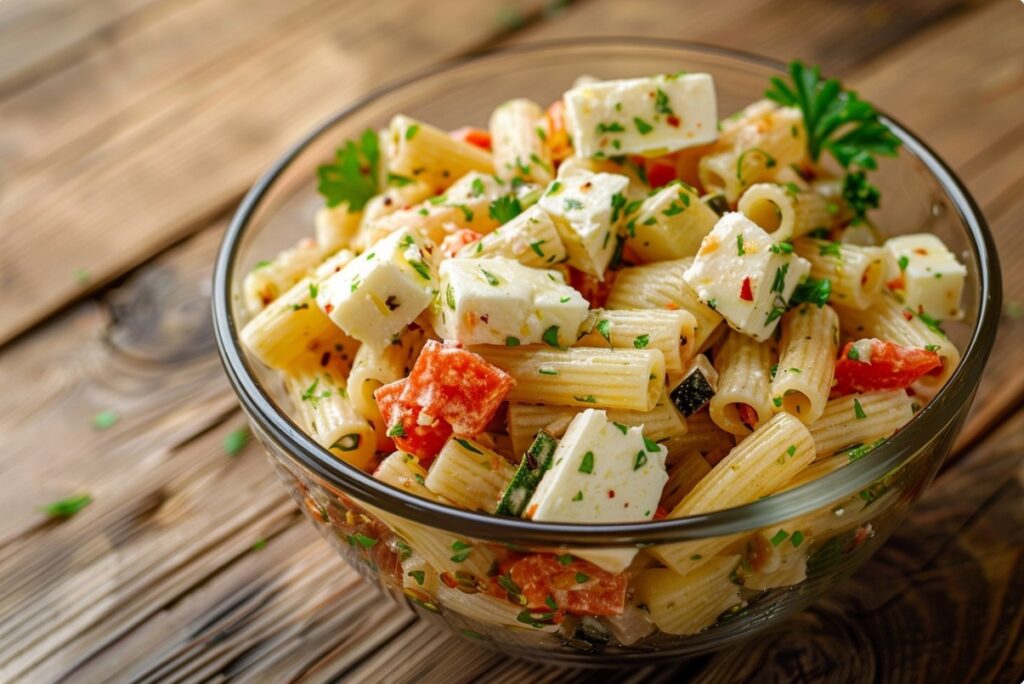
How cheese behaves in pasta salad: temperature, dressing, time—and how to avoid rubber or mush
One of the most common kitchen dramas: everything tastes great right after mixing, and then 30 minutes later the cheese changes—wet, slippery, or weirdly firm. It’s not mystery, it’s physics (and a little chemistry): fat, protein, salt, acid, temperature.
Pasta temperature: cheese doesn’t like surprises
If you add cheese to pasta that’s still warm, soft cheeses can start melting and smearing. Some people love that, but more often it’s a downside because the salad loses structure.
Tip: I mix the pasta with the dressing once it’s cooled to at least barely warm. Cheese goes in at the very end—so it keeps its personality.
Acid in the dressing: lemon and vinegar can “break” delicate cheeses
Acid makes flavors brighter, but it can be rough on certain cheeses. Very delicate soft cheeses may start releasing moisture and turn grainy—especially after the salad sits.
What I do: if the dressing is acidic, I choose a cheese that either holds its shape (semi-hard) or crumbles (feta/bryndza), or I add soft cheese in small amounts and don’t store the salad for long.
Salt: cheese is already a salty ingredient
Sounds obvious, but I see this mistake even with experienced home cooks: they salt the pasta “like always,” then add feta, olives, ham—and suddenly everything is too salty.
- If the cheese is salty, I salt the pasta a bit more gently.
- I add salt to the dressing at the end, after the cheese is already in the bowl.
Time: some cheeses “die” faster in the fridge
Pasta salad is often made ahead. And here’s the thing: mozzarella in brine can get denser on day two, while feta can soften too much if the dressing is runny.
Tip: if the salad has to survive overnight, I sometimes store the cheese separately and add it right before serving. It’s 30 seconds of work—and the texture is completely different.
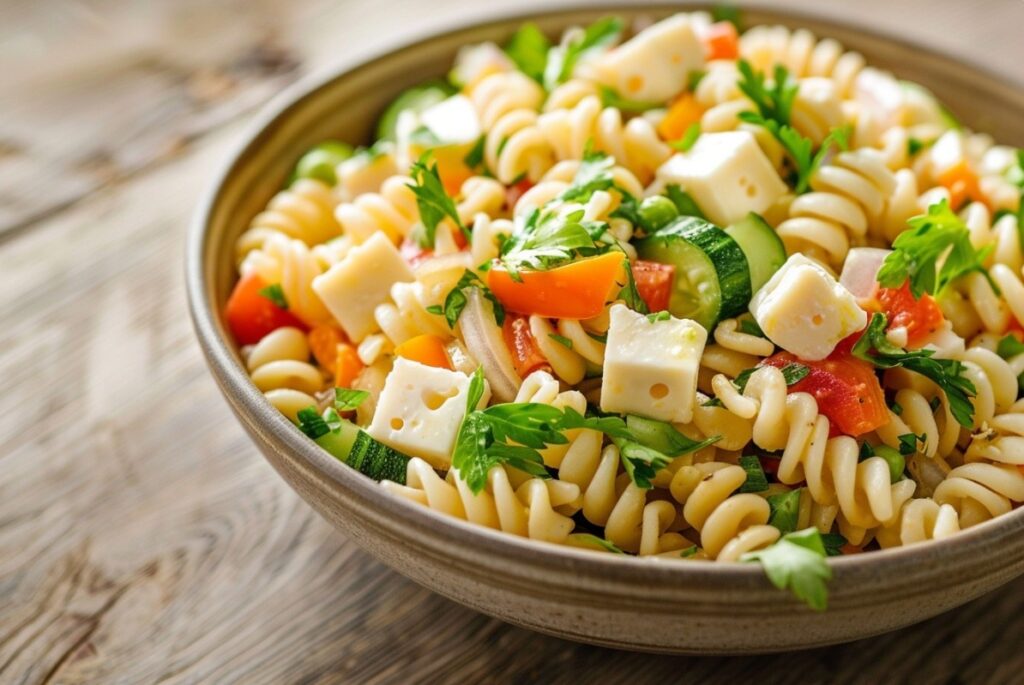
Storing cheese at home: where to keep it, how long it lasts, and how to keep it fresh
Even perfectly chosen cheese can be ruined in two days with bad storage. This matters especially for salad cheeses—they’re often soft, moist, and delicate.
Mozzarella in brine
I keep it in its original brine in the fridge, tightly sealed. If you drain the brine, it dries out fast, the surface turns tacky, and then—rubbery.
- Once opened, I try to use it within 1–2 days.
- I don’t freeze it for salads: after thawing, the texture almost always turns crumbly and cottony.
Feta/bryndza
If it comes in brine, I store it in brine. If I buy a piece without brine, I put it in a container at home and add a little mild salt solution (or at least keep it tightly covered so it doesn’t dry out).
Signs bryndza is past its best: it turns slippery, the smell gets sharply sour, and it crumbles into a wet mash.
Semi-hard and hard cheeses
The main enemies here are drying out and “fridge smell.” I wrap cheese in parchment or cheese paper, then put it in a bag or container. In plain plastic without paper, cheese sometimes “sweats” and picks up extra moisture.
- Don’t store it next to fish or unwrapped smoked meats—cheese absorbs everything.
- If a dry rind forms, you can trim it off thinly. But if the smell has gone off, I wouldn’t risk it in a salad.
Tip: take cheese out of the fridge 10–15 minutes before slicing. Cold cheese cuts worse and tastes less expressive.
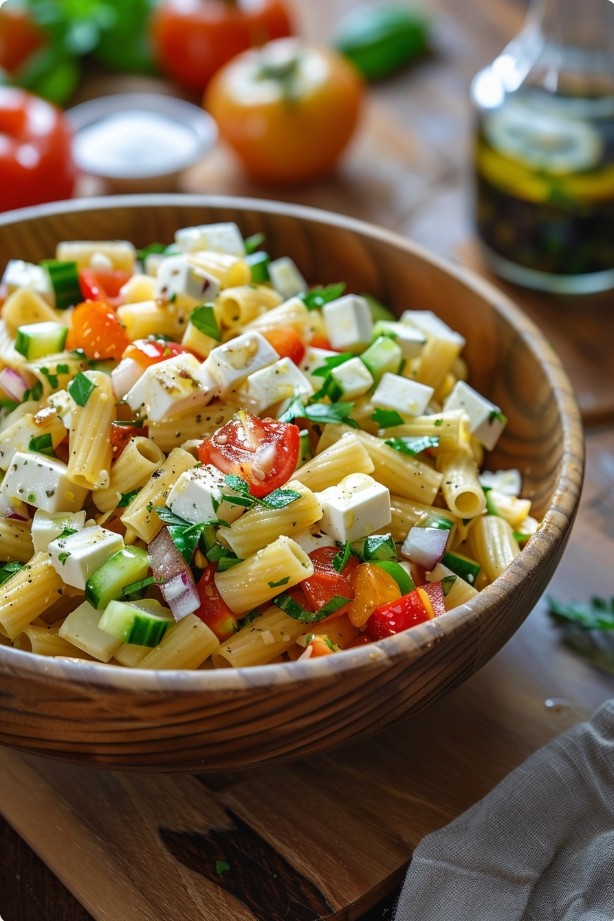
Buying cheese at markets and from farmers: what to ask (without feeling awkward)
The best part about a market is that you can talk. The worst part is that it’s easy to buy on trust and discover surprises at home. I love markets—but I’m not romantic about them. I’m practical.
Three questions that actually help
- When was it made? For soft cheeses, this is critical. If the seller gets vague, I get cautious.
- Is it stored in brine, or is it just a moist cheese? For feta/bryndza, the difference is huge—both for salt level and how it behaves in salad.
- Can I taste a small piece? A good seller usually won’t mind. You’ll immediately know if it can carry a salad or if it’s just salty.
What I check with my eyes (and hands—gently)
If it crumbles into nice flakes, that’s great for crumbling. If it’s wet, shiny with slime, or smells uneven, I keep walking. And one more thing: if cheese is sitting out without proper cooling on a hot day—even the most honest farm product can go bad fast.
Quick story: once I bought “homemade mozzarella” at a market. It was unbelievably tender, basically cloud-soft. But in a salad it dissolved into the dressing and turned everything milky and cloudy. Delicious—yes. But it was a totally different effect than I planned. The takeaway is simple: farm cheese can be amazing, but it’s often more alive and less predictable. Ask, taste, and don’t be shy about buying a smaller amount the first time.
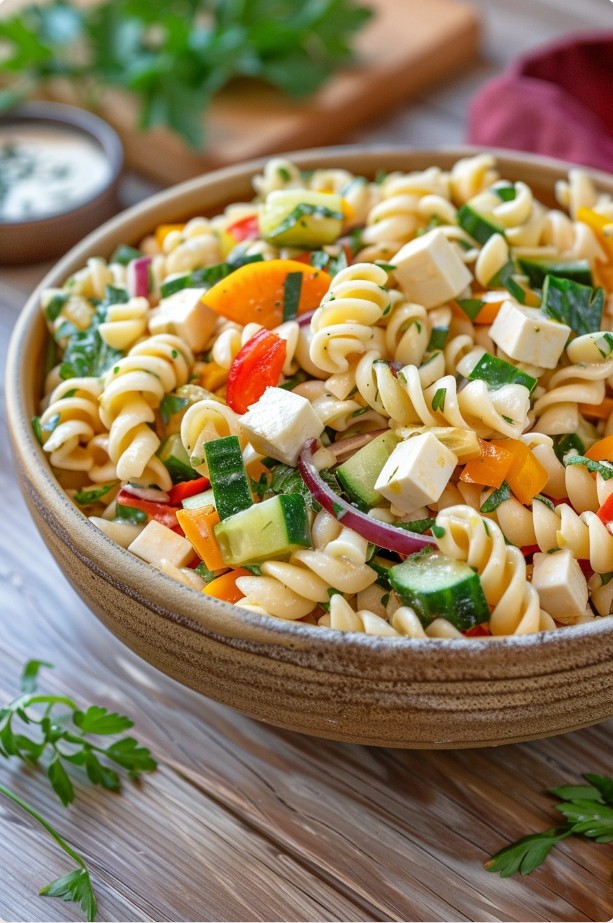
Quick checkout checklist: choose the right cheese for your salad and don’t regret it
When I’m short on time, I keep a simple set of rules in my head. Not perfect, but it prevents most disappointments.
If you want it soft and juicy
- Buy mozzarella in brine (balls/pearls), with a good date and no dried edges.
- Plan to add it at the end, once the pasta has cooled.
If you want it bold and a little salty
- Feta/bryndza: look for big flakes (not slimy), and a clean tangy dairy smell.
- Remember the salt in everything else.
If you want “reliable cubes” that survive the fridge
- Semi-hard cheese: cuts cleanly without crumbling; packaging without air pockets; flavor not sharply sour.
- Skip cheese that’s dried out—or already “sweating” in a pre-cut pack.
A note on grated hard cheeses
If you’re using something like Parmesan/Grana-style cheese, remember: it steals the spotlight fast. Better less, but better quality. And if you can avoid buying it pre-grated in a bag, do—aroma fades quickly, and sometimes you get weird “dust” instead of proper shavings.
Common mistakes (so you don’t do it again)
- Buying “pizza mozzarella” and expecting tenderness in a cold salad.
- Choosing the cheapest “cheese product” and getting waxy film and odd texture.
- Forgetting the cheese is salty and over-salting everything else.
- Mixing cheese into hot pasta and wondering why the salad turns sticky.
- Making salad for tomorrow with a cheese that doesn’t like sitting in dressing.
Choosing cheese for pasta salad is about attention, not complexity. Once you taste the difference between cheese that holds its shape and smells like clean milk—and cheese that’s “just cheap”—it’s hard to go back.
So what do you usually add to pasta salad—something crumbly, or something you cube? And have you ever had a cheese completely ruin a dish even though you did everything “right”?
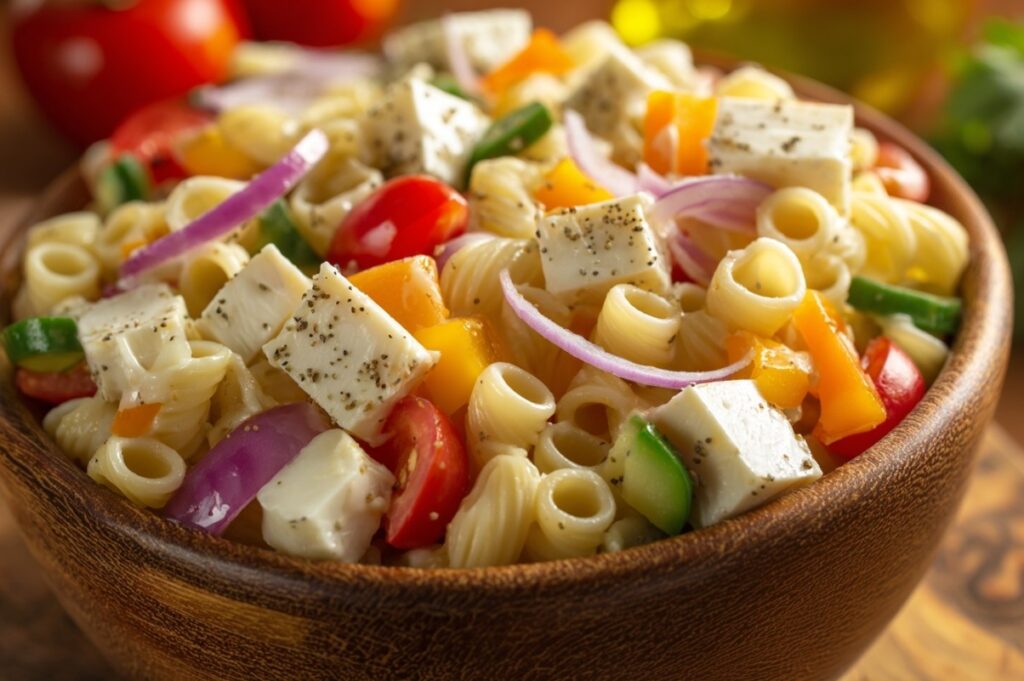
Pasta salads have been a go-to in home kitchens for ages. They’re usually made with short pasta shapes tossed with vegetables, cheese, meat or fish, and a dressing—then served chilled or at room temperature. If you want more ideas, check out our roundup pasta salad with the best recipes, cooking tips, and plenty of variations for everyday meals or a party spread.
Questions & answers
Який сир найкраще підходить для салату з макаронами?
Найкраще підходять u003cstrongu003eнапівтверді сириu003c/strongu003e, які легко нарізати кубиками і які добре тримають форму у салаті. Наприклад:u003cbru003eгаудаu003cbru003eедамu003cbru003eчедерu003cbru003eмаасдамu003cbru003eТакі сири мають ніжний смак і добре поєднуються з макаронами та овочами.
Чи можна використовувати м’який сир?
М’які сири, такі як брі або камамбер, зазвичай не використовують у макаронних салатах. Вони мають кремову текстуру і можуть розмазуватися під час змішування салату.
Як правильно нарізати сир для макаронного салату?
Сир найкраще нарізати u003cstrongu003eкубиками приблизно 1 смu003c/strongu003e. Такий розмір добре поєднується з макаронами і дозволяє рівномірно розподілити сир по всьому салату.
Чи можна використовувати твердий сир?
Так, твердий сир також можна додавати до макаронного салату. Але його краще нарізати дуже маленькими кубиками або натерти, щоб він не був занадто жорстким у страві.
Який сир краще не використовувати?
Не рекомендується використовувати:u003cbru003eплавлений сирu003cbru003eдуже солоні сириu003cbru003eсир із сильним запахомu003cbru003eВони можуть перебивати смак інших інгредієнтів.
Чи потрібно додавати сир у гарячі макарони?
Ні, сир краще додавати u003cstrongu003eколи макарони вже охололиu003c/strongu003e. Якщо додати його у гарячу пасту, сир може почати плавитися і втратити форму.
З якими інгредієнтами сир найкраще поєднується у макаронному салаті?
Сир добре поєднується з такими продуктами:u003cbru003eшинкаu003cbru003eкуркаu003cbru003eкукурудзаu003cbru003eогірокu003cbru003eсолодкий перецьu003cbru003eзелена цибуляu003cbru003eЦі інгредієнти створюють збалансований і смачний салат.