Margherita Pizza: 5 Common Mistakes (and the Secrets to Getting It Right)

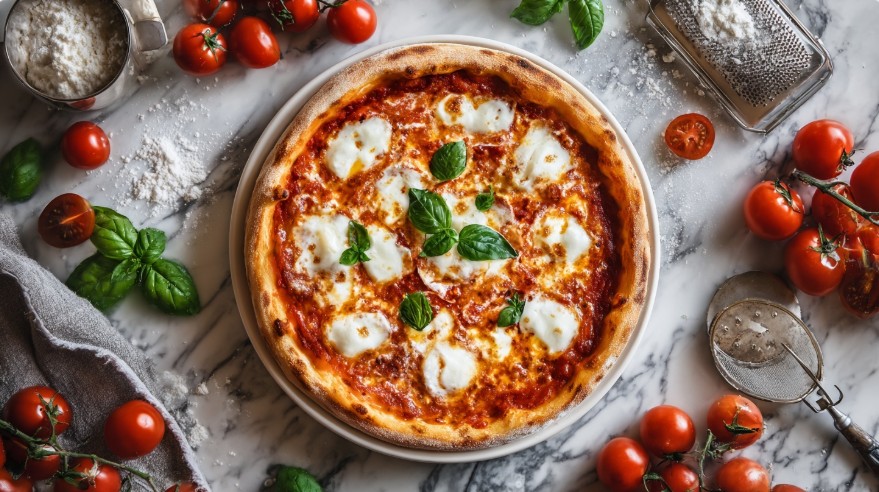
Margherita pizza is the kind of simple classic that somehow conquered the whole world. You know those dishes that don’t need any extra bells and whistles because they’re already perfect? That’s Margherita—an Italian legend that looks modest, but tastes like pure genius.
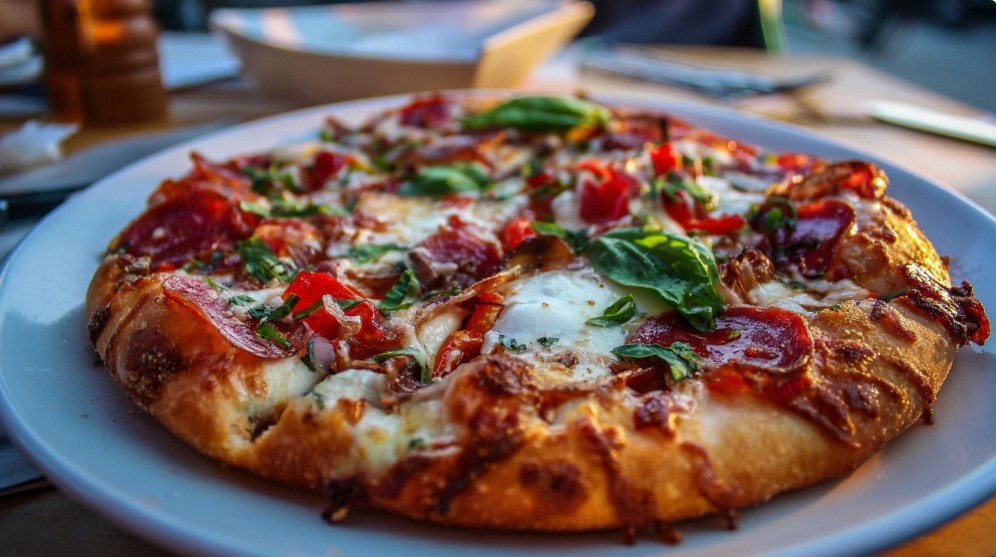
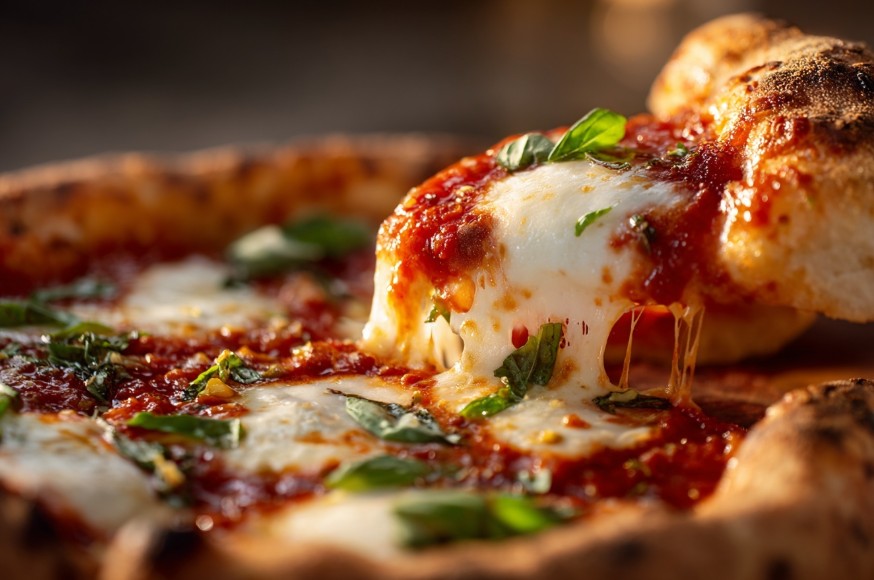
The story goes that it was born in Naples in the late 1800s, when a pizza was made for Queen Margherita of Savoy in the colors of the Italian flag: red tomato sauce, white mozzarella, and green basil leaves. A humble pie turned into a national symbol—pretty great, right?
I had my first real Margherita in a tiny trattoria right in the heart of Naples. Wood-fired oven, the smell of fresh dough, and an old pizzaiolo spinning the dough so effortlessly it looked like a veil floating in the air. And honestly? It was nothing like those “plastic” fast-food versions. This was a full-on flavor hit: sweet tomatoes, creamy cheese, and that punch of basil. Nothing extra. Nothing missing.
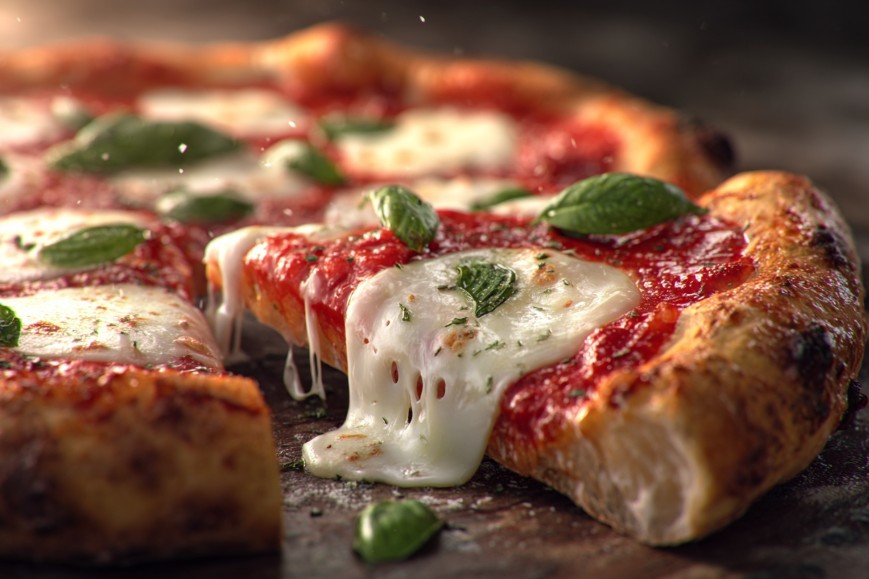
🥖 The key Margherita ingredients (and why they matter)
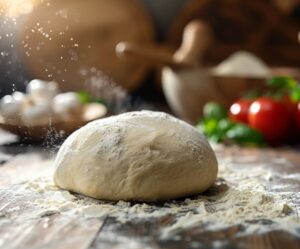
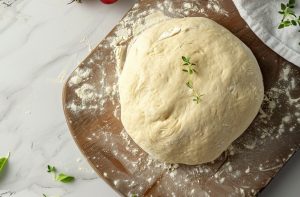
- Dough is the heart of the pizza. In the classic version it’s just flour, water, yeast, and salt. The real secret, though, is time: long fermentation. The longer the dough “matures,” the lighter and airier it becomes.
- Tomato sauce is the soul of Margherita. The gold standard is sweet Italian San Marzano tomatoes. No San Marzanos? Use ripe, in-season tomatoes—then a pinch of seasoning and a drizzle of olive oil will do the heavy lifting.
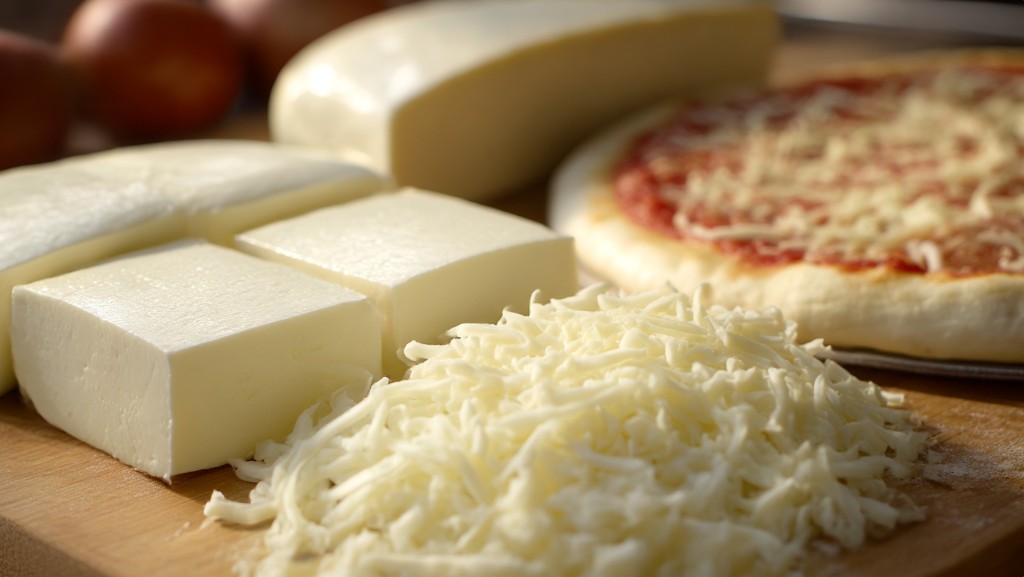
- Mozzarella is pure tenderness. In Italy they often use Mozzarella di Bufala (buffalo milk). At home, regular cow’s milk mozzarella is totally fine—just make sure it’s fresh.
- Basil is that fresh green note that wakes the whole pizza up. It’s not just decoration—it’s the aromatic “spark.”
- Olive oil is the final brushstroke. A few drops right before serving make the flavor deeper and rounder.
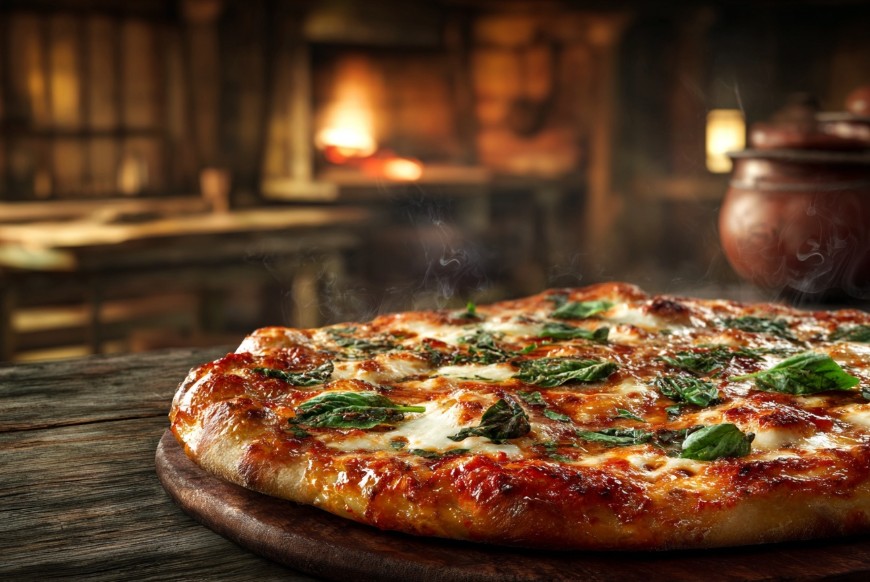
💡 Chef’s tip: true Margherita is baked in a wood-fired oven, but you can get surprisingly close at home if you preheat your oven properly and use a pizza stone.
❌ 5 mistakes that ruin Margherita pizza (and how to avoid them)
1. Dough with no resting time
Mistake: mix it and bake it immediately.
Result: a heavy, rubbery base.
✅ Fix: let the dough cold-ferment for at least 12 hours in the fridge.
2. Too many toppings
Mistake: “More cheese, more sauce—tastier!”
Result: a soggy pizza that eats like mush.
✅ Fix: keep the balance—Margherita is proof that minimalism = flavor.
3. The wrong cheese
Mistake: using cheap, overly melty “pizza cheese” instead of mozzarella.
Result: a rubbery bite instead of that gentle milky creaminess.
✅ Fix: always choose fresh mozzarella (ideally packed in brine).
4. Baking the basil
Mistake: putting herbs on before baking.
Result: black, dried leaves with zero aroma.
✅ Fix: add basil after the pizza comes out of the oven.
5. Baking at a low temperature
Mistake: 180 °C “like a cake.”
Result: dry pizza with no puffy, blistered crust.
✅ Fix: crank it up—250 °C, and even better with a pizza stone.
💡 Chef’s tip: with Margherita, it’s not about a long ingredient list—it’s about not messing up the simplicity. Avoid these mistakes and you’ll get very close to that Naples-style result.
👨🍳 How to make the perfect dough for Margherita pizza
Ingredients:
- flour — 500 g (Italian “00” is ideal, but regular wheat flour works too);
- water — 325 ml (cold, filtered);
- dry yeast — 5 g (or 15 g fresh);
- salt — 10 g;
- olive oil — 1 tbsp.
Method:
- Mix: add flour to a bowl, stir in the yeast. Pour in the water a little at a time and mix into a dough. Add the salt and olive oil at the end.
- Knead: knead by hand or with a stand mixer (dough hook) for 8–10 minutes, until smooth and elastic.
- Ferment: cover and refrigerate for 12–24 hours. That long cold ferment is what makes the crust light and airy.
- Warm up: take the dough out 1–2 hours before baking so it comes to room temperature.
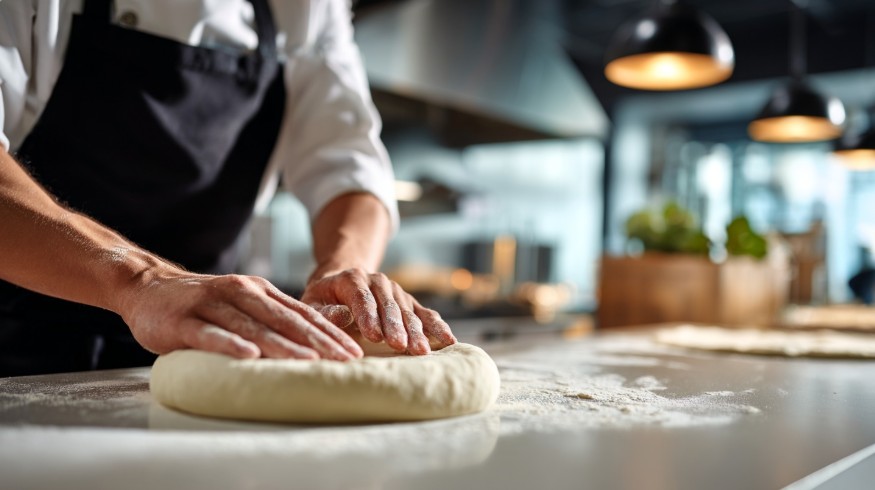
- Shape: stretch it by hand into a thin round (skip the rolling pin—you don’t want to crush the air bubbles).
💡 Chef’s tip: for the most authentic feel, make a few smaller pizzas instead of one giant one. In Italy, pizza is personal—one pizza per person.
🍅 Margherita pizza sauce
Ingredients:
- San Marzano tomatoes (or other ripe tomatoes) — 400 g;
- olive oil — 1 tbsp;
- salt — ½ tsp;
- dried oregano — a pinch (optional).
Method:
- Prep the tomatoes: if using fresh, blanch them, peel, then blitz with a blender. If using canned, just blend.
- Keep it simple: classic Margherita sauce isn’t simmered. Just add salt, a drizzle of olive oil, and (if you want) a pinch of oregano. It should taste fresh and bright.
💡 Chef’s tip: for a deeper flavor, let the sauce rest in the fridge for a few hours. Everything melds and tastes more rounded.
🧑🍳 Assembling Margherita pizza, step by step
You’ll need:
- dough (from the recipe above);
- tomato sauce;
- mozzarella — 250 g (preferably in brine);
- fresh basil — a few sprigs;
- olive oil — 1–2 tbsp.
Method:
- Preheat: as hot as your oven will go. Ideally 250 °C. If you have a pizza stone, put it in early so it gets ripping hot.
- Shape the base: stretch the dough ball by hand into a thin round. Leave the edges slightly thicker for that classic puffy rim.
- Sauce: spread the tomato sauce evenly with a spoon.
- Cheese: tear or slice the mozzarella and scatter it over the pizza. Don’t worry about little gaps—they actually make it look more appetizing.
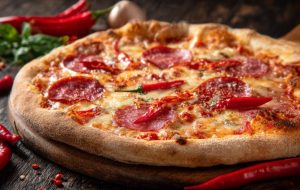
- Bake: slide onto the stone or a baking tray. Bake for 7–10 minutes, until the edges are golden with a few dark blisters.
- Finish: out of the oven, add fresh basil and drizzle with a few drops of olive oil.
💡 Chef’s tip: don’t put basil in the oven. It loses its aroma and turns black. Add it after baking.
🔥 Tips straight from Italian pizzaioli
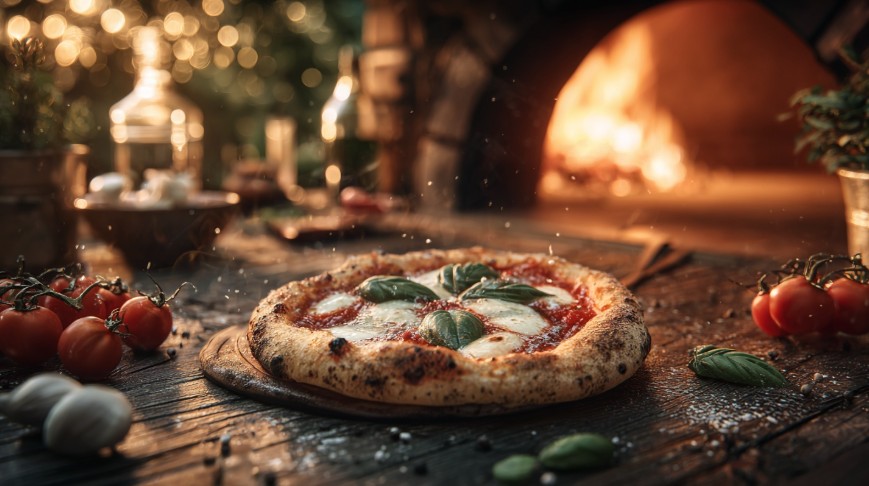
- Get the dough right: don’t rush it. A 24-hour cold ferment is half the battle.
- Minimalism wins: fewer ingredients = more flavor. Real Margherita is the balance of three colors and three tastes.
- Heat matters: the hotter the oven, the better the pizza. Pros bake at 450–500 °C in wood-fired ovens.
- Stone or steel: if you want restaurant-level results at home, a pizza stone or baking steel is worth it. The difference is huge.
- Serve immediately: pizza is meant to be eaten right away—no “we’ll reheat it tomorrow.” In Italy they joke: “Better small and hot than big and cold.”
🔑 7 secrets to an amazing Margherita pizza
Here’s the funny thing about Margherita: it’s so simple you think, “How hard can it be? Dough, sauce, cheese, herbs.” But that simplicity is exactly what makes it tricky. Miss one small detail and instead of a Neapolitan masterpiece you end up with bread and ketchup.
I’ve been there. Heavy dough. Cheese that turns rubbery. Basil that looks like it’s ready for the bin. After a lot of testing (and plenty of chats with Italian pizzaioli), I landed on seven rules that take Margherita from “just pizza” to a real symbol of Italian cooking. Sharing them with you below.
1. Let the dough “breathe”
Don’t rush it into the oven. Give it a cold ferment for 12–24 hours. The longer it matures, the lighter and more fragrant it becomes.
2. Use the right flour
Italians swear by “00” flour. It makes the dough soft and elastic and lets you stretch it so thin it almost turns translucent between your fingers.
3. Tomato sauce with no extra “tricks”
No long simmering. Fresh or canned tomatoes, salt, a little olive oil—done. Here, simple beats complicated.
4. Fresh mozzarella is non-negotiable
Go for mozzarella in brine. It melts gently into those appetizing little puddles and doesn’t turn rubbery after baking.
5. Basil always goes on after baking
Commit this to memory: basil in the oven becomes black leaves with no flavor. Add it fresh, right before serving.
6. Maximum heat
The hotter the oven, the better the pizza. Don’t be scared of a few charred spots on the crust—that’s where the magic lives.
7. Minimalism above all
Don’t turn Margherita into a “clean-out-the-fridge salad.” It’s three colors, three flavors—and that’s more than enough to make something special.
💡 Chef’s tip: real Margherita is the art of restraint. It proves that the best things are often the simplest.
🍕 Margherita pizza variations: from classic to playful
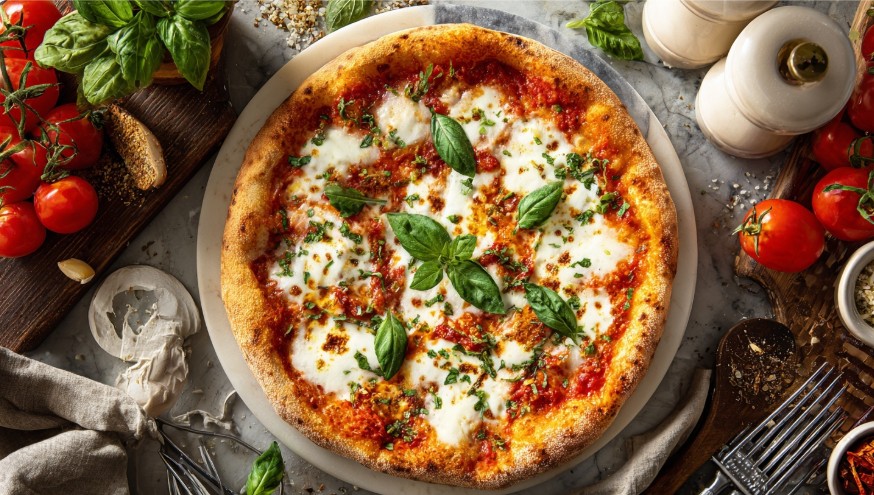
Margherita is like a crisp white shirt in your wardrobe: always appropriate, always stylish, and still easy to personalize. In Italy it’s served as a symbol of tradition, but in every country—and even every family—it picks up its own character.
🇮🇹 Classic Neapolitan Margherita
- Dough: thin, with airy bubbles that crackle when you bite.
- Cheese: ideally mozzarella di bufala—softer, creamier, and more expressive.
- Sauce: San Marzano tomatoes grown in volcanic soil near Vesuvius.
- Vibe: served simply, often on a wooden board, piping hot so the cheese still stretches.
💡 Chef’s tip: a true Neapolitan Margherita is baked in a wood-fired oven at 485 °C for just 90 seconds. It’s basically a flash of culinary magic.
🇺🇦 Ukrainian-style twist
- Instead of mozzarella, some people use homemade bryndza or suluguni for a pleasantly salty note.
- The crust is sometimes made thicker—more like a cozy homemade bake.
- A little garlic or dill can sneak into the sauce—because those familiar flavors are hard to resist.
- And yes, some folks add fresh tomato slices on top for a “double tomato” moment.
👶 Kid-friendly version
- Shape the dough into hearts or stars (birthday parties love this).
- Swap big basil leaves for baby spinach—kids tend to accept it more easily.
- Add a little sweetcorn or diced bell pepper for color and a more playful vibe.
🍴 Restaurant-style interpretations
- Modern spots often play with format: mini 10 cm Margheritas served as appetizers.
- Some chefs swap mozzarella for burrata—extra creamy, and it spills beautifully when sliced.
- Another popular move: “half and half”—one side classic Margherita, the other with a signature topping (like prosciutto).
🌍 Global variations
- USA: thicker crust and more cheese. It’s basically cheese pizza, but with Margherita spirit.
- France: goat cheese and olives sometimes join the party.
- Japan: a mayo drizzle in a neat lattice (yes, I was surprised too—but it’s oddly good).
- India: basil may be replaced with coriander, and the sauce gets extra spices for a bolder, hotter take.
💡 Chef’s tip: when you experiment, keep the balance. Dough, sauce, cheese, and herbs should stay the foundation. Everything else is an accent—not the main act.
🍮 Something sweet after pizza
After a hearty dinner, I often want something soft and not too heavy. That’s where cottage cheese pancakes come in—a Ukrainian classic I’ve fine-tuned into my own go-to recipe. They’re fluffy, fragrant, and perfect with jam or a spoonful of sour cream.
🥤 If you want something refreshing
If you’re craving a drink with a bit of personality after pizza, make kombucha. It’s homemade fermented tea that’s not only refreshing, but also great for digestion and overall immunity.
🎉 For a festive table
Planning a get-together? Don’t forget the appetizers. A real showstopper is liver cake—a tender, layered savory “cake” that always gets people talking.
❓ Margherita pizza: common questions
🔸 Question 1: What makes Margherita different from other pizzas?
👉 Answer: it’s as simple as it gets—dough, tomato sauce, mozzarella, and basil. No sausage, no mayo. That’s exactly where the brilliance comes from.
🔸 Question 2: Can I make Margherita in a frying pan?
👉 Answer: yes. A cast-iron skillet works best—cover it with a lid. The result will feel more “home-style” than oven-baked, but still delicious.
🔸 Question 3: Why does mozzarella sometimes turn rubbery?
👉 Answer: usually because the mozzarella was too dry, or the pizza was overbaked. Use fresh mozzarella in brine and keep baking to 10 minutes max.
🔸 Question 4: Can I freeze Margherita pizza?
👉 Answer: you can, but it’s better to freeze the shaped dough and sauce separately. A fully baked pizza loses about half its magic after freezing.
🔸 Question 5: Is Margherita pizza kid-friendly?
👉 Answer: yes—it’s light and made from simple ingredients. If needed, just use less basil for a milder flavor.
💡 Chef’s tip: don’t be shy about “basic” questions—those are usually the ones that unlock the best kitchen tricks.
💪 Is Margherita pizza healthy? Benefits (and what to watch)
Pizza doesn’t exactly have a health halo—but Margherita is a different story. No processed meats, no mayo, no mountain of cheese. It’s a balanced combo of simple ingredients that actually work well together.
✅ Benefits:
- Tomatoes are rich in lycopene, an antioxidant that supports heart and vascular health.
- Mozzarella provides calcium and protein for bones and muscles.
- Basil is often called a natural mood booster and can be calming.
- Olive oil contains healthy fats that support the heart.
- Sourdough-style dough (or long-fermented dough) is often easier to digest than quick-rise dough.
⚖️ Calories (per 100 g of Margherita pizza):
- Calories — about 250 kcal
- Protein — 9 g
- Fat — 8 g
- Carbs — 32 g
💡 Chef’s tip: 1 serving (2–3 slices) is the sweet spot—satisfying but still light. No need to take down the whole pizza solo.
🛠️ Chef-style kitchen hacks
1. How to fix dough that’s too salty
If you overdid the salt, mix a small batch of unsalted dough and knead it into the original. It really helps.
2. How to reheat pizza so it’s crispy again
Not the microwave. Use a skillet: place a slice in a dry pan, cover with a lid, and warm for 3–4 minutes. The bottom crisps back up and the cheese melts nicely.
3. No pizza stone? No problem
Preheat an upside-down baking tray in the oven and bake on that. It’s surprisingly close.
4. What to do if the cheese releases too much water
Lay the mozzarella on paper towels 15 minutes before baking so excess moisture drains off.
5. How to make the crust edges even tastier
Before baking, brush the rim with olive oil mixed with garlic, or sprinkle with sesame seeds. Small detail—big guest reaction.
🧾 FAQ: popular questions about Margherita pizza
❓ Питання 1: Що таке піца Маргарита?
👉 Відповідь: Це класична італійська піца з томатним соусом, моцарелою та свіжим базиліком. Вона символізує кольори італійського прапора.
❓ Питання 2: Скільки калорій у піці Маргарита?
👉 Відповідь: У середньому близько 250 ккал на 100 г. Все залежить від тіста і кількості сиру.
❓ Питання 3: Як приготувати піцу Маргарита вдома?
👉 Відповідь: Потрібно зробити тісто з борошна, дріжджів, води й солі, приготувати томатний соус, додати моцарелу, випекти при високій температурі й прикрасити базиліком.
Питання 4: Який сир використовують у піці Маргарита?
👉 Відповідь: Традиційно — моцарела ді буфала (з молока буйволиць). У домашніх умовах підійде свіжа коров’яча моцарела.
❓ Питання 5: Скільки часу випікається піца Маргарита?
👉 Відповідь: У дров’яній печі — лише 90 секунд при 485 °C. У домашній духовці — 7–10 minutes при максимальній температурі.
❓ Питання 6: Чи можна зробити піцу Маргарита без духовки?
👉 Відповідь: Так, на чавунній сковорідці під кришкою. Хоча справжній неаполітанський смак досягається тільки в печі.
Питання 7: Чим піца Маргарита відрізняється від Марінари?
👉 Відповідь: У Марінарі немає сиру — лише тісто, соус, часник і орегано. У Маргариті ж головна зірка — моцарела.
💡 Chef’s tip: Margherita is the pizza most often used in pizzaiolo competitions. If a chef can nail a perfect Margherita, they can handle any pizza.
🤝 Join the Gotuimo cooking community!
Margherita pizza proves that simple ingredients can create real magic. But cooking isn’t only about recipes—it’s about the people who make them, share their experience, and inspire each other.
👉 In our Gotuimo community, you can:
- publish your own recipes and share family secrets;
- discuss other members’ dishes and find new ideas;
- save favorite recipes so they’re always close at hand;
- earn achievements and win prizes for being active.
Let’s build a delicious story together. Join in—and your next Margherita pizza might become a community favorite.
📌 Try these next
Want a breakfast that’s crunchy and sets you up for the day? Check out how to make homemade granola with dried fruit—my own recipe with tips, variations, and an FAQ.