

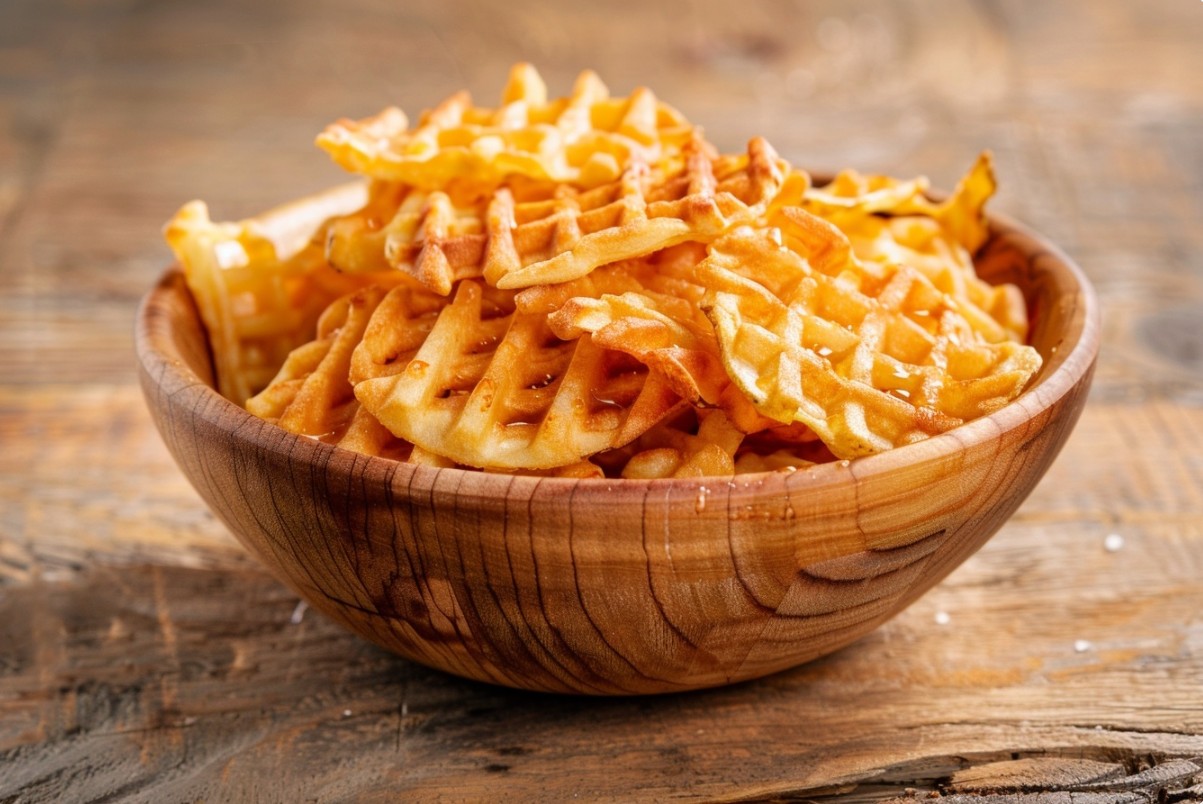
Deep-fried waffle-cut potatoes are thin slices with that signature criss-cross pattern and shatteringly crisp, golden edges. They stay light in the middle and properly crunchy on the outside.
They look a bit fancy, but the “secret” is honestly just slicing and oil temperature. The waffle texture gives you maximum crunch without that heavy, greasy feel.
When you nail it, they come out airy, with delicate edges and a very specific crunch you can’t really mistake for anything else.
Picture one of those busy evenings where the kitchen’s full of plates and chatter, and the oil is quietly crackling on the hob. I keep a bowl of cold water next to me, slice potatoes fast with a crinkle cutter, and watch the starch turn the water cloudy. While the oil climbs to  175 °C (347 °F), I mix salt with paprika and a pinch of garlic—suddenly everyone wanders closer. I drop in the first batch as a small handful so nothing clumps, and in 3–4 minutes they turn light, almost lace-like. Set them on a rack and you hear that dry, crisp crackle—the best sign. After that it’s just rhythm: keep the heat steady and don’t try to fry too much at once.
In this recipe you’ll learn
- Why you’ll love this recipe
- Tips before you start
- What to look for when choosing ingredients
- Secrets for perfect deep-fried waffle-cut potatoes with golden edges
- How to serve deep-fried waffle-cut potatoes with golden edges
- Nutritional perks
- Recipe variations
- Questions & answers
- Common mistakes

Deep-Fried Waffle-Cut Potatoes with Golden Crispy Edges
Ingredients
- 700 г Potatoes medium, starchy
- 800 мл Refined oil for deep-frying sunflower or peanut
- 1 ч. л. Salt or to taste; add after frying
- 1 ч. л. Sweet or smoked paprika optional: mix 50/50
- 0.5 ч. л. Dried garlic powder do not add to the oil
Method
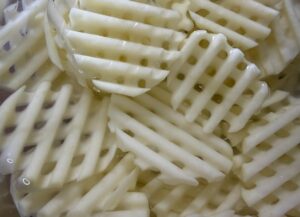
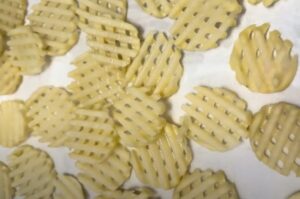
 Peel 700 г potatoes, or leave the thin skin on if it’s clean. Slice into crinkle-cut rounds about 2 mm thick (or use a waffle slicer/mandoline), dropping them straight into a bowl of cold water for 10 minutes to rinse off starch and help the crunch come out evenly.
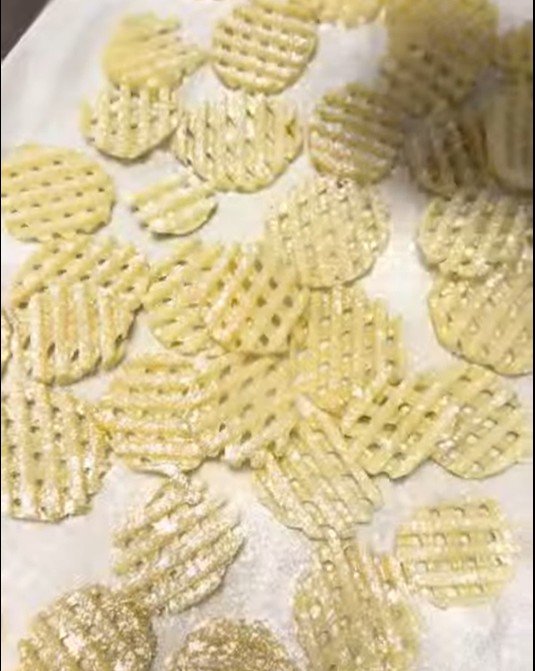
- Drain and rinse the slices 2–3 more times, until the water is almost clear. Lay the potatoes in a single layer on a towel, blot with a second towel, then let them air-dry for 10 minutes at room temperature—the surface should feel dry, not slick.
- Once dry, dust the potatoes with a very thin layer of starch, tossing gently by hand (or carefully shaking) so each slice gets a light coating with no clumps. Shake off the excess so the slices don’t stick together and you don’t end up with a floury layer while frying.
- In a heavy-bottomed pot or deep fryer, heat 700–900 мл refined oil to175 °C (347 °F). Set a cooling rack or a plate lined with paper close to the cooker, and keep the heat at medium-high so the temperature doesn’t crash when you add the potatoes.
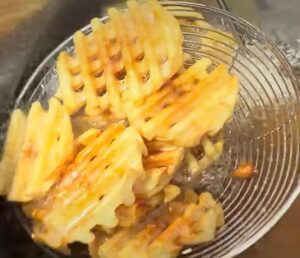
- Lower the potatoes in small handfuls (about 80–120 г), and use a slotted spoon to gently separate them for the first 15–20 seconds. Fry until pale golden, 3–4 minutes, keeping the oil around170 °C (338 °F). If the bubbling suddenly dies down right after adding a batch, wait 30 seconds, then bump the heat up slightly.
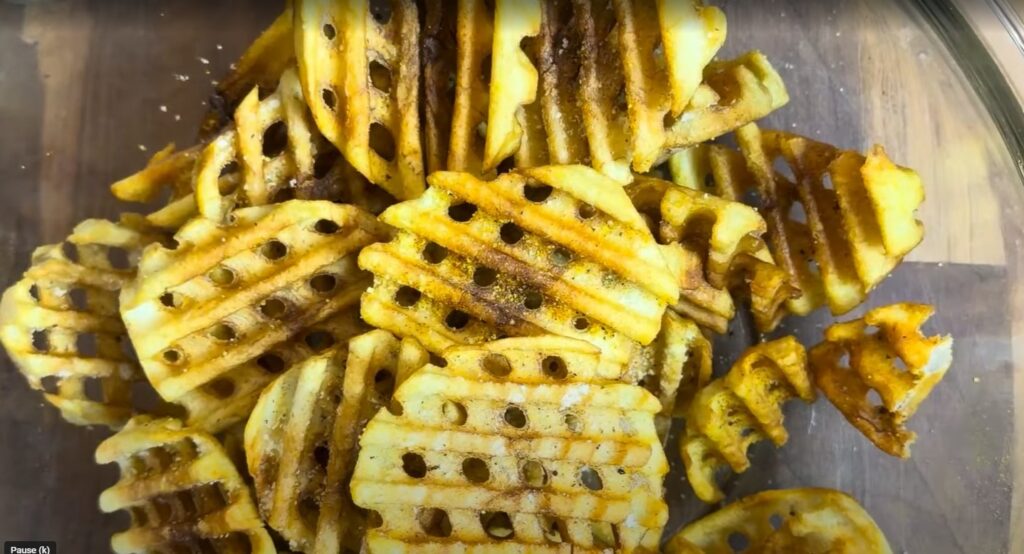
- Lift the slices onto a rack, let them drain for 2 minutes, then tip into a large bowl. Add 1 tsp salt, 1 tsp paprika, and 1/2 tsp dried garlic, then quickly toss/shake the bowl for 10–15 seconds so the seasoning catches on the ridges.
- Repeat with the remaining potatoes in the same-sized batches, bringing the oil back up to175 °C (347 °F) each time and letting it reheat for 2–3 minutes between batches. Keep the finished potatoes on a rack in a warm spot, but don’t cover them—steam will soften the edges.
- Serve right away while the edges are dry and crisp and the centre is still tender. If you need to hold a few batches, warm the oven to120 °C (248 °F) and keep the potatoes on a rack for 10–15 minutes with no foil. Don’t over-salt “just in case”—it’s better to add a pinch at the end than lose the crunch.


Notes
Private Notes
Tried this recipe?
Let us know how it was!
Why you’ll love these deep-fried waffle-cut potatoes
I genuinely didn’t think a plain potato could crunch this loudly—until I started slicing it properly thin (around 2 mm). It’s simple happiness: your hand keeps going back for “just one more,” and the bowl is empty in about 10 minutes. Another bonus: seasonings stick evenly because they cling to the ridges. And yep, you don’t need much sauce at all.
- Crinkle edges that really crackle
- Tender middle, not dry
- Best fried in small batches
- Seasoning actually stays on the ridges
- Works with loads of dips
Tips before making deep-fried waffle-cut potatoes
Ever had fries come out kind of soft even though the oil felt hot? Usually it’s extra moisture and surface starch: the outside sort of “seals,” and you end up steaming the inside instead of crisping it. The fix is easy—rinse the slices, dry them really well, then let them sit on paper towels for 10 minutes. Tiny step, big difference.
- Use a crinkle cutter; aim for ~2 mm slices
- Rinse until the water runs mostly clear
- Dry thoroughly with two towels
- Fry in small handfuls—don’t crowd the pot
- Salt after frying, not before
What to look for when choosing ingredients
For deep-frying you can use an inexpensive refined sunflower oil, or go for peanut oil if you want something more stable at high heat (it also tends to stay clearer for longer). Thin-skinned potatoes save time, but floury, starchy potatoes (the kind you’d mash) usually crisp up better. Smoked paprika costs more than regular, but it gives deeper colour on the edges in the same 4 minutes of frying.
Potatoes
Go for medium, starchy potatoes; watery ones tend to give a softer crust.
Oil for frying
Refined sunflower oil is budget-friendly; peanut oil tastes cleaner and is more heat-stable.
Paprika
Smoked paprika boosts aroma and colour; sweet paprika is milder.
Dried garlic
A fine powder sticks to the ridges better than granules.
👉 potatoes with mushrooms in sour cream — a cosy, filling dinner option
Secrets for perfect deep-fried waffle-cut potatoes
This one comes down to two things: a dry potato surface and a steady 175 °C (347 °F). Keep the slices thin and fry in batches, and the edges will brown evenly in 3–4 minutes.
- Rinsing removes excess surface starch
- Drying is the key to crunch
- Keep oil at 170–180°C
- Don’t salt before frying
- Drain on a rack, not in a bowl
How to serve deep-fried potatoes
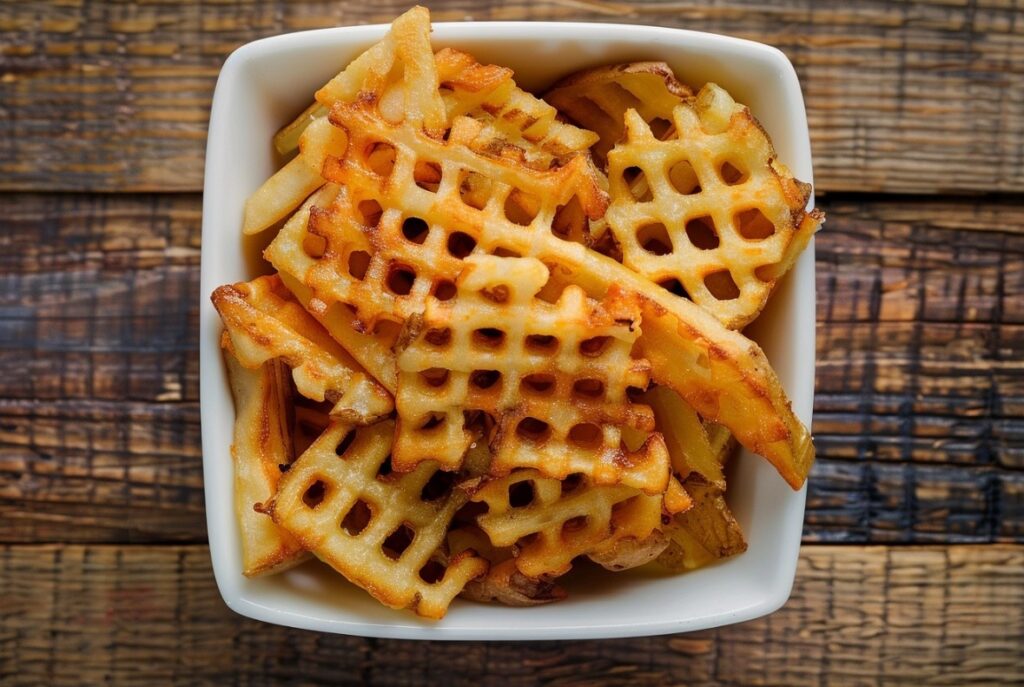
Don’t cover waffle-cut potatoes with a lid or foil—steam will steal the crunch in about 5 minutes. Serve straight from the rack, or on paper, so the edges stay dry.
- With a sour cream + dill dip
- With garlicky aioli
- With ketchup + smoked paprika
- Alongside herring and pickled onions
- As a side for roast chicken
Nutritional perks
Potatoes bring potassium to the table, which helps support fluid balance in your diet. With deep-fried snacks, portion size matters—150–200 г per person is usually plenty. You’ll keep more fibre if you leave the thin skin on and don’t fry them all the way to dark brown.
- Potassium in each serving
- Carbs for quick energy
- A bit of fibre from the skin
- How oily they feel depends a lot on drying
Waffle-cut potato variations
For a party platter, mix crinkle-cut rounds with longer “ribbons,” then finish with a pinch of smoked paprika and fresh herbs. It looks a bit more special on a big serving plate.
- Paprika + dried garlic + a little citrus zest
- Salt with rosemary and black pepper
- Spicy version with chilli flakes
- Cheesy finish: Parmesan after frying
- Salt-and-vinegar vibe: a few drops of apple cider vinegar

If you want more crispy snack ideas, have a look at what to cook for dinner—those recipes pair nicely with these potatoes and round out the menu.
Questions & answers
Once a guest asked for the recipe and then double-checked: “So you can get the waffle look without a waffle iron?” You can—crinkle cutter + steady oil does the job.
How do I slice them for that waffle effect?
Why do I need to rinse the potatoes?
What if I don’t have an oil thermometer?
How long can I keep them after frying?
 120 °C (248 °F) for up to 20 minutes, uncovered.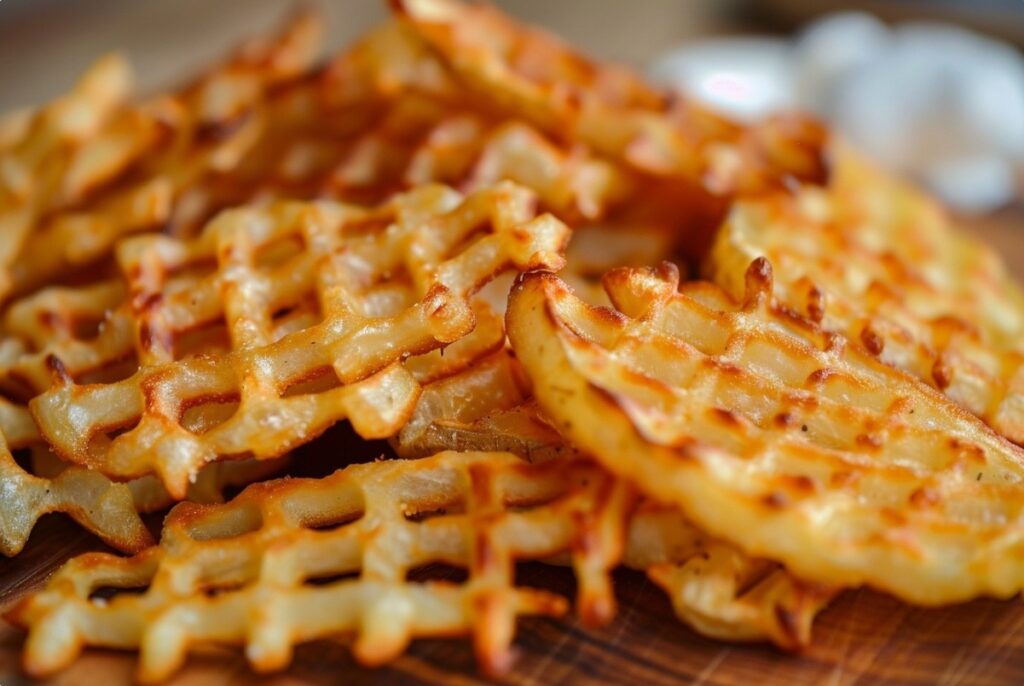
Common mistakes when making deep-fried waffle-cut potatoes
Three things will wreck those crisp edges, and they all come from rushing. First: oil that’s too cool—your potatoes soak up oil instead of drying and crisping fast. Second: wet slices after rinsing; water splatters and softens the surface. Third: an overcrowded pot, where pieces stick and steam each other.
Why don’t the edges turn golden?
Your oil is below 170°C, or your slices are thicker than ~2–3 mm. Heat the oil to 175–180°C and slice thinner.
Why do they come out greasy?
They fried too long at low heat, or you added too much at once. Keep the temperature high, fry in small batches, and drain on a rack.
Why did the pieces stick together?
You dropped them in as one big pile, or didn’t shake off excess starch. Rinse, dry well, and fry in handfuls, stirring gently with a slotted spoon for the first 20 seconds.
Why do the spices taste bitter?
You added paprika/garlic to the hot oil, or salted before frying. Season the hot, freshly fried slices in a bowl instead.



Responses