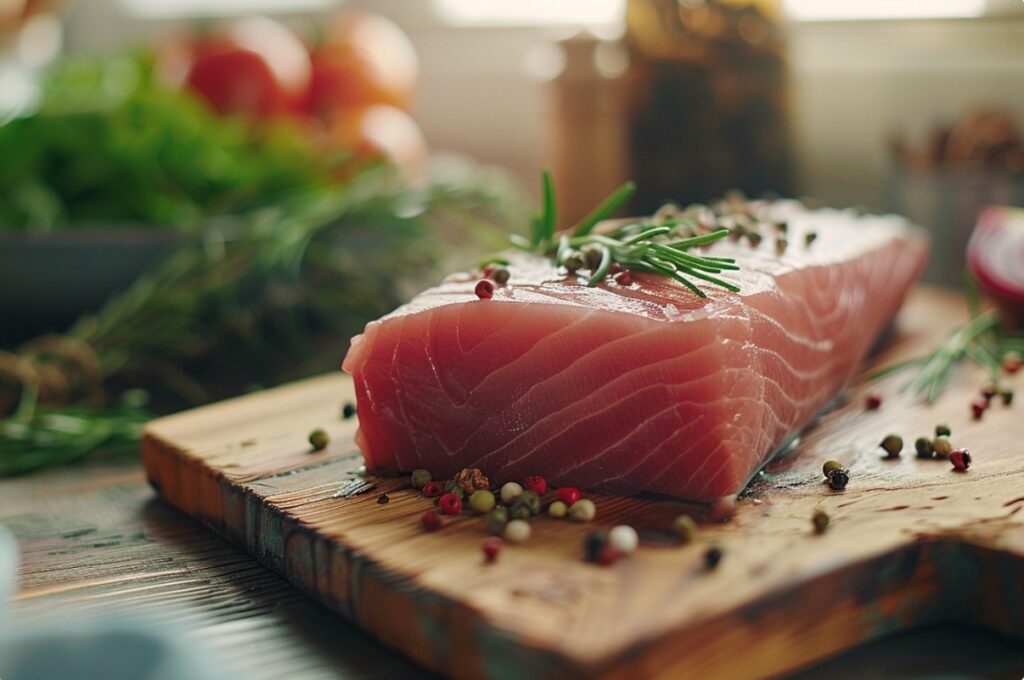
How to Store Ingredients for Tuna Salad

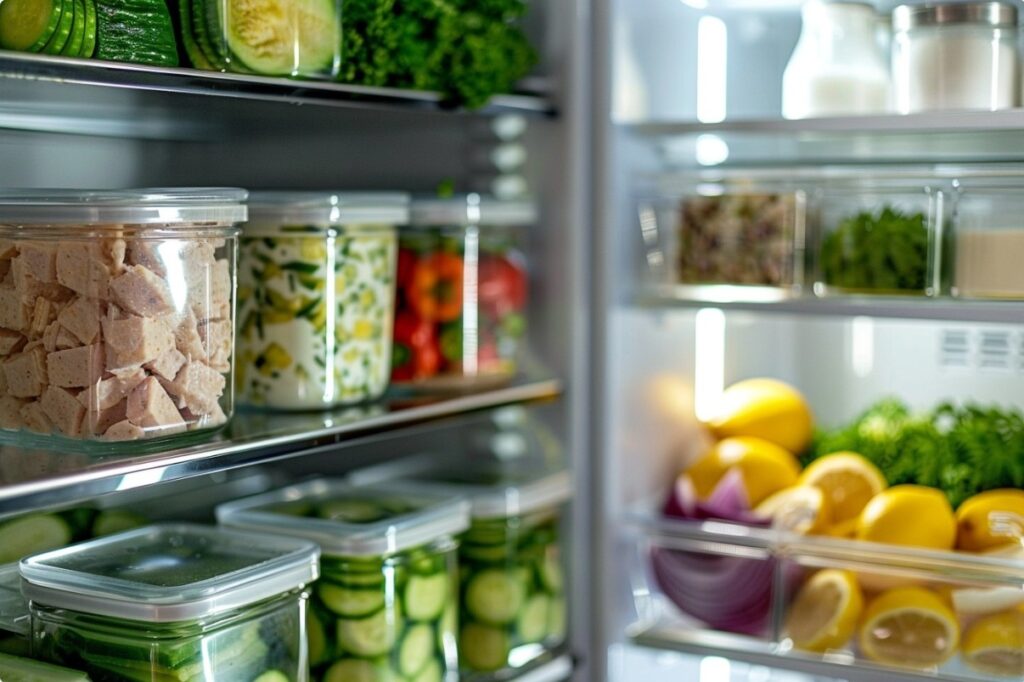
The quality of tuna salad depends not only on what you put in it, but also on how you store everything. Even the freshest ingredients can lose their crunch, juiciness, and flavor if they’re prepped the wrong way or left in the wrong conditions. This is especially true for chopped vegetables, hard-boiled eggs, and an opened can of tuna.
Getting storage right doesn’t just keep things fresh—it makes weeknight cooking so much easier. When the ingredients are prepped ahead and stored separately, you can throw the salad together in a couple of minutes without it tasting like leftovers.
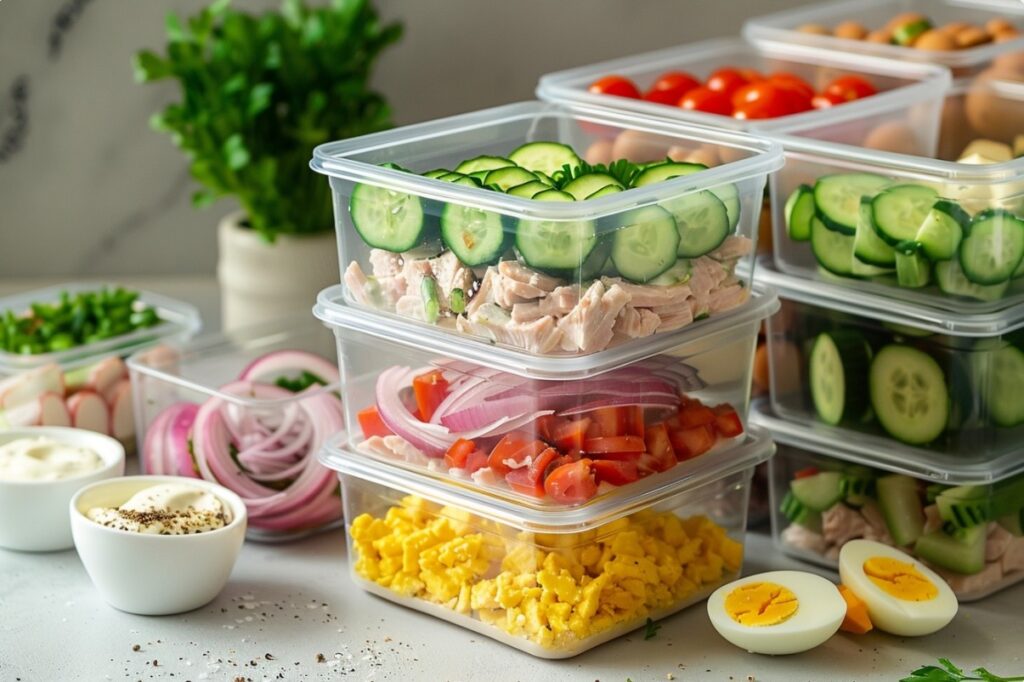
Some salads feel like they were designed to ruin your mood. On Sunday everything looks great: a can of tuna, eggs, a cucumber, corn, salad leaves—“I’ll throw this together quickly and dinner is sorted for two days.” Then Monday rolls around, you open the fridge, and it’s a different story: the cucumber has leaked, the greens have wilted, the eggs smell like the fridge, and the tuna… the tuna is technically fine, but next to soggy greens it looks kind of sad.
I know that feeling well: it’s not that I don’t want to cook—it’s that it’s annoying when you think you’re doing everything right and the result still isn’t it. Especially when tuna salad is meant for the whole household: someone needs a school lunch, someone’s rushing to work, someone just needs a quick bite between activities. You want it simple, no fuss, but also not “a fridge mush situation.”
What helps isn’t some perfect meal-prep system. It’s a few very practical storage rules I learned the hard way: what goes where, how to keep moisture from wrecking texture, what you can prep ahead, and what’s better left for the last minute. Do it once, and after that it runs on autopilot.
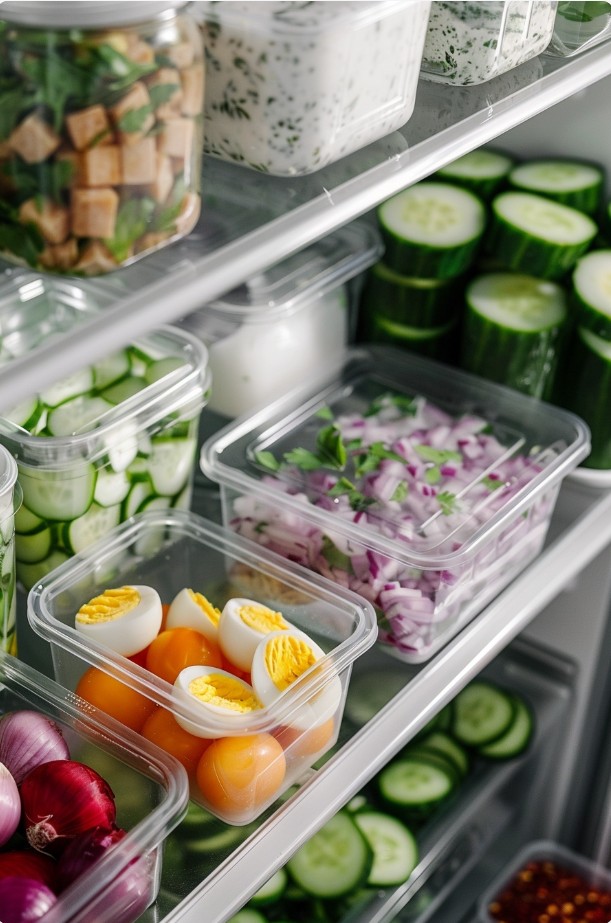
What tuna salad is usually made of—and why it falls apart in the fridge
Everyone has their own version of “tuna salad.” But the storage logic is almost always the same because the ingredients repeat: canned tuna, eggs, fresh vegetables (cucumber, tomato, onion), something crunchy (greens, Napa cabbage), sometimes corn/beans, sometimes cheese, sometimes mayonnaise or a yogurt-based dressing.
The main enemy here is moisture. It does two annoying things: it softens anything that’s supposed to be crisp, and it dilutes the flavor. The second enemy is fridge odors. Tuna is naturally aromatic, and eggs and greens pick up smells easily. The third is time: some components simply don’t like sitting around once chopped.
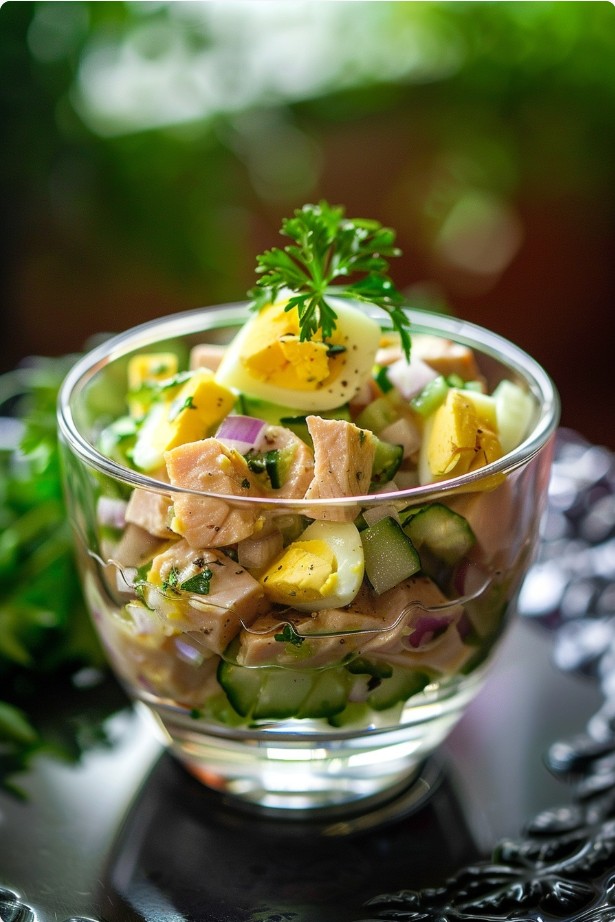
I used to do this: chop everything, mix it, dress it, pack it into a container—and feel very confident that “tomorrow it’ll be even better once it sits.” It did sit, yes. Not the flavor, though—the water at the bottom and the limp greens. After a few rounds of that, I stopped fighting physics and started working with it.
The principle that actually works
Store the components, not the finished salad. Then assemble a portion when you actually need it. That doesn’t mean “cook from scratch every time.” It means: prep the base, and after that it’s 2–3 minutes to put together.
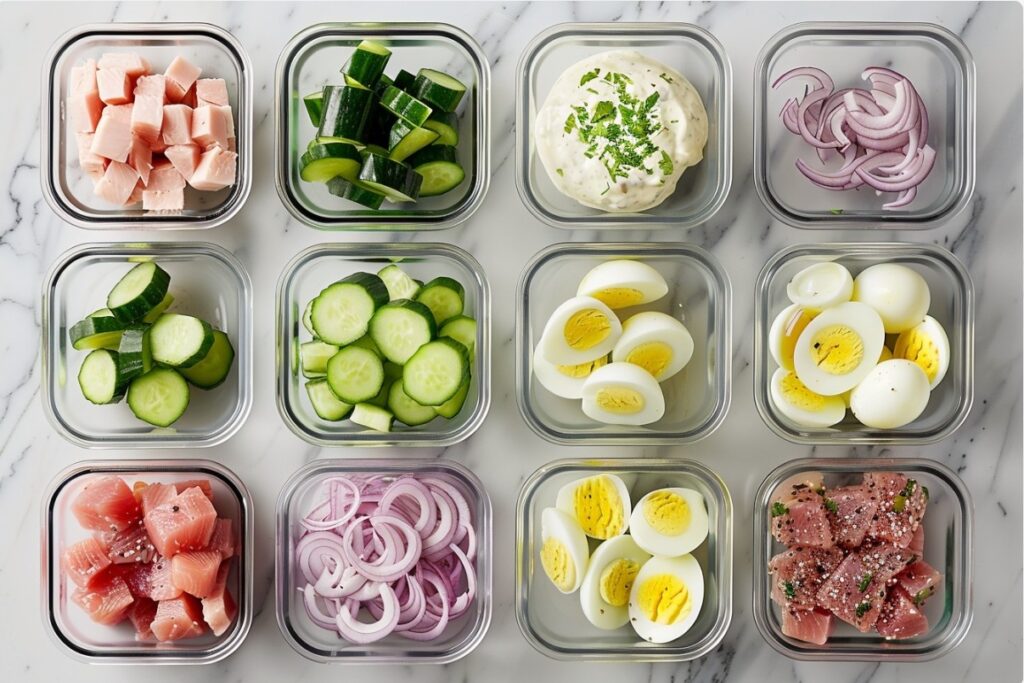
Tuna: how to store an opened can so it doesn’t smell or dry out
Tuna comes with a surprising number of little details. It might be packed in oil or spring water, in chunks or flakes. And once you open the can, it changes quickly: it dries out on top, it absorbs fridge smells, and sometimes you get that “metallic” note if you leave it in the tin.
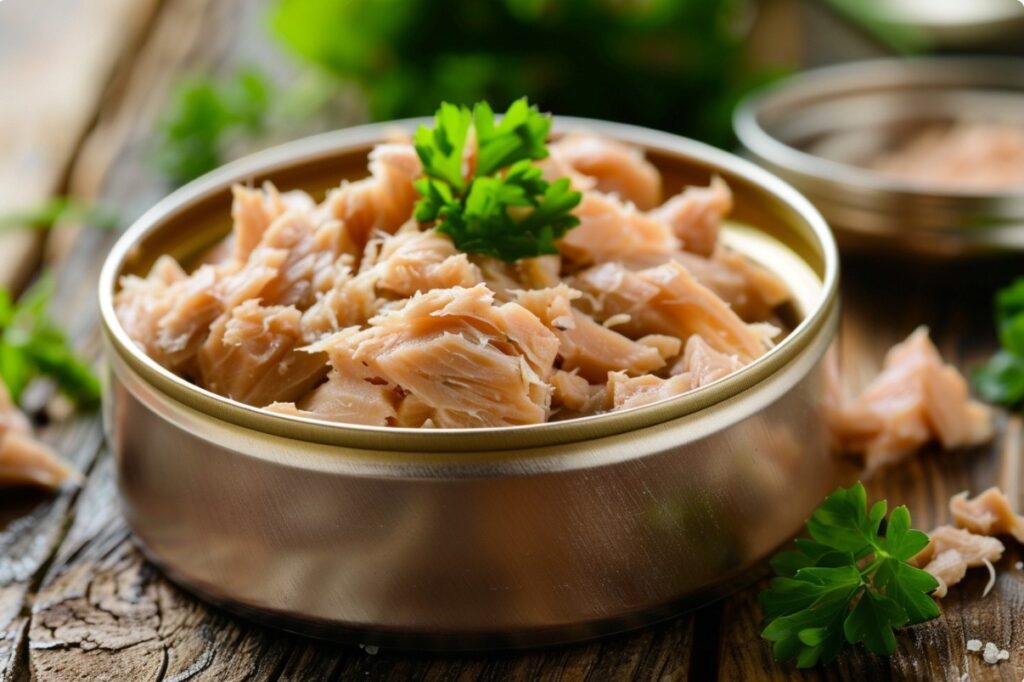
Rule number one: don’t store opened tuna in the original can—even if it has a plastic lid. Transfer it to a small glass jar or a food-safe plastic container with a tight-fitting lid.
Oil or water—drain it or keep it?
Here’s what I do: if the tuna is in oil, I drain almost all of it but leave about 1 teaspoon so it doesn’t dry out. If it’s in spring water, I also drain most of the liquid because it later “waters down” the salad. But I don’t squeeze it bone-dry—when tuna is completely dry, it turns stringy and a bit rough.
Tip: if your tuna has already dried out a little in the container, don’t rush to “save” it with mayonnaise. Add a drop of olive oil or a spoonful of yogurt and mix—texture comes back much more gently.
How long it keeps after opening
At home, I stick to 1–2 days for opened tuna stored in a container in the fridge. Not because it’s “scary,” but because the taste and smell noticeably change. By day three it’s often just not as pleasant—especially if the fridge is packed and the door keeps getting opened.
If you know you won’t use the whole can at once, it’s better to plan it right away: today some goes into salad, tomorrow into a sandwich, pasta, or a filling. But for tuna salad specifically, I like the tuna as fresh as possible after opening.
How to keep the fridge from smelling like tuna
A tight lid is half the job. The other half is a clean rim. Often the smell isn’t coming from the tuna itself—it’s from a smear of oil or liquid on the threads or around the edge. Wipe it with a paper towel and you’ll notice the difference immediately.
Quick real-life moment: once I “saved” 10 seconds and didn’t wipe the container after transferring tuna. By morning the fridge smelled like a tiny fish shop had moved in. My wife opened the door, looked at me—and I went straight to washing shelves. Since then, wiping the rim is automatic.
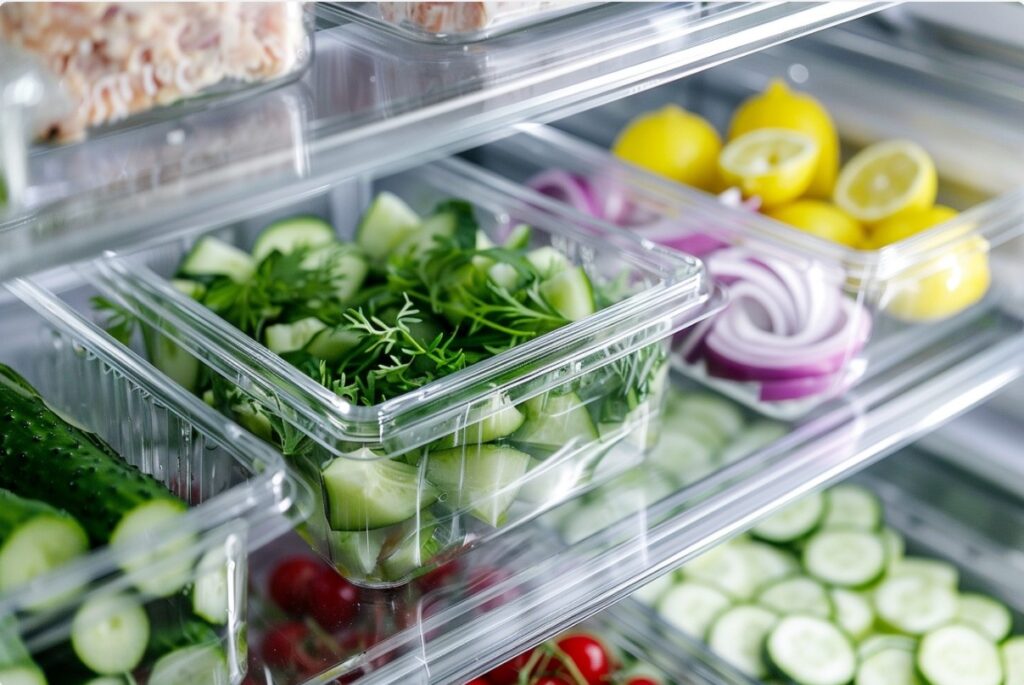
Eggs: how to boil ahead and keep them from turning rubbery (or smelling like the fridge)
Eggs are a great base for tuna salad. But they can also sabotage you: boil and peel them ahead and they dry out fast. Keep them too long and they pick up fridge odors. Overcook them and the yolk turns chalky, making the whole salad feel heavy.
Storing hard-boiled eggs: in the shell or peeled
Best option: keep them in the shell. It’s basically nature’s container. Boil them, cool them, pat them dry, and store them in a box/container. They keep longer and smell like eggs—not like the fridge.
I only store peeled eggs if I know we’ll eat them today or tomorrow. In that case: a lidded container, ideally with a paper towel on the bottom to absorb extra moisture.
Slicing: when to cut
If you slice eggs ahead of time, the cut surfaces dry out—and you can taste it. The whites get a little “rough.” So I cut eggs right before assembling the salad. It’s genuinely 30 seconds, and the difference is like a different dish.
Tip: if you’re packing lunch to go, put the eggs in a separate small container whole (or halved) and slice them right before eating. They won’t “air out” on you.
About that smell
That “egg smell” in the fridge usually happens when eggs:
- sit uncovered or in a bag that doesn’t seal well;
- are stored next to strongly scented foods (fish, smoked meats, onions);
- are kept peeled for too long.
I just dedicate one proper lidded container to eggs, and the problem disappears.
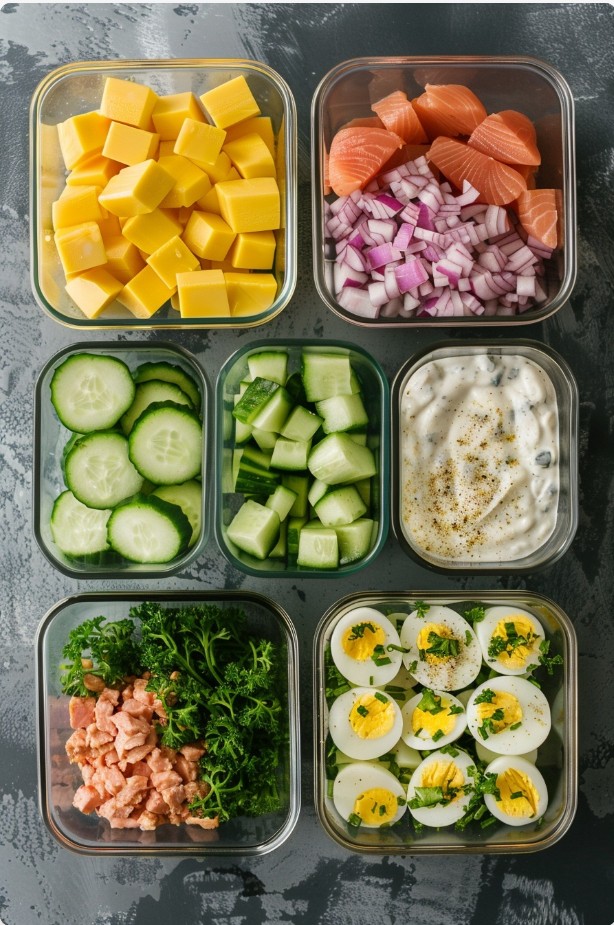
Vegetables and greens: how to keep your salad from turning watery
Tuna salad often gets watery not because of the dressing, but because of cucumbers, tomatoes, and greens. Moisture comes out, mixes with the fish, and within a few hours everything turns the same kind of soft. You can still eat it, sure—but it’s not exactly joyful.
Cucumber
Cucumber is the champion of releasing water. Slice it and leave it sitting, and it starts leaking fast. Here’s my approach:
- I slice cucumber no more than a few hours before eating, if I absolutely have to;
- I store it separately, in a container with a paper towel;
- if the cucumber is very watery, I sometimes scoop out the seeds (not always—only when I can tell it’s going to “swim”).
A paper towel in the container is such a simple trick, but it really works. It catches the droplets that would otherwise end up in your salad.
Tomato
Tomato brings flavor to tuna salad—and also risk. Chopped tomato turns soft and watery in the fridge. If you’re planning ahead, keep tomatoes whole at room temperature (as long as they’re in good shape and not overripe) and slice right before serving.
If you have to chop them in advance, store them separately and don’t salt them. Salt pulls out water instantly.
Onion
Onion is convenient because you can chop it ahead. The downside: it perfumes the entire fridge, and it can taste sharper over time. I store chopped onion in a small jar with a lid. If I want a milder flavor, I rinse the chopped onion under cold water, shake it really well, and then pack it away.
Little household memory: we once had a phase of “onion everywhere.” I’d chop it at night, leave it in a bowl with a plate on top—and by morning even the butter smelled like onion. Now I keep a dedicated tiny container for onion, and it’s one of those small kitchen upgrades that’s weirdly satisfying.
Salad leaves, arugula, spinach
Greens like dryness and a bit of air. If they’re wet, they rot. If they’re dried out, they wilt. This simple routine works for me:
- wash, then dry really well (kitchen towel or salad spinner if you have one);
- container with a paper towel on the bottom;
- greens on top, another paper towel, then the lid.
Stored this way, greens can easily last a few days and stay crisp. When you open the container, it should smell fresh—not swampy.
Tip: if greens are a little wilted, sometimes a 10-minute soak in very cold water helps, then dry them again. Not magic, but it often works.
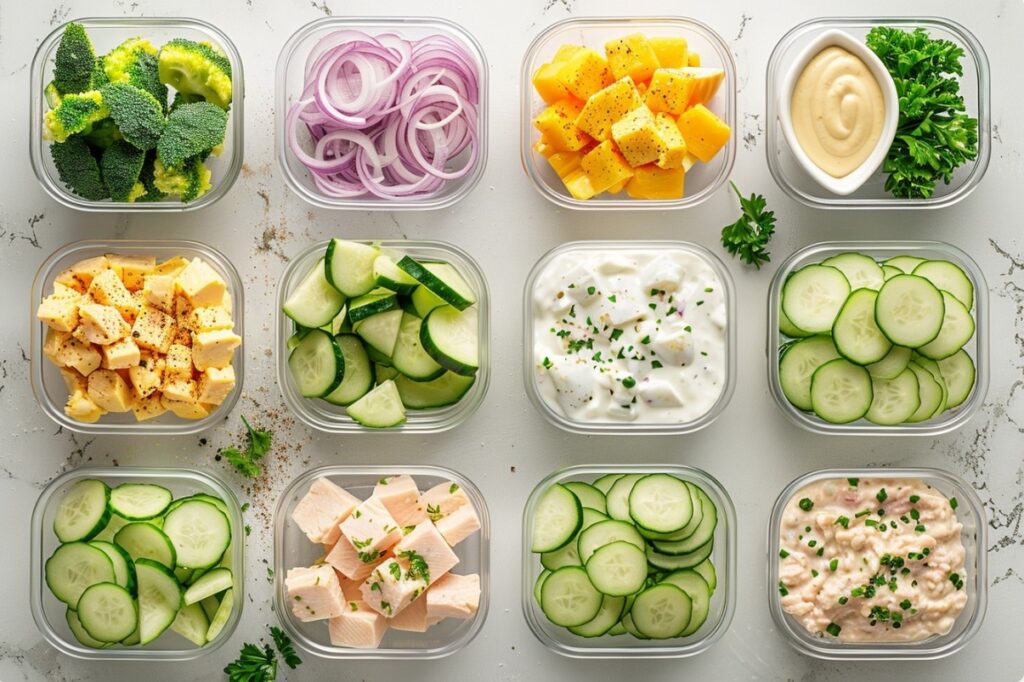
Sauces and dressings: how to keep them separate so it tastes freshly made
The most common reason tuna salad tastes “off” on day two is simple: it’s already dressed. Mayonnaise, yogurt, sour cream, olive oil with lemon—anything that meets salt and vegetable juices starts the chain reaction: things soften, release water, and blend into one texture.
I stopped dressing tuna salad “for later” a long time ago. I store the dressing separately—in a small container or jar. It’s not about being perfect; it’s about keeping the flavor and texture.
What to do if you need to pack a lunchbox
Think in layers: on the bottom, ingredients that don’t mind moisture (tuna, corn, beans); separately, greens and cucumber; and the dressing in a mini container. I’ve seen people pour dressing on top “so they don’t forget.” You won’t forget if the dressing is sitting right next to the salad.
Salt and acid at the last minute
Salt pulls water out of vegetables, and acid (lemon/vinegar) can “cook” delicate leaves. So I add salt and acid at the end. It’s a small thing, but it keeps the crunch.
Tip: if everyone in the family likes a different dressing, keep the salad base neutral and store sauces separately. One set of ingredients suddenly stops feeling repetitive.
Containers and tiny habits that solve 80% of the problems
I’m not someone who loves buying “one more storage system.” But a few things genuinely make life easier if tuna salad shows up in your kitchen regularly.
Small containers aren’t a trivial thing
Dedicated small containers for tuna, chopped onion, and dressing are like having a good knife. You can manage without them, but with them everything is faster and cleaner.
I also like when a container is almost full: less air means less drying out and fewer odors. Especially for tuna and chopped ingredients.
Paper towel wherever there’s moisture
This is my favorite “budget tool.” A paper towel goes:
- under greens—so they don’t get soggy;
- under cucumber—so it doesn’t sit in its own juice;
- under cheese (if it’s moist)—so it doesn’t “sweat.”
Just replace it if you’re prepping for a few days. A soaked paper towel stops helping and starts causing problems.
Temperature and where to store things in the fridge
The fridge door is the warmest spot. If your tuna or eggs live there, they lose quality faster because the temperature keeps fluctuating. I keep those items closer to the back, but not pressed right up against it (so they don’t partially freeze if your fridge runs cold).
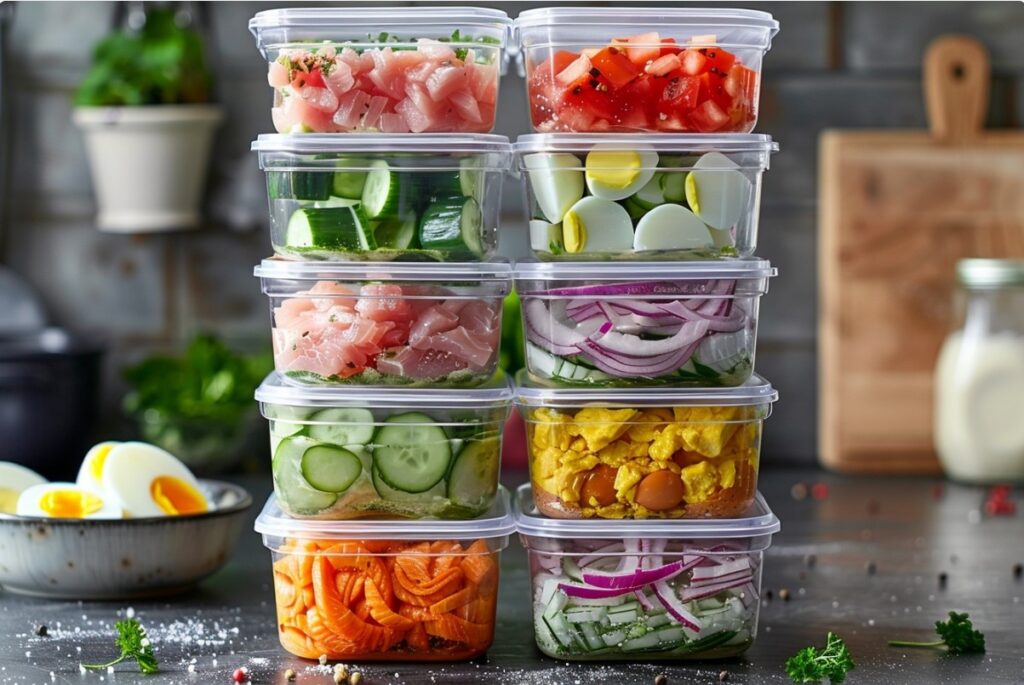
Freezing: what tuna-salad ingredients freeze well—and what absolutely don’t
Honest answer: don’t freeze tuna salad. After thawing, it’s almost always disappointing—watery, separated, with a weird texture. That said, a few components can be kept in the freezer so you can assemble a salad faster when you need it, or simply avoid wasting food.
What you can freeze without regret
- Corn (not canned, but cooked/frozen corn from a bag) — totally fine, just add it in.
- Cooked rice or pasta (if you sometimes make a “grainy” tuna salad) — freezes well in portions. The texture will be a bit softer, but it works in mixed dishes.
- Bread/lavash for serving — not an ingredient in the salad, but often served alongside. Freezing helps when you need a quick tuna snack.
The key thing: freezing is about having a backup, not about perfect flavor. It reduces the “there’s nothing to eat” stress, but it doesn’t replace freshness.
What you shouldn’t freeze
- Cucumber, salad greens, tomatoes — after thawing, you’ll get a soft, watery mess.
- Hard-boiled eggs — the whites turn rubbery. The yolks are somewhat okay, but overall it’s not worth it.
- Mayonnaise, yogurt-based dressings — they separate and can turn grainy.
What about tuna?
Canned tuna is already a long-life product. I don’t love freezing it after opening: after thawing it often becomes drier and smells stronger. If you really need to, you can—but think of it as an emergency option, not a regular habit.
Quick story: once I froze leftovers from an opened can because “it’s a shame to throw it away.” Later I thawed it, added it to salad—and it felt like it had lost its character, kind of cottony. We ate it, but nobody wanted a repeat. Since then, I’d rather plan to use an opened can within 1–2 days.
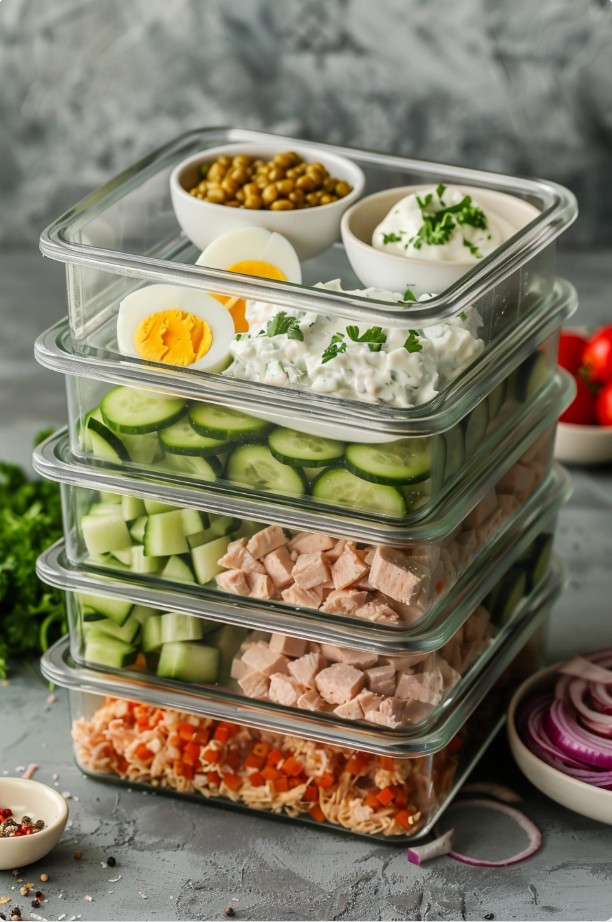
Common mistakes that make tuna salad taste ‘yesterday’ by today
This is the section where I recognize my past self. Mistakes aren’t a big deal—they just steal flavor and waste time.
1) Mixing everything at once “so it’s ready”
Convenient, but it almost always ends with water at the bottom and limp vegetables. If you want to prep ahead, store the components separately—not the finished salad.
2) Salting ahead of time
Salt pulls water out of cucumber, tomato, even tuna. Then you blame the dressing, when it was the salt all along.
3) Storing chopped vegetables without a paper towel
It seems minor, but it’s often the difference between “fresh” and “swampy.”
4) Leaving opened tuna in the tin
Smell, aftertaste, and it’s just awkward. Transfer it once and you’ll forget the problem ever existed.
5) Greens that are wet or “steamed” in the bag
If greens sit in a bag with condensation, they turn slimy fast. Better to spend 2 minutes drying them and storing them in a container with a paper towel.
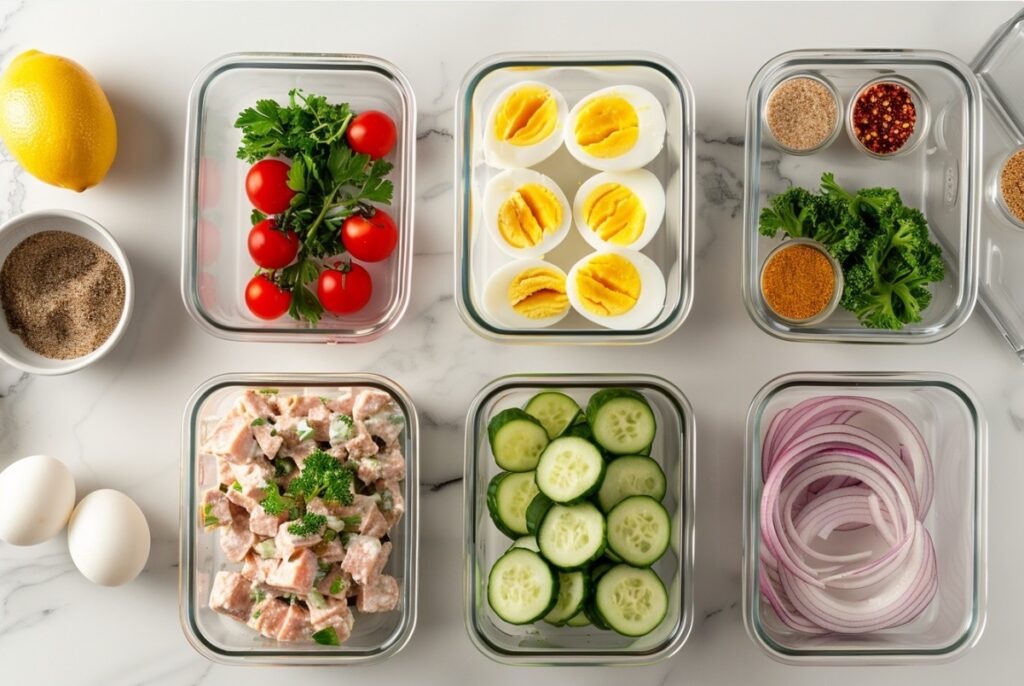
How I plan tuna salad for 2–3 days when there’s work, school, and everything else
I don’t have pretty spreadsheets. I have Sunday (or any evening) when I look into the fridge and think, “Okay—what will make weekdays easier?” Tuna salad is one of my go-tos because it comes together fast when the base is ready.
My realistic 15–20 minute routine
- Boil eggs (and keep them in the shell).
- Wash and dry greens, store in a container with a paper towel.
- Check if we have cucumber/tomatoes. If yes, wash them and keep them whole.
- Prep the “small stuff”: a jar for chopped onion or a container for dressing (if I know I’ll need it).
- I only open tuna when I’m planning to eat it within 1–2 days. If there are two cans, it’s better to open one—not both.
That’s it. Then on weekdays it looks like this: grab greens, slice cucumber, peel an egg, open the tuna—and in a few minutes you’ve got a proper meal.
When the plan falls apart
It always does. Someone runs late, someone changes their mind, someone ate at school and “isn’t hungry.” The important part is not getting mad at yourself and trying to force perfection.
Here’s what I do instead:
- If greens start to wilt, I use them sooner—even in a simple sandwich.
- If I’m not feeling cucumber anymore, I save it for another dish and build the salad without it.
- If tuna is opened and there’s some left, I plan it into the next meal and don’t postpone it.
Flexibility matters more than “doing it right.” The goal isn’t to prove you’re organized—it’s to feed yourself and your family without stress.
Tip: keep two “backup uses” in mind for every prep item. Greens go into sandwiches, eggs become a snack, tuna turns into a spread. Then nothing feels like a failure.
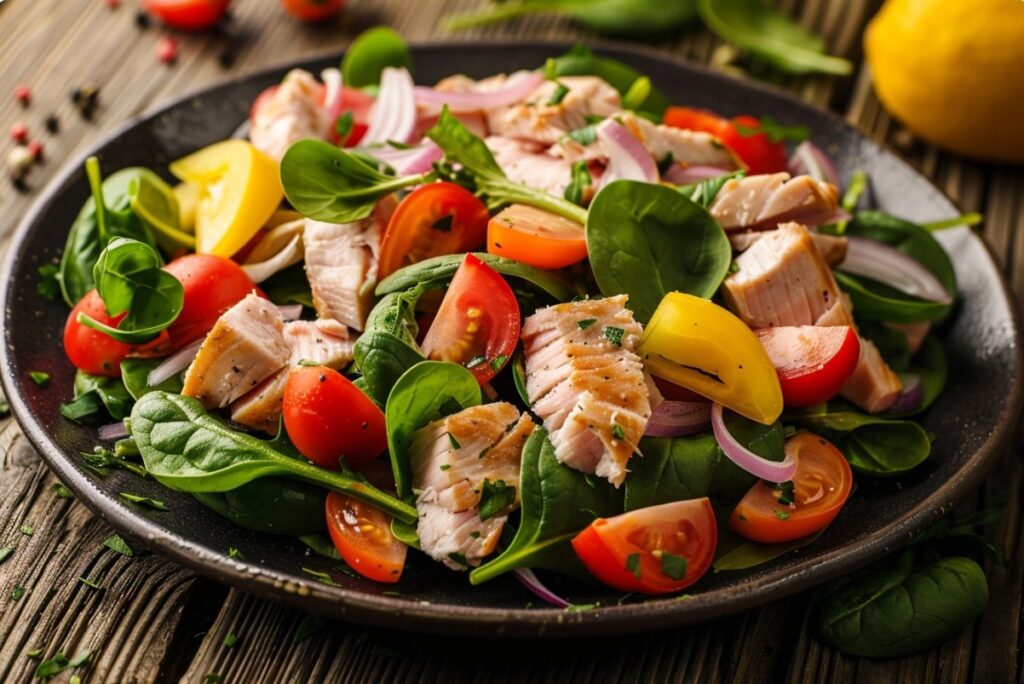
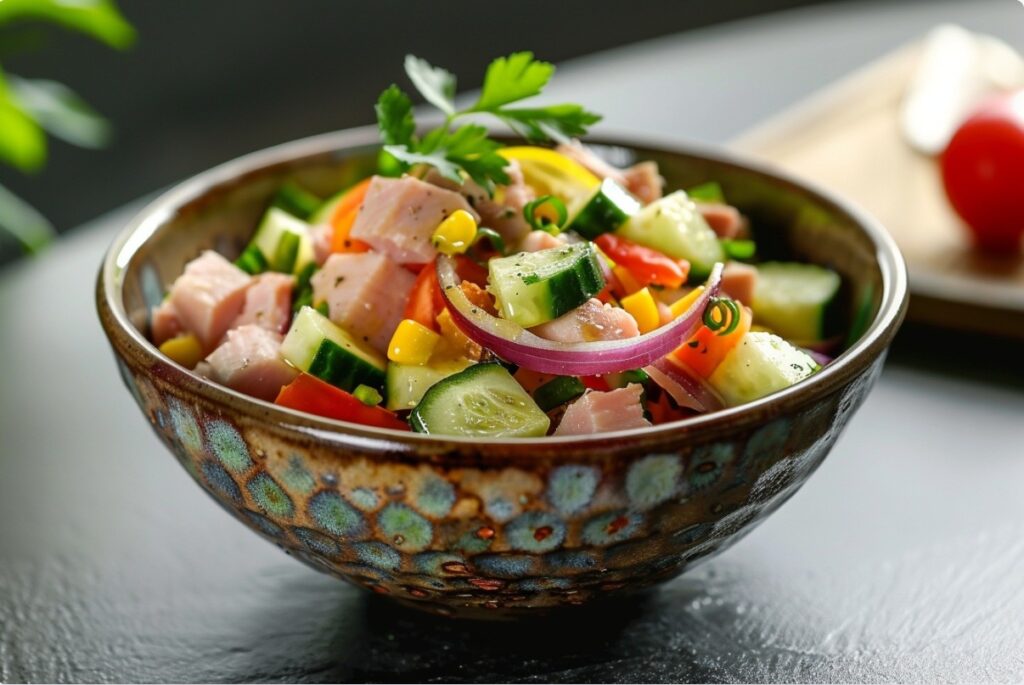
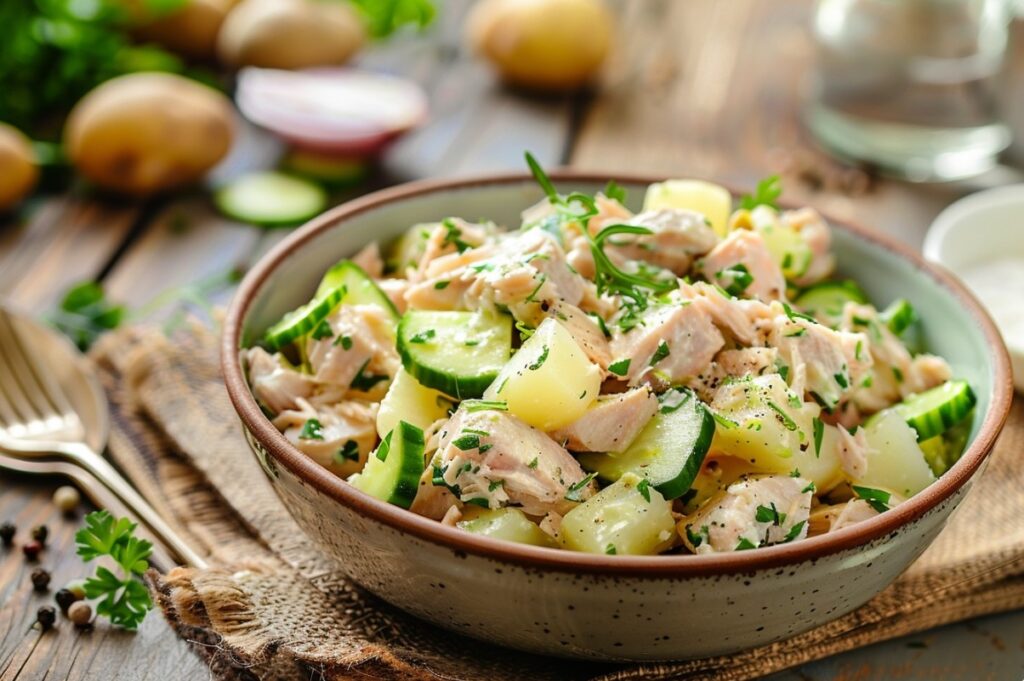
In short: tuna salad keeps well in the fridge when you don’t force it to be a salad too early. Store tuna in a container, eggs in their shells, greens dry with a paper towel, vegetables whole (or chopped at the last minute), and dressing next to the salad—not inside it. The flavor stays cleaner and the texture stays pleasant: crisp greens, tender egg, juicy cucumber—everything where it should be.
How do you usually handle “salad for tomorrow”—mix it right away, or keep everything in separate parts? And which ingredient lets you down most often?
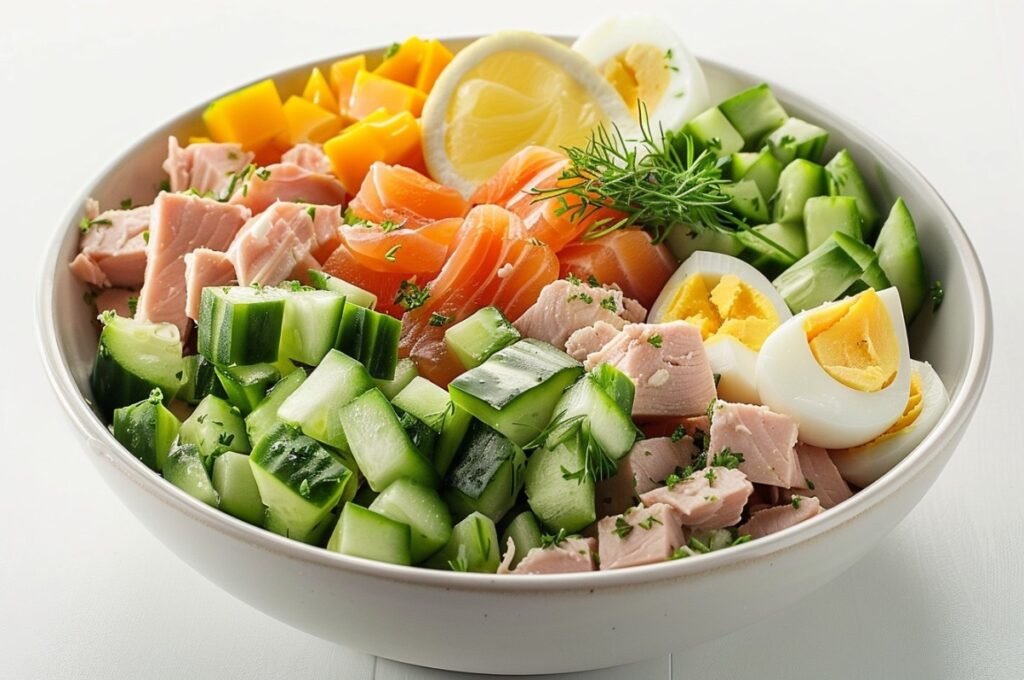
To keep ingredients fresh and avoid losing texture, it helps not only to store them correctly, but also to understand how they behave once they’re in the finished dish. For example, in the roundup Tuna Salad — recipes, tips, and cooking secrets, you can see how different ingredient combinations work in real life—and why proper prep and storage directly affect the final result.
Frequently asked questions
Why is it important to store tuna-salad ingredients properly?
Proper storage directly affects flavor, texture, and food safety. When ingredients lose freshness, the salad turns watery, loses structure, and looks unappetizing—especially vegetables and hard-boiled eggs.
What’s the best way to store opened tuna?
Transfer opened tuna to an airtight container and refrigerate it. Don’t leave it in the can, since air and metal can affect flavor. Use within 1–2 days for best quality.
Why should tuna-salad ingredients be stored separately?
Different components release and absorb moisture at different rates. Cucumbers leak, eggs dry out, and tuna can lose structure. Stored separately, everything stays fresher and the salad keeps its texture.
How should I store chopped vegetables for tuna salad?
Store chopped vegetables in airtight containers in the fridge, ideally with a paper towel to absorb moisture. For best crunch, slice cucumbers right before serving.
Can I dress tuna salad in advance?
It’s better to dress it right before serving. Dressing plus salt and vegetable juices makes the salad soften and release water, especially with yogurt- or oil-based dressings.