

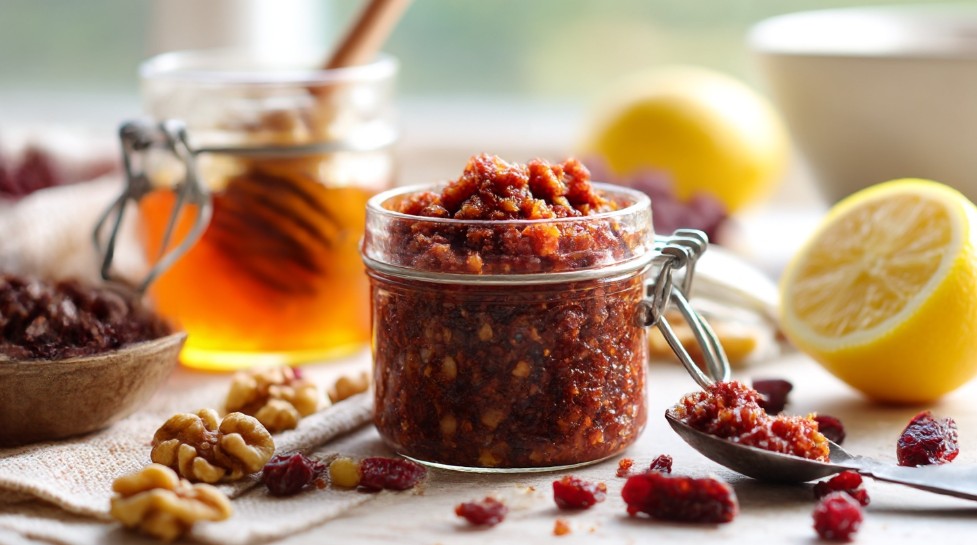
Amosov paste with dried cranberries is the kind of thing that makes mornings feel easy. A spoonful (or two) gives you that steady, not-too-sugary energy, and the cranberry twist keeps it from tasting like the usual dried-fruit mix. You get bright little pops of tartness, a nutty backbone, and a thick, spreadable texture that’s perfect for a quick, wholesome start.
After running everything through a meat grinder, the mixture turns out a little stringy and slightly sticky. If your dried fruit isn’t all the same moisture level, it can clump up—and then it takes more elbow grease to work the honey through evenly.
Dried cranberries behave differently from apricots or raisins. They’re denser and more tart (and sometimes sweetened). They give the flavour a sharper edge and they also “tighten” the texture a bit.
Keep the acidity under control—go easy on the lemon. Too much and the mixture loosens up, then you’ll notice watery separation later in the jar.
A really common fail: very runny honey + damp dried fruit. The paste ends up slumping and spreading everywhere. It’s harder to use, and it tends to spoil faster.
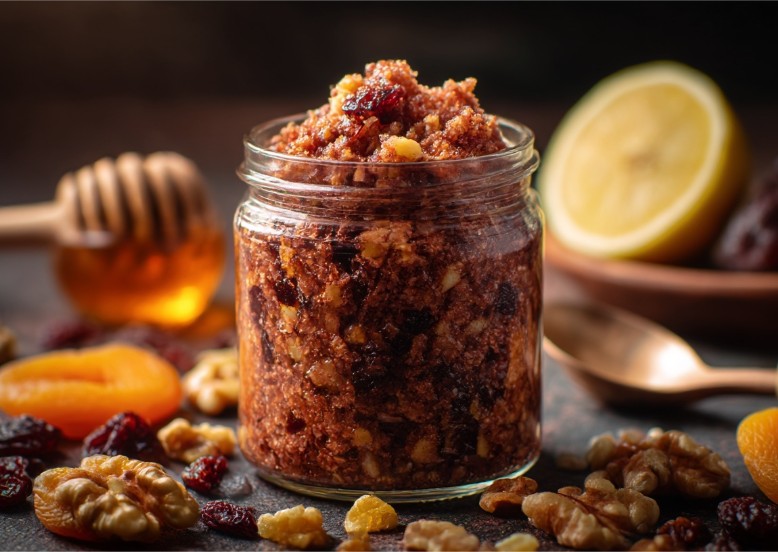
Amosov Paste with Dried Cranberries
Ingredients
- 200 г. dried apricots
- 150 г. raisins
- 200 г. prunes
- 150 г. dried cranberries
- 200 г. walnuts
- 200 г. natural honey
- 1 pcs lemon
Method
- Prep the dried fruit. Sort through the dried apricots, raisins, prunes, and cranberries—remove stems, pits, and any random tough bits. If the fruit feels sticky or dusty, rinse it quickly in a colander with warm water. The key is not to “soak” it—just wash off the surface. Spread in a single layer on a towel and let it dry until the outside feels dry. If it’s wet on the surface, you’ll get watery separation later in the jar.
- Even out the moisture if the fruit is over-dried. When apricots or prunes are tough as leather, the grinder tends to tear them into fibres instead of cutting cleanly. In that case, do a quick “soften,” not a long soak: pour very warm water over the dried fruit for 3–5 minutes, drain immediately, then dry thoroughly. You want the centre more pliable, without adding extra water to the mix.
- Get the walnuts ready. Sort and smell them—any bitterness or stale aroma will show up in the finished paste. If the walnuts are raw and a bit soft, dry them for 8–10 minutes in the oven (don’t brown them) or in a dry frying pan, then cool completely. Warm nuts in honey act like a sponge: they release oil and the mixture can turn “slick,” almost greasy.
- Cut big pieces before grinding. Slice dried apricots and prunes into 2–3 pieces. The grinder runs more smoothly, doesn’t “chew” one lump forever, and the mixture won’t heat up as much. Overheating isn’t a disaster, but it does make the texture stickier and darker, and the flavour a bit flatter.
- Run everything through the meat grinder in a smart order. I do: a handful of nuts, then some dried fruit, then nuts again, then fruit again. The nuts act like a little “brush”—they pull sticky bits through and help the blade cut instead of dragging. It also helps to mix cranberries with raisins or apricots before grinding, because cranberries alone can sometimes clump.
- Check the texture right after grinding. It should look fibrous and a bit grainy, but hold together. If it crumbles like damp sand, the fruit was too dry or there are too many nuts. If it’s shiny and stretches into strings, the fruit was too moist—and you’ll need to be extra cautious with the honey.
- Add honey gradually—don’t pour it all in at once. Transfer the ground mixture to a large bowl. Start with about ⅔ of the honey and begin mixing. Not just a couple of stirs—really work it: lift from the bottom, press, break up clumps. The honey should coat the fibres, but not turn everything into a smooth cream. After 2–3 minutes you’ll see what you need: if it’s dry and crumbly, add a little more; if it’s already sticky and glossy, stop.
- Let it rest 10–15 minutes, then come back to it. Tiny step, big difference. The dried fruit will pull in the honey and the mixture will tighten up. After the pause, mix for another minute. Half the time you’ll realise you don’t need any extra honey at all.
- If you’re using lemon, do it the “technical” way. For a fresher, more lifted taste, add only the zest (fine grater)—you get aroma without extra liquid. Juice should be very measured: start with 1 teaspoon, mix, then decide. Lemon loosens the mixture quickly, and later you may see liquid separating in the jar. It’s easier to add too little than too much.
- Fix the thickness right away (in the bowl) if something’s off.If it’s too runny: add a little extra ground nuts, or grind a handful of nuts and mix them in—they soak up excess stickiness.If it’s too dry and crumbly: add 1–2 spoonfuls of honey, mix well, then let it rest.If it clumps and won’t come together: your dried fruit had different moisture levels—just keep mixing longer. Pressing it against the side of the bowl with a spoon can help.
- Pack it into a jar without air pockets. The jar must be dry. Spoon the paste in in layers, pressing each layer down with a spoon. Not for looks—less air inside means it stays more stable, doesn’t dry out on top, and moisture doesn’t “wander” around. Smooth the top lightly, just enough to eliminate gaps.
- Let it mature in the fridge. Refrigerate for at least 6–8 hours, ideally overnight. The texture “settles”: fibres swell a bit, honey distributes, and the cranberry tartness evens out. The next day it’s almost always thicker and calmer in flavour than right after mixing.
Notes
Private Notes
Tried this recipe?
Let us know how it was!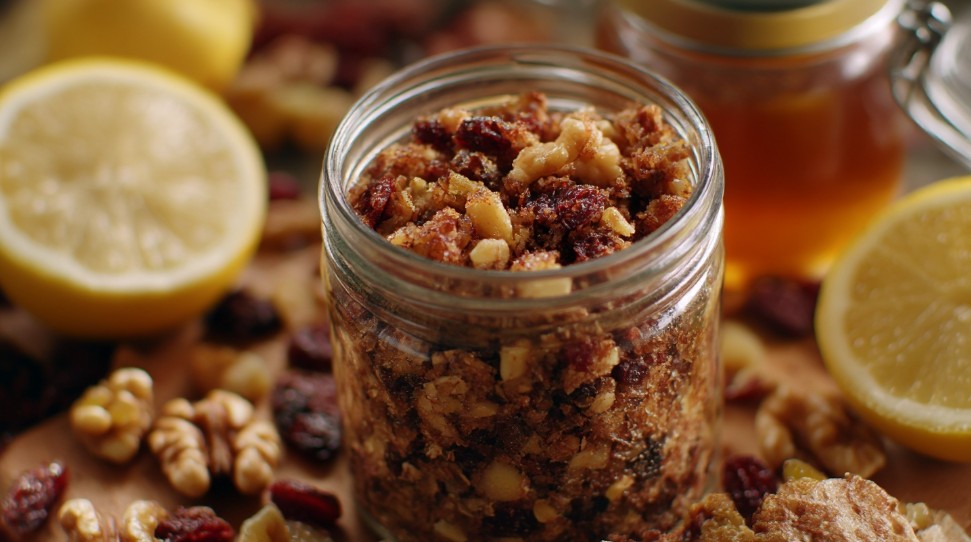
What to look for when choosing ingredients
Dried apricots
Go for soft ones without that glassy shine. Over-dried apricots make the mixture crumbly; overly moist ones thin the paste out.
Raisins
They shouldn’t feel oily. If they stick to your fingers, rinse quickly and dry really well. Surface moisture changes the thickness straight away.
Prunes
Meaty and plump is best, without a smoky smell. Very dry prunes don’t grind well and leave tough fibres.
Cranberries (extra ingredient)
Dried only—no syrupy coating. If they’re too sweet, you lose the tangy balance and the paste tastes a bit flat.
Nuts
Fresh, not bitter. Old walnuts bring a stale flavour and can leave a greasy film in the mix.
Honey
Thick honey with a mild aroma works best. Acacia honey is often too runny and can make the mixture spread too much.
Lemon
If you use it, stick to zest and just a little juice. Too much acidity can make the paste separate.
Why you’ll love this recipe
🥄 Great for immune support
Dried fruit, cranberries, and nuts bring vitamins, minerals, and antioxidants that help support your body.
⚡ Quick to make
You’re basically just grinding and mixing—about 20–30 minutes of hands-on time.
🍯 Naturally sweet
Honey and dried fruit give you plenty of sweetness without adding refined sugar.
🧊 Keeps well
Stored in an airtight jar, Amosov paste will keep in the fridge for up to two weeks.
💪 Easy energy snack
A couple of spoonfuls is a fast way to refuel when you’re dragging.
I like this version for the texture—it’s denser than the classic one. The cranberries leave a little graininess, not a perfectly smooth mass. That’s normal, and honestly, it’s nicer when you can actually feel the bits.
Thick honey matters here. Runny honey washes out the flavour and makes the mixture feel slick. I always adjust by feel, not by a chart.
Turning it into a “cream” isn’t worth it. A blender heats the dried fruit, you get extra juice, and then the paste darkens faster and turns sticky.
With a meat grinder, the texture stays stable. And the flavour comes out more even, too.
How to serve Amosov paste
You can use Amosov paste in a bunch of ways—it plays nicely with lots of everyday foods.
• Spread it on wholegrain or rye bread for a no-fuss breakfast.
• Stir a spoonful into plain yoghurt or serve it alongside cottage cheese pancakes (syrnyky).
• Use it as a sweet boost for porridge/oatmeal or granola.
• Have it with tea or herbal infusions as a smarter snack.
• Roll it into small balls and coat in desiccated coconut or cocoa—instant homemade energy bites.
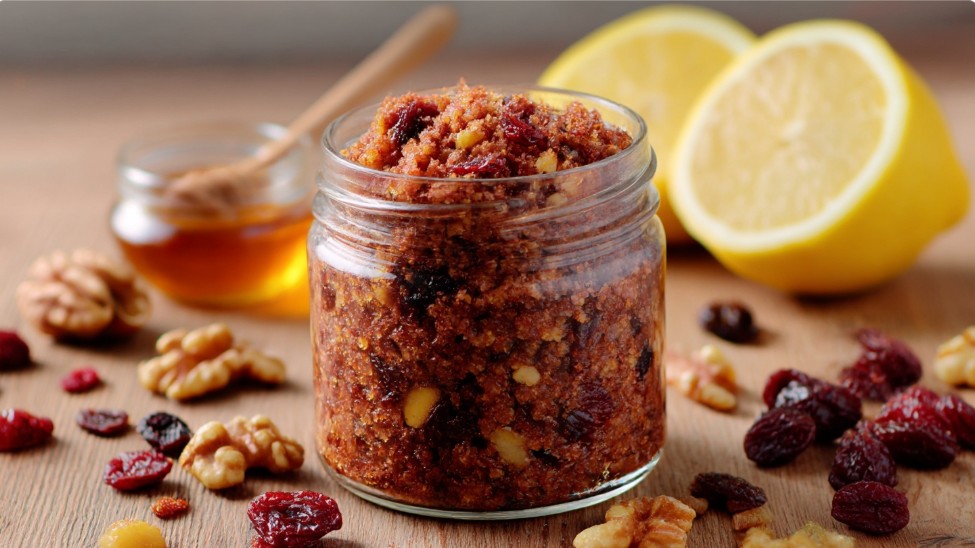
Health benefits
Amosov paste is a simple mix of dried fruit, nuts, and honey, and it’s packed with naturally occurring nutrients.
Main perks:
• supports the immune system
• contains antioxidants
• helps you bounce back quickly with energy
• high in fibre for better digestion
• provides healthy fats from nuts
Dried cranberries add a gentle tang and bring antioxidants plus vitamin C.
Nuts contribute healthy fats and protein, while honey adds natural sweetness and a cosy aroma.
Common mistakes to avoid
Skipping a quick soak when the fruit is rock-hard
If the dried fruit is very tough, the paste can turn out rough. A short soak in warm water for 20–30 minutes helps (then dry well).
Adding too much honey
Too much honey makes the mixture runny and overpowers the dried fruit. Add it gradually.
Over-processing
If you grind/blend too aggressively, you lose the nice texture and it turns into a uniform paste.
Using low-quality dried fruit
Very dry fruit or fruit treated heavily with preservatives can make the flavour noticeably worse.
Questions & answers
Скільки зберігається паста Амосова?
У герметичній банці в холодильнику паста може зберігатися u003cstrongu003eдо 2 тижнівu003c/strongu003e.
Чи можна заморозити пасту Амосова?
Так, пасту можна заморозити невеликими порціями. У морозильнику вона зберігається u003cstrongu003eдо 3 місяцівu003c/strongu003e.
Чи можна приготувати пасту без меду?
Так, мед можна замінити u003cstrongu003eсиропом агави, фініковим сиропом або кленовим сиропомu003c/strongu003e.
Які горіхи найкраще підходять для пасти?
Найчастіше використовують u003cstrongu003eволоські горіхи, мигдаль або кеш’юu003c/strongu003e. Можна комбінувати кілька видів.
Чи потрібно замочувати журавлину?
Якщо журавлина дуже суха, її можна замочити на 10–15 minutes, щоб паста вийшла ніжнішою.





Responses