

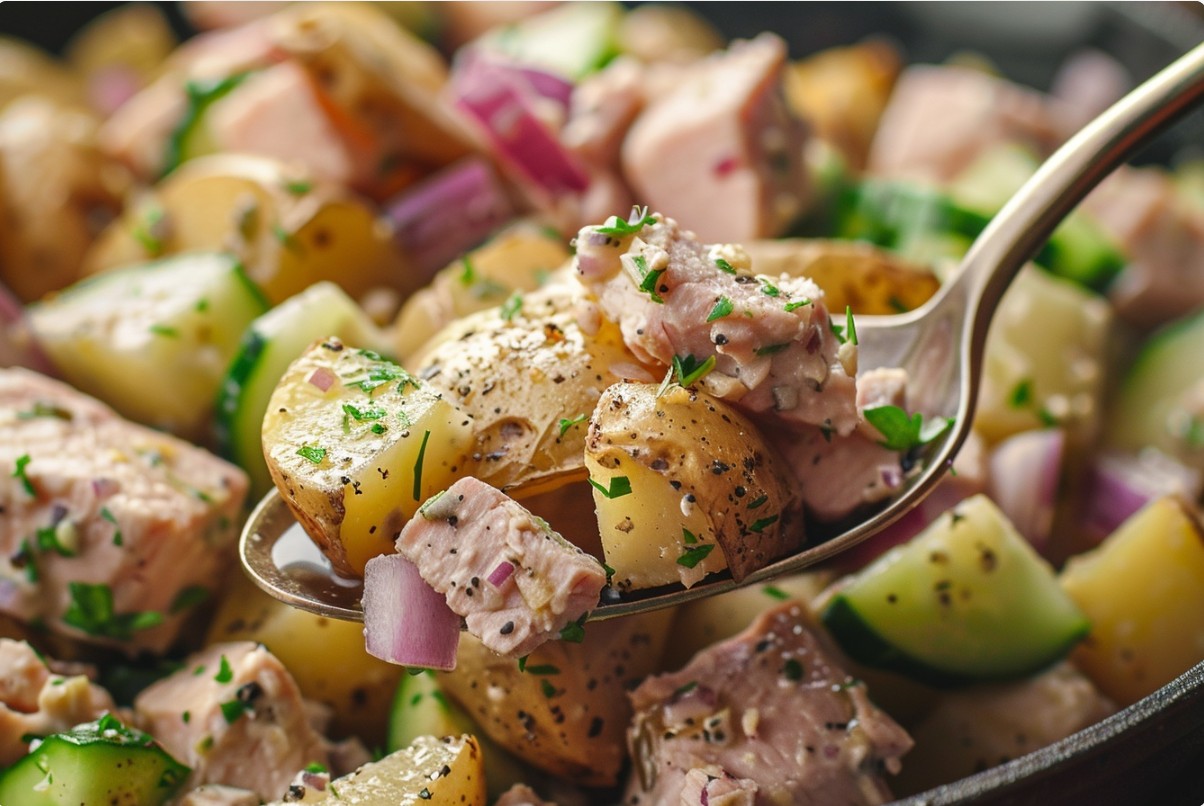
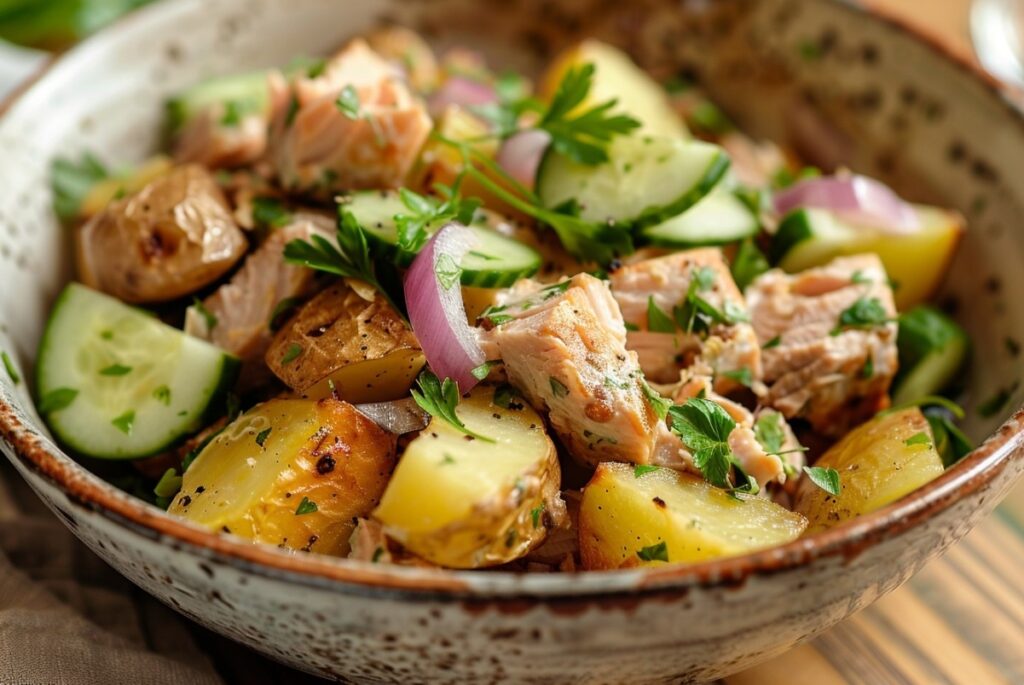
Tuna and homestyle potatoes make a surprisingly satisfying salad when you keep the textures sharp. Roasted potato cubes give it that hearty base, tuna brings protein and juiciness, and then the fresh cucumber + red onion combo snaps everything back into “salad” territory.
The dressing is simple: olive oil, lemon juice, Dijon mustard, and a tiny sweet note (honey or sugar). It pulls the whole bowl together without turning it heavy. The big thing here is structure: potatoes should stay as distinct cubes with a dry, toasty edge, and the tuna should stay in chunky flakes—not get mashed into a spread.
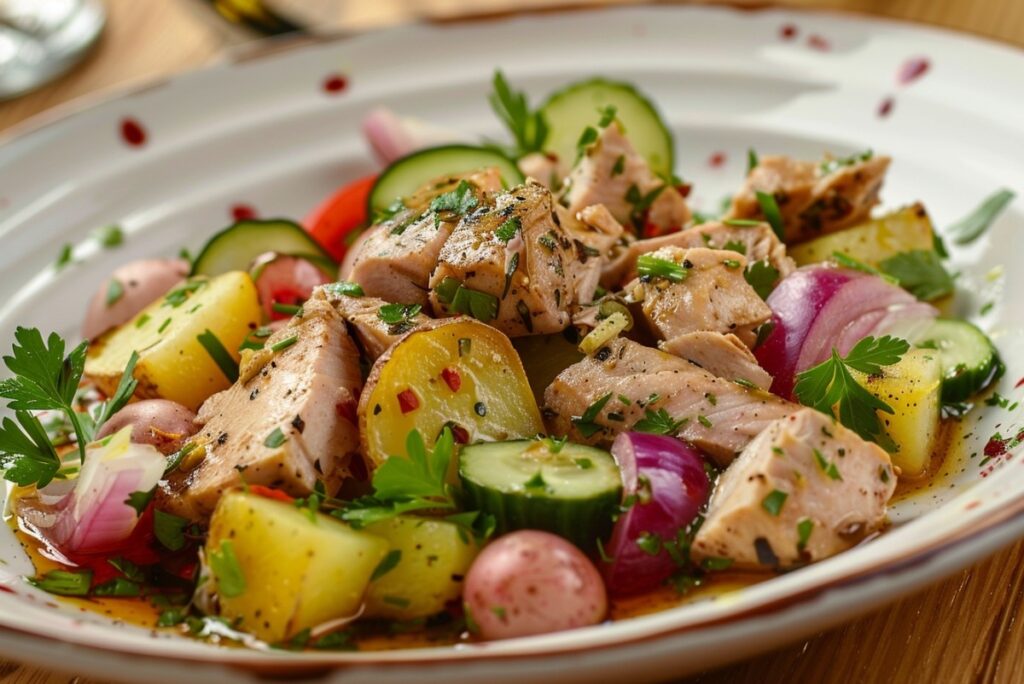
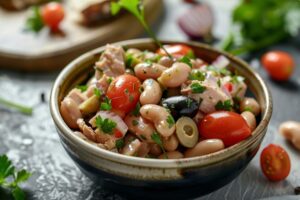
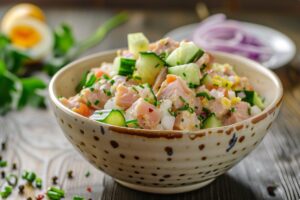
When it’s done right, it looks glossy and juicy, but never watery—every ingredient still clearly looks like itself.
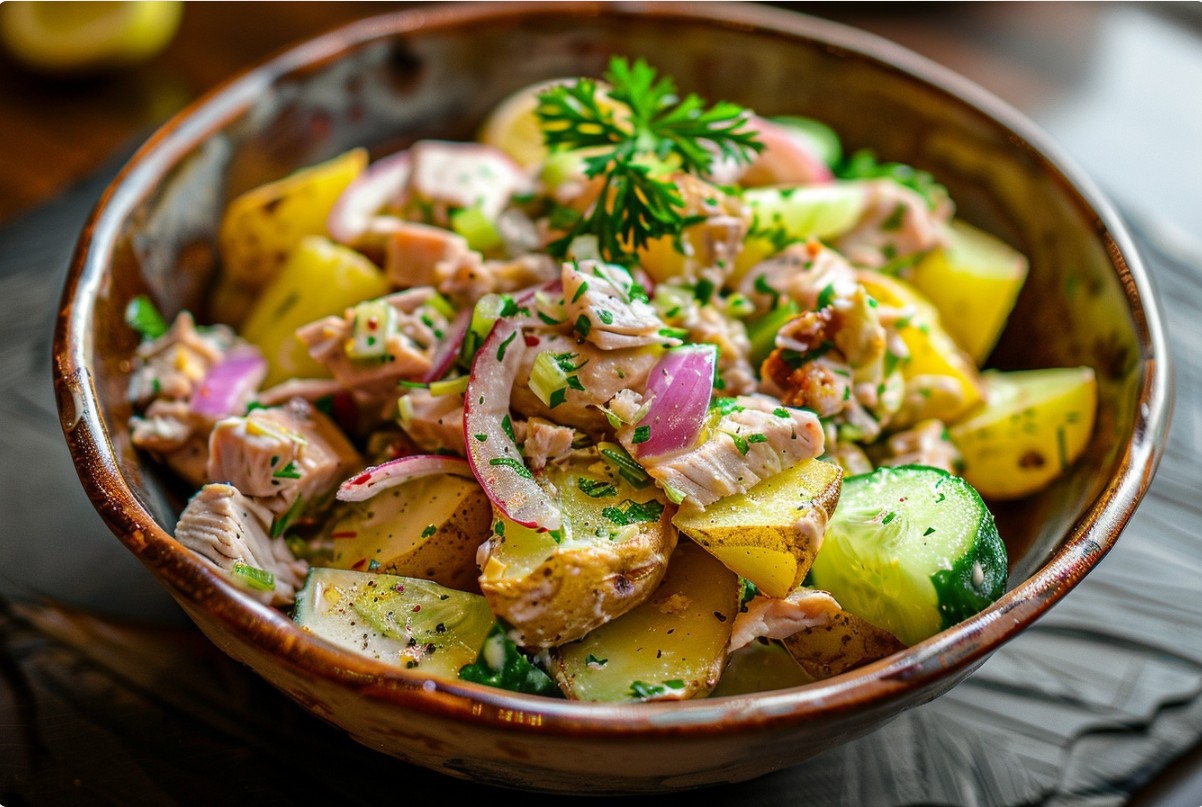
Tuna and Roasted Potato Salad (Homestyle)
Ingredients
- 600 г Potatoes medium, for roasting
- 4 tbsp Olive oil 2 tbsp for the potatoes, 2 tbsp for the dressing
- 2 cloves Garlic 1 for roasting, 1 optional for the dressing
- 2 cans Canned tuna in its own juice/brine 160–185 г each, drained
- 1 large Cucumber fresh, firm
- 0.5 Red onion thinly sliced
- 20 г Fresh herbs (dill, parsley) finely chopped
- 1.5 tbsp Lemon juice to taste
- 1 tsp Dijon mustard wholegrain works too
- 1 tsp Honey or a pinch of sugar
- 0.75 tsp Salt approx., add at the end
- 0.25 tsp Ground black pepper to taste
Method
- Heat the oven to
 220 °C (428 °F). Cut the potatoes into roughly 2 cm cubes, pat dry with a towel, then toss with 2 tbsp olive oil, 1 clove garlic, 1/2 tsp salt, and pepper. The potatoes should look glossy—not swimming in oil.
 - Spread the potatoes on a baking sheet in a single layer, leaving 5–10 mm gaps so hot air can circulate. Roast for 20 minutes, flipping halfway with a spatula. You’re looking for golden edges and a dry surface (no moisture).
- While the potatoes roast, make the dressing: in a bowl, combine 2 tbsp olive oil, 1–1.5 tbsp lemon juice, 1 tsp Dijon mustard, and 1 tsp honey. Whisk with a fork for 30 seconds until it thickens slightly and turns glossy.If the dressing “splits”, add 1 tsp water and whisk again.
- Prep the vegetables on a cool cutting board: slice the cucumber into 3–4 mm half-moons, slice the onion into thin feathers, and finely chop the herbs. If the onion is very sharp, rinse it under cold water for 20 seconds and dry well so the salad doesn’t turn watery.
- Take the potatoes out of the oven and let them cool down for 5 minutes at room temperature—they should still be warm, but not steaming. Tip into a large bowl, add half the dressing, and gently toss in 6–8 movements so the cubes stay intact.
- Drain the tuna well for 20 seconds, then use your fingers to separate it into large 3–4 cm chunks. Add it to the potatoes along with the cucumber, onion, and herbs. Pour in the remaining dressing, season with pepper, and add 1–2 pinches of salt if needed. The salad should be juicy, with no puddle at the bottom.Use a wide spatula and fold from the bottom up to keep the tuna chunky.
- Taste and tweak: add 1 tsp lemon juice for extra freshness, or 1/2 tsp honey to soften things if your mustard is punchy. Let the salad sit for 7 minutes before serving—this gives the potatoes time to absorb the dressing while the veg stays crisp.
Notes
 180 °C (356 °F). If your cucumber is very juicy, scoop out the seeds with a spoon so the salad stays thicker. Tuna in brine/its own juice tastes cleaner; if you’re using tuna in oil, you’ll likely want less extra oil in the dressing. Like a bit of heat? Add a pinch of ground chilli, but go easy so it doesn’t drown out the tuna.
Private Notes
Tried this recipe?
Let us know how it was!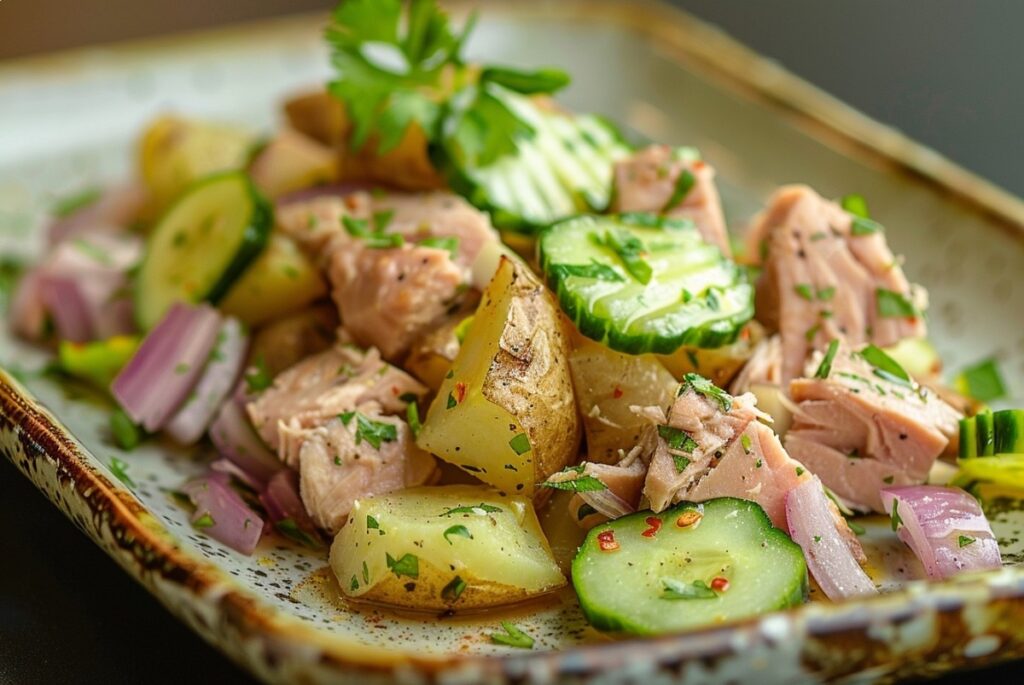
There’s that moment in the kitchen when the oven is already hot and the cutting board is basically buried under a little mountain of chopped herbs. The potatoes start sizzling on the tray, and in 10 minutes the place smells like garlic and olive oil. I usually open the tuna right when the edges of the potato cubes begin to turn golden—no point letting the fish sit out and dry. Then it’s a quick assembly: warm meets cold, crisp meets tender. Sounds like “just a salad”, but honestly… the balance is everything. I whisk the dressing with a fork until it looks lightly glossy, then pour it on while the potatoes are still warm and happy to soak up flavour.
In this recipe, you’ll learn
- Why you’ll love this recipe
- Tips before you start
- What to look for when choosing ingredients
- Secrets to the perfect tuna and roasted potato salad
- How to serve tuna and roasted potato salad
- Nutritional perks
- Recipe variations
- Questions & answers
- Common mistakes
Why you’ll love this tuna and roasted potato salad
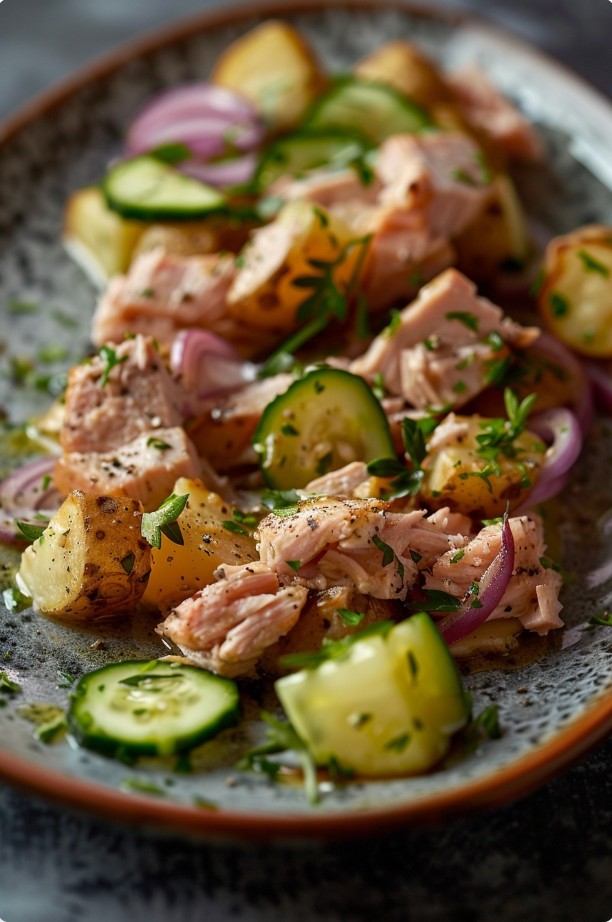
After the first bowl, you get that calm kind of full—satisfied, but not weighed down. A friend of mine who’s always rushing in after work smiled and asked for “just a bit more dressing” within 5 minutes. There’s a practical win here: tuna protein plus warm potatoes keeps you going longer than a sweet snack does. And the crunch from cucumber and onion saves the day when you want something fresh, not dessert-y.
- Filling, but not heavy
- Warm potatoes, tender tuna
- Bright lemon-Dijon dressing
- Crunchy fresh veg
- Made with everyday ingredients
Tips before you start (tuna and roasted potato salad)
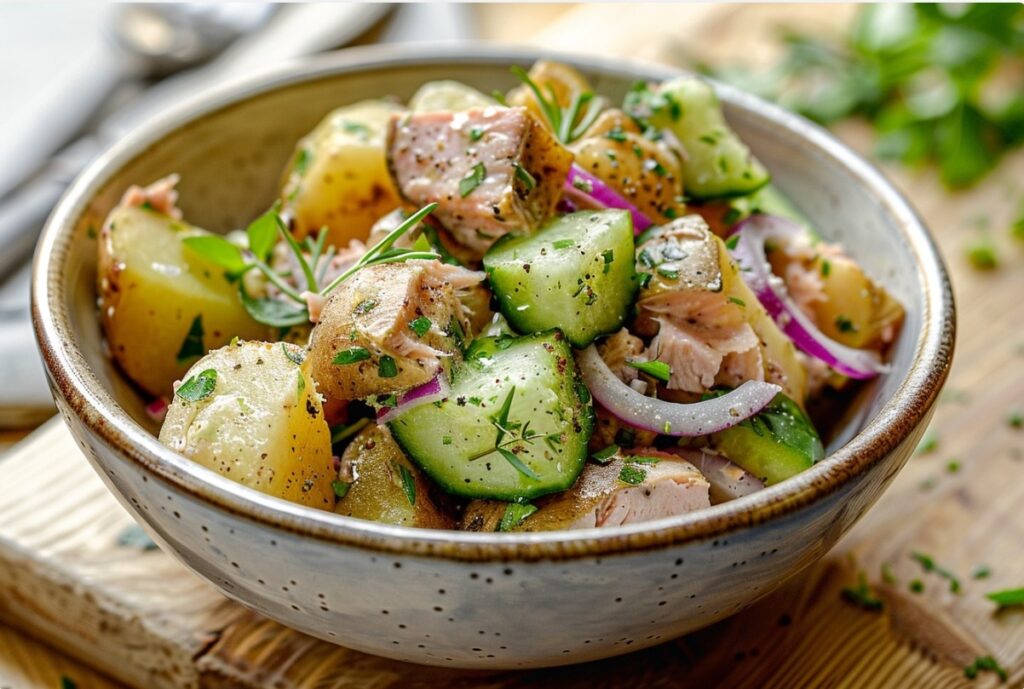
Potatoes need a dry surface here—otherwise you get soft “steam” instead of browned edges. The issue usually starts when you cut the potatoes and immediately toss them onto the tray, or you rinse them and don’t dry them properly. Easy fix: after cutting, spread the cubes on a towel and let them air-dry for about 7 minutes, then mix with oil. One more thing: use a roomy mixing bowl so you don’t crush the tuna into mush. And don’t drag out the assembly—warm potatoes + cold veg is at its best in the first 15 minutes.
- Aim for ~2 cm potato cubes
- Dry the potatoes before roasting
- Keep the tuna in big flakes
- Whisk the dressing until glossy
- Salt at the end, after the dressing
What to look for when choosing ingredients
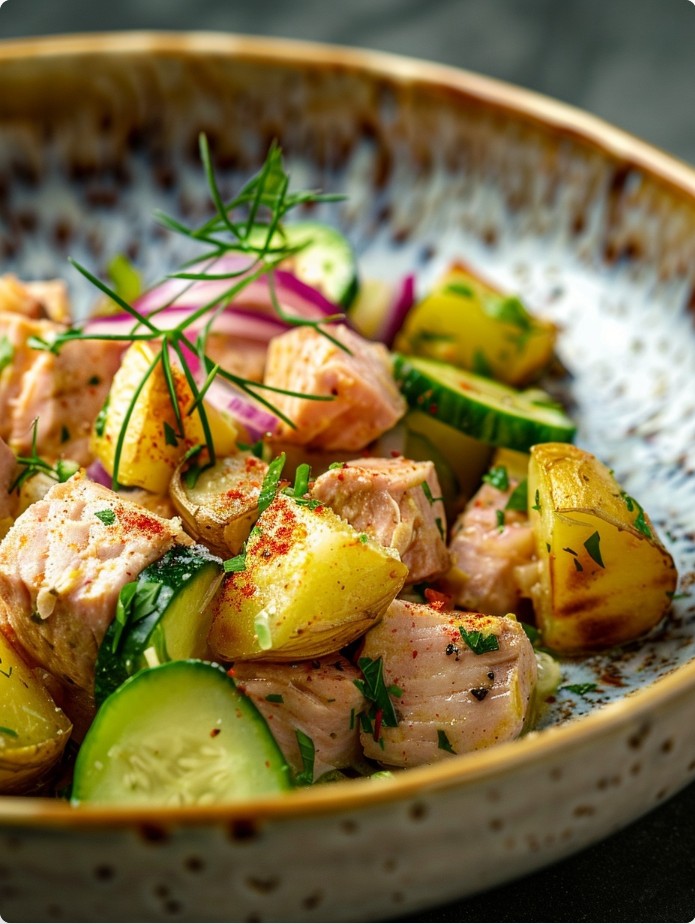
Go for tuna in brine/its own juice—tuna packed in oil often bulldozes the dressing and makes the salad feel heavier. Potatoes with thin skins roast evenly; very floury, over-starchy potatoes tend to crumble when you toss the salad. And don’t buy sad, bendy cucumbers: they’ll leak water within 10 minutes and wash out the flavour.
Canned tuna
Choose “chunks” in brine/own juice; avoid pâté-style tins—it just clumps.
Potatoes
Medium, not too starchy; small, smooth-skinned potatoes are easiest to cube.
Olive oil
For roasting, refined olive oil or a mild extra virgin works best (skip anything bitter).
Dijon mustard
Wholegrain adds texture; super-hot mustard can throw off the lemon balance.
Cucumber
Firm and heavy for its size; watery ones are better saved for a cold soup.
Secrets to the perfect tuna and roasted potato salad
Once the potatoes look lightly glossy from the oil (not wet), they’re ready for the tray. Don’t mash the tuna—separate it with your fingers into 3–4 big pieces so every bite still has that flaky “tuna bite”. And whisk the dressing for 30 seconds until it emulsifies, otherwise it just sinks to the bottom.
- Roast the potatoes in a single layer
- Flip the cubes halfway through
- Add lemon to the dressing gradually
- Rinse the onion in cold water
- Fold the salad with wide, gentle movements
How to serve tuna and roasted potato salad
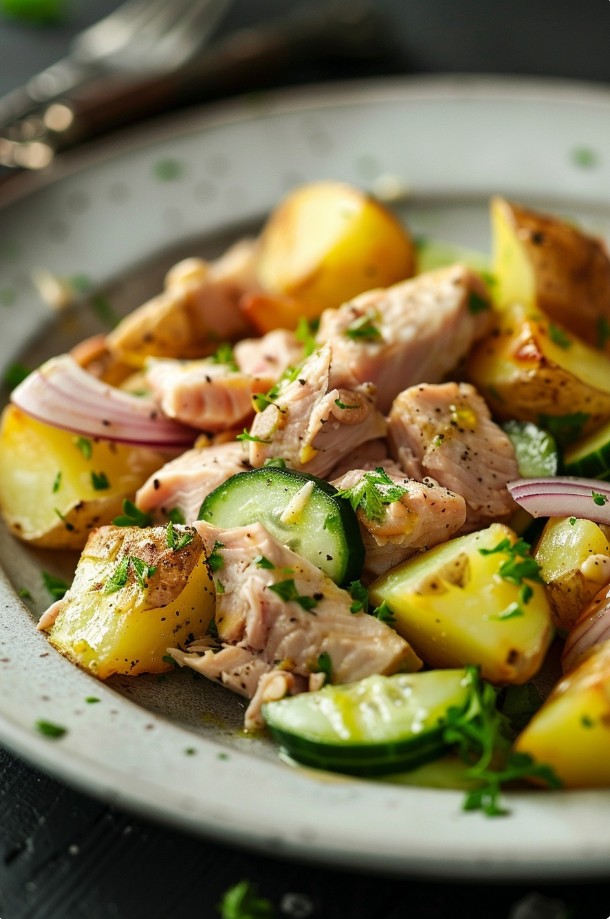
Serve it with thin garlic-oil crostini, or warmed flatbread cut into triangles. And here’s a slightly unexpected one: a side of roasted beetroot—just a few slices next to the salad adds a sweet, earthy contrast that really works.
- In a big bowl for sharing
- Portioned on romaine leaves
- With crostini or flatbread
- With wedges of soft-boiled egg
- Alongside roasted beetroot
Nutritional perks
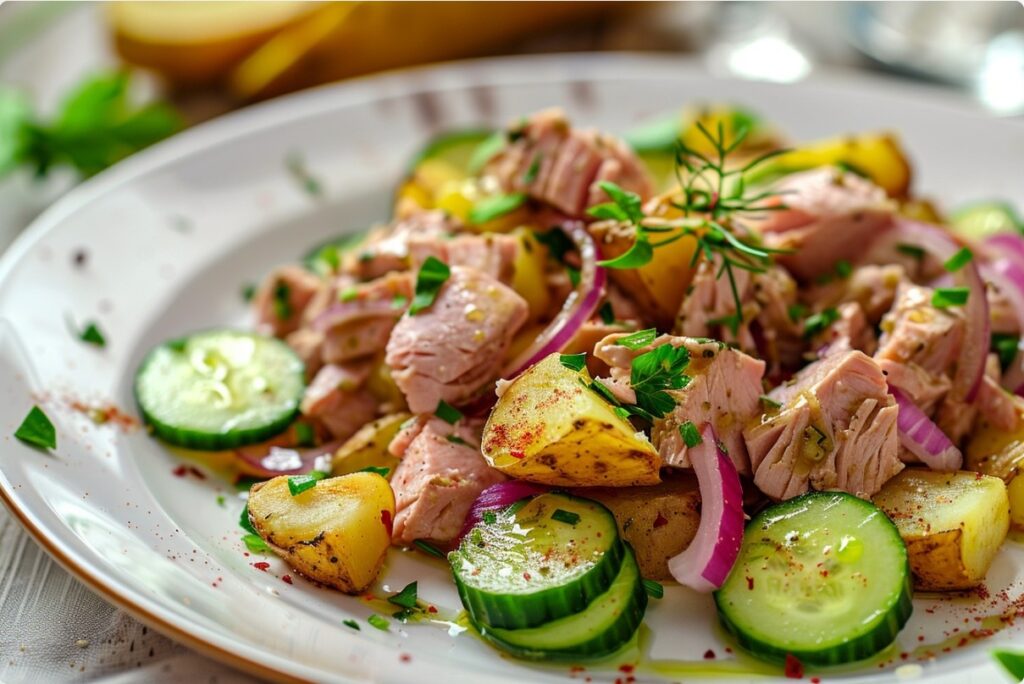
Tuna + potatoes makes a solid weekday plate when you want something filling without building a whole dinner around sides. It’s also handy for packed lunches: the salad keeps its shape and flavour in a container for about 6 hours. Herbs and veg add volume and freshness without needing loads of dressing.
- Protein from fish
- Satisfying carbs from potatoes
- Fibre from veg and herbs
- Moderate fats from olive oil
Recipe variations
Some people like this with pickles and a little horseradish for extra bite; others push it in a spicier direction with chilli and more onion. Use what you’ve got, but keep the contrast: warm + crunchy + a hit of acidity.
- With pickles and dill
- With roasted peppers and capers
- With white beans for extra staying power
- With apple and celery for crunch
- With a yoghurt-mustard dressing
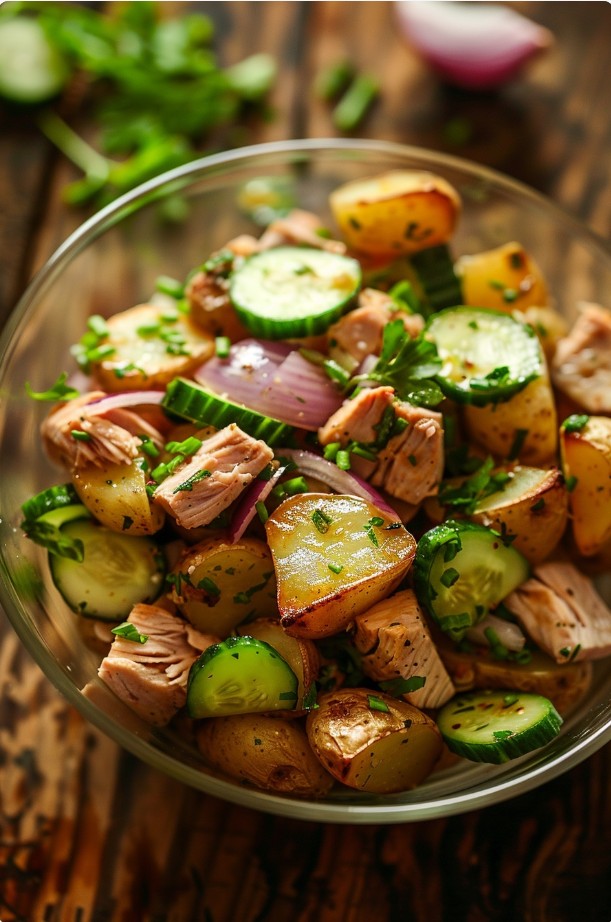
If you’re after a filling dish with clear texture and simple ingredients, take a look at this tuna salad without mayonnaise—it’s the same idea of roasted potatoes with a light crust, big flakes of tuna, and a fresh dressing that tastes rich without feeling heavy.
Questions & answers
Warm potatoes in a salad can actually make it feel fresher, not heavier—if you keep the textures under control.
Common mistakes when making tuna and roasted potato salad
Sometimes it turns watery because the veg releases juice and the potatoes were too hot. My first attempt was a total mess: I tipped the tuna into a bowl over steaming potatoes and the fish turned into dry crumbs in about 3 minutes. That’s what happens when you rush and stop paying attention to temperature and texture.
Why won’t the potatoes brown?
The cubes are stacked in two layers, or they’re wet. Spread them in a single layer, use 1–2 tbsp oil per 500 g, and roast at a higher temperature, flipping halfway.
Why does the salad turn watery?
The cucumber and onion released juice, and the dressing sat too long. Salt at the end, lightly squeeze the cucumber if needed, and add the dressing right before serving.
Why did the tuna turn into paste?
It was mixed too aggressively, or you used finely shredded/soft canned tuna. Separate it by hand and give the salad just 3–4 gentle folds with a spatula.
Why does the dressing taste bitter?
The olive oil is bitter, or there’s too much mustard. Balance it with 1 tsp honey (or a pinch of sugar) and add a little more lemon juice.

Responses