The Best Baking Sheets and Pans for Roasting Potatoes

Somewhere between the morning rush and evening fatigue, I often remember: potatoes are not just a side dish, but a whole world of possibilities. One day, when it seemed that dinner would be porridge again, I took out an old, slightly scratched baking sheet, polished it to a shine, and roasted my first crispy-skinned potatoes. From that moment, I realized that even such a simple dish depends on what you cook it in. A familiar problem: the potatoes turned out delicious, but everything that could stick to the sheet did, and washing it became a real punishment. And not every pan gives that golden crust you want again and again.
Over the years, I’ve learned to see ordinary kitchen items not just as dishes, but as tools that can make life easier. A baking sheet is not just a stand for potatoes, but a whole world of nuances: material, size, edges, depth, ease of care. I want to share what helped me stop arguing with dirty pans and spoiled tubers and choose something that serves not for a season or two, but for many years. There won’t be advice like ‘everyone buy this,’ because every kitchen has its own story. But you can make a choice you won’t curse when you have to wash the sheet after a festive feast.
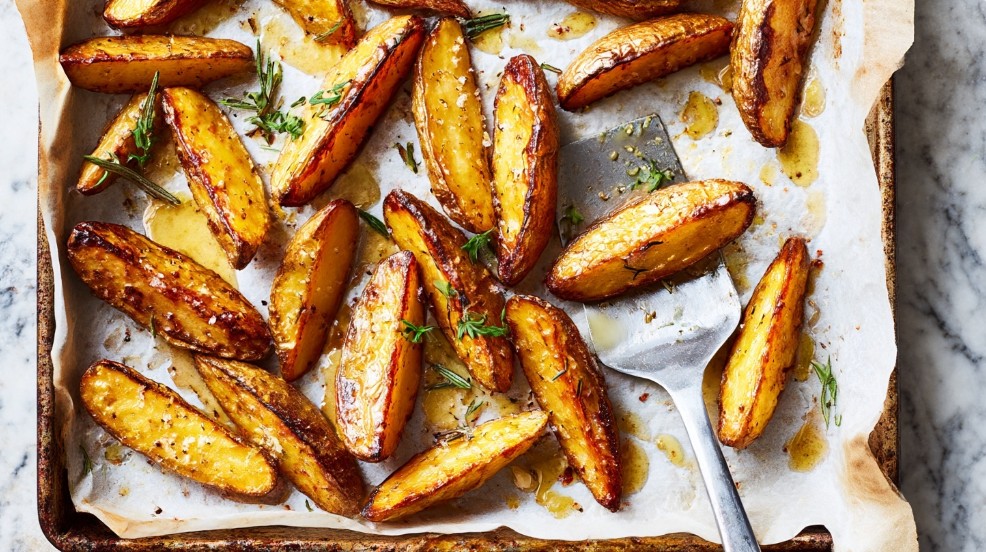
Why Even Think About a Baking Sheet for Potatoes
It might seem simple: grab the first baking sheet you find, slice the potatoes, and you’re done. But experience teaches otherwise. The choice of baking sheet or pan determines not only if the potatoes will stick, but also if they will be evenly baked, crispy or soggy, and if the pan will be easy to clean after roasting. A common scenario: tried a new recipe, and instead of an appetizing crust, you get a soggy mash stuck to thin metal. Or worse: a ruined dinner and a ruined mood.
The right baking sheet isn’t about fashion or ‘correctness,’ it’s about comfort. It saves time, nerves, and even money: no need to buy a new one every year. I had to say goodbye to a couple of cheap pans early on when they started warping from the heat, and the non-stick coating peeled off after a few washes. Now I have a favorite baking sheet that I’ve been using for over five years — and I’ve never regretted taking the time to choose it.
It’s useful to know: How to Cook Potatoes in the Oven
Materials: How They Affect Potatoes and the Kitchen
The material of the baking sheet is not just ‘metal’ or ‘glass.’ It affects everything: from how quickly the potatoes bake to how easy it is to clean after a festive meal. I’ve tried various materials: aluminum, steel, glass, ceramic, even cast iron. Each material has its pros and pitfalls.
How to Choose a Baking Sheet for a Specific Dish
- For crispy potatoes with a golden crust — choose steel or cast iron sheets. They heat well and provide active browning.
- For potatoes in their skins — suitable metal, cast iron, or ceramic pans that evenly heat the tubers inside.
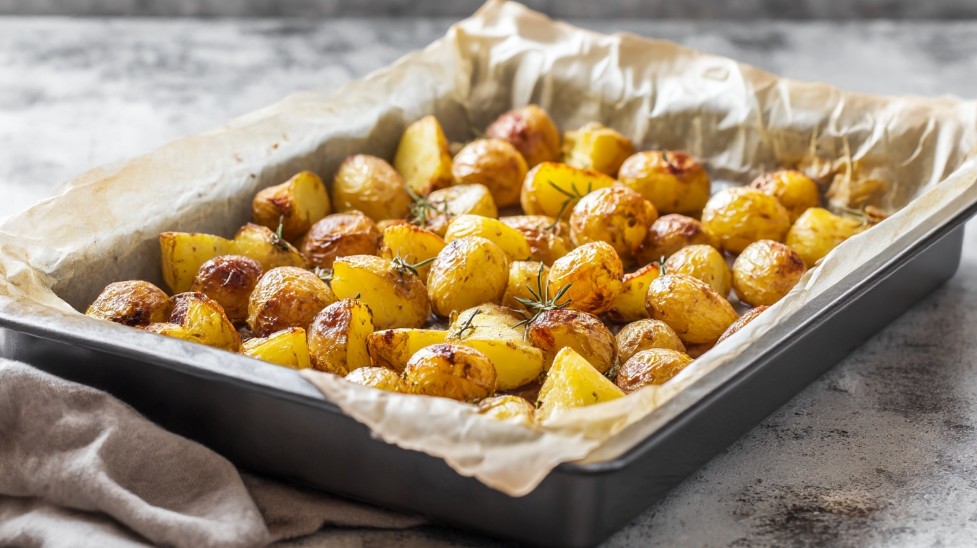
- For quick cooking — it’s convenient to use aluminum sheets, but it’s better to line them with parchment.
- For festive table presentation — ideal glass or ceramic pans in which the dish can be served straight from the oven.
- For a large amount of potatoes — the best choice is wide steel or aluminum sheets so the potatoes lie in a single layer.
Aluminum Sheets
Lightweight, heat up quickly. Good for quick dishes, but thin — the potatoes can burn on the bottom and remain raw on top. If the aluminum is uncoated, it reacts with acidic ingredients and can give a metallic taste. I use an aluminum sheet for a large amount of potatoes when I need to cook quickly, but I always line it with parchment.
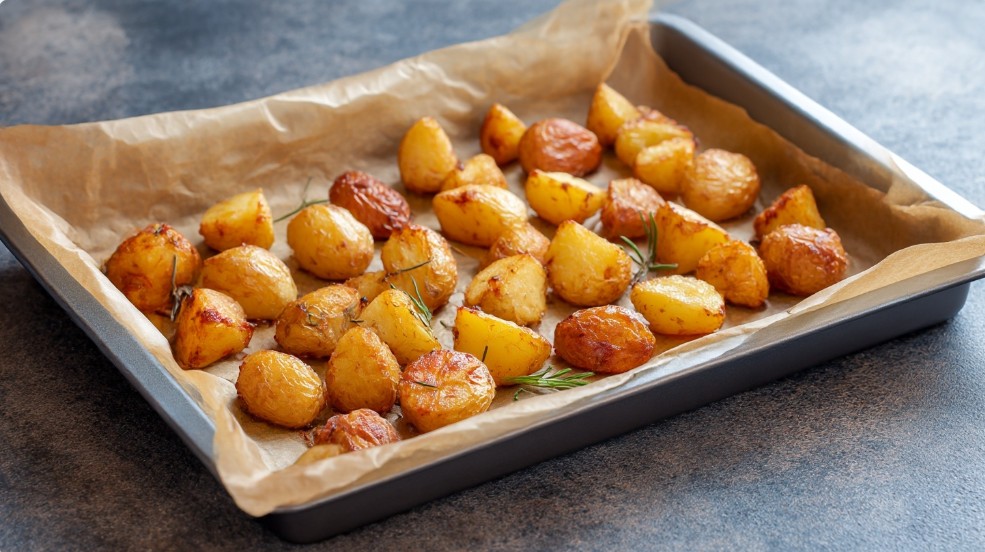
Steel Sheets
Heavier, more durable. Hold their shape well even after many years. If they have a non-stick coating, they’re easy to clean, but over time the coating wears off, and the potatoes start to stick. I avoid washing such sheets with harsh sponges and don’t put them in the dishwasher. Best for baking for large groups and when even baking is important.
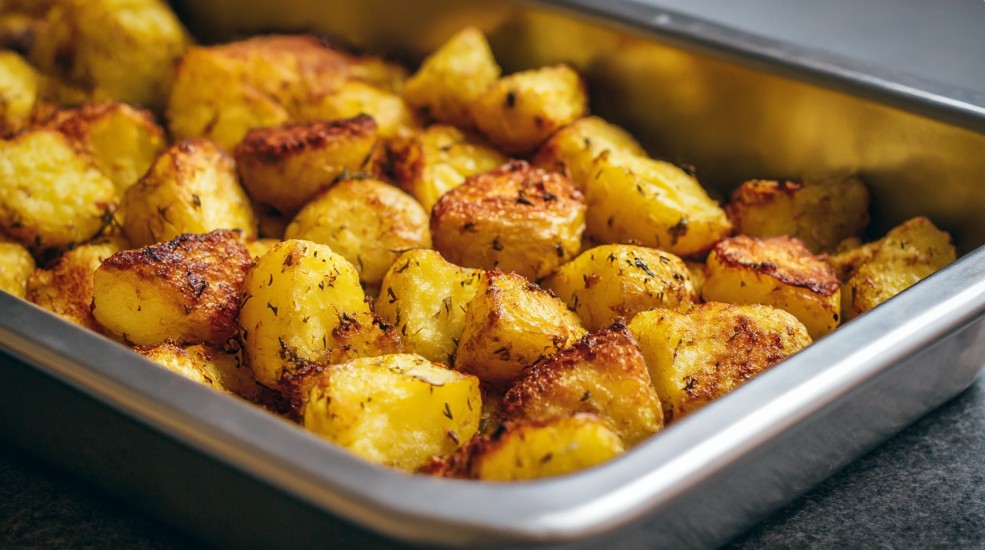
Glass Pans
Look beautiful on the table, convenient to move from oven to table. Heat up more slowly but retain heat. Potatoes in glass come out more tender, without a pronounced crust. Be careful with sudden temperature changes — I’ve heard glass crack in the oven when I forgot this rule.
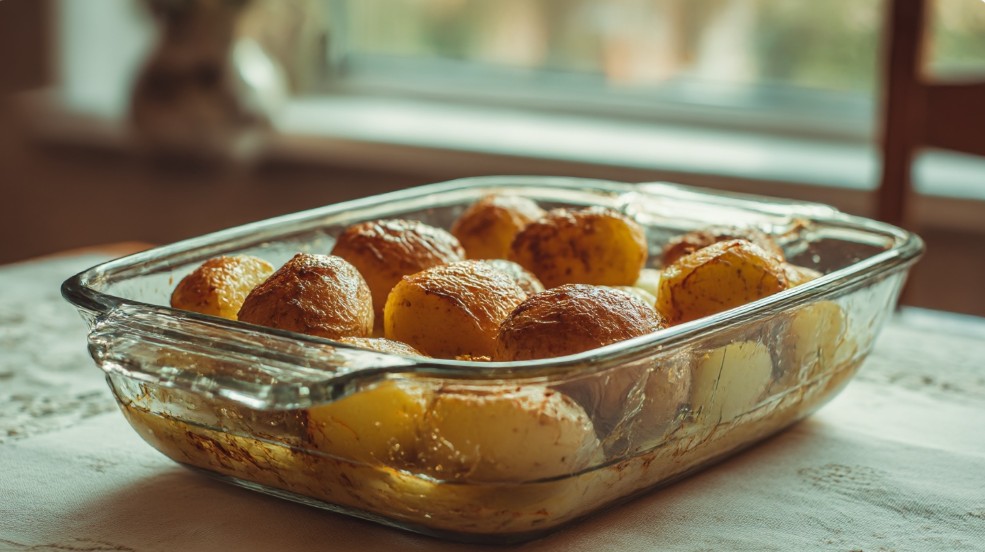
Ceramic Pans
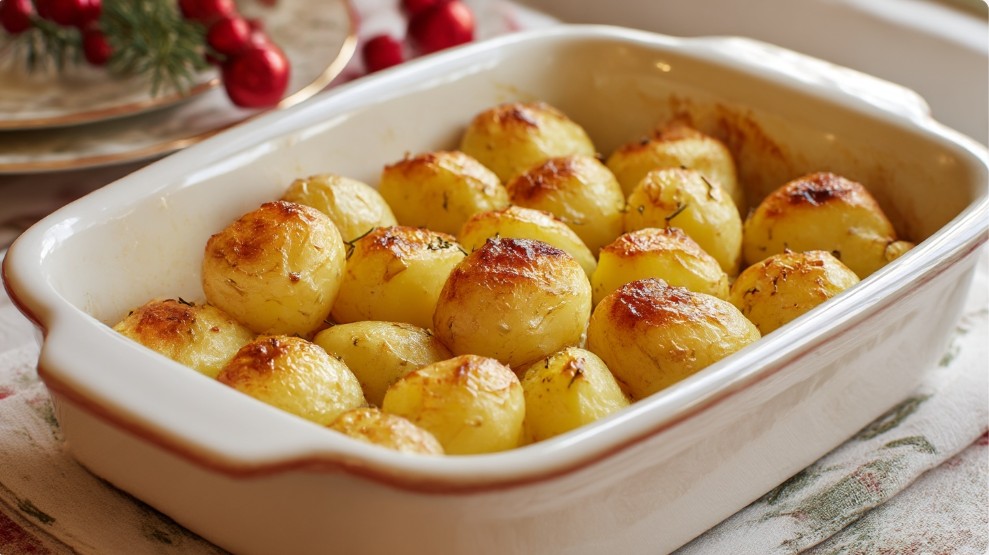
Hold heat very well, provide even baking. Potatoes come out juicy, but the crust is not as pronounced as on metal. Ceramics are heavy and fragile, can crack from impact or temperature changes. I use ceramics when I want to make something festive with potatoes and serve it right in the pan.
Cast Iron Pans and Skillets
This is a classic that never ages. Cast iron heats slowly but holds heat for a long time. Potatoes in cast iron are a separate delight: crispy skin, soft inside. But cast iron needs to be protected from rust, regularly oiled. Washing is not to everyone’s taste, but if you get used to it, it serves for decades. My favorite cast iron pan is an inheritance from my grandmother, and it still works better than many modern ones.
Tip: If you don’t want to bother with rust, you can line the cast iron sheet with parchment, but the crust will be less pronounced.
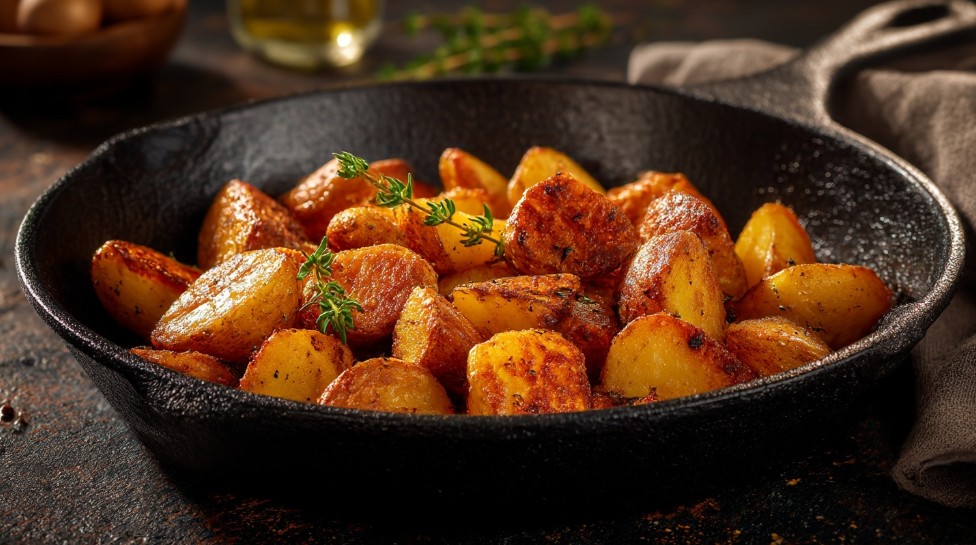
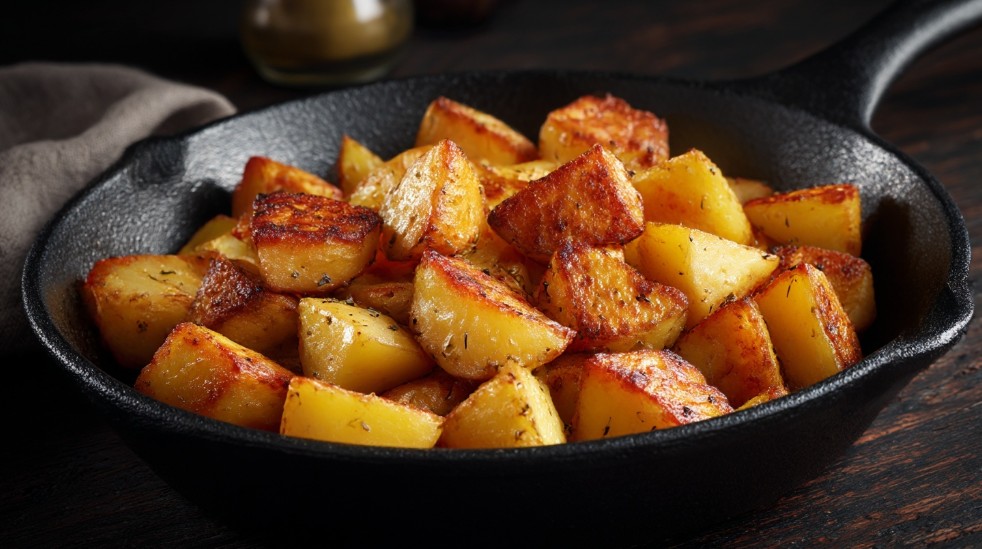
Try cooking this recipe in a cast iron skillet, Country-Style Potatoes in the Oven
Optimal Oven Temperature for Roasting Potatoes
In most cases, potatoes are roasted at a temperature of 200–220 °C. Metal and cast iron sheets work well at higher temperatures and help achieve a golden crust. Glass and ceramic pans are better used at 180–200 °C to avoid sudden temperature changes and drying out the dish.
Comparison of Baking Sheets and Pans for Roasting Potatoes
Steel
Heating speed: medium
Crust: good
Evenness: high
Best suited for large portions and even baking
Aluminum
Heating speed: fast
Crust: medium
Evenness: medium
Best suited for quick cooking
Glass
Heating speed: slow
Crust: weak
Evenness: good
Best suited for table presentation
Ceramic
Heating speed: slow
Crust: weak
Evenness: high
Best suited for festive dishes
Cast Iron
Heating speed: slow
Crust: excellent
Evenness: high
Best suited for crispy potatoes
Size and Shape of the Baking Sheet: How Not to Make a Mistake When Choosing
Imagine: you bought a large baking sheet, but it doesn’t fit in the oven. Or you took a small one — and the potatoes lie in a thick layer, baking for an hour instead of 30 minutes. I’ve fallen into such traps a few times. So before buying, I always measure my oven — not by the catalog, but with a tape measure. Especially if the oven is not standard.
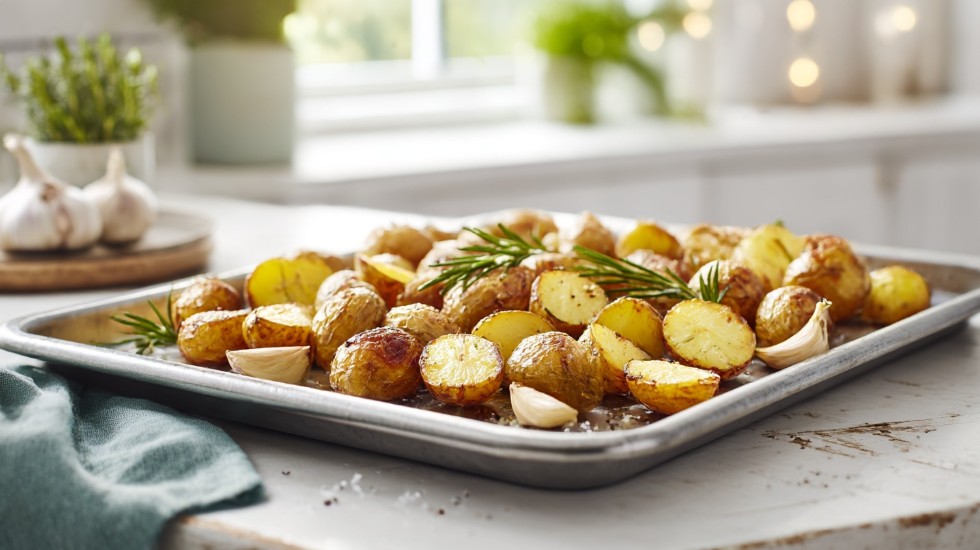
For potatoes, I choose a baking sheet with a margin: the thickness of the layer should be no more than 3-4 cm. If the layer is thicker, the potatoes won’t bake evenly, they’ll be either raw inside or over-dried on top. The optimal height of the sides is 2-4 cm: this is enough to prevent juice from spilling but doesn’t interfere with browning. A too deep pan is more for gratin or casseroles, not for crispy potatoes.
The shape also affects the final result. A classic rectangular baking sheet is versatile, but if you want an even crust on all sides, it’s better to take a round or oval pan. For large groups, two medium sheets instead of one giant one: it’s easier to control the degree of readiness and not stir the whole layer at once.
Edges, Handles, Weight: What Really Matters in Daily Use
When choosing a baking sheet in the store, it seems like they’re all the same. But try pulling a hot sheet out of the oven with one hand, and you realize how important convenient handles are. Wide, protruding edges have saved me more than once: they’re easy to grab even with mitts. A sheet without handles or with small protrusions often slips, especially if there’s a lot of juice or oil on it.
Weight also matters. A light sheet made of thin metal can warp from heat, while a heavy one is hard to hold with one hand. I found a golden mean for myself: the sheet should be massive enough not to ‘play’ in the oven, but not so heavy that I’m afraid of dropping it every time. The edges should be without sharp corners — I once cut my finger when I was in a hurry in the kitchen, and since then I choose sheets with smooth bends.
Tip: Check that the sheet doesn’t bend with light pressure. This is a sign that it won’t withstand frequent use.
Common Mistakes When Choosing a Pan or Baking Sheet for Potatoes
I’ve encountered mistakes that have ruined more than one dinner. The most common is buying the cheapest aluminum sheet, which deforms after a few uses and starts creaking with every heating. Another is choosing a pan that’s too deep or too small: the potatoes come out either stewed or undercooked. Many ignore the non-stick coating, considering it ‘marketing,’ but after washing burnt potatoes with a regular sponge, opinions change.
- Choosing a sheet without considering the oven size
- Ignoring the thickness of the metal
- Buying a pan without handles
- Trying to bake in an old pan with damaged coating
- Using a pan that’s too deep or shallow
I’ve paid the price a few times for wanting to save money. One of my first potato pans cost pennies, but after a few months of active use, it started bubbling and smelling of burnt plastic. Conclusion: it’s better to buy durable cookware once than to constantly struggle with cheap ones.
Ease of Care and Cleaning: What Helps Save Extra Nerves
One of the main reasons people don’t like roasting potatoes is washing the sheet after dinner. I had a period when I avoided this dish for that very reason. A thin sheet without coating is a disaster: the potatoes stick firmly, and you have to soak and scrub. A few tips from experience:
- Non-stick coating saves, but it’s not eternal: don’t scrape with a metal sponge, don’t wash in the dishwasher, don’t use abrasives.
- Glass and ceramics are easy to wash if you don’t let the leftovers dry immediately after use. If you forget, soak in warm water.
- Parchment paper is a real savior for those who don’t like washing.
I’ve learned not to delay washing for more than 10 minutes after the dish is eaten. When the leftovers are still warm, they come off easily. If you wait, you can spend three times as long washing. Another tip: if you plan to cook several dishes in a row, don’t let the sheet cool down; it’s easier to wash while it’s warm.
Alternatives: What Can Replace a Classic Baking Sheet
There’s not always a perfect pan at hand. Sometimes you have to make do with what’s available. For potatoes, suitable alternatives include:
- Heat-resistant skillets (especially cast iron)
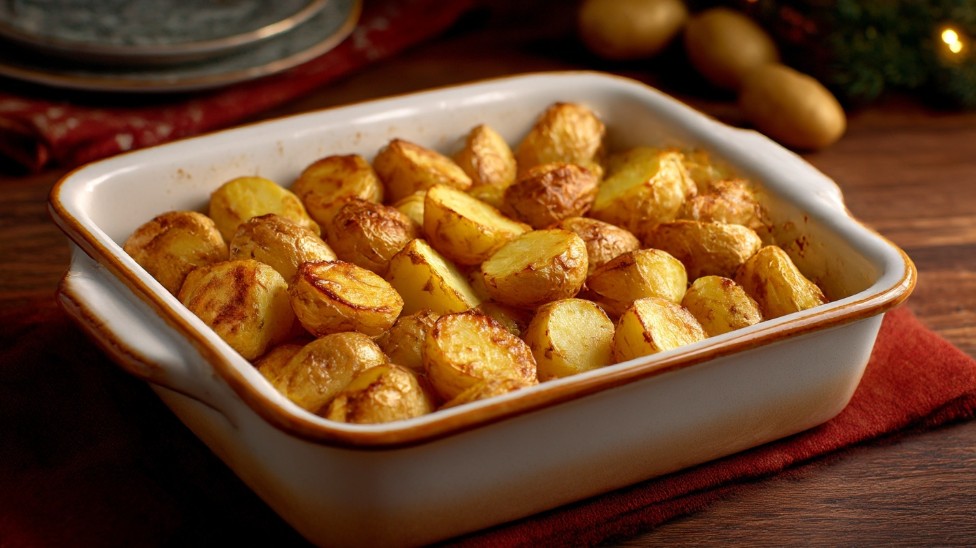
- Ceramic or glass containers (if there’s no special pan)
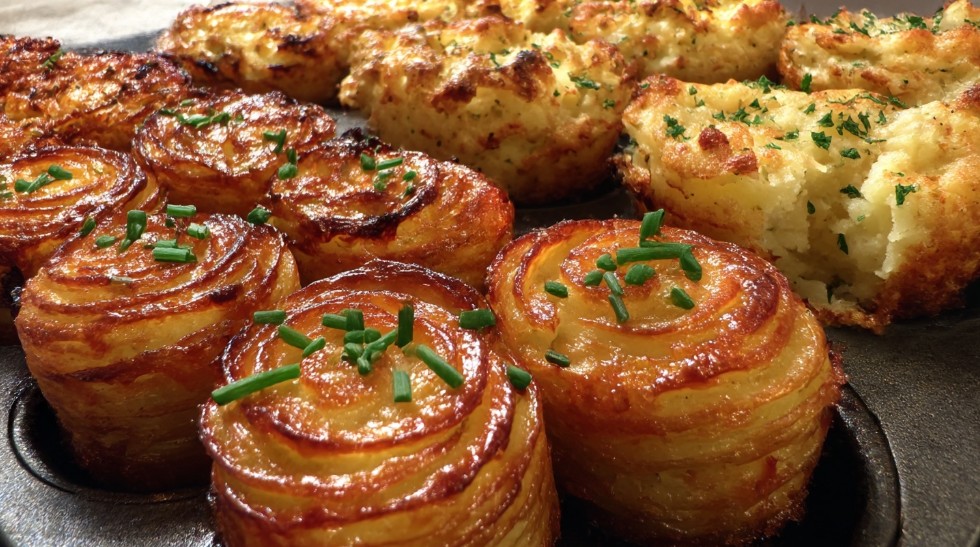
- Muffin pans (for small portions — they make interesting baked ‘baskets’)
- Small heat-resistant bowls (for individual portions)
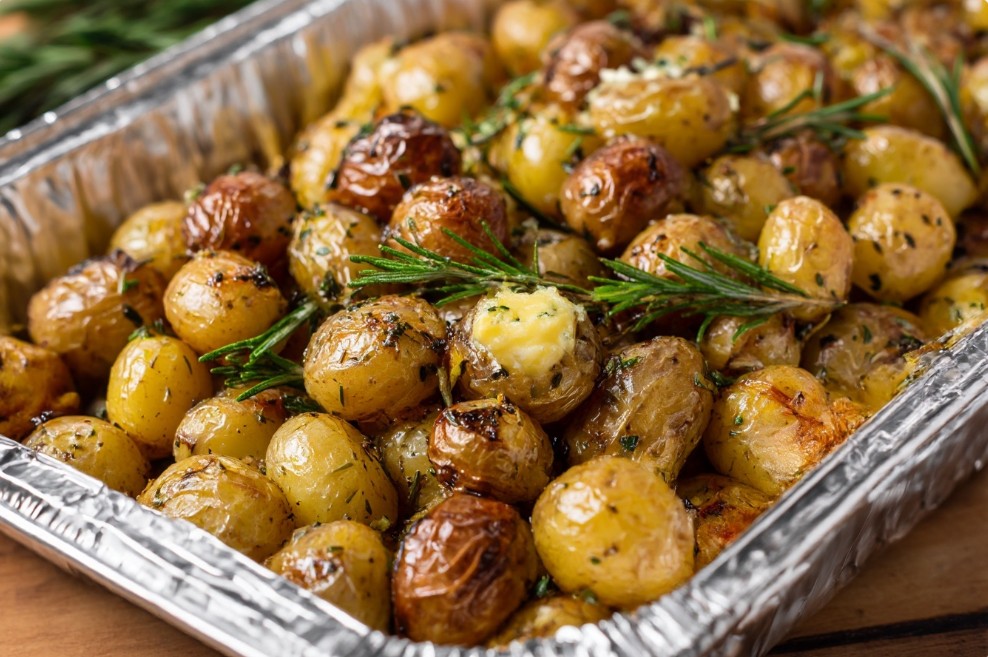
Sometimes even foil on a rack can save the day if there’s no sheet at all. But it’s important to ensure the foil doesn’t tear — otherwise, the juice will flow to the bottom of the oven. In my student years, that’s what I did: foil, rack, a bit of imagination — and dinner is ready even in the most modest kitchen.
How to Extend the Life of Your Favorite Baking Sheet or Pan
Good cookware is an investment. I’ve yet to meet a sheet that lasts forever, but a few simple habits can extend its life for years:
- Don’t cut potatoes directly in the pan — even the strongest coating gets scratched over time.
- Don’t pour cold water on a hot sheet — especially glass and ceramics, they can crack.
- Store sheets not nested without padding — place a napkin or towel between them.
- Regularly oil cast iron with a thin layer after washing, otherwise it rusts even from plain water.
My cast iron pan has survived three moves and several dozen holidays. It doesn’t look new, but it cooks better every year. The main thing is not to forget about care.
Tip: If there are scratches on the non-stick sheet, don’t use it for high-temperature baking; better leave it for cookies or vegetables at lower temperatures.
Personal Life Hacks and Micro-Stories from Practice
Every cook has their little secrets. Here are a few things that really help me:
- I always line the bottom of the sheet with parchment if I’m cooking something with cheese or cream — then washing takes a minute.
- If the potatoes need to be as crispy as possible, I use a metal sheet without coating but grease it with a thin layer of oil.
- For baking large pieces of potatoes, I take cast iron or thick-walled ceramics to keep the heat longer if the dish is served right in the pan.
- Before first use of a new sheet, I always wash it with soda and hot water, then lightly oil it — this reduces the risk of sticking.
- If there’s no energy left to wash after a festive feast, I leave the sheet in warm soapy water overnight, and in the morning everything comes off easily.
My favorite story is when I was cooking potatoes for a birthday, and the old sheet started bending right in the oven. Some of the juice spilled, the smell filled the kitchen, but the potatoes came out with a perfect crust. Since then, I don’t leave sheets unattended — even the most experienced cook sometimes encounters surprises.
When to Replace a Baking Sheet or Pan and When You Can Wait
Sometimes parting with cookware feels like betrayal: the old pan has served for so many years, and now there are cracks or the coating has peeled off. I always look at three things:
- Significant scratches and coating damage — especially on non-stick and aluminum pans.
- Cracks in glass and ceramic pans — they can break at the most inopportune moment.
- Metal deformation — if the bottom has become bulged, the dish bakes unevenly.
If the problem is only cosmetic — cloudiness, darkening, light scratches — I continue to use it. But if the pan starts throwing surprises in the form of burnt food or the smell of burnt plastic, it’s better not to risk it, even if it’s hard to part. New cookware is not a whim, but care for yourself and your loved ones.
Why the ‘Perfect’ Baking Sheet Doesn’t Exist — And That’s Okay
I’ve long stopped looking for universal cookware ‘for all occasions.’ One sheet for potatoes, another for fish, yet another for sweet pastries. The more you cook, the better you understand: the main thing is to find what works for you. My favorite sheet doesn’t look perfect: scratches, traces of time, but it cooks better than brand-new ‘innovative’ models.
Brief Conclusion for Choosing
- Want a crispy crust — choose steel or cast iron sheets.
- Need to cook quickly — an aluminum sheet with parchment will do.
- Care about beautiful table presentation — pay attention to glass or ceramic pans.
- Cooking for a large group — use wide metal sheets.
- Love classic taste and durability — cast iron is the best choice.
Boldly choose, try different options — there’s no perfect solution, but there are things that make the kitchen feel like home. Sometimes even an old, time-tested sheet brings more joy than the most expensive novelty. In the end, it’s not the pan that makes the dish special, but the hands that prepare it.
Questions and Answers
What baking sheet is best for roasting potatoes?
Does the material of the sheet affect the taste of potatoes?
Can you roast potatoes on an aluminum sheet?
What sheet is better for a large amount of potatoes?
Is a non-stick coating necessary?
Can you put a glass pan in a preheated oven?
How to care for a cast iron baking pan?
Sometimes the best solution is not to chase trends but simply to find your rhythm in the kitchen. Maybe you also have a pan that has survived more than one oven change and is still in service? Share your thoughts on baking pans for potatoes!