Which Cheese Works Best in Nudelsalat?

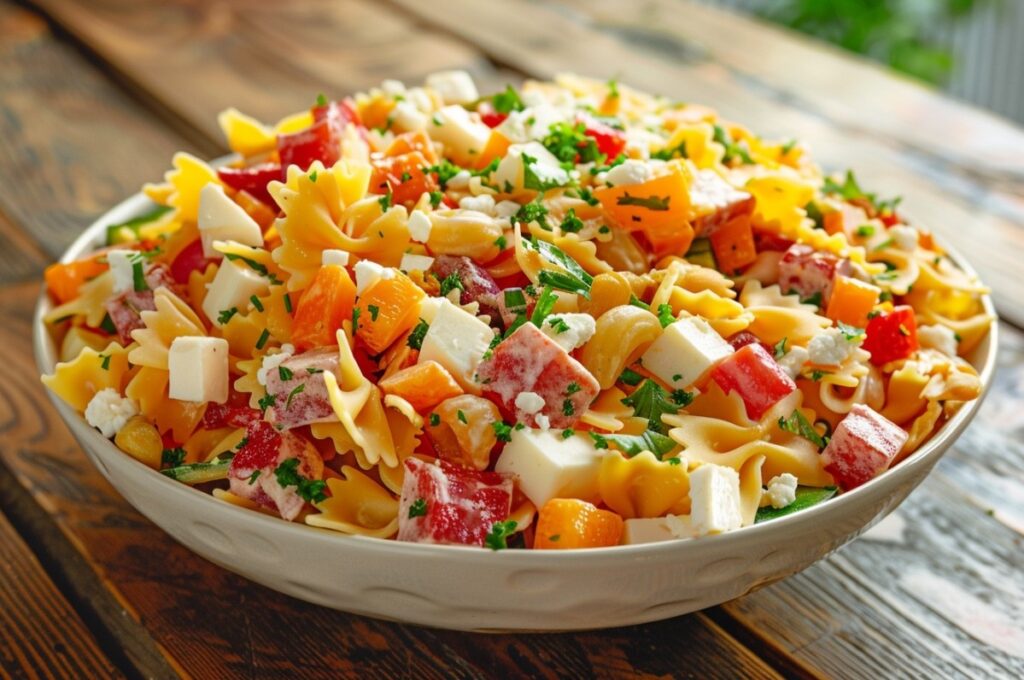
Nudelsalat can be sneaky. It looks simple enough: pasta, something crunchy, something juicy, a dressing—done. Then you pull the bowl out of the fridge, take a bite… and it’s fine, technically, but it doesn’t quite hold together. The cheese has melted into mush, or turned rubbery, or bulldozed everything with its aroma, or soaked up the dressing and left the salad weirdly dry. I’ve been there—at home parties and in professional kitchens where Nudelsalat gets made by the bucket.
Cheese in Nudelsalat isn’t “just another ingredient.” It’s texture, salt, fat, and that little bridge between the pasta and the dressing. Pick the wrong one and the salad turns heavy, falls apart into separate bits, or leaves you with a strange aftertaste. The good news: there’s no mystery here. A few practical rules will save you—even if you’re grabbing cheese from the nearest supermarket, not from an Italian grandpa at the market.
Below you’ll find which cheeses actually work in Nudelsalat, how to judge quality fast (color, smell, texture, packaging), where marketing likes to trick us, when it’s worth paying more, and how to store cheese so it doesn’t turn into a sad, slippery lump. No recipes—just smart choosing and how the cheese behaves in the bowl.
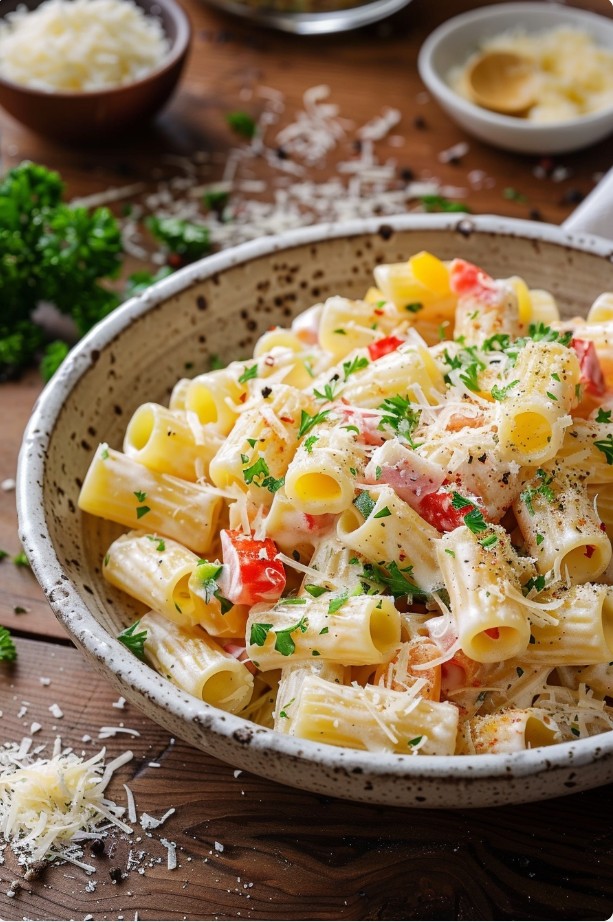
What the cheese should do in Nudelsalat: it’s about the job, not the name
When someone asks me, “Which cheese should I use?”, I always ask back: what kind of Nudelsalat are you aiming for? Because cheese can play very different roles. One version is soft and creamy, where the cheese almost “glues” the dressing to the pasta. Another is all about clean cubes—little salty islands throughout the bowl. A third needs a gentle tang and freshness.
In Nudelsalat, cheese usually has to survive three things:
- Cold (the salad almost always chills in the fridge).
- Acid (vinegar, lemon, pickle brine, yogurt, mustard—some kind of tang is common).
- Handling (mixing, transporting, “it sat—stir it again”).
So I judge cheese for Nudelsalat by four things: structure (does it hold its shape), fat content (does it round out the flavor), saltiness (will it throw everything off), and aroma (will it overpower the other ingredients).
A quick story from real life: once, for an off-site buffet, we grabbed one of those “salad cheese mixes”—pretty cubes in a bag, super convenient. An hour later in the bowl, the cubes turned slippery and started crumbling, and the dressing split. Turned out the cheese had very high moisture plus stabilizers—looks perfect in vacuum packaging, but in an acidic dressing it behaves like a diva. Since then, I don’t trust “for salads” labels without reading the ingredients and thinking about texture.
The best types of cheese for Nudelsalat (and how they behave in the bowl)
I’m not going to pretend there’s one “correct” choice. There are a few types that work consistently. I’ll describe them by texture rather than by country—because that’s the easiest way to shop in any store.
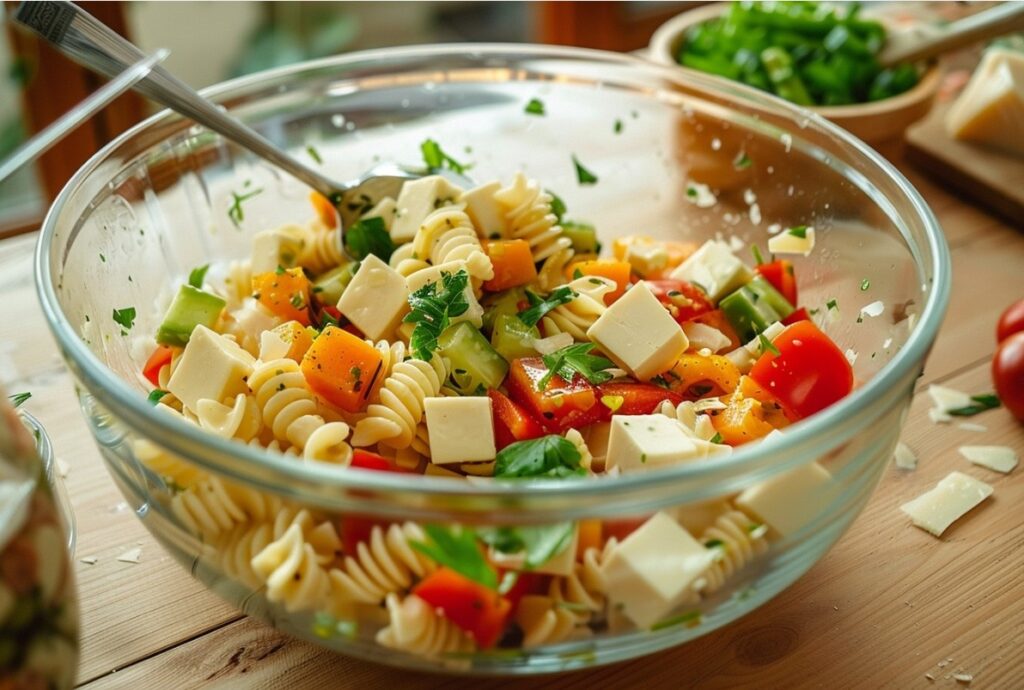
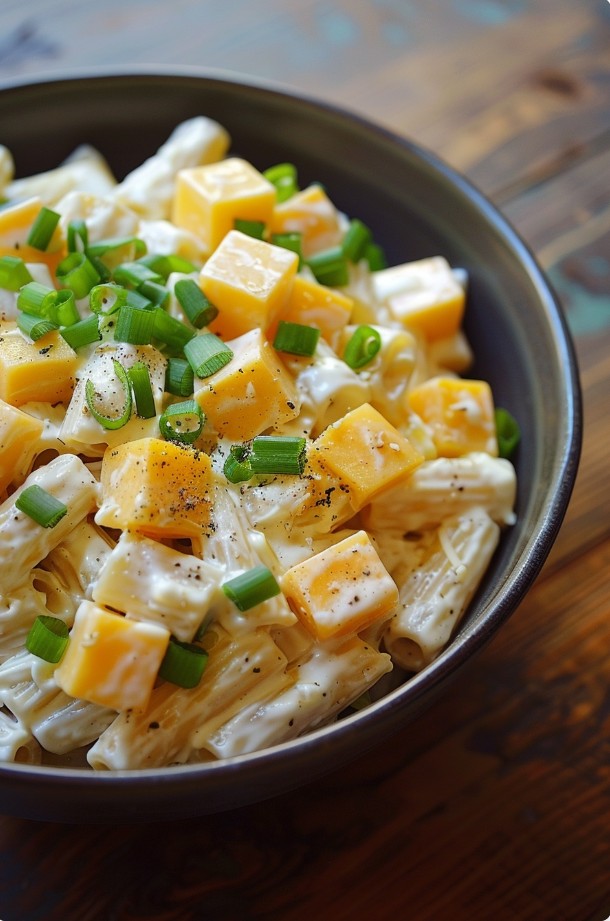
Semi-hard cheeses that hold a cube: Gouda, Emmental, Maasdam, young Cheddar
This is my workhorse when I need a salad that can handle a car ride, a stint in the fridge, and another couple of hours on the table. A good semi-hard cheese cuts cleanly, doesn’t crumble, and doesn’t “weep.” In Nudelsalat it adds satisfaction without making things heavy—unless you go overboard.
How it behaves: it won’t melt in a cold salad, but it can soften slightly in the dressing. If the cheese is very young and moist, it may release moisture and make the salad wetter. If it’s very aged, it gets more brittle and can break into smaller bits.
Tip: for neat cubes, cut the cheese cold (straight from the fridge), then let it sit for 10 minutes before mixing. It sticks less to the knife and won’t smear.
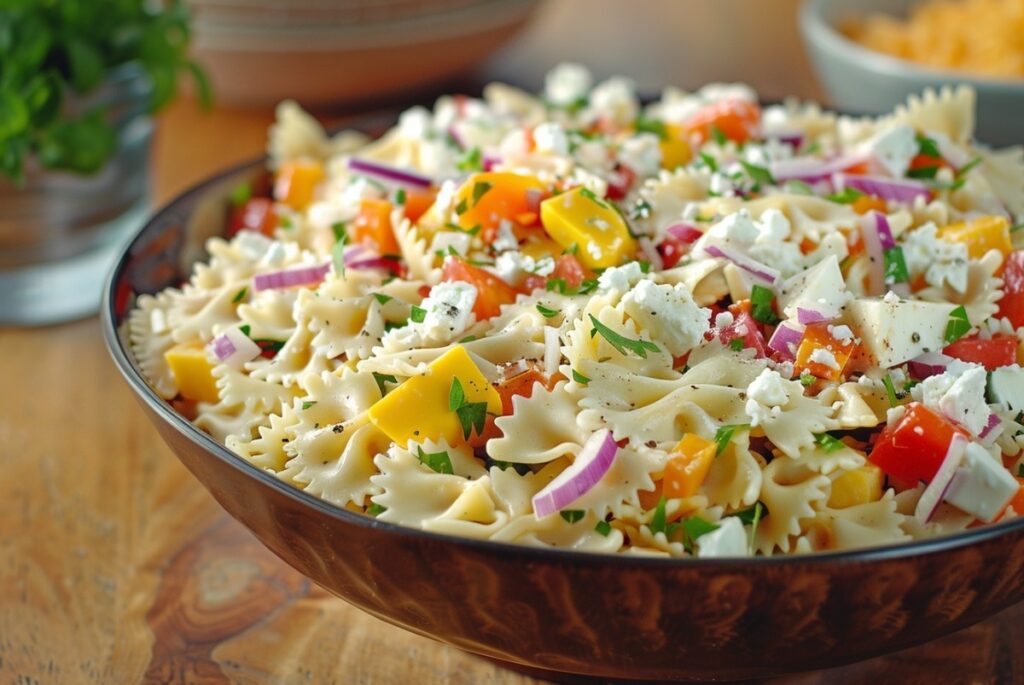
Salty brined cheeses: feta, brynza, brined cheese
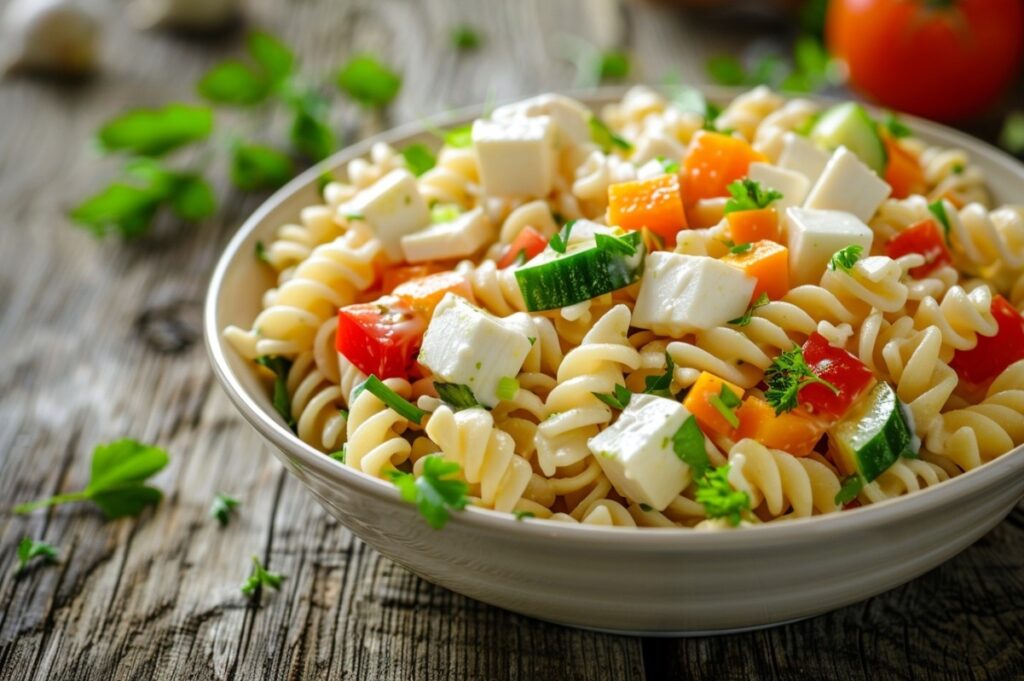
Go this route when you want Nudelsalat to feel fresher and more contrasty. Brined cheeses bring bright saltiness and a gentle tang. The downside: they’re fragile. In a bowl, they can turn into “snow” if you mix aggressively.
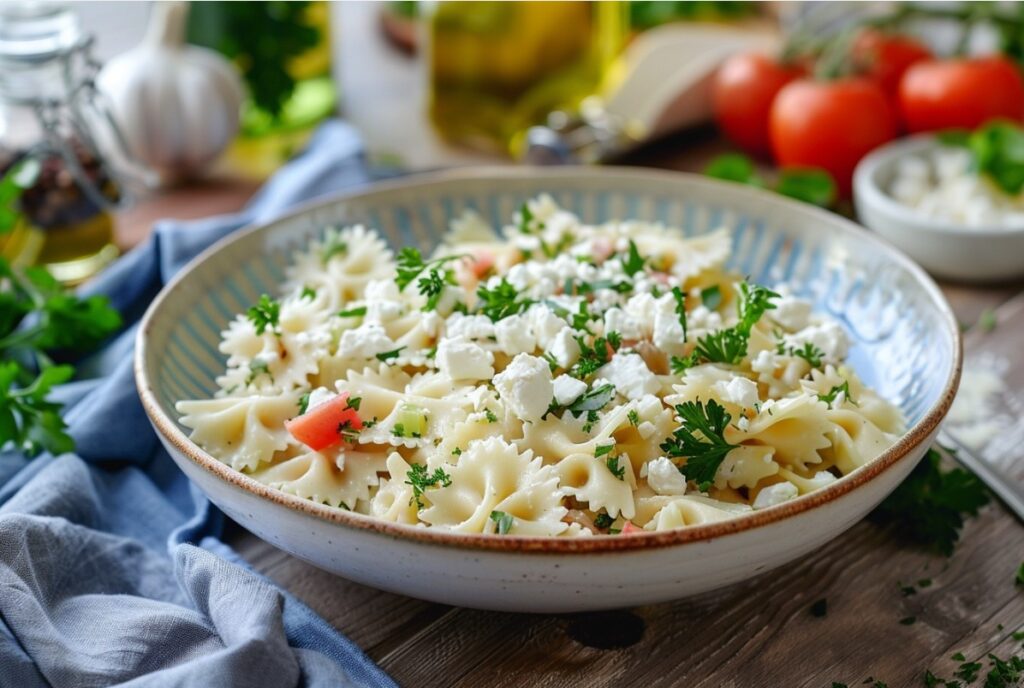
How it behaves: feta/brynza partly breaks down and blends with the dressing, leaving a creamy coating on the pasta. That can be a plus—if that’s the vibe you want. If you want clean chunks, choose a firmer brined cheese and cut larger cubes.
At my place we have a rule: if we’re using feta, we mix the Nudelsalat once—gently, with a big spoon—and that’s it. Because the second stir turns it into paste and the salad loses those nice salty pops. I once “fixed” the bowl right before serving and basically erased the best part.
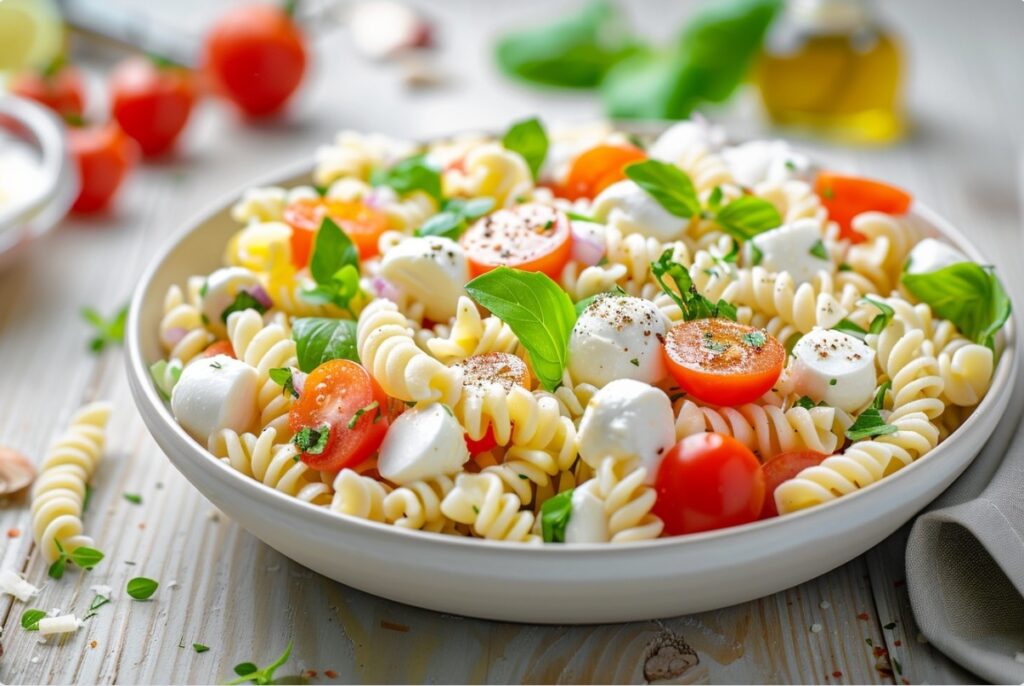
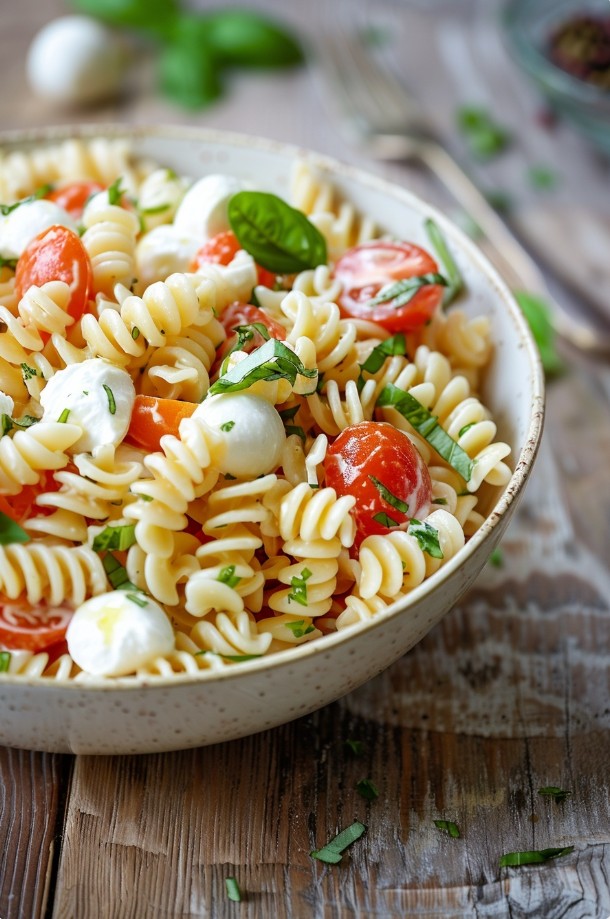
Soft, mild fresh cheeses: mozzarella (not the super watery kind), soft “salad-style” cheese
Mozzarella in Nudelsalat is popular, but it’s a coin flip: it either works beautifully or wrecks the texture. Very watery mozzarella balls often leak liquid and leave the salad soggy. A firmer, less wet mozzarella gives you tender, springy pieces that are genuinely pleasant to chew.
How it behaves: cold mozzarella can feel a bit firmer, and if it sits in dressing for a long time it can absorb acidity and shift in flavor. The key is not to marinate it for hours in a very acidic dressing.
Tip: if your mozzarella is in brine, let it drain for 10–15 minutes in a colander, then pat dry with paper towels. Tiny step, big difference for Nudelsalat texture.
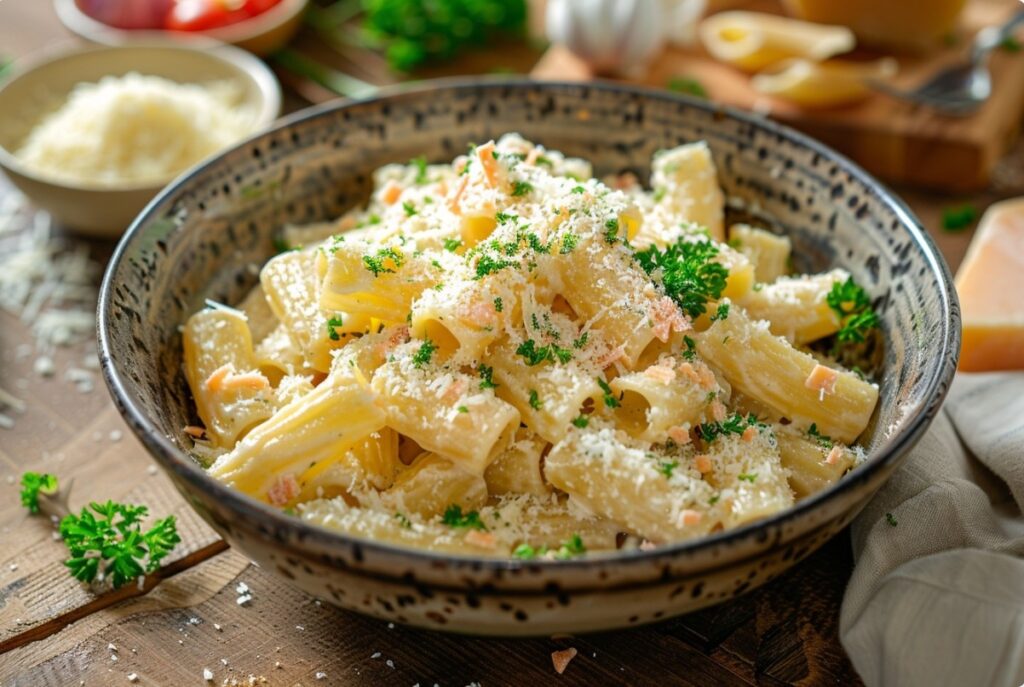
Hard cheeses for shavings: Parmesan, Grana Padano, Pecorino (go easy)
This isn’t about cubes—it’s about aroma and that dry, savory saltiness. A hard cheese shaved over the top (or crumbled finely) can pull the salad together and deepen the flavor. It’s also easy to overdo it: Pecorino, for example, can dominate and drown out everything else.
How it behaves: it won’t dissolve in a cold salad, but over time it can hydrate and soften slightly. Add too much and the salad can feel “dry,” because hard cheese absorbs some of the dressing’s moisture.
Cream cheese and processed cheese: almost always a risk
I’m not saying “never,” but this is the most common source of trouble. Cream cheese can make the whole bowl thick and heavy, and if it’s low quality it leaves that greasy, margarine-like film. Processed cheeses often have a specific smell and a plasticky bite—especially when cold.
How it behaves: it can glue the pasta into one clump, and during storage it may split and leak whey. If you’re craving creaminess, I’d rather get it another way than bring processed cheese into Nudelsalat.
Quality cues: color, smell, texture, packaging—your quick store checklist
I love a good market stall, but honestly: most people build Nudelsalat from supermarket ingredients. And that’s totally fine. You just need to learn to “read” cheese with your eyes (and your nose, when possible), not just by price tag or a pretty name.
Color: even, natural, no weird patches
For semi-hard cheeses, the color should be uniform across the cut surface. If you see grayish or overly dark areas, dried-out edges, cracks—either the cheese is old or it was stored poorly. Brined cheeses can have slight natural unevenness, but there shouldn’t be yellow greasy spots, and definitely not pink/gray specks.
Mozzarella should be white or slightly creamy. If it’s unnaturally snow-white and looks a bit like plastic, I get cautious—sometimes that’s a sign of an industrial, rubbery texture that won’t be nice in a salad.
Smell: clean and dairy-forward—no ammonia, no “basement”
If you can smell it (easy at a market, sometimes only after opening at home), the rule is simple: it should smell appetizing. Milky, nutty, lightly buttery—great. Sharp ammonia—bad (especially in aged cheeses that have gone too far). Anything like damp cellar, wet rag, sour mold—also a no.
Brined cheeses can smell like brine—that’s normal. But if the aroma is strongly yeasty or aggressively sour, it’ll jump to the front in Nudelsalat and drown out everything else.
Texture (touch and cut): how it cuts is how it’ll live in the salad
Semi-hard cheese should slice cleanly. If it smears and sticks to the knife, it’s either too warm or too moist. In Nudelsalat, that kind of cheese can “bleed” into the dressing and make it look cloudy.
Feta/brynza: good quality crumbles in larger flakes, not into wet sand. If it smears immediately, it’s either very fresh and watery or it contains additives that make it paste-like.
Mozzarella: it should be springy, not rubbery. When you cut it, the knife should glide through a dense, moist mass—not bounce off it.
Packaging and labels: not paranoia—just common sense
Look at two things: package integrity and ingredients. Vacuum packs should have no air pockets and no cloudy liquid—unless the cheese is meant to be in liquid. Brined cheese in liquid is fine, but the liquid should be clear or slightly milky, not slimy.
Ingredients: the shorter, the calmer. Milk, cultures, rennet, salt—basic. If you see a long list of stabilizers, “cheese product,” vegetable fats—maybe it’s not a disaster, but for Nudelsalat it often means odd behavior: it won’t hold shape, or it leaves a sticky film.
Tip: if you’re buying a wrapped wedge, choose one where the cut face looks fresh—no dried-out “ring” around the edge. That dry edge turns into gritty crumbs in the salad and ruins the tenderness.
Season and context: which cheese fits which kind of Nudelsalat
Cheese isn’t only about quality—it’s also about what makes sense in the moment. In summer I reach for lighter, saltier, fresher cheeses. In winter, I lean into rounder, nuttier semi-hard ones. Not a strict rule, but it works because the rest of the ingredients change too.
Summer Nudelsalat (veg, herbs, something pickled): feta, brynza, firmer mozzarella, sometimes a lighter semi-hard cheese (not too fatty). Here the cheese should lift the salad, not drag it down.
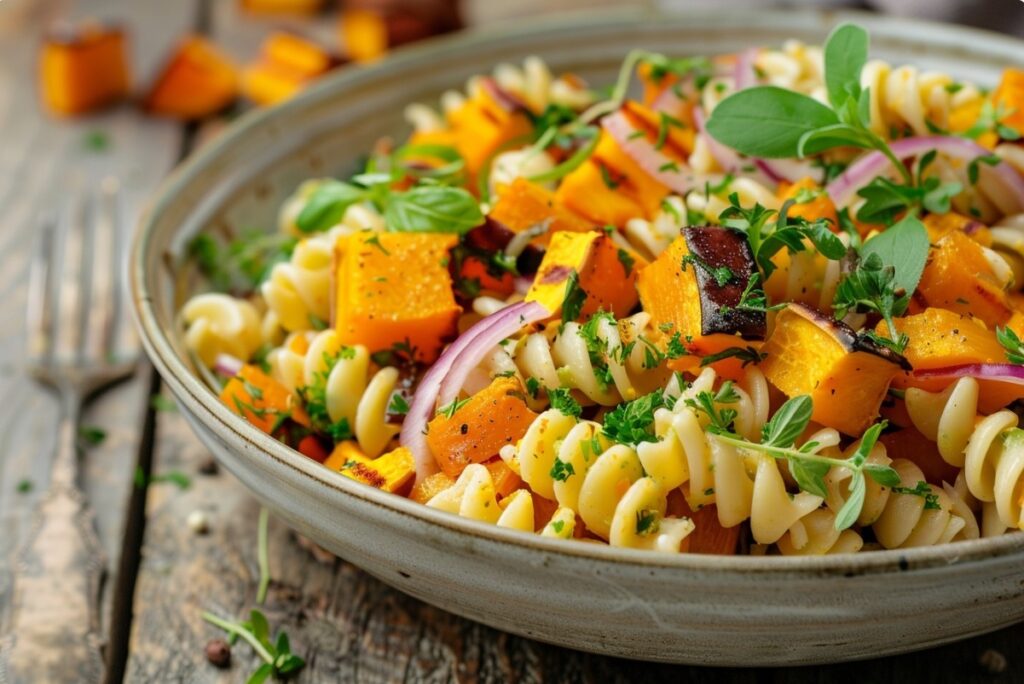
Autumn/winter (roasted veg, sausages, mushrooms, richer dressings): Gouda, Emmental, young Cheddar. They add body and play nicely with warmer flavors.
If your salad is very acidic (vinegar, brines, fermented bits): choose a cheese that won’t turn sharp. Very aged, punchy cheeses can make acidity taste oddly “metallic.” Something gentler on aroma usually works better.
Quick story: I once made Nudelsalat with pickles and added an aged hard cheese—and the whole thing tasted like it was “grinding” against itself. Not terrible, just harsh. Switching to a milder semi-hard cheese made it instantly more balanced.
Common shopping mistakes: marketing traps that ruin the salad
This is where most disappointment happens. Someone buys cheese “because the label says so” or “because it’s convenient,” and then wonders why the bowl feels off.
Mistake 1: a “cheese product” instead of real cheese
The front of the package might scream “CHEESE,” but the fine print says “cheese product” or mentions vegetable fats. In a cold salad, that often means a waxy bite and a strange aftertaste. It can also react badly with acidic dressing: you get a film, or the pieces turn slippery.
Mistake 2: bucket “salad cheese” that’s actually too soft
The format is handy, but not always for Nudelsalat. Often the cheese is very tender and watery. It breaks down fast and turns the dressing white and thick—sometimes that’s fine, but if you want texture, it’s a letdown.
Mistake 3: buying the cheapest feta/brynza without reading the ingredients
Cheap brined cheese often means either a very salty product or a cottony, bland texture. In Nudelsalat you’ll notice immediately: either you oversalt the whole bowl, or you get crumbly bits that muddy the pasta texture.
Mistake 4: buying pre-cut “salad cubes”
I get the temptation. But pre-cut cubes usually mean:
- more surface area → dries out faster;
- often treated so the cubes don’t stick together;
- easier to hide less-than-great cheese.
In the salad, those cubes often have a squeaky bite and a weaker flavor. If you have 2 minutes, it’s better to cut your own.
Mistake 5: forgetting how salty the cheese is
This one is classic. People add feta, then salt the dressing “to taste,” and the whole bowl ends up aggressively salty. My rule: if there’s brined cheese or a salty hard cheese, I salt at the very end, after the cheese is already in the bowl and has sat for 5 minutes.
Tip: if the cheese is too salty, you can quickly rinse it under cold water and pat dry. Not sacrilege—salad rescue.
Price vs. common sense: when it’s actually worth paying more
Cheese is one of those products where “more expensive” sometimes really does mean “tastier and more stable.” But not always. I don’t want Nudelsalat to turn into a budget project, so here’s how I think about it.
When a basic cheese is totally fine
If cheese isn’t the star and you’re just adding a handful of cubes for texture, a decent mid-range semi-hard cheese is perfect. The main thing is that it’s real cheese (no vegetable fats) and has a clean flavor.
Same goes for Nudelsalat with a bold dressing and lots of mix-ins—subtle nuances of an expensive cheese will get lost anyway.
When it’s better not to cheap out
1) Brined cheeses. The gap between “fine” and “oh no” is immediate. With feta/brynza, quality is texture, salt level, and clean taste. A cheap option can ruin the whole bowl with one stir.
2) Mozzarella. Cheap mozzarella is often either too watery or too rubbery. In Nudelsalat it’s obvious: pieces either fall apart or chew like an office eraser.
3) Hard cheese for shavings. If you’re using it like seasoning, it needs to be aromatic and clean. Cheap imitation gives you saltiness and not much else.
A sign you’re overpaying
If you buy a very aged, complex cheese and toss it into a salad loaded with pickles, sausage, onion, and a tangy sauce—you’re paying for nuances you won’t taste. In that case, grab a simpler but good-quality cheese and spend the difference on better vegetables or olives.
Storage: how to keep cheese from spoiling (and from spoiling your salad)
Most of the time, cheese goes bad not because it started out “bad,” but because it was stored poorly at home—especially after opening. Then it ends up in Nudelsalat already dried out, flavorless, or full of fridge smells.
Semi-hard cheeses
I store them in parchment or cheese paper, then put that in a container or bag so they don’t dry out. If you wrap only in cling film, the cheese can “suffocate” and develop a sticky surface. If you leave it uncovered, it dries out—and you’ll get crumbs in the salad.
How long it lasts: after opening, think a few days up to a week depending on the cheese and your fridge. If it smells sharp or the surface turns slimy, don’t risk it.
Brined cheeses
Their home is brine. If you bought it in brine, keep it there. If you bought it without, you can make a light salt solution (not “ocean salty,” just moderate) so it doesn’t dry out. One caveat: if the cheese is already salty, storing it in salty liquid for too long will make it even saltier.
How long it lasts: usually a few days after opening is the sweet spot. After that the flavor gets sharper and the texture more crumbly.
Mozzarella
If it’s in brine, keep it in brine—but don’t leave it in the open jar “as is” for a week. Once opened, the brine picks up fridge odors fast. I move it to a clean container, pour over the same brine, and seal tightly.
If it’s brine-free and vacuum-packed, wrap it after opening so it doesn’t dry out—but also doesn’t sit in its own moisture. A container with a paper towel on the bottom can help.
Tip: don’t store cheese next to fish, smoked meats, or very aromatic sauces unless it’s in an airtight container. Cheese is a sponge for smells—and in Nudelsalat you’ll notice immediately.
How to prep cheese specifically for salad: cutting, temperature, mixing
No kitchen magic here—just small moves that make Nudelsalat look and eat better. I’ve seen the same cheese give two totally different results depending on who prepped it.
Temperature: cold cheese cuts better, but tastes better warmer
For cutting, I like cheese cold—it holds its shape. But if you serve the salad right away and the cheese is icy, the flavor can feel muted. My compromise: cut it cold, mix the salad, then let it sit for 10–15 minutes before serving (not in the sun—just on the counter). Texture stays neat, aroma wakes up.
Piece size: smaller isn’t always better
Small cubes release flavor faster, but they also lose texture faster. For semi-hard cheese, I like a medium cube so you can actually feel it. For feta, go bigger because it’ll crumble a bit anyway. For hard cheese, use shavings or a fine crumble—but not dust.
Mixing order: how not to turn cheese into mush
If the cheese is fragile (feta, brynza), I add it at the end and mix very gently. If it’s firm, you can be bolder. Mozzarella is also better added closer to the end so you don’t beat it up while mixing.
Tip: don’t stir fragile cheese in circles. Instead, lift the salad from the bottom up. It’s a tiny change in motion, but it keeps the pieces intact.
Acid and cheese: introduce them the right way
If your dressing is very acidic and your cheese is delicate, don’t leave the salad overnight without testing. Sometimes after just 2–3 hours the cheese tastes sharper and the texture gets more crumbly. What I do: mix, let it sit 20–30 minutes, taste. If it’s still great, then I chill it longer.
Bought the wrong cheese? Quick fixes without panicking
It happens. You buy it, get home, and realize it’s too salty, too watery, or too pungent. You don’t always need to run out for a replacement. A few tricks can genuinely save the bowl.
If the cheese is too salty
Brined cheese can be rinsed quickly and patted dry. Semi-hard cheese is harder to “fix,” but you can balance the salad: don’t salt the dressing, add more neutral components (more pasta, cucumber, tomato—whatever fits what you already have), and let it sit. The salt spreads out and stops hitting in sharp bursts.
If mozzarella (or cheese balls) are too watery
Drain and pat dry—first step. Second: don’t mix them straight into a big amount of dressing. Add the cheese right before serving, or at least at the end, so it spends less time in contact with acid and salt.
If the cheese smells too strong
Honestly, in Nudelsalat it’ll be even more noticeable, because cold and acidity highlight sharp notes. You can try cutting it smaller and using less so it works as an accent, not the main voice. But if the smell already isn’t for you—don’t torture yourself (or the salad).
If the cheese crumbles and falls apart
Either lean into it (the cheese becomes part of the dressing), or cut bigger pieces and mix as gently as possible. Sometimes the best fix is adding cheese directly to each plate instead of the main bowl—especially if the salad will sit out and people keep stirring it.
Nudelsalat likes simple solutions. Cheese here isn’t about the “right country of origin”—it’s about how it cuts, how it smells, how it holds its shape, and how it gets along with acid and cold. Most often I grab a semi-hard cheese for stability or feta/brynza for freshness—and I always think about salt and moisture. And I don’t fall for pretty labels if the ingredients and texture raise questions.
I’m curious: what kind of Nudelsalat do you make most often—creamy, where the cheese melts into the dressing, or with clean cubes so each bite feels distinct? And which cheese is the most reliable for you?
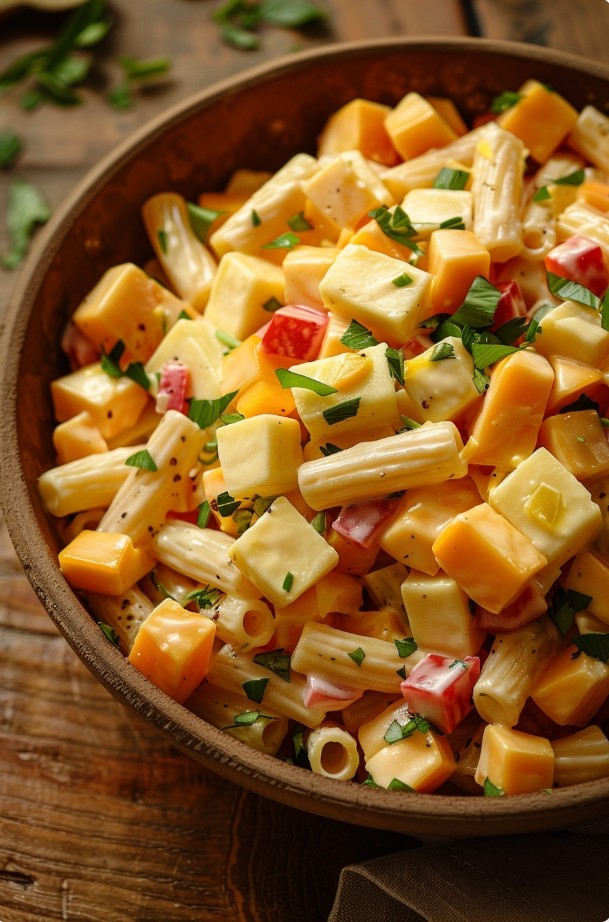
Pasta salads are easy to adapt to whatever you have on hand—from cheese and vegetables to fish or meat. In Nudelsalat, different cheeses can completely change the texture, making it creamier or more rich and savory. If you want to play with other ingredient combos, take a look at these pasta salad recipes for more everyday ideas.
Questions & answers
Which cheese is best for Nudelsalat?
For Nudelsalat, cheeses that are easy to cube or crumble work best. Popular choices include Cheddar, Gouda, Emmental, or feta. They have enough flavor to stand up to pasta and creamy dressings, making the salad more satisfying and interesting.
Can you use feta or brynza in Nudelsalat?
Yes—feta or brynza work really well in Nudelsalat. They add saltiness and a pleasant creamy element. As the cheese crumbles, it spreads through the pasta and other ingredients, so each serving tastes brighter and more balanced.
Is hard cheese good for pasta salad?
Hard and semi-hard cheeses are great in Nudelsalat, especially when cut into small cubes. Cheddar, Gouda, or Emmental add a richer cheese flavor and a more interesting bite. Just choose a cheese that doesn’t crumble too much or disappear among the other ingredients.
Can you add mozzarella to Nudelsalat?
Yes, mozzarella works in Nudelsalat—especially as small balls or larger chunks. It has a mild, milky flavor that pairs nicely with pasta, vegetables, and creamy dressings. Just make sure it isn’t overly watery, or drain it well first.
Should you add grated cheese to Nudelsalat?
Grated cheese can work, but it behaves differently than cubes or crumbles. Parmesan (or another hard cheese) can boost the dressing with a savory, umami note. It’s best used as a finishing touch rather than the main cheese in the salad.
Which cheese is better to avoid in Nudelsalat?
Very soft cheeses and processed cheeses are often a poor fit for Nudelsalat because they dissolve into the dressing and can make the salad heavy or gluey. It’s usually better to choose a cheese that holds its shape and stays noticeable in the bowl.
Can you combine several cheeses in Nudelsalat?
Absolutely. Mixing cheeses can make Nudelsalat more interesting—for example, cubes of Cheddar with crumbled feta, or a little Parmesan stirred into the dressing. You’ll get deeper flavor and more varied texture.
When should you add cheese to pasta salad?
Add cheese once the pasta has cooled. If you mix cheese into hot pasta, it can melt or lose its texture. In a chilled Nudelsalat, the cheese pieces stay intact and distribute more evenly.