The Best Way to Cook Buckwheat: Pot, Saucepan, or Sauté Pan

Buckwheat is one of those grains that taught me patience. It seems simple: pour, add water, wait. But then you see that someone has mushy grains, another has undercooked ones, and a third person forgot about it and ended up with a brown bottom. Over the years, I’ve noticed that it’s not so much the recipe but the cookware that affects the final result. The choice—pot, saucepan, sauté pan—seems trivial, but it’s where the journey to perfect buckwheat begins. Cookware is not just a container; it determines how quickly the water boils, whether it will spill over, burn, or how long it retains heat. I want to share my experience on how to choose the right cookware for cooking buckwheat, so it not only tastes good but is also convenient at every stage: from washing to storage.
Why Choosing Cookware for Buckwheat is Important
Buckwheat is not a very demanding grain, but it has its own character. I’ve tried cooking it in a thick-walled pot, a light saucepan, and a wide sauté pan. You’d think the difference is minimal, but the result is completely different. When you cook buckwheat in a large pot, it comes out crumbly, but sometimes too dry. In a saucepan, it’s quick, but there’s a risk it will spill over or burn. In a sauté pan, it’s interesting to watch the grains “breathe” evenly under the lid, but not every sauté pan retains moisture well.
I’ve had periods when I cooked buckwheat for a large family, and then a pot with a thick bottom saved the day. When I lived alone, a saucepan seemed ideal—quick to wash, quick to cook. I tried a sauté pan later, and it was its own adventure: the buckwheat didn’t stick, even when I overdid it with water. It’s these seemingly small nuances that made choosing cookware for buckwheat no longer random for me.
How to cook buckwheat properly, a complete guide, and all proven methods of cooking grains.
Pot: A Classic for Buckwheat and More
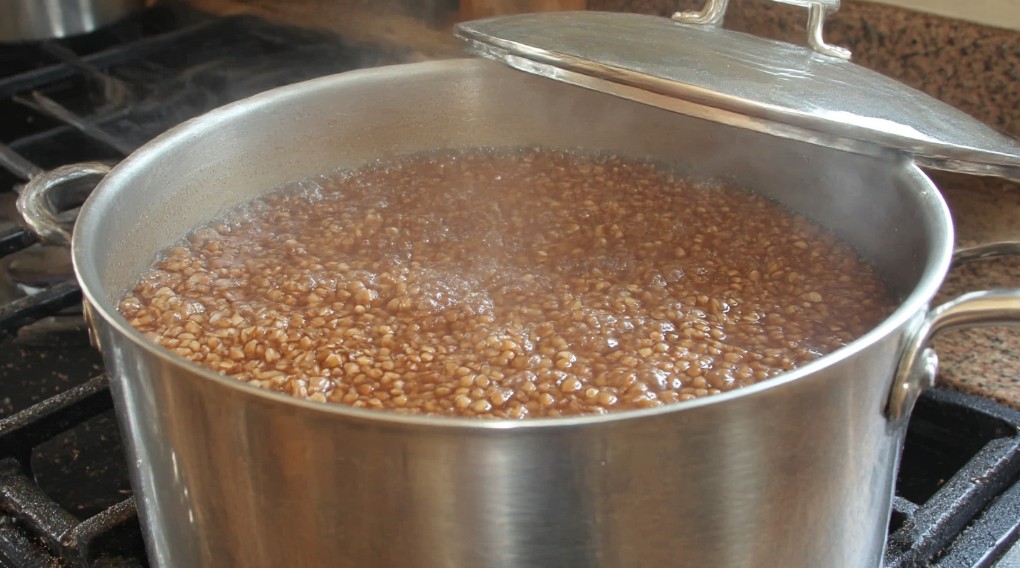
If someone has only one pot at home, it’s likely that’s where they cook buckwheat. I love pots for their versatility: you can cook 300 grams of grains or a whole liter. Pots come in different types: aluminum, enamel, steel, with non-stick coating. This affects both the result and convenience.
Which Pots are Suitable for Buckwheat
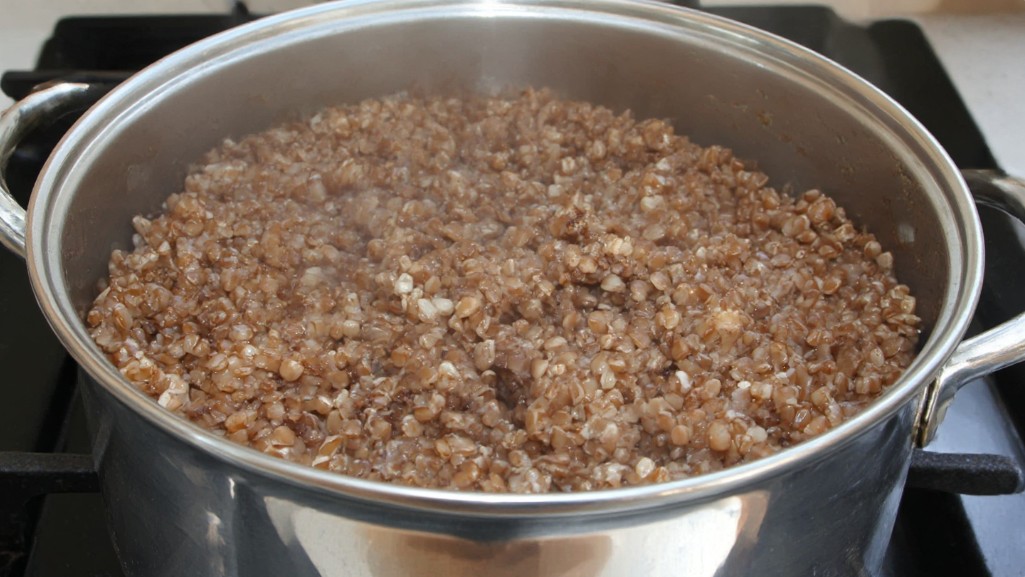
I prefer pots with a thick bottom and walls. They retain heat, water doesn’t evaporate instantly, and buckwheat doesn’t burn even if you get lost in a chat for a few minutes. If you’re cooking on gas, look for steel or aluminum with a multi-layered bottom. It also works on induction, but it’s important that the bottom is flat—otherwise, it may “spot.”
A small tip: if the pot is too large for the amount of buckwheat, the grains may lose their crumbliness because the water evaporates faster. I’ve determined the optimal size for myself—when the layer of buckwheat doesn’t exceed 3-4 centimeters in height.
Pot Problems: Sizes, Lids, Washing
One common mistake is choosing a pot “with a reserve” and then wondering why the buckwheat comes out cooked but not tasty. In a large pot, water evaporates faster, and the grains can remain dry on top and clump together at the bottom. Another annoying thing: a thin bottom. In such a pot, buckwheat burns even on low heat, and washing it afterward is quite a quest. An enamel pot is beautiful, but if the enamel is cracked, the grains can acquire a metallic taste. And another nuance: not all lids fit tightly. If the lid “wobbles,” steam escapes, and the buckwheat doesn’t steam properly.
Micro-story: A Pot from the Past
As a student, I got an old pot from my parents’ house. It was a bit worn by time, but with a thick bottom. It was in this pot that buckwheat turned out the best: separate grains, not sticking together, the smell—like in childhood. Back then, I didn’t think it was all about the bottom—I was just happy I didn’t have to scrape off burnt bits.
Caring for Your Pot
After cooking buckwheat, washing the pot is easy if the bottom hasn’t burnt. Non-stick options are even easier, but I wouldn’t recommend scrubbing them with metal sponges. If there’s a bit of grain left at the bottom, I pour hot water and leave it for 10 minutes. It’s important not to leave the pot wet—rust doesn’t sleep, especially on the seams.
Tip: if you notice that buckwheat often burns, try reducing the heat after boiling and slightly lifting the pot above the flame (on a stand).
Saucepan: Speed and Compactness
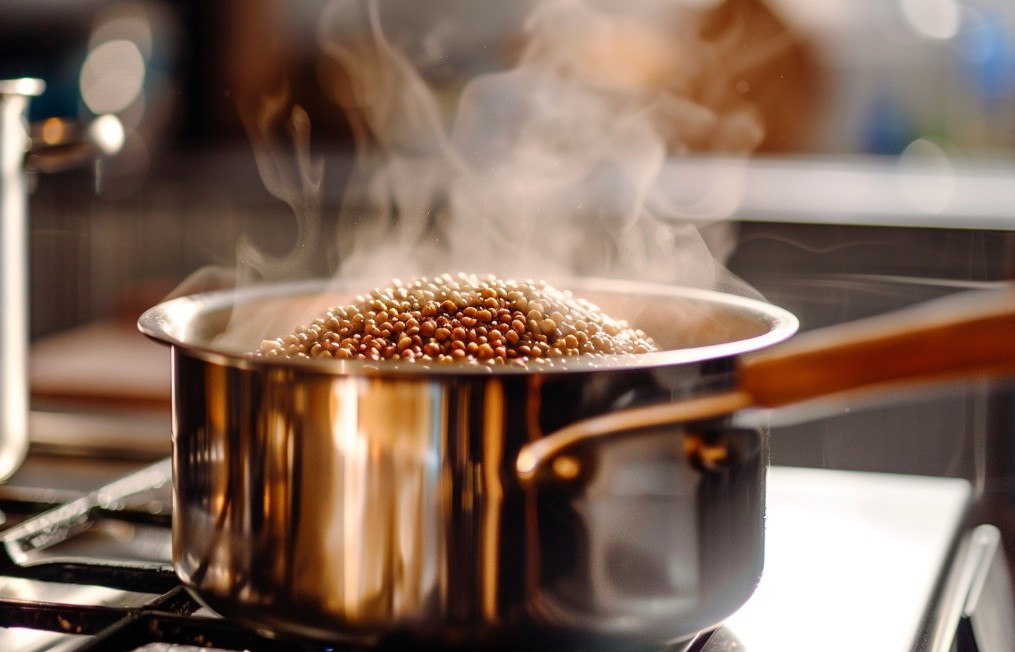
The saucepan is my choice when I need to cook buckwheat for one or two servings. It’s light, heats up quickly, and takes up little space. But there are also pitfalls here.
The main advantage of a saucepan is time-saving. Water boils quickly, the lid is small, and it’s easier to keep the process under control. When I cook buckwheat just for myself, I take a saucepan with a non-stick coating and a thick bottom. In it, you can perfectly see how much water is left and easily control the degree of readiness.
Not Suitable for All Volumes
If you need to cook more than 100-150 g of buckwheat, the saucepan starts to lose to the pot. The water rises quickly, and if you don’t manage to reduce the heat, it will spill over onto the stove. A thin saucepan (I’ve had those too) almost guarantees a burnt crust, especially if you get distracted for even five minutes.
Common Mistakes When Using a Saucepan
- Too high heat: often leads to water spilling over and burning.
- Lack of a tight lid: steam escapes, water evaporates, and buckwheat becomes dry.
- Choosing a saucepan with a slippery or thin bottom: heats unevenly.
Micro-story: Saucepan for a Bachelor
Once I lived in a small apartment with little kitchen space. The saucepan was my friend: I cooked buckwheat, ate straight from it, and washed it in two minutes. But once I forgot and put it on high heat—ended up with a burnt layer. Since then, I always watch the heat when cooking in a saucepan.
Caring for Your Saucepan
Washing a saucepan is much easier than a pot: less surface, less chance of something sticking. But if you leave buckwheat at the bottom and forget about it, you might end up scrubbing longer than you’d like. Non-stick coating wears out quickly if you wash with abrasives, so the advice here is simple: sponge and warm water.
Tip: for a saucepan, choose options with a convenient long handle—it has saved me from burns more than once when I needed to quickly remove it from the heat.
Sauté Pan: The Golden Middle for Control Lovers
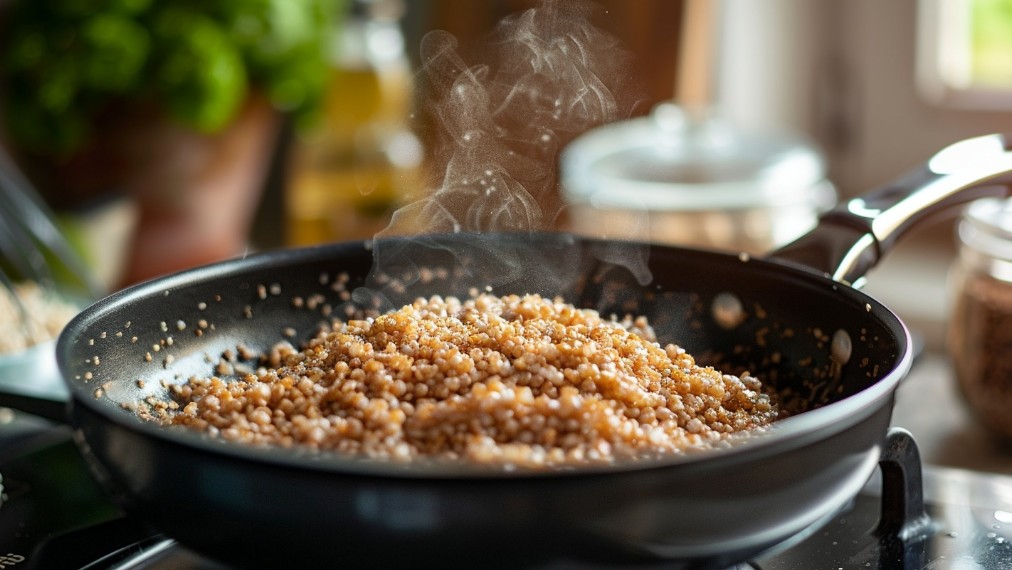
The sauté pan didn’t appear in my kitchen right away. At first, I thought it was more for stewing meat or vegetables, but I later realized: the sauté pan is perfect for buckwheat if you like everything under control. It’s wide, not too high—water evaporates evenly, the grains don’t lie in a thick layer and are easy to stir.
Why the Sauté Pan is Suitable for Buckwheat
In a sauté pan, buckwheat doesn’t just cook, it simmers. I love when the grains evenly absorb moisture, rather than “floating” on top and drying out at the bottom. This is especially noticeable if you cook on low heat under a tight lid. Another plus: in wide cookware, it’s easier to monitor the state of the grains and adjust the amount of water.
Sauté Pan and Steam: Important Not to Overdry
One common mistake is leaving the lid slightly ajar so it “doesn’t spill over.” In a sauté pan, this doesn’t work well: water evaporates quickly, and buckwheat can come out dry, especially around the edges. I always close the lid tightly and reduce the heat to a minimum after boiling. In this sense, the sauté pan is a bit more demanding than a pot.
Micro-story: Buckwheat in a Sauté Pan on a Large Kitchen
Once I was cooking buckwheat for a group of friends. I had a large sauté pan and decided to try cooking several servings at once. The result was surprising: the buckwheat steamed perfectly, not a single grain stuck together, and the aroma filled the entire kitchen. Since then, the sauté pan has become not only for vegetables but also for grains.
Caring for Your Sauté Pan
A sauté pan with a non-stick coating is the most convenient for washing. If any buckwheat remains stuck, just pour water and leave it for 10 minutes. Thick-walled options retain heat longer, so don’t rush to wash them hot. Sauté pans with handles that don’t heat up are a big plus, especially if you frequently move the cookware on the stove.
Tip: if the buckwheat in the sauté pan comes out a bit dry, add a spoonful of hot water, cover with a lid, and let it sit for five minutes—the grains will become softer.
Common Mistakes When Choosing Cookware for Buckwheat
At first glance, it seems that any cookware will do. But from experience, there are a few things that are often overlooked, and then regretted.
- Thin bottom. Buckwheat burns even at low heat, and the burnt smell is hard to mask.
- Lack of a tight lid. Steam escapes, buckwheat doesn’t reach readiness, becomes dry.
- Too large or small volume. In large cookware, the grains spread out in a thin layer and dry out, in small cookware, they easily spill over or burn.
- Poor quality non-stick coating. It wears out quickly, then buckwheat sticks even to “new” cookware.
- Old enamel with cracks. It can give a metallic taste, and it’s also unsafe for health.
Another mistake is choosing cookware only for its beauty. In photos, everything looks impressive, but if the handle heats up or the lid doesn’t fit, it’s not very useful.
How to Choose Cookware for Your Kitchen Type
A small kitchen is always a compromise. When space is limited, a saucepan or a small pot is the ideal solution. I once had a kitchen where only two saucepans could fit on the stove. There, it’s not about choice—more about practicality. If the kitchen is larger and there’s space, you can afford both a pot and a sauté pan.
For a family, it’s better to have a medium pot with a thick bottom: it’s good for both soup and buckwheat. And if you often cook for yourself, a saucepan is indispensable. A sauté pan is a great option for those who like to experiment: it’s easy to control the process, and the grains always come out more “alive.”
Storage is also important: if the cookware nests into each other, it saves space. I store the sauté pan in the pot, and the saucepan separately to avoid damaging the coating.
Care and Longevity: How to Keep Your Cookware in Order
The main rule is not to overheat empty cookware. Non-stick coating “burns” and starts to peel, and the steel bottom can deform. After cooking buckwheat, don’t rush to wash with hot water—let the cookware cool down. If there are leftovers, pour warm water and leave for a few minutes.
For non-stick cookware, avoid using metal spoons or forks. For steel or aluminum, you can, but carefully: scratches appear quickly. It’s better to store the lid separately to avoid damaging the edge of the pot or sauté pan.
Lifehacks for Extending the Life of Cookware
- Occasionally boil water with baking soda in the pot—it removes odors and old stains.
- If scale appears, remove it with citric acid or vinegar—let it sit for an hour, then rinse.
- Don’t leave cookware wet in the cabinet—especially steel.
- Sauté pans with wooden handles should not be soaked in water for long—wood swells and cracks.
- A saucepan with plastic near the handle is not suitable for the oven—it will melt even at 150°C.
Alternatives: What Can Replace a Pot, Saucepan, or Sauté Pan
Sometimes, none of the classic options are at hand. Then you have to look for alternatives. Sometimes I’ve cooked buckwheat in a deep frying pan—it turns out just as well, especially if there’s a lid. But you have to make sure the layer of grains is thin, or it will dry out.
You can try cooking buckwheat in a multicooker—it simplifies control but takes the process out of your hands. A microwave is also suitable if you have the right dish, but the taste will be a bit different, and the texture not as rich.
Another option is heat-resistant cookware for the oven. If you have a ceramic dish or a roasting pan, buckwheat acquires a special aroma there. But this is a completely different process, more about baking than cooking.
Micro-story: When There’s Nothing at Hand
Once at the cottage, I only had a kettle and a small stainless steel bowl. I poured boiling water over the buckwheat, covered it with a lid, and wrapped it in a towel. An hour later, I had a quite edible dish—not perfect, but hunger is not an aunt. Since then, I know: the main thing is the approach, not the perfect cookware.
Comparison: Pot, Saucepan, Sauté Pan — What’s Better in Real Life
After many years of cooking buckwheat, I can’t say there’s one perfect option for everyone. Each cookware has its place in the kitchen and its advantages.
- Pot — for large volumes, universal, retains heat well, easy to store, suitable for families.
- Saucepan — for one or two servings, heats up quickly, easy to wash, indispensable for bachelors or those who cook small portions.
- Sauté Pan — for those who like to control the process, get evenly cooked grains, or experiment with flavors.
If you choose one cookware, the pot will be the most versatile. But if you have space, the saucepan and sauté pan significantly simplify life.
Lifehack: Test for the Perfect Cookware for Yourself
Before buying, just imagine: is it convenient to hold this cookware with one hand, does it fit into your kitchen processes, is it easy to get out of the cabinet? The best cookware is the one you use every day, not the one that gathers dust.
In short, perfect buckwheat starts not with a recipe, but with the choice of cookware. Pot, saucepan, or sauté pan—it’s not about “right” or “trendy,” but about what’s convenient for you. My tips are the result of more than a dozen times when I took the pot off the heat and thought: “This turned out well.” I hope it will be more often for you too. How and where do you cook buckwheat? Share your stories—it’s interesting to compare experiences.