Black or White Chia Seeds: What’s the Difference

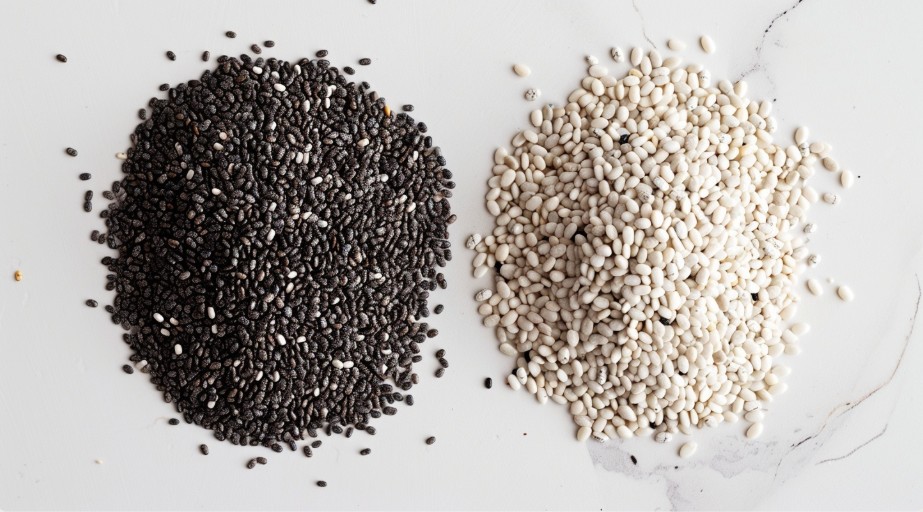
Standing by the spice counter, someone next to me is intently rubbing a chia package with their fingers — trying to see through the transparent side, are the seeds black or white? There’s no smell, they look like tiny, shiny grains. But here’s the dilemma: they take the black, set aside the white. I ask myself — what’s the actual difference? Why are some more expensive than others? And most importantly: how to choose good seeds so they don’t spoil the taste or the mood?
Even experienced people can get confused here. On the shelves — white seeds in trendy packaging, black ones in regular craft, the price differs twofold. Sellers each recommend their own. But in fact, the difference isn’t always where it’s painted. The real value isn’t in the color, but in freshness, quality, and the honesty of the producer. I’ll tell you how not to fall into the packaging or marketing trap, and what truly means ‘quality chia’.
Black or White: What Chia Seeds Really Are
Chia is the tiny seeds of the Salvia hispanica plant, native to Central America. They look like something between small beans and poppy seeds. Most often, two varieties are found in the market or supermarket: black and white. The shape is the same, the size too. The main difference to the eye is the color. Black chia can have shades of gray, brown, even bluish. White is light gray, pearly, rarely almost transparent.
The color only determines the variety and partly the region of cultivation. It minimally affects taste, texture, and quality. It’s not like grapes — where white and black give different wines. Here it’s simpler: both types act the same in dishes, swell the same when soaked, and only very sensitive people can feel the difference in light nutty notes.
When I first bought chia, I took both types — white and black. In a glass of water, I didn’t notice a difference. But in desserts, the white looked more ‘clean’ — without dark spots. But it didn’t affect the taste.
How to Choose Quality Chia Seeds: Signs to Look For
The appearance of the seeds is the first thing that catches the eye. But there are nuances. Quality isn’t always visible at first glance. Here’s what I always check myself and recommend to others:
- Uniform color. For black — there shouldn’t be many white or gray impurities. For white — conversely, minimal black or dark seeds.
- Gloss and integrity. Fresh seeds have a slight matte gloss, not too dull. The grains shouldn’t be broken, crushed, or covered in dust.
- Smell. Quality chia almost doesn’t smell. If you sense mustiness, a nutty bitterness, or foreign aromas — better not to take it.
- Feel to the touch. If possible, try rubbing a few grains between your fingers (clean!). They shouldn’t break or crumble, shouldn’t be moist.
- Packing date. Chia lasts long, but fresh is always better. Look not only at the expiration date but specifically at the packing date.
There was a situation: a friend bought a promotional package of chia — 3 months before expiration. The seeds turned out to be rancid, with a smell of old nuts. The shade was dull, the grains partially broken. Saved money, but threw everything in the trash.
Another important point: if the seeds are sold by weight, always pay attention to storage conditions. Humidity, nearby smells, even direct sunlight can spoil the product in a few days.
Packaging and Marketing: How Not to Fall into the Trap
In stores, chia seeds are sold in different formats: transparent bags, paper craft packages, stylish boxes with a window. Marketers love to play on trendiness — the packaging often says: ‘white — premium’, ‘black — organic’, ‘superfood’, ‘100% natural’. Here you need to be sober. True quality isn’t on the label, but in the product itself.
- Transparent packaging — ideal if you want to see the color and condition of the grains. Minus: in such packaging, the seeds can spoil faster from light.
- Craft package — a good choice if it closes tightly. It’s important that the package has information about the producer, packing date, and storage conditions.
- Large container — often more profitable, but if you’re not sure about quick use, it’s better to take smaller volumes. Chia, even in airtight packaging, loses quality over time.
There are also more cunning moves: the packaging says ‘non-GMO’, ‘eco-friendly’, but there are no confirmations or certificates. Don’t fall for empty words. Better look at the product itself, not the slogans.
Once I took very expensive white chia — with an ‘eco’ certificate. It turned out the grains were mixed with small white millet. The taste — nothing in common with chia. The producer then simply disappeared from the shelves.
Price and Common Sense: When It’s Worth Paying More
There’s a stereotype: white seeds are always more expensive than black. Partly true — white is rarer, considered ‘elite’. But price isn’t a guarantee of quality. Sometimes black chia from a trusted producer is of better quality than white in ‘trendy’ packaging without information about origin.
When I choose chia, I focus not so much on the price, but on appearance, smell, and freshness. If the price difference is 20-30 hryvnias per 100 grams — it’s still logical (especially for white). If the difference is twofold, and the packaging is the same quality, often it’s just a marketing trick.
- It’s worth paying more if you see: clear composition, certificates, transparent origin, packaging protects from light and moisture.
- If the price is higher only because of a ‘trendy’ brand — think if it’s really worth it.
Another nuance: sometimes in the market or store, chia is sold under the guise of other seeds (for example, common sage, which looks similar but doesn’t have the same properties). In such cases, the price will be suspiciously low. Better not to risk it.
I remember a familiar seller at the market had ‘chia’ at half price. The taste — like old flax, grains — of different sizes. After a month of such ‘experiment’, she stopped selling it: people complained it didn’t swell, the smell was unpleasant.
Common Mistakes When Buying Chia Seeds
- Buying by weight in open containers. Seeds quickly absorb smells, humidity, even dust. Open sale — risk of spoiled product.
- Taking the largest package ‘for the future’. Chia doesn’t spoil instantly, but when stored for more than a year even in a closed package, it can become rancid.
- Not checking smell and appearance. Even in a new package, seeds can be moist, have a musty or bitter aroma.
- Getting carried away with ‘white chia’. If you’re not making desserts where color is important, black and white taste almost the same. No need to overpay just for appearance.
- Believing in the ‘magic’ of words on the package. ‘Superfood’, ‘organic’, ‘eco-friendly’ — just words without confirmation don’t matter.
Another common mistake is buying seeds in repackaged bags without any information. Without a label, it’s hard to understand when and where it was packed, who the producer is, whether it was stored correctly.
Storage: How to Extend Freshness and Not Spoil Chia
Chia is not a very demanding product, but there are a few nuances. If you follow simple rules, the seeds retain their properties for up to two years. The main thing is to avoid moisture, light, and foreign smells.
- Airtight container. After opening, pour chia into a glass jar or plastic container with a tight lid.
- Dark place. Best — a cupboard or drawer where sunlight doesn’t reach. Transparent container — only if stored in a dark place.
- Away from spices and coffee. Chia easily absorbs aromas. If you place the jar next to an open packet of coffee or spices, the seeds will quickly acquire a foreign smell.
- Not in the fridge. If the apartment is dry and not hot, the fridge isn’t needed. There, the seeds can collect condensation, leading to mold. Exception — very hot summer or high humidity.
If you store chia at a temperature up to +20°C and humidity up to 60%, it will remain fresh for up to two years. But I always advise: better to buy small volumes and regularly update the stock.
I had an experiment at home: a jar of chia stood in a dark cupboard, and another — near the stove. After six months, the ‘kitchen’ jar had a slight oil smell, and the grains became a bit sticky. The one in the cupboard — like new.
How Chia Behaves in Cooking: Nuances of Black and White
In cooking, black and white seeds behave almost identically. Both quickly absorb liquid, swell, and form a characteristic gel-like layer. The difference is only in the visual effect. White chia in light dishes looks more delicate, black gives contrast, ‘dots’ on the background of yogurt or porridge.
- Texture: both varieties become slippery, soft when soaked, but don’t fall apart.
- Taste: almost neutral, with a slight nutty hint. White may be a bit softer in taste, but the difference is minimal.
- Smell: quality seeds don’t have a strong smell. If you feel bitterness or mustiness after soaking — it’s a sign of poor quality or old chia.
In practice, I use black chia for all dishes where color isn’t critical (puddings, porridge, baking). White — when I want lightness and purity in appearance (for example, for desserts in transparent glasses).
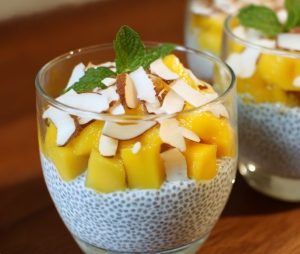
Once I made a dessert for guests: white chia in coconut milk, topped with strawberries. Looks very delicate, unlike black, which would give a ‘speckled’ effect. But there was no difference in taste.
Life hack: if you’re unsure about the quality of the seeds — soak a teaspoon in water for 15 minutes. If most grains remain hard or don’t form gel — it’s a poor-quality product.
Seasonality and Country of Origin: Does It Matter
Chia doesn’t grow in our climate — the main suppliers are Paraguay, Argentina, Bolivia, Peru, Australia. In different seasons, seeds from new batches appear on the market, but this doesn’t have fundamentally important significance. Quality depends not on the country, but on the conditions of cultivation, harvesting, and transportation.
Some sellers like to emphasize: ‘Australia — the best’, ‘Peru — organic’. In reality, if you don’t have a direct acquaintance with the supplier, it’s better to trust proven brands with a transparent history. For myself, I’ve noticed: the tastiest chia is fresh, regardless of the country of origin.
Seasonality here is a relative thing. Seeds are harvested once a year, but due to long storage, they are sold constantly. Focus on the packing date, not slogans about ‘new harvest’.
Where to Buy: Market, Supermarket, or Online
Each option has its pros and cons. I’ve bought chia in all three places more than once — and everywhere there are nuances.
- Supermarket. Here it’s easier to find a packaged product with clear information. Minus — sometimes chia lies on the shelf for a long time, especially if the store doesn’t specialize in healthy eating.
- Market. You can buy by weight, evaluate by appearance, smell. But the risk of getting poor quality or repackaged seeds is higher.
- Online. The choice is large, but there’s no way to evaluate smell and appearance before purchase. Good if you choose a trusted seller or a well-known brand.
My approach is simple: if you’re buying for the first time — better take a small package in a familiar place. If you like it — then you can order a larger volume online or in proven points at the market.
Once I took chia from a familiar seller at the market: she let me smell it, showed the grains, told about the supplier. And then ordered the same product from the same producer online — the quality matched one to one.
Life Hacks and Practical Tips from the Chef
- Don’t buy chia for a year ahead — better take a small package and update the stock.
- Check smell and appearance even in a closed package: rancid seeds are felt immediately.
- For desserts where appearance is important, choose white chia — gives a delicate, clean color.
- Store seeds in a tightly closed jar, away from spices and coffee.
- If chia doesn’t swell in water — it’s a signal that it’s old or stored incorrectly.
And one more detail. If you buy chia by weight, always ask to try one or two grains: put on your tongue, slightly bite. Fresh seeds almost have no taste, without bitterness and mustiness. If you feel a foreign taste — better not to take it.
Chia is a simple product that is easy to make your friend in the kitchen. The main thing is not to fall for marketing tricks and trust your own feelings. I’ve been convinced more than once: the best seeds are those that are fresh, clean, without unnecessary pomp on the packaging. Color is a matter of taste and your recipes, but quality is the foundation of everything.
How do you choose chia? Have you had any ‘unsuccessful’ purchases? Write your stories in the comments — it’s interesting to know what nuances you’ve encountered.