Bohrach: How to Cook the Real Carpathian Cauldron Stew with Meat & Paprika

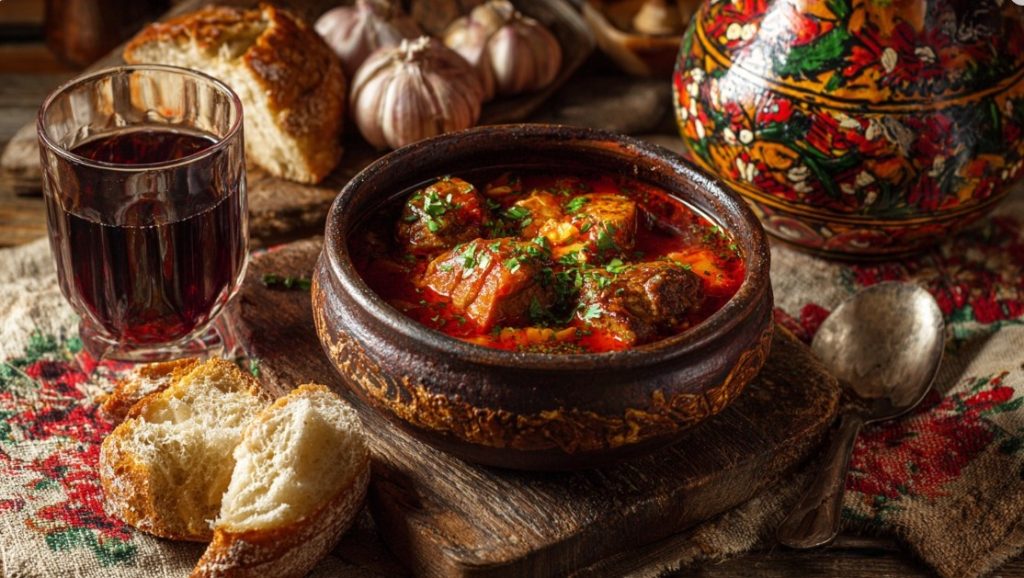
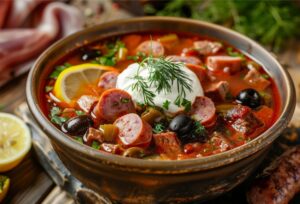
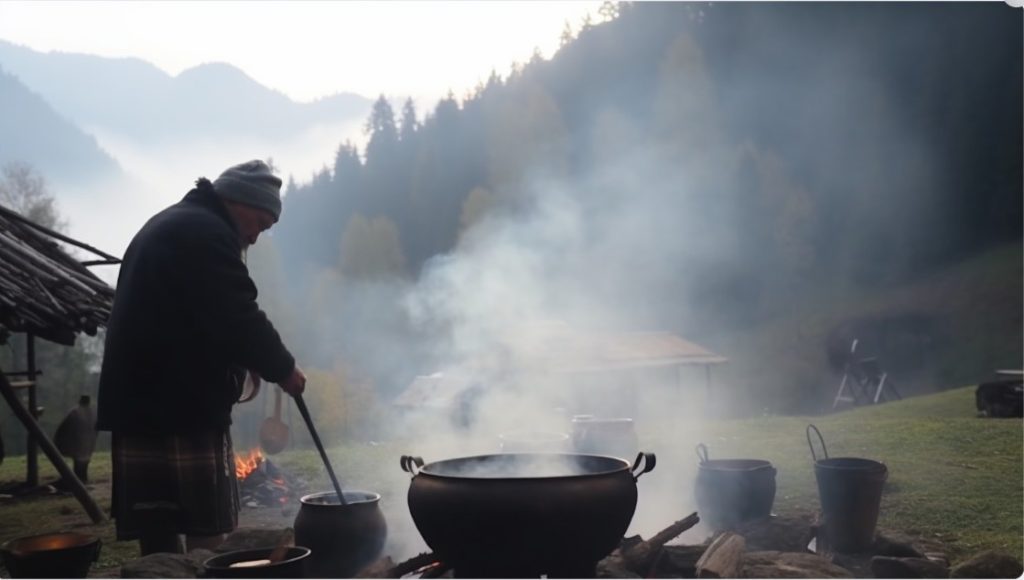
Bohrach is one of the best-known dishes from Zakarpattia (Transcarpathia). Think thick, hearty soup-meets-stew made with a few kinds of meat, vegetables, and a generous hand with paprika—traditionally cooked outdoors, in a cauldron over an open fire. The aroma is unmistakable: woodsmoke, spices, slow-cooked meat, and that cozy heat that hits you the moment the bowl lands on the table.
It’s more than food. It’s a tradition, a ritual, a piece of Carpathian culture. In village yards, at festivals, at family celebrations—somewhere nearby there’s usually a cauldron of bohrach bubbling away. That’s not an exaggeration.
But people ask the same thing all the time: what exactly is bohrach, and how is it different from goulash? What ingredients actually matter, why the cauldron and open flame change everything, and—most importantly—how to make it taste like the kind you’d get at a Hutsul guesthouse in the mountains.
👉 In this guide, you’ll get all the answers:
- what goes into real bohrach,
- how to bring a little piece of the Carpathians to your bowl—at home or outdoors,
- how to avoid the most common mistakes,
- and of course—a full step-by-step recipe.
Let’s start with the big one: the difference between bohrach and goulash, because almost everyone mixes them up 😉
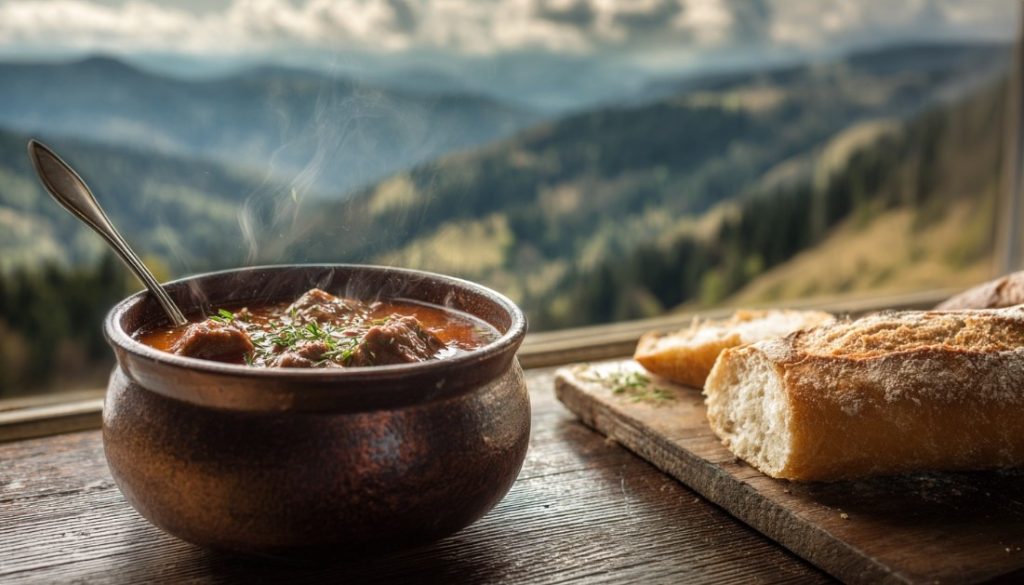
Bohrach vs goulash: what’s the difference—and why does it matter?
A lot of people confuse bohrach with goulash—and honestly, it’s easy to see why. Both have Hungarian roots, both are meaty and fragrant, and both lean heavily on paprika. But once you look a little closer, they’re two different worlds. Here’s what’s going on.
Quick history moment. Goulash (Hungarian: gulyás) was originally a herdsmen’s dish cooked in a cauldron as far back as the 16th century. The word comes from gulya—a herd, and by extension a herdsman. Bohrach, on the other hand, became a Zakarpattian Carpathian icon: a symbol of a big, satisfying feast and a festive mood. Fun fact: in Hungary, bogrács often refers to the little cauldron itself—the pot you’d cook goulash in. In the Carpathians, the word stuck as the name of the dish, and it evolved into something uniquely local.
Let’s break it down 👇
Table: Bohrach vs goulash
| Feature | Bohrach | Goulash |
|---|---|---|
| Word origin | A Zakarpattian usage; literally tied to “cauldron” (from Hungarian bogrács) | Hungarian gulyás—herdsman |
| Type of dish | A thick first course (soup-stew) | A classic soup or a meat stew |
| Cuisine | Zakarpattian (Transcarpathian) with Hungarian influence | Hungarian national cuisine |
| Where it’s cooked | Most often outdoors, over an open fire, in a cauldron | More often at home on the stovetop |
| Main ingredients | Several kinds of meat, potatoes, paprika, garlic; sometimes beans, mushrooms, smoked meats | Beef, onion, paprika, carrots, tomatoes |
| How it’s served | As a main meal, often with bread and a shot of palenka | Often served as a first course |
| Flavor | Deeper, bolder, often spicier, with a smoky note | Milder, slightly sweeter, usually less spicy |
| Ingredient count | Typically more—Carpathian versions are often “use what you’ve got” | Simpler, more standardized |
| Symbolism | A festive, “you’re in the Carpathians” dish | An everyday Hungarian staple |
| Texture | Thick—right on the line between soup and stew | Can be soup-like or very thick, depending on the style |
Why it’s worth knowing the difference between bohrach and goulash
Simple: so your expectations match what lands on the table. If you order a meat-and-veg dish in the Carpathians, you’re not getting “just a meat soup”—you’re getting a whole ritual. It comes piping hot, with that rich woodsmoke aroma, local spices, and sometimes mushrooms or homemade sausage thrown in for good measure.
Also, fire-cooked bohrach has dozens of local versions, so what you taste in Kvasy can be totally different from what you’ll be served in Synevyr or Perechyn. Goulash tends to be more standardized, with a classic recipe and a familiar spice profile.
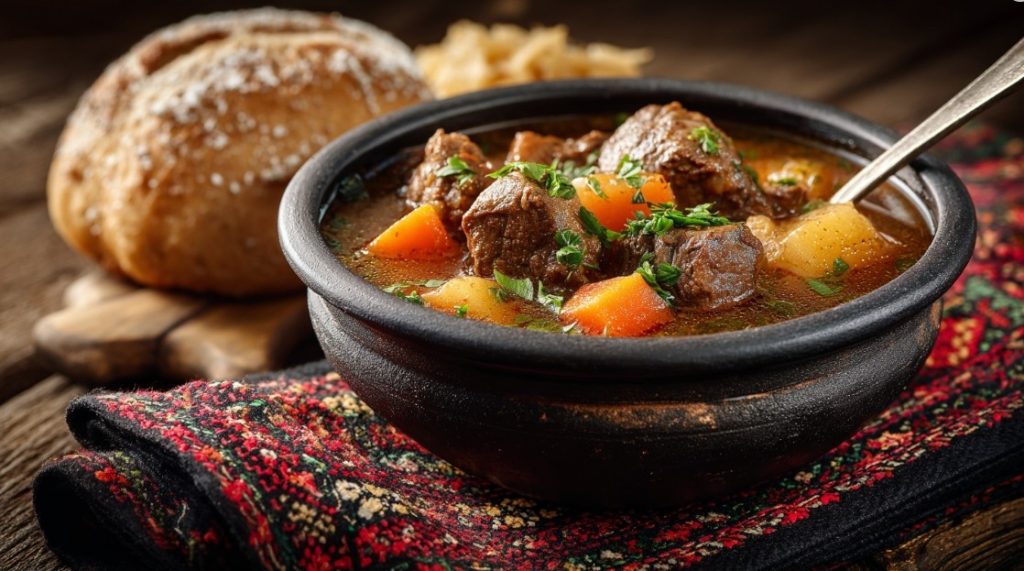
A little “insider” tip for travelers:
On menus you might see phrases like:
- “Hungarian bohrach”
- “Carpathian goulash”
- “Homestyle bohrach”
👉 Always ask: was it cooked in a cauldron over an open fire, or on the stove?
The real Zakarpattian flavor comes from the fire—otherwise it’s just a good meat soup.
Types of bohrach: from classic to modern twists
Bohrach isn’t just a dish—it’s a whole culinary universe. Every cottage, every guesthouse, and honestly every family has their own version. Someone goes heavy on paprika, someone adds smoked pork belly, and someone makes a totally unexpected pot with mushrooms—or even fish. That’s the fun of it. There isn’t one “correct” pot of meat and vegetables. There are thousands of delicious interpretations.
For simplicity, you can group Carpathian-style bohrach into a few main types. Each has its own little signature—ingredients, technique, or a regional accent.
1. Classic Carpathian bohrach
This is the mountain flavor you’ll most often get at homesteads, festivals, and family gatherings. The base is a few kinds of meat (beef, pork, sometimes game), a lot of onions, good paprika, potatoes, and garlic. It simmers for a long time in a cauldron over an open fire. The result is deep, smoky, and pleasantly thick.
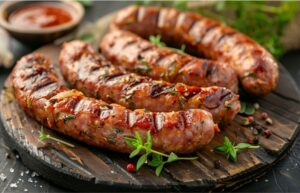
2. Bohrach with smoked meats
This version is a full-on flavor bomb. Along with the basics, you’ll see:
- smoked pork belly,
- sausages (often homemade),
- or even ribs.
Smoky bohrach is especially popular in mountain villages and tourist guesthouses. One whiff and you know: “Okay, this is going to be good.”
3. Mushroom bohrach
An autumn favorite in Zakarpattia, especially during mushroom season. People use:
- wild porcini,
- chanterelles,
- and sometimes dried mushrooms, soaked first.
Mushroom bohrach is a bit gentler and can feel less “meat-forward,” but it’s incredibly aromatic. It’s also a great option for vegetarians if you skip the meat.
4. Bohrach with beans
This one is popular in western parts of Zakarpattia. Beans make the pot thicker and more filling. They’re either pre-cooked or added early enough to soften during the long simmer.
It’s especially good with beef or game.
5. Festive bohrach (weddings or festivals)
This is the showpiece pot for big celebrations. It often includes a bit of everything:
- several kinds of meat,
- smoked meats,
- beans,
- mushrooms,
- lots of spices.
It’s cooked in a big cauldron for dozens of people, often with a noticeable kick. It simmers for hours.
6. Lenten or vegetarian bohrach
Yes, it exists! You’ll see it in bigger hotels or during fasting periods. The base is mushrooms, vegetables, paprika, tomatoes, and beans. Even without meat, it can be seriously tasty—especially if it’s cooked over a fire and picks up that smoky edge.
7. Fish bohrach
Rare, but it’s a thing—especially near rivers and lakes. It’s made with firm-fleshed fish (like carp), plus paprika, onions, garlic, and a little potato. It cooks faster than the meat version, but it has its own charm.
8. “Whatever’s in the fridge” bohrach
This can be anything: with button mushrooms, tomato paste, prunes, hot chili, cumin, even corn. These versions usually happen on a whim—or when you’re cooking with what you’ve got.
Traditionalists might raise an eyebrow, but here’s the truth: a little piece of the Carpathians in your bowl is also about freedom. You can make it your own.
🎯 So if you’re looking for the version your family will love—experiment.
➡️ [See the full bohrach recipe]
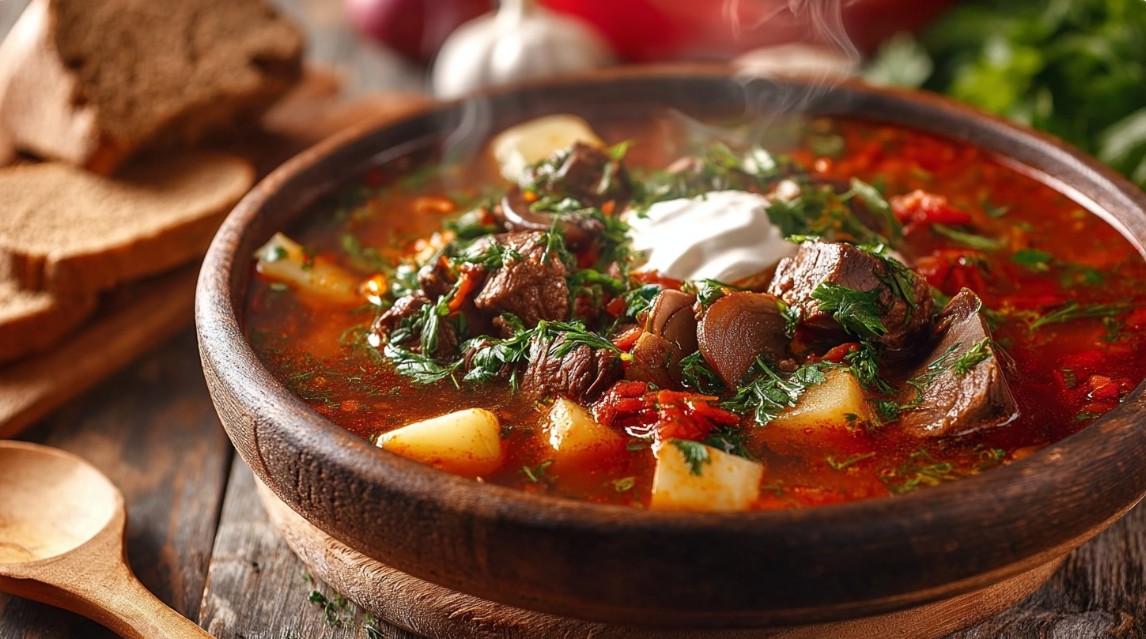
Бограч
Ingredients
- 500 г м’ясо яловичини Використовуйте свіжу яловичину для найкращого смаку.
- 2 шт. цибуля Нарізати кубиками.
- 2 шт. перець солодкий Виберіть різного кольору для яскравості.
- 1 шт. морква Натерти на тертці.
- 3 шт. картопля Нарізати кубиками.
- 2 шт. помідори Можна використовувати консервовані.
- 1 ч.л. червоний перець Додайте для пікантності.
- за смаком сіль Соліть на кінцевому етапі приготування.
- за смаком перець чорний Додайте для аромату.
- 1.5 л вода Для приготування юшки.
Method
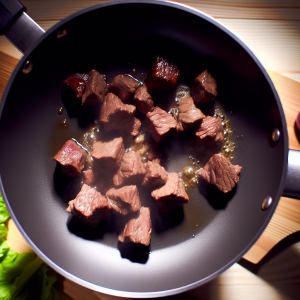
 На великій сковороді обсмажте нарізане м’ясо на середньому вогні до золотистої скоринки, близько 10 minutes.
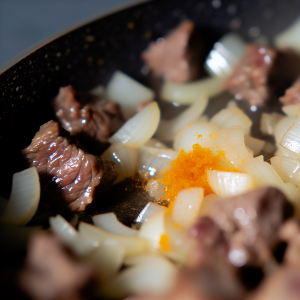
- Додайте до м’яса нарізану цибулю і обсмажте до прозорості, приблизно 5 minutes.
- Вмішайте нарізані перці та моркву, готуйте ще 5 minutes, помішуючи.
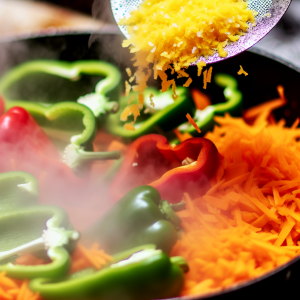
- Додайте картоплю, помідори, спеції і залийте водою. Доведіть до кипіння, зменшіть вогонь і варіть 40 minutes.
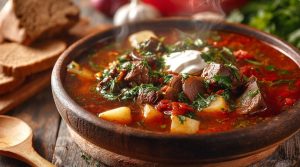
- Спробуйте на сіль і подайте гарячим, прикрасивши нарізаною зеленню.
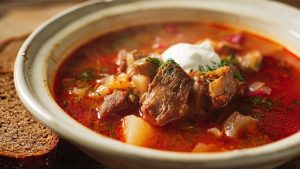
Notes
Private Notes
Tried this recipe?
Let us know how it was!Traditional bohrach ingredients (and what you can swap)
To cook a proper Carpathian pot—thick, rich, fragrant, and warming—it helps to understand not just the steps, but why each ingredient is there. Bohrach isn’t about “boiling some meat.” It’s about balance: flavor, texture, spice, and smoke.
Core ingredients: the Carpathian classic
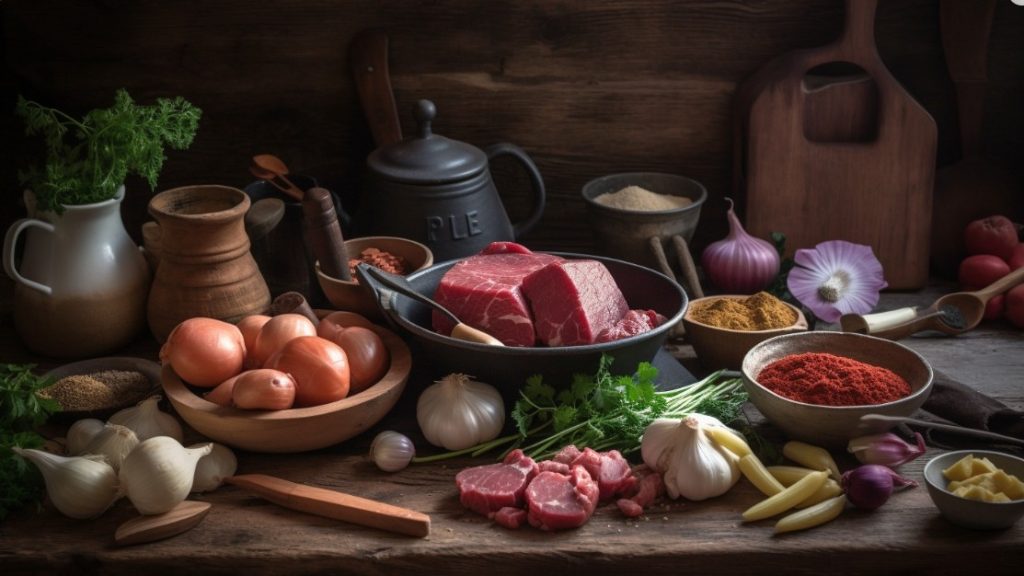
Here’s what you’ll typically find in traditional Carpathian bohrach—the kind served in the mountains, at festivals, or cooked in a cauldron over a campfire:
- Meat — the foundation. Ideally: 3 types. For example, pork (for richness), beef (for depth), plus something special—ribs, game, or sausages.
- Onions — lots. Some recipes go 1:1 onion to meat. They caramelize and create that thick, savory base.
- Potatoes — make it filling and help the stew hold its shape.
- Paprika — the king of spices here. Use sweet Hungarian-style paprika (Hungarian or Zakarpattian).
- Garlic — brings aroma and that signature “bohrach” finish.
- Red pepper (dried or fresh) — gentle heat, if you want it.
- Salt, black pepper, bay leaf — classic finishing seasonings.
- Water or stock — depending on how thick you want the final pot.
And here’s the good news: you can adapt all of this depending on the season, your budget, or what you have on hand.
What can you substitute in bohrach?
Here’s a handy table for when you’re cooking this mountain favorite at home and can’t find a few ingredients 👇
| Ingredient | Possible substitute / alternative | Note |
|---|---|---|
| Beef | Veal, game (venison, wild boar) | Great depth, but plan for a longer cook |
| Pork | Chicken, turkey | Leaner, but you’ll lose some richness |
| Sausages | Smoked ham, ribs, cured pork fat | For that smoky effect |
| Paprika | Mix of sweet paprika + mild chili | If you can’t get Hungarian-style paprika |
| Garlic | Garlic powder (fresh is best) | Only as a last resort |
| Potatoes | Chickpeas, beans, corn | For a different texture |
| Bay leaf | Rosemary, thyme, marjoram | Use lightly so it doesn’t overpower |
| Onion | Leek, shallot, red onion | Shallot is milder; red onion is sweeter |
Tips & tricks: how to choose the best ingredients for bohrach
- Choose meat with a little fat—after a long simmer it turns tender and juicy.
- Onions aren’t just chopped—they’re cooked slowly until golden. That’s your flavor base.
- Paprika goes in not at the very beginning, but after the meat is browned—so it doesn’t turn bitter.
- Don’t be shy with garlic—it’s part of the signature finish.
- If you want that smoky note, cook it in a cauldron over a fire, not in a pot on the stove.
Can you add your own twist?
Absolutely. This Zakarpattian cauldron stew is flexible. Some people add mushrooms, others throw in prunes, some go for chili, and a few even add corn grits.
The only rule: keep it balanced—rich, meaty (or deeply savory), aromatic, and gently spicy.
🍲 Cooking bohrach? Let’s do it together!
Join our cooking community! You’ll find fellow food lovers, get tips from people who’ve cooked more than one cauldron, and share your own delicious results. Fire, cauldron, bohrach—welcome to the club.
👥 Join the communityHow to cook bohrach: a quick “get the idea” version
Cooking bohrach isn’t just cooking—it’s a ritual that smells like smoke, meat, and paprika. If you’re making it for the first time, here’s a simplified roadmap so you understand the flow. The detailed version with exact proportions is below ⬇️
Quick step-by-step bohrach
🕒 Cooking time: 2.5–3 hours
🍲 Servings: 6–8
🔥 Method: best over a fire in a cauldron, but you can do it at home
1. Prep the meat
- Use 2–3 kinds of meat (beef, pork, smoked meats).
- Cut into medium cubes.
- If you have ribs or sausages, add them too.
2. Chop the vegetables
- Onion—a lot, roughly as much as the meat.
- Potatoes—optional, about 4–5 medium.
- Garlic, paprika, spices, carrot, sweet pepper—to taste.
3. Cook the onions
- In a cauldron or heavy pot, heat fat or oil.
- Add lots of onions and cook until golden.
4. Add the meat
- Onions first, then meat.
- Sear over higher heat until nicely browned.
5. Add paprika and spices
- Once the meat is browned, take it off the heat for a few seconds, add paprika, pepper, spices, and stir.
- Pour in hot water or stock to cover the meat.
6. Slow simmer
- Cook gently for 1.5–2 hours, until the meat is tender.
- Add a little more liquid as needed if it reduces too much.
7. Add potatoes
- About 40 minutes before it’s done, add potatoes (or other veg, mushrooms, beans).
- Don’t stir too often—potatoes shouldn’t fall apart.
8. Final touches
- When it’s thick and fragrant, add chopped garlic, bay leaf, and final seasonings.
- Let it rest for 10–15 minutes.
Serving
Bohrach is best with:
- crusty homemade bread, ideally dark rye;
- sour cream or a spicy sauce;
- a glass of red wine or palenka—if the moment calls for it 😉
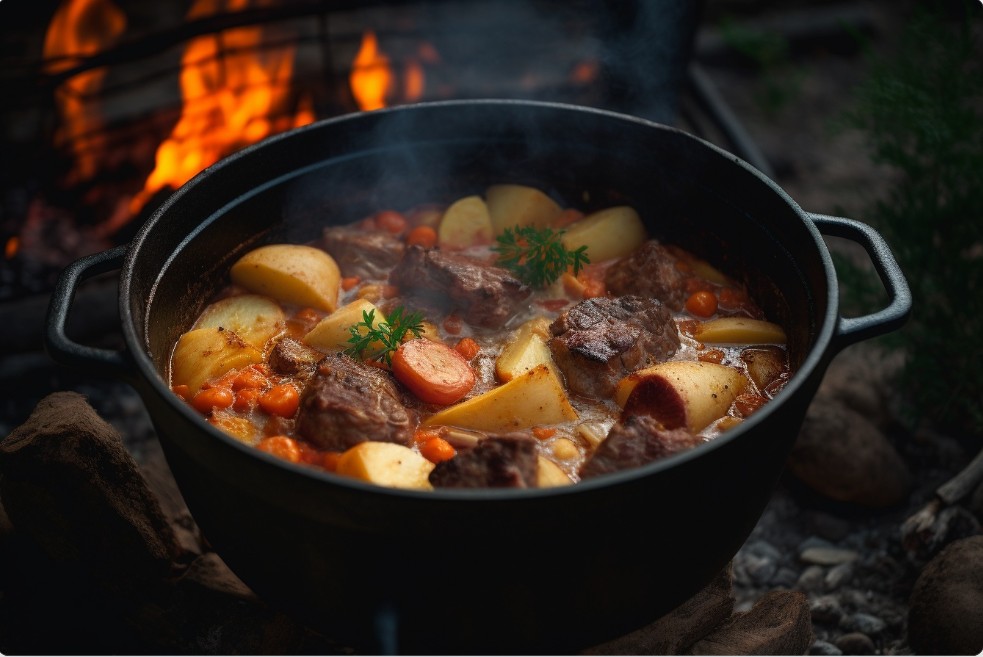
How to cook bohrach in a cauldron over a fire: the secrets of the real flavor
Real, authentic Carpathian meat stew is fire-cooked. A cauldron over open flame, the right wood, patient simmering, and the whole outdoorsy vibe—that’s what gives you the depth you simply won’t get on a kitchen stove.
It’s not just dinner—it’s a ritual, an event, a little adventure. Here’s how to do it right so your cauldron of Carpathian comfort turns out spot-on.
What you need to cook bohrach over a fire
Basic checklist:
- Cauldron (cast iron or aluminum) — 6–12 liters, depending on your crowd.
- Tripod or stand to hang the cauldron.
- Firewood — fruit woods are great (cherry, apple), also hornbeam; they give a softer aroma.
- Fire starters, matches, small kindling.
- Ladle or long spoon — for stirring and tasting.
- Knife, board, bowls for ingredients.
Practical tips: how to get bohrach right in a cauldron
1. Pick a sheltered spot
Choose an open area out of the wind, ideally with some shade or a canopy. Keep water nearby—for cooking and for safety.
2. Not all firewood is equal
Avoid resinous woods (pine, spruce)—they create soot and a bitter, harsh smoke.
👉 Best options: cherry, apple, beech, hornbeam, plus a little oak.
3. Keep the fire moderate
Your cauldron shouldn’t boil like a kettle. You want steady, even heat. It’s better to maintain embers than to chase big flames.
4. Take your time with the onions
Let the onions caramelize. Don’t rush—this is where the flavor base is built. Some cooks go all the way to deep golden, almost brown.
5. Don’t add paprika to screaming-hot fat
One of the biggest secrets. If you toss paprika into very hot oil, it burns and turns bitter.
👉 Lift the cauldron off the heat, add paprika, stir, then put it back.
6. Don’t rush it
Bohrach isn’t a “30-minute soup.” Ideally, give it 2.5–3 hours of slow simmering, adding ingredients in stages.
7. Meat first, then everything else
Order matters:
- Onions
- Meat (brown it well)
- Paprika + spices
- Water/stock
- Slow simmer
- Potatoes, vegetables, beans
- Salt—only near the end!
8. Taste and adjust
Every pot is different. Taste regularly. You might want more paprika, a little extra pepper, or another clove of garlic.
Little details people forget
- Wash the cauldron after every use, or you’ll get a stale old-fat aftertaste next time.
- Don’t fully cover with a lid—let it “breathe.”
- Don’t stir too often—especially after adding potatoes.
- If you’re cooking for a big group: everyone can help, but there’s only one cook 😉
Real cauldron bohrach is also about the atmosphere
While the cauldron bubbles, people talk, laugh, sip tea—or something stronger. It’s a celebration for no reason, an excuse to gather. And the taste depends not only on ingredients, but also on the mood of the person stirring the pot.
Want to impress family or friends? Grab a cauldron, meat, spices—and head to the yard, the woods, or the mountains.
Common bohrach mistakes (and how to avoid them)
You can have the best meat, fresh paprika, a solid cast-iron cauldron… and still end up with a pot that tastes flat if you make a few classic mistakes. And that’s painful—because bohrach isn’t the kind of dish you can “fix in five minutes.”
Here’s a checklist of the most common slip-ups and what to do instead. Save it—you’ll use it again 😉
1. The fire is too strong
❌ Mistake:
If the cauldron is raging over flames, the dish doesn’t gently simmer—it boils hard and reduces too fast. Meat turns tough and the aroma gets “cooked out.”
✅ Fix:
Keep moderate heat or embers. Once it comes to a boil, lower the heat. If your fire is large, move the cauldron slightly around the edge to control intensity.
2. Adding paprika to very hot oil
❌ Mistake:
People rush and throw paprika straight into bubbling oil. Result: bitterness that can ruin the whole pot.
✅ Fix:
After browning the meat, lift the cauldron off the fire, let it cool slightly, then add paprika. Stir, then return it to the heat.
3. Over-stirring after adding potatoes
❌ Mistake:
Once potatoes go in, many people stir too often. They break down and the pot turns into “potato purée soup.”
✅ Fix:
Add potatoes, stir once, then leave it alone. Let it cook calmly.
4. Salting at the beginning
❌ Mistake:
Salt too early and the meat can tighten up. Then you add more water later and the flavor gets diluted.
✅ Fix:
Salt near the end, when the dish is almost ready. You’ll get a cleaner, more accurate seasoning and tender meat.
5. The wrong firewood
❌ Mistake:
Softwoods like pine and spruce create heavy smoke and soot, and can leave bitterness in the food.
✅ Fix:
Choose hornbeam, beech, apple, or cherry—they burn clean and smell great.
6. Too many ingredients
❌ Mistake:
The desire to impress turns into chaos: meat, mushrooms, beans, rice, plums, corn, cured fat—everything in one pot.
✅ Fix:
Pick 2–3 main “features” (for example, beef + sausage + mushrooms) and keep the rest minimal. Bohrach isn’t a “clean-out-the-fridge” soup.
7. Undercooked or overcooked meat
❌ Mistake:
Stop too early and the meat is chewy. Cook it to death and it falls apart and loses character.
✅ Fix:
Simmer meat gently for 1.5–2 hours, tasting for tenderness.
8. Not tasting as you cook
❌ Mistake:
You serve it… and it’s under-salted, bland, or way too spicy.
✅ Fix:
Taste at least three times: after spices, after adding potatoes, and right before finishing. Bohrach likes being “tuned” as it cooks.
9. Cooking it on the stove and expecting the same smoky flavor
❌ Mistake:
You cook it in a regular pot and expect it to taste exactly like the Carpathians. Sadly—no.
✅ Fix:
Even at home, you can add smoked paprika, a piece of smoked pork belly, or natural liquid smoke to hint at that campfire vibe.
10. Not letting it rest
❌ Mistake:
You take it off the heat and immediately ladle it into bowls. The flavors haven’t “come together” yet.
✅ Fix:
Let bohrach rest for 10–15 minutes in the cauldron or pot. The flavor settles and the aroma deepens.
🎯 Remember: bohrach isn’t a race—it’s a journey.
In a hurry? Order pizza. Want the real Carpathian vibe? Cook slowly, with heart.
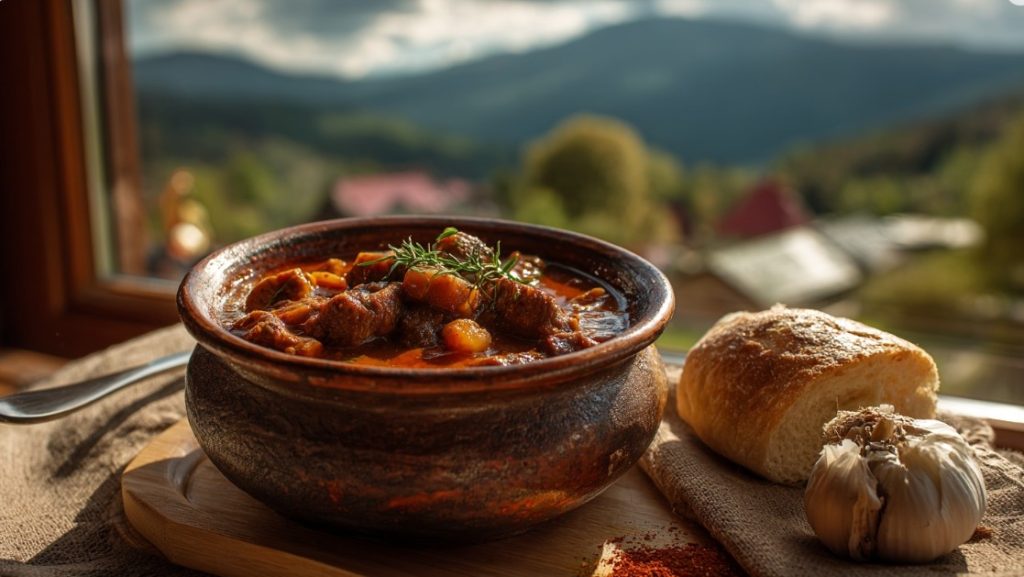
What to serve with bohrach: sides, bread, drinks, and sauces
This Carpathian icon is already a complete meal: meat, vegetables, spices, smoke, and history in one cauldron. Still, the right bread or drink can make it taste even better.
Here are some ideas for what to serve with bohrach, depending on the season, the company, and your mood.
🥖 Bread: non-negotiable
1. Homemade crusty bread
Dark rye bread is the classic—especially if you toast it a little on the grill. People dip it into the broth to catch the last drop.
2. Lavash or flatbread
Perfect for outdoor meals and hikes. Lavash can basically replace a spoon 😉
3. Zakarpattian-style pan-fried rounds
Small flatbreads toasted on a dry pan or grill grate. Great with thick bohrach.
🥔 Sides (optional)
Classic bohrach often already includes potatoes or other vegetables, but sometimes you want something extra. Here are a few options:
- Cornmeal porridge (banosh) — a very Carpathian pairing, especially if your bohrach is thick and you skipped potatoes.
- Sauerkraut — adds tang and balances the richness.
- Pickled vegetables — cucumbers, peppers, tomatoes.
- Grilled vegetables — eggplant, zucchini, onions.
🥛 Drinks: traditional and modern
1. Homemade wine (red or rosé)
The Carpathians have a strong winemaking tradition. With bohrach, go for lighter reds—Kadarka, Zweigelt, or even a slightly chilled red.
2. Palenka or slivovitz
As they say in the Carpathians: “No palenka—no bohrach!”
But go easy. It’s friendly… and sneaky.
3. Herbal infusions
Mint, thyme, wormwood—often served to help digestion after a rich meal.
4. Carpathian herbal tea
If you don’t drink alcohol, rosehip, thyme, lemon balm, or mint tea fits perfectly—especially after cooking outdoors.
🧄 Sauces and extras
1. Sour cream
Add it right to the bowl. It softens the heat and gives a creamy texture—especially helpful if your pot turned out spicy.
2. Spicy adjika
Carpathian-style or homemade adjika with peppers and garlic is a big bonus for heat lovers.
3. Chili (fresh or dried)
For anyone who wants extra fire.
🔥 Serving ideas for a party or guests
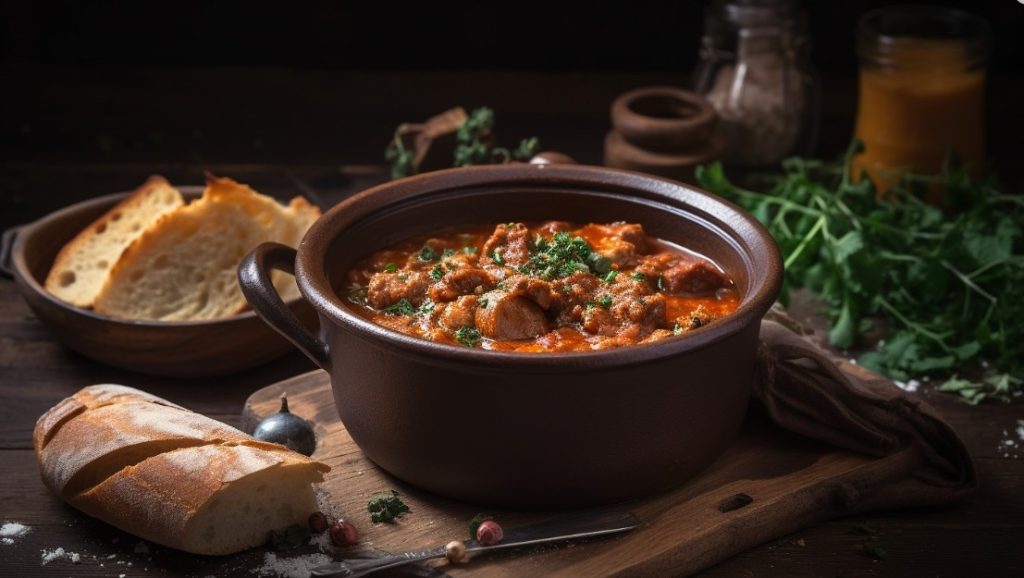
- In ceramic bowls or rustic “ethno” style dishes.
- With a wooden spoon—or bread as the spoon.
- On a wooden board with small bowls of sauces and pickles.
- Bring the cauldron to the table if you’re feeding a crowd.
What NOT to serve with bohrach:
- Pasta or rice—it turns into a completely different dish.
- Mayonnaise-heavy salads—they clash in both texture and flavor.
- Very sweet drinks—they overpower the main flavors.
🎯 Keep in mind: this Carpathian-Hungarian classic isn’t just a dish—it’s an occasion. Everything around it is part of the experience.
Bohrach is more than a dish
When we say “bohrach”, we don’t just mean a thick soup with meat and paprika. We mean tradition, atmosphere, people, and the taste of the Carpathians. It’s a dish that combines fire and patience, woodsmoke and good company, comfort and warmth.
It doesn’t matter if you cook Carpathian-style goulash in a cauldron over a campfire or in a pot on the stove—the key is doing it with heart. Choose good ingredients, don’t rush, add a little love, and the result will be unforgettable.
💡 And most importantly—experiment. Smoky cauldron stew doesn’t have one single “official” recipe. It lives in variations, in your creativity, in every cauldron.
👉 What next?
- Want to cook real Carpathian-style goulash right now?
➡️ You’ve got everything you need: the recipe and the motivation. Time to pull out the cauldron! - Curious about another traditional Carpathian treat?
➡️ Here’s a step-by-step guide for verhuny (crispy fried pastries) - Looking for travel ideas with a side of food?
➡️ Read our guide: “Culinary traditions of Ukraine”
❓ Frequently asked questions (FAQ)
Бограч — це карпатський варіант угорського гуляшу, який готують у казані на відкритому вогні. Він густіший, насиченіший, часто містить кілька видів м’яса, копченості, гриби або квасолю. Гуляш — класичний угорський суп або рагу, що готується зазвичай на плиті.
У середньому — 2,5–3 години. Це залежить від м’яса та обраних інгредієнтів. Варити слід повільно, на слабкому вогні, щоб смак u0022зібравсяu0022.
Найкраще поєднувати кілька видів: яловичину (для глибини), свинину (для соковитості) і копченості (для аромату диму).
Так, можна! Але смак буде трохи інший, бо не буде димного аромату. Щоб компенсувати — додають копчену паприку або ковбаски.
Так! Існують пісні версії — з грибами, овочами, квасолею. Головне — дотримати базу спецій, паприки й часнику.