

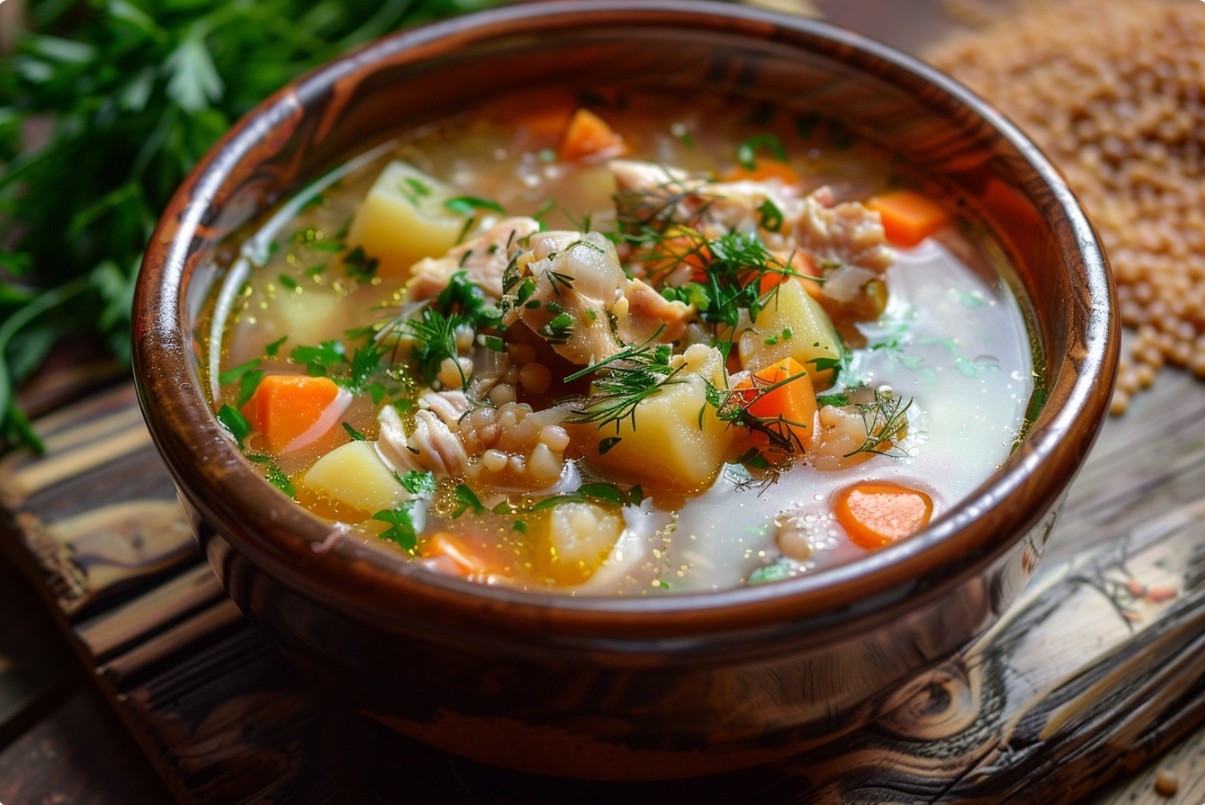
This is the kind of everyday soup that runs on two things: a good broth and a handful of simple staples. Buckwheat makes it properly filling, and chicken gives it that cozy, savoury depth.
Best enjoyed piping hot, finished with fresh dill and (if you’re like me) a generous spoonful of sour cream.
Late evening, the hob’s quietly doing its thing, and the kitchen smells like onions turning sweet in the pan. I set the pot over a steady heat and hear the carrot tick-tick under the knife as I slice it into thin matchsticks. The buckwheat’s already rinsed—dry, loose, and nutty the second it hits warm broth. It feels like it’ll be “just soup”… until the bay leaf and a pinch of black pepper go in and everything snaps into focus. The best moment is when the potatoes turn tender and the buckwheat opens up without collapsing into mush. Heat off, lid on for a few minutes, and that familiar home-kitchen aroma shows up—the one that somehow gets everyone back for a second bowl.
In this recipe you’ll learn
- Why you’ll love this recipe
- Tips before you start
- What to look for when choosing ingredients
- Secrets to the perfect buckwheat soup
- How to serve buckwheat soup
- Nutritional perks
- Recipe variations
- Questions & answers
- Common mistakes
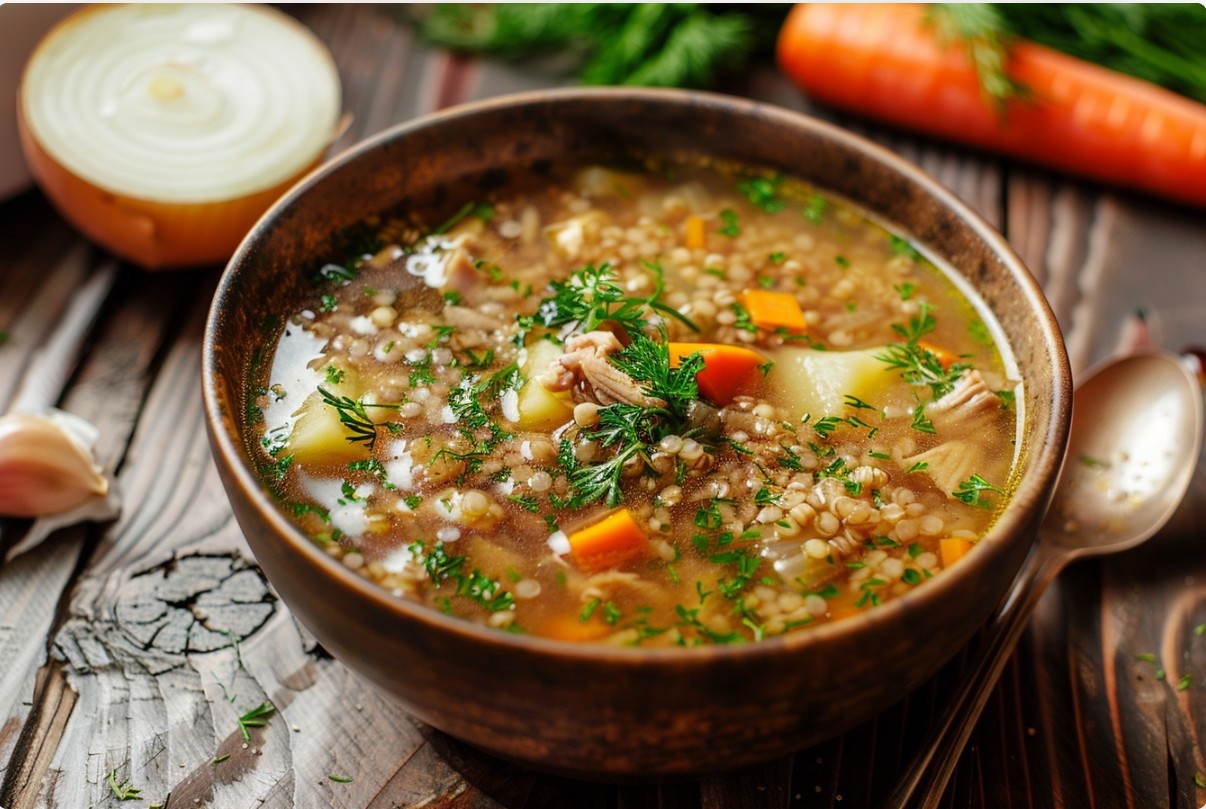
Buckwheat Soup
Ingredients
- 500 г Chicken drumsticks (or thighs) preferably bone-in; skin removed if you like
- 2.2 л Water for the broth
- 100 г Buckwheat groats rinse 2–3 times
- 350 г Potatoes cut into ~1.5 cm cubes
- 120 г Carrot julienned or grated
- 120 г Onion small dice
- 1 ст. л. Sunflower oil for sautéing
- 1 шт. Bay leaf
- 8 шт. Black peppercorns approx.
- 1 ч. л. Salt or to taste
- 10 г Dill to serve
- 120 г Sour cream to serve, optional
Method
- Put the chicken drumsticks into a pot, pour over 2.2 l cold water, and bring up over medium heat to
 95 °C (203 °F). Once foam appears, skim it off for the first 10 minutes, keeping the simmer very gentle so the broth stays clear.
 - Add the bay leaf and 6–8 peppercorns. Reduce the heat to low and cook with the lid slightly ajar for 25 minutes. The meat should pull away from the bone easily, and the surface should only tremble—no rolling boil.
- While the broth cooks, rinse the buckwheat 2–3 times until the water is almost clear, then leave it to drain in a sieve for 5 minutes. Cut the potatoes into ~1.5 cm cubes, slice the carrot into thin matchsticks, and dice the onion finely so everything cooks evenly.
- Heat a frying pan over medium heat, add 1 tbsp oil, and sauté the onion for 4 minutes until translucent. Add the carrot and cook for another 5–6 minutes, stirring, until the vegetables are soft but not browned.If the carrot starts browning too quickly, turn the heat down and add 2 tbsp water so it steams and softens instead.
- Lift the chicken out of the pot and let it cool for 5 minutes. Add the potatoes to the broth. Bring back to a gentle simmer at95 °C (203 °F) and cook for 10–12 minutes, until the edges of a cube pierce easily but the centre still has a little bite.
- Add the sautéed vegetables and the rinsed buckwheat. Stir and simmer gently for 12–15 minutes. You’re looking for buckwheat that’s plumped and tender, broth that isn’t gluey, and potatoes that are fully cooked; keep the heat just below medium.
- Remove the meat from the bones, cut into 2–3 cm pieces, and return it to the soup. Warm through for 2–3 minutes over low heat. Salt gradually (start with 1 tsp), add a pinch of ground black pepper, then turn off the heat and rest under the lid for 10 minutes.For a cleaner flavour, pull out the bay leaf as soon as it’s done cooking so it doesn’t turn bitter.

Notes
Private Notes
Tried this recipe?
Let us know how it was!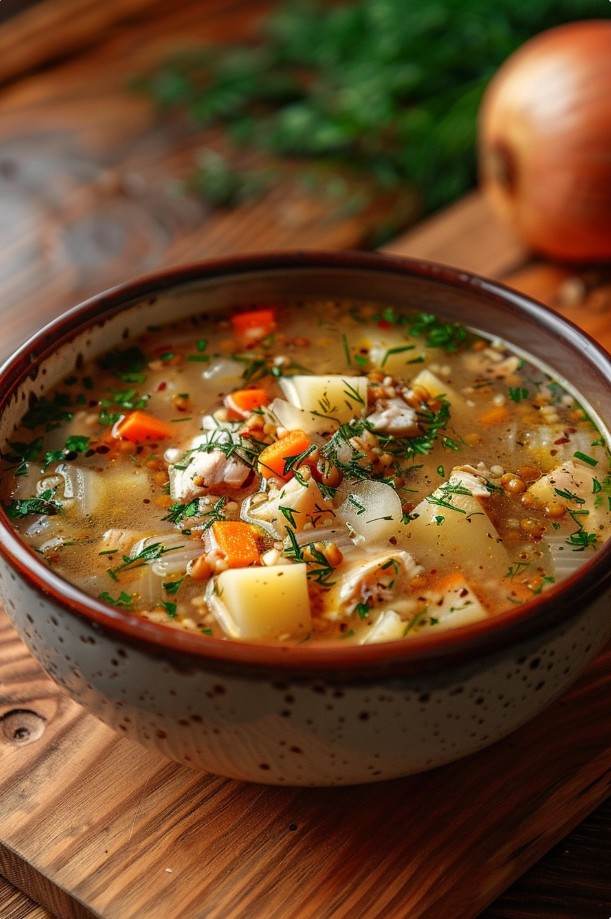
Why you’ll love this buckwheat soup
Yesterday my neighbour popped round “for a minute” and immediately asked for seconds as soon as the spoon hit her lips. You can almost see shoulders drop—warm broth does that from the first sip. Buckwheat makes it satisfyingly hearty, but the vegetables keep it feeling light. And yes, after a bowl of this I’m not hunting for something sweet for a good hour.
- Filling, but not heavy
- Buckwheat stays pleasantly “grainy”, not mushy
- That lovely aroma from sautéed veg
- Clear, clean-tasting broth
- Great for meal prep
- Tastes even better the next day
Tips before you start
When you’re short on time, it’s tempting to tip the buckwheat straight from the bag—and that’s when the pot goes cloudy. It’s usually just dust and tiny bits clinging to the grains, and they “muddy” the broth. Easy fix: rinse the buckwheat 2–3 times until the water is almost clear, then let it drain in a sieve for 5 minutes. One more thing: veg cut in random sizes cooks in random ways, so keep the potatoes in ~1.5 cm cubes and slice the carrot thinner—everything will finish together. And don’t rush the salt at the start; it’s easier to nail the seasoning at the end, once the buckwheat has released a little starch.
- Rinse the buckwheat until the water runs clear
- Cut potatoes into 1.5 cm cubes
- Sauté the vegetables over medium heat
- Add salt closer to the end
- Let the soup rest for 10 minutes
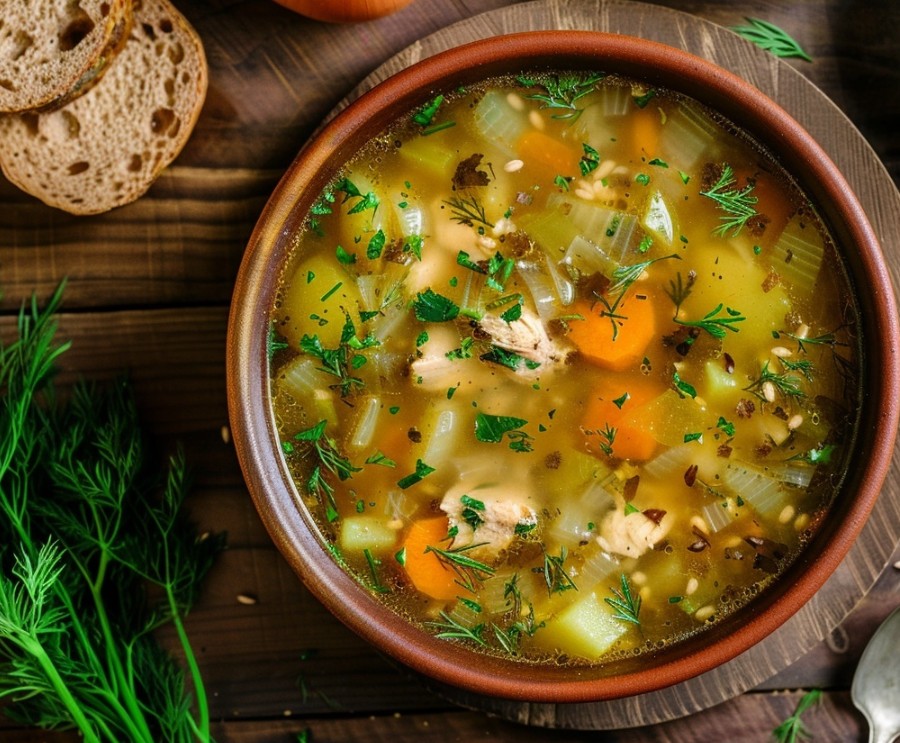
What to look for when choosing ingredients for buckwheat soup
Good buckwheat smells lightly nutty and feels dry and loose—no stale, musty whiff. For the broth, go for meat (or bones) that look fresh with a slight gelatin-y sheen; you’ll get deeper flavour without ending up with a greasy slick on top.
Buckwheat
Choose whole groats with minimal dust; the aroma should be gentle and nutty.
Potatoes
A medium-starch potato turns tender but still holds its shape in cubes.
Carrot
Juicy and bright; for extra sweetness you can finely grate a small portion.
Onion
Firm, no soft spots; sauté until translucent, not browned and crusty.
Chicken (thigh/drumstick)
Bone-in is best—richer, more aromatic broth.
Secrets to the perfect buckwheat soup
Patience, honestly. Keep the broth at a quiet simmer (no aggressive bubbling) and it’ll stay clear. And add the buckwheat only once the potatoes are almost tender—then the grains cook through without turning the whole pot into porridge.
- Skim foam for the first 10 minutes
- Keep the broth at a gentle “shiver”
- Sauté without letting anything burn
- Add buckwheat midway through cooking
- Rest under the lid for 10 minutes
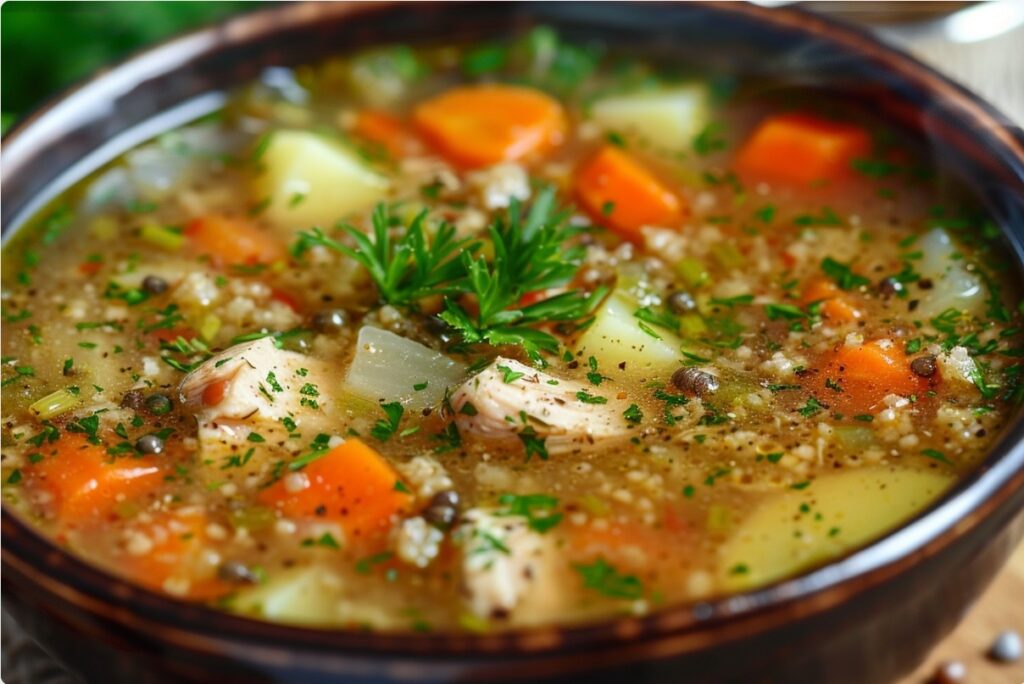
How to serve buckwheat soup
I like it in a deep ceramic bowl—it holds the heat, so the soup doesn’t go lukewarm halfway through. Finish with herbs and one contrasting note: either tangy or creamy.
- With dill and a crack of black pepper
- With a spoonful of 15–20% sour cream
- With garlic croutons on the side
- With a pickled gherkin alongside
- With spring onion greens and a drip of oil
Nutritional perks of buckwheat soup
Buckwheat brings fibre, which helps you stay satisfied after lunch. The broth and vegetables also contribute potassium, which supports everyday fluid balance.
- Fibre for longer-lasting fullness
- Slow-release carbs from buckwheat
- Protein from chicken and broth
- Vegetables add micronutrients
- Moderate calories per portion
Buckwheat soup variations
Swap the broth base and tweak the vegetable cut and the whole soup changes character, but the cooking time stays pretty similar. For a kid-friendly version, dice everything smaller, skip the pepper and bay leaf, and you can mash a portion of the vegetables with a spoon for a softer texture.
- Meat-free version with vegetable stock
- With mushrooms: button mushrooms or porcini
- With turkey instead of chicken
- With tomato: 1 tbsp tomato paste
- Add celery root for extra aroma
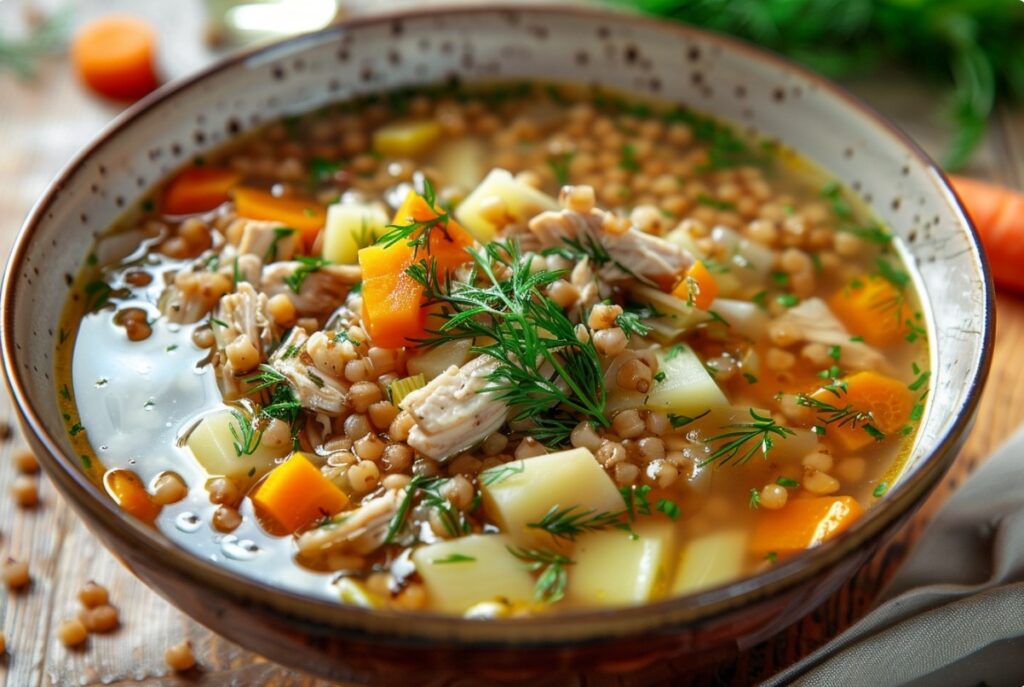
Questions & answers
How long should you cook buckwheat in soup so it stays grain-by-grain?
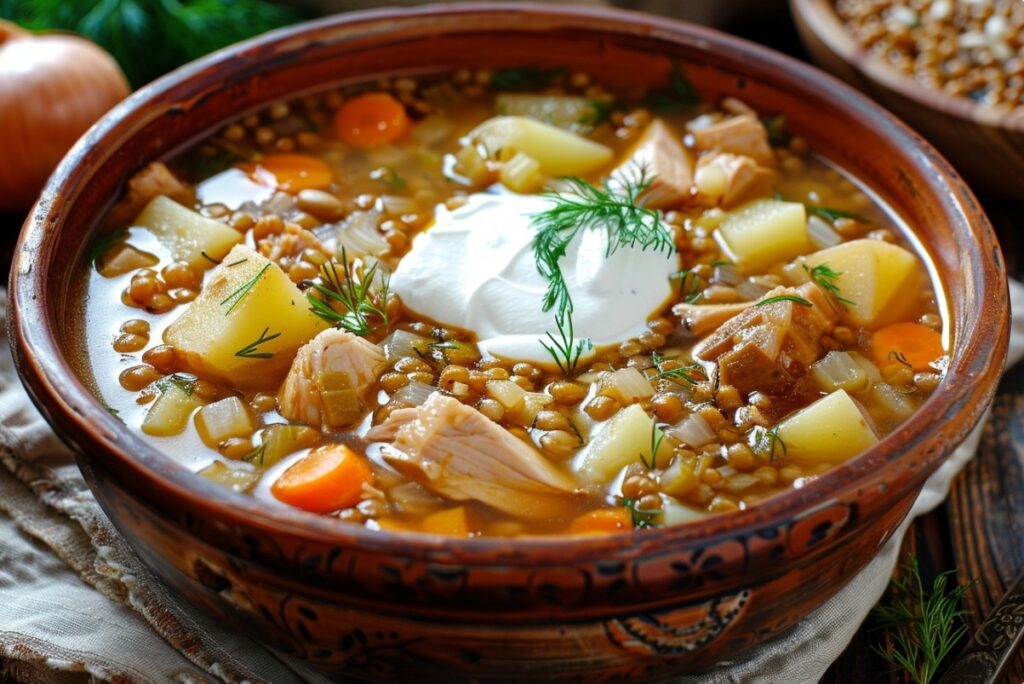
If you’re into simple, filling food, take a look at more buckwheat recipes—they’re an easy way to round out a cosy home menu.
Common mistakes when making buckwheat soup
Sometimes the soup turns cloudy because the broth was boiling too hard, tossing tiny particles around. Another classic culprit is unrinsed buckwheat—its dust makes the liquid look almost “milky”. And if buckwheat turns to mush, it usually went in too early and cooked for too long. Don’t stress—everyone does it. Next time just keep the heat gentle and add the grains at the right moment.
Why is my broth cloudy?
The soup boiled too vigorously, or the buckwheat wasn’t rinsed. Keep a gentle simmer on low heat and rinse the grains 2–3 times; skim foam for the first 10 minutes.
Why did the buckwheat overcook?
It was added at the start or cooked for too long. Add buckwheat when the potatoes are almost tender and cook it 12–15 minutes at a gentle simmer.
Why does the soup taste bland?
Not enough sautéing, or the soup was salted too early and the flavour never really “popped”. Soften the onion and carrot properly, then adjust salt and pepper at the end, after the buckwheat is cooked.
Why is there so much fat on top?
You used very fatty pieces or didn’t skim. After cooking, let the soup stand for 5 minutes and spoon off excess fat; for a lighter version use chicken breast or remove the skin.





Responses