How to Make a Budget-Friendly Tuna Salad

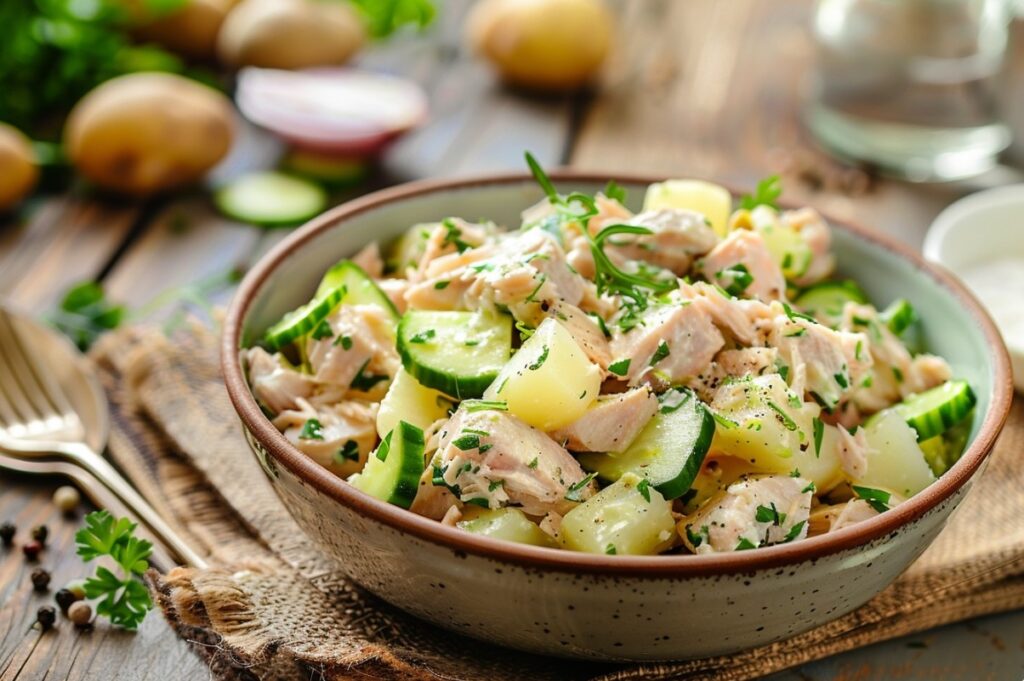
You don’t have to spend a lot to end up with something genuinely good. Tuna salad is one of those cases where simple, everyday ingredients often taste better than the “fancy” add-ons.
The trick isn’t piling on more stuff—it’s choosing the right combination. Do that, and you get a salad that’s filling, fresh, and easy on your wallet.
It happens: you open the fridge and it’s… not inspiring. There’s a can of tuna, a couple of eggs, a cucumber that’s basically on its last day, and the thought running through your head is, “I want real food—but not the kind of grocery bill that happens when you ‘just pop in for bread.’” That’s exactly where tuna salad usually saves the day—fast, filling, and it feels like an actual meal. And yet sometimes it somehow ends up costing a small fortune.
I’ve been there. For a while, tuna salad was almost a “special occasion” thing in my kitchen: I’d buy the priciest can, add all the pretty extras, then get annoyed when half the greens wilted and the fancy sauce sat in the fridge door until next season. Worst part? I’d still feel like I ate… and my budget still took a hit.
In reality, a budget-friendly classic tuna salad isn’t about “saving money and suffering.” It’s about smart choices: what to buy, what to skip, what to swap without losing flavor, and how to store things so you’re not throwing food away. Once you get that rhythm, you get this really satisfying feeling of control—like you’re running your kitchen, not the other way around.
What ‘budget-friendly’ actually means in a tuna salad
When people say “make it budget,” they often mean “buy the cheapest ingredients.” But after years in my own kitchen, I’ve learned this: the most expensive food is the food you buy and don’t use. Second place goes to impulse buys “because it looks nice.” Only after that comes the difference between tuna brands.
So for me, a budget tuna salad comes down to three things:
- A solid base: something filling and neutral that turns the salad into a meal, not a two-bite snack.
- One bright accent: acidity, crunch, something fresh or pickled—so the flavor feels alive even with a simple ingredient list.
- Minimal waste: ingredients should either keep well or be easy to use up in other meals without a whole production.
Quick story from my kitchen: once I made a “pretty” tuna-and-avocado salad. We didn’t finish the avocado, it browned, then I kept moving it around the fridge because I “didn’t want to waste it”… and I tossed it anyway. Since then, my rule is simple: if an ingredient doesn’t have a Plan B for tomorrow, it’s a maybe.
Tuna without overpaying: how to pick a can and not regret it
Tuna is the star of the show—and also where the budget most often goes off the rails. The key question isn’t “which one is the most expensive?” but “which one fits what I’m making?”
In oil or in water—which is better value?
In everyday terms: tuna in water (or its own juices) is usually easier to work into different dressings because it doesn’t bring that “can oil” flavor along for the ride. Tuna in oil can be juicier, though—and then you can save on dressing by using a little of the oil from the can as your base (as long as it smells and tastes clean).
Here’s how I decide: if I’m going for something tangy (lemon, pickles, a bit of mustard), I buy tuna in water. If I want a super simple “work lunch” salad, I grab tuna in oil and keep the dressing minimal.
Chunks or flaky shreds?
Labels love words like “chunks,” “fillet,” “for salads.” Real life: for a budget tuna salad, it can actually make sense to buy smaller pieces—they’re cheaper, and once everything’s mixed, it doesn’t matter much.
One nuance: if the tuna is basically mush, it can make the salad feel heavy and wet. I usually check two things:
- no weird additives or “flavorings” in the ingredients list; simpler is better;
- once opened, the smell should be clean and ocean-y, with no bitterness.
Tip: don’t buy the “big can” if you’re not sure
A big can looks like a bargain. But if you’re not sure your household will finish it—or you don’t have a plan for leftovers—two small cans beat one big “now what?” can. The worst kind of saving is when half of it ends up in the trash.
I always ask myself before buying: “Am I opening this today or tomorrow?” If the answer is vague, I buy less—or I don’t buy it at all.
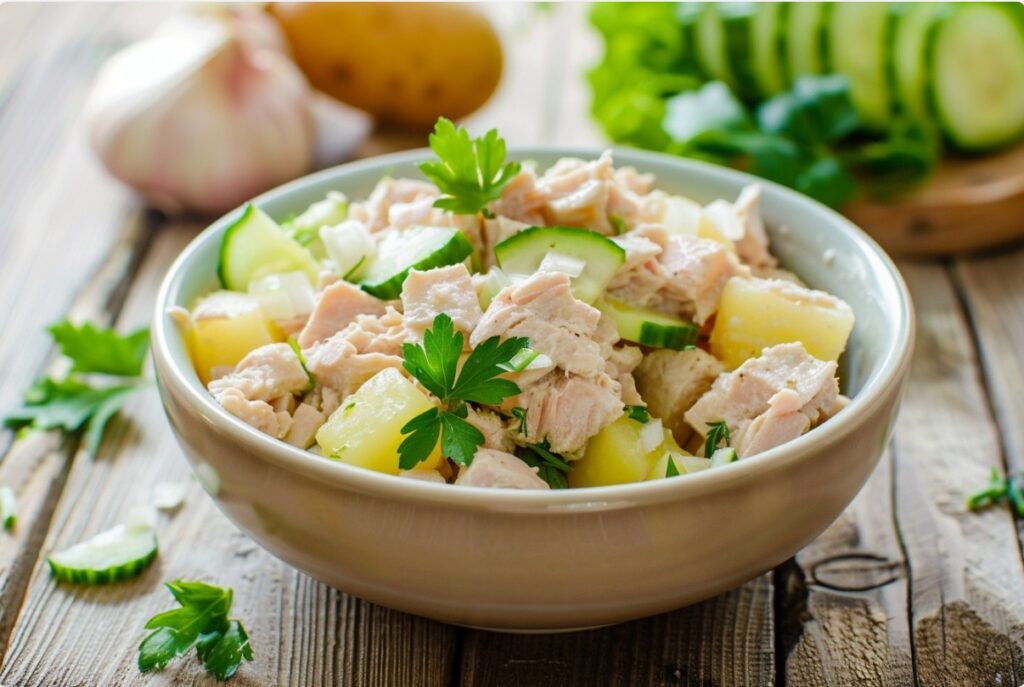
Tuna salad for ~100 UAH: how to actually save
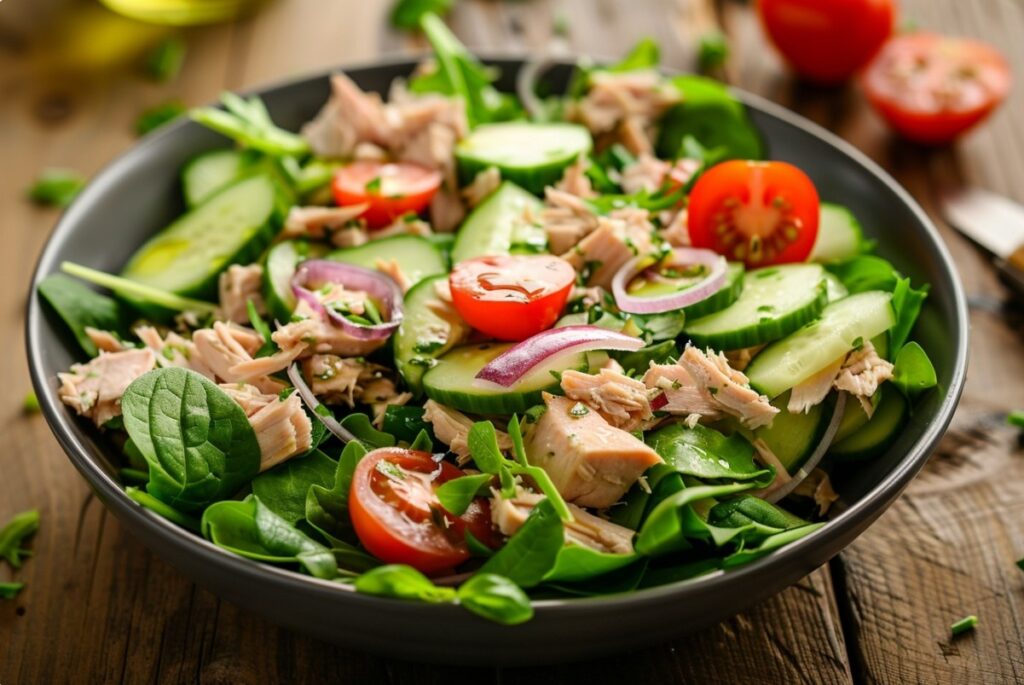
You can make tuna salad that’s tasty and budget-friendly if you stick to simple ingredients and don’t overload the recipe with extras. The goal is balance, not a long shopping list.
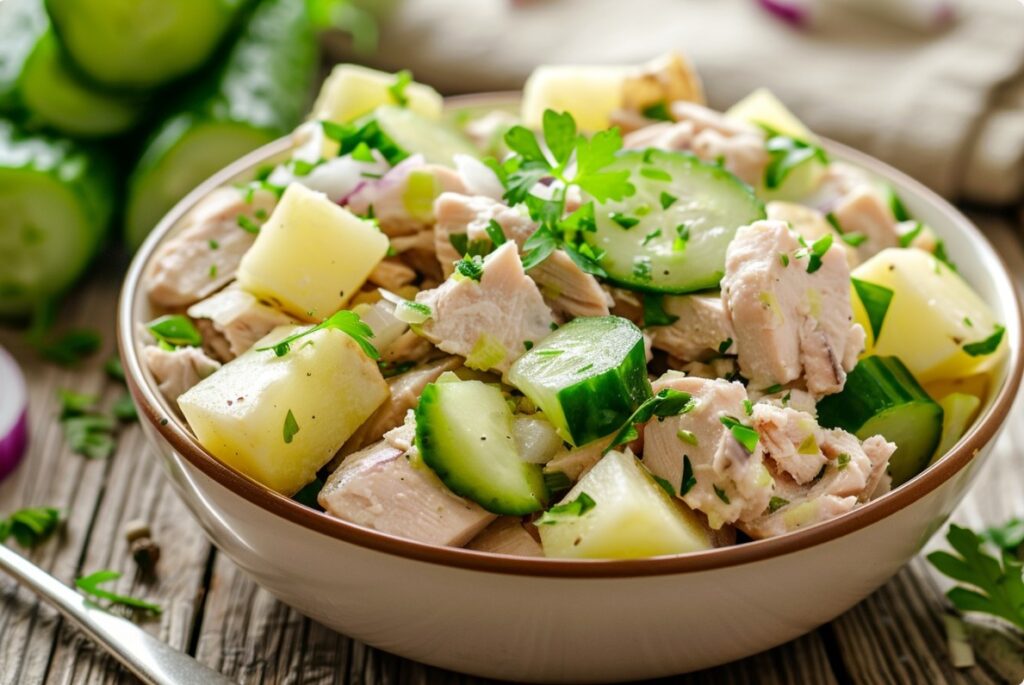
Example ingredient list for ~100 UAH
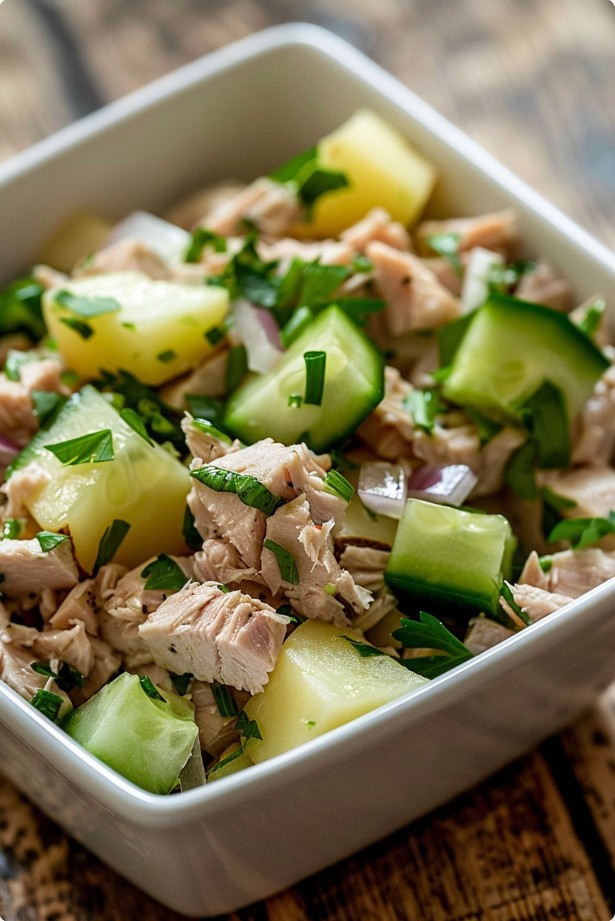
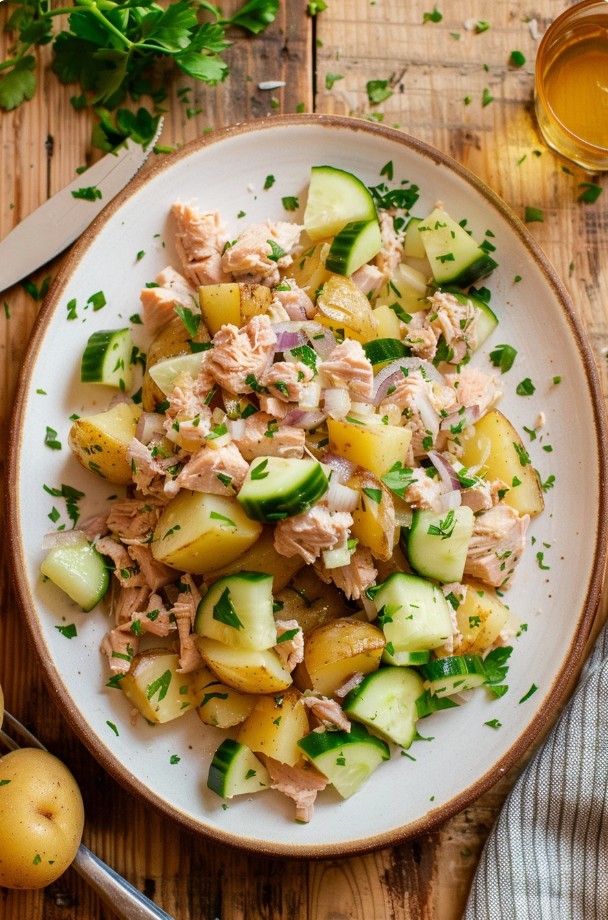
- canned tuna in water — 1 can
- potatoes — 2–3
- cucumber — 1
- onion — a small amount
- oil — 1 tbsp
- salt, pepper
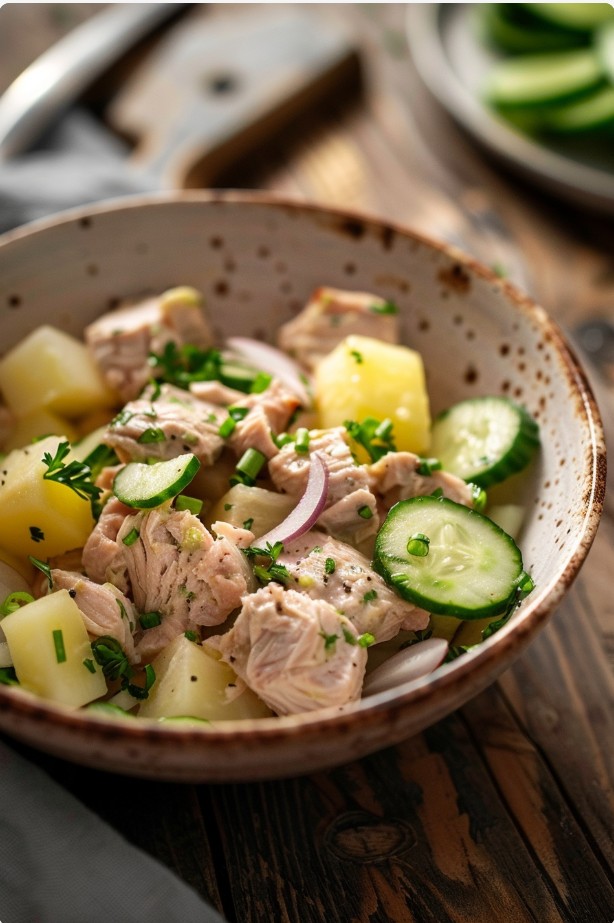
Potatoes do the heavy lifting here—they add volume and make the salad filling, without relying on pricey ingredients.
How to allocate your budget
- don’t overpay for premium tuna
- skip expensive add-ons (avocado, cheese, olives)
- use what you already have at home
What adds volume without extra cost
- potatoes
- cucumber
- fresh herbs
How to keep it from tasting “cheap”
- add a little acidity (lemon or vinegar)
- don’t drown it in oil
- balance the salt properly
Common mistakes
- too little tuna — the flavor disappears
- too much potato — the salad tastes bland and “empty”
- no acidity — the flavor falls flat
Bottom line: Tuna salad for ~100 UAH isn’t about cutting everything to the bone—it’s about getting the ingredient balance right. A simple combo often tastes better than an overloaded recipe.
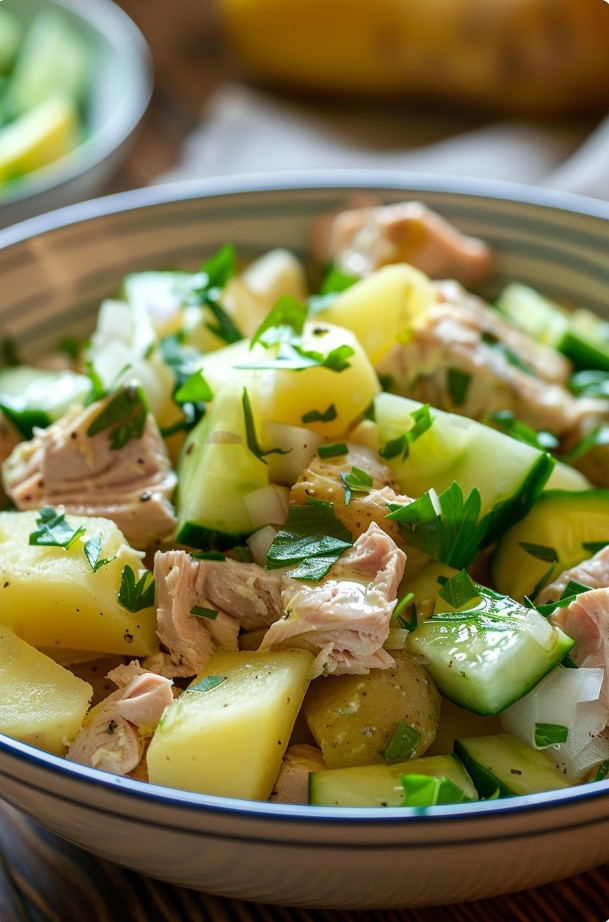
A filling base: how to ‘stretch’ tuna so the salad feels like a meal
This is where the real savings live. Tuna isn’t the cheapest ingredient, but you don’t need a lot of it if you build the salad on the right base. The base gives you volume and staying power; tuna becomes the flavor center.
The best options are simple things you often already have:
- Eggs — add softness and that cozy, homemade taste. Plus you can boil a few ahead of time.
- Beans or chickpeas (canned or cooked) — make the salad seriously filling, and tuna doesn’t feel “sad” next to them.
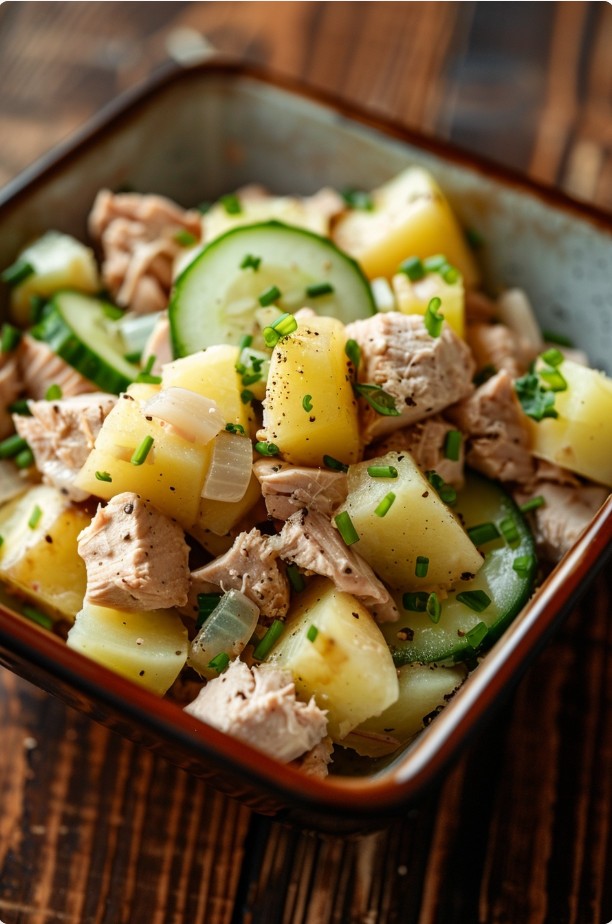
- Potatoes — plain boiled or roasted. They’re great with tuna and cost very little.
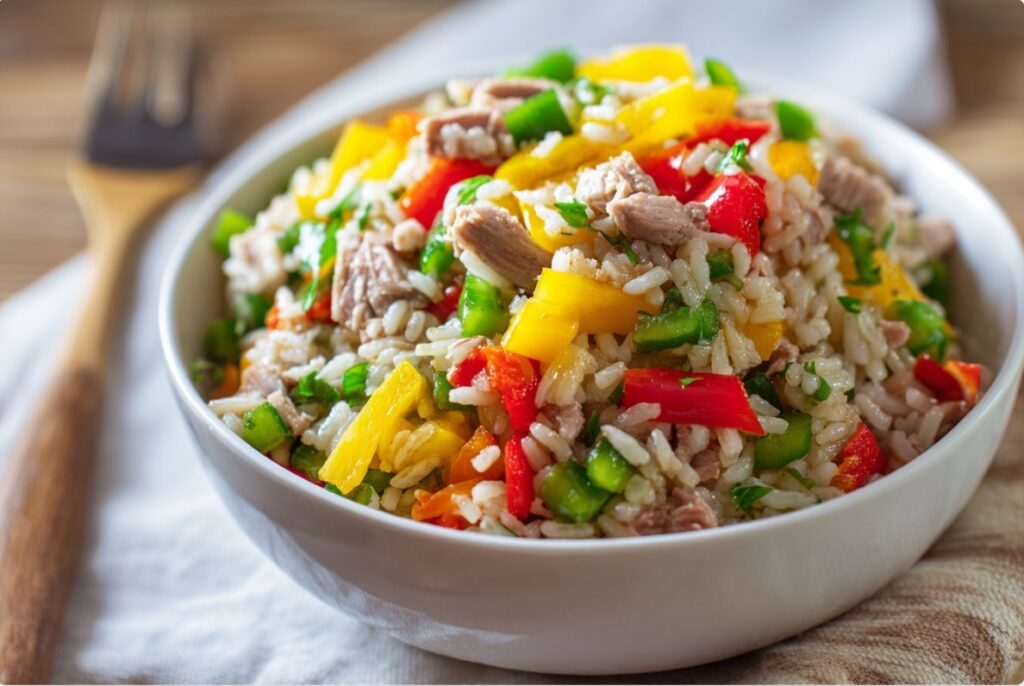
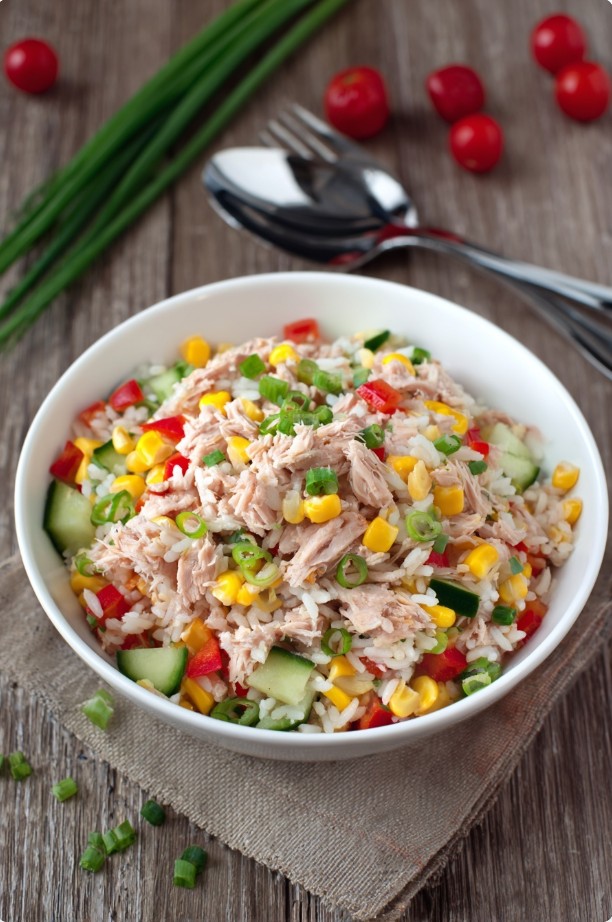
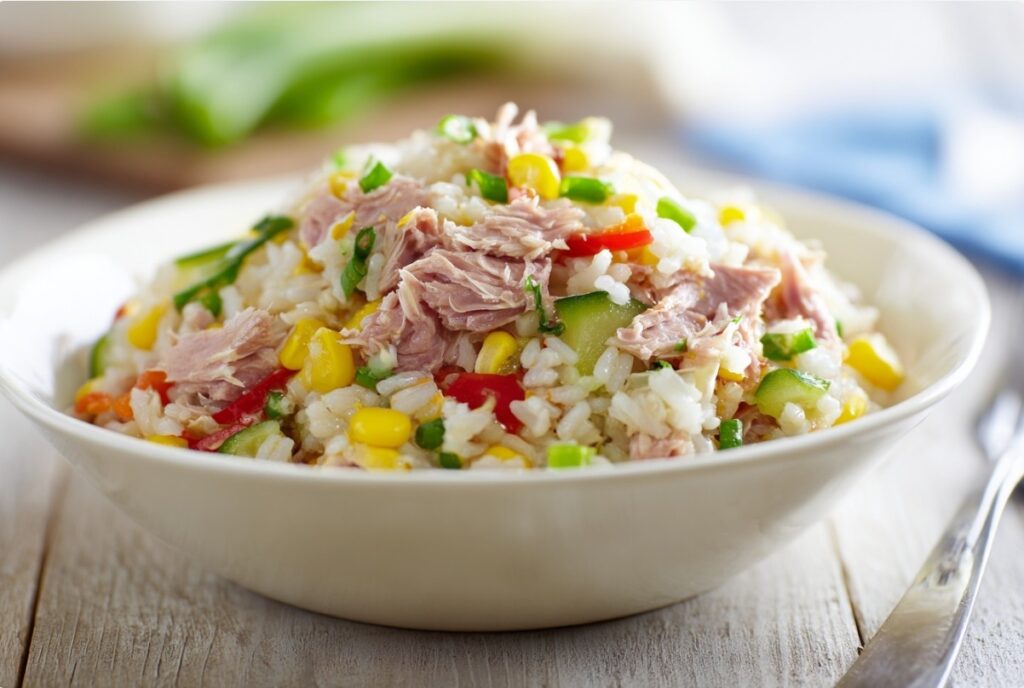
- Rice or bulgur — especially if you have leftovers from yesterday. This is exactly where leftovers help your budget.
- Cabbage (green or Napa) — adds volume and crunch, and it keeps well in the fridge.
Quick story: I went through a phase where I’d buy tuna “for salad” and then make it with just cucumber and leafy greens. It tasted good… but an hour later I was hungry again. And what did I do? Bought snacks. Once I started adding beans or potatoes, the salad became real food, and those little “I’ll just grab a yogurt/cookies” purchases disappeared. That’s part of the budget too.
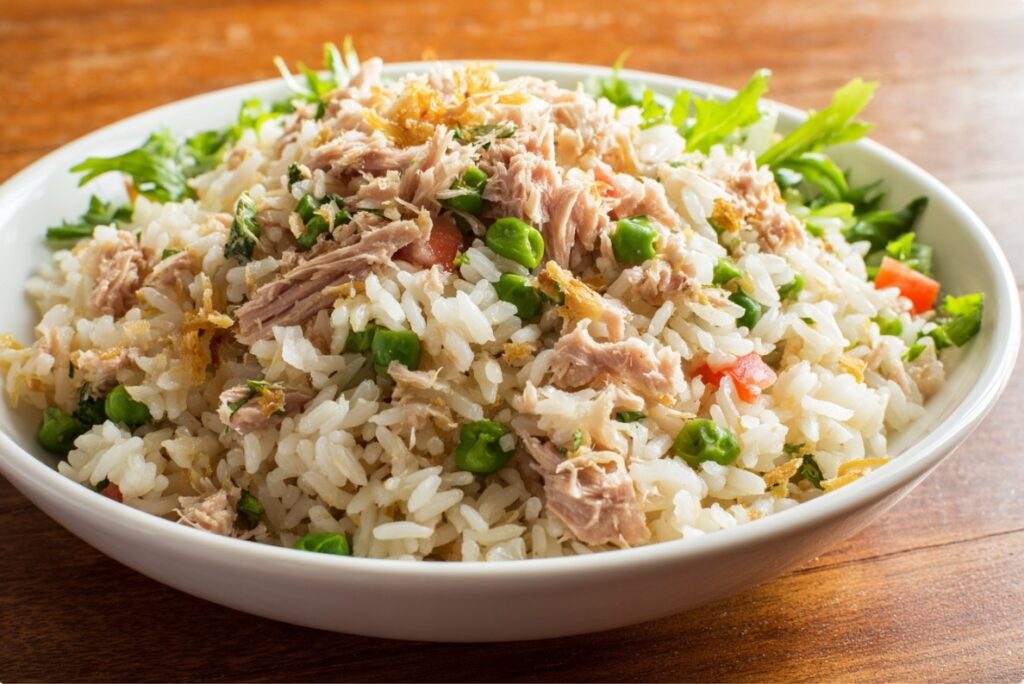
Cheap ingredients that make it taste ‘expensive’
Budget-friendly doesn’t have to mean bland. Most of the time what’s missing isn’t “one more expensive ingredient,” but a small detail: acidity, crunch, aroma. And those details can be cheap.
Acidity: tuna’s best friend
Tuna really shines with a little tang. That can be:
- lemon juice (even a small squeeze);
- a pickled cucumber or a splash of pickle brine;
- apple cider vinegar (literally a few drops in the dressing);
- sauerkraut (if you like it—it works surprisingly well).
Add acidity and the salad tastes more “put together.” The flavor gets clearer, and you’re less tempted to drown everything in mayonnaise.
Crunch: so it doesn’t turn to mush
Crunch is what makes a salad feel fresh. And it’s often basically free if you use what you already have:
- onion (white, red, or green);
- carrot (finely grated or cut into thin matchsticks);
- cabbage;
- cucumber;
- seeds (sunflower, pumpkin)—if you have them, a handful is a total upgrade.
Little trick: if the onion is too sharp, I soak it in cold water for a minute or quickly pour boiling water over it, then squeeze it dry. It mellows out fast and tastes much cleaner.
Aroma: small spices, big impact
You don’t need pricey bottled sauces. One or two simple things are enough:
- black pepper (freshly ground is a different world);
- garlic powder or one fresh clove;
- mustard (1 tsp in the dressing and it suddenly tastes “grown-up”);
- dill or parsley (even frozen).
Quick story: I underestimated plain dill for years. Then one day I made tuna salad with potatoes and a pinch of dill, and it smelled like I’d tried twice as hard. I hadn’t—I just opened the freezer.
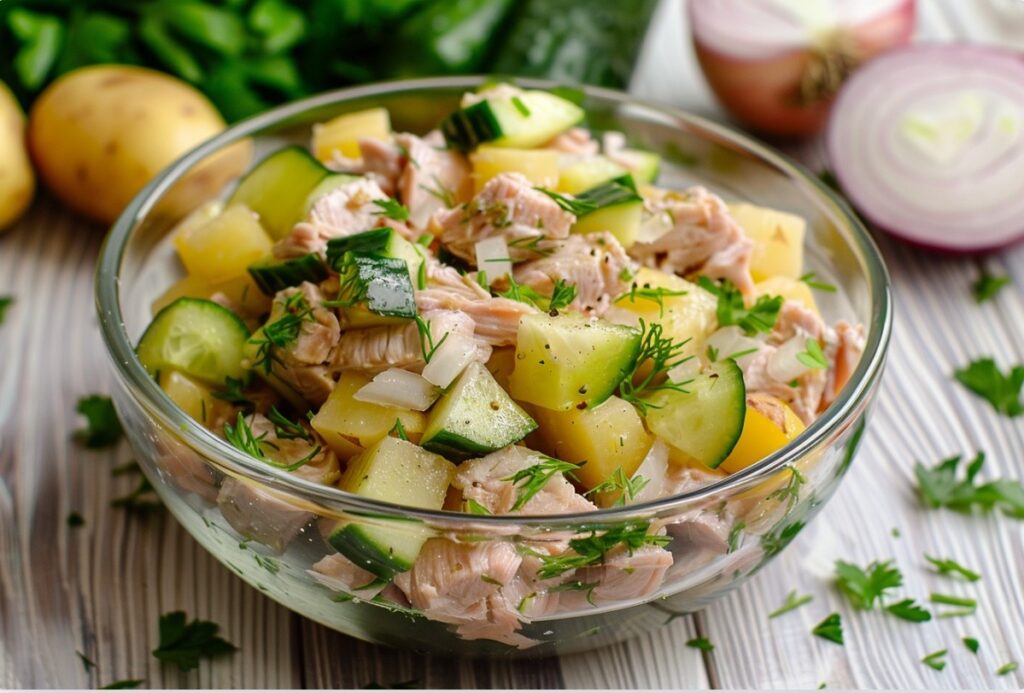
Dressing without extra spending: how to keep it tasty (and not drown the salad)
Dressing is where your budget either holds steady—or quietly falls apart. Because when you don’t have anything “right” at home, it’s so easy to buy a bottle of sauce that then sits around for six months.
I stick to simple dressings made from things that actually live in a normal kitchen for a long time. The formula is: fat + acidity + salt/pepper. Fat can be a spoonful of oil (or a bit from the tuna can), acidity is lemon/vinegar/brine, and then you adjust to taste.
When mayo is fine—and when to go another way
Mayonnaise isn’t the enemy. But it’s easy to overdo it, and then the salad turns heavy and the tuna disappears. What I do: if I really want mayo, I use a little and loosen it with something lighter—plain yogurt or even a spoonful of water/pickle brine—so it becomes a dressing, not a paste.
Tip: mix the tuna with a small amount of dressing first, then add the rest of the ingredients. The dressing distributes more evenly, and you’ll need less.
A sneaky way to save: use ingredients that already have flavor
If your salad includes pickles or olives, you don’t need a complicated dressing—they already bring salt and acidity. If you’re using canned beans, sometimes it’s enough to drain them well, add pepper, and a drop of oil. Fewer “layers” means cleaner flavor and fewer extra purchases.
Dressing should highlight, not hide. If you keep wanting “more sauce,” it’s often a sign you need more acidity or salt—not more mayo.
Common budget tuna salad mistakes—and how to fix them
Mistake: too little tuna
Fix: don’t cut the tuna down too far or the salad loses its flavor. Add volume with vegetables, but keep enough fish for it to taste like tuna salad.
Mistake: too much potato
Fix: potatoes add fullness, but keep them in check. If you overdo it, the salad tastes bland and the tuna character disappears.
Mistake: no acidity
Fix: add a little lemon juice or vinegar. It lifts the flavor and makes even a budget tuna salad taste brighter.
Mistake: too much oil
Fix: use the minimum. Oil should support the flavor, not make the salad feel heavy.
Mistake: watery texture
Fix: dry your vegetables well and drain the tuna properly. Otherwise the salad looks messy and loses its bite.
Mistake: too many ingredients
Fix: keep it simple. 4–6 ingredients is the sweet spot for balance without overspending.
Mistake: no structure in the way it’s mixed
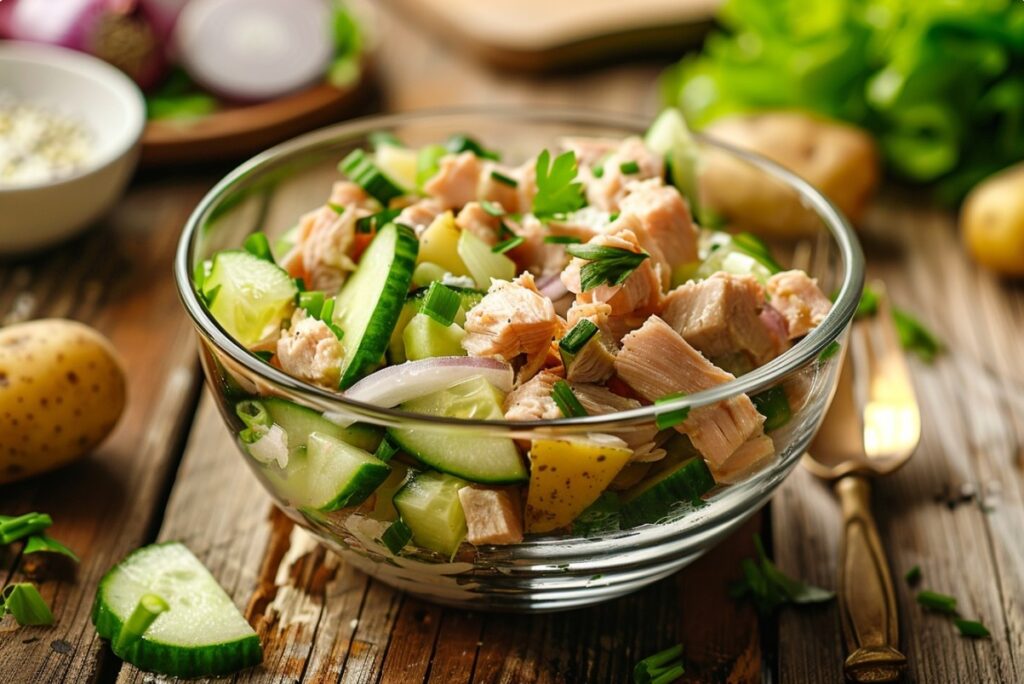
Fix: don’t mash it into one uniform paste. Keep tuna and vegetables in visible pieces—instantly looks better and eats better.
Common mistakes that make tuna salad pricey—and disappointing
No lectures here—just real life. I made these mistakes over and over until I got tired of throwing away food (and money).
Mistake #1: buying “all the fresh things” and not using them in time
Salad greens, herbs, avocado, cherry tomatoes—beautiful. But if you buy them without a plan, half will wilt. Budget-friendly means you buy exactly what you’ll eat, or what will still be fine a week later.
Mistake #2: not draining the tuna and ending up with a watery mess
If the tuna isn’t drained well, the salad turns soggy, the vegetables “float,” and the dressing separates. And what do people do next? Add more mayo/sauce to “fix it.” That makes it more expensive—and heavier.
Tip: I drain tuna using the lid, then gently press it with a fork. Not aggressively—just enough to get rid of the excess liquid.
Mistake #3: too many pricey “little extras”
A few olives, a few capers, a bit of sun-dried tomato, plus cheese—none of it seems like much. But together it turns into “weekend salad for half a paycheck.” For a budget version, choose one bold accent, not five.
Mistake #4: no texture balance
When everything is soft—tuna + egg + potato + mayo—you get a paste. It’s great for the first few bites, then you start craving something fresh. And that’s when the “I’ll just buy crackers/extra veggies/juice” spiral begins. Add crunch and the salad feels complete.
A no-nonsense shopping list: how I build a budget tuna salad in my head
I’m not into complicated systems. I need something that works in real life—after work, when my brain is tired. So I keep a simple “builder” in my head: tuna + base + 2 crunchy veg options + acidity + a simple dressing.
To avoid buying extras, I do this: I check what I already have at home first, and only then write the list. Not the other way around. Because an “internet list” almost always makes you buy things you won’t use up.
How to write a list without overbuying
My method is very down-to-earth:
- Write down the base: what’s already there—eggs/potatoes/beans/rice. If I have it, I don’t buy another base “just in case.”
- Write down the crunch: cucumber, cabbage, or carrot—one or two items max.
- Write down the acidity: lemon or pickles. If I have pickle brine at home, I might not need a lemon.
- Write down the dressing: oil/mayo/mustard—I check the fridge before buying anything.
- And only then: tuna—how many cans I actually need.
A little trick that saves me from the “I’ll grab one more thing” habit: I jot a mini plan next to items. Like “cabbage—also for tomorrow’s salad” or “eggs—for breakfasts.” No plan? Then it’s questionable.
What to do when there’s a sale and you want to stock up
I’m not against sales—I love them. But I have a rule: I buy only what we’ll realistically eat in 1–2 months, and only the canned goods I truly use. Otherwise it sits in the cupboard for years, and you buy more because you “forgot you had it.”
Quick story: once I found three cans of tuna at home from different “great deals.” Two were fine, and one smelled so off after opening that it stopped me in my tracks. Since then I don’t buy “any cheap one.” Better fewer cans, but ones you trust.
The basic pantry/fridge setup so tuna salad is always an option
I love that feeling when you can put together a proper meal without running to the store. This isn’t “apocalypse stocking”—it’s just a few things that genuinely come in handy.
Here’s what I almost always have, and it helps with budget salads (not only tuna):
- Canned goods: tuna, beans, or chickpeas (1–2 cans of each—nothing extreme).
- Grains: rice or bulgur (just one that you actually cook).
- Long-lasting vegetables: cabbage, carrots, onions.
- Eggs: easy protein and a “binder” for salads.
- Acidity: a lemon or a jar of pickles.
- Basic seasonings: salt, pepper, mustard.
- Oil: a basic one—no need to overthink it.
When you’ve got that, tuna salad stops being a “mood purchase.” It becomes a reliable option you can make weekly without feeling guilty about your grocery bill.
Storage: how not to throw away half your groceries after ‘one salad’
This part hurts the most. Because a “budget” salad often becomes expensive not at checkout, but two days later—when you find a slimy cucumber and wilted herbs.
Tuna after opening
If I open a can and there’s tuna left, I move it into a small container, seal it tightly, and put it in the coldest part of the fridge. I don’t leave it in an open can—both smell and flavor go downhill faster. And if it’s tuna in oil, I make sure it doesn’t dry out; it’s better if a little liquid covers it.
Vegetables and crunch
I don’t wash cucumbers ahead of time “just because”—they keep longer unwashed. I keep cabbage wrapped so it doesn’t dry out. Herbs, if I’ve bought them, I save the simple way: rinse, dry really well, wrap in a paper towel, and store in a bag or container. Not magic, but it buys you a couple extra days.
Prepared salad: how to keep it from getting watery
If I need to pack it for later or keep it for tomorrow, I either keep the dressing separate or add just a tiny amount. Especially if there’s cucumber or tomato—those release water fast. A salad that was crisp at night can look pretty sad in the morning. Dressing on the side keeps everything much fresher.
My simple rule: anything that releases water is best mixed right before eating, not hours ahead.
Labels without the stress: what to check so you don’t overpay
I’m not the person standing in the aisle with a magnifying glass. But I do check a few things because they really affect both flavor and whether the purchase is worth it.
Ingredients: shorter is calmer
For tuna, it’s simple: fish, water/oil, salt. Sometimes spices—fine, if you like them. If I see a bunch of odd additives, enhancers, or “flavors,” I pick a different can. Not because I’m scared of it, but because the taste can be unpredictable—and then you’ll try to cover it up with extra sauces.
Weight: look at the drained weight
Cans usually show total weight and the weight of the fish without liquid (drained weight). That second number is the honest one. You can buy a “big” can and find that half of it is just packing liquid. I don’t do complicated math—I just compare. If two cans are side by side and one clearly has less fish, it’s not a deal even if the price looks lower.
Best-before date and can condition
Sounds obvious, but speaking as someone who once opened a questionable can and ruined the whole evening: I don’t buy bulging, badly dented, or strangely scratched cans. And I check the date—especially if I’m not planning to eat it right away.
When a budget tuna salad is built from simple, familiar ingredients—and you’re not buying extras “for looks”—it stops feeling like a luxury. It becomes a practical option: quick to throw together, filling, minimal mess, and no sense that you got played at the store again.
How is it for you—tuna salad is more about saving time, or more like “something tasty, but only once in a while”? And what’s the thing that most often goes bad in your fridge after these kinds of shopping trips?
If you want more affordable meal ideas, take a look at these tuna salad recipes—lots of ways to cook well without overspending.
FAQ
How can I make tuna salad cheaper without losing flavor?
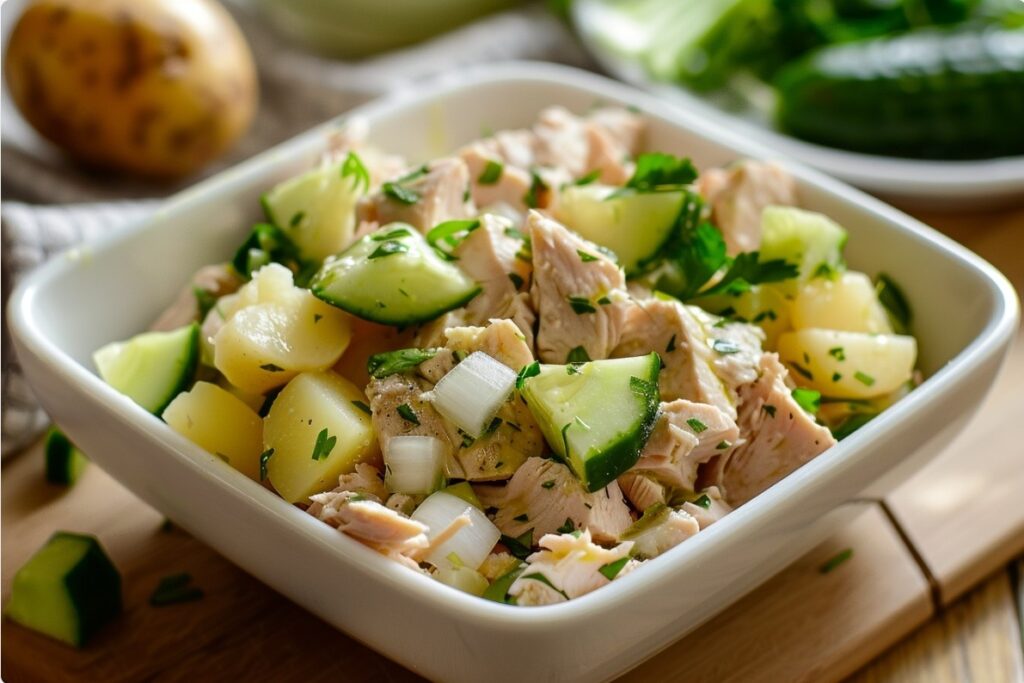
Focus on smart, simple ingredients. Potatoes, cucumber, and a bit of onion add volume and texture, while tuna brings the main flavor. Tuna salad doesn’t need expensive extras—balance matters most.
Which tuna is the best value to buy?
Canned tuna in water (its own juices) in the mid-price range is usually the best value. Very cheap options can be dry, and premium cans rarely make a big difference once it’s mixed into a salad.
What can I use instead of expensive ingredients?
Instead of avocado or cheese, use boiled potatoes. They’re filling, work well with tuna, and keep the salad budget-friendly.
How do I keep a budget tuna salad from tasting bland?
Even a budget tuna salad needs balance. Add a little acidity (lemon or vinegar) and a couple of seasonings—this boosts flavor without extra cost.
Can I make it even cheaper?
Yes—use a bit less tuna and increase the vegetables or base ingredients. If you keep the seasoning and acidity balanced, it can still taste great.
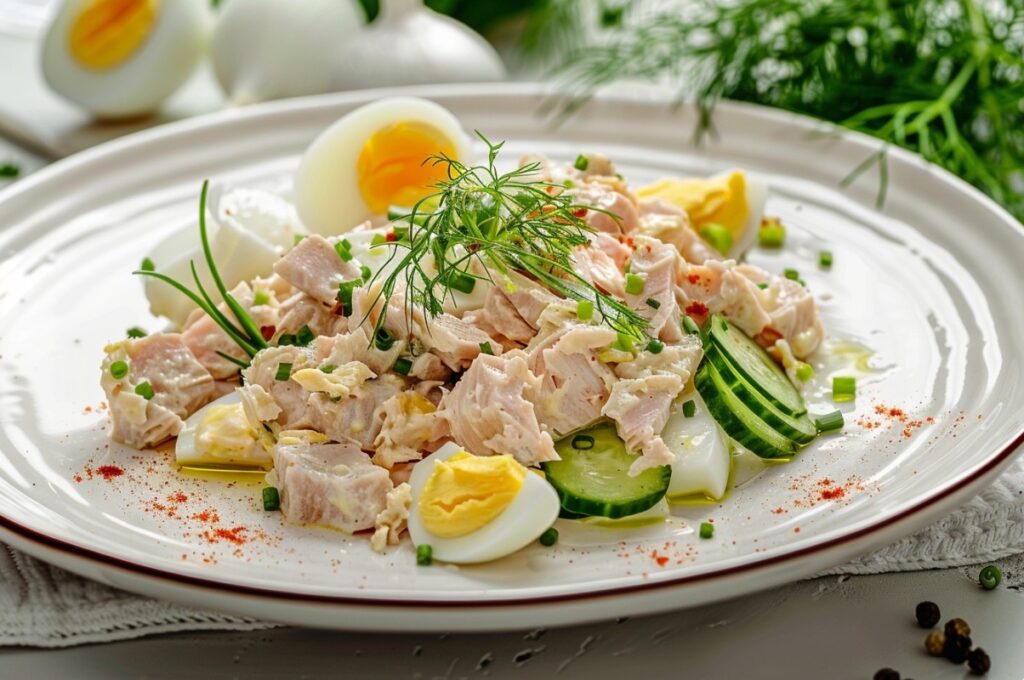
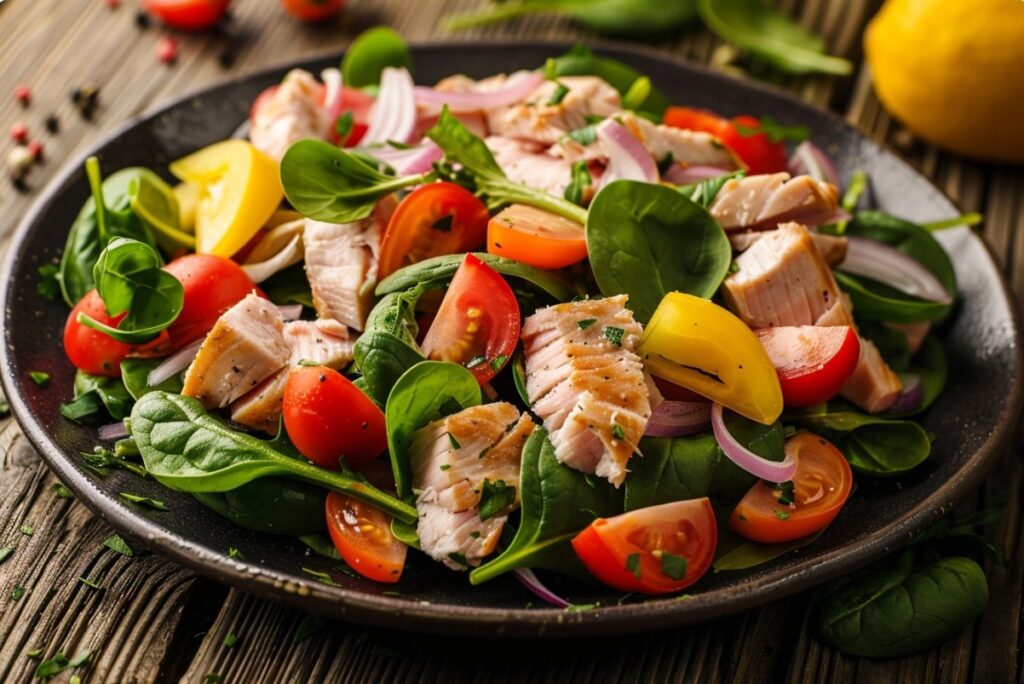
How can I make a budget tuna salad look nice when serving?
A clean plate, neat plating, and visible ingredients are enough. You don’t need anything extra—just don’t mix it into a uniform paste.