Burn Without Fire: How Hot Steam Hurts More Than It Seems

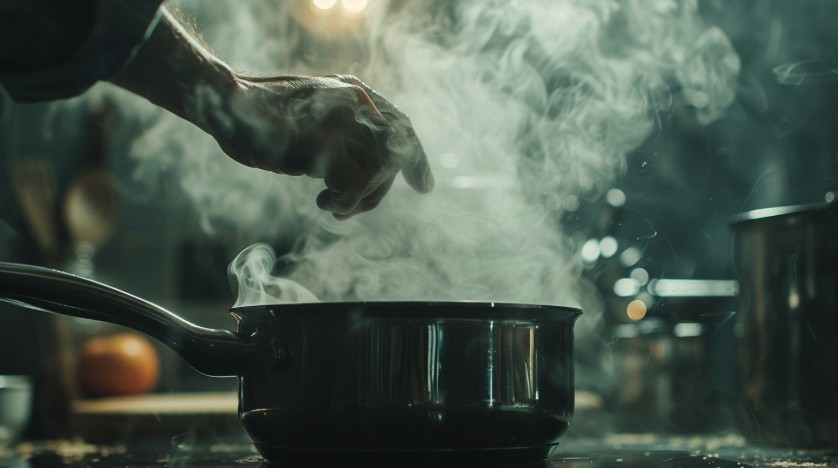
The first time I got burned by steam was as a teenager – I was opening a pot lid over the sink, and a stream of hot air hit my palm. There was no fire, no sizzling, just – sharp pain. A mark appeared on my skin within a minute. It surprised me then: it seemed like I hadn’t touched anything, yet it felt as if I had touched hot metal. Since then, I’ve always been cautious of steam in the kitchen. And I see that people often underestimate its power.
Heat treatment in the kitchen is not just about pans and ovens. Steam is an invisible participant in almost every cooking process. It appears where, at first glance, there seems to be nothing dangerous: over a pot of pasta, in a kettle, under a saucepan lid. This is where the trick lies – steam burns, although it seems almost harmless. Most people fear fire but are not afraid of steam at all. And that’s a mistake.
I’ve seen many minor and serious burns from steam, even among experienced cooks. The saddest part is that some people start fearing cooking altogether after such incidents because “the kitchen is dangerous.” In reality, everything can be kept under control if you understand what’s happening. And it’s not about bravery but about observation and simple logic of the process. Steam has its physics, which you should feel to overcome fear.
Why Steam Burns More Than Hot Water or Air
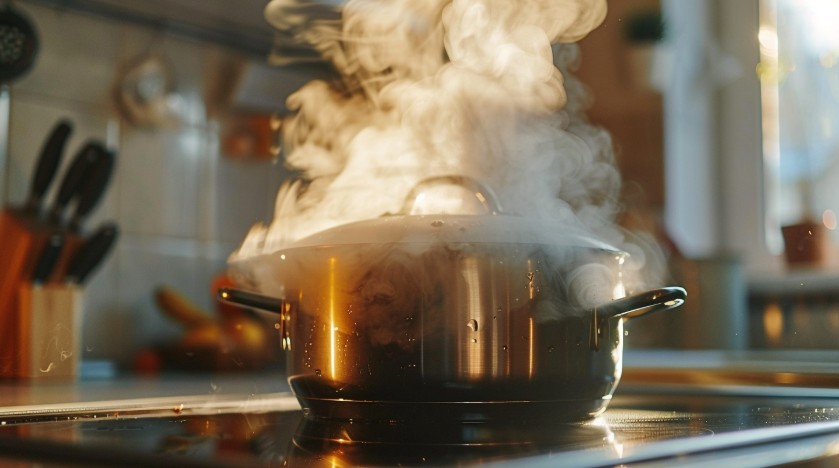
People are used to being cautious of boiling water or a hot pan – it’s clear: touch it, get burned. But with steam, the story is more interesting. Steam is water that has transitioned into a gaseous state, and in this state, it holds a huge reserve of energy. When steam touches the skin, it instantly condenses, releasing this energy back into liquid – and this happens right on the surface of the body. That’s why a steam burn is often deeper and more painful than from water of the same temperature or even hot air.
Imagine: you’re opening the lid of a pot of borscht. If you accidentally get your hand into the stream of steam – the sensation is immediate, and the pain is no less than if you dipped your fingers into the borscht itself. Why? Steam at 100°C (or slightly less, depending on pressure) carries what’s known as latent heat of vaporization. When it contacts your skin, it instantly condenses and transfers all the heat to you. It’s not just heated water; it’s a double blow: both high temperature and additional heat from the transition from steam to liquid.
Where Dangerous Steam Lurks in the Kitchen
Steam is everywhere something is boiling or evaporating. But most often, it hides in places that are not immediately noticeable. Here are some typical traps:
- Under the lid of a pot or pan. When you open it, the steam rushes out and rises up or to the side. This is where people most often get burns on their fingers or wrists.
- When draining hot water from pasta, potatoes, or other foods. Steam rises with the splashes, and if you hold your face or hands over the colander – a burn is almost guaranteed.
- In the oven. You open the door, and clouds of steam, especially if a dish with a lot of liquid was baked, rush out to meet you. Hands, face, and even eyes often suffer.
- Dishwasher. Many people don’t think about it, but when you open the door right after the cycle ends, hot steam comes out.
- Multicookers, steamers, pressure cookers. Here, steam is under pressure, and if you release it incorrectly or open the lid, you can get a serious burn.
Once, I was in a hurry, opened the multicooker right after the signal – and got a burn on my forearm. Just a second of inattention. Now I always wait for the pressure to drop and make sure the steam comes out gradually.
Common Mistakes Leading to Steam Burns
Most people don’t consider steam a real danger – and that’s what gets them. Here are some common situations where the risk of getting burned increases sharply:
- Opening the lid “towards yourself” abruptly. When the lid is removed and immediately tilted towards you – the steam hits directly in the face or hands.
- Rushing while draining boiling water. If you don’t let the water cool down a bit or don’t set the colander aside, the steam concentrates under your hand.
- Poor kitchen ventilation. Closed window, turned off exhaust fan – steam doesn’t dissipate, accumulates under the ceiling, often descends after opening the oven or pot.
- Opening the dishwasher right after the cycle ends. Hot steam can be so dense that even glasses fog up, not to mention burns on hands.
- Using wet towels to grab hot dishes. Moisture instantly turns into steam under the influence of a hot surface, and this steam is under the towel, right next to the skin.
The simple rule here is: just because you can’t see it doesn’t mean it doesn’t hurt. I always say: try to imagine where the steam will go before opening something or draining water.
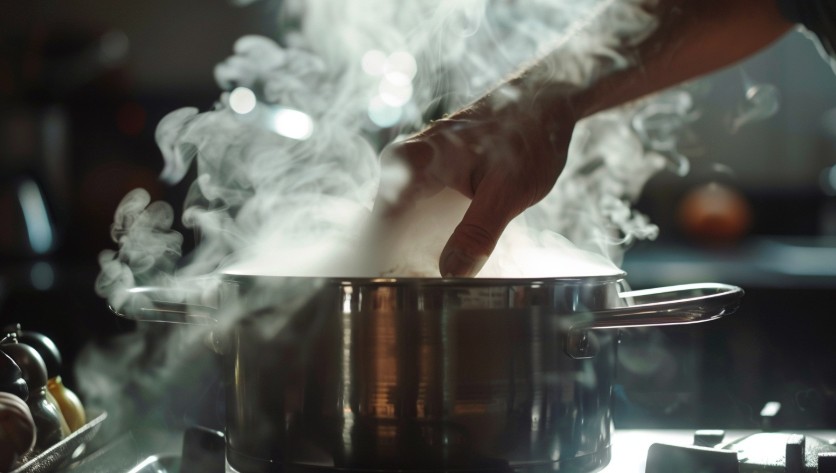
How to Sense and Recognize Dangerous Steam: Signs and Symptoms
The habit of noticing steam is not about a “sixth sense,” but about attentiveness. Steam is not always visible, especially when it’s clear. However, there are several tangible markers that help avoid burns:
- Smell and humidity in the air. When it suddenly becomes humid over a pot, and the smell of the dish intensifies – there’s hot steam nearby.
- Fogging of glasses or glass. If everything in the kitchen starts to “sweat,” it’s a signal: there’s a lot of hot steam in the air, be careful.
- Slight warmth on the face or hands. Even slightly raising your palm over a pot, you can feel how the skin becomes moist and warm. This is already the risk boundary.
- Condensation on kitchen surfaces. Often after boiling pasta or potatoes, moisture appears on the shelves under the cabinets – meaning the steam has settled and spread throughout the room.
I’ve learned to “listen” to steam: sometimes you can hear it – a slight hissing when lifting the lid, especially when the dish has stopped boiling but hasn’t cooled yet. It’s a good sign: the steam is ready to burst out.
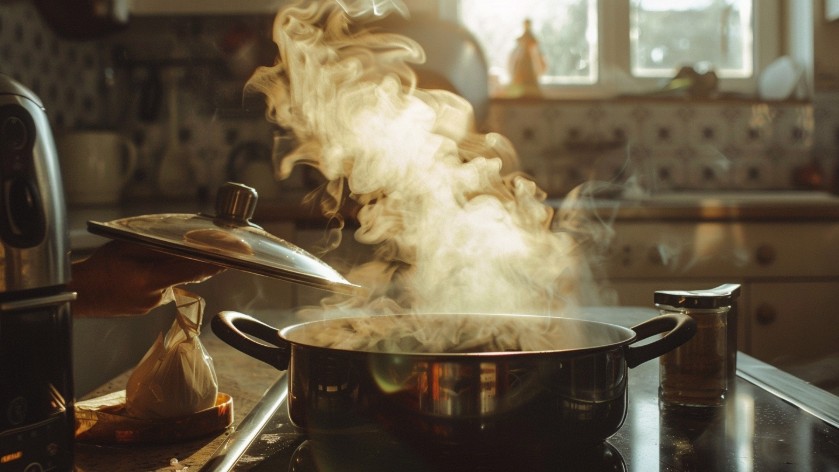
The Mechanics of the Process: How Steam Forms and Why It’s So Aggressive
Steam is not just warm air. When water heats up to 100°C (or lower if the pressure is low), its molecules gain enough energy to escape from the liquid phase and transition into the gaseous phase. This leap – from liquid to steam – takes up the most energy. Imagine a kettle: the water inside boils, the steam bursts out through the spout. When this steam enters a cooler environment (for example, your hand), it instantly condenses, releasing all the accumulated energy. This creates a deep burn.
There’s another nuance: steam is lighter than air, it always rises, so hands or face often end up in its path. If you add sudden movements – for example, quickly opening a lid – the steam doesn’t have time to disperse but gathers in one stream and hits concentratedly.
In a professional kitchen, there’s a rule: open the lid away from yourself, so the steam goes in the opposite direction. But at home, this is often forgotten. It seems that steam is just a light mist that can’t harm. But if you look at the skin after contact with steam – a red, painful spot that takes a long time to heal.
Micro-story
Once I was helping a friend – she decided to drain pasta, but placed the colander right in the sink and leaned her face low to see if everything had drained. The steam rose in a column and burned her cheek. After that, she always steps back and advises everyone to do the same.
How to Avoid Steam Burns: Tips and Habits of a Cook
It all starts with attention to detail. I always watch where the steam goes, and here are a few simple habits that really help:
- Open the lid “away from yourself.” When lifting the lid, tilt it so the steam goes in another direction, not on you or your hands.
- Use long spoons or spatulas to check readiness. This allows you to keep your hands away from hot steam, especially in large pots.
- Don’t lean your face over the pot or colander. When draining water, it’s better to step back a step and hold the colander at a distance.
- Let the dish stand a bit after boiling. If time allows, wait 2-3 minutes – the steam comes out gradually, and the risk of burns decreases.
- Use kitchen gloves or towels, but only dry ones! Moist fabric is an enemy: it itself turns into hot steam.
- Open the oven standing slightly to the side. When you open the door, don’t stand directly in front of the oven – the steam goes up and forward.
If you feel that steam has already accumulated, try opening a window or turning on the exhaust fan – this quickly disperses the hot air.
There’s another little thing: when you need to quickly release steam from a multicooker or pressure cooker, it’s better to use a wooden spoon or glove to direct the stream to the side, not on yourself. I often place a container under the stream so the steam condenses in the water, not flying all over the kitchen.
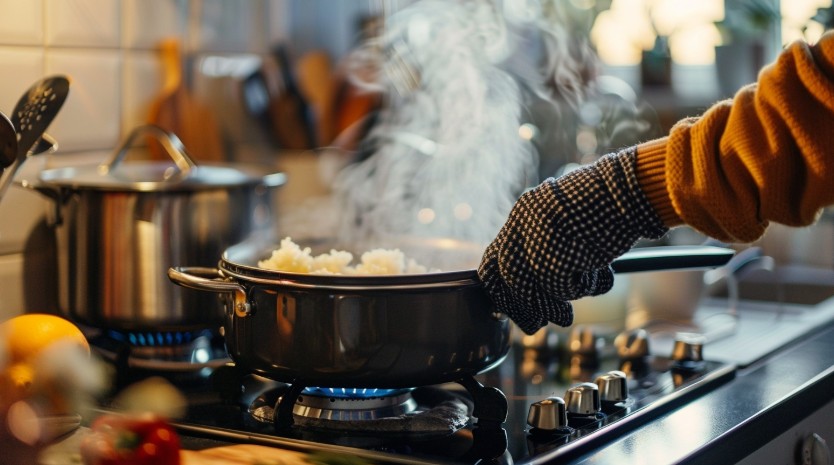
What to Do If You Get a Steam Burn
Even the most experienced cooks are not immune to mistakes. I’ve had a few minor burns, and each time I was convinced: the faster you help yourself, the easier it will pass. Here’s my approach:
- Immediately cool the burn site with cool (not icy!) water – just under the tap for 10-15 minutes.
- Don’t apply oil or fat to the reddened skin – it only increases the pain and hinders cooling.
- Don’t puncture blisters if they appear. It’s better to cover them with a sterile bandage and leave them alone.
- If the pain is severe or the burn is large – see a doctor. Don’t delay.
Micro-story from practice: once I burned my finger with steam from a kettle – immediately put my finger under cold water, and within an hour the pain almost disappeared. But when a friend decided to “endure,” the blister was so big that he had to avoid cooking for a few days.
What to Do If Something Goes Wrong: How Not to Lose Control
There are moments when even with caution, something doesn’t go as planned. For example, you start draining water, and the colander slips from your hands; or you open the lid, and the steam unexpectedly bursts out stronger than expected. In such moments, the main thing is not to panic.
- Step aside if you see steam coming at you. Don’t reach for the pot blindly.
- If a burn has already occurred – immediately cool the area, and then continue cooking (if it’s safe).
- Don’t rush to clean or wash hot dishes – let them cool to avoid repeated steam burns.
- Always have a towel or potholder on hand, but check that they’re dry.
I’ve seen people, after getting a minor burn, start to panic and hastily make even more mistakes: dropping dishes, spilling water, burning other parts of their body. So the main thing is – stop for a second, breathe, and remember that haste is the enemy in the kitchen.
Sensations to Remember: Texture, Smell, Sound, and Appearance of Steam
Steam in the kitchen has its own character. It’s transparent, light, but very insidious. Its smell is the concentrated aroma of the dish, only a hundred times stronger. Sometimes it seems like you can inhale the aroma of borscht or vegetables – and it’s pleasant until you feel warm, moist air on your face.
The sound of steam is a slight hissing, sometimes even crackling, when the lid touches the boiling surface. If you look closely, you can see a light mist over the pot that quickly disappears. But if you bring your hand closer – you immediately feel a moist, hot wave. This is the moment to stop.
I have a personal habit: if I hear hissing under the lid – I don’t open it immediately, I give it a minute for the steam to escape through the hole or gap. And if the smell of the dish suddenly intensifies – it’s a signal: the steam is already waiting, and it’s time to be careful.
Why the Fear of Steam Disappears When You Understand the Process
Fear is always about the unknown. When you start to understand what steam is, how it forms, and where it moves, a sense of control appears. Steam stops being a frightening enemy and becomes a predictable element you can handle.
I’ve seen beginners, after their first burn, start to fear even boiling water. Everything is cured by experience: it’s enough to carefully observe where the steam goes a few times and learn to work with it, not against it. The logic is simple – understand the process, and unnecessary anxiety disappears.
My advice: don’t be afraid of steam, but learn to see it. It’s not an enemy, just another tool in the kitchen. The main thing is to notice its presence in time and know how to act.
A Few Words About Teaching Children and Beginners in the Kitchen
If there are children or people in the family who are just starting to cook, tell them about steam. Don’t scare them, but show them in practice: open the lid – show where the steam went. Let them try to bring their hand at a safe distance to feel the warmth. This forms the right reaction – not to hide from the kitchen, but to be able to anticipate tricky moments.
I’ve often seen children reaching to see what’s cooking – and few warn them about steam. So it’s better to explain the mechanics once than to treat burns later. And for beginners, I advise starting with the simple: observe the steam, listen to its sound, inhale the smell – this quickly develops an instinct for caution.
It’s better to show once than to tell ten times: open the lid together, step back and watch how the steam goes. This is remembered for a lifetime.
The kitchen is a place where even such a tricky thing as hot steam can be controlled. Just give yourself time to get used to it and don’t rush.
Once after a master class, a woman approached me and thanked me: “I’m no longer afraid to open the lid. Now I know how to do it.” This is the real result of learning.
Hot steam is not a reason to avoid cooking, but another reason to become more attentive and confident in the kitchen. What stories have you had with steam? Share in the comments – it’s always interesting and useful for everyone.