Christmas Dishes You Can Cook with Kids

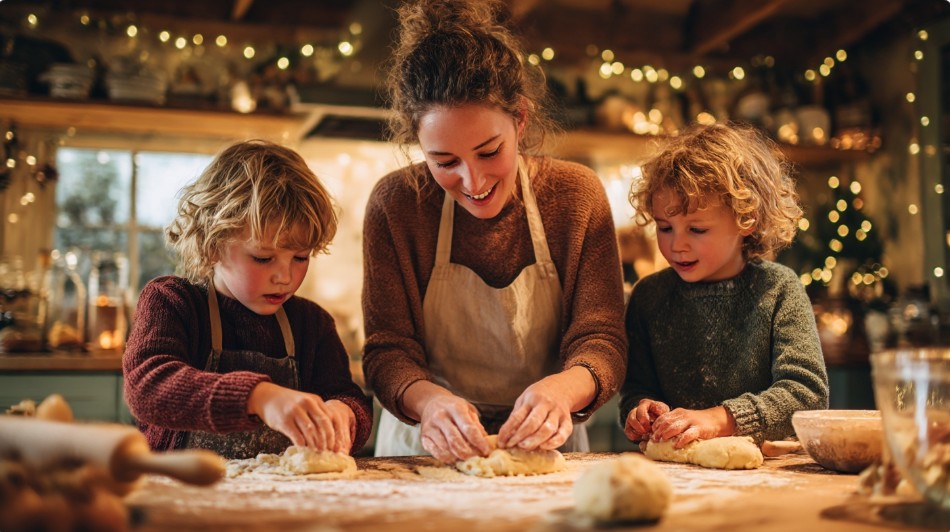
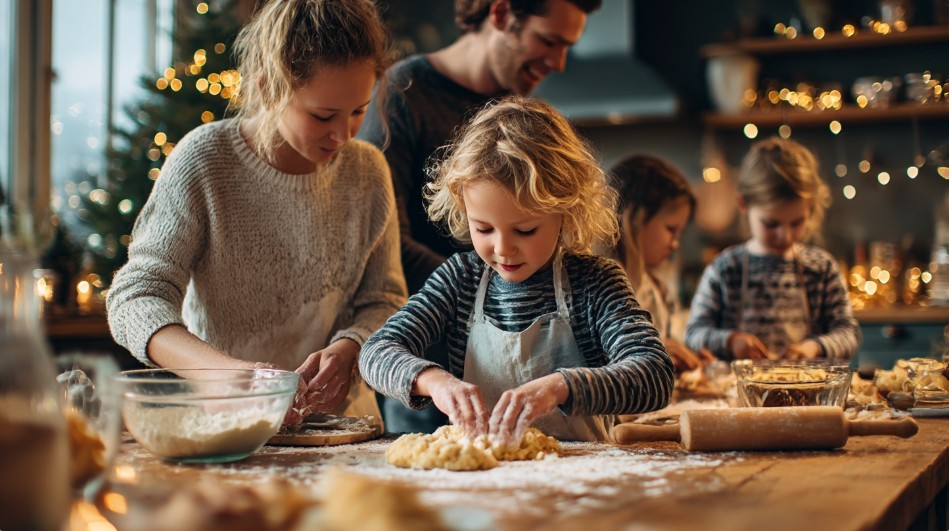
There’s something special about how the smell of cinnamon and warm dough fills the home at Christmas. It’s not about perfect baking shapes or a flawlessly set table. What’s more important is the shared experience when little flour-covered hands join big adult hands to mold, cut, and touch the food that will later be enjoyed together. Sometimes it feels like a little chaos: laughter, spilled milk, lost spoons. But that’s where the real warmth lies. Cooking during the holidays with kids is not about control and lessons, but about trust, openness, and small joys that linger in memory for a long time.
Christmas is not a checklist of mandatory, ‘correct’ dishes. It’s about the opportunity to be together, to pause, and let hands work together. An adult and a child here are not teacher and student, but partners, each with their own contribution, mistakes, and discoveries. And truthfully, sometimes those imperfect shapes or mixed-up ingredients become the tastiest memories. The main thing is not to be afraid to try, to trust little hands, and not to rush.
How to Involve Kids in Christmas Cooking
The real magic begins even before the kitchen. I’ve noticed that as soon as you say, ‘Let’s cook together,’ kids become curious, even if they didn’t know what aromas are hidden in the cupboards. It’s important not to force, but to invite. Ask, ‘Do you want to help knead the dough or sprinkle the sugar?’ Often, a child chooses what they feel ready for at the moment. Don’t view it as a ‘life lesson.’ It’s more of a shared adventure—and if something goes wrong, the world won’t end.
I’ve noticed that when you give a child real responsibility—not decorative, but real—they blossom. A small choice, like which shape to cut from the dough or which decoration to add, is already a step towards co-creation. Don’t rush to correct or suggest. Let them try, even if the kitchen becomes noisier and more fun.
Tip: Prepare a few simple tasks in advance, but don’t impose them. The child might want to invent something of their own.
Safety Without Fear: How to Organize the Space
Safety in the kitchen is not a list of ‘don’ts,’ but about finding a comfortable pace and space for everyone together with the child. I remember when my son first picked up a wooden spoon at four years old. I was a bit shaky. But I stayed close, didn’t take it away, just watched and supported where I could. The main thing is not to intimidate with words, but to calmly agree on boundaries: ‘A sharp knife—only with me,’ ‘Hot stove—wait until I call you.’ Kids understand tone, not just rules.
Set up a place where the child can reach the countertop. You can use a chair, but don’t rush—sometimes it’s convenient to work on a low table. It’s worth removing unnecessary sharp objects from reach and keeping towels handy to wipe up spilled water together. It’s not about avoiding mess, but about calmly accepting that it happens. The child should know: if something spills or falls—it’s not a disaster.
Tip: Explain in practice: ‘This knife is sharp, let’s hold it together.’ This way, the child develops a sense of responsibility, not fear.
Age Capabilities: What Kids Can Do at Different Stages
What seems trivial to an adult becomes an adventure for a child. The main thing is to understand that each age opens up its own possibilities. It’s not worth comparing: some kids at three years old can skillfully knead dough, while others at five don’t like to get their hands dirty. Everyone’s experience is their own.
3-4 years: Introduction to the Kitchen
At this age, children are just beginning to ‘feel’ the kitchen. They are interested in pouring, touching different textures. I often give little ones a bowl of flour: let them just knead it, listen to how it rustles. You can entrust them to break cookies, sprinkle raisins, help grease a baking sheet with oil, or place napkins on the table. It’s important not to rush—the child doesn’t have to keep up with your pace.
- Mixing ingredients by hand or with a spoon
- Lining a baking form with paper cups
- Drizzling honey or sauce over a finished dish
- Decorating with sprinkles, beads
5-7 years: Attempt at Independence
At this age, children want not just to help, but to be part of the process. I remember when my niece first rolled out dough on her own—the whole kitchen was covered in flour, but there was so much joy! Let them try more: measure a cup of milk, crack an egg (be prepared for shells in the dough), separate the egg white from the yolk with their fingers. Even if it doesn’t work out the first time—it’s experience.
- Rolling out dough with a small rolling pin
- Cutting out cookie shapes
- Measuring liquids in a measuring cup
- Brushing pastries with egg yolk using a brush
8-12 years: Partnership
Here, you can do more: let them cut soft fruits with a plastic knife under supervision, entrust them with whipping cream with a mixer (independently, if there’s trust). At this age, children actively offer their ideas: they might want to do something ‘their way.’ Don’t rush to refuse—this is real partnership.
- Cutting bananas, soft fruits
- Whipping cream or egg whites with a whisk or mixer
- Baking under adult supervision
- Independent dish decoration
Tip: Let the child create their own ‘Christmas toast’ or come up with a name for the dish. This adds a sense of importance and involvement.
The Cooking Process: How Not to Shift into Control
I’ve often caught myself thinking: as soon as a child does something ‘wrong,’ my hand automatically reaches to correct it. But it’s worth letting go of control a bit. Let there be a little more sugar, and the cookies not be the same size. The holiday is not about perfection, but about shared joy. A child learns not when they’re told instructions a hundred times, but when they feel that their actions have meaning and result.
Once, my daughter and I got so carried away with decorating that all the icing dripped onto the table. Instead of scolding, we took spoons and ate it just like that. It turned into a funny, sticky, but very fun evening. For me, that’s the main thing: allowing yourself to be imperfect, and letting yourself and the child create together.
Life hack: Cook without rushing, choose music, and don’t be afraid to improvise. Kids sense when you’ve let go of tension.
Common Mistakes and How to Accept Them
Ruined dough, spilled spices, forgotten ingredients—these are not failures, but part of the festive atmosphere. One of the most common mistakes is trying to avoid mess at all costs. Kids are not about sterility. The more attempts, the more laughter and unexpected moments.
- Expecting the child to do everything ‘like an adult’—they won’t
- Trying to forbid everything that might fall or spill—it’s futile
- Wanting to correct every detail—takes away the child’s interest
I remember when my youngest accidentally over-salted the pie filling. We decided together that it would be a ‘spicy version’ and promised to try again next time. Such moments teach us to take the process lightly. The main thing is not to scold or laugh at the child. It’s better to find a funny way out together or just smile and make conclusions for the future.
Tip: Always have spare towels and wet wipes on hand. Not to clean up after the child, but to tidy up together at the end.
Real Situations: Noise, Mess, and Spontaneity
No Christmas kitchen with kids goes without noise. It’s normal. The main thing is not to try to fit the process into the framework of silence and order. I love when there’s laughter in the room, someone singing, and someone asking for another spoon for ‘tasting.’ Sometimes you have to pick up scattered raisins from the floor, and find chocolate stains even on ears. Don’t fight it, enjoy the moment.
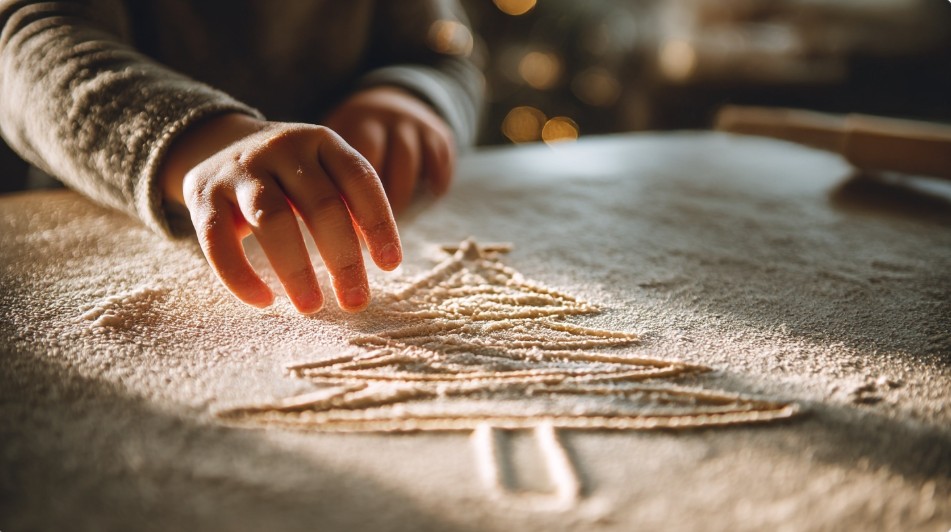
Sometimes a child suddenly decides they want to do something completely different: instead of making cookies, they want to draw on the flour with their finger. Don’t force them back into the process. Give space for spontaneity. Maybe they’ll remember not the taste of the dish, but this moment of exploration and ease.
- Allow drawing with fingers on flour—it’s part of the experience too
- Organize a small competition: who can find the lost spoon faster
- Take a tea break—sometimes it saves the process from fatigue
Life hack: Play favorite Christmas music. It sets the mood and helps to perceive the chaos around more easily.
Culinary Sensations: Texture, Smell, Appearance Together
Close your eyes and inhale the aroma of fresh pastries—it’s an experience that stays with you for a lifetime. Children’s hands kneading dough feel it in a new way. My daughter once said, ‘The dough in khachapuri is like a pillow, only tastier.’ Allow children to explore the world through culinary: listen to how the butter sizzles, smell the cinnamon, touch the soft dough. These are not trifles, but real discoveries.
It’s worth more often watching together how the color of the dough changes in the oven, how the cookies turn golden, how the crust browns. Children love to see changes and compare: ‘It was white—it became yellow!’ This adds confidence in their abilities and teaches them to wait for the result of delicious pastries.
- Invite the child to describe what each ingredient smells like
- Let them listen to how the cookie crunches or sugar crackles under their fingers
- Watch the dish in the oven together—it’s a moment of calm
Life hack: Record new sensations together in a small notebook—after a year, it will become a small family tradition.
Emotional Outcome: Trust, Curiosity, Memories
Cooking at Christmas is not just about food. It’s about those moments that stay in the heart for years. I still remember how my grandmother allowed me to decorate pies myself in childhood. She never corrected my crooked patterns but praised my courage. This trust still helps me be patient with my own children.
When a child feels that they are truly listened to and involved, their curiosity blooms. They want to return to the kitchen again and again, even if not everything works out. And those evenings when we gathered crumbs from the floor together, laughed at the strange shapes of pastries, or invented new names for dishes—become warm memories that warm even years later.
- Give children the opportunity to talk about their impressions—it’s valuable
- Keep funny stories together in a family album or just in words
- Don’t forget to thank them for their help—it builds trust
Life Hacks for Patient Adults
- Prepare one less dish than planned—leave time for spontaneity
- Prepare a spare set of simple ingredients—for ‘experiments’
- Don’t plan to clean up immediately: leave a few minutes for a joint finish
- Use colorful dishes—it adds festivity and mood
- Agree to ‘tasting’ during the process—kids love it
And also: don’t be afraid to be honest if something is tiring. Kids understand when adults find it difficult. You can say, ‘Let’s take a break,’ and it won’t ruin the festive atmosphere. On the contrary—it teaches respect for others’ boundaries.
The Main Thing is to Be Together
Christmas cooking with kids is not about perfect dishes, but about how to scatter flour together, get hands dirty with chocolate, and laugh at your own mistakes. It’s about trust, shared experience, and little adventures that will be remembered for many winters to come. The taste of the dish is forgotten, but the feeling of warmth and acceptance is not.
How do your Christmas evenings in the kitchen with kids go? What stories and funny situations do you remember the most? Share in the comments—I’d love to hear your experiences.
Frequently Asked Questions and Answers
It’s best to choose simple dishes without complex processes: cookies, muffins, salads, sandwiches, dessert decoration. Such recipes are safe and interesting for kids.
Usually, children can participate in cooking from 3–4 years old under adult supervision. At this age, they can be entrusted with mixing, placing ingredients, and decorating dishes.
Use safe kitchen tools, avoid hot surfaces and sharp objects. Adults should control work with the oven, stove, and knives.
Yes. During cooking, children learn to count, read recipes, distinguish products, and develop fine motor skills. It’s a useful and interesting activity for the whole family.
Give the child a simple task, let them choose decorations for dishes, and praise the result. The atmosphere of play and joint creativity motivates better than any words.