Dinner Ideas from What You Have – Cooking with Kids

Sometimes you open the fridge and it’s not exactly empty, but there’s nothing whole either. There’s not enough ingredients for a ‘proper’ dinner, the kids are already running around hungry, and payday is still far away. Surprisingly, these are the evenings that are most memorable. Not because of the lack of money, but because of the sense of unity—when everyone comes together to figure out what to make from what you have. I’ve often found myself thinking that in these moments, when the kids and I are scavenging the shelves, laughing over a randomly found can of peas, or burying our hands in flour, a special trust is born in the family. It’s during these simple evenings, without pomp and fancy recipes, that kids learn not to fear mistakes, and I learn not to fear mess. Sometimes, it’s from the scraps of various ingredients that a coziness is created that money can’t buy.

The ‘whatever’s there’ is not a sentence, but a reason to play
Many perceive dinners from what you have as something worse than a full menu. But in reality, it’s a separate kind of family ritual. Kids see: not everything is perfect, but together you can come up with something interesting. It’s one thing to just feed the family, it’s another to turn dinner preparation into an adventure. I love giving kids the opportunity to choose how to help and decide together how to use the leftovers. Laughter, a bit of mess, the rustle of grains on the table—it’s not a hassle, but part of the shared experience.
Inviting kids into the kitchen, I don’t expect neatness or speed. I remember one Friday evening when my daughter and I were looking for a substitute for an egg in pancake batter. It didn’t turn out quite familiar, but it was tasty. She then spent a week telling everyone that ‘we invented a new taste.’ This space for experimentation is more valuable than any perfect dinner.
- Kids see that adults don’t always have all the answers
- Developing flexibility: if it doesn’t work, try another way
- New tastes and combinations are born in ‘non-standard’ conditions
Don’t fear the unknown: if something spills, it’s not a failure, but the beginning of a story you’ll remember together later.
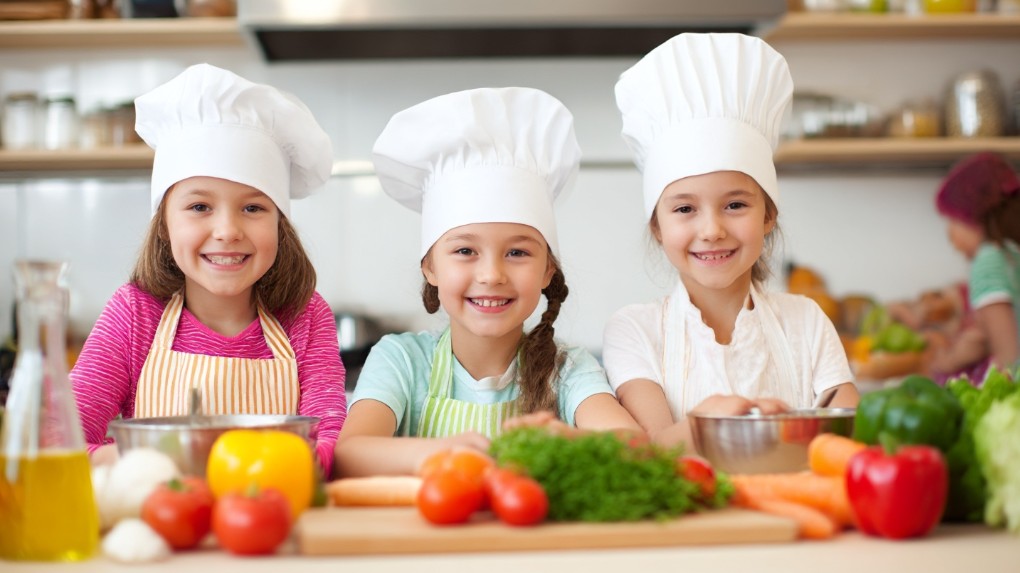
Age Capabilities: What Kids Can Do in the Kitchen
Kids in the kitchen are a separate adventure. At 3-4 years old, they can’t cut or stir hot things yet, but they enjoy munching on peas or sorting grains. At 5-7, they start showing interest in real actions: pinching dough, salting, handing over a spoon. And at 8-12, a child can independently mix, peel vegetables, even fry under supervision.
Toddlers 3-4 years: touch, simple tasks
At this age, I recommend giving tasks that don’t require precision. For example:
- Sorting beans or lentils
- Washing vegetables under the tap
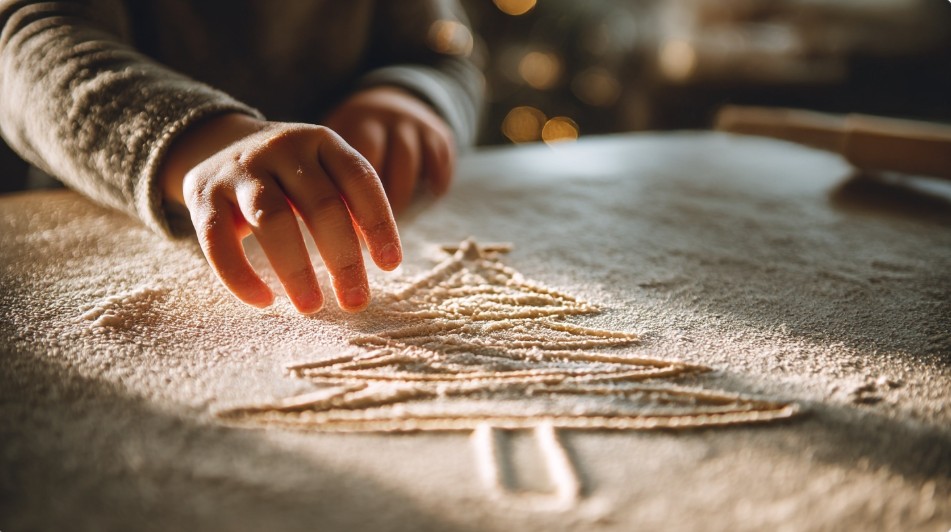
- Rolling a ball of dough
I often sit nearby and watch as the child measures water with a spoon, pours grains from one bowl to another. It’s not about speed, but about the feel of texture, noise, smell. Once, my son got so carried away with pouring rice that I found grains in the most unexpected places for two days. But he enjoyed it, and that’s what matters.
Children 5-7 years: involvement in the process
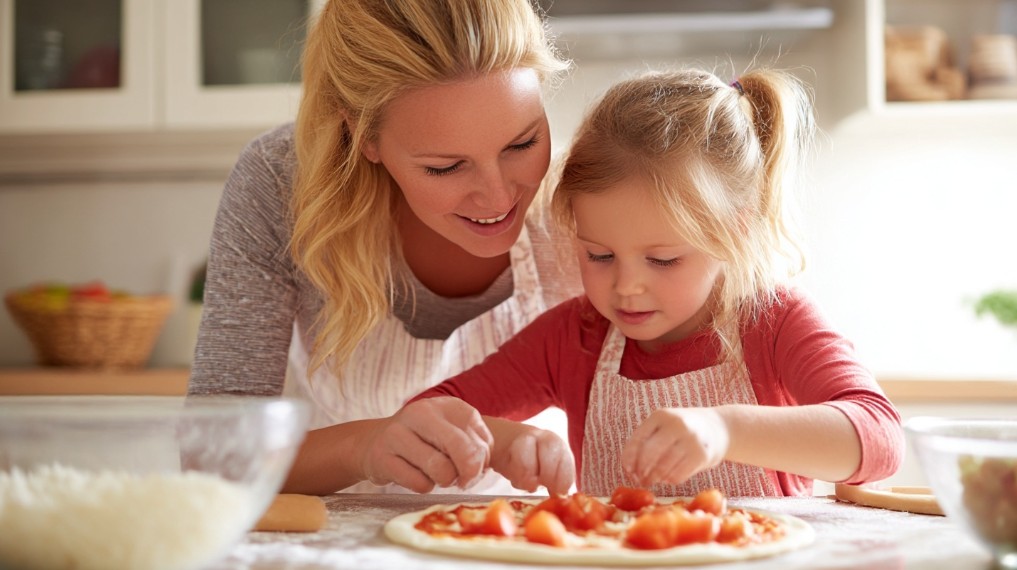
At this age, you can give more freedom. They can independently knead dough, sprinkle dishes from above, hand over ingredients. It’s very important not to get nervous if something spills or leaks. A simple rule helps me: a minute of cleaning won’t ruin the mood, but a scolding might.
Children 8-12 years: independence under supervision
Here, kids want to ‘lead’ the process themselves. Let them try cutting vegetables (at first with a dull knife), weighing ingredients, even cracking an egg (though shell in the batter is almost guaranteed). Explain in practice, but don’t control every move. Let there be room for their own decisions. I’ve noticed: if you give them a chance to do something on their own, even with the risk of mistakes, the child later proudly recalls this experience.
At this age, simple basic dishes that are easy to explain without complex theory work well. For example, you can prepare a side dish together and simultaneously show how proportions, time, and patience work. Such moments are convenient to use to unobtrusively explain the basics of cooking grains—why it’s important not to rush and let the dish ‘come together.’ If you want to explore this in more detail, we have a separate article on ways to properly cook buckwheat, which is perfect for such family culinary experiments.
Life hack: don’t take away the child’s initiative out of fear of mess. Let them try and see that their actions matter.
Safety: Calm, Not Anxiety
The topic of safety often causes unnecessary tension. I used to be afraid to even let my daughter hold a spoon over a hot pot. But over the years, I realized: the main thing is not to forbid, but to show and explain calmly. Kids sense when an adult is nervous—and then unnecessary tension appears in the kitchen. It’s better to discuss simple rules together:
- Hot things—don’t touch without permission
- Knife—only with an adult
- Wet floor—no running
No threats or horror stories. Just look together at why it’s important. Once, my son spilled water on the floor, and I explained how easy it is to slip. He then ran for a rag himself, without waiting for my instruction. Kids learn rules better if they are logical and not imposed from outside.
Another life hack: show how you handle a knife or stove yourself. I always emphasize that I advise not to hide knives, but to teach how to use them without haste.
Safety is not about fear, but about trust. If a child feels that you trust them, they will start asking for permission for more complex actions.
Real Kitchen Situations: Noise, Mess, and Spilled Water
Honestly, no evening with kids in the kitchen has ever passed without extra noise or spilled grains. It’s part of the process, and it’s important to come to terms with it, or better yet, accept and even love it. Kids don’t understand that ‘kitchen chaos’ is something bad. They feel like real explorers.
I remember when we were cooking something from leftover vegetables. They got so carried away with cutting that the carrot flew to the floor, and a piece of cucumber disappeared in an unknown direction. We laughed, and then cleaned up together. It’s these moments—when instead of nerves, there’s teamwork—that create a family atmosphere.
- Don’t scold for mess—it passes, but memories remain
- Involve kids in cleaning as a game
- Give a rag, a small bucket—and let them try to handle it themselves
If water spills and flour covers the floor, it’s not a catastrophe. You can even have a little competition: who can pick up beans or wipe a stain faster. The main thing is not to turn cleaning into punishment.
After a lively evening, I sometimes find crumbs in the most unexpected places. But I have dozens of warm stories that I remember with a smile.
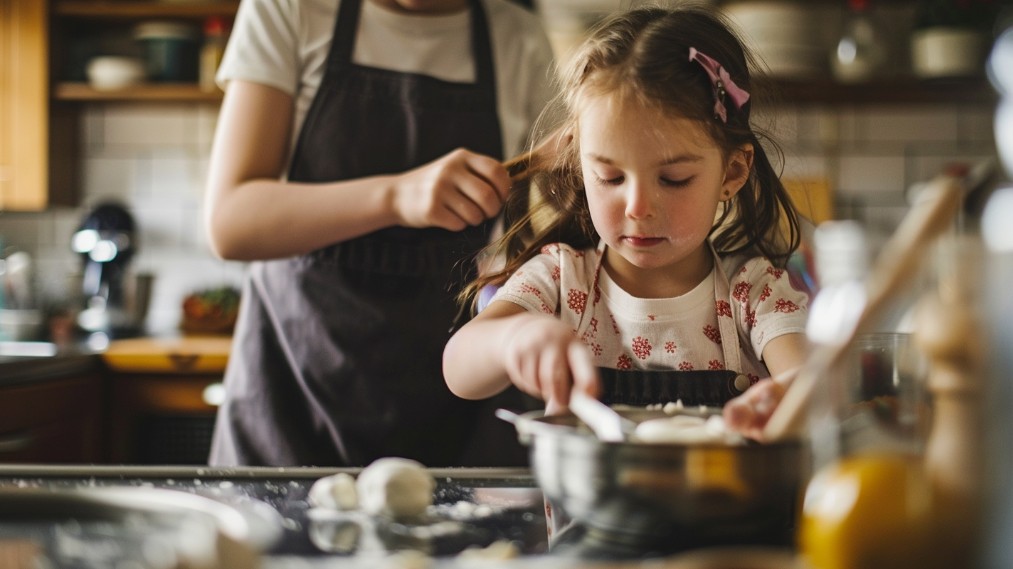
Involvement, Not Control: How to Make a Child Feel Important
It’s important for kids not only to be present but to feel significant. I try not to turn their help into ‘work by dictation.’ When a child does something their own way, it’s their contribution, even if it’s not like adults. For example, if they sprinkle salt in the wrong place, you can explain why and how otherwise, but don’t take the spoon from their hands.
A game that works well is: ‘choose the next step.’ I ask: ‘What can we do next?’ The child suggests themselves—and feels like the author of the process. Even if the decision isn’t the best, it’s important to give the opportunity to make mistakes.
- Let the child make choices (which bowl to choose, what to mix first)
- Don’t correct immediately if you can wait
- Encourage initiative: ‘Thank you for helping!’
It seems to me that this approach builds trust. The child feels: they are not being controlled, but involved. They are not afraid to try new things and are not ashamed of their mistakes.
Life hack: if you want your child to enjoy helping, let them be imperfect. Give space for experimentation.
Textures, Smells, Sounds: Why This Matters for Kids
Adults sometimes forget how many impressions a simple touch of dough or the smell of a fresh cucumber can give. For a child, the kitchen is not just food, but a whole world of new sensations. I love watching how little ones feel flour, smell spices, hold a bean in their hand. They don’t yet think that ‘this should be done quickly and cleanly.’ They explore.
Evenings when we cook ‘from what we have’ are especially rich in such impressions. The products are different: hard carrot, smooth bean, soft bread, the smell of fried garlic. Kids learn not only to combine tastes but to feel that the kitchen is alive and diverse.
I’ve noticed: if you allow a child to touch, smell, even taste individual ingredients, they become bolder in their food choices. They are curious—and that’s the best thing that can happen in the kitchen.
- Let the child smell different spices
- Allow them to mash, crush ingredients with their hands
- Pay attention to sounds: how it sizzles in the pan, how the cucumber crunches
Kids remember not only the dish but the sensations: how the kitchen smelled, how the noise sounded, how the dough looked on their hands.
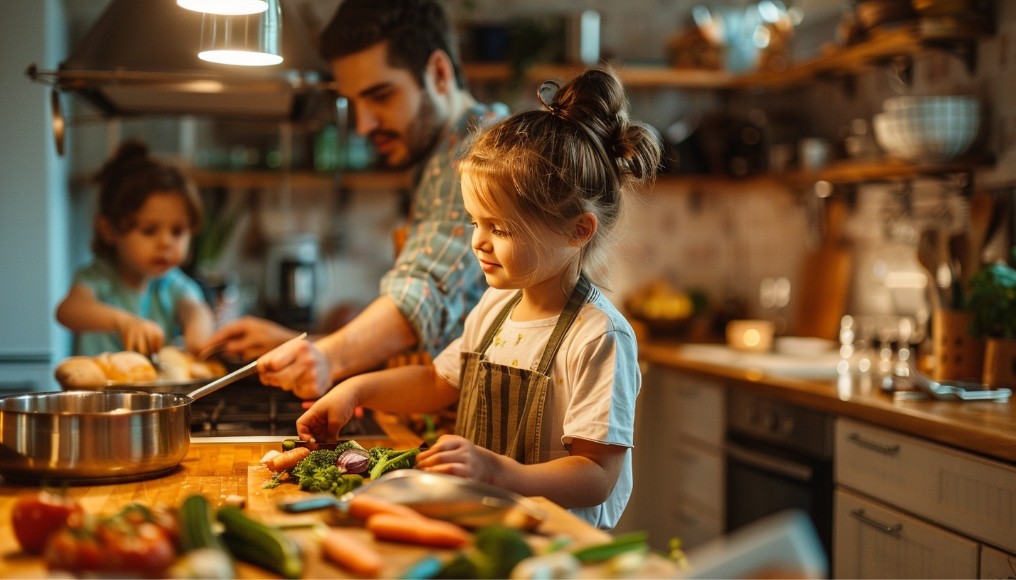
Common Adult Mistakes: How Not to Ruin the Family Adventure
Most often, kitchen idyll is ruined not by kids, but by adult expectations. I used to want everything to be quick, clean, and my way. But with experience, I realized a few simple things:
- Don’t demand perfect order—it’s impossible
- Don’t rush—kids live at their own pace
- Don’t scold for mistakes—it’s experience, not guilt
- Don’t take everything on yourself—share tasks
I had a case: I was rushing with dinner, nervous about spilled water. My daughter noticed my mood and didn’t want to help anymore. I then realized: better a little more time and less nerves than perfect cleanliness. Since then, I try to joke more, scold less, and always thank the kids for their help.
Remember: kids quickly pick up on adults’ moods. Your calm reaction is the best guarantee of success in the kitchen.
Another mistake is doing everything for the child. Let them try, even if you have to redo something later. Independence is not about speed, but about confidence.
And of course, don’t compare your family to perfect pictures from the internet. Everyone has their own style, their own traditions, and their own little kitchen adventures.
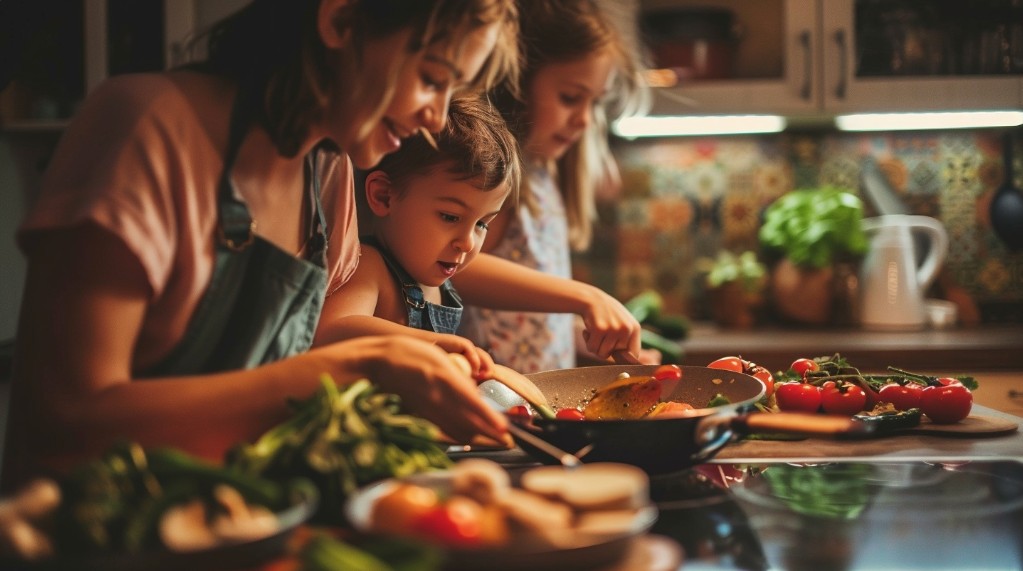
Life Hacks for a Peaceful Dinner from What You Have
Over time, I’ve accumulated a few small tricks that save evenings when there are few ingredients and many kids:
- Start with a fridge review with the kids—let them search for ‘treasures’ themselves
- Have a ‘magic’ bowl for everything left over—then decide together what to do with it
- Give each one a simple task: someone washes, someone cuts, someone crumbles
- Have a game: who can find something in the kitchen that hasn’t been used for a long time
- Let the kids taste individual ingredients—it awakens curiosity
- Don’t fear ‘strange’ combinations—sometimes they become favorites
If things don’t go as planned—just remind yourself: the main thing is not the dinner, but the atmosphere. Relax your shoulders, take a deep breath, and allow yourself to laugh at small mishaps.
A simple trick helps me: if something doesn’t work out, I make up a joke and suggest the kids ‘save’ the situation together.
Emotional Outcome: Trust, Curiosity, and Warm Memories
Cooking with kids is not about perfect dishes, but about small victories, shared discoveries, and even small defeats. It’s in these evenings, when payday is still far away, that we learn to see value not in products, but in attention to each other.
I still remember the smell of toasted bread from childhood, the taste of tea spilled for the first time on my own, and the excitement of not being scolded for a broken cup. Now I try to give my kids the same feelings: that they are important, that they are listened to, and that their help is valuable. Dinners from what you have are not about poverty, but about the richness of shared moments.
Kids grow up, but these simple evenings stay with them forever. They remember not the dishes, but the laughter, the smells, the little adventures in the kitchen. And it seems to me, this is how warm family stories are formed.
Have you ever had such evenings when you had to invent dinner from nothing? What moments do you remember the most? Share your stories—I’d love to hear how it is for you.