How to Distinguish Quality Cheese from Products with Additives

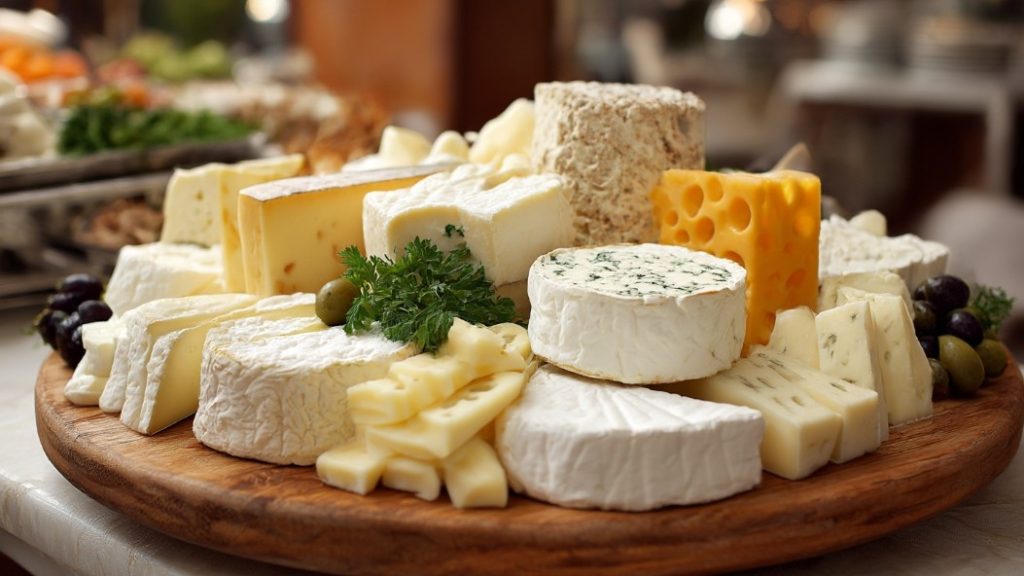
Cheese is one of those products that may seem simple at first glance, but in terms of touch, smell, and taste, it’s a real detective story. People often ask me: how to tell good cheese from the ‘store-bought’ kind that seems like cheese but is actually a mix of additives? About ten years ago, I was fooled by a bright label and bought ‘Dutch’ cheese that didn’t even melt on a hot pan. That’s when I realized: cheese isn’t about price or brand, it’s about attentiveness and a bit of experience.
There’s always something special in the air of a cheese shop at the market: a sweet aroma of milk, a hint of creaminess, sometimes a note of nuts or even grass. The quality of cheese is felt not only by the nose but also by the fingers — texture, softness, even the sound of the rind matters. We live in a world where ‘cheese product’ stands next to cheese, and the difference between them is not just taste, but a matter of common sense, satisfaction, and, frankly, money.
Let’s figure out how not to be fooled, how not to overpay for a pretty wrapper, and how to learn to distinguish real cheese from imitation without unnecessary nerves and disappointments.
What Real Cheese Looks Like: Color, Smell, Texture
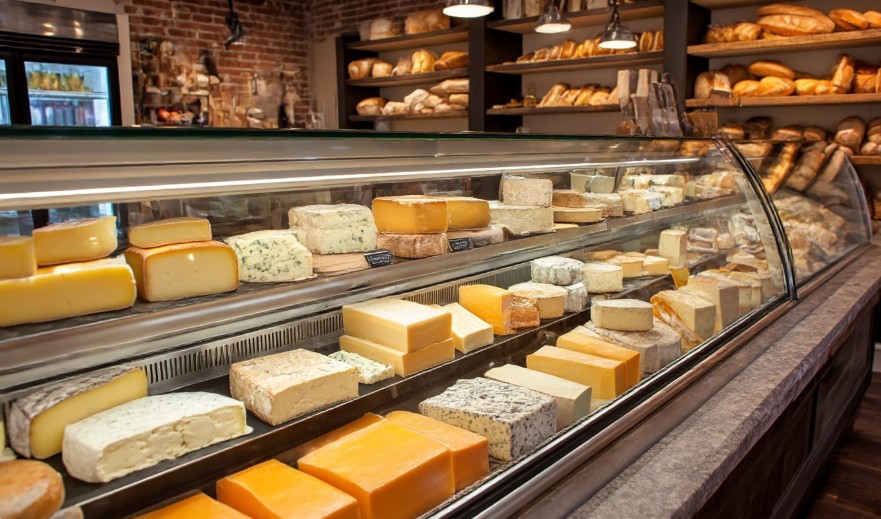
I’ve often seen people at the market choose cheese just ‘by sight’. They see a familiar yellow piece and put it in their basket. But real cheese isn’t just about color. Look closely at the piece: quality hard cheese has an even, not too bright shade, closer to light yellow or creamy. If the color resembles a marker, it’s a reason to be cautious: often, dyes are added to make it look more ‘appetizing’.
Smell is another marker. Good cheese smells like fresh milk, sometimes nuts, mushrooms, or even a light creamy aroma. If there’s an acidic, chemical note or a plastic smell, it’s not your option. I recall a trip to farmers near Kyiv: their cheese literally smelled like hay, a bit grassy, and it was the best sign of authenticity.
To the touch, cheese should be firm but not rubbery. You press it with your finger — it yields slightly but doesn’t spread or crumble. The surface should be free of slime, dry, not sticky. A slight sheen is okay, but if it ‘shines’, there might be palm oil or other additives.
Tip: always smell and touch the cheese if you can. These two things can’t be faked with a label.
Reading the Label: How Not to Fall into a Marketing Trap
Marketers have long understood: ‘cheese’ on the packaging sells better than ‘cheese product’. But the difference is significant. Real cheese consists of milk, starter culture, rennet, and salt. That’s it. If the ingredients include vegetable fats (especially palm oil), starch, preservatives, or flavorings, it’s no longer cheese, but a simulacrum.
Manufacturers often hide the word ‘product’ in small print while writing ‘Dutch’, ‘Swiss’ in large letters. Don’t be fooled. Pay attention to the fat content: for hard cheeses, usually 45-50% fat in dry matter is the norm. If less, the cheese is less rich; if more, it may be too fatty but still natural.
Another trick is ‘cheese product’ with flavor imitation. They might sell you something under the guise of cheese just because of flavorings. I once saw cheese on the shelf labeled ‘parmesan flavored’, though there was no hint of parmesan in the ingredients. So don’t be lazy to read, even if you’re in a hurry.
- Milk — the first ingredient
- No vegetable fats
- Minimal ingredients (4-5 components max)
- No E numbers or flavorings
Tip: if the ingredient list is longer than a short note, it’s not cheese but the result of an experiment.
Packaging and Appearance: What Can Reveal a Fake
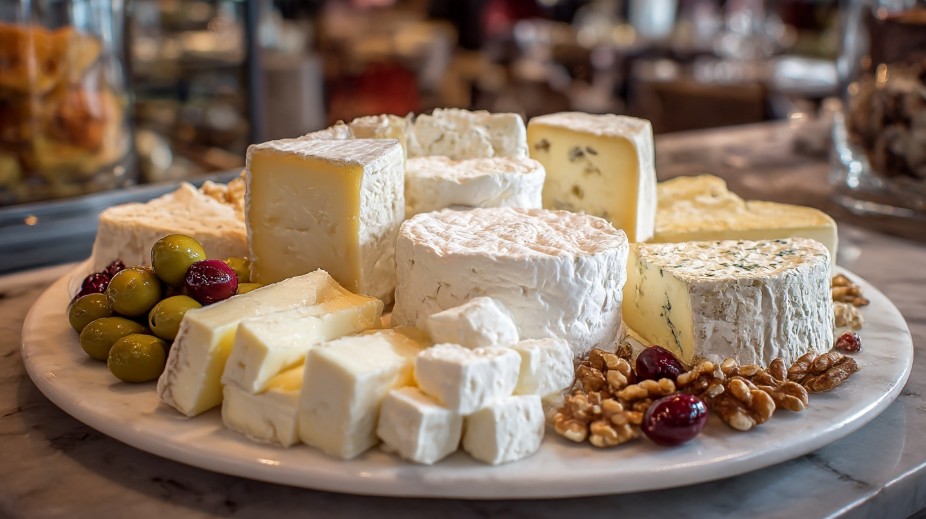
Packaging is not always a guarantee. Many subconsciously trust vacuum or brand. But even in the supermarket, I’ve caught ‘cheese product’ in a beautiful wrapper. Look for transparent windows — they show texture and color. If the packaging is full of condensation, crumpled, or the cheese inside has cracks, it’s a bad sign.
Real cheese in vacuum lasts longer, but if there’s liquid inside, storage conditions are likely violated or something extra is added. Farm cheese is usually sold in parchment or even just paper. It’s normal — cheese needs to breathe. A plastic tray and film are better than a polyethylene bag because they don’t allow moisture to accumulate.
Pay attention to the edges of the cheese. Good cheese shouldn’t have a dry crust, greenish or pink spots, mold traces (except for blue cheeses, but that’s another story). If you see ‘sweating’ on the slice, the cheese is either old or with additives.
Seasonality and Region: Why It Matters
Not everyone thinks about cheese as a seasonal product. Of course, the supermarket is full of ‘cheese’ all year round, but if you’ve tried real farm cheese in spring when cows graze on fresh grass, you know the difference. Spring and summer cheese is softer, more aromatic, with a distinct milky taste. In winter, when cows eat hay, cheese becomes denser, the taste less bright.
Region also plays a role. For example, Hutsul brynza is not like Poltava hard cheese. I once was in the Carpathians and tried cheese that smelled like forest and even a bit of smoke — in the village, they smoke it on fruit tree branches. Such things can’t be faked on an industrial scale.
Tip: if there’s a choice, buy cheese in season, look for local producers, try new things, don’t get stuck on one brand.
Common Mistakes When Choosing Cheese
The most common mistake is chasing discounts. You see a ‘-30%’ price tag, and your hand reaches out. But often discounts are placed on products that need to be sold quickly or on cheese imitation. You lose in quality, although it seems like you won in price.
Another mistake is buying a large piece ‘for reserve’. Cheese doesn’t like long storage in an open state: it quickly dries out, loses aroma. I’ve bought a kilogram ‘for all occasions’ several times, only to throw half away. It’s better to buy less but more often.
Some choose cheese only by taste sample at the market, without looking at the composition and appearance. But the sample piece may be quality, while the rest are not. Don’t hesitate to ask to see another piece if something is alarming.
- Ignoring the composition
- Buying blindly (without inspection and smell)
- Choosing only by price
- Trusting only big brands
- Storing cheese in an open bag
🍓 Why Quality Cheese is Important for Cheesecake
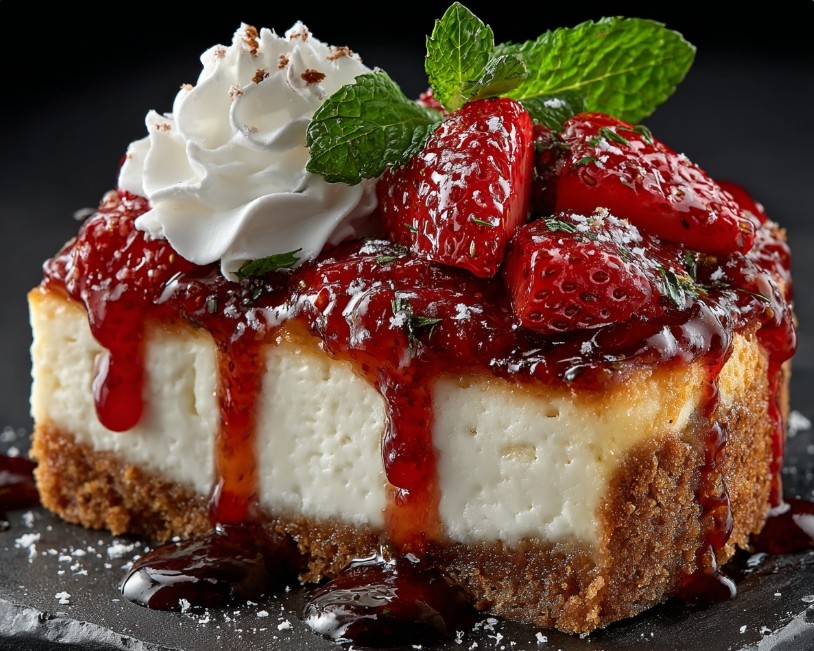
Cheesecake is a dessert where the quality of the cheese is immediately visible. Especially in berry variants, like with strawberries, where the delicate cheese base isn’t masked by chocolate or spices. That’s why strawberry cheesecake is a good example to understand the difference between real cheese and cheese product with additives.
For a classic cheesecake, cream cheese with a simple composition is used: milk, cream, starter culture. Such cheese gives a uniform, creamy texture, a soft milky taste, and pairs well with the tartness of strawberries. The filling turns out tender, not ‘rubbery’ or watery.
If you use a product with vegetable fats, stabilizers, or thickeners instead of cheese, the result will be different: the mass becomes denser, the taste flat, and the aftertaste may seem artificial. Even the right recipe won’t save the dessert in this case.
Therefore, cheesecake is a good test of quality: the simpler the cheese composition, the better the result on the plate. This rule works not only for desserts but for any dishes where cheese is a main ingredient.
Price and Common Sense: When It’s Worth Paying More
Cheese is an expensive product if it’s real. The principle here is: cheap cheese is almost always a cheese product. Producing quality cheese requires a lot of milk, time, and care. If you see cheese priced lower than good meat, think twice. It’s like buying ‘chocolate’ at the price of bread: something’s off.
I’m not saying you should always choose the most expensive. There are decent cheeses in the mid-price range, especially from small producers and at the market. But if you see ‘Gouda’ for 150 hryvnias per kilogram, it’s either a promotion or magic. Usually, it’s the latter.
On the other hand, overpaying isn’t necessary either. Branded cheese may cost more just because of marketing. Taste and quality are what matter. I’ve often bought simple farm cheese without a name that was much better than the ‘elite’ store-bought kind.
Tip: focus on the price/quality ratio, don’t fall for ‘premium’ if you don’t feel the difference in taste and touch.
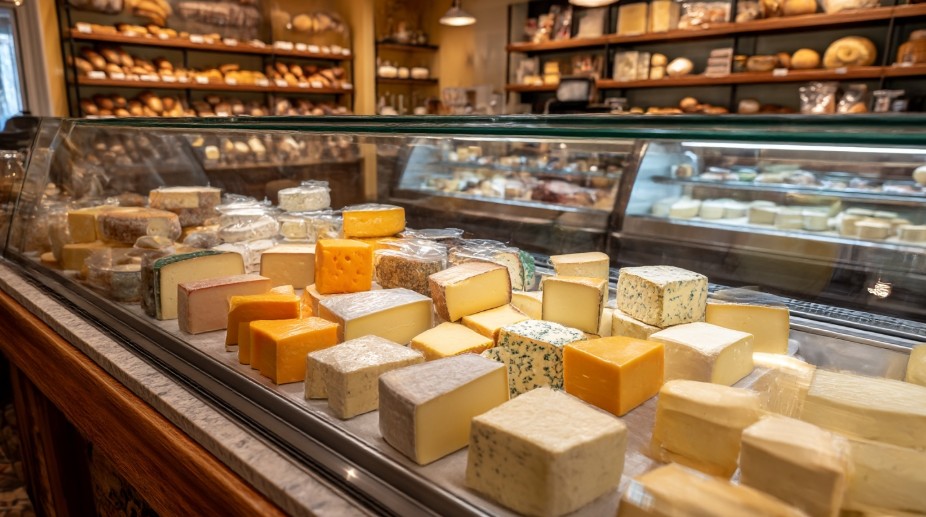
How to Store Cheese So It Doesn’t Lose Flavor
Cheese is alive. It breathes, changes even in the fridge. I’ve noticed: the more natural the cheese, the faster it ages. So storage isn’t just ‘throw it in the fridge’.
The optimal temperature is from +2 to +6°C. It’s better to keep cheese in the cheese compartment of the fridge or in the lower drawer. Wrap it in parchment or special cheese paper, not polyethylene. Paper allows moisture to escape, cheese doesn’t ‘sweat’ and doesn’t get slimy. If there’s no paper, you can use thick food film, but don’t seal it tightly.
Never place cheese near products with strong odors (sausage, fish, onions) — cheese quickly absorbs everything. I once forgot a piece of parmesan next to herring and couldn’t figure out what was wrong for a long time. Now I store cheese separately, often even in a container.
Hard cheese can last up to 2-3 weeks if done right. Soft cheeses — up to 5-7 days. If mold appears (not the intended kind), slime, or a sharp unpleasant smell, don’t risk it.
Tip: cheese that has dried a bit can be grated and used for sprinkling — but only if it’s mold-free and odorless.
Cheese in Cooking: How Quality and Fake Cheese Behave
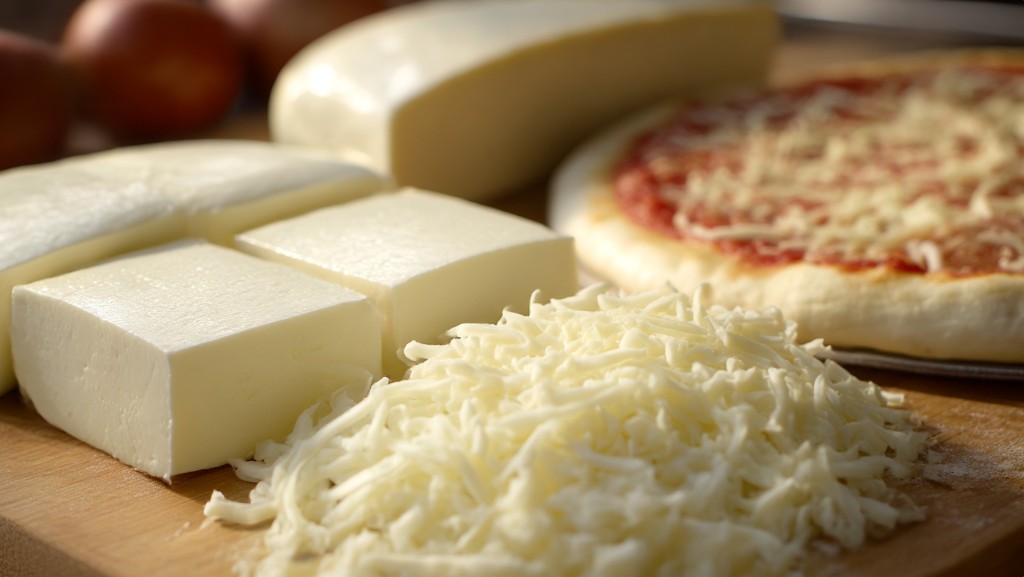
In the kitchen, the difference between real cheese and cheese product is immediately noticeable. I once bought cheap ‘Russian’ cheese for a casserole, and it just didn’t melt — it lay on the pizza like a rubber piece. Real cheese melts evenly, stretches when you eat khachapuri, gives an appetizing crust. In a dish, it doesn’t disappear but instead adds flavor and aroma.
Cheese product often releases a lot of fat, spreads, gives an unpleasant smell when heated. If you see cheese becoming transparent, ‘glassy’, or just not melting when heated, it’s not cheese. Real cheese crumbles or cuts evenly (depending on the variety), while fake cuts plastically like sausage.
Another sign is taste. Natural cheese leaves an aftertaste, slightly tart, milky, with notes of nuts or herbs. Cheese product is flat, sometimes even sweetish, with a chemical tint.
- Real cheese melts evenly
- Adds a distinct aroma to the dish
- Doesn’t release pools of fat
- Doesn’t have a synthetic smell
Cheese Selection Hacks at the Market and Store
I have a few simple tricks that help not to make a mistake even in an unfamiliar place.
- Try the cheese if possible. But be sure to inspect the piece, smell it, touch it.
- Ask the seller about the composition. If they start to get confused, it’s better to pass by.
- Buy in small portions, from different producers — compare at home. Over time, you’ll have a favorite.
- Don’t hesitate to return the cheese if you find a strange smell or taste at home.
- Look for farmers’ markets — they often have real cheese, not mass-market.
A farmer friend once taught me: ‘Cheese, like bread, should be alive — if it smells, looks good, and doesn’t break, it means it was made with soul’. Since then, I always check this way.
Tip: it’s better to take a slightly more expensive cheese from a trusted seller than a cheap one with a surprise in the composition.
🧀 Cheese in Baking: Using Cheese Casserole as an Example
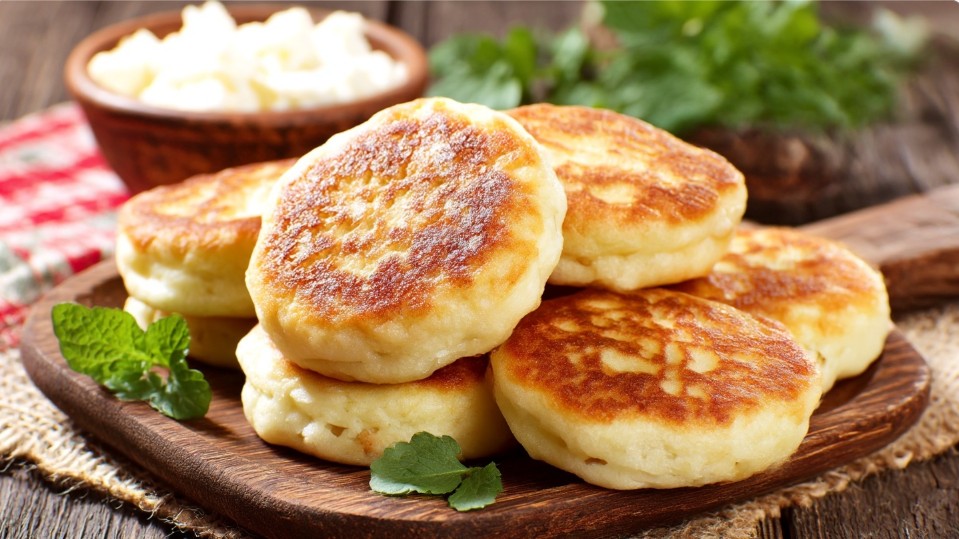
Another dish where the quality of cheese is crucial is the classic cheese casserole. It doesn’t have bright flavor ‘masks’, so any additives in the cheese immediately make themselves known: the texture can become grainy, too moist, or, conversely, dry and heavy.
For a successful casserole, you need cheese with a simple composition, without vegetable fats and thickeners. Such cheese holds its shape well, bakes evenly, and gives a tender, creamy structure without excessive density.

If you want to delve deeper into the technique, check out the material “How to Make the Perfect Cheese Casserole“ — it explains step by step which cheese to choose, how to prepare the mass, and what to pay attention to during baking.
This example clearly shows a simple pattern: quality cheese is not a detail, but the foundation of the result.
How to Develop Your Taste and Trust Your Senses
Cheese is about experience. Don’t be afraid to make mistakes, try new things, compare. Over time, you’ll start to feel the difference between ‘live’ cheese and a fake even with your eyes closed. Remember what you liked: aroma, texture, aftertaste. Keep a cheese diary, even just on your phone — it’s easier to return to successful purchases.
Invite friends for a cheese tasting — it’s not only fun but also useful for developing taste. I’ve hosted such evenings several times, and even those who said ‘I don’t understand’ could clearly say where the real cheese was and where something was off after an hour.
Trust your senses. If the cheese seems strange, don’t eat it, even if everyone around says it’s ‘normal’. Better to be safe than risk your health or mood.
Tip: every purchase is an experience. If one didn’t work out, the next time will be better.
Real cheese is more than a product. It’s an emotion, a habit, a piece of mood with tea or a glass of wine. Learning to choose quality cheese is not difficult if you pay attention to details and trust yourself. Have you had any funny or unsuccessful cheese stories? Share in the comments — it’s interesting to see what life throws at us on the shelves of our stores and markets.
Popular Questions and Answers About Cheese Quality
How to tell if cheese is natural and not a cheese product?
Natural cheese is made from milk, starter culture, rennet, and salt. If the ingredients include vegetable fats, palm oil, stabilizers, or flavorings, it’s a cheese product, not real cheese.
Can you determine cheese quality by its composition?
Yes. Quality cheese has a short and clear composition. The fewer and simpler the ingredients, the higher the likelihood that the product is natural.
What is the difference between a cheese product and cheese?
A cheese product contains milk fat substitutes, which reduce production costs but also lower nutritional value. Real cheese has better texture, taste, and benefits for the body.
Is it true that quality cheese can’t be very cheap?
Yes, it’s true. Natural milk and proper production technology have their cost. A very low price often indicates the use of vegetable fats or additives.
What does quality cheese look like on the outside?
Quality cheese has a uniform color, without cracks, slime, or excessive moisture. The texture is dense but not rubbery, without a sharp sheen.
Can cheese quality be determined by taste?
Yes. Natural cheese has a clean, milky taste without bitterness, acidity, or chemical aftertaste. Cheese product often seems ’empty’ or overly salty.
What does it mean if cheese crumbles or stretches a lot?
Excessive crumbliness or, conversely, rubbery structure can indicate a violation of technology or the presence of additives and stabilizers.
Is it necessary to read the labeling on the packaging?
Absolutely. Labeling helps distinguish cheese from cheese product. The name ‘cheese product’ must always be indicated by the manufacturer.
What is the normal shelf life for cheese?
Natural cheese usually has a limited shelf life. A very long shelf life may indicate preservatives or special processing.
Is it safe to consume cheese product?
Cheese products are not always harmful, but they are inferior to natural cheese in nutritional value. For a daily diet, it’s better to choose quality natural cheese.