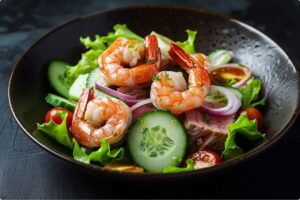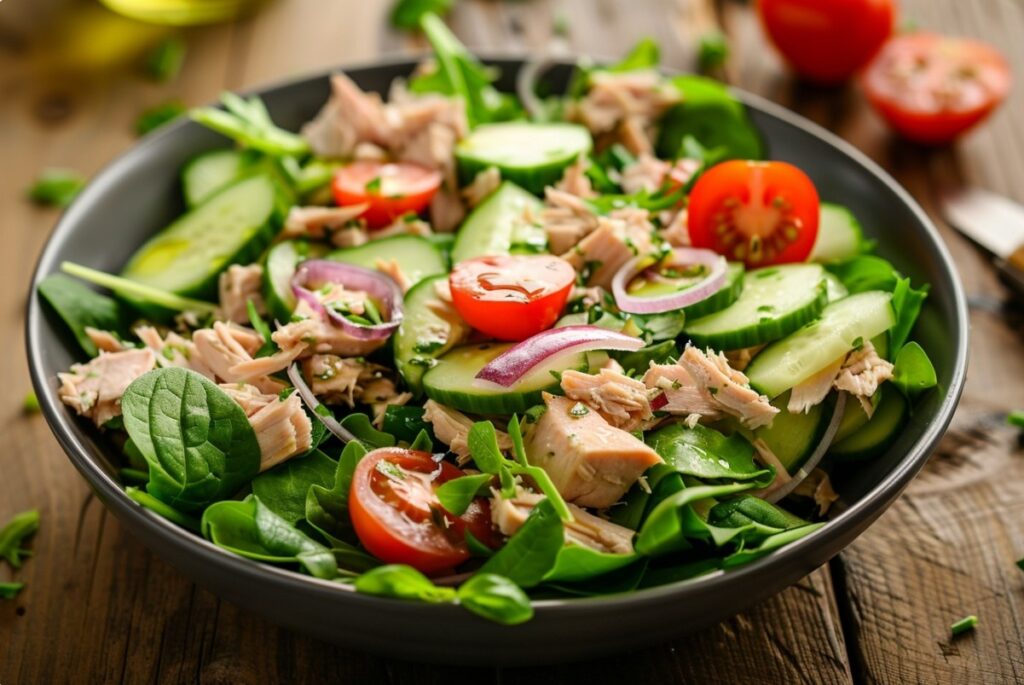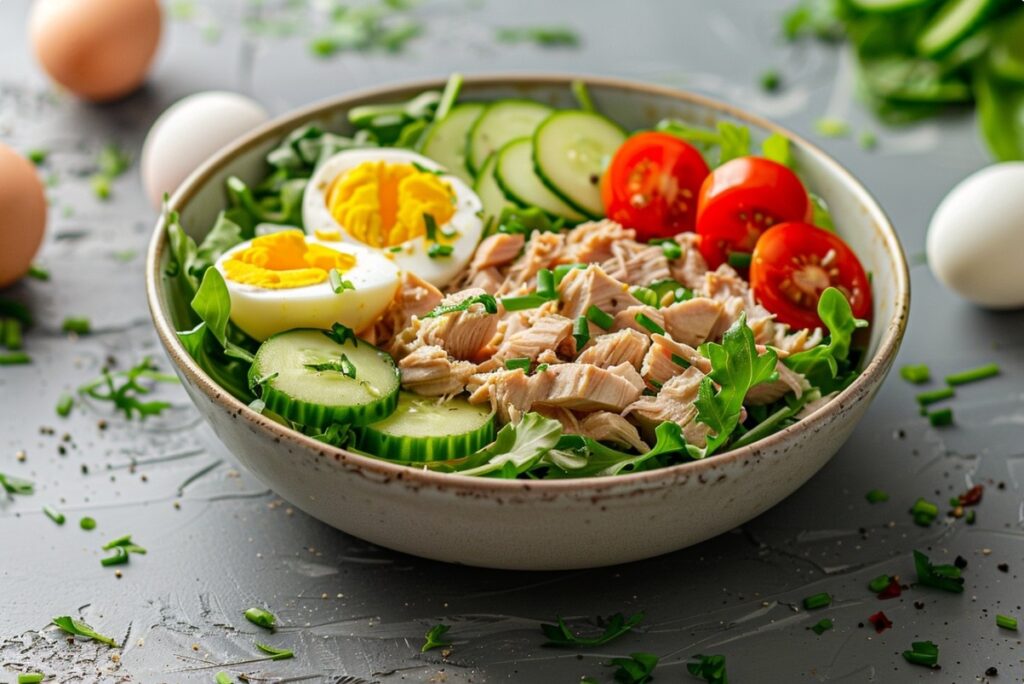
An Easy Tuna Salad for a Quick Weeknight Dinner

After a full-on day, you want something simple, light, and fast—this is exactly where a tuna salad shines. There’s no real cooking involved (unless you decide to boil an egg or use leftover potatoes), and you can pull together a proper dinner in 10–15 minutes.
The secret is the combo. Fresh veg keeps it crisp and juicy, tuna brings the protein and makes it feel like an actual meal. The result is balanced: filling without being heavy, and perfect for evenings when you just need dinner to happen.
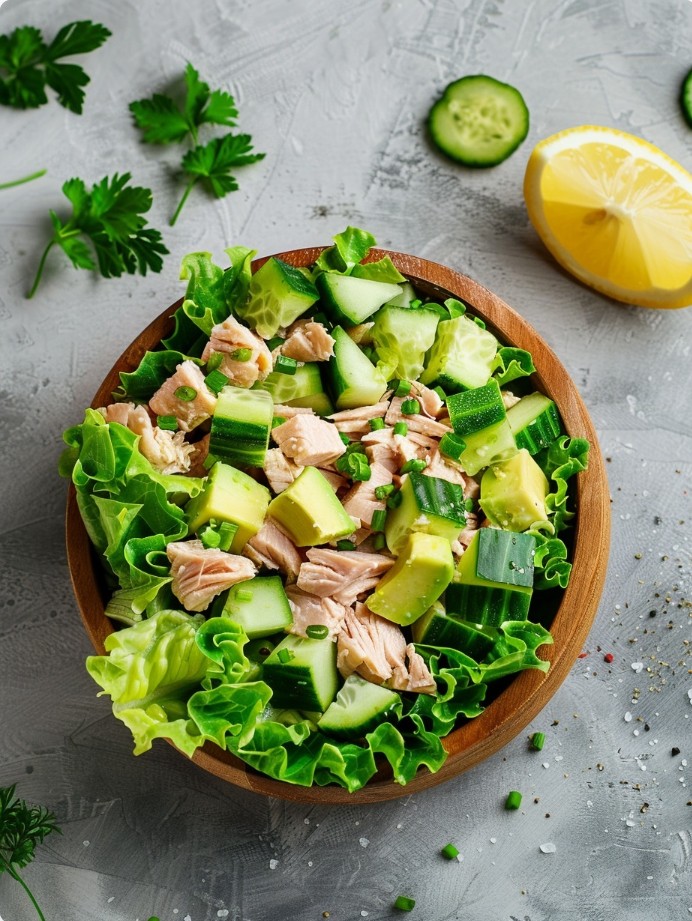
There are evenings when you walk in the door and realize you’ve got just enough energy to kick off your shoes, put the kettle on, and… somehow not starve. The stove feels like a big commitment. The fridge isn’t exactly cheering you up either: it’s either “nothing” or “you’ll have to think.”
In those moments, one thought plays on repeat in my head: I need to eat like a normal person. Not perfectly, not “restaurant-level,” just tasty, filling, and not at the cost of my last nerve. And ideally without ending up at the sink with a mountain of dishes, feeling like dinner was way too expensive.
That’s when a light tuna salad has saved me for years. Not as a “healthy lifestyle” statement—just as honest, quick dinner: open, chop, mix, eat. It’s a weekday lifesaver: after work, between calls, when the kids are already grumbling, or when you’re so hungry you’d happily eat plain bread.
Best part? You can adapt it to what you actually have at home. No heroics. No “I need 12 more ingredients.” Just making something good out of what’s within reach.
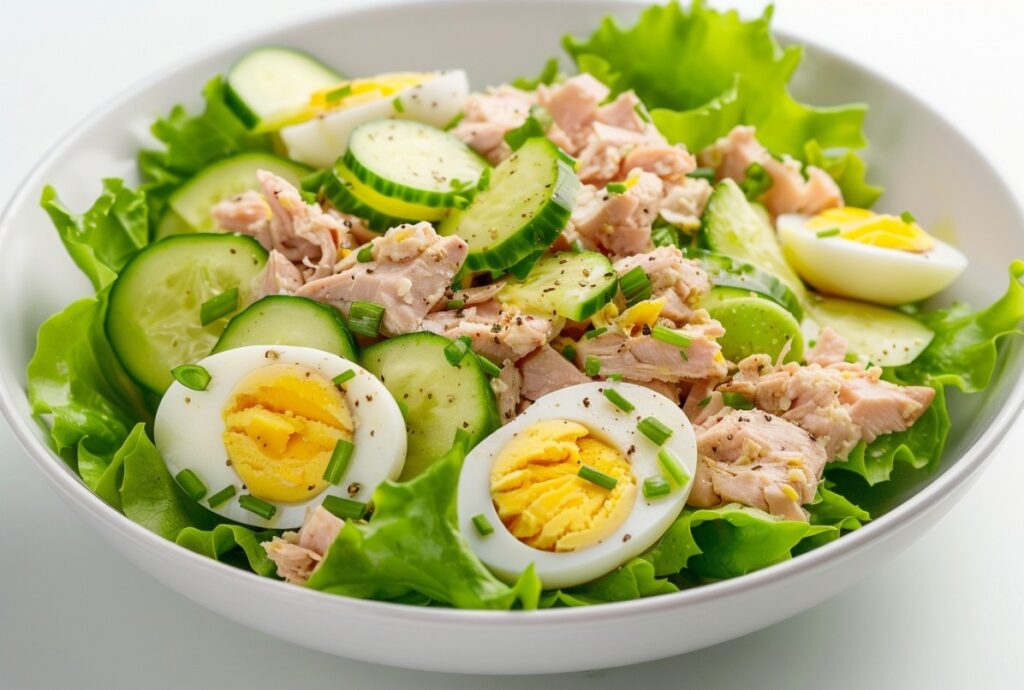
Why tuna salad is the ‘Plan B’ that often becomes Plan A
Some foods are basically made for weekdays. Canned tuna is one of them. It doesn’t ask for your mood, your time, or your inspiration. It just sits there. And if you’ve got even one can in the cupboard, it’s no longer “there’s nothing to eat”—it’s “I can throw something together.”
I love that tuna gives you that feeling of real food. Not a grab-and-go snack, but dinner. It’s filling, a little salty, with that light ocean-y aroma that basically promises: this will taste good, even if you’re exhausted and not a culinary genius.
Another bonus: it plays nicely with almost anything. Fresh vegetables, beans, corn, egg, rice, pasta, herbs—even plain onion and cucumber—and suddenly you’ve got something you’re not embarrassed to put on the table.
And the main thing: you can make this salad light—not “diet food” light, but “easy on your life” light. Minimal effort, maximum payoff.
A tiny Monday story
One Monday I got home late, with that buzzing-head kind of tired. In the fridge: half a cucumber, a bit of salad greens, a lemon, and a can of tuna (I buy them “just in case,” and it’s one of the few times I’m genuinely proud of myself). I tossed everything into a bowl, added a spoonful of yogurt, salt, pepper. And you know what? It ended up being one of the nicest Mondays that month—because I ate without drama.
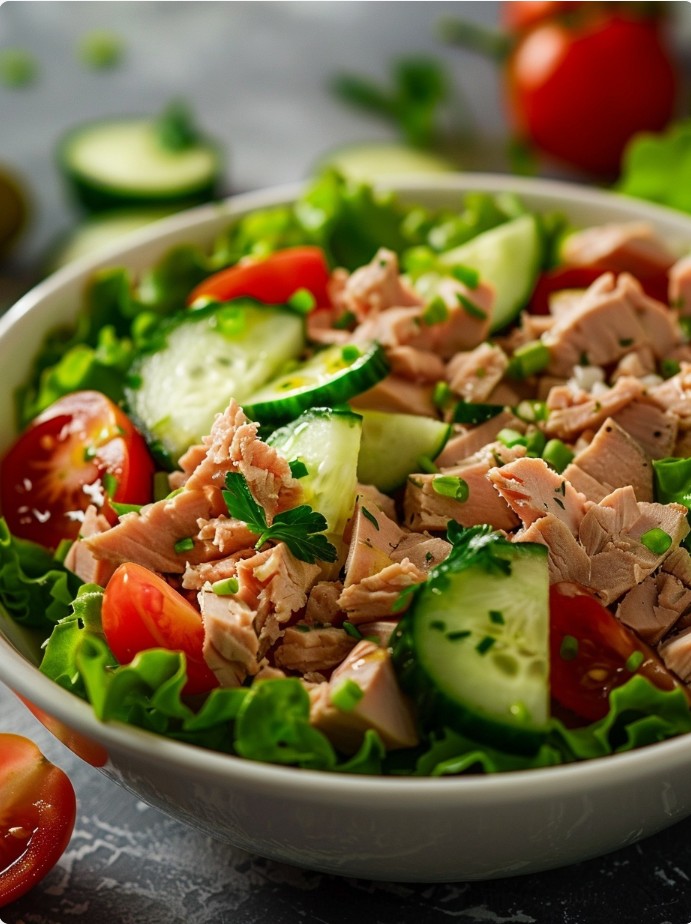
What to keep at home so tuna salad comes together in 7 minutes
I don’t really believe in the “perfectly stocked kitchen.” But I do believe in a few things that genuinely save you. Not apocalypse supplies—just small staples that keep you from ordering delivery when you’re already running on fumes.
Here’s what I try to have around at least sometimes (it doesn’t always happen, and that’s fine):
- Tuna in water or in oil (1–2 cans is already great).
- Something crunchy: cucumber, celery, radishes, Napa cabbage, salad greens. Even regular cabbage works if you shred it thin.
- Something soft: avocado (if you’re lucky), egg, canned beans, corn, yesterday’s boiled potatoes.
- A bit of tang: lemon, lime, pickles, capers, a splash of vinegar.
- Dressing: mayonnaise, yogurt, sour cream, olive oil—whatever you’ve got.
- Flavor boosters: mustard, black pepper, dried garlic, soy sauce, herbs.
This isn’t a “go buy this” list. It’s more of a reminder: if you’ve got even 2–3 things from it, dinner is absolutely doable.
Tip: I keep one can of tuna somewhere I can actually see it, not buried in the cupboard. Seriously. When you’re tired, your brain doesn’t search—it grabs what’s right in front of you.
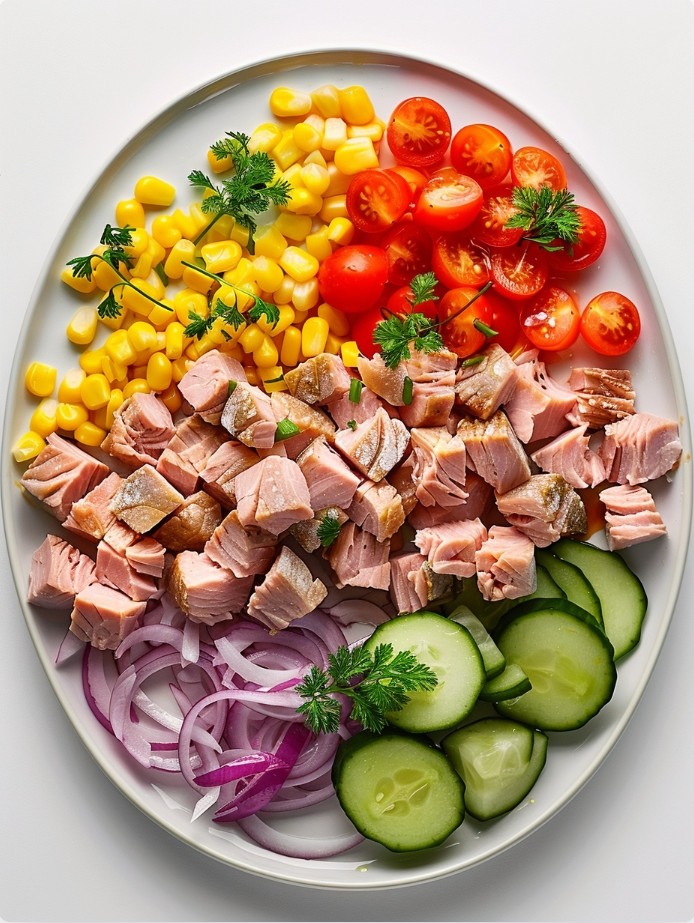
How to build a light tuna salad: the simple ‘3 layers’ rule
I hate when “quick meals” turn into complicated projects. So I came up with a very dumb—but very effective—rule: a base + something crunchy + something that ties it together. Tuna is exactly the thing that holds the whole salad together.
This isn’t a strict recipe. It’s just a way not to freeze in front of the fridge.
1) The base: so it’s dinner, not “chewing on leaves”
The base is what makes it feel like a meal. Easy options:
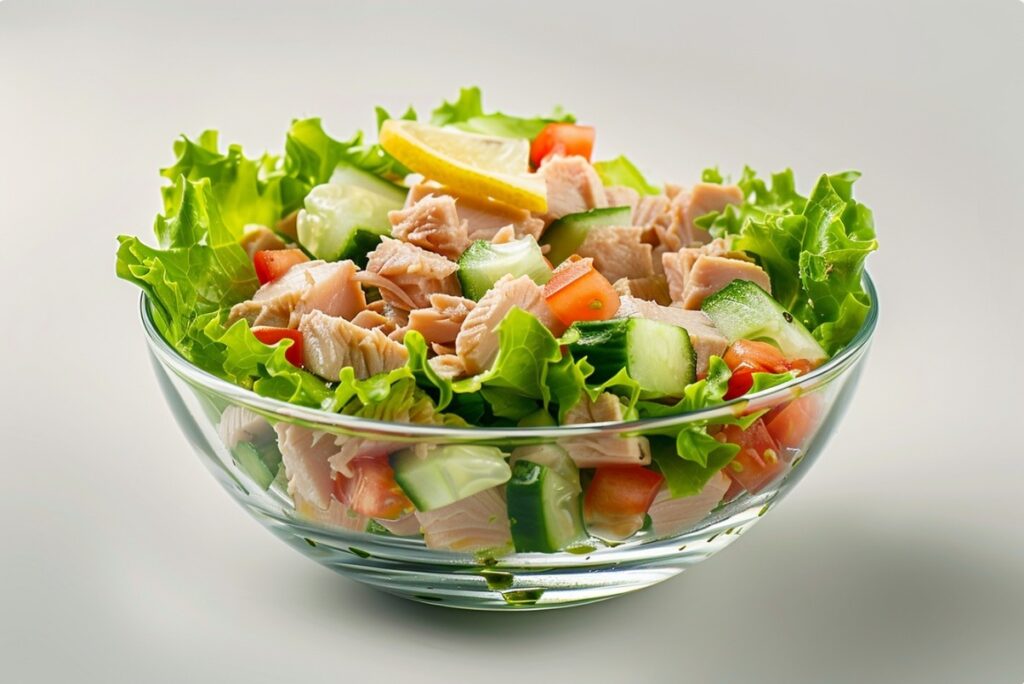
- salad greens/arugula/mixed greens—when you want it light;
- Napa cabbage or thinly shredded white cabbage—budget-friendly and more filling;
- canned beans or chickpeas—when you want it to really “hold you over”;
- yesterday’s boiled potatoes—when the day was long and you need comfort with a bit of attitude;
- leftover rice or pasta—and now you’re basically in salad-bowl territory.
2) Something crunchy: so the salad feels alive
A salad without crunch is like a movie with no sound. It’s technically there, but it’s not the same. Most often, it’s:
- cucumber;
- celery;
- radishes;
- bell pepper;
- pickles (yes, they count—just a different kind of crunch).
I love that moment when you stir the bowl and hear a little crunch. It’s a small thing, but it somehow brings back the feeling that you ate properly—not just “something.”
3) What ties it together: dressing + a little flavor
Two things matter here: a bit of richness and a bit of acidity. You don’t need much. Often 1–2 spoonfuls and a few drops are enough.
- Mayonnaise + lemon juice = a classic that always works.
- Yogurt/sour cream + mustard = gentler, but still really good.
- Olive oil + lemon/vinegar = lighter, when you don’t want a “heavy” dressing.
And one more thing: salt and pepper. It sounds obvious, but they’re what make tuna taste like “tuna in a salad,” not “tuna straight from the can.”
Tip: if the tuna is packed in water, I sometimes add 1–2 teaspoons of that liquid to the dressing. It’s slightly salty, boosts the flavor, and makes the salad feel more cohesive.
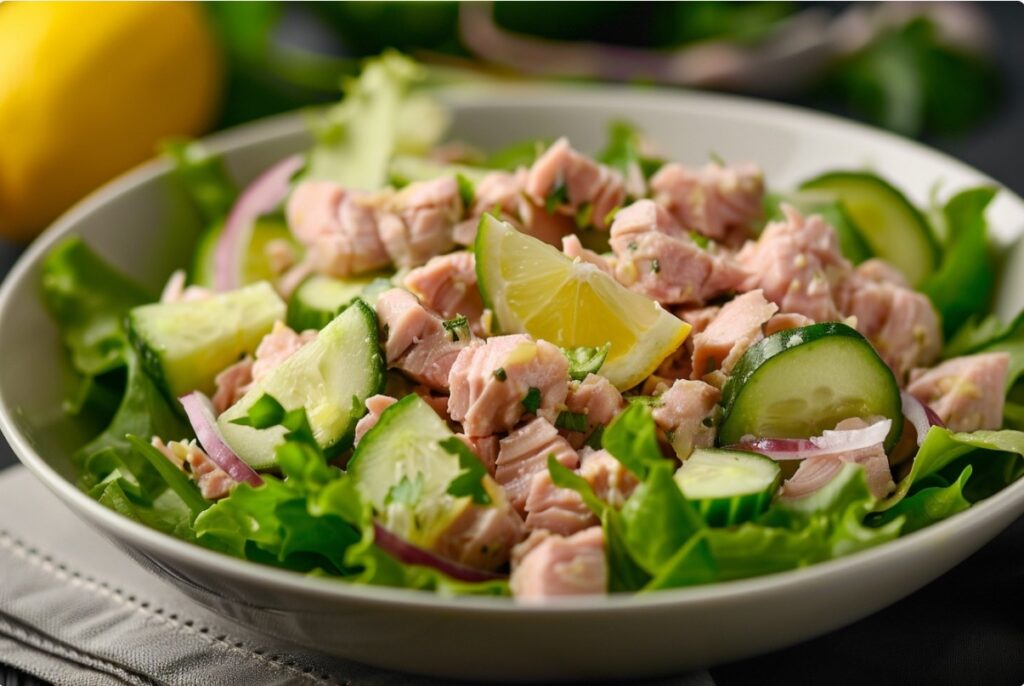
Tuna in water or in oil—and how to keep the salad from turning dry
No need to overthink it. I buy both—depending on my mood and what I’m mixing it with.
Tuna in water is more neutral. It’s easy to match with any dressing. But it can turn a bit dry if you don’t add enough sauce, or if your vegetables aren’t very juicy.
Tuna in oil is softer and more aromatic right away. Often it’s basically dressing on its own. But if there’s a lot of oil, the salad can feel heavy—especially if you also add mayonnaise.
What I actually do in real life:
- If the tuna is in water, I add something creamy (yogurt/mayo/avocado) or simply more lemon and a little oil.
- If the tuna is in oil, I drain some of it—but not all the way. I leave a little so the flavor stays.
A tiny story about “dry salad”
I once made a salad where everything was “right”: tuna, greens, cucumber, egg. But I went stingy on the dressing—figured it would be fine. It tasted like chewing paper with fish. Now I have a rule: it’s better to add dressing little by little, mix, and taste than to suffer through a dry bowl and get annoyed.
Tip: if the salad already turned out dry, don’t throw it away. Add a little lemon juice or 1 teaspoon of mayo/yogurt, mix, and let it sit for 3 minutes. The tuna relaxes, and the texture gets much nicer.
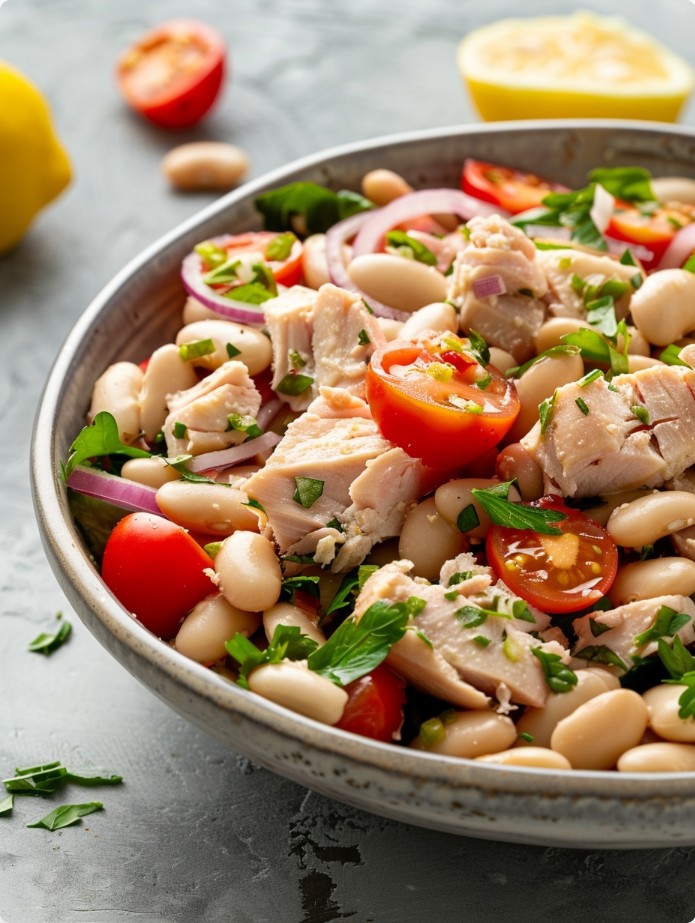
‘Use what you’ve got’ combos: 7 options for different moods
This is my favorite part, because it’s about real life. Not “go buy asparagus,” but “I’ve got a can of tuna and something sad in the crisper drawer.”
I’m not giving exact grams or telling you to do it one way. These are just ideas so your brain doesn’t stall out.
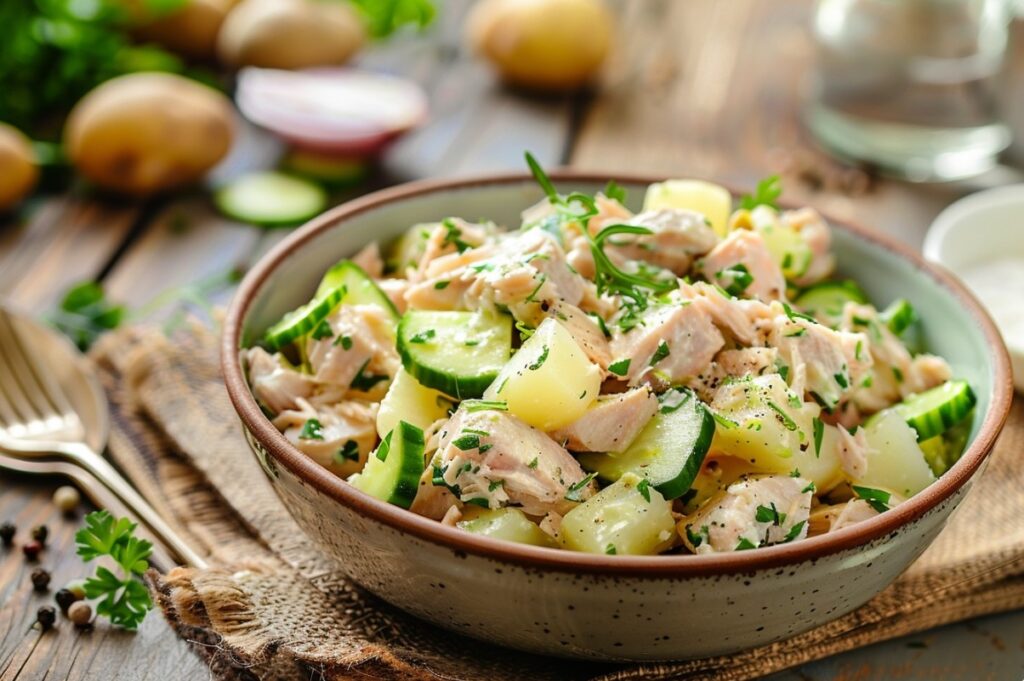
1) Cucumber + egg + tuna
Fast and familiar. Cucumber brings freshness and crunch, egg adds softness. Any dressing works—from a spoonful of mayo to yogurt with mustard. This is the one I make when the kids are hungry and there’s no time to “get creative.”
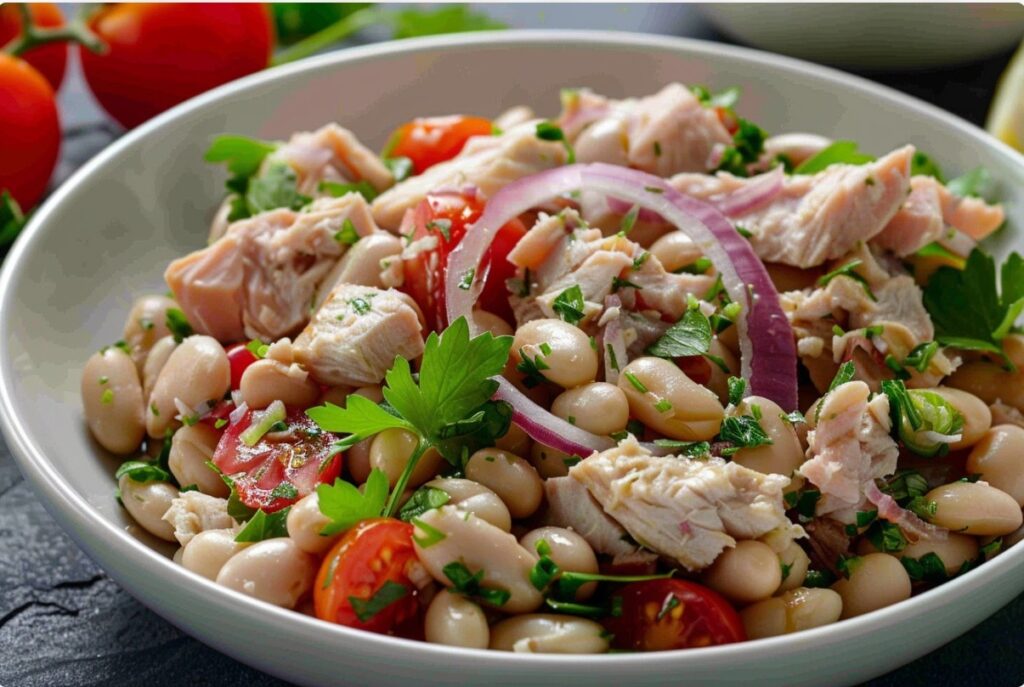
2) Tuna + corn + beans
This one will keep you full for hours. It’s hearty, a little sweet from the corn, and ridiculously easy. I like adding a pickle or a bit of onion for some attitude.
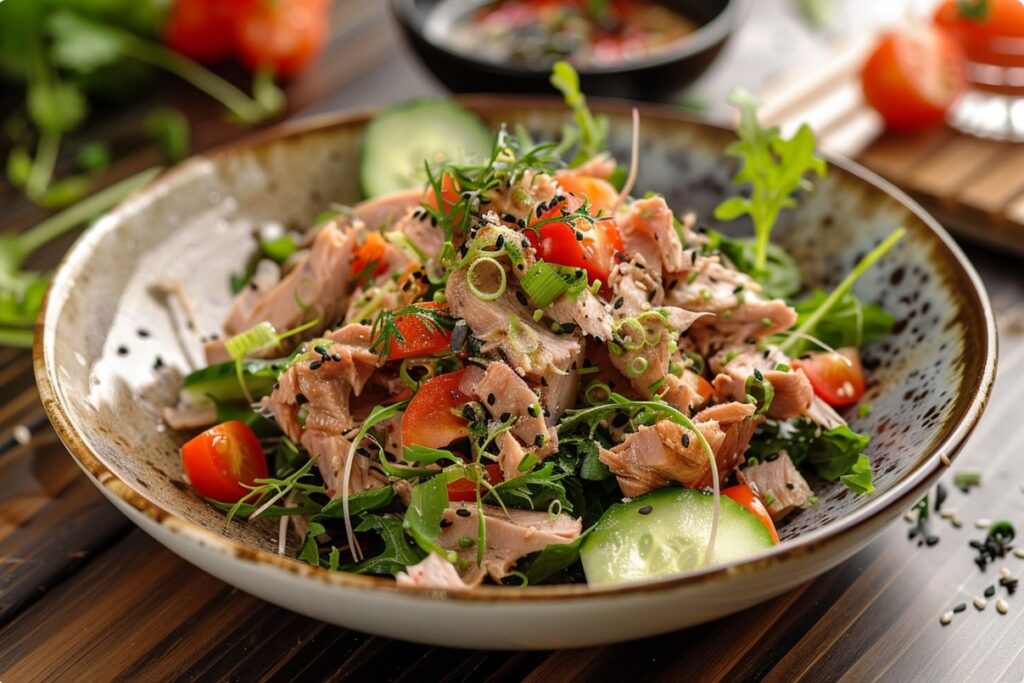
3) Tuna + tomato + onion (or spring onion)
When tomatoes actually smell like tomatoes, it’s a small holiday. Their juices mix with the dressing and the salad turns out really juicy. If the tomatoes are pale and wintery, I add a little lemon and a pinch of sugar—not to make it sweet, just to round out the flavor.
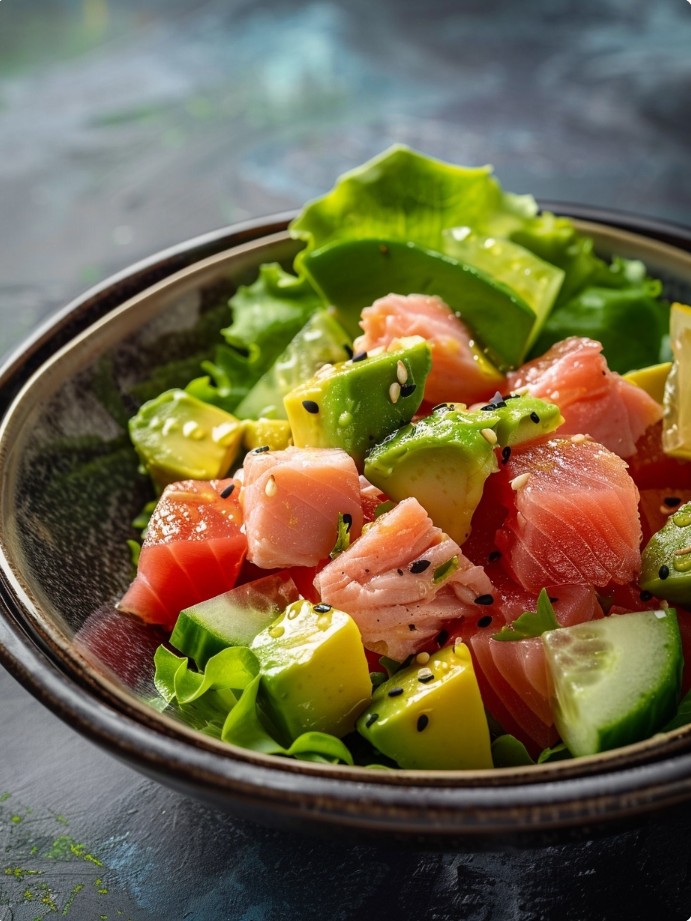
4) Tuna + avocado + lemon
This is the “soft and creamy” mood. Avocado works like a sauce: mash it with a fork, add lemon and salt, and you’ve got dressing with almost no effort. Avocado isn’t always hanging around at home, but when it is—this is one of the laziest, nicest options.
5) Tuna + cabbage + carrot
Yes, it sounds a bit cafeteria-ish. But if you shred the cabbage thin, add lemon, oil, and pepper, it’s genuinely good. Budget-friendly, crunchy, and a real lifesaver when the fridge is empty and you can’t be bothered to go to the store.
6) Tuna + greens + cheese (feta/bryndza/anything)
Cheese adds saltiness and makes the salad feel “finished.” Sometimes I throw in a handful of croutons or some toasted bread, and suddenly it looks better than I feel.
7) Tuna + leftover side dish
Leftover rice? Buckwheat? Pasta? No shame. Add tuna, something crunchy (cucumber/pepper), a bit of dressing—and you’ve got a salad that disappears faster than you can think, “Maybe I should just order pizza.”
Tip: when you’re using leftover grains or pasta, add a little more acidity (lemon/vinegar/pickles). It lifts the flavor and stops it from tasting like “just mixed leftovers.”
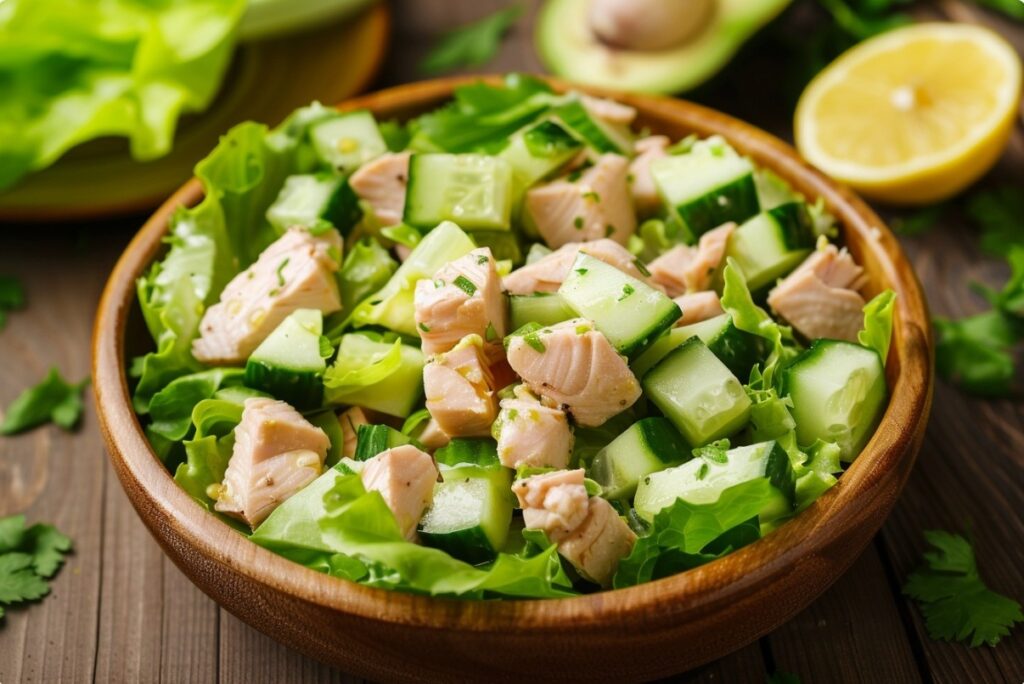
Common mistakes that make the salad feel ‘off’ (and quick fixes)
Tuna salad looks foolproof, but in simple dishes the little mistakes show up the most. I’ve made every single one of these. More than once. It’s fine—you just do it differently next time.
Mistake 1: not draining enough—or draining it bone-dry
If the tuna is swimming in liquid, the salad can turn watery. But if you drain every last drop and leave dry flakes behind, it can feel like sand in your mouth.
Quick fix: drain most of it, but leave a little. Or add the liquid into the dressing 1 teaspoon at a time, until the texture feels right.
Mistake 2: too much onion
Onion is great, but it can take over fast. And then you’ve got “onion salad,” not tuna salad.
Quick fix: if you went overboard, add more base (cucumber, greens, beans) and a little acidity. Or rinse the chopped onion under cold water before adding—it mellows it out.
Mistake 3: not enough salt—or no pepper
Tuna tastes a bit salty already, so it’s easy to think you’re fine. But vegetables “eat up” salt. Pepper is what gives that grown-up, not-boring flavor.
Quick fix: salt at the very end, after mixing. And I’m usually more generous with pepper than I think I need (still, no need to go wild).
Mistake 4: dressing that’s too heavy
If there’s more mayonnaise than everything else combined, it’s no longer a light dinner—it’s the kind of meal that makes you want to lie down. Sometimes that’s fine. Just not always.
Quick fix: add something fresh and juicy (cucumber, tomato, greens) and a squeeze of lemon. Or loosen the mayo with yogurt/sour cream.
Mistake 5: everything is cut too big
Then you’re chasing tuna around the plate, cucumber falls out, greens tear—eating becomes annoying. And when you’re tired, annoying is a dealbreaker.
Quick fix: chop smaller, especially for an everyday salad. It should be easy to eat with a spoon—no wrestling.
Tip: if you want that “café salad” vibe, cut the main ingredients to roughly the same size. Not perfect—just close. It really does make the whole thing taste more put-together.
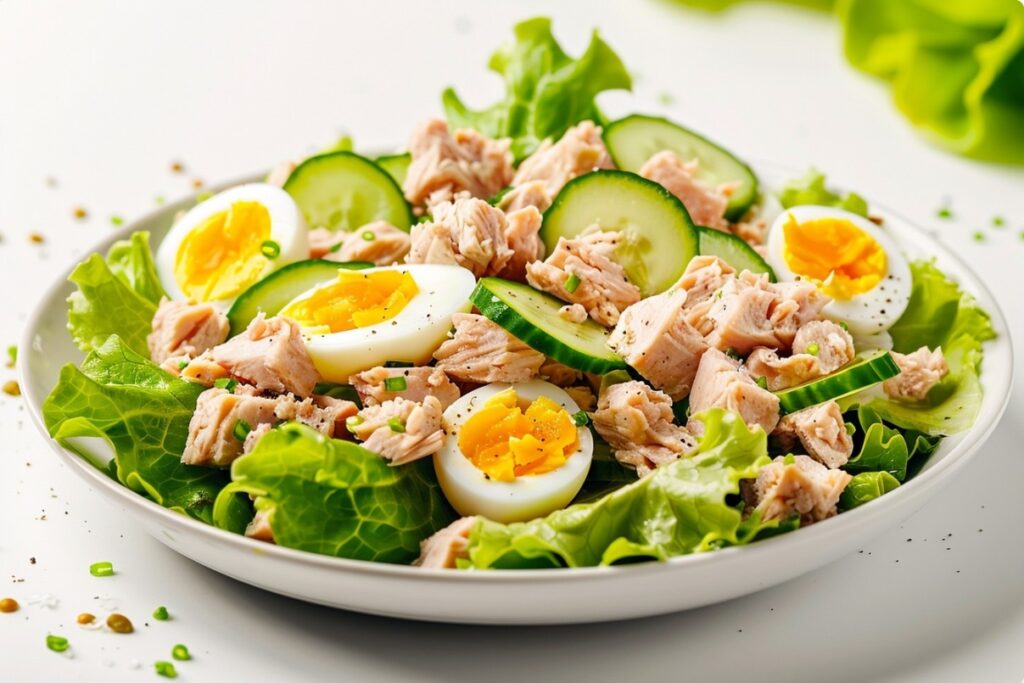
How to make dinner even easier: low-effort prep
I’m not the kind of person who meal-preps the whole week on Sunday and lines up containers like a spreadsheet. I can manage “wash a couple things and keep my sanity.” But a few small habits really do save nerves.
Keep “quick vegetables”
Cucumber, tomatoes, salad greens, Napa cabbage—these don’t need much peeling or fuss. If I know the week will be rough, I try to buy at least one of them. Not a “health kit,” just one real chance at a normal dinner.
Eggs are the best insurance policy
Hard-boiled eggs rescue a lot of situations. But even if they’re not boiled yet—it’s still quick. Sometimes I put eggs on to boil while I wash my hands and grab a bowl. Then I cool them under cold water, peel, and done.
One bowl, one fork, one cutting board
It’s a small thing, but it matters. When you cook “quickly” and then have to wash five bowls, it feels like a scam. I often chop everything straight into one big bowl: dry/clean ingredients first, then tuna, then dressing. That’s it.
Tip: if you’re truly out of energy, make the salad in the same bowl you’ll eat from. It’s not “wrong.” It’s smart.
When there’s ‘nothing’ at home: easy swaps so you don’t suffer
I know that feeling when you open the fridge and it’s basically just a lightbulb and one lemon that’s seen better days. And you still want to make something.
Here are a few swaps I use all the time. They’re not about “perfect”—they’re about “this will work”:
- No fresh cucumbers/tomatoes — use pickles, sauerkraut, even cornichons. That tang is a best friend to tuna.
- No salad greens — shred cabbage, or use frozen peas (quickly pour boiling water over them if you want them softer). Yes, it’s not a “light green salad” anymore, but dinner will happen.
- No mayo/yogurt — oil + lemon + mustard (if you have it) makes a perfectly good dressing. Or just oil with salt and pepper.
- No lemon — a drop of vinegar or a little brine from pickles/olives. Go easy—it’s salty.
- No “soft” ingredient — add bread on the side. Yes, just bread. That’s also a solution.
And this matters: if dinner tonight is tuna with cucumber and a slice of bread, you’re not “bad at cooking.” You’re just a tired person who took care of yourself.
A tiny story about “a sandwich counts as dinner”
I had a stretch where work was so intense that evenings were for silence only. I made tuna salad every other time, and sometimes I just piled tuna onto toast, topped it with cucumber and a bit of pepper. And it was fine. Honestly, sometimes the best dinner is the one that doesn’t make you hate your kitchen afterward.
A light tuna salad isn’t about culinary achievements. It’s about having a weekday safety net: quick, tasty, no extra steps. A can of tuna, something crunchy, something soft, a little acidity—and you’re eating, not suffering.
So what’s your go-to rescue dinner when you need something fast? What’s always on standby in your fridge—eggs, beans, cucumbers… or do you also keep that one “just in case” can of tuna for a rainy day?
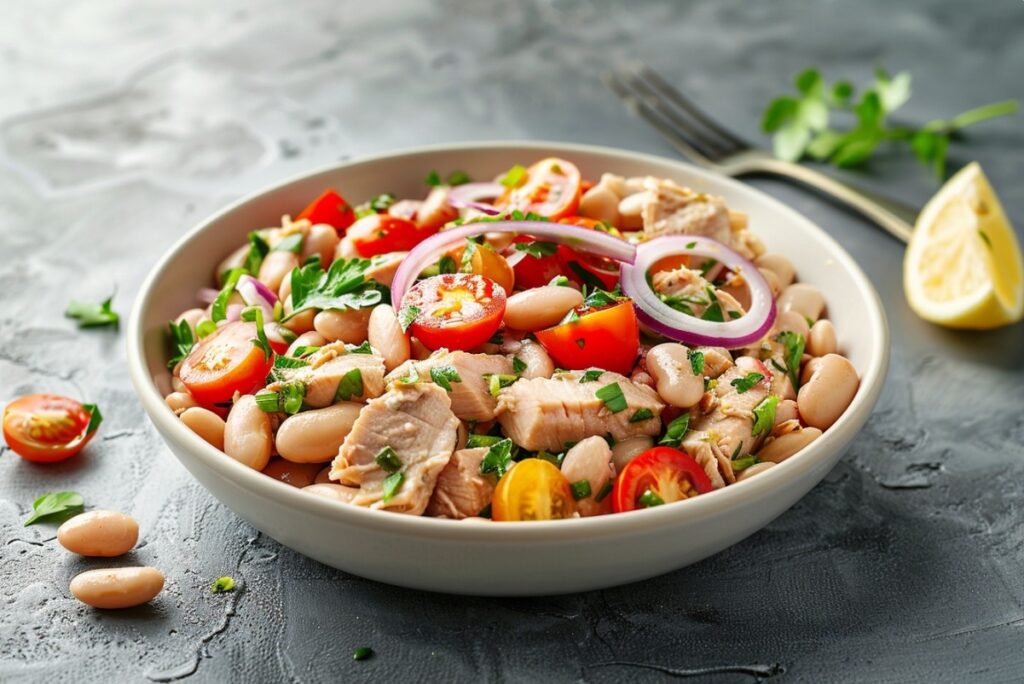
If you want one more tried-and-true idea for a light, quick dinner, take a look at this easy tuna salad. It’s a great example of how to combine simple ingredients without mayonnaise and still get a fresh, balanced flavor without that heavy feeling. This approach makes it easy to put dinner on the table in 10–15 minutes while keeping the clean taste of tuna and vegetables front and center.
Frequently asked questions
Why is tuna salad good for a light dinner?
It balances protein from tuna with fresh vegetables for volume and fiber, so it’s filling without feeling heavy—especially helpful in the evening.
How fast can you make tuna salad?
Most versions take 10–15 minutes since canned tuna is ready to eat and the rest is simple chopping and mixing.
How do you keep tuna salad from turning dry?
Use enough dressing and add acidity (lemon/vinegar). If tuna is packed in water, mix in 1–2 teaspoons of the liquid or add something creamy like yogurt or avocado.
Is tuna in water or in oil better for salad?
Tuna in water is more neutral but can be drier; tuna in oil is softer and more flavorful but can feel heavier. Drain oil partially, not completely, for the best texture.