First Hot Dishes That Are Hard to Ruin

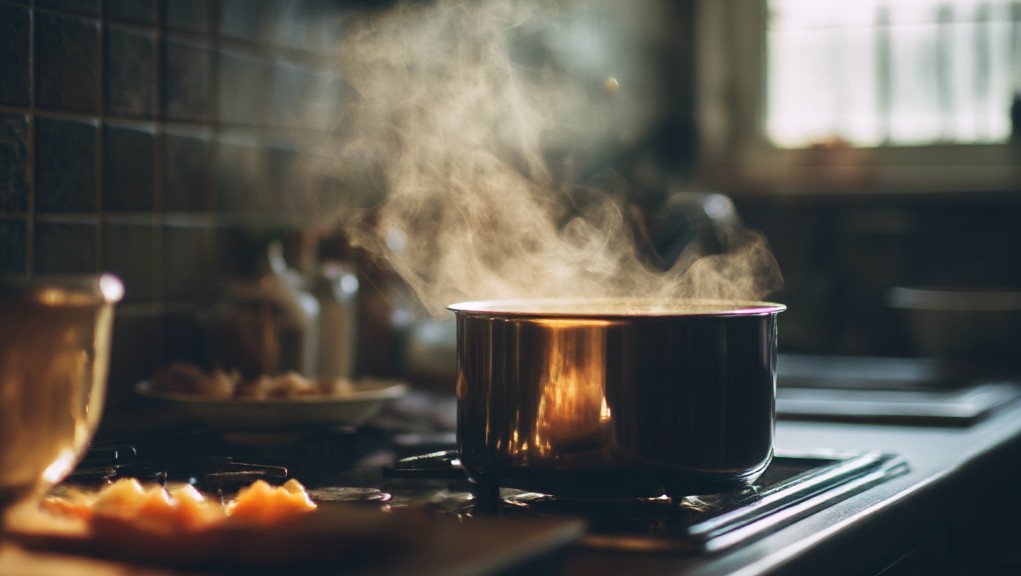
There is a special moment when a person first picks up a spoon to taste something they’ve cooked themselves. It’s not about perfection. It’s about that first sip of warmth that you created yourself — and the feeling that you can do it. I remember it too: the smell of a steaming pot, the nervous pause before removing the lid, and the trembling fear that everything will be too salty or not resemble food at all. But these small victories remove the fear of the kitchen. You don’t have to cook masterpieces to feel confident. It’s enough to make something hot and homemade at least once and see that even if something went wrong — it’s not the end.
Hot dishes are like a cozy blanket: they give a sense of calm and bring people together at the table. Beginners often practice on them. But here’s the catch: minimal knowledge about temperature, time, sequence — and suddenly the soup resembles water, and the porridge turns into glue. Many think, “I can’t do it,” but the real reason is not in their hands but in the lack of understanding of simple things. I want to show that even the very first hot dishes can be made to truly delight. It’s not about repeating “like someone else,” but about feeling the process — and small tips that work in real life, on a regular stove in an ordinary apartment.
Let’s figure it out together: how basic hot dishes work, why some techniques never fail, how to recognize when everything is going right, and what to do if something goes wrong. The main thing is not to be afraid to try and not to scold yourself for small mistakes. I’ll tell you how I overcame this fear myself and what tricks still help me.
Why Hot Dishes Are the Perfect Start for Beginners
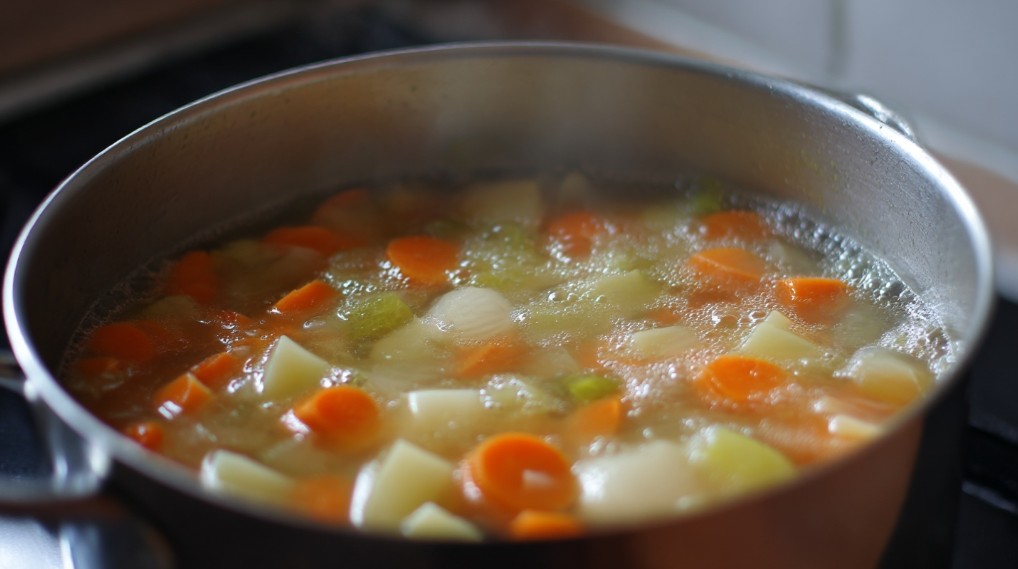
Hot dishes are not just about satiety. They give time for reflection, trials, and adjustments. Unlike dishes that need to be fried to the second, here there is room for maneuver. When you cook soup or porridge, you can stop, taste, add something else, instead of standing tensely by the frying pan. That’s why I always recommend starting with simple hot dishes to those who are afraid of ruining them.
I remember when I first cooked soup in a student dorm room. The stove was old, the pot thin, and the recipe from my mother’s memory. I was worried that everything would overcook or burn. But hot dishes forgive a lot: even if something goes wrong, you can always add water, spices, change the texture. It’s not baking, which is “either-or.” The main thing here is to understand the process, and then you feel like the master of the situation.
One of the secrets: a hot dish gives a chance to understand how products behave when heated. From here comes confidence in further experiments. Hot dishes teach you to feel the smell, color, density, not just read instructions. This is the first step to freedom in the kitchen.
How Simple Soups Work: From Broth to Flavor
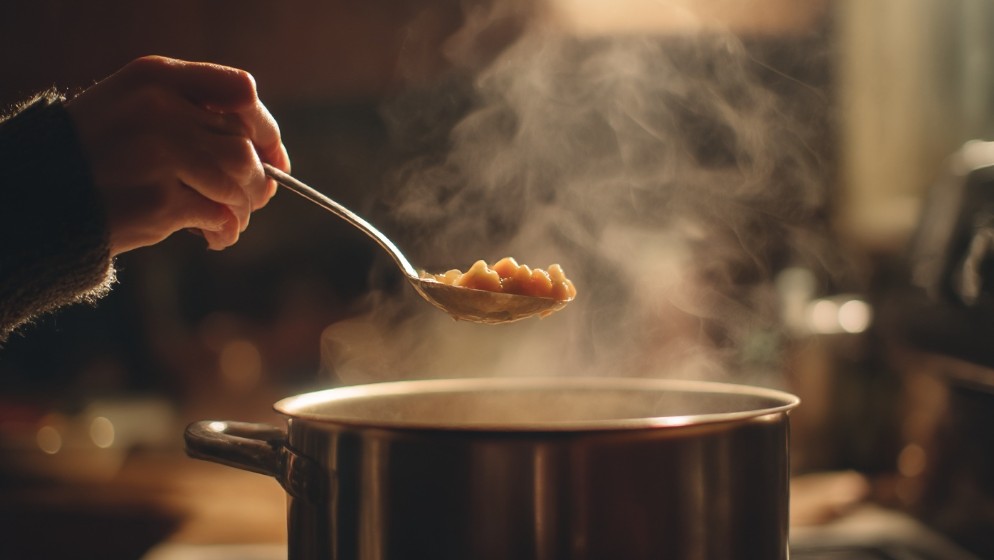
Soup is a classic that millions of people start with. But this is where the understanding of general principles is laid: how water behaves, what temperature is, why it’s important not to rush. I often see beginners throwing everything in at once and then wondering why the soup is “nothing.”
Why Sequence is Important
When products are added to hot water one by one, they gradually release flavor and aroma. If everything is thrown in at once, the potatoes turn into mush, and the carrots are still hard. I noticed this back in school when I cooked soup for my younger brother: he loved everything crunchy, and I liked it overcooked. We often argued about when to add vegetables until we learned to observe the change in color and smell.
Temperature — Your Friend and Foe
To a novice cook, it seems that the higher the heat, the faster it will be ready. But in soups, it works the opposite: strong boiling “breaks” the texture, and the products become tough or fall apart. Here’s the trick: soup should not be boiled but simmered. When there are only occasional bubbles on the surface, the soup retains both the smell and color and the shape of the vegetables. I always say: if it’s quiet in the kitchen and a light aroma is coming from the pot — you’re on the right track.
How to Recognize the Right Moment
The sense of smell helps a lot: when the aroma becomes rich and mixed — the base is ready. The color of the broth becomes deeper, and the vegetables are soft but not falling apart. I like to taste a spoonful of soup before adding salt: it’s easier to feel what’s missing. Don’t be afraid to experiment with this — even if it doesn’t turn out exactly as planned, you’re already learning to hear the product.
Common Soup Mistakes
- All vegetables are thrown in together — some overcook, some remain hard.
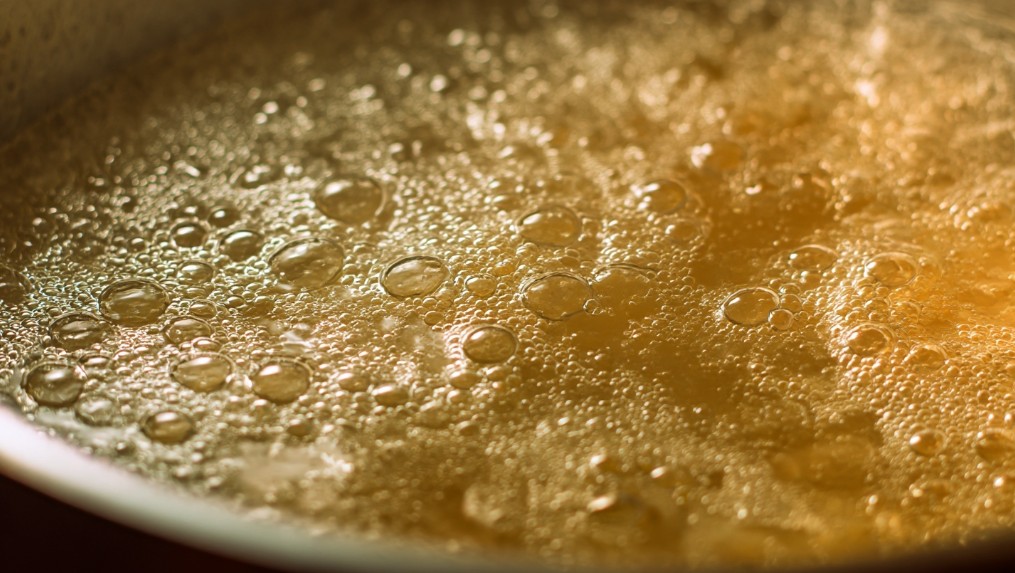
- Constant boiling — the soup is cloudy, and vegetables “fall apart.”
- Salt is added too early — the flavor “gets lost” under the lid.
- Forgetting to skim the foam — the broth becomes cloudy and has a bitter taste.
Tip: If the soup is too salty, add a piece of raw potato, cook for 10 minutes, and remove. It will “absorb” the excess salt.
Porridges: Simple Physics and Texture
Porridge is another “trainer” for beginners. Here, simple physics works: the ratio of grain to water, patience not to rush, and constant attention to texture. I’ve seen people lose heart after the first lumpy porridge, although it’s just a matter of ratios and time.
What Affects the Result
The main thing is not the amount of grain, but the ratio to the liquid. For different porridges, these are different numbers, but the most important thing is not to be afraid to look under the lid and taste. The grain should “breathe,” not be squeezed by water or, conversely, dried out. I love the light smell of toasted grain — it means the heat is distributed evenly, and the taste will be more pronounced.
Texture Control
Don’t be embarrassed if the porridge turns out either thick or runny. It’s normal. Over time, you start to feel when to add a spoonful of water and when to just stir. One trick helps me: I turn off the stove earlier, cover it with a lid, and let the porridge “come” on its own steam. It becomes more tender, doesn’t burn, and doesn’t turn into glue.
Common Porridge Mistakes
- The heat is too high — the bottom burns, the top is raw.
- Stirring during cooking — the porridge becomes lumpy.
- Salt and sweeten immediately — the taste becomes “flat.”
- Covering tightly with a lid — the porridge “suffocates” and becomes sticky.
Tip: If the porridge is burnt, carefully pour the top layer into a new pot. Do not scrape the bottom — otherwise, the taste will be bitter.
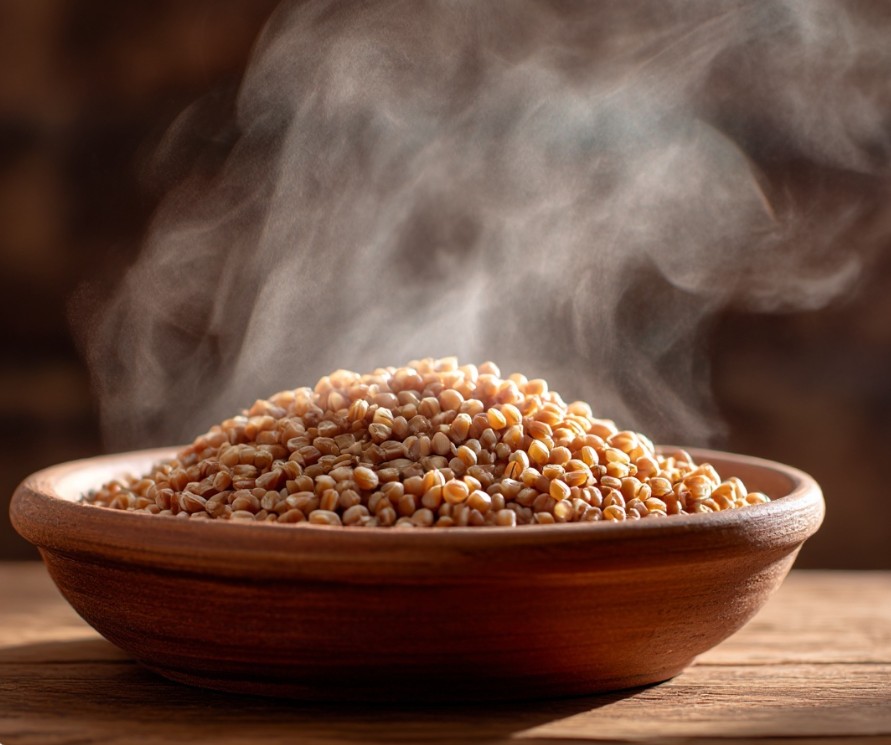
When it comes to simple hot dishes, buckwheat deserves special attention. It often seems “primitive,” but it’s the best way to learn to feel water, temperature, and the moment of readiness. When the grain turns out crumbly, aromatic, and not over-dried, confidence in your actions in the kitchen appears. More about how to bring buckwheat to perfect texture without extra effort, I told in a separate article.
How to “Read” Temperature: From Noise to Aroma
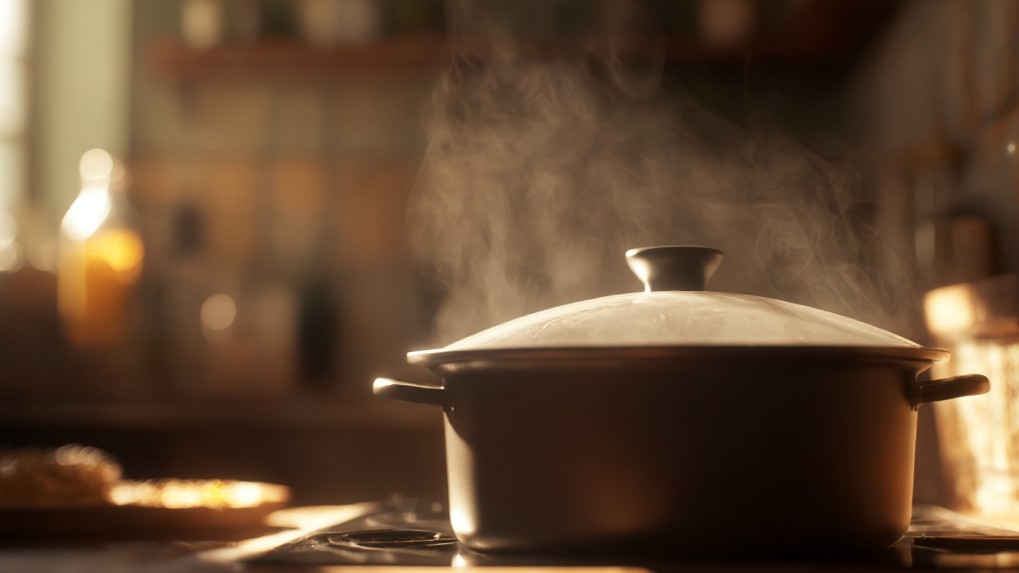
Temperature is not just a number on the stove. It’s sound, smell, the movement of bubbles. I don’t use thermometers at home but rely on these signs:
- Gentle bubbling, not fierce boiling — ideal for soup.
- Quiet rustling under the lid — the porridge is finishing.
- The aroma becomes deeper — it’s time to add spices.
- The color of the broth or porridge changes from “grayish” to golden or clear.
I had a case when I couldn’t get used to the power of a new stove. The soup constantly “escaped,” and the porridge burned. Then I started listening and smelling more — and realized that temperature “feels” before something goes wrong. It’s not magic, but attentiveness. When the kitchen smells warm, not burnt — everything is going well.
Life Hacks for Temperature Control
- Don’t be afraid to lower the heat even during cooking — it won’t slow down the process but will make the taste deeper.
- If something boils over — remove the lid, let the steam out, and immediately lower the temperature.
- A light aroma is a better marker than time on the clock.
What to Do If Things Don’t Go as Planned
I don’t know a cook who always got everything right the first time. I’ve had it too: the soup suddenly got too salty, the porridge “floated,” the borscht lost its color. The main thing is not to panic. There are a few simple steps that save the situation.
How to Save a Soup
- Too salty? Add a piece of raw potato or a little boiling water.
- Too thin? Let it boil without a lid — the liquid will evaporate.
- Cloudy? Let it stand — in 20 minutes, much will “settle.”
How to Save a Porridge
- Thick and sticky? Add a little hot water or milk, stir, and let stand.
- Runny? Leave on low heat uncovered — the liquid will evaporate.
- Lumpy? Sieve it or mash with a spoon.
And most importantly: don’t be afraid to ask for advice. I still sometimes call my mom or a chef colleague if something goes wrong. It’s normal. The kitchen is not a competition, but a process.
Why It’s Important to Feel, Not Just Repeat
I often see people mechanically copying actions but not understanding why they do it. This is the main reason for disappointments. When you understand why the water should be just like that, why vegetables are added not together, why you shouldn’t rush — everything becomes clearer and simpler.
I had a student who was afraid to even stir the soup because “it’s not in the recipe.” We started trying together: adding spices, changing the temperature, observing the smell. A week later, he was inventing ways to improve the dish himself. This is the freedom that understanding gives, not blind following.
I advise everyone: distract yourself from recipes and learn to listen to the dish. If the smell has changed — it’s a sign. If the color has become brighter — something has happened. If the porridge has become more tender — you did something right. The kitchen is a dialogue, not a dictation.
Micro-Stories: First Wins and Small Failures
I remember when I first cooked buckwheat myself. It turned out almost black, but the aroma was such that the neighbors came “for the smell.” We laughed, ate with crispy crusts, and it was my first success. Then I made many mistakes with the amount of water, but each attempt made me more confident.
Another story is soup with frozen vegetables. I boiled everything together, and it turned into mush. But then I noticed: if you add spices after removing from heat, the aroma becomes brighter. Since then, I always add greens at the end — and this is my personal life hack.
And another failure: the porridge burned when I got carried away talking on the phone. I learned not to leave the stove “just in case,” but to use a timer on the phone or just put a glass of water nearby — it’s a reminder that it’s time to return to the kitchen.
Practical Life Hacks for First Hot Dishes
- Use pots with a thick bottom — they burn less often, even if you get distracted.
- Start with small portions — it’s easier to control the process and not a pity if something goes wrong.
- Don’t rush with salt: add a little, then taste a few minutes before the end.
- Keep a wooden spoon nearby — it’s convenient for skimming foam and checking the density of porridge.
- Don’t be afraid to let the dish “rest” under the lid — the taste will become richer.
Tip: If the dish seems boring, add a little acid (lemon, tomato, vinegar) — it enhances the flavor even in simple soups or porridges.
Comparison: How It Should Be and How It Often Is
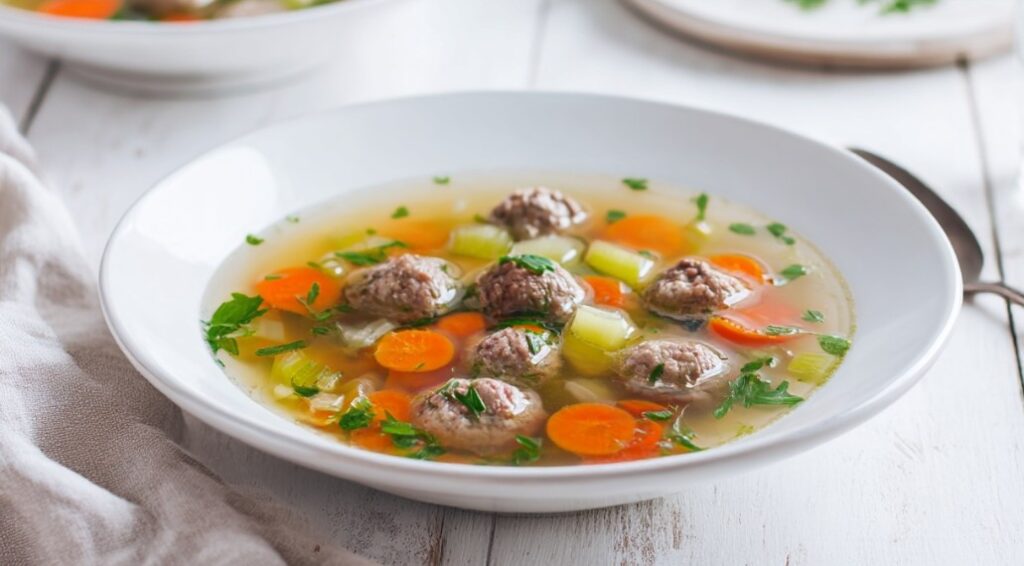
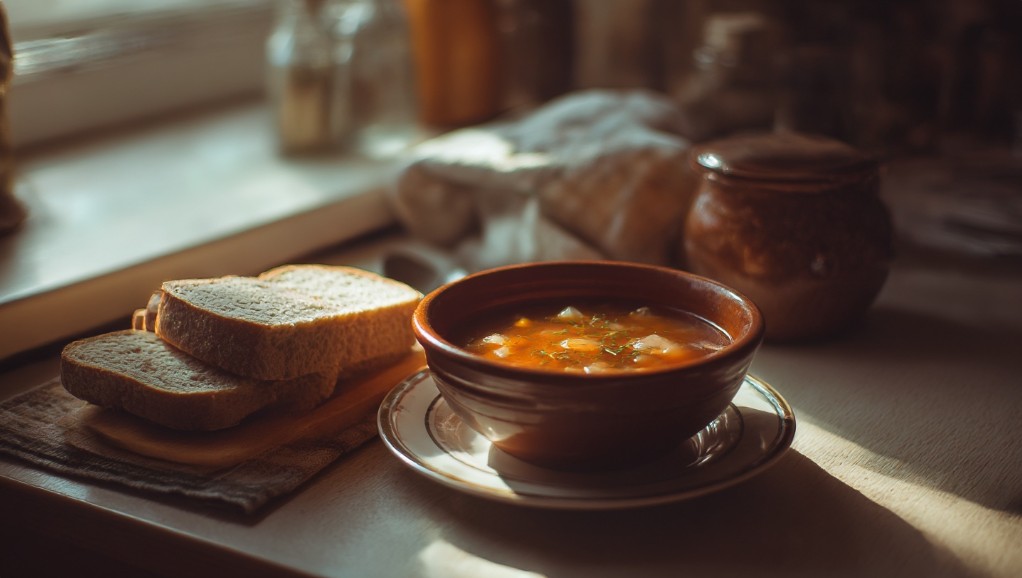
An ideal soup is clear, aromatic, vegetables are tender but not overcooked, the taste is balanced. In real life: the soup is cloudy, vegetables almost indistinguishable in taste, the aroma is weak. But even such a soup is already a victory if you made it yourself. The main thing is to understand why it happened and try differently next time.
Porridge should be crumbly, tender, aromatic. Often it turns out sticky or dry. This is not a failure, but experience. I still sometimes make mistakes, but each time I learn something new about temperature, time, and the “behavior” of the grain. Knowledge comes through attempts.
Over time, confidence appears: you are no longer afraid of mistakes, but perceive them as hints. Then the kitchen ceases to be a place of stress and becomes your territory.
What You Feel When Everything Works Out for the First Time
The first success is not just about taste. It’s about self-confidence. When you cook soup or porridge yourself, you understand: this is your result, even if it’s not perfect. The feeling of control comes with the understanding of the process — you’re no longer afraid of the stove, not nervous if something is “wrong.”
I often recall my first attempts and advise: don’t expect it to work out the first time. Maybe even the second or third. The main thing is to notice the changes: smell, color, consistency. This is the main skill for the kitchen. And the best thing is to share this warmth with someone else. Then even the simplest dish seems like a celebration.
Which of your first hot dishes do you remember the most? Share your stories: sometimes it’s from them that true love for the kitchen begins.