

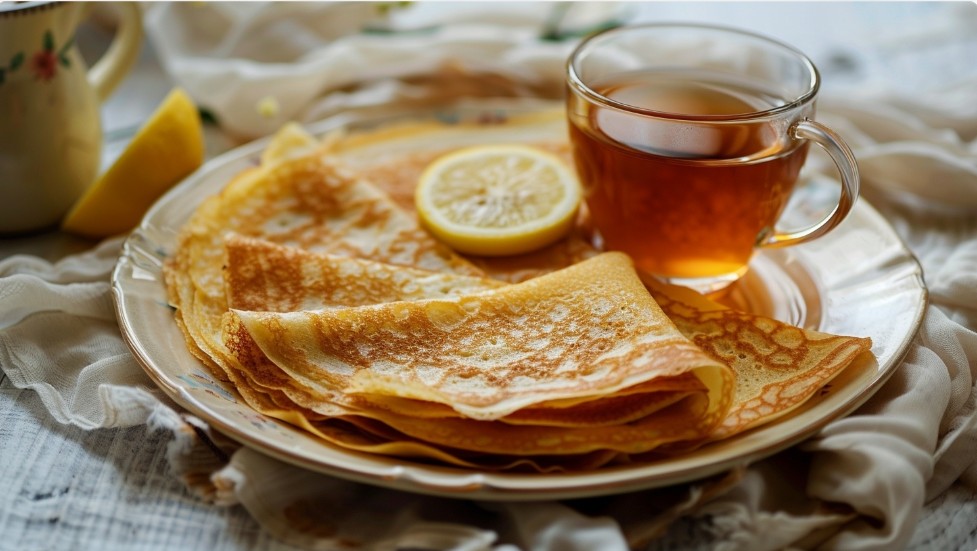
This homemade pancake recipe brings the warmth of family traditions to your kitchen. It reminds us of those loving childhood moments when pancakes were made with care. These pancakes are soft and elastic, perfect with honey, jam, or sour cream. The secret lies in the perfect balance of ingredients and a bit of patience while cooking.
As kids, pancakes seemed simple. Now we know it’s all about the details. Too thick, and they’re heavy; too runny, and they tear when flipped.
The balance hinges on eggs and flour, providing elasticity. Milk adds softness, but too much and the pancakes become fragile.
Another key is letting the batter rest. If cooked immediately, the structure is unstable. Give it 15–20 minutes, and the flour absorbs moisture, calming the batter.
The skillet matters too. Too cold, and pancakes are pale and dry. Too hot, and the edges get brittle.
Key Considerations for Choosing Ingredients
Flour
Medium grind without any off smell. Too much makes the batter heavy. Sifting helps avoid lumps. If the flour is old or too moist, the consistency may change.
Eggs
At room temperature. They provide structure. Too many, and the pancakes are rubbery; too few, and they’re crumbly.
Milk
Fat content of 2.5–3.2% works best. Skim milk gives a less pronounced flavor. It should be warm or room temperature to combine better with the flour.
Oil or Butter
A small amount in the batter prevents sticking. Too much, and the edges dry out. A thin layer is enough for the skillet.
Salt and Sugar
Salt enhances flavor. Use sugar sparingly, or the pancakes will darken quickly on the skillet.
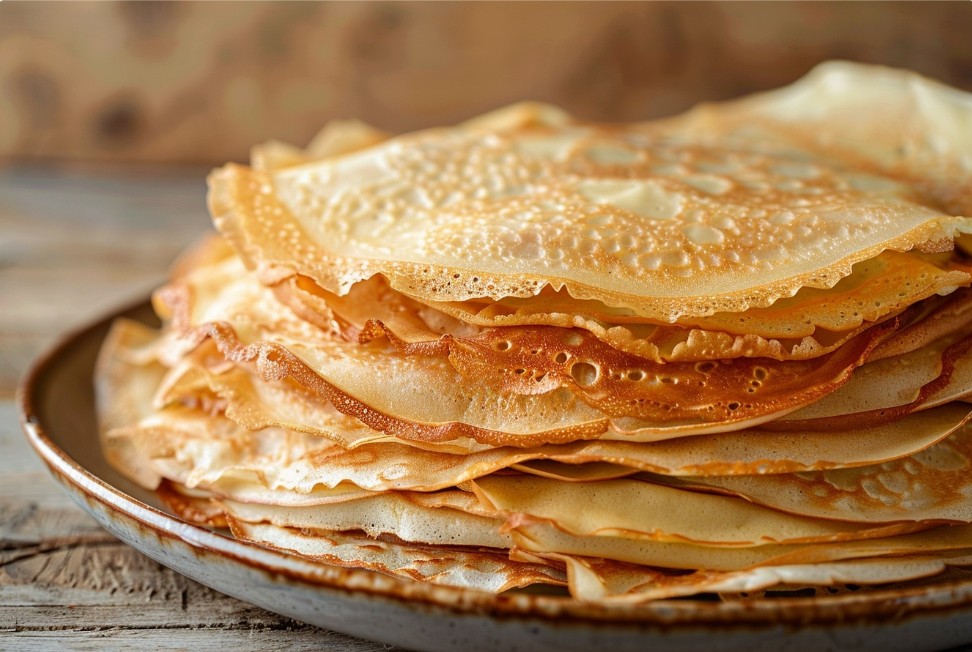
Homemade Pancakes Just Like Childhood – Soft and Elastic
Ingredients
- 2 cups Flour Sift before using for a lighter texture.
- 2 cups Milk Use warm milk for better ingredient integration.
- 2 pieces Eggs Add at room temperature for better mixing.
- 2 tablespoons Sugar Adjust to taste.
- 1 pinch Salt Enhances the flavor of the pancakes.
- 2 tablespoons Oil For frying the pancakes.
Method
- In a bowl, mix the eggs with salt and a small amount of sugar. Don’t beat into a foam, just combine. Overbeating fills the mixture with air, causing pancakes to tear.
- Add part of the milk and gradually sift in the flour. Stir with a whisk to avoid lumps. Once it thickens, pour in the remaining milk. This helps control the consistency.
- Add a tablespoon of oil and mix. Let the batter rest for 15–20 minutes. This time allows the gluten to stabilize, making the pancakes more elastic.
- Heat a skillet over medium heat. Lightly grease the surface before the first pancake. Pour a small amount of batter and quickly spread it with circular motions.
- When the edges start to dry and the surface loses its shine, flip it. The second side cooks faster. Remove the pancake and cover with a towel to keep it moist.
- Repeat, adjusting the temperature as needed. If the batter thickens, add a little more milk.
Notes
- Add oil directly to the batter to reduce the need for greasing the skillet.
- If lumps appear, strain the batter through a sieve.
- Let the batter rest for at least 15 minutes.
- Flip using a thin spatula or your hands if you’re confident.
- Don’t stack hot pancakes tightly — let them ‘breathe.’
- If the edges are dry, the temperature is too high.
- If they tear, add a spoonful of flour and mix.
- The first pancake is always a test.
- Store under a towel to prevent drying out.



Responses