How Belgian Waffles Won Over America—and Changed for Good

Some foods look almost too simple—batter, heat, a little sugar—but they drag a whole trail of stories behind them. Belgian waffles are exactly that kind of dish. I’ve watched people order them “for breakfast” in cafés and, without even noticing, turn it into a tiny ritual: first breathe in the vanilla-and-caramel smell, then snap off a crisp edge, and only then pick up the fork.
Here’s the funny part: in Belgium, a waffle isn’t one single canon. They change by city, by fair, by who’s baking and who they’re baking for. In America, “a Belgian waffle” turned into a very specific image—big, square, fluffy, with deep pockets made for butter and syrup. Like two relatives who share the same eyes, but live completely different lives.
When people ask me, “How did that happen?” I always come back to everyday life. Not dates and famous names, but how people ate on the go, how fairs worked, what motel breakfasts looked like, how vendors tried to get a crowd to stop at their counter. Waffles are perfect for that kind of transformation: they can be festive, they can be ordinary, they can be dead simple—or they can feel like a little cake.
So let’s talk about it like normal humans: how Belgian waffles landed in the American imagination, why that particular shape and texture stuck, what America added, and what we often mix up when we say “real Belgian.”
Belgian waffles at home: not a national symbol, more like a neighborhood habit
If you say “Belgian waffles” to someone who grew up in the U.S., they’ll picture one thing. Say it to a Belgian, and you’ll probably get a follow-up question: “Which kind?” That’s not snobbery—it’s just how everyday food works. In Belgium, waffles aren’t a monument. They’re local.
I like to think of it this way: waffles there are like bread is for a lot of us. There’s a shared idea, but every neighborhood has its “right” version. And that “rightness” rarely comes from rules. It comes from memory: the smell near the stall, sticky fingers from caramelized sugar, a warm waffle steaming inside a paper bag while you walk home.
Two big families: Brussels and Liège
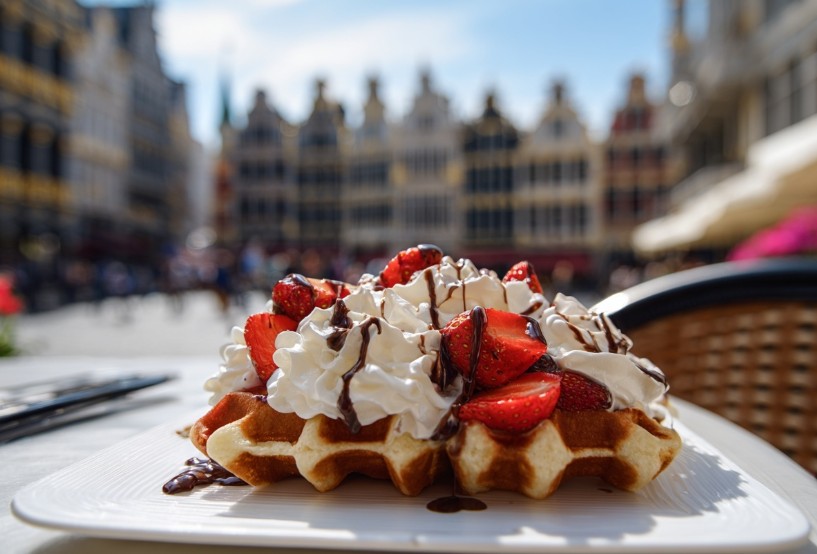
No timelines—just vibes. A Brussels waffle is lighter, airier, with clean rectangular grids. It practically asks for something on top: powdered sugar, whipped cream, fruit. A Liège waffle is denser, more doughy, with nuggets of sugar that melt and crunch like tiny caramels. You can eat it plain and feel completely satisfied.
One quick kitchen story: I once stood behind a waffle iron at an event where people kept asking for “the Brussels kind.” And every time I handed over a waffle without toppings, they’d pause—confused: “Where’s the syrup?” That little gap between expectation and reality is the best proof of how strongly culture reshapes a dish. In Belgium, syrup isn’t mandatory. In America, without it the waffle can feel like it’s missing the last sentence.
The fair and the street as the main stage
In Belgium, waffles often live not on a plate, but in your hand. That matters. Food you eat standing up has to be self-sufficient: it needs to hold together, not fall apart, and taste great without complicated sauces. That’s where the love of caramelized sugar, a bold crust, and an aroma that grabs you from a distance comes from.
Another thing people underestimate: waffles are about smell. When they’re baking, it’s not just “sweet.” You get warm batter, butter, and a little yeasty or vanilla trail. At a fair, that’s basically a beacon. And that logic—getting “hooked by your nose”—moves to America beautifully, just with different scenery.
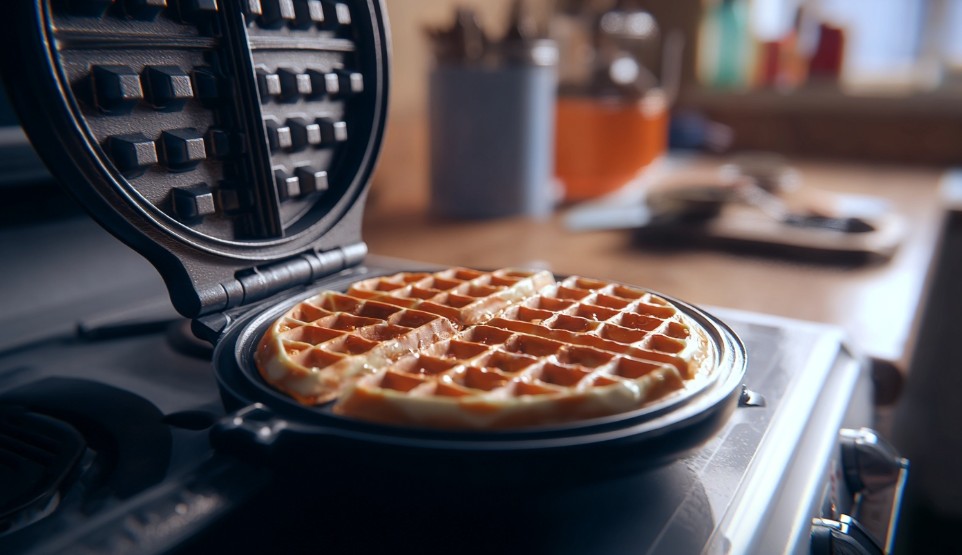
America meets the waffle: not as tradition, but as a show-stopping breakfast
America is really good at turning food into an event. Not necessarily a holiday thing—just something you want to order, photograph, and recreate at home. Once Belgian waffles landed in that context, they started being read the American way: big, generous, “more is more.”
Picture a familiar scene: a roadside motel, a breakfast room with little tables, people rushing, kids in tow, coffee in a paper cup. Breakfast has to be fast, obvious, and filling. A waffle is perfect here. It looks like dessert, but it’s socially acceptable at 8 a.m. Honestly? Genius.
Why a waffle, and not a crepe
Crepes have their place in the U.S. too, but waffles give you a different eating “mechanic.” Those pockets hold butter, syrup, jam. You pour—and it doesn’t immediately run off the plate. It’s a small thing, but it builds a habit. And habits are what later get called “classic.”
I once worked a hotel-style breakfast line (a long time ago, but I remember it clearly). Waffles were queen because the service was so simple: batter in a dispenser, iron hot, timer ticking, and the guest is holding something that smells like homemade dessert. Nobody wants to wait 15 minutes. Nobody wants a complicated explanation. Waffles get it.
The waffle as a “blank stage” for toppings
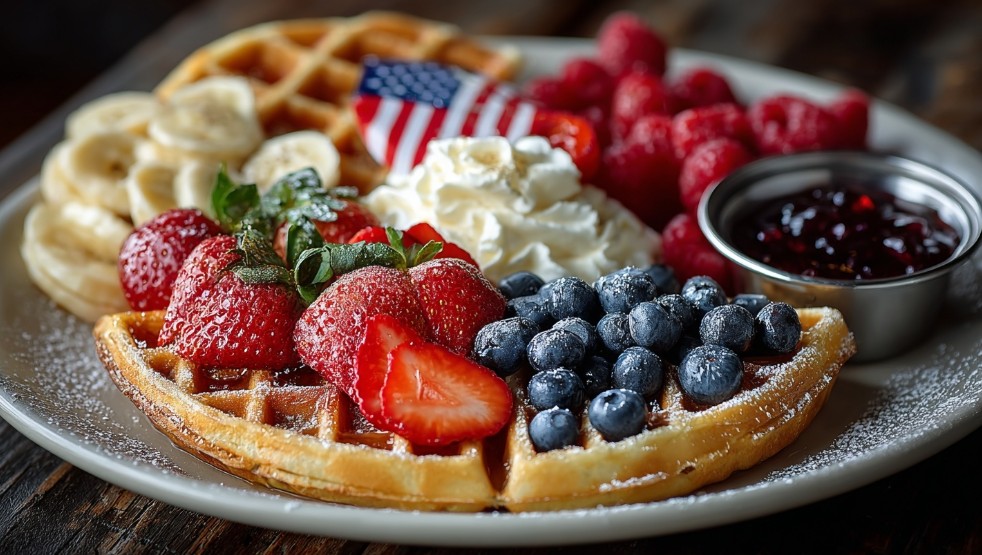
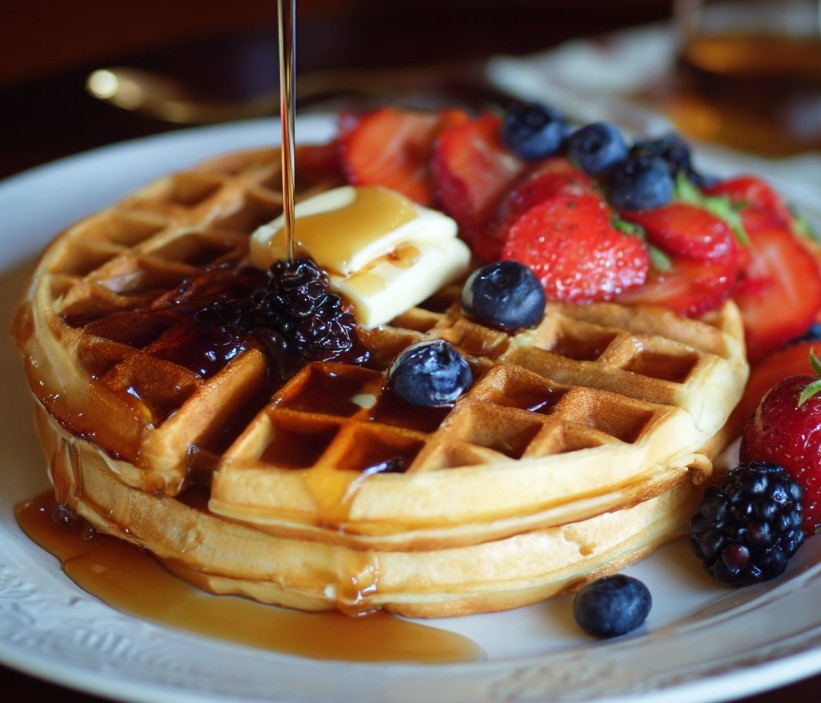
American breakfast culture is also topping culture: syrup, butter, berries, whipped cream, peanut butter. Waffles handle that better than a lot of other bases. They hold their shape, have a crisp edge and a soft center, and they don’t mind being pushed sweeter.
In Belgium, the waffle itself is often enough. In America, the waffle often becomes the platform. Not better, not worse—just a different job. Like different kinds of bread: one you eat on its own, another you build a sandwich on.
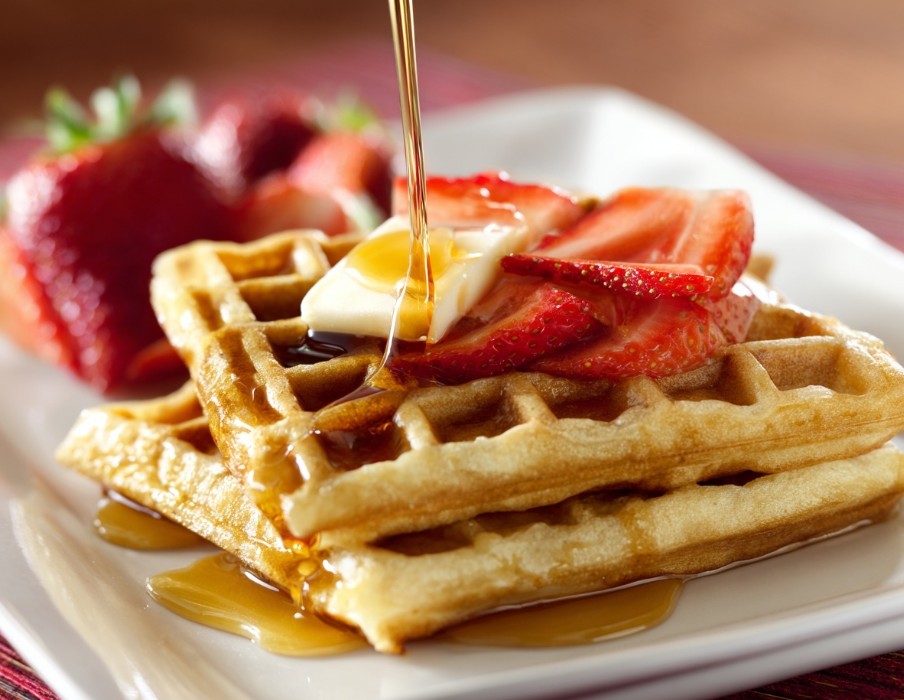
What changed “forever”: shape, texture, and expectations
When a dish moves into a new culture, it doesn’t change because someone “ruined the original.” It changes because it has to fit new habits: different kitchens, different ingredients, a different pace of life. With waffles, that shift is especially obvious.
Bigger, thicker, softer
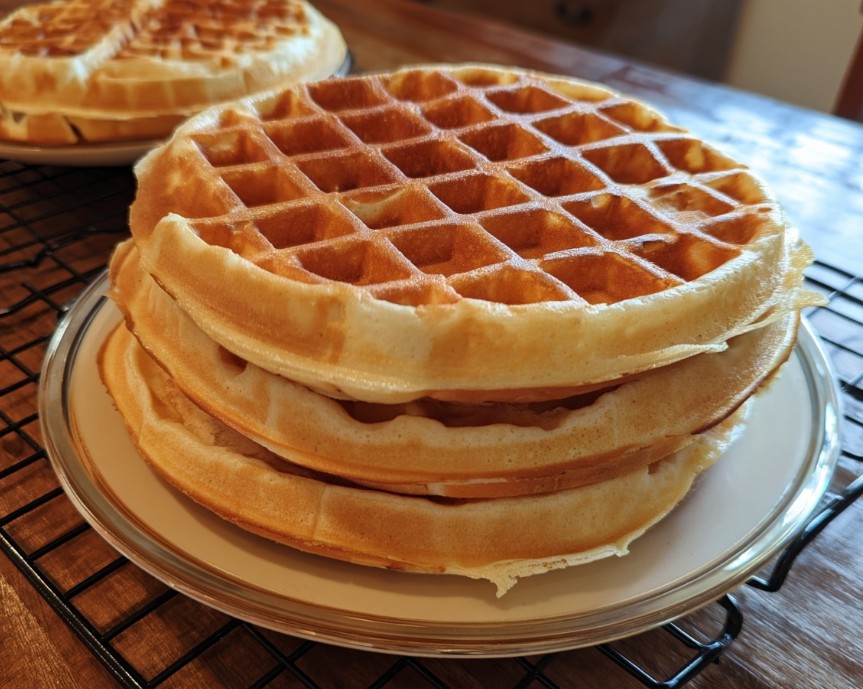
The American “Belgian” waffle is usually larger and thicker—and often softer inside, almost cake-like. That’s not an accident. First, it looks like good value on a plate. Second, it’s easier to eat slowly with a knife and fork. Third, thickness allows for deep pockets, which brings us right back to syrup and butter.
There’s another thing I can feel literally in my hands: American waffles tend to spring back when you press them with a fork. Belgian street waffles (especially Liège) can be denser and more pleasantly chewy—like enriched dough, in the best way.
Sweetness as the default setting
In the U.S., waffles are often sweet on their own, even before syrup. It makes sense: they need to taste good “straight out of the gate,” because they’re treated like a dessert-leaning breakfast. In Belgium, sweetness can be more restrained—especially if the waffle is meant as a base for powdered sugar or fruit, or if the sweetness comes in bursts from caramelized sugar rather than being baked into every bite.
It’s like the difference between sweetened tea and tea served with cookies. Both end up sweet, but the experience is totally different.
“Belgian” as a style, not a map pin
This is where the cultural part gets interesting. In America, “Belgian” started to mean not “from Belgium,” but “fluffy, deep pockets, made for syrup.” That’s a normal process: a name turns into a style label. Like “French toast”—that’s not about a passport, right?
From that point on, the waffle has its own life. Different flavors, different flours, different add-ins—still “Belgian” in people’s heads if the shape and expectations match.
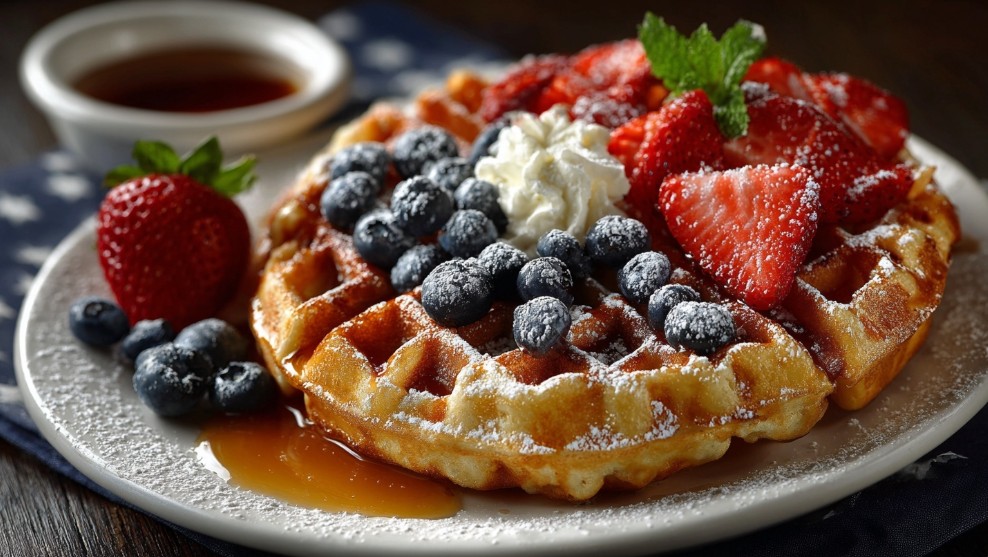
Fairs, diners, hotels: where waffles took root the strongest
Some places practically “raise” a dish. For waffles, those places were fairs and quick-breakfast spots. Three things matter there: speed, smell, and consistency. Waffles deliver all three.
The waffle as an attraction
At a fair, people buy feelings as much as they buy food. A waffle bakes right in front of you, sizzles when batter hits hot metal, and a few minutes later you’re staring at a golden grid that looks like it was designed to be photographed. It’s a tiny show.
I remember a festival where we had a line not because we were “the best,” but because the waffle iron was positioned so you could see it from far away. People followed the smell and the sound. Someone would come over “just to look,” and walk away holding a waffle. That’s fair magic.
Hotel breakfast and self-serve
The American waffle story pairs perfectly with the “make it yourself” format. It takes pressure off the kitchen and gives guests a sense of control: want it lighter—pull it early; want it darker—leave it longer. It’s also a little morning entertainment, especially for kids.
And that’s where waffles really lock in as breakfast food. Not street food, not a special-occasion treat, but a regular thing. They stop being “that fair delicacy” and become part of routine.
Diners and comfort food
A diner is where people go for something familiar and calming. On that kind of menu, a waffle isn’t exotic—it’s one of the gang. Served next to eggs, bacon, coffee, it fits right in. That’s another reason American waffles became softer and more filling: they need to hold their own next to savory food, not just berries.
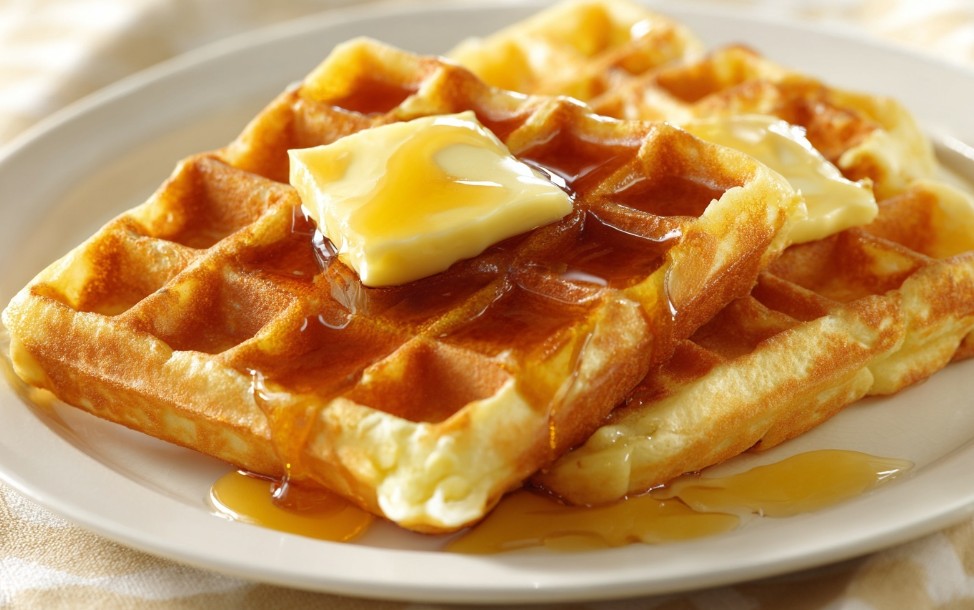
A mix-up born from love: what we call “real Belgian”
I see people argue about this all the time: “Those aren’t real Belgian,” “Real ones are only like this,” “That’s not how they do it there.” Those debates always make me a little sad, because they’re about control, not taste. But the confusion is real—and it’s easy enough to sort out calmly.
There are several originals—and that’s fine
Belgium doesn’t hand you one standard. There are different waffles, and they’re all “real” in their own context. The trouble starts when we take one version (often the American one) and declare it the only possible truth. That’s like saying there’s only one “real” borscht. In every family, someone will argue with you—and be right in their own way.
The American version isn’t a fake—it’s an adaptation
A simple thought helps me: a dish is like a language. When you move, you start speaking differently—you pick up intonation, slang, shortcuts. You don’t become “wrong.” You become understandable in a new place. The American waffle did the same thing.
Yes, it can be far from the waffle you’d buy in a Belgian town, warm from a paper bag. But it honestly meets American expectations: a big breakfast, lots of toppings, a soft center, a crisp edge.
The word “Belgian” as marketing—and as a compliment
Let’s not pretend names don’t sell. “Belgian waffle” sounds more romantic than “thick waffle.” It works. But it’s also a compliment: Belgium really is associated with sweet culture—chocolate, pastries, cafés. So the word became a bridge, carrying some of that reputation onto the plate.
Common mistakes that ruin waffles (and how I deal with them in my kitchen)
Even when we’re not talking recipes, mistakes matter—because they’re what shape a dish’s reputation. How many times have I heard, “I don’t like waffles, they’re dry,” or “They’re rubbery.” That’s not waffles as a concept. That’s how they’re made and served.
Mistake 1: letting the waffle sit and steam
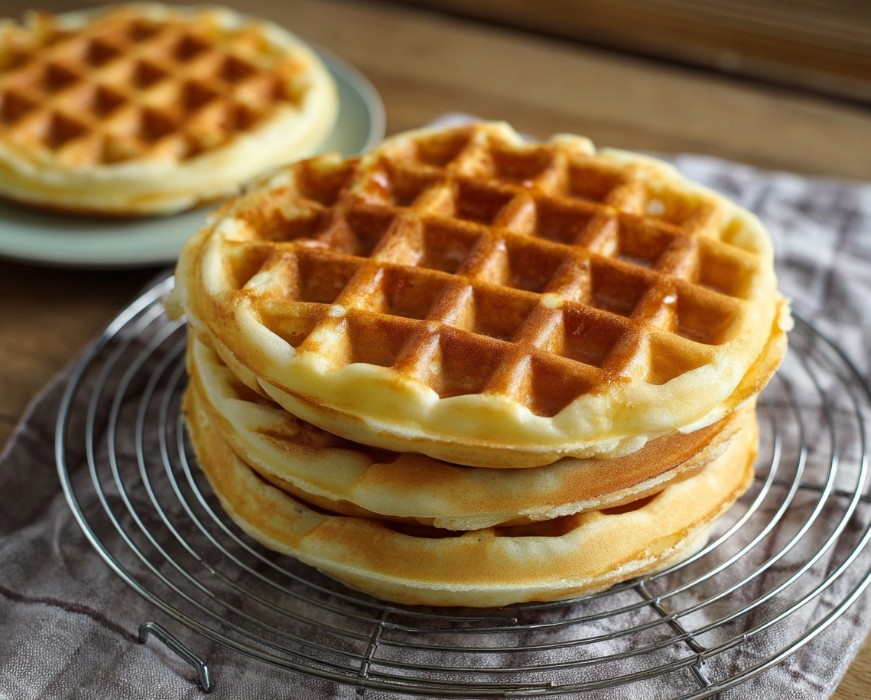
The most common fail is baking a waffle and letting it sit. It’s hot, it releases steam, and that steam settles right back onto the crust. A few minutes later the crispness is gone, the surface turns soft, and people assume “that’s just how waffles are.” Then they add syrup and end up with a sweet, soggy sponge.
Kitchen tip: if a waffle has to wait, park it on a wire rack, not a plate. Airflow underneath saves the crust.
Mistake 2: too much syrup all at once
I get the temptation. Syrup shines, smells amazing, and it feels like there’s no such thing as too much. But a waffle isn’t a crepe. It has pockets, and those pockets turn into swimming pools fast. Once you overdo it, you stop tasting the waffle itself—its aroma, butter, that slight toasted bitterness in the crust.
Kitchen tip: drizzle syrup in a thin stream around the edge and let it “find” the pockets on its own. Add more later if you really need it.
Mistake 3: expecting one waffle to do everything
People want a waffle to be crisp like a cookie and soft like sponge cake, sweet like dessert and neutral like bread. That’s not how it works. Different waffle styles come with different trade-offs. The helpful question isn’t “Which one is correct?” but “Do I want a waffle that’s a base for toppings, or a waffle I can eat plain?”
This is a very home-kitchen kind of lesson. I had a phase where I made waffles for savory toppings (yes, really), and it annoyed me that they weren’t “sweet enough.” Then I realized: what annoyed me wasn’t the taste—it was the American syrup picture stuck in my head. Once I let that go, the waffle made sense again.
Mistake 4: serving waffles cold, like they’re cookies
A waffle can be tasty when it’s not piping hot, but its “heart” lives in warmth. Heat lifts the aroma of butter and vanilla and makes the texture feel alive. Cold waffles often come across drier than they actually are.
Kitchen tip: if a waffle has cooled down, a quick reheat brings back aroma better than extra syrup ever will.
How different families eat waffles: rituals without “right/wrong”
The most interesting part of food isn’t what’s printed on a menu—it’s what happens at home. Waffles are a great example, because they slide into very different family routines.
In Belgian everyday life, waffles often sound like “a day out.” Not every day, but when you’re walking around town, when there’s a fair, when you want something sweet on the go. Like buying something warm and sugary on a cold day and thinking, for a second, life is pretty decent.
In American life, waffles easily become “weekends at home.” Saturday, a slow morning, someone in pajamas, someone puts music on, butter and jam and fruit on the table. Here the waffle isn’t street food—it’s home food. It pulls people into the kitchen because you can’t make waffles quietly: there’s the click of the iron, the smell, the waiting.
One of my favorite tiny stories is about friends whose kids always fought over who got the “most perfect” waffle. Their dad solved it in the simplest way: he started making one intentionally “wonky” waffle and calling it the chef’s waffle—the best one, because it had extra-crispy edges. The kids immediately stopped wanting perfect. That’s food culture: not rules, but little agreements that keep breakfast peaceful.
Waffles also turn into a language of care. You make someone a waffle because they didn’t sleep well. Because they’re visiting. Because “you did great today.” They’re simple, but there’s a quiet celebratory note in them: warm, sweet, made right now.
Today: waffles as a build-your-own—and as nostalgia, at the same time
These days, waffles live in two modes. The first is build-your-own: everything can be tweaked, added, customized. The second is nostalgia: going back to “how it used to be,” to simplicity, to a familiar taste from childhood or from a trip.
Instagram looks and going overboard
Waffles can easily become a stage for excess: mountains of cream, sauces, sprinkles, cookies on top, plus ice cream. Sometimes it’s fun. Sometimes the waffle disappears under all of it like it’s under a blanket. I’m not anti-generosity—I just love the moment when you can still taste the crisp edge and warm center, not only sugar.
Kitchen tip: if you want a “wow” presentation, pick one main accent (fruit or sauce) instead of everything at once. Waffles like being heard.
Back to simple
At the same time, there’s a different movement: people are valuing simple breakfasts again, without the show. Waffles win here because they can be minimalist and still delicious. A warm waffle, a little butter, maybe a dusting of powdered sugar—that’s enough to make a morning feel softer.
I’ve noticed another modern thing too: waffles have become a bridge between cultures. Someone might never visit Belgium, but through a waffle they touch the idea of Belgian sweet tradition. Then, if they’re lucky, they try a different waffle while traveling and get surprised that it’s different. That’s a good kind of surprise.
How not to lose the point of waffles in everyday life
The point of waffles isn’t proving authenticity. The point is that they create a pause. While they’re baking, you can’t do “one more minute on your phone”—you have to watch the time, the aroma, the color. And that little bit of attention suddenly turns breakfast into an event.
I like treating waffles as an excuse to gather in the kitchen. No special occasion required. Just because. Sometimes “just because” is the best reason.
Belgian waffles didn’t just catch on in America—they found a new role and a new body. From a street-side sweet joy, they turned into a big breakfast ritual: fluffy, generous, with syrup and butter, with pockets full of comfort. And they didn’t erase Belgian variety—they simply split off into a separate style that now lives on its own.
So which waffle feels more like you: the self-sufficient, crisp one you eat out of your hand, or the one that lands on a plate and patiently waits for butter and syrup? And what do waffles mean in your head—travel, or home?