How the Christmas Table is Changing: Modern Interpretations of Traditions

There is something special about how Ukrainians prepare for Christmas. I remember as a child, the whole family would gather in the kitchen—grandmother with a mixing bowl, grandfather with a sack of potatoes, mother directing the process, and me, a little one, bustling underfoot. The smell of cinnamon, dried fruits, and fresh kutia is so ingrained in memory that even now, when I see modern Christmas tables, I search for that same spirit. But times change. Some traditions acquire new meanings, others fade into the background, and that’s not always a bad thing. Anything truly alive must change. I’m often asked: can the Christmas table be changed? Honestly, I’ve never seen two that are the same.
Today’s Christmas table is no longer just about strict adherence to fasting or a set of canonical dishes. It becomes something personal, local, even ironic. The challenge for many is how to balance honoring ancestors with the desire to make the holiday ‘your own,’ without betraying its essence but also not turning everything into a museum. I’ll try to figure out which changes to the Christmas table truly make sense and which are just hype that will fade away.
Living Tradition: Why the Christmas Table Always Changes
Traditions are not rituals frozen in time. They live with us, adapting to the rhythm of life, circumstances, and even our whims. I’ve observed how in different regions of Ukraine, the Christmas table looks entirely different. Somewhere it’s wheat kutia, elsewhere it’s rice, some use honey, others sugar. This is not ‘betrayal’ but a manifestation of living culture.
When people complain that ‘traditions are being lost,’ I always ask them to look at photos of their great-grandmothers. Tables in the 1920s, 1960s, and 2020s differ greatly. New products appear, ingredient availability changes, migration influences, even politics. Once, for example, not everyone could have fish on Christmas Eve—simply because it was not available. Now, some even have eel rolls on their table.
Life forces tradition to change. This is not ‘betrayal’ but a sign that it is truly needed. A dead tradition is a museum exhibit, not a celebration at home.
The Line Between Authenticity and Modernity
The modern Christmas table is a constant play with balance. On one hand, there’s the desire to preserve the main elements, those associated with family, childhood, history. On the other, there’s the temptation to do something new, ‘add yourself.’ I’ve seen families argue over adding orange zest to kutia or replacing dumplings with ravioli. But if you listen to yourself, it becomes clear: authenticity is not an exact list of ingredients. It’s a feeling. The smell of poppy seeds, warmth from the oven, children’s laughter in the kitchen.
So don’t box yourself in. The main thing is not to lose the meaning. If kutia is a symbol of unity, does it really matter what grain it’s made from? I myself have experimented: adding caramelized pear or even crumbs of black bread to kutia. It doesn’t spoil the dish but gives it character. But if you don’t feel this boundary and do it ‘because it’s trendy,’ the dish loses its soul.
Tip: don’t be afraid of modern interpretations if they make you smile. But do it consciously, not just for an Instagram ‘picture.’
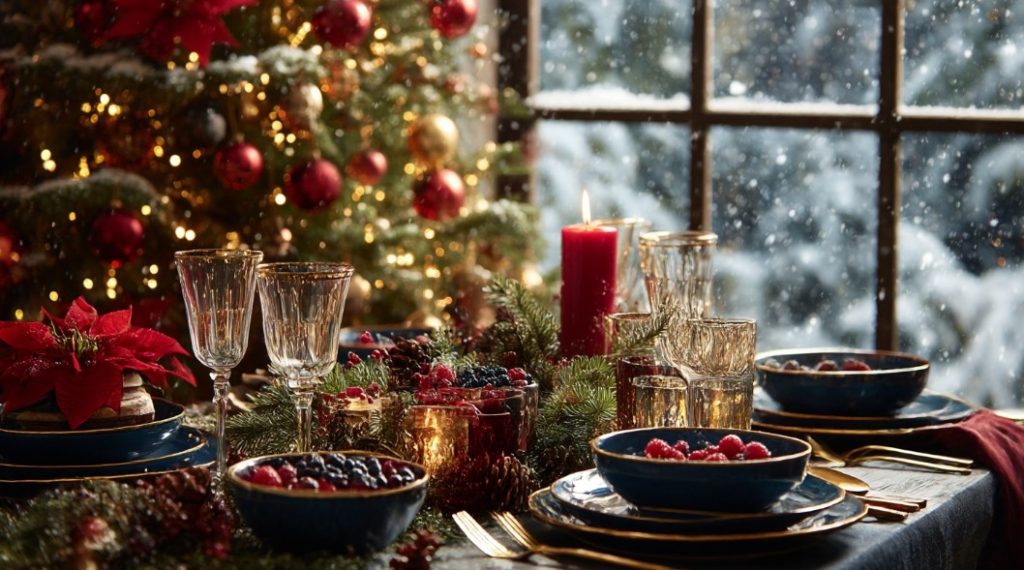
New Ingredients and Local Products: Why It’s Not Betrayal
The Christmas table has always consisted of what was at hand. This is its true nature. Today, we have access to many products our ancestors never heard of, but that doesn’t mean we should ignore seasonality or locality. On the contrary, now is the time to make the festive dinner even closer to oneself.
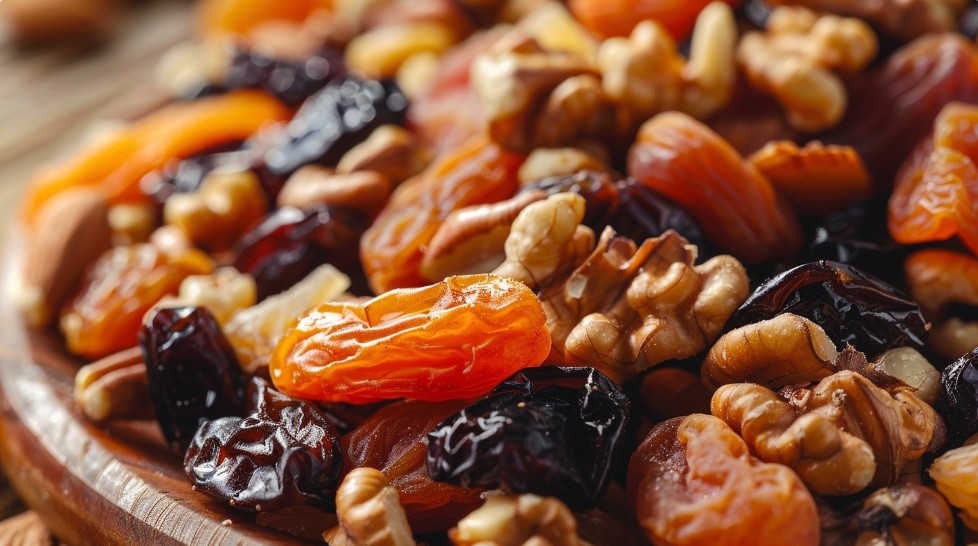
In recent years, more families are replacing imported dried fruits with local berries, using honey from local apiaries, adding farm cheeses to dishes, and instead of classic sweets, putting dried apples or nuts from their own garden on the table. I saw in the Carpathians how a hostess added dried blueberries to kutia instead of raisins—and it was incredibly delicious.
Such adaptation is not a rejection of tradition but its continuation. Better a simple, sincere product than a set of ‘mandatory’ ingredients from the supermarket.
- Replace vegetable oils with flaxseed or pumpkin oil—it adds character to the dish.
- Nuts from your own garden instead of imported cashews—simpler but tastier.
- A bit of farm cheese in dumplings—it’s about local flavor, not ‘fashion.’
Vegetarianism, Allergies, Diets: How Holiday Cuisine is Changing
Just ten years ago, few considered that someone in the family might not eat gluten or be allergic to nuts. Now it’s part of reality. Many choose plant-based diets not just for fasting but as a way of life. This reflects naturally on the Christmas table.
I’ve observed how young hostesses look for gluten-free grains for kutia, replace milk with almond or coconut for uzvar, use chickpeas or lentils instead of wheat. Previously, this was frowned upon, but now it’s no longer a question of ‘correctness’—it’s about caring for loved ones.
The main thing is not to make a spectacle of it. In my practice, the best principle is: everyone has the right to their own plate, but the table is still communal. So it’s better to offer several variations of dishes than to force everyone to eat the same thing.
Tip: if you’re cooking for a large group, find out dietary preferences in advance. It saves a lot of unnecessary questions.
Minimalism and Return to Simplicity: New Value
The world is getting faster, people have less time for long preparations. Hence the trend towards minimalism and simplicity. I see more families preparing 5-6 dishes instead of 12, but putting more soul into them. The feeling of ‘obligation’ disappears—no one competes over who has more plates.
This doesn’t mean the tradition is disappearing. On the contrary, people choose dishes that truly mean something to them. Once, I saw a family leave only kutia, uzvar, dumplings, and cabbage soup on the table, but they spent the whole evening telling stories about each one. It was sincere and warm.
Minimalism is not about poverty but about conscious choice. To discard the unnecessary and keep what is essential for your Christmas.
- Choose 4-5 favorite dishes and prepare them with loved ones.
- Don’t try to impress everyone—the main thing is warmth and taste.
The Influence of Globalization: Foreign Dishes on Our Table
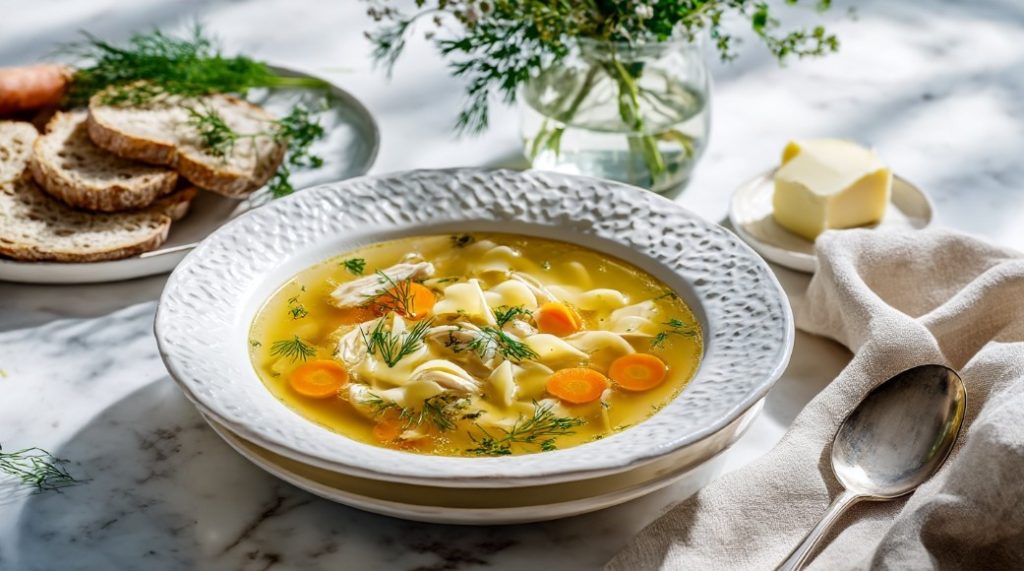
Every year, new dishes appear on Christmas tables—hummus, panettone, even sushi. Some see this as betrayal, others as a game, some just close their eyes. My experience says: if it brings joy, I see no problem. However, there’s a difference between natural integration and ‘trendy’ imitation.
In my kitchen, Italian cookies on Christmas Eve have become a tradition—my wife has Italian roots. But it’s not a replacement for kutia, just its neighbor. It’s important not to mix everything into one porridge but to honestly admit: these dishes mean different things to us, and that’s okay.
Globalization is not an enemy if you don’t forget who you are. Add new things, but don’t try to ‘erase’ the old.
Tip: if you’re introducing a foreign dish to the table, tell its story—why it’s there. It makes the dinner even warmer.
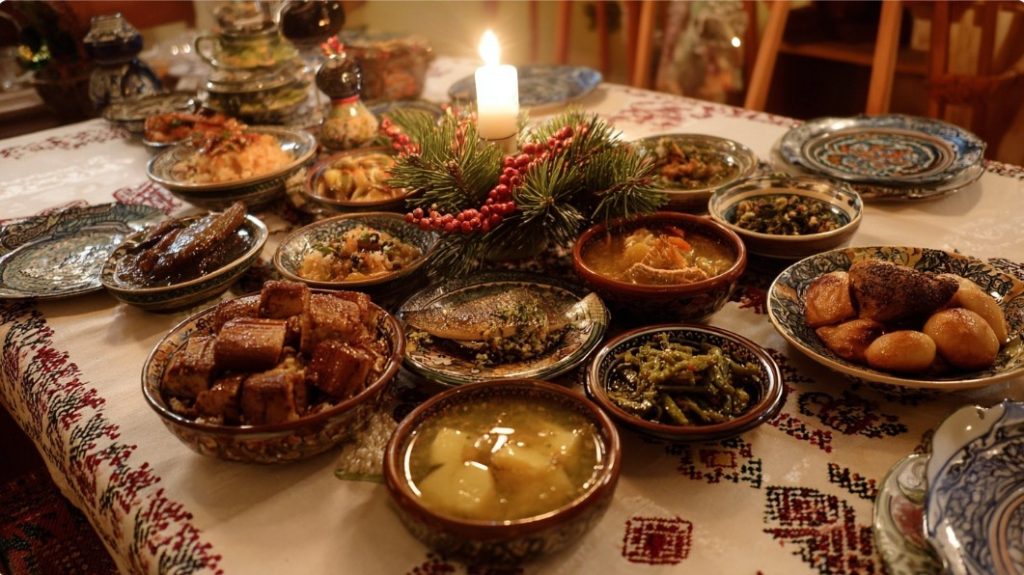
Serving, Atmosphere, and the “Face” of the Holiday
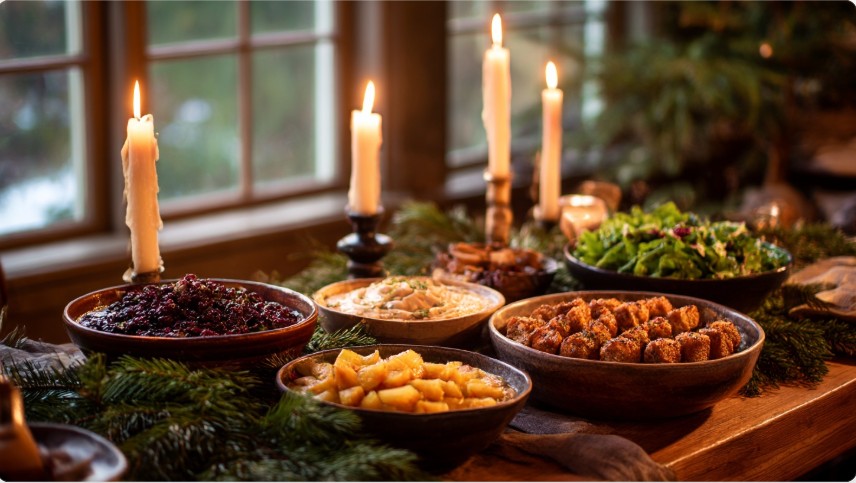
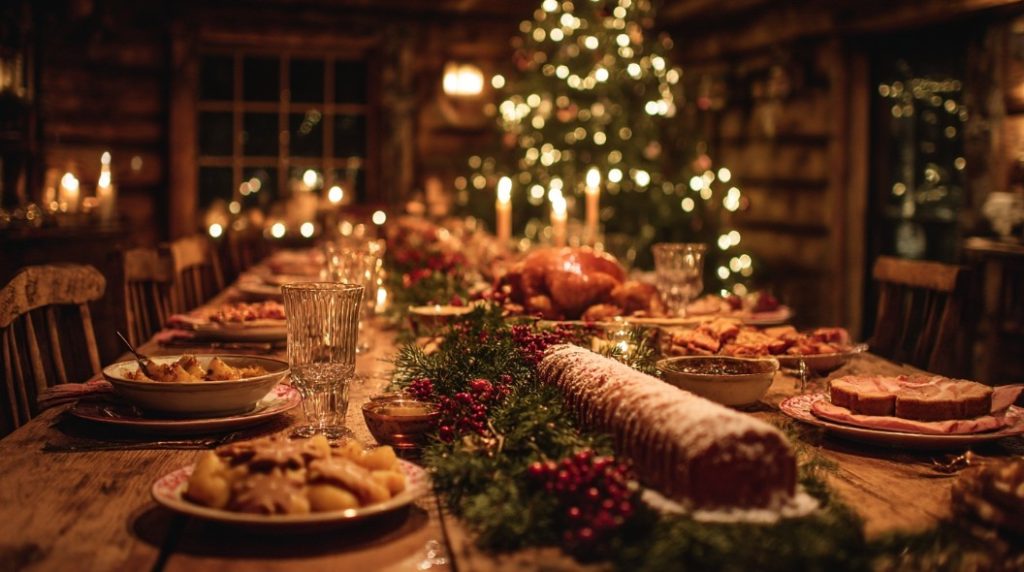
Recently, people have been thinking more not only about food but also about atmosphere. The table is no longer just a set of plates but a platform for communication, games, hugs. I’ve seen some families use an old homespun towel instead of a pompous tablecloth, and homemade wax candles instead of store-bought ones. This adds uniqueness to the evening.
Serving stops being ‘showy’ and becomes a way to say: ‘this is our home, our holiday.’ Someone places a favorite grandfather’s cup on the table, someone else homemade Christmas ornaments. I’ve found that these little things create a mood just as well as the most expensive appliances.
- Use items with history—they add ‘soul’ to the table.
- Don’t be afraid to mix old and new—it creates a special atmosphere.
- The main focus is not on quantity but on the feeling of coziness.
Common Mistakes in Modernizing the Christmas Table
I’ve seen how the best intentions can spoil a Christmas dinner. The most common mistake is trying to do something ‘trendy’ without understanding why. For example, replacing kutia with chia pudding or completely ignoring a family’s favorite dish because of someone’s social media advice. Another common mistake is having too many different dishes that no one gets to try, and half ends up in the trash.
Another extreme is fanatically adhering to the ‘canon,’ where even children are afraid to suggest anything. Tradition doesn’t become stronger from this, it just annoys.
- Don’t copy ‘trendy’ without understanding the meaning.
- Don’t force everyone to eat what they don’t want—the holiday is not about that.
- Don’t chase quantity—better less, but with soul.
Tip: avoid radical changes without family consent. Cook what everyone loves and add new things gradually.
What Will Remain Forever: Meaning and Atmosphere
Fashion changes, new products, ideas, and serving methods appear. But some things are timeless. In every home, it’s something unique: the smell of kutia, the taste of uzvar, the song of carolers outside the window. No matter how the table changes, it’s important to leave room for these little things.
I have a favorite tradition: before dinner, turn off the lights and light a single candle. It’s at this moment that you feel Christmas has arrived. It doesn’t matter what’s on the table—what matters is that those you want to share the holiday with are nearby.
The Christmas table is not about a list of dishes but about the feeling of home. And no matter how the world changes, this will stay with us. The rest is just decoration.
Changes to the Christmas table are a natural process. Some things fade away, some return, some are born anew. The main thing is not to lose the essence. How do you feel: what is the true taste of Christmas for you? What changes have you already accepted in your family, and what remains unchanged for years? Share your experience in the comments—I’m curious how it happens for you.
Frequently Asked Questions and Answers
The modern Christmas table is becoming lighter and simpler. Fewer heavy dishes, more vegetables, baked and stewed dishes, attention to presentation and balance of flavors.
Yes, this is the most common approach today. Traditional dishes remain, but the method of preparation, presentation, or ingredients change—without losing the essence of the holiday.
Salads, side dishes, meat and fish dishes are most often changed. They are baked instead of fried, sauces are simplified, and served in smaller portions.
No. Many families choose a smaller number of dishes, focusing on quality and atmosphere. The tradition adapts to the modern pace of life.
There are more lean, vegetarian, and light dishes, the use of local products, and attention to healthy eating.
No. Traditions live precisely because they change with people. Modern interpretations help preserve the spirit of Christmas, making it closer to the present.