How Hunger Disguises Itself as Fatigue and Stress


Sometimes you come home after a long day and feel not so much hungry as generally tired. It seems like your energy has vanished, but you realize: you ate just anything throughout the day, or even forgot to eat at all. Often we confuse fatigue with hunger, and stress with the desire to eat, and it’s not surprising. In the routine of tasks, calls, and noise, it’s hard to catch the moment when the body asks for food and when it just needs rest. I’ve been through this, more than once. When the day ends and your mind is foggy, understanding your true needs isn’t a priority. But over time, I’ve learned to listen to myself a bit better.

It makes sense: we are not robots. Food is not just about calories or ‘healthiness’, but also about supporting ourselves during difficult periods. Sometimes hunger hides behind a feeling of fatigue, and we start eating not because the body needs food, but because we want relief. When you know how to distinguish these feelings, it’s easier not to blame yourself for an extra bun or a late-night snack.
How the body and brain confuse signals: where does this ‘hunger’ come from
Hunger is not always straightforward. It seems it should be simple: feel an emptiness in your stomach — it’s time to eat. But in practice, it doesn’t work that way. Fatigue, stress, emotions — all these can give us signals that resemble hunger. Especially when the day doesn’t go as planned, or when you’re just exhausted.
There was a time when after a hard shift, I could eat half the fridge and then realize that I actually just wanted to lie down and be silent. Over time, I began to catch this moment: when the body asks to rest, but the hand reaches for food. The brain often offers food as a simple way to get quick satisfaction. Sometimes it works, but more often it leaves you even more tired and guilty.
Our body is complicated: hunger signals and the signal of energy deficiency are similar but not always the same. If you haven’t rested for a long time, it’s easier for the brain to ‘mask’ fatigue as a desire to eat something quick and tasty. Because it’s quick energy. Sometimes it’s just a simple desire to cheer yourself up.
- A tense day often ends with an ‘automatic’ snack — it’s not always about hunger.
- Stress makes you look for food, even if the body is full.
- Fatigue increases cravings for sweets and fast food.
Emphasis
Real hunger develops gradually. If you suddenly feel a sharp desire to eat — it may not be about food, but about fatigue or emotions.
Why we eat when we’re actually tired
Food is one of the most accessible ways to quickly get ‘relief’. Especially when there’s no energy and you’re feeling uneasy. I’m familiar with this desire: to come home after a shift, open something tasty, and feel like life is getting a bit better. It’s not about hunger; it’s about seeking comfort and a short break.
During stressful periods, the brain starts looking for quick energy sources. It’s not always food. Often the body asks for sleep, a walk, or just a few minutes of silence. But in our lives, it’s easier to eat something than to allow ourselves to rest. Especially if there are kids at home, or a lot of tasks, and you’re already on autopilot.
Hunger and fatigue are easy to confuse. Fatigue manifests as irritability, inattentiveness, a desire for coffee, or something sweet. Real hunger often feels more physical: there’s an emptiness in the stomach, slight rumbling, sometimes weakness. But it’s not a sudden ‘attack’, but a gradual build-up.
- After a hard day, the body wants to rest, but the brain offers candy or pizza as a ‘reward’.
- When there’s no time for yourself — food becomes the only allowed pleasure.
- Sometimes we eat to avoid thinking about fatigue or stress.
Emphasis
Food is a resource, not an enemy. It’s important to distinguish the need for food from the need for recovery.

How to recognize ‘hidden hunger’: body and mind signals
Learning to listen to yourself is not about perfect self-discipline, but about simple attentiveness to your own state. For me, it was a revelation: not all my ‘hungers’ are real. Several times I caught myself eating when I actually wanted to sleep or just have some silence.
There are a few simple guidelines that help distinguish physiological hunger from emotional hunger or fatigue:
- Hunger develops slowly, not suddenly.
- You don’t crave specific food, just want to eat.
- After eating, you feel satisfaction, not guilt.
- Emotional ‘hunger’ often craves something specific: chocolate, chips, a piece of cheesecake.
- Fatigue can disguise itself as a desire for a quick snack.
I’ve developed a simple rule for myself: if I really want to eat, I ask myself if I want to sleep, if I’m nervous, or if I’m tired. Often the answer is yes. Then it makes sense to try resting first, drinking water, or taking a walk. If the hunger doesn’t go away, then it’s definitely time to eat.
Micro-story
Once, after an especially stressful day, I caught myself opening the fridge for the third time in the evening. There was a feeling of ’emptiness’, but food didn’t help. I turned off the kitchen light, sat on the floor, and just breathed for five minutes. It turned out I wanted silence, not food. After that, I slept like a baby.
Lifehack
Put off eating for 10 minutes and do something else. If you still want to eat after that, it’s real hunger.

Stress, food, and ‘comfort’: why the hand reaches for treats
Stress is a tricky opponent. When a lot of worries accumulate, the brain looks for a quick way to feel at least a little joy or relief. Food here is a very simple option. Especially something sweet, crunchy, or tasty. It’s a short burst of dopamine, an illusion of control, ‘at least here I can allow myself’.
I’ve seen this both in my kitchen and with acquaintances. After hard shifts in the restaurant, when everyone is exhausted, people grab the simplest food. Not because they’re hungry, but to compensate for fatigue. It’s normal. That’s how the psyche works. But if it becomes a habit, the sense of the body’s true need is lost.
- Stress increases the desire to eat ‘comfort’ food.
- Sweet or fast food gives a sense of immediate relief.
- Afterwards, there’s often guilt, which only adds to the stress.
Lifehack
If you’re drawn to food during stress, try drinking water first or taking a few deep breaths. This helps separate the real desire to eat from emotional ‘hunger’.
When food is the only pause: about automatic habits
Sometimes food becomes not just a lifesaver, but literally the only pause in a hectic schedule. Especially on workdays, when there’s no time for lunch, and dinner is the only opportunity to sit and be with yourself. Then food is not just about satiety, but also about a rest for the brain.
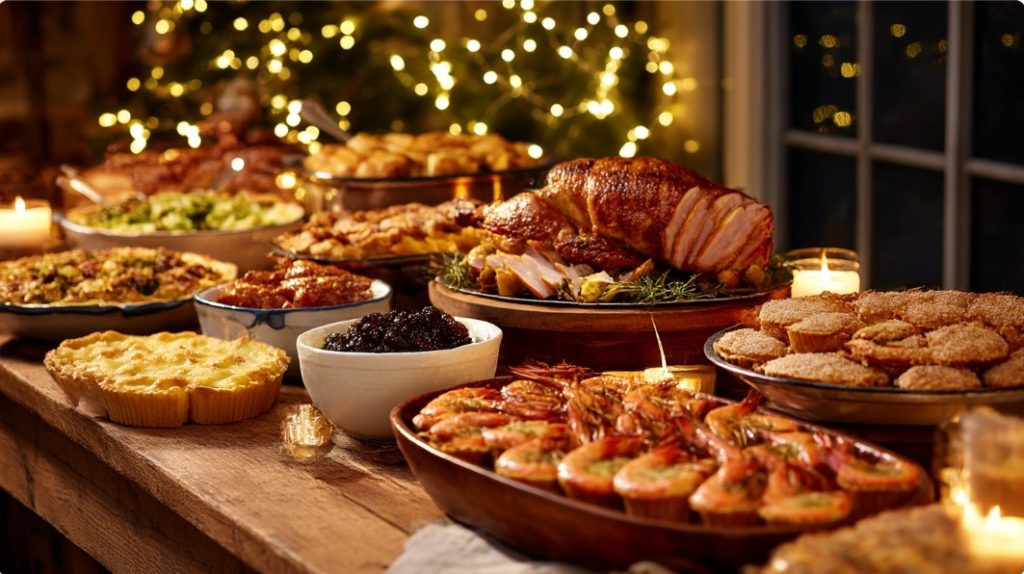
There was a time when I lived on autopilot: coffee in the morning, something on the go during the day, in the evening — ‘rewarding’ myself with a good dinner: ribs with potatoes and a bowl of salad, plus cake with tea for dessert. On such days, the feeling of hunger was strange: sometimes there, sometimes not, but food was a mandatory ritual of rest. Later I realized: it’s not always about physiology, but about trying to create ‘my pause’.
In many families, it’s the same: kids, work, household chores — and the only quiet moment to sit is lunch or dinner. The main thing here is not to scold yourself for it, but to accept it as part of life. There’s no need to make food a ‘proper ritual’, let it be as it is. Over time, if you pay attention to your real needs, the habit of eating on autopilot gradually fades away.
- Food as the only pause is normal if you acknowledge it.
- Allow yourself to enjoy this moment, rather than pushing yourself for ‘imperfection’.
- The habit of eating on autopilot changes gradually when there’s more attention to oneself.
Micro-story
A friend with two kids confessed: her evening tea with cookies was the only quiet moment of the day. She scolded herself for it for a long time, then just allowed it: ‘I have the right to my pause’. And later noticed that she ate less when she stopped punishing herself.
Mistakes that make hunger and fatigue even more confusing
Many fall into this trap. Instead of stopping and figuring out why the hand reaches for food, we start to scold ourselves. ‘Overate again’, ‘why can’t I control myself’ — familiar thoughts? They only increase stress and fatigue. Or another option: completely ignoring the body’s signals because ‘something is wrong with my discipline’.
- Scolding yourself for food throws you even more off balance.
- Ignoring fatigue and hunger leads to breakdowns.
- Strict rules make it very easy to lose flexibility.
I also once chased ‘perfect nutrition’ — it didn’t end well. Until I allowed myself to be an ordinary person who sometimes eats ‘off schedule’ and doesn’t always understand what exactly they want.
Emphasis
Allow yourself not to know if you’re hungry or tired. It’s normal. Over time, you’ll learn to distinguish these states.
Flexibility instead of restrictions: how not to ‘break down’
Life doesn’t consist of perfect days. Sometimes the kids get sick, sometimes there’s a crisis at work, sometimes you don’t have the energy even for basic things. In such moments, it’s very easy to ‘break down’ — eat too much, or on the contrary, forget to eat. But here’s the important thing: flexibility. Don’t set yourself rigid boundaries. Flexibility is not the absence of structure, but the ability to adapt to real life.
I’ve developed a few simple guidelines for myself that help not to blame myself and not to fear ‘breakdowns’:
- A day without a plan is normal. The body will tell you when and what it needs.
- Ate more or differently — it’s okay, tomorrow will be different.
- Allow yourself food even when you’re not sure it’s ‘real hunger’.
- Returning to balance is not punishment, but self-care.
Flexibility is the best prevention against ‘breakdowns’. When you allow yourself to be imperfect, the desire to eat ‘out of spite’ or ‘for the future’ disappears. It’s like in the kitchen: if you forbid yourself all sweets, the brain will eventually want them. But if you allow a little, food stops being a forbidden fruit.
Lifehack
Instead of ‘I can’t allow myself’, try ‘I can choose what and when to eat’. This gives freedom and removes tension.

Small habits that help you listen to yourself
No one learns to distinguish hunger and fatigue in one day. It’s a process. I still sometimes confuse these states, and there’s nothing wrong with that. But a few habits help become more attentive to oneself. They’re easy to implement, even if life is busy and chaotic.
- Before eating, take a pause. Ask yourself: ‘What do I really want right now?’
- Drink water throughout the day. Often thirst disguises itself as hunger.
- Note moments when you eat ‘on autopilot’ — just notice, without judgment.
- Allow yourself to eat ‘unplanned’. It reduces tension and fear of ‘breakdown’.
- After eating, pay attention to your body’s sensations: satiety, lightness, or conversely — fatigue.
Micro-story
Once, I decided to just hang a small piece of paper in the kitchen with the question: ‘What do you really want right now?’ At first, I laughed, but over time this question became a useful pause. Sometimes the answer is not about food at all.
Lifehack
Don’t try to ‘control’ every meal. Instead, pay attention to your body’s signals — it’s much more effective.
Common sense instead of ‘perfect nutrition’
In pursuit of correctness, it’s easy to lose the sense of real life. Kids, work, fatigue, mood swings — all this affects our eating habits. There is no perfect diet that suits everyone. The main thing is to listen to yourself and not chase mythical ‘perfection’.
For me, healthy eating is not strict rules, but balance and flexibility. When you allow yourself to be imperfect, there’s more ease. Food stops being a source of guilt and becomes support. When you’re tired, allow yourself a pause, not just food. When you’re hungry, don’t delay eating. Everything else is a matter of experience and time.
- Listening to yourself — finding the balance between hunger and fatigue.
- Allowing yourself flexibility — the fear of ‘breakdown’ disappears.
- Food is part of life, not a system of prohibitions or punishments.
Micro-story
I remember when I tried to eat ‘perfectly’. No sweets, no evening snacks. But it didn’t last long. Now I allow myself what I want and think less about food. Balance appeared precisely when I stopped setting strict boundaries for myself.
Sometimes hunger and fatigue are hard to distinguish, especially when life is busy and unpredictable. But if you allow yourself to be attentive to your feelings, gradually understanding appears: what do I really want now — to eat, or just to rest? You don’t have to be perfect. It’s enough to be yourself, with all our habits and pauses.
And how about you: when fatigue disguises itself as hunger, what guidelines help you figure it out? Have you noticed that sometimes food is not about satiety, but about rest or comfort? Share your experience in the comments — it’s interesting to see how it’s arranged for different people.