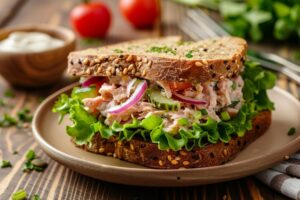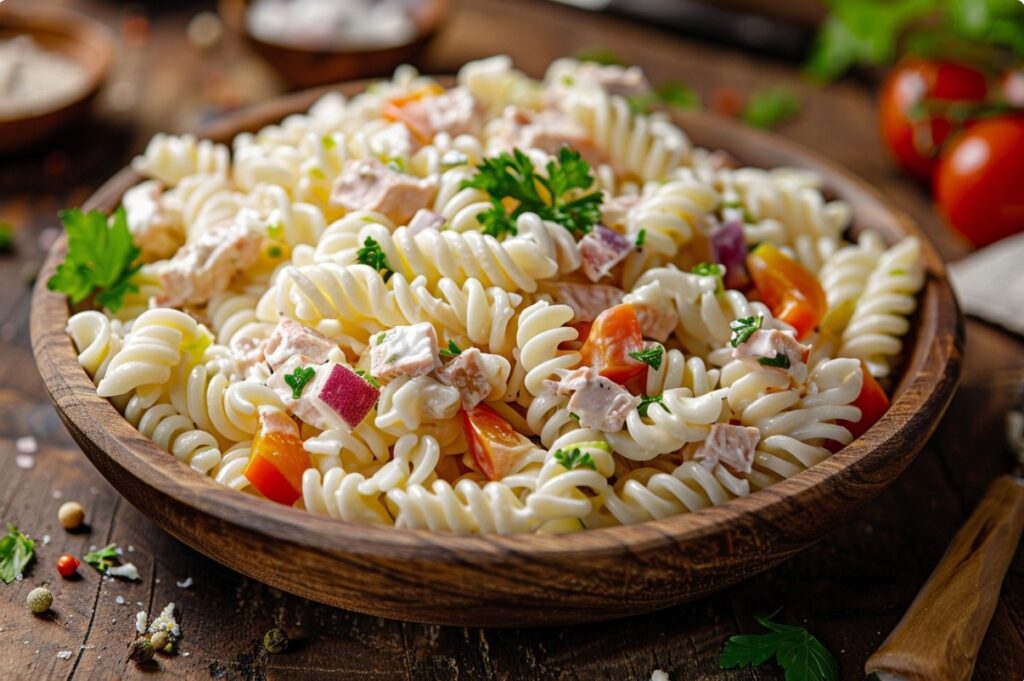
How to Balance the Flavor of a Tuna Salad

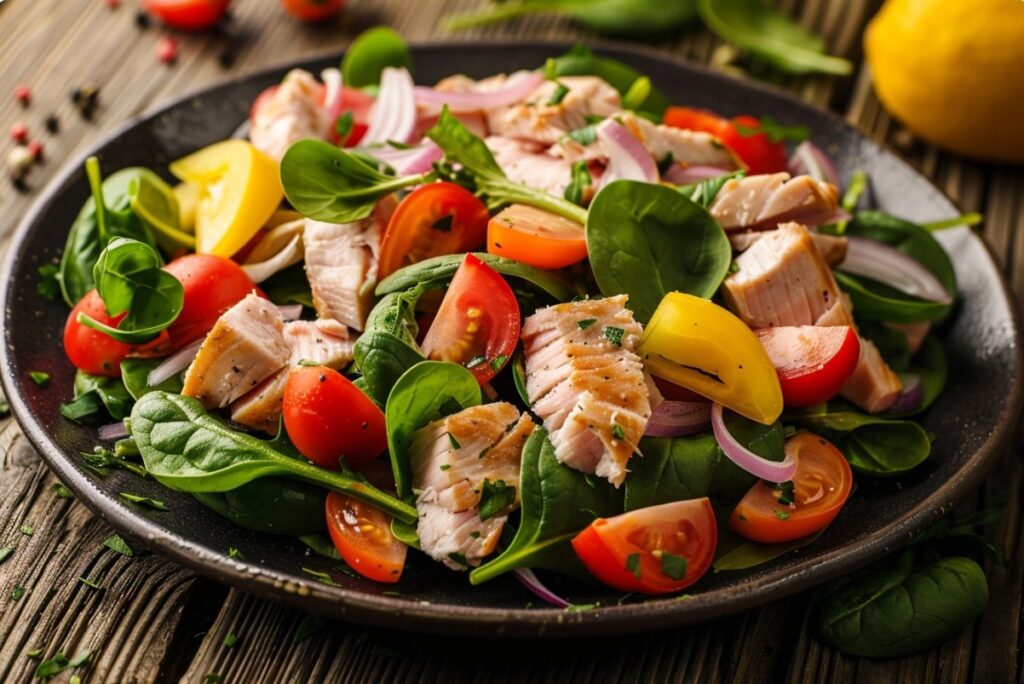
Tuna salad is one of those things that’s easy to ruin—and just as easy to get exactly right. It all comes down to balance. One ingredient can make it dry, another can turn it watery, and sometimes it’s simply missing that little “spark” that makes the whole bowl taste alive.
The good news: balance isn’t complicated. It’s a handful of simple principles that work almost every time. Once you understand them, even the most basic tuna salad suddenly tastes like you actually meant it.
Some salads feel “foolproof”: open a can of tuna, chop whatever’s in the fridge, toss it with a dressing—done. And then you sit down to eat and realize something’s off. Too sour, too bland, tuna bulldozing everything else, or after a few bites you’re reaching for water because your mouth feels coated in this dense, slightly salty heaviness.
That happens with tuna a lot, and it’s not because you “can’t cook.” Tuna is a strong personality ingredient: firm, protein-heavy, with its own built-in saltiness (even if you don’t notice it right away), and it loves to steal the spotlight. Add a heavy dressing on top and the salad can swing either dull or aggressively sharp.
I like to think of tuna salad as a tiny stage where every ingredient has a job. Tuna is the lead, sure—but without good lighting, a background, and the right sound, the lead doesn’t land. Once you know how to steer acidity, fat, salt, sweetness, and texture, the fear of “messing it up” disappears. You’re not guessing—you’re adjusting.
And the best part? Balance isn’t about fancy ingredients. It’s a few precise moves in the kitchen and paying attention to taste at each step. Yes, you’ll need to taste as you go. But that kind of tasting gives you control, not doubt.
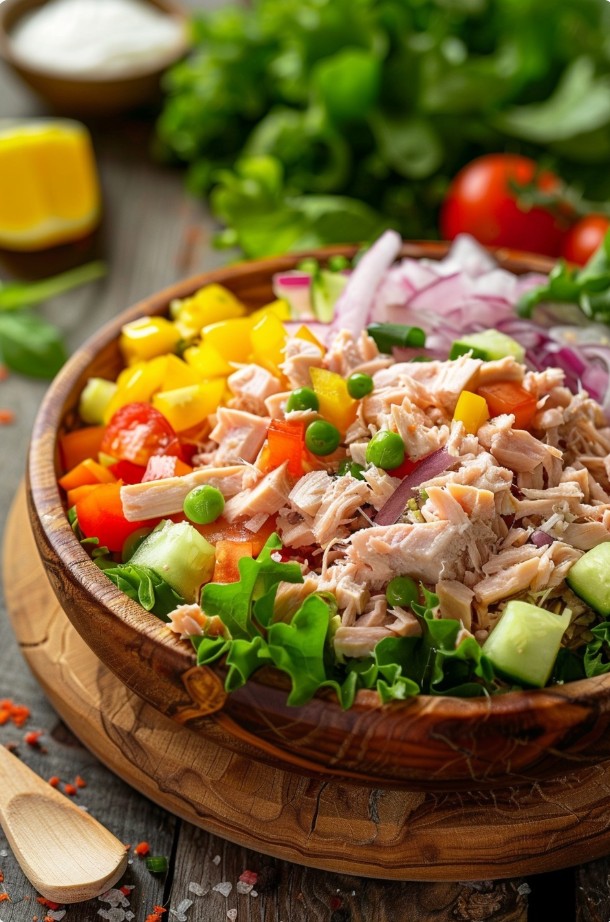
What you’re really ‘balancing’ in tuna salad: five flavor dials
When people say “this salad isn’t balanced,” they usually mean one of two things: the flavor is flat (nothing grabs you), or it’s harsh (one element is way too loud). With tuna salad, three issues show up most often: too much salt, too much acid, or too much richness. The fix isn’t “add more pepper”—it’s understanding the five pillars.
Salt: it’s already there, even if you didn’t add any
Canned tuna almost always comes with baseline salt. Even “in spring water” isn’t truly neutral. Add pickles, olives, capers, soy sauce, or just salt the dressing generously—and the salad turns heavy, like it’s gripping your tongue.
A sign you’ve oversalted isn’t just “it tastes salty.” It’s when, after a few bites, you crave something fresh or sweet and you lose the desire to keep eating.
Acid: it lifts flavor, but it can take over fast
Lemon, vinegar, anything pickled—this is what makes tuna taste bright and not “canned.” Without acid, tuna salad often tastes a bit tinny. But you have to keep acid on a short leash: it should highlight, not dominate.
A sign there’s too much acid: you feel sharpness along the sides of your tongue, and after you swallow there’s a quick little sting in your throat. The salad is tasty, but not comfortable.
Fat: adds roundness, but it can mute everything
Tuna can be a bit dry on its own, so it’s natural to reach for mayonnaise, oil, avocado. That’s fine: fat makes the texture pleasant, helps everything cling together, and makes the salad feel satisfying. The problem starts when the richness isn’t balanced with acid and freshness. Then the flavor goes quiet and heavy—like cotton in your mouth.
A sign there’s too much fat: it smells great, but the flavor doesn’t “open up.” You chew and everything tastes the same.
Sweetness: small, but surprisingly useful
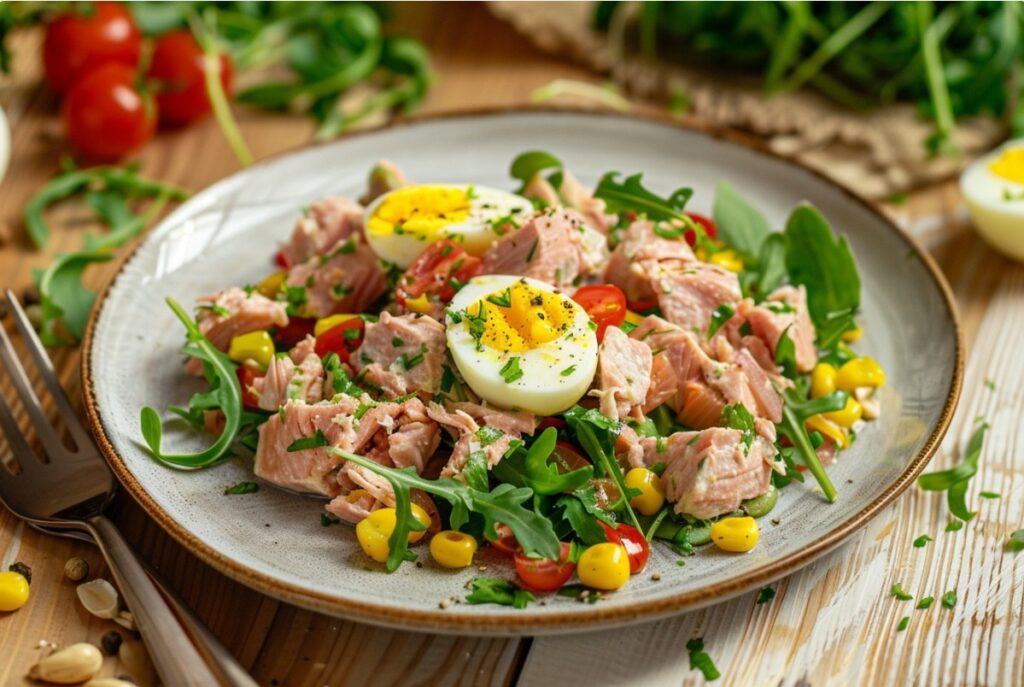
Not spoonfuls of sugar. In salads, sweetness usually comes from tomatoes, corn, sweet onion, apple, roasted peppers—or even a tiny drizzle of honey in the dressing. It works like a brake for acidity and a booster for aroma. Without it, tuna salad can feel too one-note: salty-sour and that’s it.
Texture: crunch and juiciness are part of balance too
Flavor isn’t just your tongue—it’s your teeth. Tuna is firm and flaky. If everything else is soft too (boiled eggs, potatoes, tender greens), the salad turns into a paste. Add crunch and suddenly the whole thing tastes brighter, even if you didn’t change the dressing.
Texture is your safest tool. If you’re nervous about oversalting or over-lemoning, add something crisp and juicy—and the salad will already sound better.
Tip: when you can’t tell what your tuna salad is missing, don’t ask “what should I add?” Ask “what’s lacking—acid, freshness, crunch, or a sweet note?” You’ll get to the answer faster.
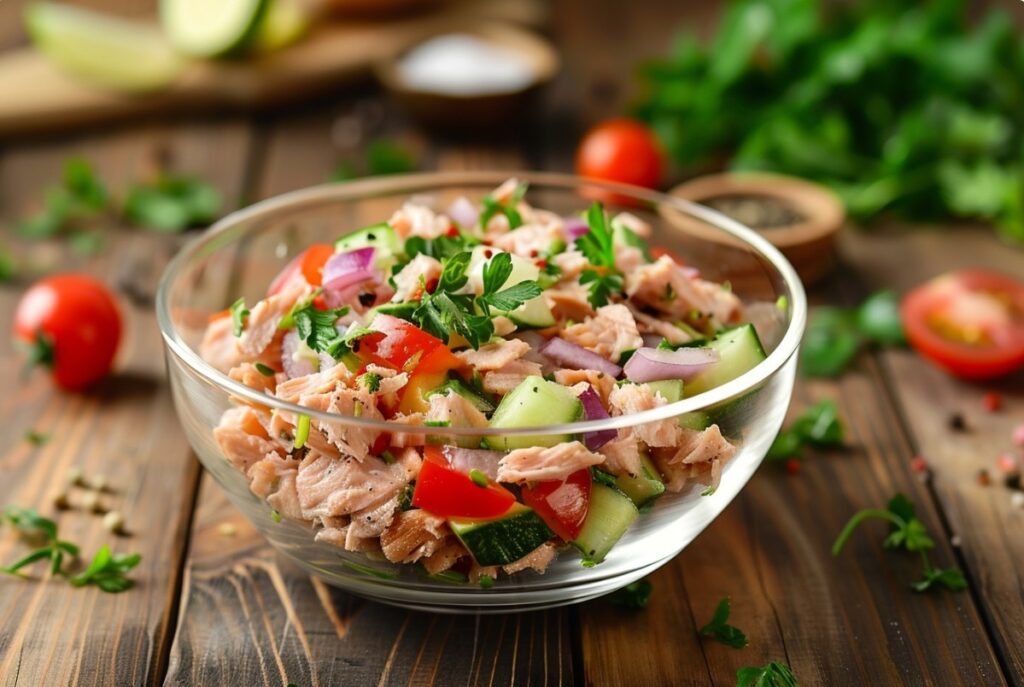
How tuna works: why it ‘pulls’ flavor and how to work with it
Tuna is dense and protein-forward. That means it soaks up dressing well, but it can also flatten it: fat and salt cling to the fibers, and instead of tasting “sauce + tuna,” you get one unified mass. That’s why tuna salad often needs clearer accents than, say, a simple cucumber-and-tomato salad.
In home kitchens I keep seeing the same scene: people drain the can, dump the tuna into a bowl, and immediately mash it with a fork into tiny crumbs. Then they add dressing, stir—and end up with “pâté pretending to be salad.” It’s edible, but it’s not exactly joyful.
The liquid in the can: enemy or ally
If the tuna is packed in water, that liquid carries fish aroma and salt. If it’s packed in oil, it’s extra fat that can either help or overload the salad. Here’s what I do: I don’t automatically pour it all out. I drain most of it, but keep about a teaspoon “just in case.” Sometimes it saves a dry salad when you don’t want to add more mayo or oil.
Quick story: once I had a can that was weirdly dry (it happens, even with decent brands). I almost reached for more oil, then remembered that teaspoon of packing liquid. I stirred it in and the texture softened immediately—without turning greasy. The flavor stayed cleaner too, because it was tuna’s own liquid, not extra fat.
Flake size: smaller isn’t always better
When tuna stays in larger flakes, you get little “islands” of flavor. One bite tastes creamy dressing, the next tastes juicy vegetables, the next tastes tuna. When everything is mashed, it all blends into one note.
So I usually break tuna into big flakes, not crumbs. If I actually want a spreadable texture (sometimes that’s the goal), then I compensate with crunch and a brighter hit of acid—otherwise it turns boring fast.
Temperature: cold tuna mutes aroma
Tuna salad straight from the fridge almost always tastes less aromatic. That’s normal: cold dulls smell and flavor, especially fat. If you have 10 minutes, let the finished salad sit at room temperature for a bit (not an hour—just a short rest). The flavor rounds out, and you’re less likely to “add more salt” simply because everything is cold.
Tip: if some ingredients are fridge-cold and others are at room temp, the salad often tastes more interesting—like it has more flavor. Small detail, but it works.
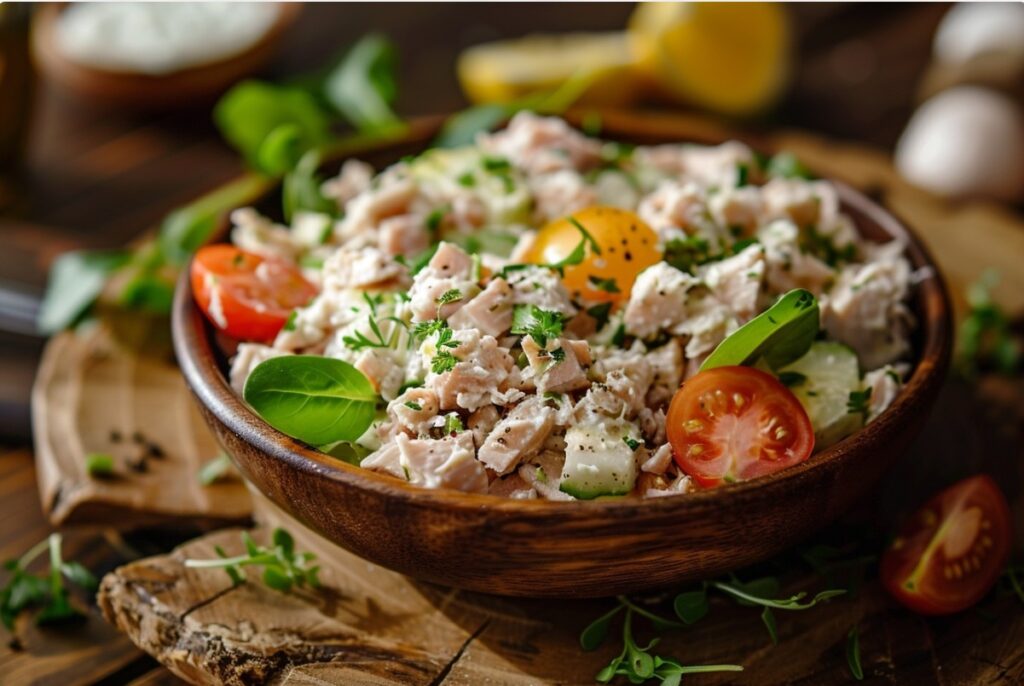
Acid + fat: the key duo that makes a salad feel alive
If I had to explain tuna-salad balance in one line, it would be: fat brings comfort, acid brings life. Without fat, tuna feels dry and dusty. Without acid, it turns heavy and “canned.” Together, they create that feeling where you actually want another bite.
What matters here isn’t which dressing you use, but how it feels in your mouth. Oil, mayonnaise, yogurt, avocado—different kinds of richness. Lemon, vinegar, pickle brine, tomato juice—different kinds of acidity. They behave differently, but the logic is the same.
How to tell you need more acid
The salad is fine, but it doesn’t “pop.” You chew and the flavor opens slowly, without that spark. In this situation people often start adding salt. That’s the trap: salt makes it louder, not more interesting.
Add a drop of acid, toss, and taste again. Don’t flood it—one small splash often makes the difference.
How to tell there’s too much acid
You taste sharpness before you taste tuna. The salad almost “whistles.” This is when you want more fat or a sweet note—not more acid (yes, people sometimes add more lemon because they think they need “freshness”).
Quick story: once I added too much lemon juice because the lemon tasted mild—so I thought I needed more. Five minutes later the salad turned aggressively sharp. Avocado saved it (it gently softened the acidity), plus a small spoon of sweet mustard. The acid stayed, but it stopped poking.
Richness can be the “wrong kind” too
Mayonnaise gives thickness and a bit of salt, oil gives silkiness, yogurt gives lightness, avocado gives creaminess. Sometimes the issue isn’t how much fat you used, but that it’s too heavy for the rest of the ingredients. If your salad is mostly greens and cucumber, thick mayo can feel weighty. If you’ve got potatoes or eggs in there, a slightly thicker dressing can actually pull everything together.
Tip: if the dressing feels heavy, don’t rush to add more acid. Try thinning it first with a few drops of water or that reserved tuna liquid—lighter feel, no “acid punch.”
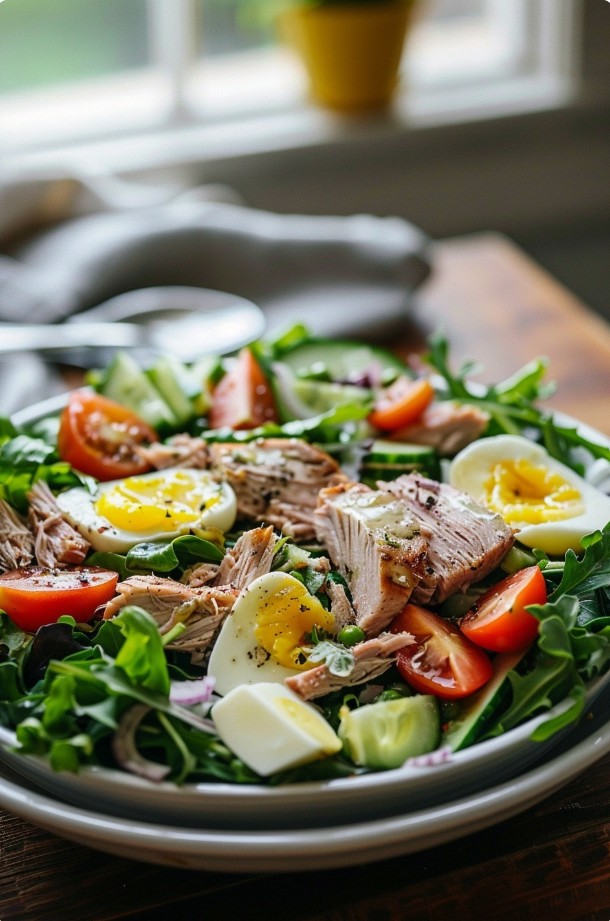
Salt, salty add-ins, and ‘hidden oversalting’: how not to ruin it
It’s incredibly easy to oversalt tuna salad—and not notice while you’re making it. Because the tuna tastes fine on its own, the cucumber tastes fine, the dressing tastes fine… and then together it’s too much.
Where salt hides (and why it matters)
- the canned tuna itself;
- pickles, capers, olives;
- cheese (even a little);
- mustard, sauces, bottled dressings;
- croutons or crackers, if you add them;
- salted water, if you boiled anything for the salad.
That’s why I almost always salt at the very end. And not the whole bowl in one go—I taste, add a pinch, toss, taste again. It’s not being fussy; it’s how you avoid ruining it.
How to boost flavor without more salt
When a salad tastes bland, about half the time it doesn’t need salt—it needs:
- acid (a few drops of lemon/vinegar);
- aroma (fresh herbs, zest, pepper);
- crunch (cucumber, celery, radish);
- a slightly warmer temperature (let it sit 10 minutes).
Quick story: I once made tuna salad for a big group and was worried it would be under-seasoned. I was about to add salt, then stopped and added finely grated lemon zest and black pepper instead. The salad tasted brighter and no one missed the salt. If I’d salted it, it would’ve been too much.
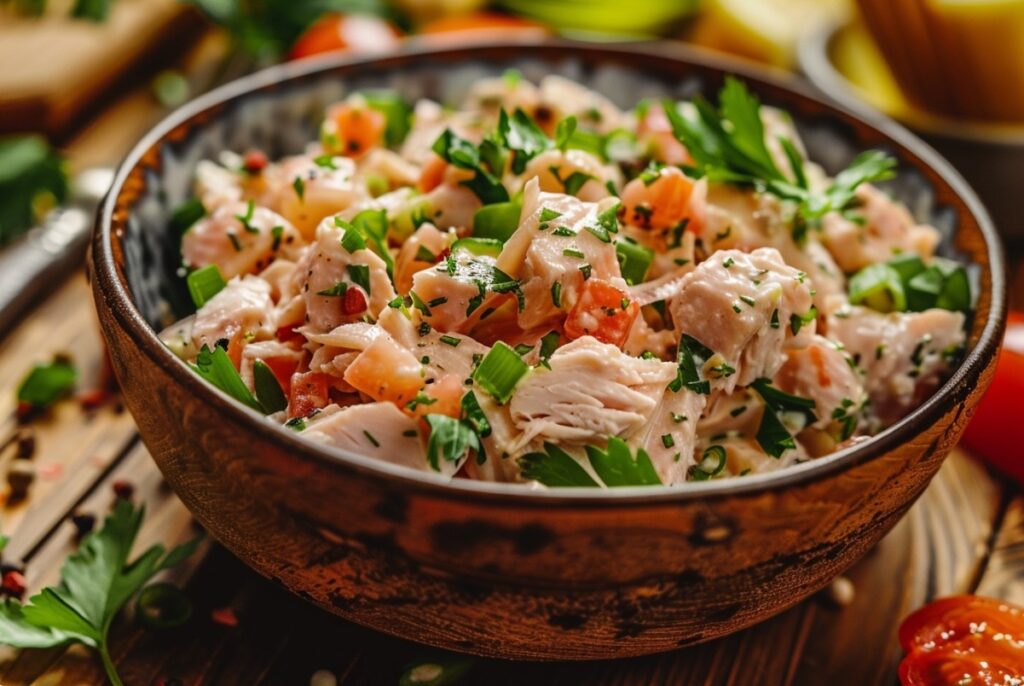
Texture and juiciness: how to keep tuna salad from turning into mush
Tuna salad can turn into a dense mass fast—especially if you like chopping everything tiny, or if your mix has lots of soft ingredients. The trick isn’t “inventing new ingredients,” it’s thinking about mouthfeel: you need something that crunches and something that brings juiciness.
Crunch: the small detail that makes it taste more expensive
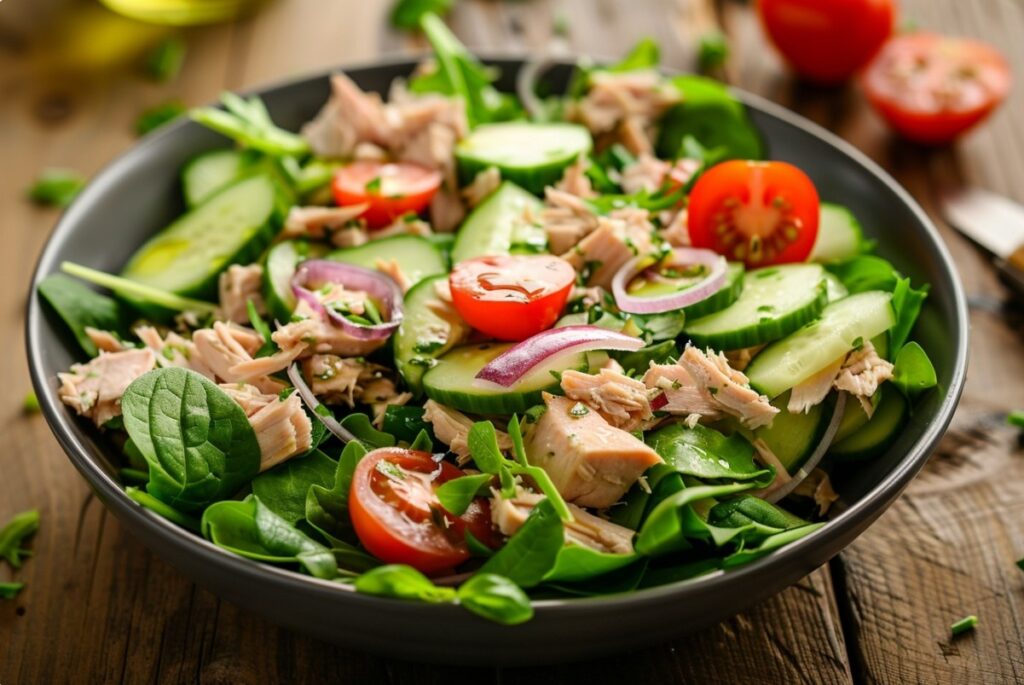
I like adding something crisp even to the simplest version. Fresh cucumber, celery, radish, sweet pepper, even thinly sliced cabbage all work. Crunch isn’t just “nice.” It cuts through richness and tells your brain the dish is fresh.
What you want: distinct layers—soft tuna, juicy veg, light dressing.
What often happens: everything gets chopped small, stirred too long, and the dressing coats it all the same way—so the salad tastes one-dimensional.
Juiciness: don’t confuse it with “watery”
Juiciness is when natural juices (tomato, cucumber, citrus) help carry flavor through the salad. Watery is when those juices dilute the dressing until everything tastes washed out.
It’s a fine line, but you can feel it. If you’re adding very juicy vegetables, it helps to:
- mix the salad closer to serving;
- avoid an overly runny dressing;
- salt at the end (salt draws water out of vegetables).
Don’t mash—fold
Some salads like a long, thorough mix. Tuna isn’t one of them. If you want to keep pieces intact, stir gently, more like folding. Two or three minutes is plenty. After that you’ll start breaking the tuna down into paste.
Tip: if your salad has already turned too uniform, don’t try to rescue it with more spices. Add something crisp and fresh, toss just a few times, and it’ll come back to life.
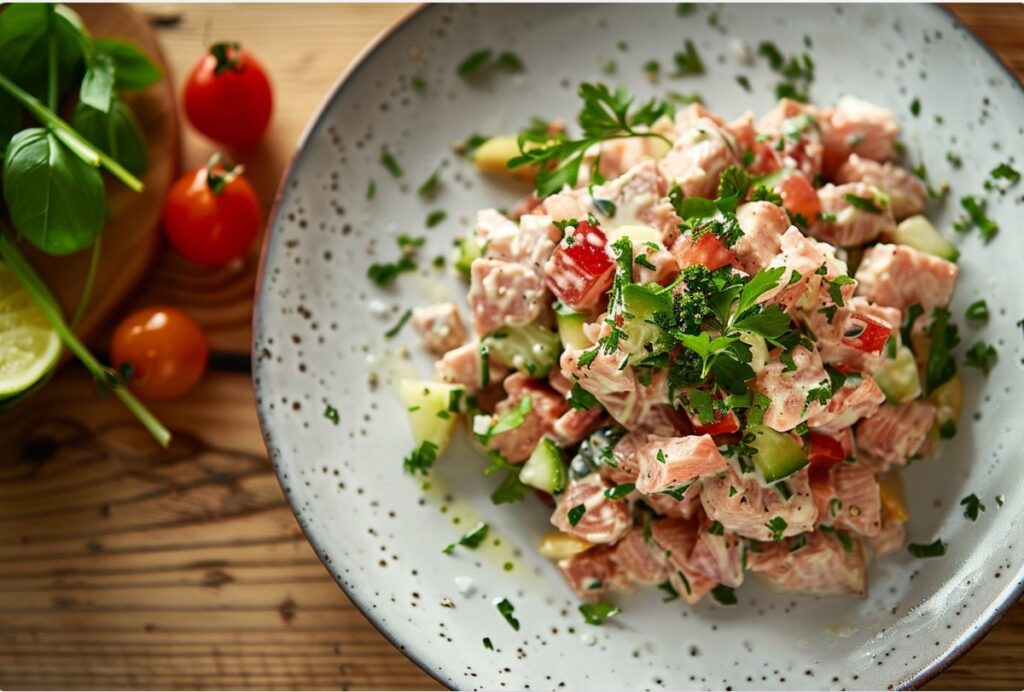
Aroma and ‘top notes’: herbs, spices, zest—the stuff that ties it together
Often what tuna salad is missing isn’t salt or acid—it’s aroma. Tuna has its own smell, but it’s quiet and steady. A salad needs a top note: the thing you notice before the first bite.
This isn’t about dumping in “fish seasoning.” It’s about simple things: herbs, freshly ground pepper, a little zest, a dab of mustard. They don’t make the salad spicy or weird. They make it feel finished.
Herbs: not as garnish, as a tool
Parsley tastes clean, dill gives that cozy, classic “with fish” vibe, green onion adds a gentle bite, basil brings a slightly sweet aroma. One thing matters: don’t chop herbs into dust. When herbs get mashed, they turn bitter and lose freshness.
I usually add herbs in two stages: some mixed in, and some sprinkled on top. The aroma hits harder that way, even if the salad is cold.
Pepper: go freshly ground—and not just for heat
Black pepper is aroma, not just spiciness. If a salad tastes “meh,” a few turns of the grinder can add dimension instantly. White pepper is softer and reads more “creamy.” Paprika brings a sweet smokiness (even when it’s not smoked paprika).
Zest: a little magic for tuna
Lemon or lime zest isn’t acidity—it’s fragrance. It’s easy to overdo, but in small amounts it makes tuna taste fresher without extra juice. I reach for zest when the acid level is already fine, but the salad still feels like it’s missing that spark.
Quick story: I once made tuna salad at a friend’s place and there was only one lemon—and it was dry. Hardly any juice. I grated a bit of zest and added a drop of vinegar. It turned out even better than dumping in lots of lemon juice: bright aroma, controlled acidity.
Tip: if you’re worried about overdoing zest, grate it onto a cutting board first, then pinch up just a tiny amount with your fingers. Much easier to control.
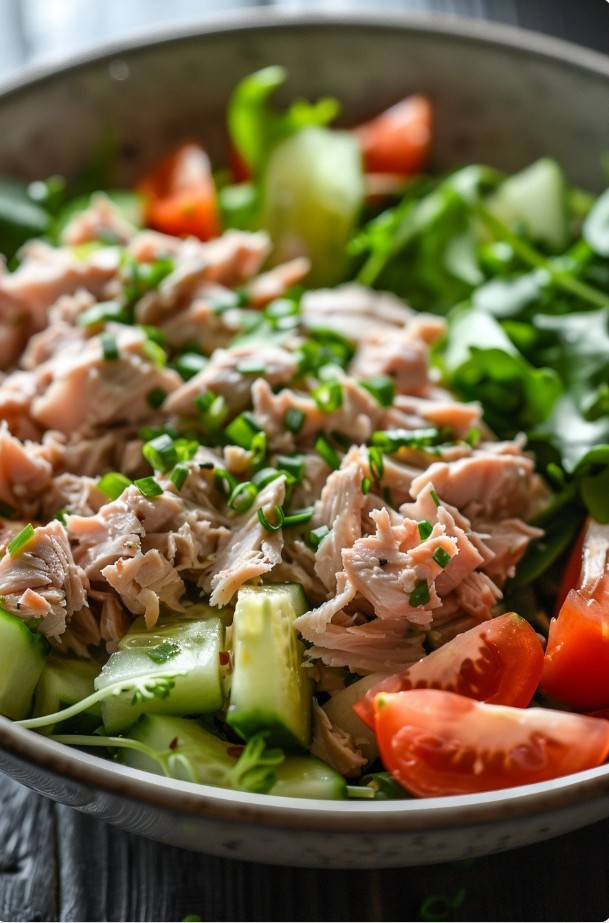
Common beginner mistakes: why tuna salad turns out either harsh or boring
I’ve seen dozens of tuna-salad versions, and the mistakes repeat with impressive consistency. The good news: fixing them isn’t about “talent”—it’s a few habits.
Mistake 1: dressing the whole bowl “by eye”
Too much dressing hides the ingredients. Too little makes it dry. Worst part: it’s hard to fix afterward—add more vegetables and you throw off the balance; add more dressing and it gets even heavier.
What I do: I mix part of the dressing into the tuna first to soften it, then add the rest of the ingredients and adjust from there. Much more control.
Mistake 2: salting at the start
Salt pulls water out of vegetables, so the salad turns wet quickly. And you haven’t accounted for the salt in the tuna and other add-ins. Result: either diluted flavor or oversalting.
Better: salt at the end, after everything is mixed and the salad has had a minute to settle.
Mistake 3: adding too much acid to “get rid of the fishy smell”
Tuna doesn’t need masking. If you pour in lots of lemon, you’re not removing smell—you’re making the salad sour. Aroma works better: herbs, pepper, zest, a little mustard.
Mistake 4: making everything soft
Soft tuna + soft ingredients + creamy dressing = monotony. Then you want more salt or more acid, and the salad turns harsh. What it really needs is crunch and freshness.
Mistake 5: overmixing
Overmixing breaks the tuna down and makes everything uniform. The salad loses structure—and with it, that feeling of freshness.
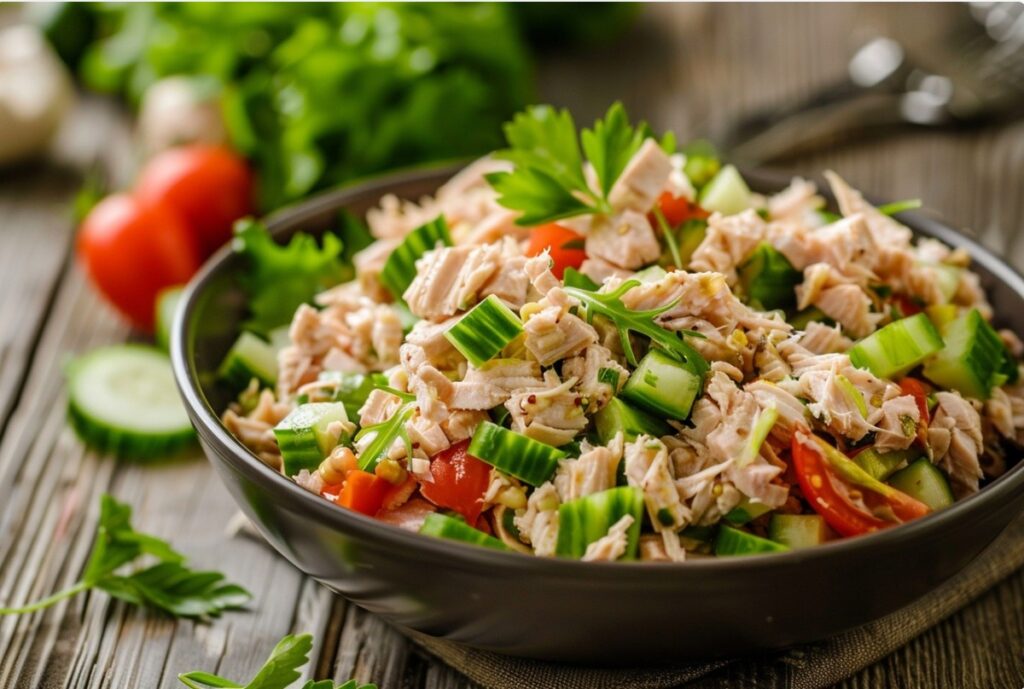
If something went wrong: quick ways to fix the flavor
This is my favorite part, because it’s where you get calm in the kitchen. Salad isn’t baking. You can adjust a lot. The key is to make small changes and taste after each one.
If the salad is oversalted
Don’t try to “cover” salt with pepper or spices—it usually gets worse. Work against the salt instead:
- Add volume: more neutral ingredients (greens, cucumber, tomato—whatever you have). Most reliable fix.
- Add a little fat: it rounds out saltiness. Just don’t overdo it or the salad will go dull.
- Add a sweet note: a bit of sweet pepper, some corn, apple, or a drop of honey in the dressing. Sweetness won’t make it “sweet”—it softens the sharp edge of salt.
Quick story: I once oversalted a salad because of olives plus the tuna. I couldn’t add more vegetables (the bowl was already full). Apple saved it: a few thin slices added juiciness and gentle sweetness, and the salt stopped being a problem.
If the salad is too sour
- Add fat: a bit of mayonnaise/yogurt/avocado or oil—whatever fits your salad. Fat softens acidity.
- Add sweetness: a drop of honey or something naturally sweet. It works faster than you’d think.
- Add something neutral: greens, cucumber—anything that dilutes the acid without adding more acid.
Important: don’t add more salt “to balance it.” Sometimes it helps, but it’s easy to swing into a different problem.
If the salad is rich and heavy
- Add acid in tiny amounts: literally a few drops, then toss.
- Add crunch: fresh cucumber, radish, celery. Texture makes it feel lighter without changing calories—it’s perception, but it’s real.
- Add aroma: pepper, herbs, zest. They lift a heavy flavor.
If the salad tastes bland and boring
The temptation is to salt immediately. I do it differently—I check three things in order:
- is there at least a little acid (it often fixes everything);
- is there aroma (pepper/herbs/zest);
- is there texture (crunch and juiciness).
Only if it still feels empty after that—then a pinch of salt.
If the salad is watery
This usually happens when vegetables release juice or you added too much liquid. Options:
- Drain the excess (yes, it’s fine), then quickly rebalance with a touch of acid/fat.
- Add something that absorbs some moisture: sturdier greens, extra tuna, or a thicker dressing (careful not to make it heavy).
- Don’t salt early next time—best prevention.
Tip: when you’re fixing a salad, make changes in small amounts. In tuna salad, “half a teaspoon” often matters more than “a bit more by eye.”
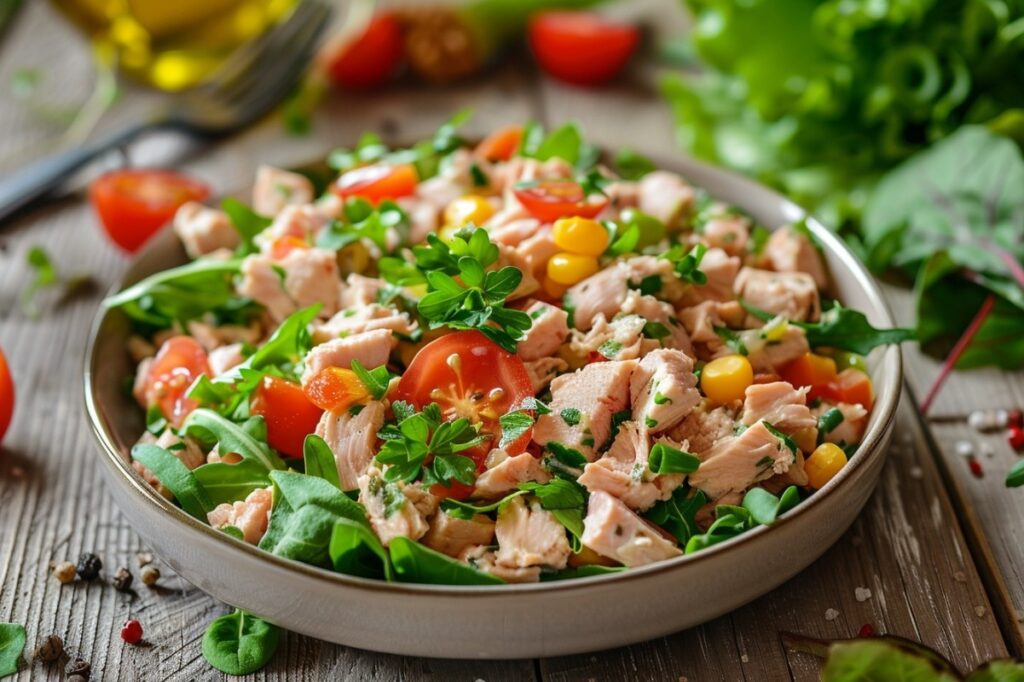
How I ‘tune’ tuna salad: a step-by-step order that gives you control
I don’t love a kitchen where everything depends on luck. So I stick to a simple order that works almost every time. It’s not about specific ingredients—it’s about logic.
1) Start by assessing the tuna
I taste a small piece. Is it salty? Dry? Soft? That sets the direction: if it’s salty, I’m careful with salty add-ins. If it’s dry, I think about how to soften it (not necessarily mayo—sometimes a little reserved tuna liquid or juicier ingredients are enough).
2) Add richness—without smothering the salad
I want the tuna to stop feeling dry. But I don’t want everything to turn into a creamy blob. So I add fat gradually and watch the texture: the tuna should be tender, but still “breathe.”
3) Raise the acid until it feels fresh
Acid should show up as a little salivation—that’s a good sign. When your mouth feels like it “woke up,” you’re close to balance. If it starts to sting, stop.
4) Add texture
I add crunch and juiciness closer to the end so I don’t crush them. This also helps if you slightly overdid the dressing: texture brings back the feeling of “salad,” not “spread.”
5) Finish with aroma—and only then salt
Pepper, herbs, zest—and only after that, a pinch of salt (if needed). Often, once the aroma is there, salt is either unnecessary or you need just a tiny bit.
6) Give it a minute, then taste again
It’s a small thing, but it matters: in a minute, salt and acid distribute, the tuna absorbs some dressing, and the flavor becomes clearer. I taste again—and only then decide if it needs anything.
If I had to sum it up: tuna salad turns out best when you don’t try to “make it delicious all at once,” but instead adjust richness, acidity, texture, and aroma one by one—saving salt for last. It’s not slower. It’s just more precise.
So what usually goes wrong with your tuna salad—does it get oversalted, too sour, too dry, or does it turn into mush? Tell me how you build it and what you don’t like about the result—I’d love to troubleshoot it together.
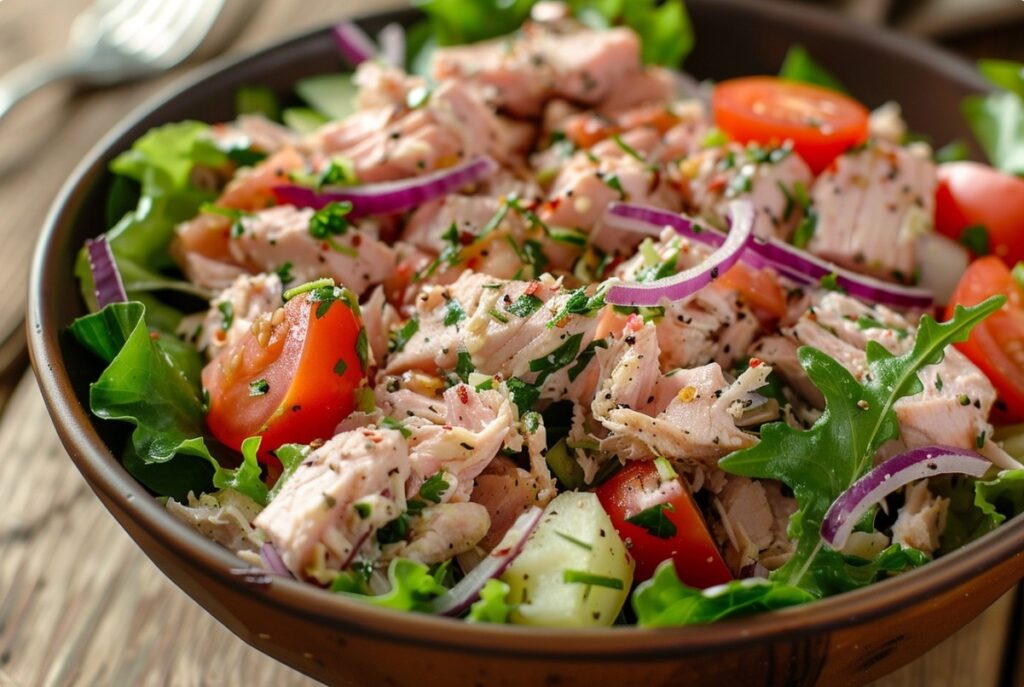
FAQ
What does “balanced flavor” mean in tuna salad?
It means no single ingredient dominates and the flavors support each other. In tuna salad, you’re aiming for balance between salty, acidic, rich, and fresh. If something is missing—or there’s too much of one thing—the flavor falls apart quickly.
How can I tell my tuna salad is missing flavor?
If it tastes flat or boring, it usually needs either a touch of acid or a bit of salt. Tuna salad often wakes up after a few drops of lemon juice or a small pinch of salt.
What should I do if my tuna salad turns out dry?
That usually means it needs more fat or more dressing. Add a little olive oil or a bit more sauce. Don’t pour it in all at once—add gradually, mix, and taste.
How do I fix watery tuna salad?
Most often it’s from cucumber releasing juice or tuna that wasn’t drained well enough. If it’s already watery, you can drain off the excess liquid or add a few drier ingredients to absorb some moisture, then mix again.
Why is acidity important in tuna salad?
Acid (lemon juice or vinegar) lifts the flavor and makes it taste brighter. Without it, tuna salad can feel heavy or dull even if the ingredients are good.
Can you overdo it with ingredients?
Yes—one of the most common mistakes. Too many components make the flavor chaotic. For the best result, stick to about 4–6 ingredients.
How should I mix tuna salad so I don’t ruin the texture?
Mix gently, without pressing down. Tuna salad turns into mush if you ‘knead’ it, so use light folding motions instead.
When should I add the dressing—at the beginning or the end?
It’s best to add dressing at the end and mix right away. If you add it too early, vegetables can release juice and the salad may turn watery.