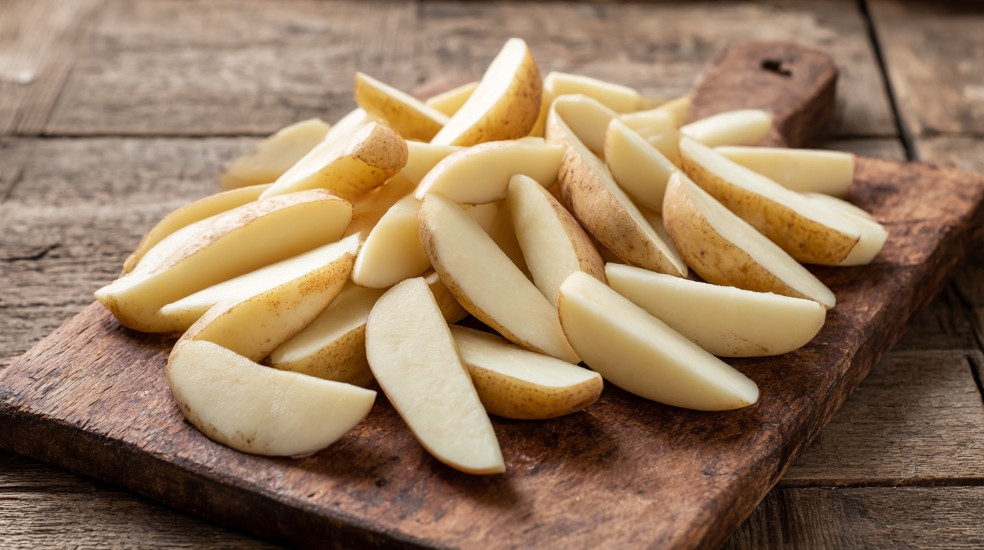
How to Choose Potatoes with the Perfect Texture

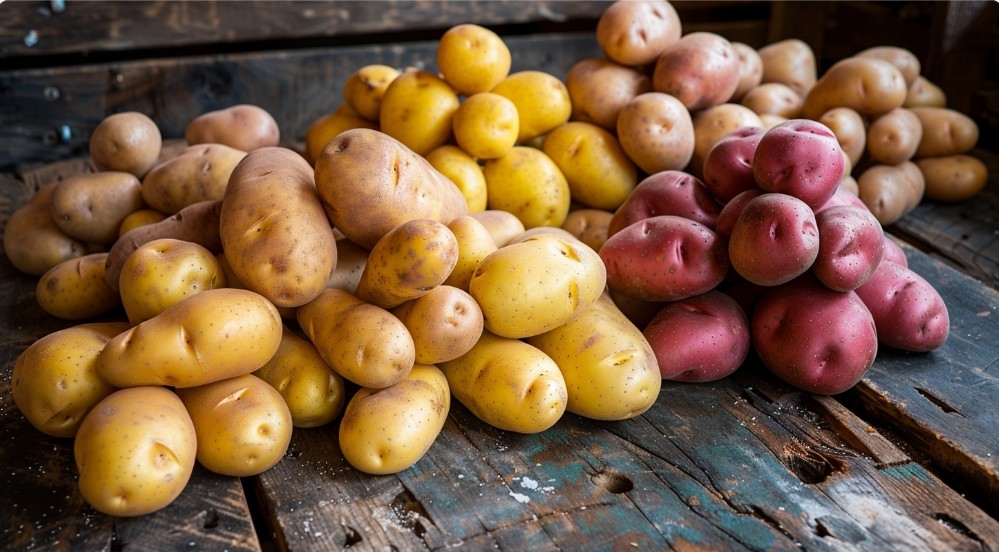
You know that moment when you buy potatoes “for mash,” and they stubbornly hold their shape and turn out grainy—almost sandy? Or you grab some “for frying,” and in the pan the pieces collapse and stick like glue. That’s usually when you want to blame the recipe, the skillet, the moon phase—anything except the potatoes.
But honestly, half the success happens at the buying stage. Potatoes have personalities: one kind falls apart into a fluffy, tender interior; another stays neat and crisp around the edges. It’s not magic—it’s the variety, maturity, storage conditions, and even how the potato looks and feels in your hand.
I love that little moment at an open-air market: you pick up a potato, roll it around in your palm, and you can already guess what it’ll be like cooked. The details matter—how dry the skin feels, that clean earthy smell, how many “eyes” it has, even the sound when two potatoes lightly knock together.
So here’s the practical, no-fluff version of how to choose potatoes so you get the texture you’re after—and how to avoid the “pretty means good” trap.
Texture starts with what you actually want from the potato
There’s no such thing as a potato that’s “just good.” It’s good for something. That clicked for me after one very ordinary flop: I planned crispy fried potatoes for a family dinner, bought the cleanest, most even ones—picture-perfect. The result? Golden outside, but wet and gluey inside. The pan wasn’t the problem. My choice was. I’d picked a potato that loves to fall apart and dump starch into hot oil.
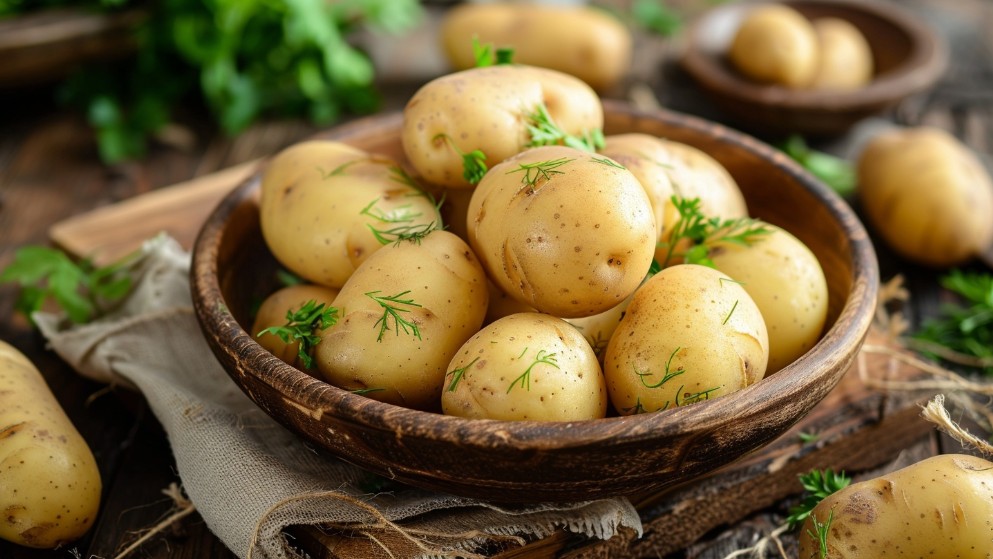
Put simply, there are two ends of the spectrum:
- Floury, starchy potatoes — fluffy flesh, mash easily, soak up butter and milk beautifully, and give you that soft, tender feel. Downside: they can break apart when frying, and they can cloud a soup broth.
- Waxy, firm potatoes — hold their shape, slice neatly, and after boiling the cubes don’t turn into mush. Downside: mashed potatoes can come out dense and “play-dough-ish,” without much air.
There are “all-purpose” potatoes in the middle, but all-purpose is still a compromise. If you’re chasing a specific texture, you want fewer compromises.
To keep it simple, I stick to this rule of thumb: for mash and baking, you often want potatoes that readily release starch; for salads, soups, and stews, you want ones that hold their shape. Then at the market or store, I look for clues that point me in the right direction.
Tip: if you don’t know what you’ll be cooking this week, buy two small batches of different potatoes instead of one big sack “for everything.” It’s cheaper than a ruined dinner mood.
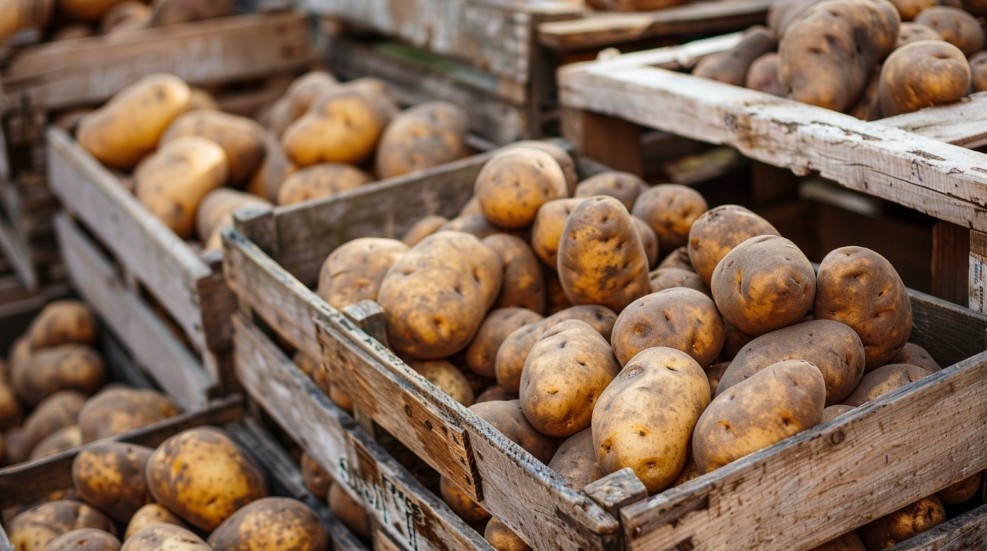
At the market: what to look at, smell, and feel
I like buying potatoes where I’m allowed to touch them. In a supermarket you often only see the packaging; at the market, the potato speaks for itself.
Skin: dry, firm, no “play-dough” feel
Run your finger over the surface. A good potato feels dry and slightly rough—like clean, dry soil. If the skin feels tacky (like it’s damp) or, on the other extreme, overly smooth and slippery, I get cautious. Moisture can mean it was washed and not dried properly (or stored in a damp place), and that shortens its shelf life fast.
Another sign: skin that peels off in a thin film. For new potatoes that’s normal, but for regular potatoes it’s suspicious—could be under-mature or poorly stored.
Firmness: it should feel springy
Give the potato a gentle squeeze. It should be firm, with no soft spots. Softness on the side is often the beginning of rot, even if you can’t see a mark yet. And yes, sometimes a seller will say, “It’s fine, just cut it off.” You can cut it off—but the texture won’t be the same. Those areas tend to cook watery and can bring a faint sweet, “going-off” note.
Eyes and sprouts: not just cosmetic
Eyes aren’t a big deal, but how many there are and how deep they go matters. Deep eyes mean more waste and uneven slicing. Sprouts, though, are a sign the potatoes have been sitting too long in warmth or light. They’re often softer, the flavor shifts, and they can behave unpredictably when boiled.
I don’t buy potatoes with long sprouts, even if they’re “cheap.” It’s cheaper for me to buy decent ones than to spend ages peeling, trimming, and getting annoyed.
Smell: earthy, not musty
Yes—smell the potatoes. Good ones smell like dry earth and freshness, sometimes with a faint nutty note. Bad ones smell like a damp cellar: musty, stale, heavy. If a sack smells like “old potatoes,” that can show up in your food as bitterness and a lingering odor, especially after baking.
Tip: ask the seller to scoop from the middle of the sack. The top often dries out; the middle shows what you’re really buying.
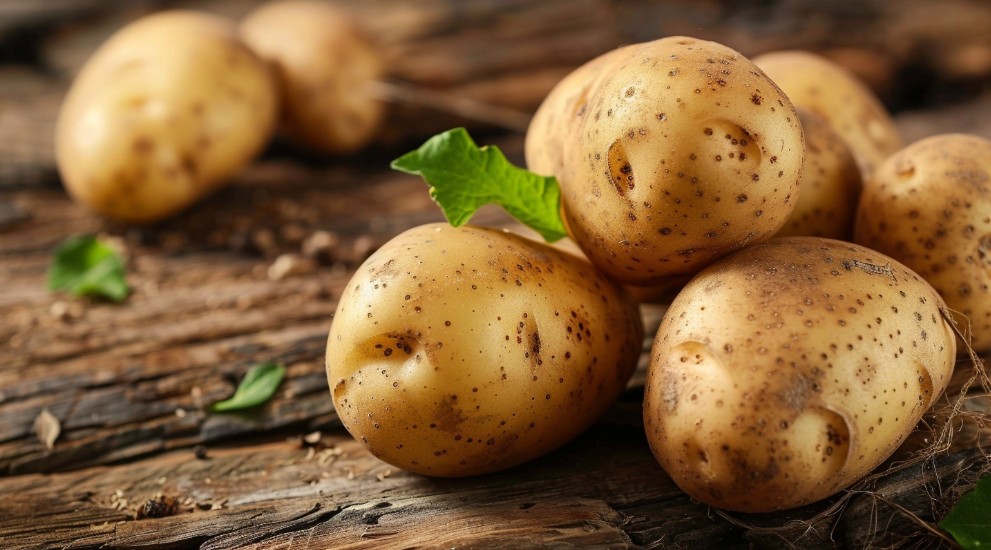
Supermarket and bagged potatoes: how not to buy trouble in a pretty package
In a store, we buy with our eyes. Packaging is great at distracting you: “washed,” “premium,” “for baking,” “selected.” Some of that is genuinely helpful; some of it is just words.
Watch for condensation and droplets
If there’s moisture inside the bag—droplets or fog—that’s a bad sign. The potatoes are basically steaming, and spoilage speeds up. Even if they look fine today, in a few days at home you might pull out soft potatoes with an unpleasant smell.
Check the bottom of the bag
The bottom is where damaged potatoes and dirt collect. If you see dark wet patches, clumped mud, or anything that looks like mush—skip it. That’s a perfect little environment for rot, and it spreads.
Size consistency isn’t being picky
When potatoes are roughly the same size, they cook evenly. That’s directly tied to texture: small ones overcook while big ones are still firm. You end up with collapsing pieces and undercooked centers in the same pot.
With bagged potatoes, I either buy very small ones (when I want speed and even cooking) or medium ones of a consistent size. Mixed-size bags are a gamble.
Don’t trust “for mash/for frying” labels blindly
Sometimes it’s a real selection by type; sometimes it’s pure marketing. If the producer lists the variety or at least the type (something like “waxy/floury”), that’s already better. If it’s just a pretty slogan, rely on visible signs and common sense—not the promise on the bag.
Tip: in the store, choose bags where the potatoes don’t look overly glossy. A very shiny surface often means they’ve been washed and polished hard—and that isn’t always great for storage.
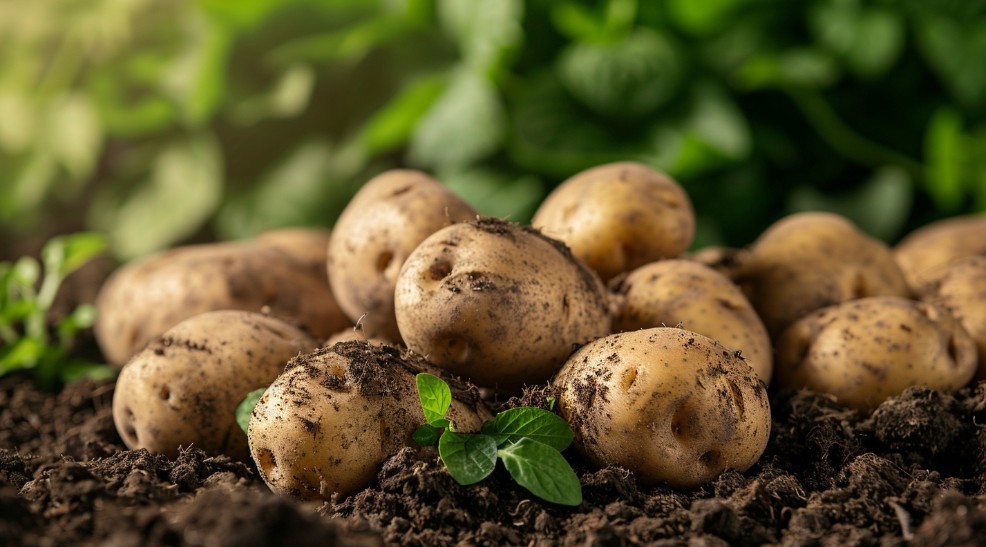
Quality signs: color, spots, green patches—and what to do about them
Some things are hard “no” signals, and some are “I can live with that.” Potatoes are a living product, and you won’t always find flawless ones.
Green skin: don’t try to be a hero
A green tint comes from light exposure. If it’s faint and in a small area, some people just peel a thicker layer and call it fine. But if the potato is noticeably green—especially on one side—I don’t buy it. First, it tastes bitter. Second, the texture can be odd too: drier, with a slightly “woody” vibe.
Black specks and “rusty” patches
Tiny dark dots on the skin can be soil stains or minor scuffs—if they’re superficial, it’s fine. But if you see lots of dark, sunken spots (like someone pressed a finger in), that can mean internal bruising or damage from being knocked around. For mash, you can trim it away. For neat wedges or cubes, it ruins the look and gives you uneven softness.
Cracks, cuts, dents
A crack is an open door for microbes and moisture loss. Cracked potatoes dry out faster and can turn “cottony,” or go watery around the damaged area. If I buy them at all, it’s only when I’ll use them quickly and in a dish where perfect shape doesn’t matter.
Flesh color isn’t just about looks
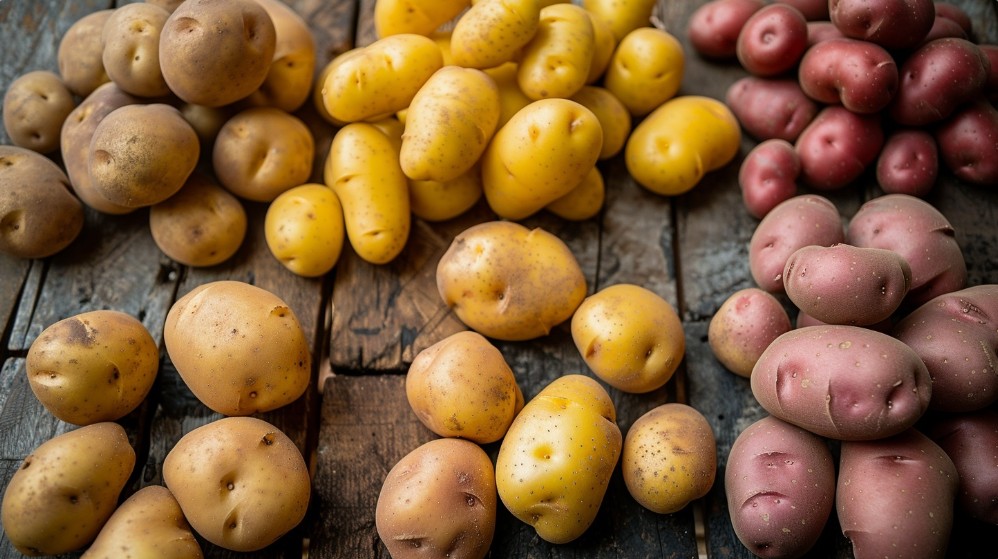
White, cream, yellow—totally normal. Yellow-fleshed potatoes often feel a bit more “buttery” and look great in mash or baked dishes. White can be more neutral. But I don’t choose based on color alone; storage and freshness matter more.
I once bought “perfectly yellow” supermarket potatoes that looked like a dream. At home they turned out limp, with hollow spots inside. In the pan they went soft with zero crunch—like a baked pear. Lesson learned: color is a bonus, not a guarantee.
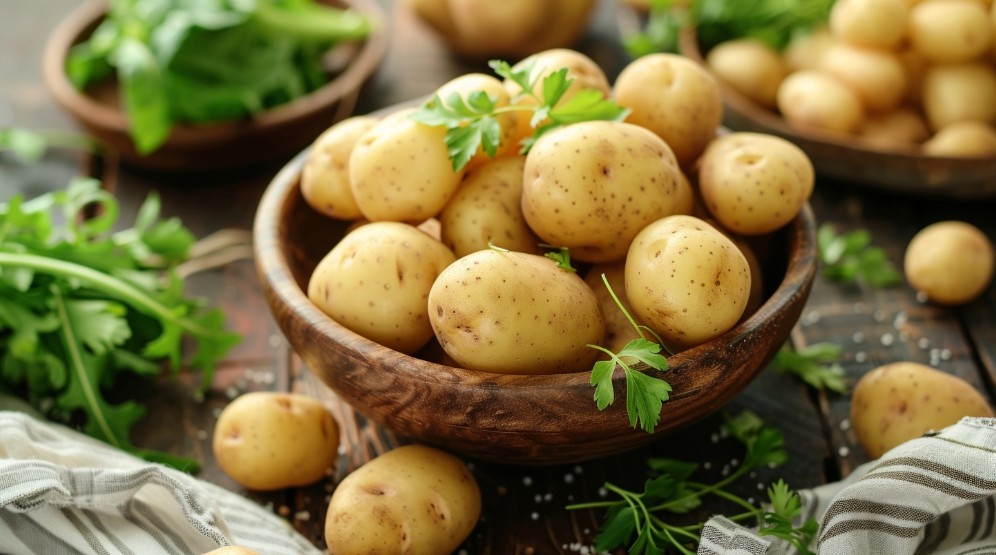
Seasonality and potato “age”: new, last year’s, and the tired ones
Potato seasonality isn’t as romantic as strawberry season, but you can absolutely taste—and feel—it in the texture.
New potatoes: tender, but not always crispy
New potatoes have thin skin, lots of moisture, and a delicate aroma. They cook quickly and give you a juicy, tender bite. But if you want that dry fluffiness or a seriously crisp crust, new potatoes can let you down. They tend to release water and soften the crust.
At the market, they’re easy to spot: the skin rubs off with light friction, the potatoes often come with little clumps of soil, and the smell is fresh. I buy them when I want gentleness, not dramatic crunch.
Main season: steady and predictable
Fully mature potatoes that have been properly cured (dried a bit after harvest) are the easiest to cook with. They’re predictable: they boil evenly, and they either hold their shape or fall apart depending on type—without the “sometimes yes, sometimes no” surprises.
Late-season potatoes: sweeter and a bit weird
After a long time in storage, potatoes change. They often get sweeter and sometimes softer, with hollow spots. For mash, it can be tolerable. For frying, it’s a headache: the sweetness caramelizes faster, the potatoes brown unevenly, and the inside can stay kind of limp.
I once grabbed a “sale” sack at the end of winter and spent two weeks fighting with it in the kitchen. They either burned outside or stayed undercooked inside. Since then, my rule is simple: suspiciously cheap late-season potatoes almost always have a reason.
Tip: if the potatoes look okay but you have a feeling they’re “old,” buy less and plan to use them within 3–5 days—not over the next couple of weeks.
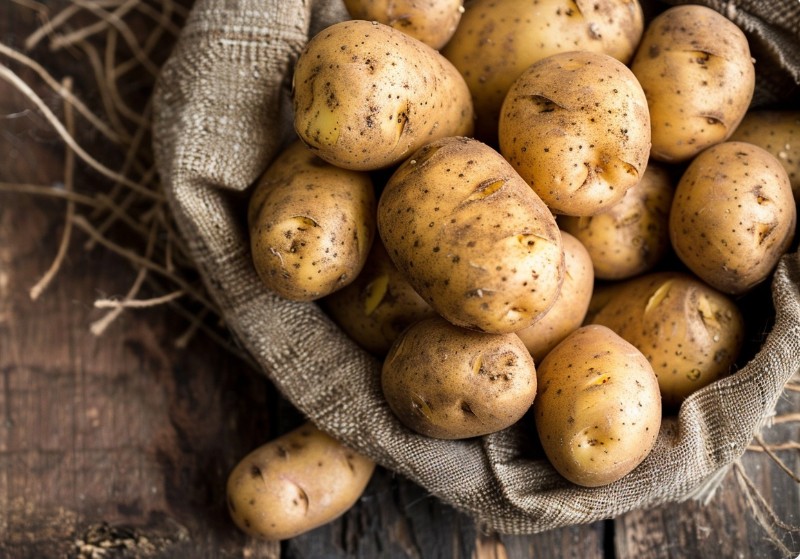
Marketing traps and common buying mistakes
I’ll say it plainly: potatoes are champions of “small tricks.” Not always malicious—just the kind that mess with your results.
Mistake 1: buying only the “prettiest” ones
Perfectly clean, identical, not a speck in sight—often that means the potatoes were heavily washed, sorted, and sometimes kept under bright store lights for a while. They can be fine, but they’re not automatically better than potatoes with a little soil and a “living” skin.
I actually like potatoes with a thin layer of dry soil—it’s like natural packaging. They store better and usually smell more like… well, potatoes.
Mistake 2: buying a sack without checking
Especially at the market: the top layer can be gorgeous, and the middle can be small and bruised. If you’re buying a lot, ask them to scoop from different spots or at least let you peek inside. A decent seller won’t take it personally.
Mistake 3: ignoring weight in your hand
Two potatoes the same size can have very different density. The lighter one is often dehydrated. It’s harder to get a juicy, even texture from it—it can turn “cottony” after boiling and won’t crisp up nicely when fried.
Mistake 4: not looking for bruising
Potatoes get tossed, squeezed, transported. Bruises aren’t always visible right away, but inside you can get dark patches. For mash, you can survive it. For dishes where clean cuts and even tenderness matter, it’s disappointing.
Mistake 5: buying washed potatoes for long storage
Washed potatoes are convenient—but they don’t last as long. If you’re buying for 1–2 weeks, unwashed is usually better (or at least potatoes that are truly dry, with no condensation in the bag).
Tip: if you tend to buy “for later,” look for unwashed potatoes with dry skin. They forgive more.
Price and common sense: when it’s worth paying more
I’m not the person who says “buy the most expensive and you’re safe.” But the cheapest option can end up being the most expensive when half of it becomes waste—or when the dish just doesn’t make you happy.
What I’m willing to pay extra for:
- Consistent size — less stress while cooking, more even texture.
- Clear info on variety/type — if the seller or producer actually knows what they’re selling, your odds of getting the right potato go way up.
- Freshness of the batch — potatoes that haven’t had time to get “tired” in storage behave better almost every time.
- Less waste — shallow eyes, fewer damaged spots.
When you can save money without pain: if you’re making something where the potatoes will be mashed, riced, or mixed with other ingredients and looks don’t matter much. Small cosmetic flaws won’t hurt you there.
But if you want perfect wedges with sharp edges, or a salad where every cube should be neat and springy—don’t skimp on the potatoes. Any “tiredness” shows up immediately.
How potatoes behave when you cook them: what you’ll notice on the knife, in the water, and in the pan
A few signs show up at home—before you ruin a whole pot.
While peeling and cutting
When you peel and cut, look at the cut surface. If it quickly turns sticky—almost gluey—that’s a high-starch potato. It’s more likely to cook up fluffy, but it needs a bit more care for frying (and proper drying).
If the cut surface feels drier and smoother rather than sticky, the potato is denser and more waxy. That’s the one that behaves nicely in soups and salads.
In water
Starchy potatoes often make the water cloudier. That’s not “bad,” just a clue. But if the water turns cloudy instantly and heavily—and the potatoes are old—there’s a risk some pieces will fall apart before others are even tender.
In the pan
For a crisp crust, the surface needs to be dry and the potato can’t be overly watery. Waxy potatoes more often give you tidy pieces with clean edges. Starchy ones can give you an incredible crust too—but only if you control moisture and don’t overcrowd the pan.
Sound is a clue as well: when potatoes hit a properly hot pan, you want a clear sizzle. If it’s quiet and they start releasing water, either the heat is too low or the potatoes are too wet/new/watery.
Tip: if your cut potatoes are very starchy, rinse them quickly in cold water and dry really well. It’s not a “recipe”—it’s insurance against a sticky, steamy crust.
Related: baking sheets and pans for roasting potatoes
Storing potatoes at home: so the texture doesn’t go downhill before they hit the pot
Potatoes can be perfect on the day you buy them and mediocre a week later—simply because of where they were stored.
Light is the enemy
Light encourages greening and bitterness. Keep potatoes somewhere dark: a pantry, cupboard, or drawer. If your kitchen is always warm and bright, it’s better to buy smaller amounts more often.
Moisture speeds up spoilage
Don’t store potatoes in a sealed plastic bag with no ventilation. They can’t breathe. At home, I transfer them to a paper bag or a crate with holes. And I never wash potatoes “for later”—only right before cooking.
Temperature: not hot, not freezing
In warmth, potatoes sprout and dehydrate faster. In very cold conditions (especially the fridge), the flavor can shift and they can brown oddly when fried—often darkening faster. I keep mine somewhere cool but not extreme, with airflow.
Sort them at home
It sounds boring, but it works. When you get home, do a quick check. Set aside any potato with a soft spot or crack to use first. One slightly rotten potato can spoil the rest, and you’ll absolutely smell it in the box.
Tip: store potatoes separately from onions. Together they “age” faster and sprout more often.
Potatoes with the perfect texture aren’t some rare treasure—you just have to choose them with your hands, your nose, and a bit of common sense, not just your eyes. Look for dry skin, firmness, no moisture trapped in packaging, avoid green patches and long sprouts, and don’t be shy about buying different types for different jobs. Then give them decent conditions at home—dark, dry, cool—and they’ll reward you with consistent results.
I’m curious: do you prefer potatoes that collapse into a tender cloud, or the kind that holds its shape and has a nice, springy bite? And where do you usually buy them—at the market or the supermarket?