How to Cook Delicious Meatball Soup: Basic Technique

Each of us has favorite childhood dishes, and for many, that soup is meatball soup. It has something very homely: a simple taste, a warm aroma, a sense of comfort when the weather outside is bad. But it might seem, what could be easier: water, vegetables, meat — throw it into the pot and wait. And then suddenly the soup turns out cloudy, the meatballs fall apart, the vegetables are overcooked, and the taste is somewhat ‘meh.’ Sounds familiar?
I’ve seen this more than once, and honestly, I used to lose faith in simple things myself. Why does this happen? Because meatball soup is not just a set of ingredients, but a sequence of small decisions and observations that create the result. The feeling of control in the kitchen comes not from the recipe, but from understanding why to do it this way. And when you see the soup come out light, clear, with juicy meatballs and vegetables, confidence arises: you don’t have to be afraid, even if something goes off plan.
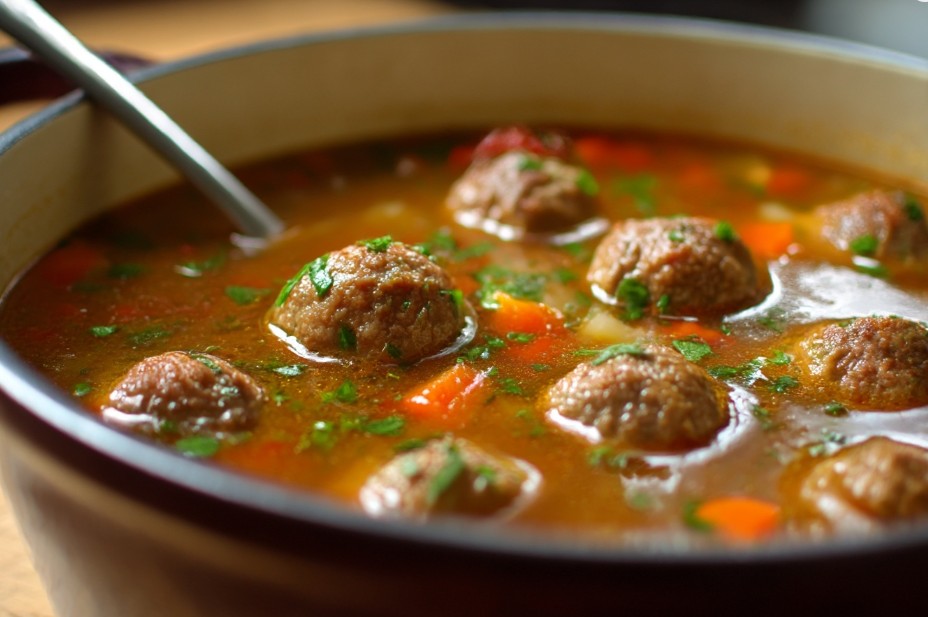
What Actually Affects the Taste and Appearance of the Soup
When talking about meatball soup, it’s often reduced to meat, spices, and vegetables. But the real difference is made not so much by the ingredients as by the temperature, sequence, patience, and attention to detail. The taste of the soup is built in layers, and each layer is a small choice. This is where the magic begins: water is not just for ‘pouring,’ but for creating texture; vegetables are not just ‘chop and throw,’ but give them time to release their aroma; meatballs are not just ‘roll,’ but understand why they hold their shape and don’t fall apart in the pot.
Once, when I was just learning to cook soups, my main mistake was trying to do everything quickly. Pot on the stove, water boiling, everything together in the water — and, of course, the result was a cloudy liquid with shapeless pieces. Now I know: every soup, even if it’s homemade solyanka — is a story about observation, not speed.
How to Start: Choosing Water, Utensils, and Temperature
Let’s start with choosing a pot with a thick bottom. It doesn’t have to be an expensive vessel, just one that heats evenly and doesn’t let the soup ‘burn’ at the bottom. Water — filtered or at least settled, without foreign odors. Water is 90% of the soup, and if it has a taste, it will be felt in every spoonful.
Temperature is both an ally and an enemy. Always start on medium heat. A sudden increase in heat and the soup will bubble, the protein from the meat will coagulate, the broth will become cloudy, and the meatballs will start to fall apart.
Tip: if you want a clear soup, never bring it to a rolling boil, just a gentle simmer.
Once, I experimented on a new stove — turned on a powerful mode to speed up the process. In 10 minutes, the soup looked like a grayish broth, and the meatballs disappeared in an unknown direction. Since then — only calm, and the water should ‘barely live.’
Preparing Vegetables: Understanding Flavor, Not Just Chopping
Many people throw carrots, potatoes, and onions into the soup without even thinking why these vegetables. In fact, each adds its layer of flavor: carrots — sweetness, onions — depth, potatoes — satiety and texture. Another thing is the size of the cut. Too small — the vegetables will overcook and become mush. Too large — they won’t have time to release their aroma into the broth. It’s useful to learn which knife is really needed in the kitchen.
I always focus on the size of the meatballs — everything should be about the same caliber: both vegetables and meatballs. This gives the soup harmony and allows everything to cook evenly.
Another point: sautéing vegetables. Some believe the soup should be ‘clean,’ and they put the vegetables raw. I often do the opposite: lightly fry the carrots and onions in a drop of oil until golden. This gives sweetness and aroma, making the soup brighter even in appearance.
Tip: don’t throw vegetables directly into the water, let them release their aroma in the pan or even in the same pot before adding water.
Here’s an article on how to cook meatball soup in 30 minutes.
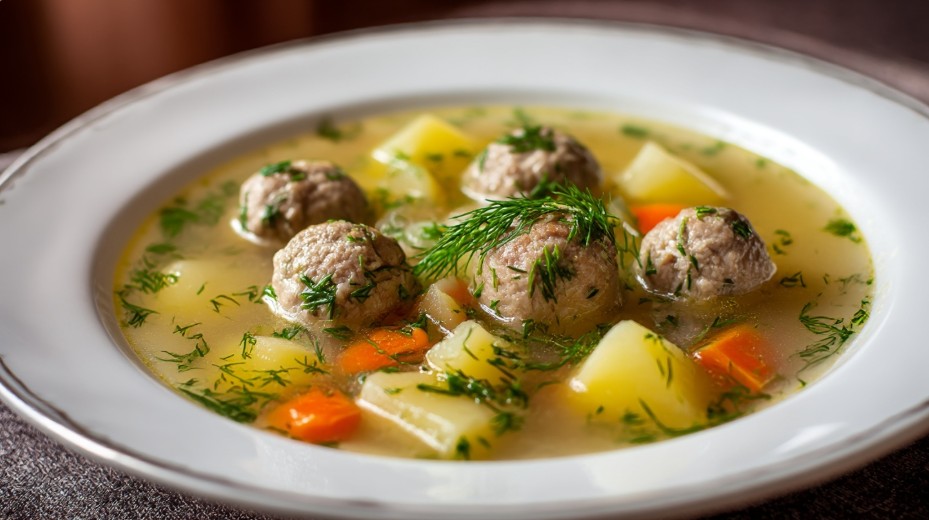
Meat Part: How to Make Meatballs Juicy and Firm
Meatballs are not just balls of minced meat. The main thing here is to feel the balance between juiciness and density. Excessively dry meat gives hard meatballs, too wet mince — they fall apart. I always add a little water or milk to the mince, a pinch of salt, knead by hand until smooth. If the mince sticks — that’s good, it means there is enough protein for binding.
One common mistake is rolling meatballs too large or too small. Ideally, the size of a walnut. Such balls won’t fall apart and will cook evenly.
Another thing: don’t throw meatballs into cold broth and don’t rush. If the soup hasn’t reached temperature yet, they will ‘spread.’ If it’s boiling — the protein will coagulate instantly, and the inside will remain raw.
Tip: when forming meatballs, lightly moisten your hands with water — the mince sticks less, and the balls come out smooth.
Why Do Meatballs Fall Apart?
The main reason is too runny mince or strong boiling. If you see meatballs losing shape, remove the pot from the heat for a few minutes, let the temperature drop, carefully gather the broken pieces with a skimmer. Next time — less liquid in the mince and more attention to temperature.
Temperature and Time: How Not to Overcook the Soup and Ruin the Texture
A few years ago, I thought soups needed to be ‘simmered’ for hours to make everything soft. But with meatballs, this doesn’t work. Long cooking is the enemy of good texture. The optimal time after adding meatballs is 10-15 minutes on a gentle simmer. Vegetables should remain slightly firm, not falling apart. If you see the potatoes are already soft, but the soup is not yet to taste — just turn off the heat and let it steep under the lid.
A friend of mine always ‘plays it safe’ and cooks meatballs for 30 minutes. As a result, they resemble rubber balls. It’s important to catch this moment: the meatball should be firm but not hard, aromatic but not too saturated with meat flavor.
Tip: it’s better to undercook the soup by 2 minutes and let it steep than to overcook — the taste will be brighter, and the texture more pleasant.
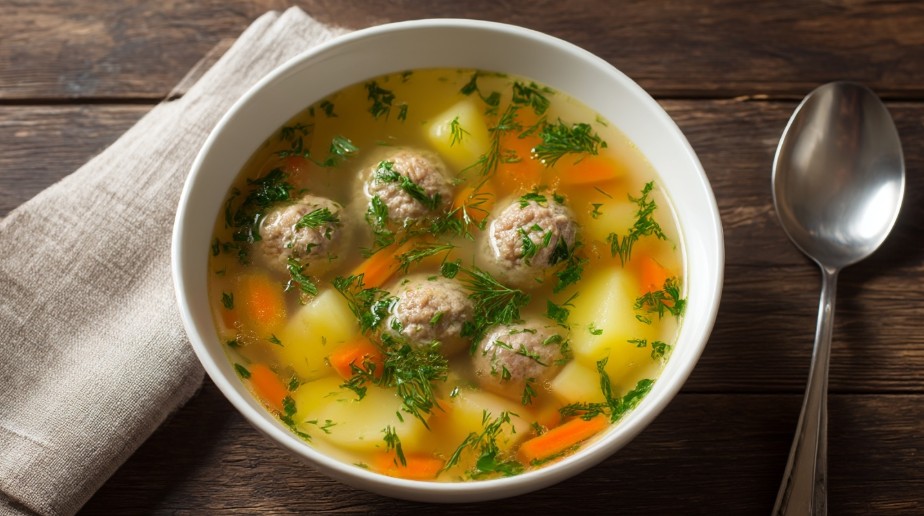
Visual and Aromatic Clues: How to Know When the Soup is Ready
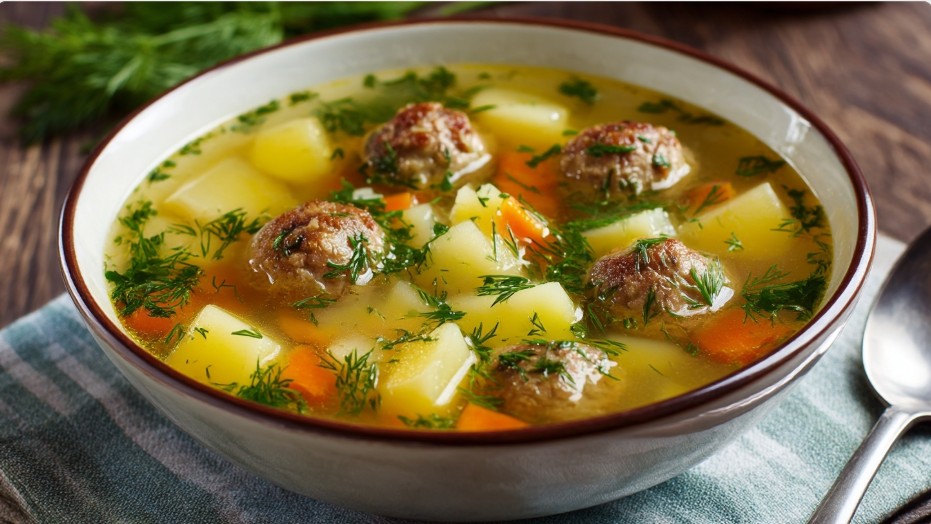
Here, eyes and nose decide everything. A clear, light broth where every piece is visible is already half the success. If the surface of the soup is not covered with a large amount of foam or cloudy clumps — you did everything right with the temperature.
The aroma will also tell you: first, you smell the vegetables, then a sweetish meat smell appears. If the soup smells like a ‘school cafeteria’ — something went wrong: either you’re cooking too long, or the meat isn’t fresh.
When the soup is ready, the meatballs float, the vegetables hold their shape, and the aroma makes even a full person feel hungry. I always taste a spoonful, even if everything looks perfect. It’s not about distrust, but about the habit of understanding the taste at every stage.
Common Mistakes for Beginners and How to Avoid Them
- Strong boiling — cloudy soup and broken meatballs.
- Too long cooking — hard meatballs and mushy vegetables.
- Different chopping sizes — vegetables won’t cook evenly.
- Too many spices — overpower the taste of meat and vegetables.
- Raw mince or frozen meatballs — always give cloudiness.
- Not skimming the foam — the soup has an unpleasant smell and appearance.
People often write to me: ‘My soup is gray, what to do?’ — and in 90% of cases, the reason is temperature or unfortunate mince. It’s important not to blame yourself, but calmly figure out: where was the rush, where was the uncertainty. All these mistakes are part of learning.
What to Do If Something Goes Wrong
Sometimes, even with all efforts, the soup turns out far from ideal. Meatballs fell apart, the broth is cloudy, vegetables are overcooked. It’s not the end of the world. First of all, don’t pour out the soup — the taste can be saved:
- If the broth is cloudy — let the soup steep, then strain through a sieve and bring to a gentle simmer again.
- If the meatballs fell apart — turn the soup into a creamy dish by blending it.
- Overcooked vegetables? Add a little fresh greens, lemon juice, or spices for a fresh accent.
- Taste ’empty’? Add a little salt, black pepper, thinly sliced onion or garlic, and let it steep under the lid.
Never be afraid to experiment. Sometimes that’s how a new signature soup is born. Once, when everything ‘went wrong,’ I just added a piece of butter and a bit of dill — and got a completely different, but very homely taste. It’s useful to read: 10 culinary lifehacks that will save even a hopeless dinner.
Lifehacks and Little Secrets for a Successful Soup
- Let the soup steep for 10-15 minutes after cooking — the taste will deepen.
- Drop meatballs one by one to avoid lowering the broth temperature.
- Carefully skim the foam during cooking — it gives a clean look and taste.
- Add salt and spices at the end — it’s easier to control the balance.
- Use a piece of carrot or celery stalk for a rich aroma, but remove them before serving.
From experience: the best soup is the one that is cooked ‘mood in the pot.’ Don’t be afraid to deviate from the standard, the main thing is to understand why you are doing it.
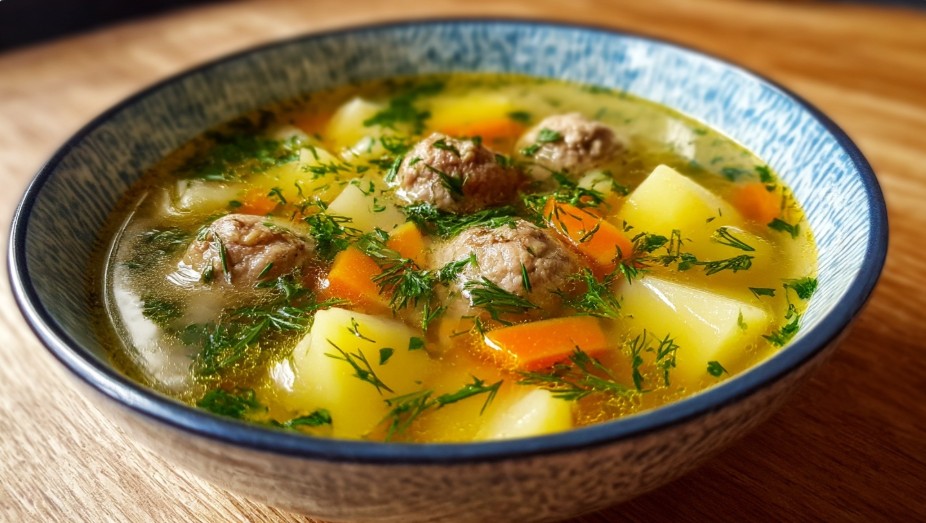
Learning to Trust Yourself: From Fear to Confidence
I’ve seen dozens of people who were afraid to even approach the stove because ‘something will definitely go wrong.’ But every mistake is a small step towards understanding the processes. Meatball soup is perfect for learning: here you can see how the meat behaves, how the vegetables change, how the water reacts to temperature. Over time, you’ll start catching these clues without prompts.
The main thing is not to chase perfection but to learn to listen to the soup: smell the aroma — lower the heat; see cloudiness — skim the foam; taste — add spices. The kitchen is not a laboratory; it’s a place for experiments and joy. And when you first make a clear, aromatic soup with juicy meatballs — that’s when you’ll want to share the experience with someone else. And maybe even add this dish to your birthday menu, some guests love to have a soup before the main festive meal).
The main thing in the kitchen is to feel the process and not be afraid of mistakes. Share your stories: who had meatball soup as their first success? Or maybe it turned out to be ‘training’ before more complex dishes? Tell us in the comments how you first cooked soup and what you would change now.