How to Cook Dinner Quickly, Even If You Don’t Like Cooking

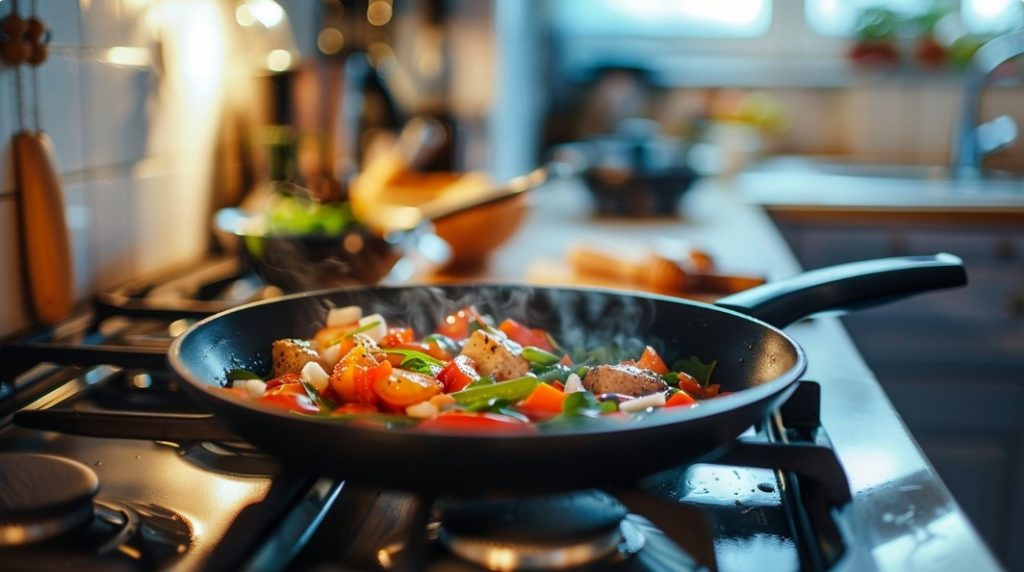
In the kitchen, many feel as if they’re on a battlefield. Especially when, after a long day at work, energy is low, and the thought of cooking dinner brings fatigue rather than appetite. I’ve seen it dozens of times: a person stands by the stove, looks at the ingredients, and doesn’t know where to start. The main question is how to do everything quickly without turning the process into torture?
I know this feeling of confusion well. Especially on those days when you really don’t want to cook, but you have to. And here come two temptations: either order something ready-made or cook pasta for the fifth time this week. But there’s a way to get through this without unnecessary stress — if you understand the simple logic of the kitchen, even a regular dinner stops being a challenge.
Culinary art is not about tricks and complicated recipes, but about small decisions you make every day. It’s not about how much time you can spend, but how you organize your actions. You don’t need talent here, you need an understanding of why certain things work the way they do. And this gives freedom — even if cooking is not your favorite hobby.
Why Dinner Seems More Complicated Than It Really Is
Many imagine this scene: a pile of different ingredients, unclear where to start, and little time. The thought spins in your head: “I can’t do it as fast as needed.” Here’s where the first trap lies. Dinner is rarely complicated in itself — we complicate it ourselves, often out of fear of doing it “wrong.”
I’ve observed for years how even the simplest things seem insurmountable when there’s no confidence in the basics. People fear overcooking, undercooking, or missing something. But if you break the process into simple steps and learn to see where your attention is needed and where you can relax, everything becomes easier.
Most often, it’s not the lack of skills that complicates things, but the lack of a plan. When you don’t understand what to do first and what can wait, even the simplest dish stretches out over an hour. Tested on myself: the more you try to cover at once, the more chaos. And the kitchen doesn’t like senseless haste.
How to Organize Work in the Kitchen: The Main Rule of a Quick Dinner
Let’s start not with the ingredients, but with how you approach the task. In the kitchen, everything works on the principle of “what takes longer goes first.” If something requires more time (like potatoes as a side dish or chicken in the oven), it starts right away. While it’s cooking, you handle other tasks. This is the main logic of a stress-free dinner.
I like this comparison: the kitchen is like a workshop. It’s important that things are within reach and actions don’t interfere with each other. So, before starting anything, just stop for a second and think — what will take the most time? It’s not always obvious: for example, peeling vegetables for a salad sometimes takes longer than cooking grains. And meat from the fridge should be taken out in advance to warm up to room temperature (it fries better this way).
Tip: Before you start, determine what takes “long” and start that process first. Then work with what’s left.
A micro-story: once I had an evening when guests were on their way, and I was absolutely running out of time. I opened the fridge, thought: “What do I need as soon as possible?” Threw potatoes in the oven, started boiling eggs, and only then started chopping. I managed everything — not because I rushed, but because I set the right priorities.
Temperature, Time, and Texture: How Not to Ruin a Dish Even When in a Hurry
This is where all sorts of mishaps happen. Someone thinks: “To be faster, I’ll do it on high heat.” A familiar mistake. In reality, the product burns on the outside and stays raw inside. Another option: you’re afraid of undercooking, so you leave it on the heat longer than needed. It turns out dry, tough, unappetizing.
In cooking, time and temperature are your main tools. They affect texture, taste, and even smell. For example, if you’re frying chicken and it’s just out of the fridge, it will remain cold inside even with a good crust. If you throw vegetables on a not-hot-enough pan, they’ll release juice and soften instead of frying.
- Meat and fish should be taken out of the fridge 15-20 minutes before frying
- Heat the pan without oil, then add it and immediately the product
- Remember: water boils at 100°C, but for stewing, it’s better to reduce the heat after boiling
Visual signs are your friend. If the meat easily comes off the pan, it’s time to turn it. If the vegetables have changed color but are still a bit crunchy, they’re ready. The smell also tells you: if you smell something burning, reduce the heat.
Tip: It’s better to check and smell several times than to rely solely on a timer.
I’ve been saved many times by paying attention to texture and smell. Once, I was making an omelet on a very powerful stove — it set on top but remained liquid inside. Since then, I always reduce the heat a bit and let the dish “finish” under a lid. It’s a small thing, but it saves nerves and time.
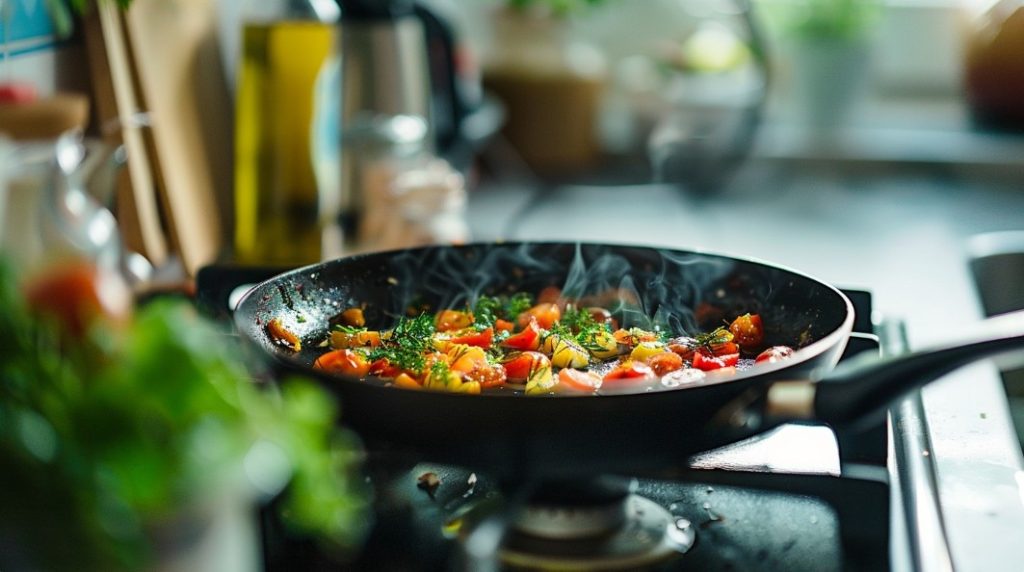
How Not to Get Confused with Ingredients: Minimum Moves, Maximum Benefit
One of the difficulties is when there’s a lot around, and time is short. Here, the principle of “one board, one process” helps a lot. Don’t try to do everything at once: chop vegetables, put them away, then deal with the meat. Even the simple habit of washing dishes “on the go” helps keep the space under control.
Another common mistake: you start looking for spices when the dish is already on the stove. You get distracted, and something burns. So habits formed with experience really save time.
- Prepare everything you need before starting (knives, boards, spoons, spices)
- Keep main products near the work area
- Don’t be afraid to use the same board if it’s vegetables first, then meat (not vice versa!)
Once, when I was just starting, I always got lost in the details: the spoon wasn’t there, I was looking for salt in the cupboards. Now everything I need is right by the stove, and there are fewer movements. Dinner is prepared faster not because I cook faster, but because there’s less fuss.
Lifehack: place a small bowl next to the stove — toss everything unnecessary into it. Then throw it away in one move.
Why You Shouldn’t Be Afraid to ‘Mess Up’: Mistakes Are Part of the Process
Here’s a story from my own experience: once I oversalted the soup. A real catastrophe for a beginner. But instead of getting angry, I just added a bit of water and vegetables — the taste balanced out. Mistakes happen to everyone, even professionals. But the main thing is not to hide from them, but to understand why it happened.
A typical mistake is doing everything too quickly, without pausing to think. Another is the fear of experimenting: “What if it doesn’t work out, better do it as always.” But if you don’t try, you won’t gain experience. And experience comes not from recipes, but from trials and even failures.
- Oversalted? Add water or a dairy product
- Something burned? Carefully remove the top layer, leave the better part, reduce the heat
- Too runny? Let it simmer on low heat, partially open the lid
Why does this work? Food is a flexible material. It can be saved and adapted to the situation. Don’t be afraid to mess up — learn to fix it. This is true confidence in the kitchen.
Tip: Treat the kitchen like a laboratory. Every mistake is a new experience.
How to Know When a Dish Is Ready: Look, Smell, Taste
Many look for perfect timing in minutes. But in a home kitchen, this rarely works — different stoves, pots, sizes of products… So it’s better to trust your senses than the clock.
When frying vegetables, they should become brighter and a bit softer, but not fall apart. Pasta should be firm but not hard. Meat should slightly spring back under your finger, not release pink juice. If the dish smells so good that you want to grab a spoon, that’s a good sign.
- Taste for salt and flavor several times during the process
- Look at color and texture: changes indicate readiness
- Don’t rely solely on recipes — feelings are more important
Once, I was making vegetable stew for a large group. Time was short, and the recipe said “simmer for 30 minutes.” I looked, the vegetables were already soft, the smell was wonderful — I turned it off after 20 minutes. It turned out perfect. So don’t be afraid to listen to yourself, not just the instructions.
Lifehack: the spoon is your main tool. Taste and don’t hesitate to adjust on the go.

The Mechanics of a ‘Quick Dinner’: How to Streamline the Process Without Extra Steps
It all starts with a short pause before you begin. I always advise: before you take out the pan, think about what you really want to eat. You don’t need to invent something complicated — it’s important that dinner is filling, doesn’t require unnecessary movements, and doesn’t leave a lot of dishes.
Imagine you’re putting together a puzzle: while one piece is cooking, another — you’re peeling or chopping. For example, while buckwheat is cooking (that’s 15 minutes), you have time to fry an egg or make a quick salad. If you choose the oven, start it first, then everything else. This gives a sense of control: you’re not running around, but moving in an organized way according to your own plan.
- Start with the slowest product
- Use “dead” time (while something is cooking, don’t stand idle)
- Don’t try to do more than 2-3 actions at once — this reduces the risk of mistakes
What to do if you get lost in the process? Stop, look at the stove — what’s already on the heat? What else needs to be prepared? Priority is what can spoil first (for example, meat in the pan). The rest adjusts to this pace.
Common Mistakes and How to Avoid Them
Mistake 1: Everything on the Stove at Once
I often see people throwing everything into the pot or pan at once. It seems faster, but in reality, the products cook unevenly, losing texture and flavor. It’s better to give each ingredient its time. For example, first brown the onions, then add carrots, then the main product.
Mistake 2: Cold Pan
If you start frying on a not-hot-enough surface, the product absorbs oil, comes out limp, not fried. So always let the pan heat up. You can check — drop a bit of water: if it sizzles and evaporates, you can start.
Mistake 3: Not Tasting During the Process
Many beginners are afraid to taste the dish before it’s finished, as if it’s “wrong.” But tasting during the process allows you to adjust salt, spices, and doneness. It’s not a weakness, but a key skill of a cook.
Mistake 4: Excessive Perfectionism
Sometimes you want to make it “like in the picture,” and you get lost in the details. But a home dinner is about taste and satisfaction, not perfect form. Allow yourself simplicity. It really unloads and gives a sense that you control everything.
Tip: Don’t try to make everything perfect. Good enough is already good.
What to Do If Something Goes Wrong: ‘Rescue’ Strategies
Everything can go off plan. I’ve often found myself with a dish that’s not what I imagined, or something burned, or oversalted. Here the rule applies: don’t panic, look for a solution. Here are some real strategies that work in any kitchen.
- If the dish is oversalted, add more neutral product (potatoes, grains, water)
- If it burned, remove the top layer, quickly transfer to another dish
- If the dish is too runny, open the lid, increase the heat, evaporate excess moisture
- If it lacks flavor, add lemon juice, herbs, spices at the end
A micro-story: once, when cooking on the go, I had no salt at all. I had to improvise: added more herbs, a bit of lemon juice, and the dish took on new shades. Such a situation taught me not to be afraid to go beyond the limits.
Lifehack: if you can’t fully fix the taste, serve the dish with a bright sauce or fresh herbs — it distracts attention, and the dinner is still perceived “with a bang.”
The ‘Less Is More’ Approach: How Not to Overload Yourself and Dinner
One of the best pieces of advice I heard from a senior colleague: don’t try to fit everything in the fridge into one dinner. Fewer products mean fewer moves, less risk of messing something up. It’s not about laziness, but about common sense.
I have a favorite principle: choose two main products and one additional. For example, buckwheat + egg + greens. Or potatoes + fish + lemon. Dinner turns out light, quick, and doesn’t leave a pile of dishes.
- Don’t try to make 3-4 dishes at once
- Use leftovers from yesterday’s meal — it saves time and effort
- Plan dinner so that there are minimal leftovers
This approach especially saves when there’s no inspiration to cook. Simple dishes, minimal effort — and maximum satisfaction. And most importantly, the feeling that you control the situation, not the dinner “controls” you.
Tip: If you’re unsure how to complement the dish, just add a bit of fresh greens or yogurt to the base. It refreshes the taste and makes dinner more interesting.
How to Enjoy the Process (or at Least Not Get Annoyed)
Cooking isn’t always about passion or creativity. But even if you don’t love the process, you can find something in it for yourself. Music helps me — I turn on my favorite playlist, and the routine becomes easier. Some find it helpful to break preparation into stages so as not to overload themselves at once.
Another point: don’t set yourself the task of making dinner a “celebration.” It’s enough for the food to be tasty and filling. When you stop demanding too much of yourself, ease appears. And with experience, even simple cooking begins to bring satisfaction — at least from the fact that you control everything and aren’t afraid of the kitchen.
A micro-story: I had a period when cooking annoyed me. But when I started approaching it as an exercise in mindfulness (observing the ingredients, smelling, tasting), the process became calmer and even a bit meditative. Every dinner is not a duty, but a regular part of the day.
Lifehack: if you can’t cook alone, involve someone from the household. Even simple help with the table or chopping makes the process easier and faster.
Dinner stops being a problem when you stop treating it like an exam. It’s just a regular process where you can make mistakes, correct them, and even experiment a bit. And over time, you can even love the kitchen, at least on your own terms.
Now that you know how to think in the kitchen, not just repeat actions, any dinner can become easier and more enjoyable. Maybe you have your own little rituals that help you stay calm and in control while cooking? Share in the comments — it’s interesting how you find balance between taste, time, and your own comfort.