How to Make Carrot Cake as Moist as Possible

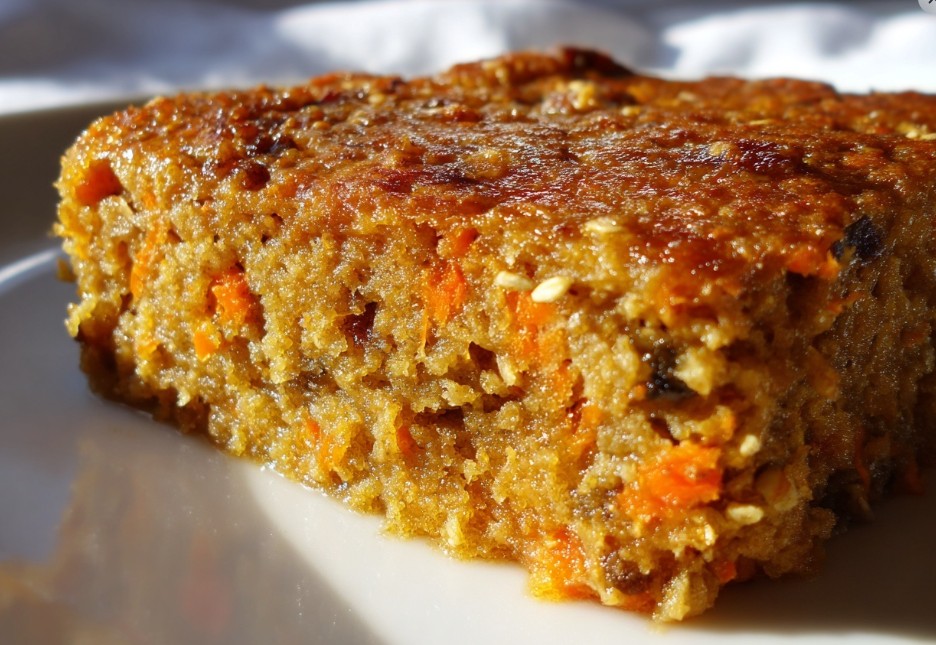
You know that familiar scene: the carrot cake has just come out of the oven—the whole house smells like warm spices, the top is smooth, the color is gorgeous, even a little glossy. You slice it and everything seems fine. Then the next day it turns kind of… bready. The crumb feels a bit dry, like the cake lost its personality overnight. And you’re sitting there with a cup of tea thinking: where did I go off track?
Carrot cake is sneaky like that: we often mix up “moist” with “underdone.” And we also tend to assume the moisture comes only from the carrots. In reality, moisture is a balance—how you prep the carrots, how much liquid you keep in the batter, how you mix, how long you bake, how you cool it, and even how you store it.
I love carrot cake because it’s forgiving, but it’s also honest. Rush a step or dry things out along the way, and it will tell on you. But when everything clicks, the crumb is springy and soft with a slight sheen, and each slice feels heavier than it looks. That’s “maximum moisture” to me—not wet, just juicy.
Let’s break it down the way I’d explain it at my own kitchen counter: what actually creates moisture, how not to lose it at each stage, and what to do if your cake already came out a bit dry.
What a ‘moist’ carrot cake really means: a feeling, not magic
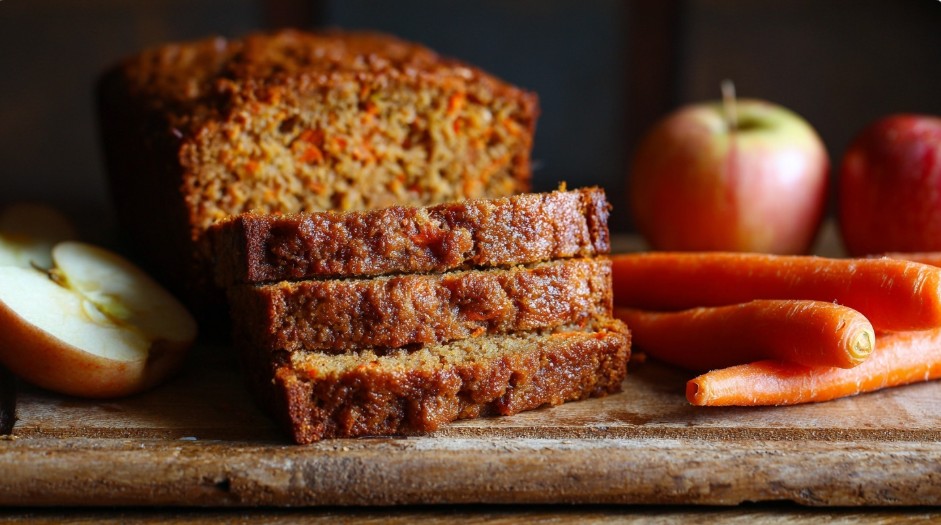
When people say “I want a moist cake,” they’re usually describing a few things at once. First, the crumb doesn’t crumble into dust or fall apart into dry grains. Second, the slice springs back when you press it and slowly returns to shape. Third, it doesn’t suck the moisture out of your mouth—if anything, it feels like it gives some back.
Here’s the key: moisture in baking isn’t just about water. It’s also about how that water is held inside the crumb. Sugar, fat, starch, proteins, carrot fiber—even tiny bits of nuts or fruit—help trap moisture. Overmixing, baking too hot, or baking too long does the opposite: it pushes that moisture out.
A neighbor once brought me a slice and said, “It’s tasty, but it’s dry. I didn’t skimp on the carrots!” I cut into it and saw the classic picture: a very fine, tight crumb with no bigger pockets. That wasn’t a carrot problem. That was structure—either the batter was overmixed, overbaked, or both.
How it should be vs what people often do
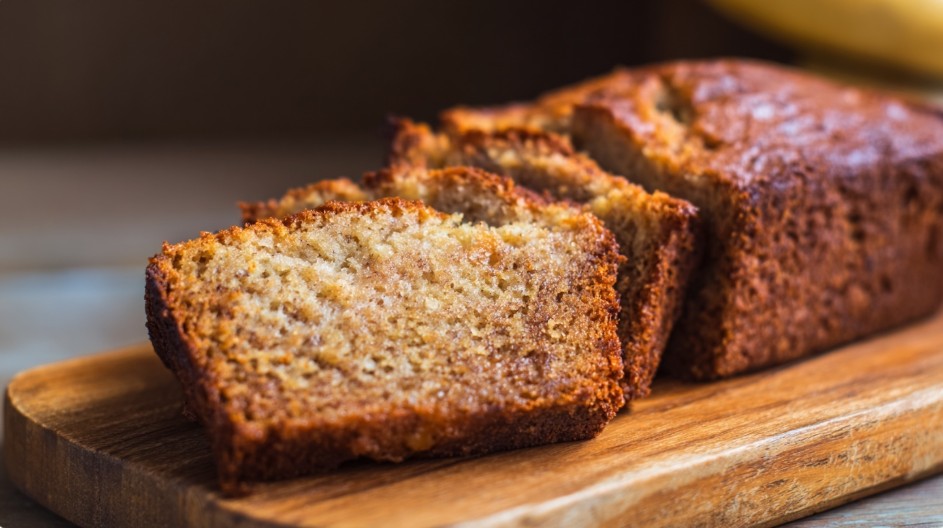
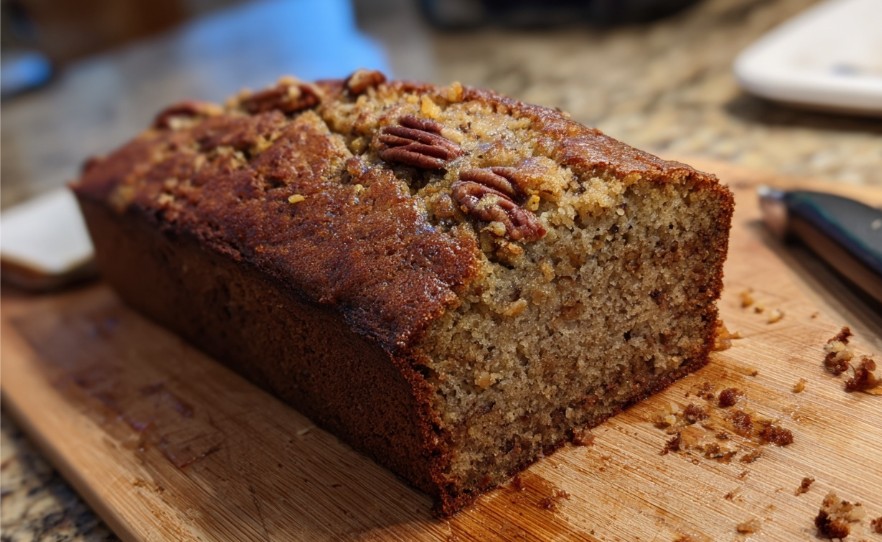
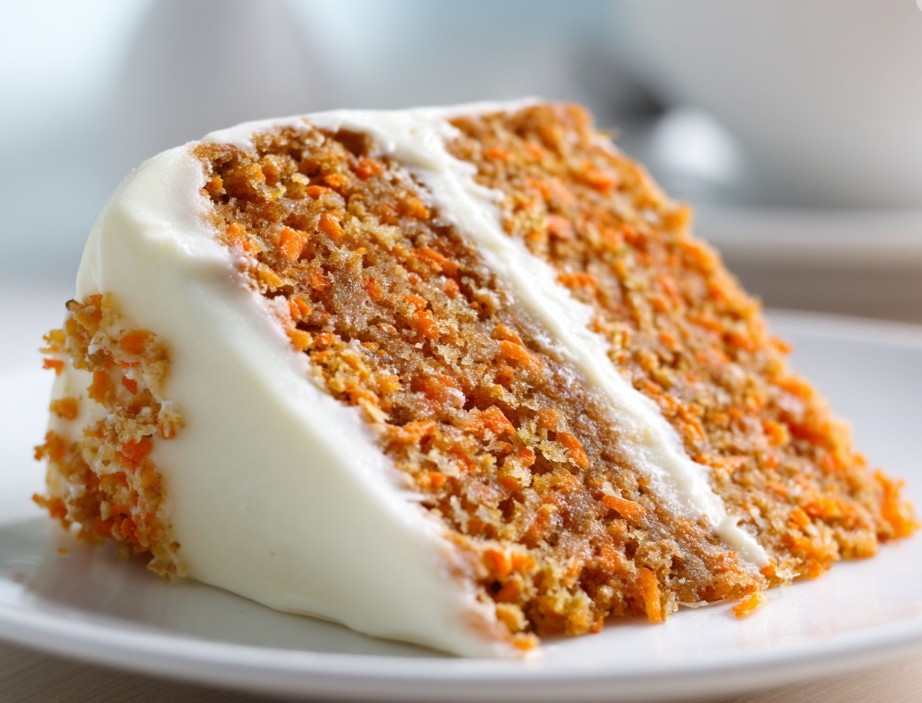
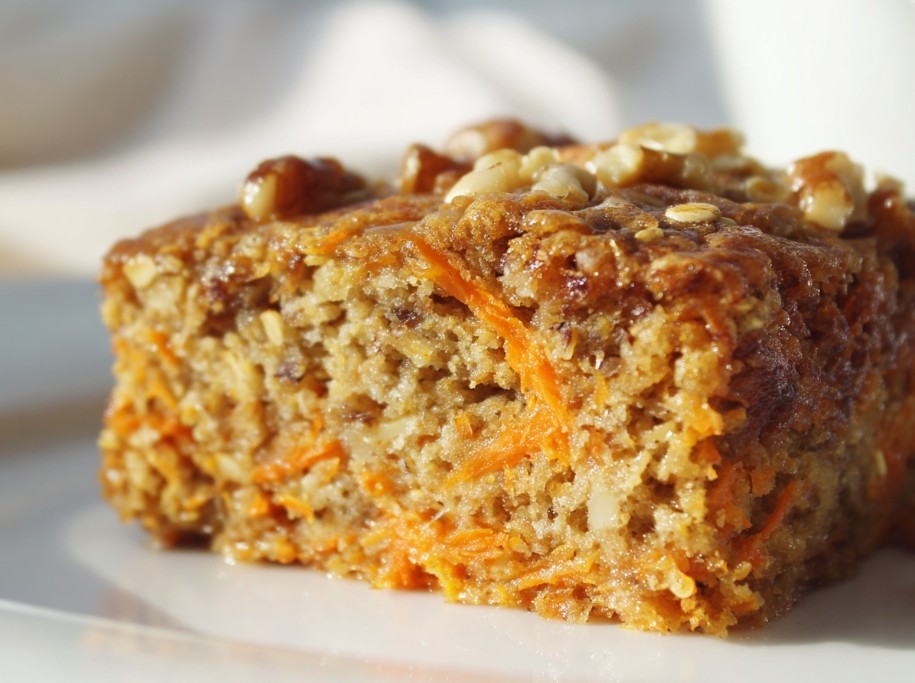
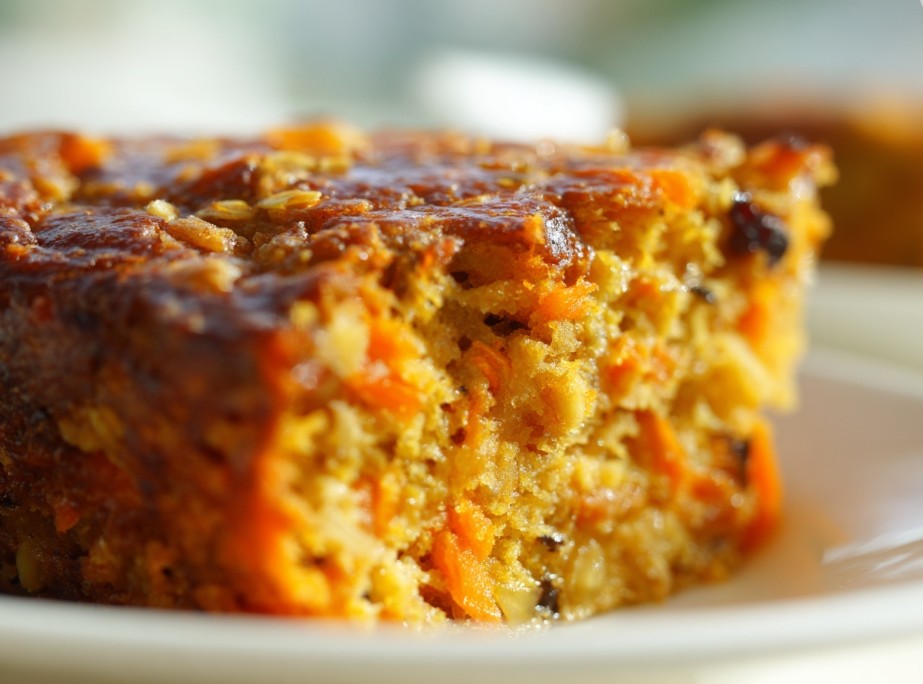
How it should be: the crumb has a slight sheen, the pores are uneven (but not huge), the slice holds together and doesn’t break when you nudge it with a fork. The aroma is warm and spicy, not “toasted flour.”
What people often do: they chase a “bone-dry toothpick,” keep the cake in the oven “just in case” for another 10 minutes, then wonder why it’s dry the next day. Or they mix it like they’re kneading dough—and the crumb turns dense and a bit dry even if the bake time was fine.
My rule of thumb: a moist carrot cake is done when the skewer comes out with a few moist crumbs. Not clean, not smeared with raw batter—crumbs.
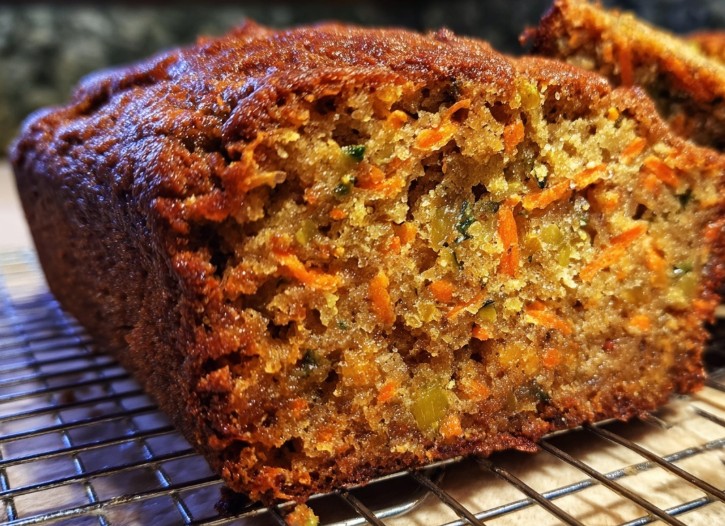
Carrots: grater size, juiciness, and why ‘super fine’ isn’t always better
Carrots are what give carrot cake its body. But they behave differently depending on how you prep them. And here’s the nuance: carrots bring not only water, but also fiber. Fiber holds moisture—but if you turn carrots into purée, the structure changes. The cake can end up heavy, a little “rubbery” in spots, and sometimes oddly wet near the center.
In a home kitchen, it usually comes down to three options: a fine grater, a coarse grater, or a chopper/blender.
Fine grater
This gives you a more uniform crumb—carrots almost “disappear” into the batter. Great if you like a smooth texture without noticeable strands. The risk is that finely grated carrots release moisture faster, and during baking that moisture can evaporate faster too. Add even a little overbaking, and dryness shows up quickly.
Coarse grater
You’ll get more distinct bits, a livelier crumb, and the cake stays juicy longer. This is what I reach for when I want “maximum moist” without that underbaked vibe. The downside: if the shreds are very thick and you don’t let the batter sit a little, you can get the occasional “crunchy” strand—especially if the carrots are older.
Chopper or blender
It’s easy to go too far here. If you turn it into near-purée, the carrots become a wet filler and the cake can bake up dense. If you pulse briefly into small granules, it can work—just watch that you’re not squeezing out a lot of juice.
Tip #1: I often mix two carrot textures: some finely grated for “binding,” and some coarsely grated for juiciness and a longer-lasting crumb. It’s not about exact percentages—it’s about what you see in the bowl: a mix of carrot shreds and a finer carrot mass.
One thing people rarely mention: carrot temperature. If your carrots are fridge-cold but everything else is at room temp, the batter can act weird—fat firms up, the mixture feels heavier, and your hand naturally wants to “mix properly.” That’s exactly what we don’t want.
And about squeezing: “Should I wring out the carrots?” Here’s what I do. If the carrots are extremely juicy and you can literally see a puddle of juice in the bowl, gently squeeze a bit out—but don’t dry them out completely. We want moisture, just not so much that the center turns heavy and the top dries out because you have to bake longer.
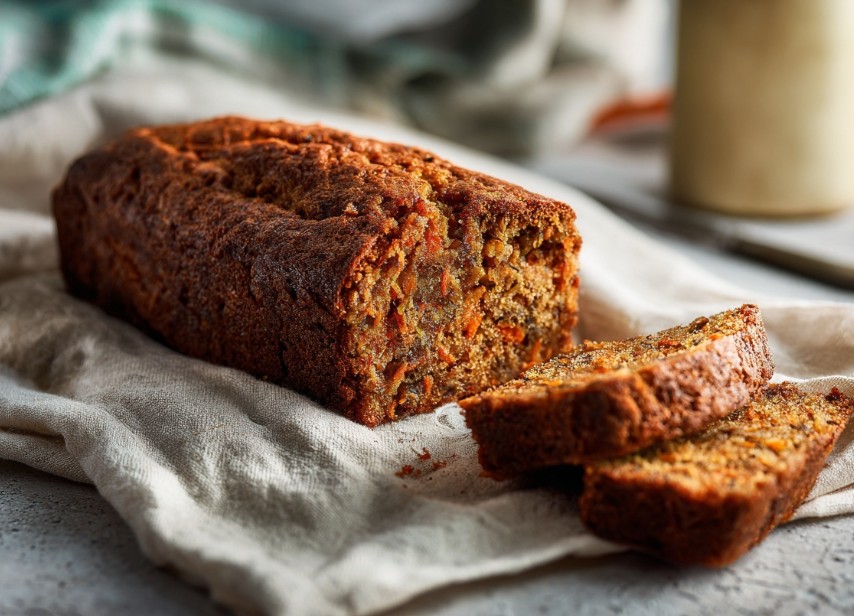
Moisture balance in the batter: fat, sugar, and starch as moisture keepers
When a cake turns out dry, the oven gets blamed first. And yes, the oven can absolutely be the culprit. But very often it’s the batter balance. I’m not giving a full recipe here—I want to explain the logic: what actually holds moisture in the crumb, and why “I cut the sugar to make it healthier” sometimes ends in dry baking.
Fat: not just about tenderness
Fat coats flour particles and partly prevents proteins from forming a tough network. That’s why the crumb stays softer and stales more slowly. In carrot cake, fat also carries spice aromas—everything smells deeper and warmer.
How it feels in your hands: a batter with enough fat looks glossier, it slides off a spatula more slowly, and it moves in heavy waves. If the mixture looks matte and a bit “sandy,” there’s a good chance the cake will lean dry.
Sugar: yes, it holds water
Sugar doesn’t just sweeten. It attracts and retains moisture, which is why cakes with enough sugar stay soft longer. Cut it drastically and the cake can dry out faster—both in the oven and on the counter.
I’ve seen this so many times: someone makes a “lighter” version, reduces the sugar, then tries to compensate by baking longer because “it doesn’t seem right.” That’s a double hit.
Starch and flour: who does what
Flour gives structure. But too much flour soaks up moisture and the crumb turns dry. A bit of starch (either naturally in the flour or added separately) can help hold moisture, but balance matters: too much and you’ll get a dense, almost pudding-like texture.
Tip #2: if you can see the batter is already thick and your hand wants to add “just a little more flour to be safe”—stop. Carrots will release moisture as the batter sits, and flour will continue to hydrate. Dryness often starts with that extra handful of flour added “by eye.”
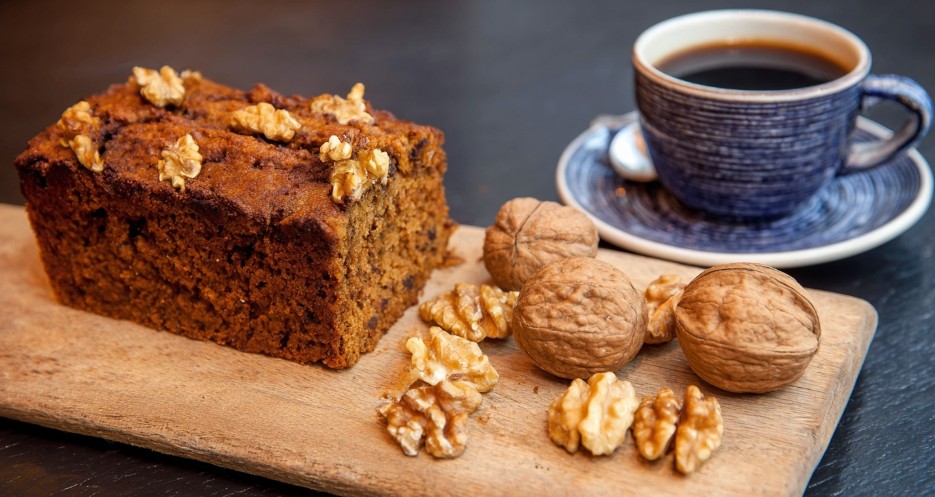
One more thing about add-ins like nuts and dried fruit: they affect moisture more than you’d think. Nuts can make the crumb feel drier because they add crunch and change the overall mouthfeel. Dried fruit can add juiciness, but if it’s very dry, it can pull moisture from the batter as it bakes.
If you’re adding dried fruit and want a moist cake, pinch a piece between your fingers first: it should feel soft. Hard, “glassy” bits act like sponges in the oven and steal moisture.
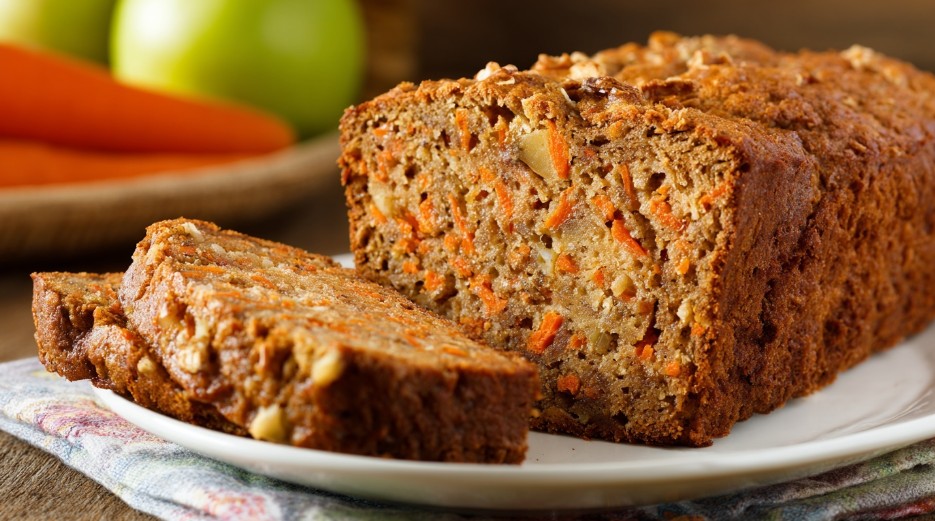
Mixing mechanics: how not to beat the moisture out with your hands and whisk
This is where most carrot cakes go off the rails. A lot of people make it as a “mix everything in one bowl” cake. That’s totally fine. The problem is how it gets mixed. We’re taught that the more thoroughly you mix, the better. In baking, it’s often the opposite.
When you mix flour with liquid for a long time, proteins start forming an elastic network. For bread, that’s perfect. For carrot cake, it’s a fast track to a tight, dry crumb. The moisture may technically be there, but the structure won’t “give” it—so the slice feels rubbery, and the next day it reads as dry.
Signs you’ve mixed enough
I don’t go by time—I go by what I see. The batter should be uniform enough that there are no dry pockets of flour. Small lumps aren’t a tragedy; they’ll sort themselves out in the oven. But a perfectly smooth, glossy batter that looks photo-ready can sometimes mean you’ve pushed it too far.
Tip #3: mix with a spatula or spoon, not a mixer. If you do use a mixer, keep it on the lowest speed and only briefly. I find it easier to control by hand: you can feel resistance and notice the moment the batter starts to “tighten.”
A quick story from my kitchen
Once I was in a rush: guests were about to arrive, dinner was happening at the same time, and my hand automatically reached for the mixer “to be faster.” The batter turned perfectly smooth in a minute. The cake rose beautifully—but the crumb was like a dish sponge: springy, a bit dry, and missing that tender juiciness. Since then, I’ll use a mixer only for the wet ingredients if I need to, but flour always goes in by hand.
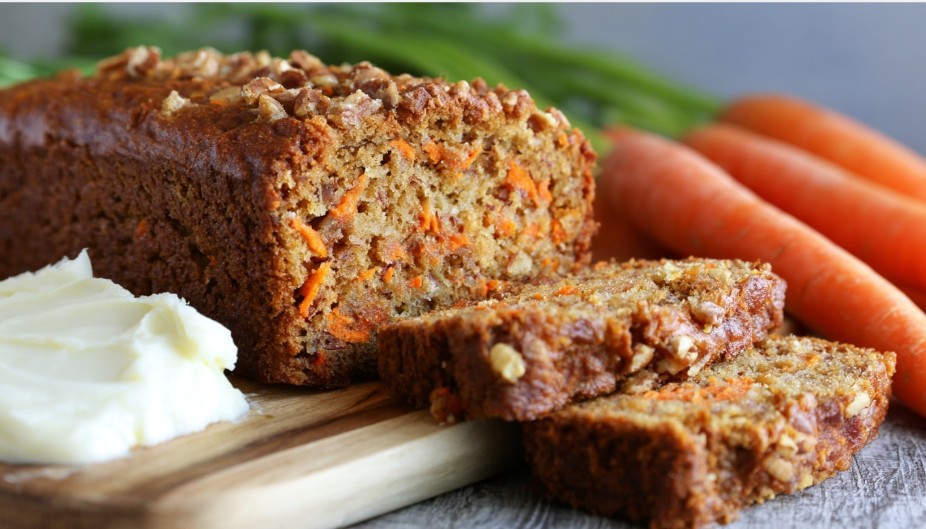
Temperature and time: how the oven dries cake out—and how to work around it
An oven isn’t just a “hot box.” It dries. It evaporates moisture from the surface, browns the edges, and if you give it too much time, it will steal juiciness even from a well-balanced batter.
The most common mistake is baking at too high a temperature. The top darkens quickly, you panic, lower the heat—but the cake has already taken a hit: the outside dries out while the inside is still underdone, and then you’re forced to “make up for it” with extra time. Result: dry edges and a compromised center.
How to read doneness without getting obsessive
Yes, a skewer helps. But it’s often used the wrong way. If you poke the center and wait for it to come out completely dry, you’ll almost certainly overbake a cake that’s meant to be moist. Carrots, sugar, and fat all leave moist crumbs even when the cake is done.
Here’s what I do:
- I check the edges: they should start pulling away from the pan slightly, but not look overbrowned.
- I gently press the center: it should spring back and slowly level out, not wobble or feel sloshy.
- The skewer comes out with a few moist crumbs, no raw batter.
Tip #4: if the top is browning too fast, don’t wait until it’s nearly black. Lay a piece of foil over the top (don’t press it down—think of it like a little “roof”). It lets the center finish baking without drying out the surface.
Pan size and batter depth
A thicker layer of batter takes longer to bake—obviously. The nuance is that longer = more chances to dry it out. If you want the moistest crumb possible, don’t bake a very tall cake in a small pan unless you know your oven well. A slightly wider pan with a lower batter depth usually bakes faster and keeps more moisture in.
Also: in a lot of ovens, the real temperature doesn’t match the dial. I’m not here to preach oven thermometers, but if you keep getting dry baking at “normal” bake times, it might simply be running hot. You think you’re baking at 180°C, but it’s actually closer to 200°C—and then everything dries out.
Patience after baking: cooling, settling, and why carrot cake is often better the next day
This is where a lot of people lose half the cake’s moisture potential. The cake comes out and goes straight into a draft, or it gets sliced immediately because “it smells too good.” I get it. I’ve done it too. But baked goods are still “alive” after the oven: steam is moving, the crumb is setting, everything is stabilizing.
If you cut a hot carrot cake, you release steam—and that steam is moisture. The structure also hasn’t fully set yet, so the slice can look underdone. Then you panic and… put it back in the oven. And that’s how a dry cake is born from good intentions.
How I do it at home
I let the cake sit in the pan for 10–20 minutes (depending on size). Then I carefully turn it out and cool it on a rack. Not on a plate—otherwise the bottom steams and turns damp while the top dries out, and you end up with a weird contrast.
Tip #5: for the moistest result, let the cake cool completely, then (once it’s no longer warm) wrap it in parchment or plastic wrap and leave it for a few hours or overnight. The moisture redistributes, the crumb evens out, and that “moist” effect becomes much more noticeable.
Quick story: I once baked a carrot cake for a birthday, but I was cutting it close. I cooled it properly, wrapped it, and left it until morning. When I unwrapped it, the spice aroma was deeper, the crumb looked darker and more caramel-like, and slicing was a dream—the knife glided through without crumbs all over the board. Since then, an overnight rest isn’t a fancy extra for me; it’s a practical technique.
Common mistakes that make carrot cake dry (and how to catch them in the moment)
Here are the usual suspects. Not to scold—just so you can recognize the moment it’s happening and stop in time.
Overbaking out of fear of “underdone”
People want a dry skewer, so they bake longer. A truly moist carrot cake rarely gives you a perfectly dry skewer in the center. Look for moist crumbs, a springy center, and edges that start to pull away.
Extra flour “to make it thicker”
Carrot cake batter can look a bit loose at the start, especially with juicy carrots. But flour hydrates, carrots release some moisture, and after 10–15 minutes the texture changes. Add extra flour and you’re basically baking dryness into it.
Mixing until “perfect”
Perfectly smooth isn’t always your friend. Carrot cake likes quick mixing: bring it together, then stop.
Slicing while hot
Cut it hot and you release steam. Then you decide to “bake it a bit more.” That’s a double hit to moisture.
Too-dry add-ins
Nuts, shredded coconut, very dry dried fruit—these can all steal the sense of juiciness. It doesn’t mean you can’t use them. Just remember they change the balance. The more dry add-ins you use, the more important it is not to overbake.
What to do if something went wrong: the cake is already a bit dry or the crumb feels ‘bready’
It happens. Not the end of the world. I’m a big fan of “don’t toss it—understand it and fix what you can.” A few options, depending on what went wrong.
A bit dry, but not rock-hard
If the cake is just drier than you wanted, proper storage can help a lot. Wrap the completely cooled cake in parchment and plastic wrap (or put it in an airtight container) and let it sit for a few hours. Sometimes that’s enough: the remaining moisture redistributes and the crumb softens.
Another trick that helps me: slice it, then pack the slices snugly in a container. When the cut sides face each other, they dry out much less.
Dry edges, but the center is fine
This is almost always about too much heat or too long in the oven. Next time: lower temperature or shorter bake time, plus foil on top once it’s nicely browned.
Right now, just trim the dry edges off in a thin layer. That’s not “ruining” it—it’s an honest correction. You’ll be surprised how much it improves the overall bite.
Tight, rubbery crumb—like the batter was overmixed
Here the issue isn’t that there’s no moisture—it’s that the structure won’t release it. Next time: mix less, skip the mixer (or keep it on the lowest speed), and be more careful with flour. As for this cake, you can “save” it with how you serve it: thinner slices, and more resting time after baking so it can settle. Often, this kind of cake is more pleasant after 24 hours than on day one.
The center seems wet and you’re afraid it’s underbaked
Don’t rush to put it back in the oven. Let the cake cool completely. Carrot cakes often look “too moist” while they’re hot. If, after cooling, the center is still clearly raw (sticky batter that smears rather than crumbles), then yes—it needs more baking. But if it’s just moist crumbs, that’s exactly what we were aiming for.
The worst decision for moisture is “another 10 minutes just in case.” Better 10 minutes of resting on a rack than 10 unnecessary minutes in the oven.
Hands-and-eyes control: learning to read batter consistency without scales or stress
You can have perfect tools, but ingredients are still living things: carrots are drier one day and juicier the next; flour can be more humid or more airy; eggs vary in size; ovens have personalities. That’s why I prefer learning to feel the process, not just copy it.
Here’s what I watch for when I want the moistest carrot cake possible.
Batter consistency in the bowl
It shouldn’t be bread-dough thick—stiff and sitting in a lump. But it shouldn’t be like crepe batter either. I like it when a spatula lifts the batter and it slowly slides off in heavy waves, leaving a trail that doesn’t disappear instantly. The carrots should be evenly distributed, with no dry “islands.”
Sound and look while mixing
When batter is too thick and dry, mixing sounds dull—like you’re pushing something heavy around. When the balance is right, the sound is softer, the spatula moves more easily, and the mixture almost feels like it “breathes.”
How it behaves in the pan
If the batter settles into an even layer on its own, it might be a bit thin (not always bad, just bake carefully). If you have to forcefully spread it and it holds stiff peaks, there’s a chance the cake will bake up dry or dense. In that moment, I pause and think: did I add extra flour, are the carrots on the dry side, did I overmix?
Tip #6: let the batter rest for 10 minutes before baking (while the oven heats or while you prep the pan). Flour absorbs moisture, the texture stabilizes, and you’re less likely to “fix” the batter with extra flour or extra mixing.
Another quick story: I went through a phase of trying to cook “fast, no pauses.” That’s when I got dry cakes most often. When I gave myself those 10 quiet minutes back, the batter became more predictable. Sounds odd, but a pause is a tool too.
The moistest carrot cake isn’t one secret ingredient or a pastry-chef trick. It’s a handful of small decisions: how you grate the carrots, stopping at the right moment when mixing, not overbaking out of fear, letting the cake cool and settle. Once you start feeling those points, baking stops being a lottery.
What’s your usual carrot-cake struggle—do you overbake “just to be sure,” or do you worry it’ll be underdone and hover by the oven? Tell me how yours turns out, and we’ll troubleshoot by symptoms.