How to Make a Restaurant-Quality Tuna Salad

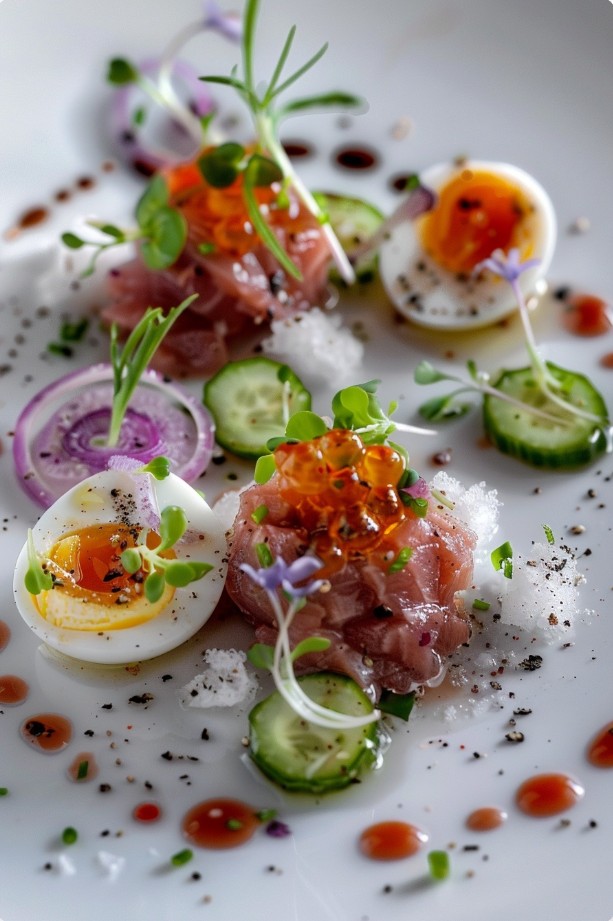
A restaurant-quality tuna salad isn’t about pricey ingredients—it’s about precision, restraint, and a bit of control on the plate. The exact same lineup can read as a quick home lunch or something you’d happily order out. The difference comes down to texture, how you cut things, the balance of the dressing, and how clean the final composition looks.
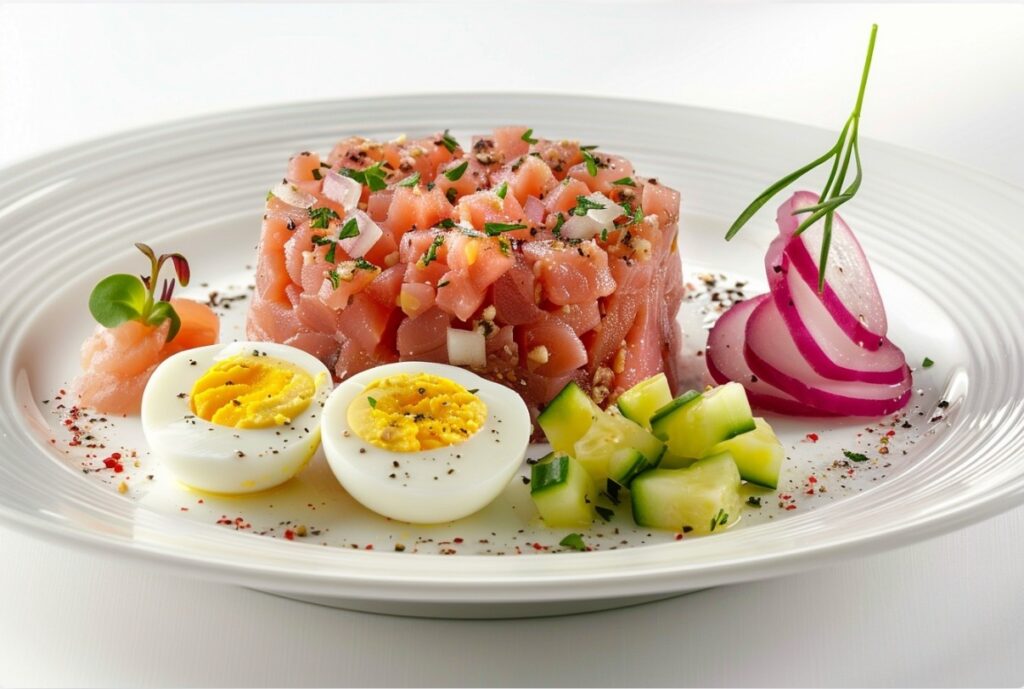
In restaurants, this kind of salad isn’t tossed into chaos or drowned in sauce: the tuna keeps its structure, eggs look intentional, cucumbers bring contrast, and the dressing simply highlights everything instead of masking it. That control—appearance, consistency, and timing—turns a simple salad into something neat, “expensive-looking,” and genuinely balanced.
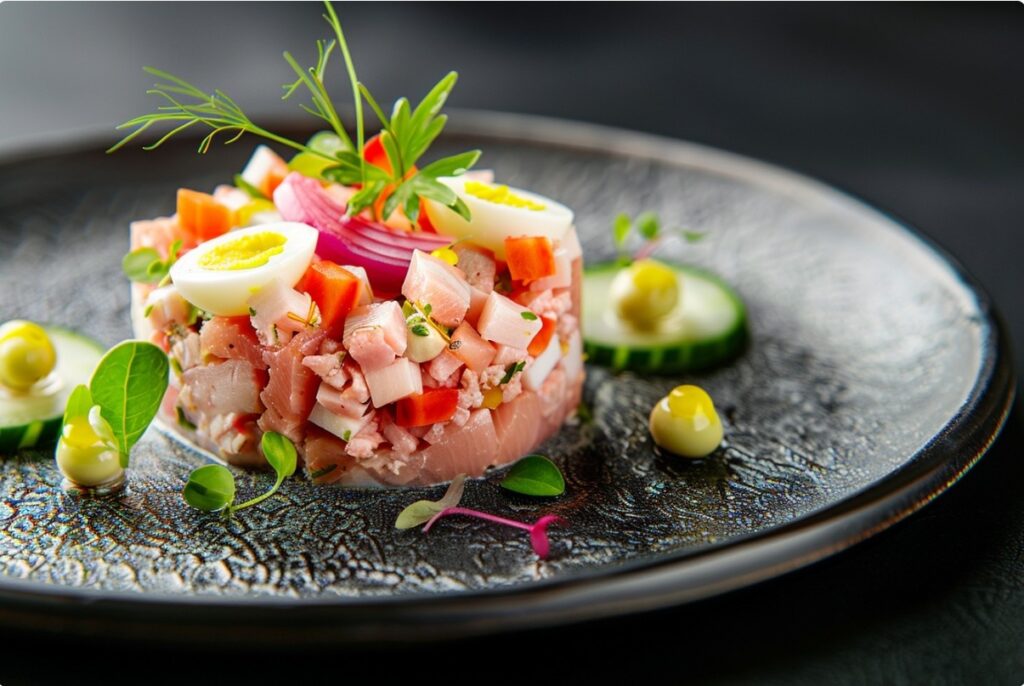
You know that moment: you crack open a can of tuna and your brain goes, “Alright, quick snack, nothing fancy.” Then you remember the tuna salad you’ve had at a really good place—soft and fresh, smelling like the sea and lemon, crunchy in the right spots, and with none of that heavy “fishy” aftertaste that can happen at home.
Most of the time, the tuna isn’t the real problem. The problem is the small stuff: temperature, excess moisture, the wrong level of acidity, strong smells nearby, and that habit of “just mix it all up” until everything tastes the same. Tuna doesn’t love that. It’s delicate, not difficult—if you treat it calmly and pay attention.
I like to think of tuna salad as a tiny exercise in control. No complicated techniques—just getting a feel for the ingredient: how it flakes when you touch it with a fork, how it reacts to lemon, how the aroma shifts if you add something salty or spicy. Once it clicks, the salad suddenly feels restaurant-level not because you bought something expensive, but because everything is exactly where it should be.
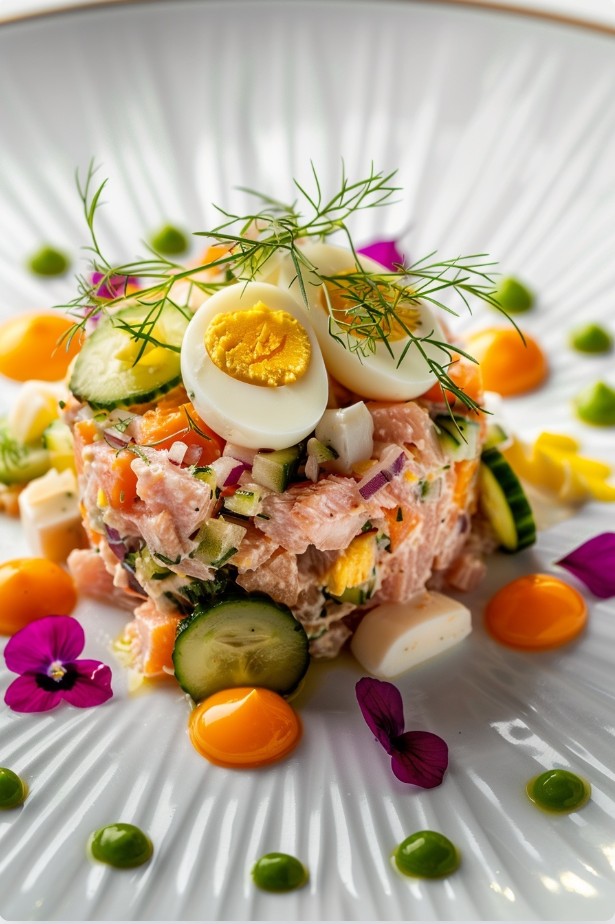
It starts with the tuna: what to choose (and why you taste it in every bite)
In a tuna salad, tuna isn’t just “added protein”—it’s the lead singer. If it’s dry, harsh, or metallic, you can drown it in the best dressing on earth and it’ll still taste like a can. But if it’s tender and smells clean, the whole salad instantly feels more polished.
At home, most of us end up in one of three scenarios: tuna in spring water/brine, tuna in oil, or fresh/chilled tuna (or a steak you sear quickly). All three can absolutely work for a restaurant-style result—you just play by slightly different rules.
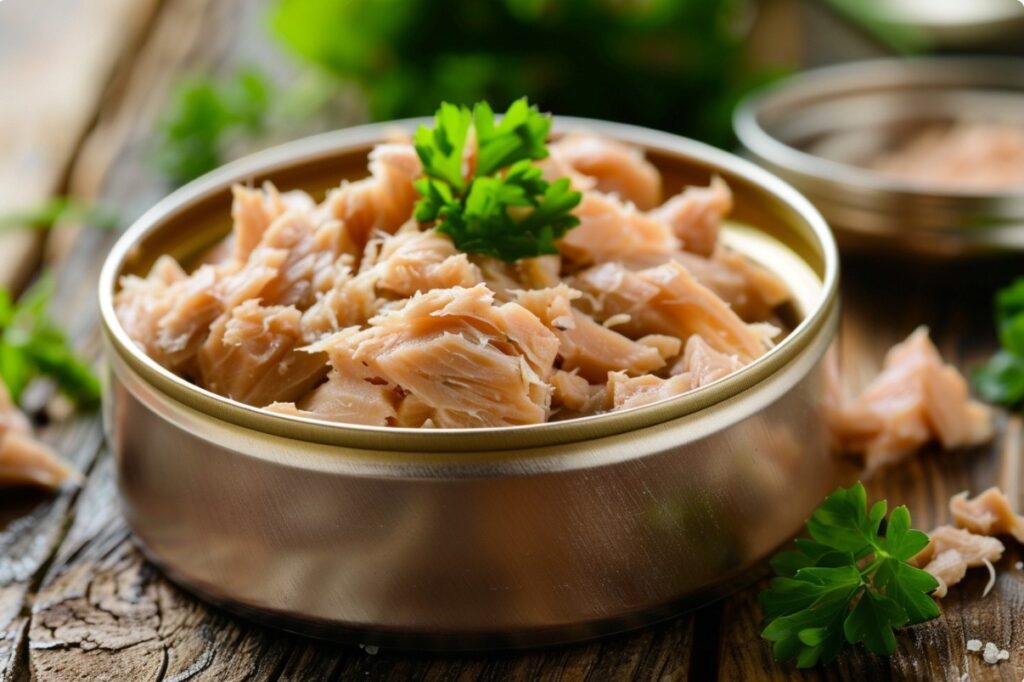
Tuna in spring water: light and easy to control
This is my go-to when I want a clean, fresh salad without extra richness. One catch: the liquid in the can isn’t some precious “juice” you must keep. It often carries that canned aroma and extra salt. Leave it in, and your salad turns watery and the flavor goes flat.
Tip: drain it, then let the tuna sit for 5–7 minutes in a sieve or on paper towel. Don’t squeeze it into sawdust—just remove the excess so the dressing clings instead of pooling.
Tuna in oil: richer, but easy to overdo
Tuna packed in oil often feels more tender, which is tempting. But if you don’t drain it properly and then add more olive oil to the dressing, the salad gets heavy and the freshness disappears. A restaurant tuna salad almost never tastes like “oil from the can.”
What I do: either drain the oil completely, or keep literally about 1 teaspoon for the whole portion—just for aroma, not as the base. Then I build the dressing separately.
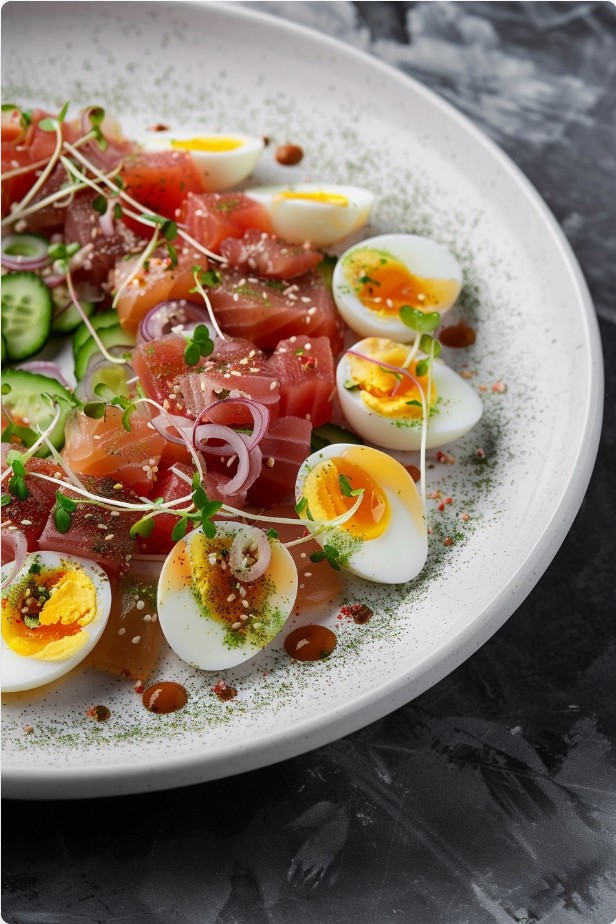
Fresh tuna (or quick-seared): maximum delicacy
This is the most impressive option—and the easiest to mess up. Overcook it and you’ll get a dry steak that you have to chew, stealing the spotlight from everything else. Do it right and the pieces stay tender with a light ocean aroma, and the salad suddenly feels like something you’d get out.
On a home stove, the classic issue is: the pan is hot, the fish is fridge-cold. You drop it in and it releases moisture instead of searing fast. That’s how you end up steaming it. For salad, that’s not great—the flavor turns “boiled” and the texture goes cottony.
Tip: if you’re using chilled tuna, let it sit at room temperature for 10–15 minutes, pat the surface dry, then sear quickly on a very hot pan. You’re aiming for tenderness—not “cook it through at all costs.”
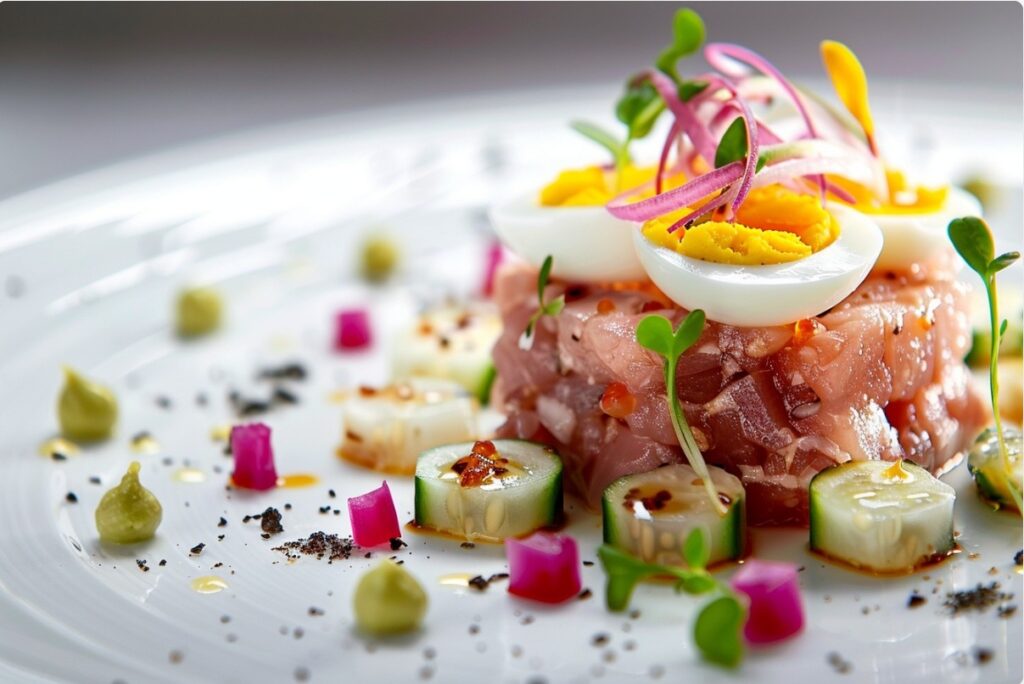
Freshness and aromas: how to make tuna smell like the sea, not “fishy”
That word—“fishy”—usually doesn’t mean the tuna itself. It’s the mix of aromas. Tuna in a salad picks up smells from onion, garlic, old oil, the fridge, even the cutting board you just used for something else. Then people say, “I don’t like fish.” What they really don’t like is that combo.
I once worked in a kitchen where salads were made at speed. Tuna sat uncovered in a gastro pan right next to sliced onion. An hour later it smelled like it had been “marinated” in onion air. Half the batch went in the bin. Since then, I’m picky about the little things—and they matter at home too.
Temperature is half the smell
Very cold tuna smells sharper. Very warm tuna can also smell intense, especially if it’s fatty and overheated. The nicest aroma in a salad comes from tuna that’s neither icy nor hot—more like cool. That’s when you get “sea,” not “can.”
That’s why I like to take the can out about 10 minutes before assembling. Not on a radiator, not in the sun—just on the counter. Then drain, let it drip, and go.
Acid as a “sponge” for heavy aromas
Lemon, lime, wine vinegar—this isn’t just “a bit of tang.” Acid lifts flavor and cuts through fattiness or that slight metallic note. But there’s a fine line: go too far and the tuna turns fragile, like it’s been “cooked” by acid, and it starts breaking down into mush.
Tip: add acid to the dressing, not straight onto the tuna. It distributes more gently and doesn’t hit one spot like a punch.
Onion and garlic: how to add character without killing delicacy
Raw onion is a common reason the “restaurant vibe” never happens. At home it’s often cut thick, added generously, and it takes over. In a good tuna salad, onion should be a detail: crisp, but not aggressive.
A simple trick that helps: slice the onion very thin and soak it in cold water for 5 minutes. The smell softens, but the crunch stays. Want it even gentler? Use water with a drop of vinegar, then rinse quickly and pat dry.
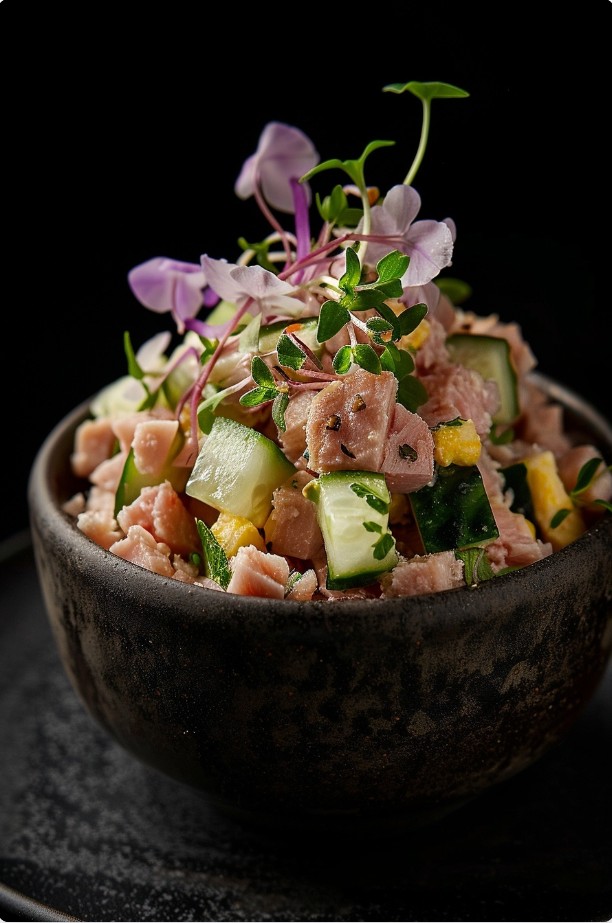
Restaurant-style texture: balancing crisp, tender, and juicy
Restaurant salads almost always rely on contrast. Not a million ingredients—contrast. Every forkful gives you different sensations: tender tuna, cool greens, something crisp, something juicy, and a small salty/acidic point that pulls it all together.
At home, we often do the opposite: cut everything roughly the same, toss, dress, and end up with “one texture.” Tasty? Sure. Restaurant-like? Rarely.
Crunch: what works (and what makes it feel rough)
Crunch isn’t just croutons. It can be cucumber, celery, radish, thinly sliced sweet pepper—even apple (as long as it doesn’t steal the show). The key is that the crunch should feel fresh and juicy, not tough and fibrous.
A classic mistake is adding something very rigid (like coarse cabbage with no prep) and expecting tuna to “carry it.” It won’t. Tuna is delicate, and next to a rough texture it tastes even drier.
Juiciness: how not to turn the salad into a puddle
Juiciness is great—until it’s uncontrolled. Tomatoes, cucumbers, citrus… they all release liquid. Add them without thinking and in 10 minutes you’ll have a watery bottom, and the tuna will start tasting diluted.
Tip: salt juicy vegetables separately and briefly—just a pinch over the chopped veg, 3–5 minutes, then drain off the released juice. You keep the flavor, lose the swamp.
Tenderness: how to handle tuna so it doesn’t turn into paste
It’s tempting to mash tuna with a fork so it “distributes evenly.” But then the salad starts eating like a spread. For that restaurant feel, keep it in flakes. Not huge chunks—flakes—so you can feel the fibers without effort.
My method: drain the tuna, let it drip, then gently separate it into large flakes. No pressing, no grinding. If the tuna is good, it naturally opens up in layers.
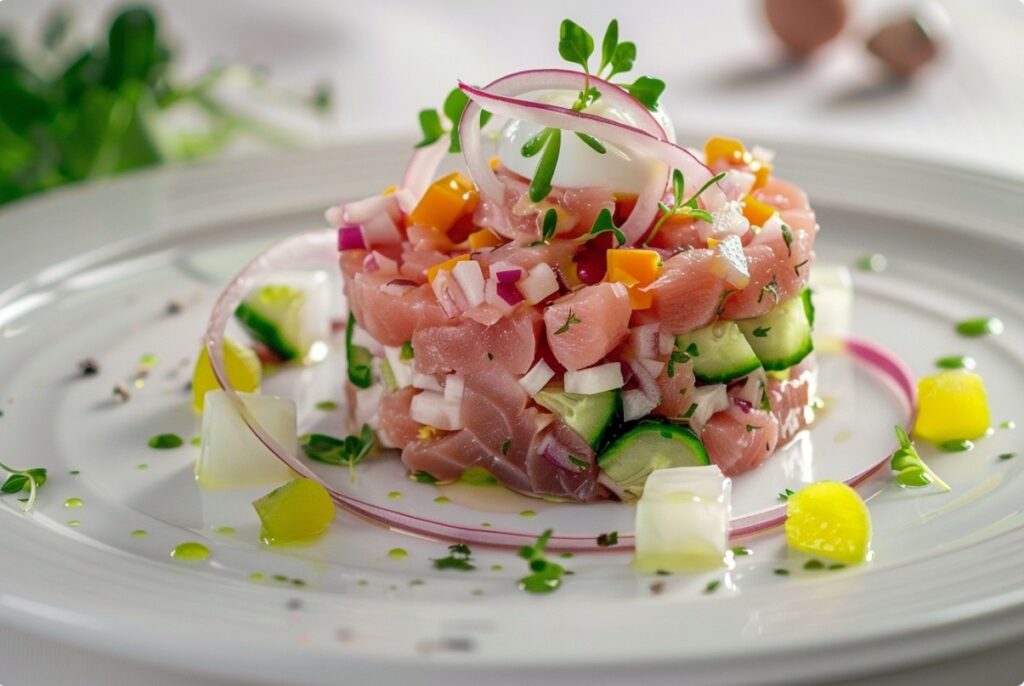
A dressing that doesn’t bulldoze the salad: flavor without the mayo-bomb
Dressing in a tuna salad is like background music: it sets the mood, but it shouldn’t shout over the main instrument. The most common home extremes are either too dry (a drizzle of oil and that’s it) or too heavy (loads of mayo “for juiciness”). Restaurant-level is when you can taste the dressing, but it doesn’t feel sticky, greasy, or one-note.
Emulsion math: why restaurant dressing feels different
Here’s the nerdy thing that genuinely changes the result: in good salads, the dressing isn’t just mixed—it’s emulsified. Oil and acid (lemon/vinegar) combine into something more uniform and slightly thicker, so it coats greens and tuna instead of sliding off. The salad doesn’t “swim”—it shines.
At home, it often goes like this: oil first, lemon second. They don’t really come together—oil stays oil, acid stays acid. First bite: sharp sour hit. Second bite: oily patch. That’s not balance.
Tip: shake the dressing in a small jar with a lid. 10 seconds and it turns smooth. Or whisk vigorously with a fork in a bowl—just keep going until it looks cohesive.
Salt and pepper: when and how so you don’t “dry it out”
Salt pulls out moisture. If you salt everything early and let it sit, the salad starts collapsing. Greens wilt, cucumber releases juice, tuna softens—but not in a good way. More like watery.
I prefer salting the dressing, not the salad. The salt dissolves, spreads evenly, and doesn’t beat up the textures. Then at the very end, a tiny pinch on top if needed—like a finish.
Quiet flavor boosters that don’t scream
The restaurant effect often comes from small salty and aromatic accents rather than loud spices: capers, olives, a little mustard, a drop of soy sauce (very carefully), lemon zest. They add dimension without changing tuna’s character.
The key is not piling everything in at once. If you’ve added capers and olives, you probably don’t need extra salt. If you add mustard, ease up on the acid—mustard already brings heat and lift.
- Citrus zest adds aroma without extra acidity.
- Capers bring salt and a slight bitterness—use a light hand.
- Mustard helps emulsify and adds depth if you don’t overdo it.
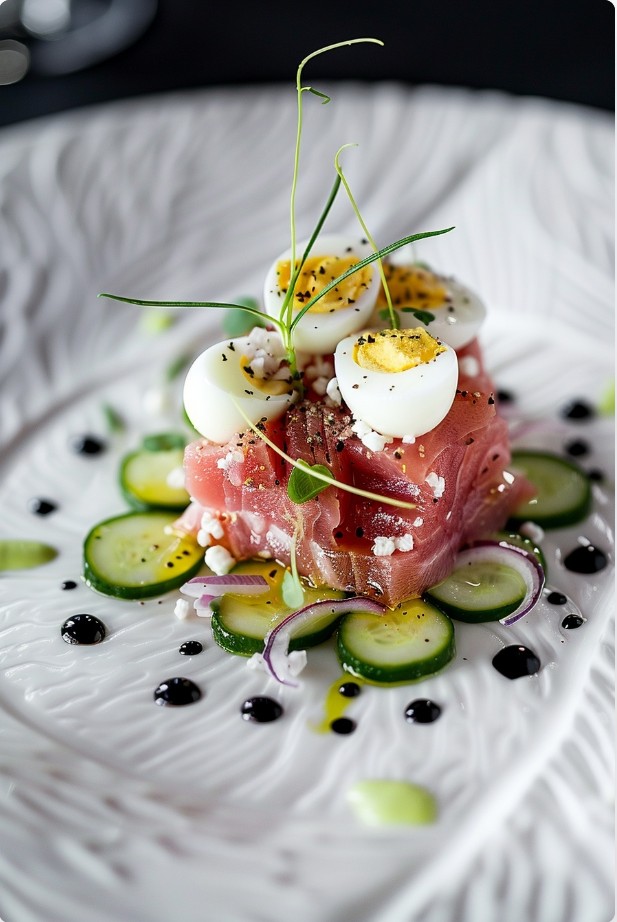
Handle with care: how mixing ruins tuna (and how to avoid it)
The second big thing is mechanical stress. Tuna (especially canned) is already a cooked, fragile structure. It doesn’t like being mashed around with a spoon. It doesn’t like being mixed with heavy components that press and break the fibers. And it doesn’t like sitting in an acidic environment for long.
When a salad turns into “paste,” people blame the tuna quality. Often it’s because the tuna was overworked, then left in dressing for 20 minutes. Acid does what acid does: fibers get more fragile, the flavor gets sharper, and the aroma starts leaning more “canned.”
How it should be vs how it usually goes
- How it should be: add tuna at the end and fold it in gently, briefly, keeping the flakes intact.
- How it usually goes: tuna goes in first, gets drenched in dressing, then gets mixed “so it soaks it up.”
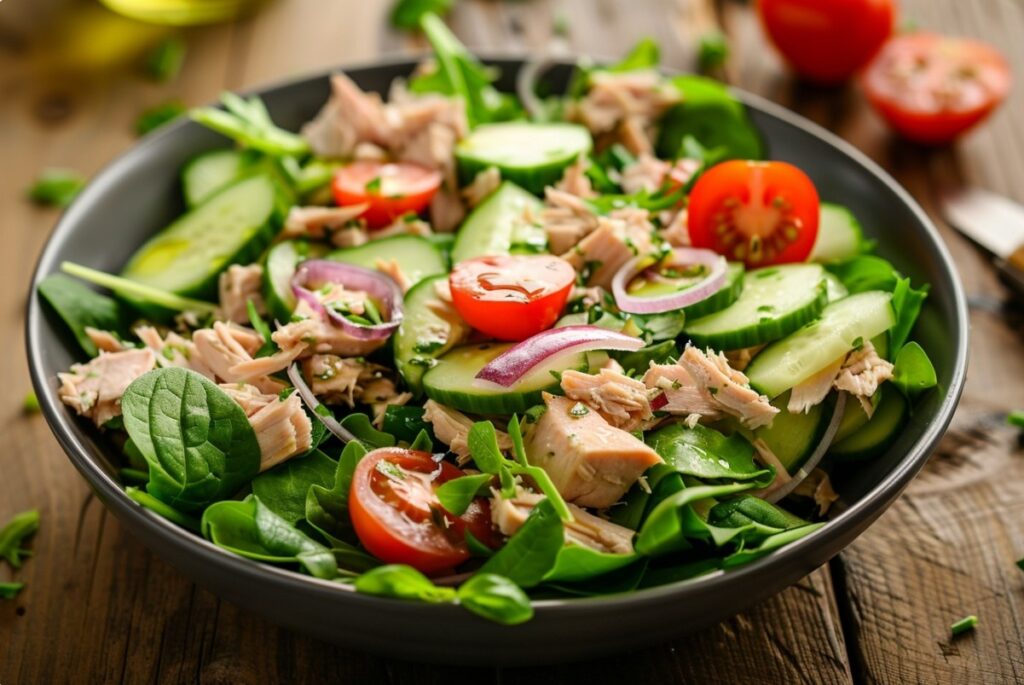
I assemble in layers: greens and crunchy components first, then a little dressing and a light toss. Only then does the tuna go on top, followed by another small drizzle of dressing and two or three gentle folds—no more. Sounds fussy, but you feel the difference immediately.
Tip: if mixing makes you nervous, plate it in portions. It’s much easier to control your movements on a plate, and the tuna won’t fall apart.
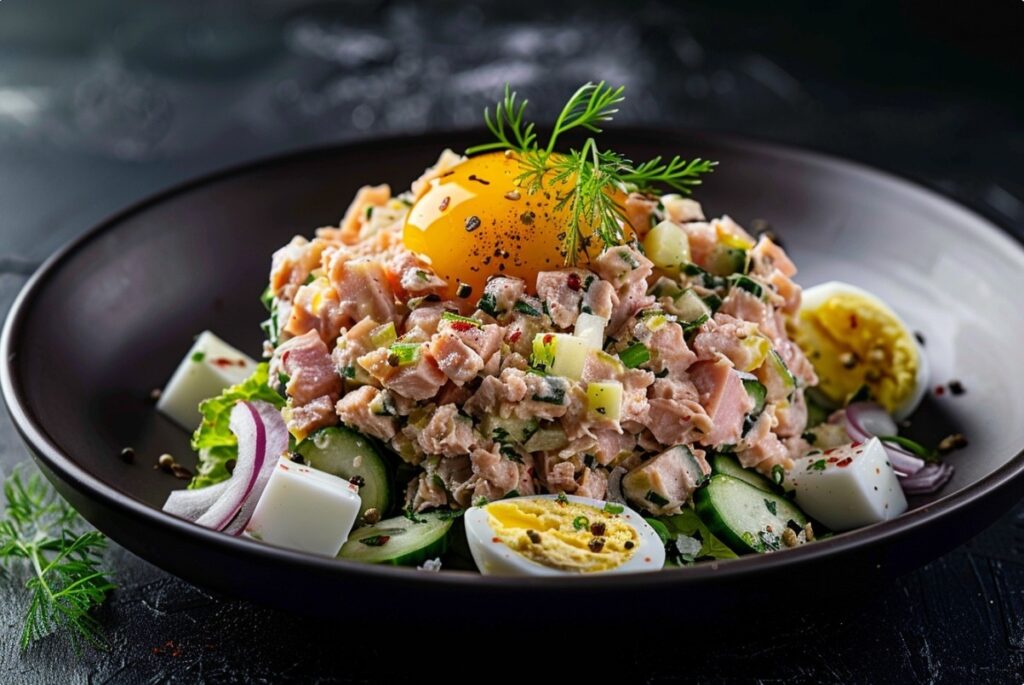
Common beginner mistakes: why it turns out flat, watery, or overly pungent
I’ve seen dozens of versions of “my salad didn’t work,” and most causes repeat. The good news: it’s not about talent. It’s a handful of habits you can fix fast.
Mistake 1: not removing excess moisture
Tuna with can liquid, wet greens after washing, juicy vegetables with no prep—all together. The dressing won’t cling, the flavor gets diluted, and you’re left with water at the bottom with a faint fishy note. It can taste “yesterday-ish” even if you just made it.
Mistake 2: too many aggressive aromas
Thick raw onion, garlic “for health,” smoked paprika, plus a strongly scented cheese—and the tuna disappears. Restaurant tuna salad is built on clean flavor. Personality is great, but cleanliness matters more.
Mistake 3: the dressing isn’t brought together
If oil and acid never become one, the salad eats unevenly: sour here, greasy there, bland somewhere else. Then people start adding more salt, more lemon, more oil—and it only gets worse.
Mistake 4: turning tuna into crumbs
This one hurts, because the tuna can be excellent. But once you mash it, you lose that meaty, satisfying bite we love in restaurant salads. Also: smaller pieces absorb acid faster, so the flavor gets sharper.
Mistake 5: letting the salad sit too long
Tuna salad doesn’t like waiting. 10 minutes is fine. Half an hour in dressing is already risky. Greens wilt, tuna changes texture, aromas blend into something heavier. If you need to prep ahead, prep components separately and assemble at the last minute.
If something goes wrong: saving flavor, texture, and smell
Something always goes a little sideways in the kitchen, and that’s normal. I’ve overdone the lemon more than once, and I’ve watched a salad suddenly turn watery. Don’t panic—figure out what broke: moisture, balance, or aroma.
If the salad turned watery
Most often it’s from vegetables or tuna that wasn’t drained well. The fixes are simple—just do them quickly:
- Gently transfer the salad to a sieve for 30–60 seconds to let the excess drain. Don’t press.
- Return it to the bowl and add a little dry greens or a crunchy component to absorb moisture (don’t go overboard).
- After that, add dressing sparingly—better in drops, tasting as you go.
If it smells too “fishy” or heavy
Three things help here: acid, fresh herbs, and “clean” fat.
- Add a little lemon zest or an extra drop of lemon juice to the dressing (not directly onto the tuna).
- Add fresh herbs with a bright aroma but not perfumey—dill, parsley, a little green onion.
- If you suspect the smell is coming from old/heavy oil, it’s better to drain off the dressing completely, lightly blot a few spots with paper towel (yes, it feels weird), and make a new, lighter dressing.
A quick micro-story: once at home I made a salad and realized my olive oil was “on the edge”—not rancid, but heavy. In the salad it was twice as noticeable. I didn’t force it: drained the dressing, added fresh lemon and a different oil, and the salad came back to life. Those small decisions are exactly what “restaurant thinking” looks like.
If you oversalted
Oversalting hits hard in tuna salad because tuna is often already salty. Neutral volume is your friend:
- Add more greens or unsalted cucumber.
- Add something neutral and creamy in texture (for example, avocado if you like it) to soften the saltiness.
- Be careful with acid: it won’t remove salt, but a tiny bit can distract—if you keep it subtle.
If it tastes bland and “flat”
This isn’t always a salt problem. Often it’s missing acid or a small bitter/salty accent.
- Add a drop of lemon juice or vinegar to the dressing and mix well.
- Add a pinch of black pepper—not for heat, for aroma.
- Add a tiny salty accent: a couple of capers or a piece of olive, then taste again.
Plating and final touches: how to make it look and feel like it was served to you
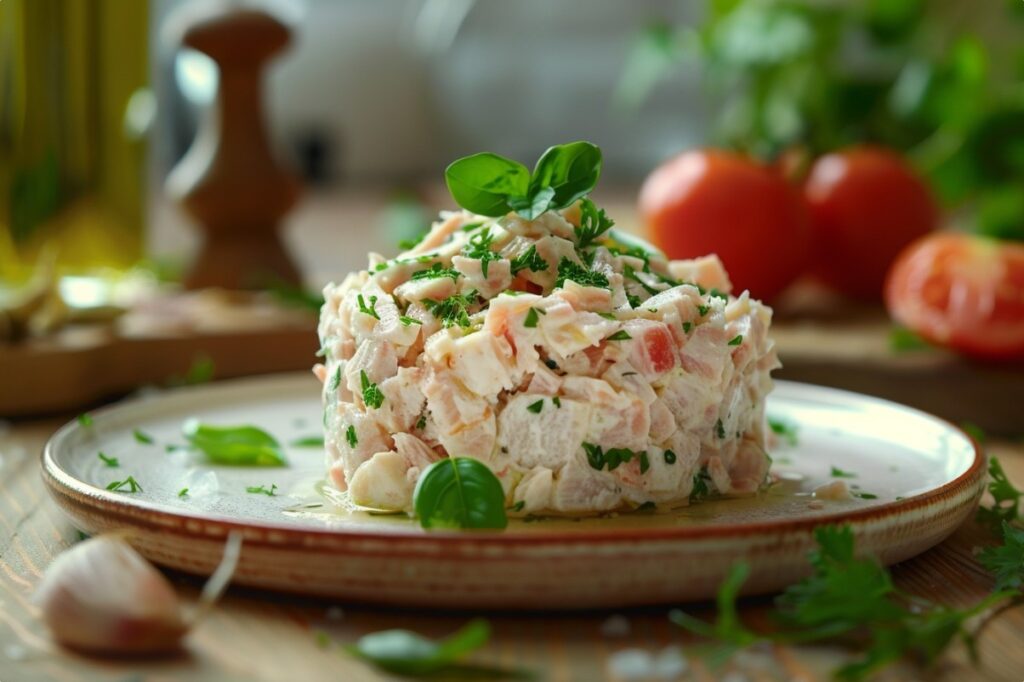
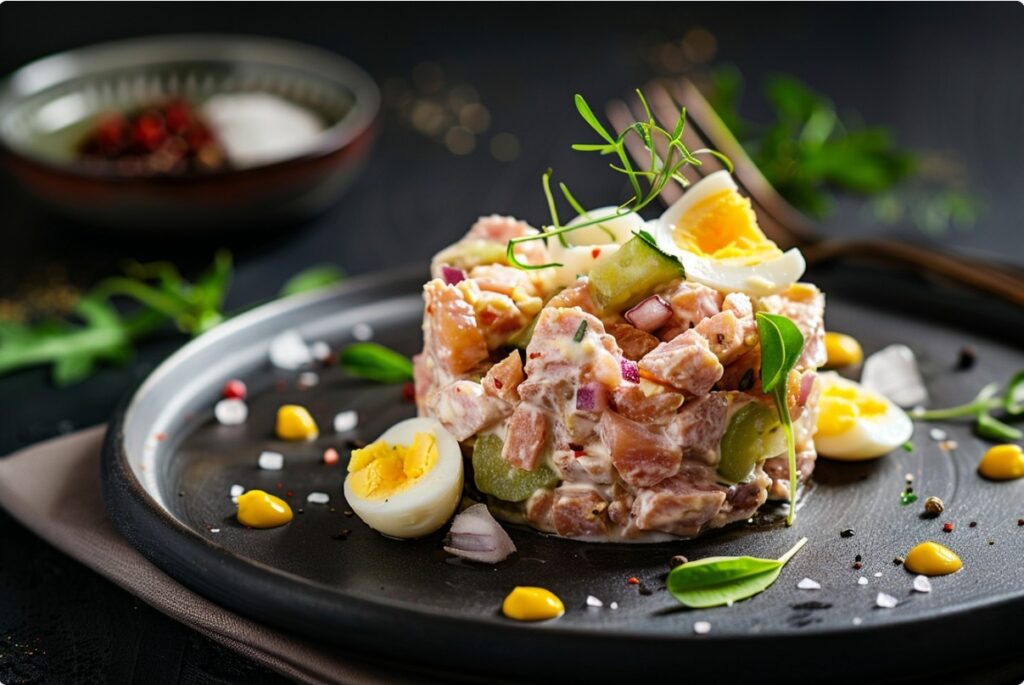
One underrated truth: a restaurant salad often tastes better before the first bite. Because it’s assembled so you can see the textures, the sheen of the dressing, the tuna flakes, and greens that aren’t bruised. It’s not “pretty for a photo.” It’s how food is perceived.
I like serving tuna salad on a wide plate rather than in a deep bowl. In a bowl, everything gets squashed faster and kind of steams itself. On a plate, the salad can breathe, and you can control where the tuna sits, where the greens are, and where the crunch is.
A finish that almost always works
- A drop of good oil on top, on the plate—not for richness, for aroma.
- A little freshly ground pepper at the end, not during mixing.
- Zest—just a few strokes to make everything smell “fresh.”
- Flaky salt (if you have it)—in tiny points, not evenly over the whole salad.
One more thing I swear by: let the salad sit for 2 minutes after it’s assembled. Not 20, not “until everyone sits down and chats”—2. In that time the dressing settles onto the greens and the aromas come together, but the textures are still alive.
Another quick micro-story: I once made this salad for friends and got pulled into a conversation—about 15 minutes. I came back to tired greens, liquid at the bottom, and tuna that had gone soft and bland. Everything was high quality; timing still ruined it. Since then, I assemble at the last minute and keep components separate until then. Less stress, more consistent results.
Restaurant-quality tuna salad is really about respecting the details: remove excess moisture, don’t suffocate it with strong aromas, emulsify the dressing, keep the tuna in flakes, and don’t let the salad get “tired” on the table. Once you’ve got that in your hands, cooking feels calmer—no fear of messing it up.
So how do you like your tuna salad—light and citrusy, or richer with salty accents like capers and olives? Tell me which version works best in your kitchen.
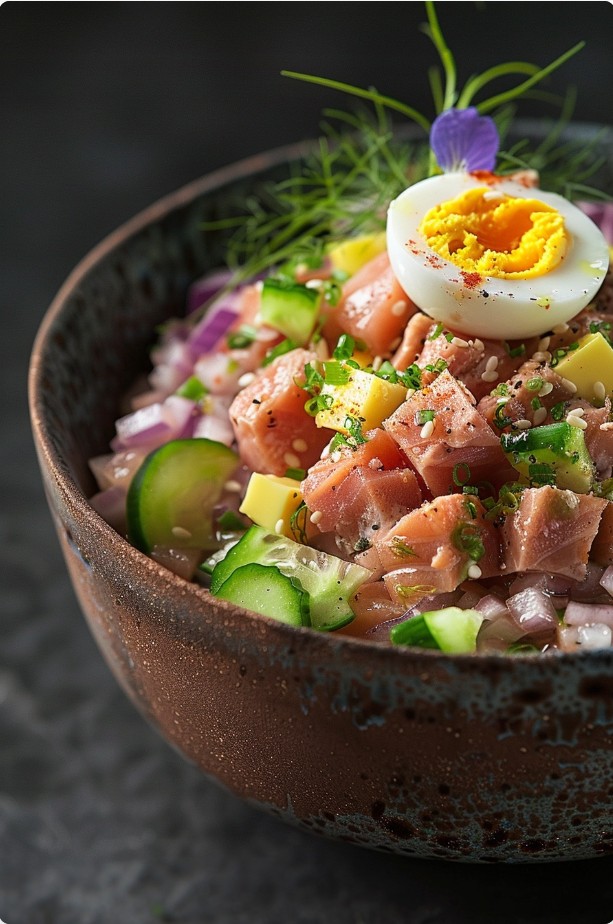
If you want to go deeper and see a few different approaches to prep and plating, take a look at the roundup on tuna salad. It’s a collection of recipes, variations, and practical tips—great for seeing how the same simple ingredients can turn into salads with totally different structure and vibe, and how to push the final dish toward a more intentional, put-together result.
Frequently asked questions
What actually makes a tuna salad “restaurant-quality”?
Not the ingredients—control. Clean shapes for each component, tidy plating, balanced dressing, and zero chaos. Ingredients stay distinct but are tied together by the dressing.
Why does restaurant tuna salad look neater than homemade?
Restaurants control geometry and composition: consistent cuts, intentional arrangement, and a clean plate with no extra mess.
What’s the main mistake that makes tuna salad look cheap?
Chaotic mixing and too much sauce. When ingredients lose their shape and turn into a uniform mass, it instantly looks sloppy.
Do you need expensive products to get a restaurant look?
No. The restaurant effect comes from prep and plating, not price. The same tuna and eggs can look upscale when handled correctly.
How should dressing work in a restaurant-style tuna salad?
It should lightly coat the ingredients and give a sheen—no puddle at the bottom. The dressing connects flavors; it shouldn’t be the main event.