How to Make Tuna Salad More Flavorful (Without Overcomplicating It)

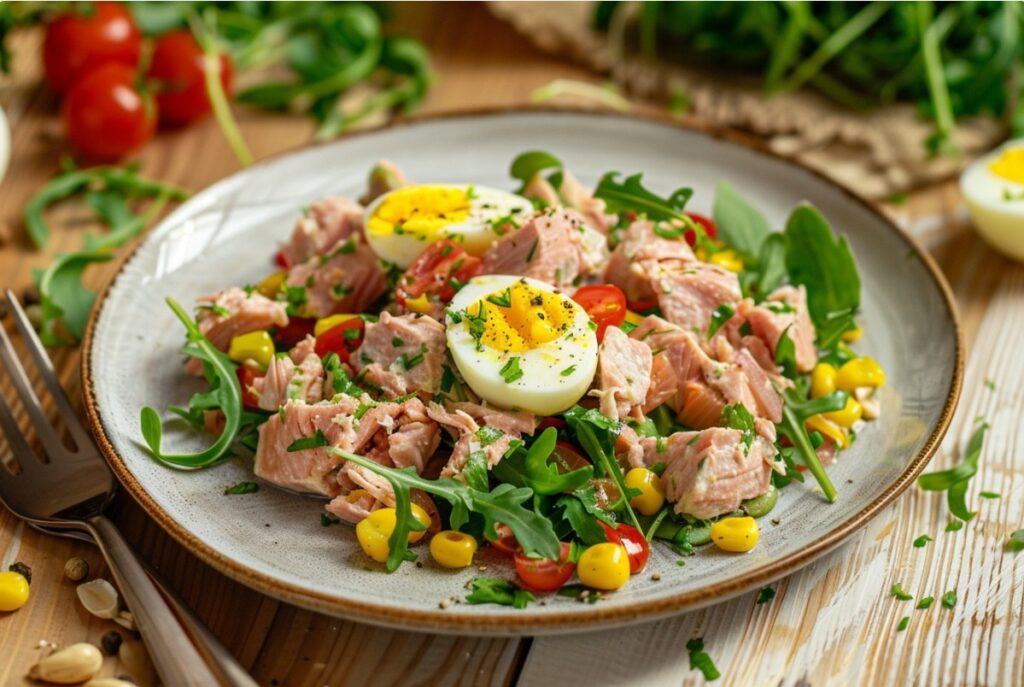
Tuna salad is one of those things that can be perfectly fine… and still feel like it’s missing something. Same ingredients, same effort—yet one version disappears fast, and the other just sits there looking sad.
The difference is almost always in the details. A little acidity, the right dressing, something crisp or fresh—and suddenly that “basic” tuna salad turns into something you actually want to make again.
Tuna salad is a lifesaver when you need something quick and “proper”: open a can, mix a few things, done. But there’s this annoying moment when everything is fresh, the tuna is decent, and the taste is still… flat. Like you’re eating a neat pile of ingredients that never really got introduced.
I know that feeling from the days I used to cook at full speed between shifts. You want the bowl to smell good. You want that “oh yes” bite that makes you go back for another forkful. The good news: you don’t need fancy add-ins or chef-y tricks. You just need to understand where aroma comes from—and how not to kill it.
Flavor in a salad isn’t just “add garlic.” It’s the balance of fat and acidity, the right temperature, a touch of bitterness, salt at the right moment, and a couple of small things that work like amplifiers. And yes—respect the tuna itself. It’s bold, but it can’t do everything alone.
Below is the logic I use that almost always makes tuna salad smell better and taste more alive. No strict recipe, no magic—just kitchen practice you can repeat at home.
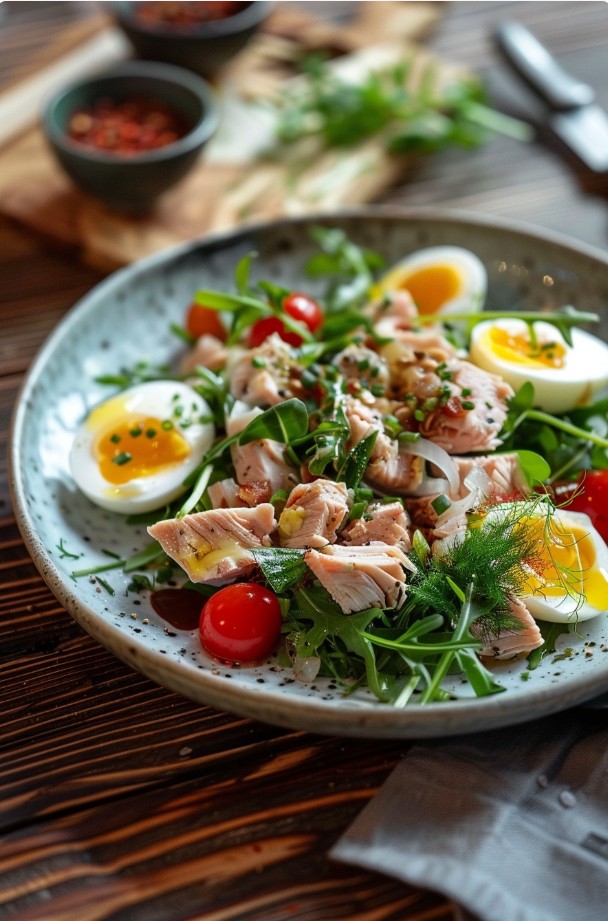
Why tuna salad often tastes bland: the mechanics of aroma
Aroma is made up of volatile compounds—things you “taste” with your nose. In a salad, those compounds either lift and bloom, or they get muted by cold and fat, or they get washed out by excess water. Canned tuna has its own ocean-y smell, sometimes a little metallic, sometimes almost gently smoky (even when it’s not smoked). But that aroma disappears fast when it’s surrounded by neutral ingredients: hard-boiled eggs, potatoes, rice, pasta, cucumber, iceberg lettuce.
Three common reasons the flavor doesn’t show up:
- The “smell temperature” is off. Very cold salad smells weaker. Not bad—just physics. Aromas are less volatile when everything is icy.
- Water dilutes everything. Juicy vegetables, rinsed greens, tuna packed in water—this all adds moisture. Water makes salt and acid distribute unevenly, so the whole thing tastes blurred.
- Fat without acid (or acid without fat). Aromatic molecules often “stick” to fat, while your palate needs acidity so the salad doesn’t feel heavy. If one is missing, the result reads flat.
I once made a big tuna salad for the kitchen crew. Everything was “right”: tuna, egg, cucumber, a bit of mayo. It disappeared—but not because it was amazing. People were just hungry. I tasted it and realized: it didn’t smell like anything. Next time I changed one thing: I mixed the tuna first with a little acid, a pinch of salt, and a drop of mustard, let it sit for 5 minutes, and only then added the rest. The difference was so big it felt like I’d added a secret ingredient (I hadn’t).
That’s the mechanic: aroma isn’t a list of ingredients—it’s the order and conditions that let them open up.
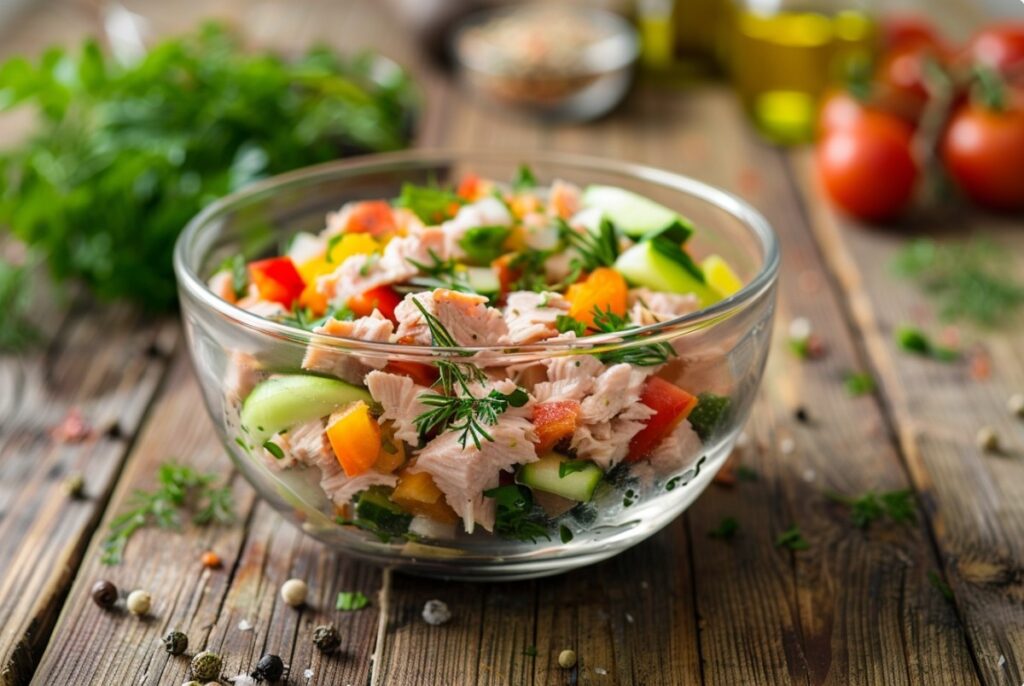
Start with the tuna: how to ‘wake up’ flavor straight from the can
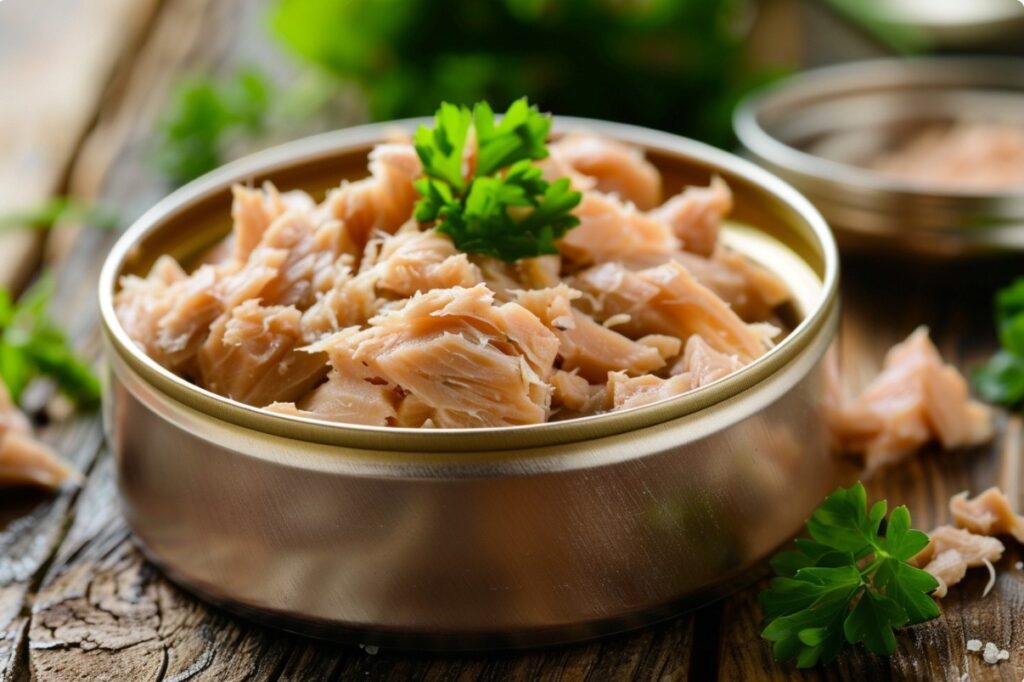
Canned tuna is already cooked and ready to eat. But its flavor often feels “asleep” because it’s cold, sitting in liquid, and packed into dense chunks. The first thing I do is check the texture and smell before adding anything.
Drain the liquid—without drying it out
If the tuna is packed in water, there can be a lot of it. Water is the enemy of aroma in a salad because it dilutes everything you add next. I drain it, but I don’t squeeze the tuna until it turns into sawdust. Let it drip, then press lightly with a fork.
If it’s tuna in oil, that’s a different story: oil carries flavor. But sometimes there’s too much, and the salad turns heavy. I drain most of it and leave just a little—literally enough so the tuna doesn’t feel dry. It’s one of the simplest ways to make the flavor feel “pulled together.”
Flake it into strands, don’t mash it into a paste
There’s a difference between flaking and smearing. When you mash tuna until it’s uniform, it releases more of that “canned” smell, and the salad starts to feel like a spread (even if that’s not what you’re going for). I like to break it up with a fork into medium flakes—easy to mix, but still with character.
A 5–10 minute micro-marinade: acid + salt + something sharp
This is my favorite trick, and it works almost every time. No complicated marinade needed—the logic matters. Acid (lemon juice, vinegar, caper brine/pickle brine) lifts aroma and removes that “flat” feeling. Salt pulls the flavor forward. A little heat or bitterness (mustard, horseradish, pepper) adds a spark.
Tip: mix the tuna first with a pinch of salt and a few drops of acid, then let it sit for 5 minutes. Add vegetables and dressing after. The flavor gets deeper without adding anything fancy.
A quick home moment: I once made tuna salad late at night when everything in the fridge was ice-cold. I tasted it—nothing. I left the tuna in a bowl on the counter for 7 minutes (not an hour, not in the sun), then added lemon and salt, and the aroma finally showed up. Not because it “warmed up” dramatically, but because those volatile compounds started moving more actively.
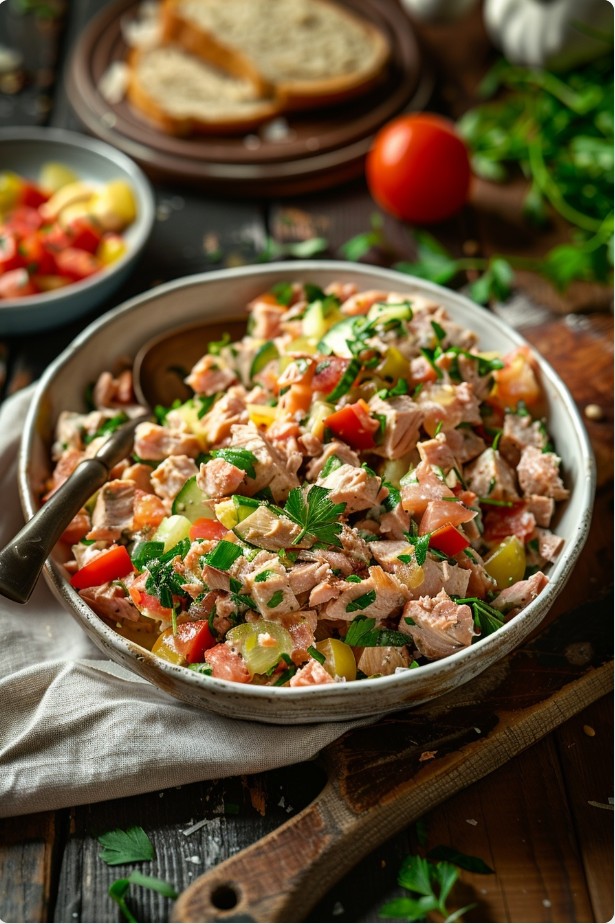
Acid, fat, and salt: the three buttons that switch flavor on
If you boil it down, a flavorful salad stands on three things: acid, fat, and salt. And it’s not just what you add—it’s when you add it.
Acid: makes flavor feel bigger and cleans up the finish
Tuna is rich—or at least dense on the palate. Acid highlights it the way good lighting shows texture on a plate. Without acid, tuna salad often tastes greasy or just heavy.
One nuance: if acid hits greens or delicate vegetables too early, they can wilt and release water. That’s why I almost always work with the tuna and dressing first, and add leafy greens at the end.
Fat: carries aroma and gives the salad “body”
Fat doesn’t have to mean mayonnaise. It can be a bit of the oil from the can, a spoon of olive oil, yogurt with a drizzle of oil, avocado, even egg yolk. Fat holds onto aromatic molecules and helps the salad smell good longer—not just for the first 10 seconds.
A common mistake is being afraid of fat and making the salad “dry.” Then salt and acid taste harsh, and the flavor never comes together.
Salt: not just saltiness—an aroma booster
Salt makes aroma pop. But in salads it’s easy to get uneven seasoning: salty in one bite, bland in the next. A simple rule helps: salt in layers. A little for the tuna, a little for juicy vegetables (tomato, cucumber), then a final taste check.
Tip: if you’re worried about oversalting, build part of the salt through “salty accents”—capers, olives, a tiny bit of anchovy paste, or a few drops of soy sauce. The flavor will be deeper than salt alone.
I’ve watched people add mayo, mix, taste, then add more salt. Then they toss in cucumber or greens and suddenly it’s bland again. That’s not “bad hands”—it’s just volume. You added more food without adding seasoning. Season as you go.
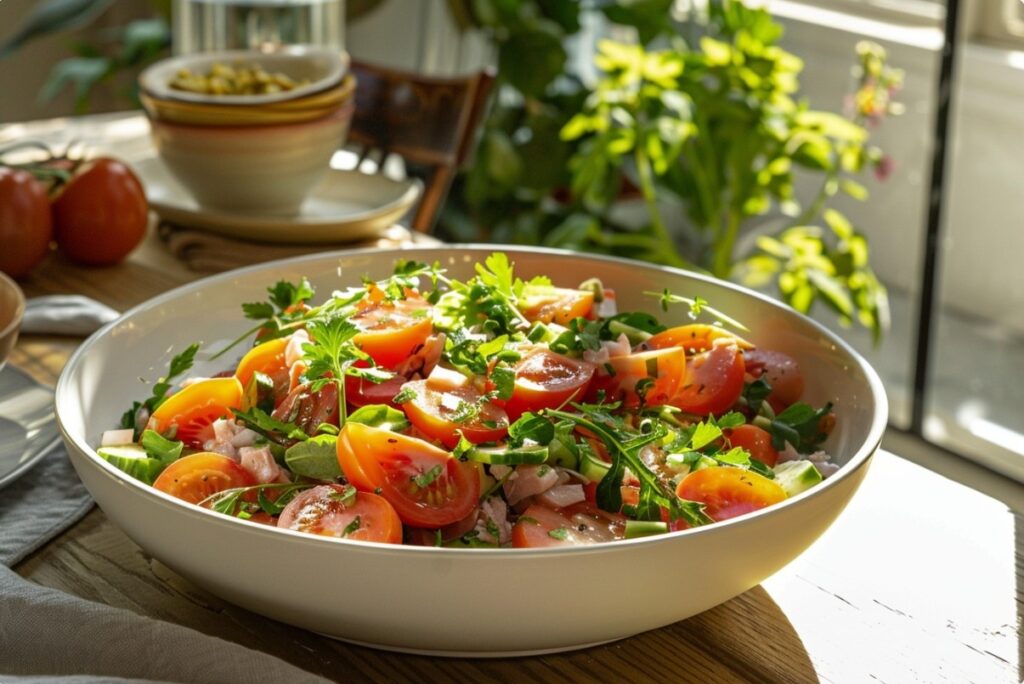
Aromatic accents: what actually makes tuna salad smell amazing
The key here is restraint. Tuna doesn’t love being drowned in perfume. But it’s incredibly responsive to small, precise accents—the kind that make you go “mm” before you even take a bite.
Fresh herbs: not for color—for aroma
Parsley, dill, scallions, basil—these aren’t just garnish. Still, you don’t need to turn the bowl into a herb bouquet. My rule: one main herb + one supporting herb. For example, parsley as the base and a little scallion for bite.
Another thing: herbs smell best when they’re lightly bruised or chopped—but not pulverized. If you mince them into dust, they darken quickly and can turn bitter.
Onion and garlic: how to use them without overpowering everything
Raw onion is a strong player. It can easily dominate tuna. If I want onion flavor without the aggression, I slice it thin and soak it for 5 minutes in cold water with a pinch of salt or a drop of acid. It softens, and the smell becomes cleaner.
With garlic, I’m careful. Often it’s better not to toss in chunks, but to rub the bowl with a cut clove, or add a tiny bit of garlic paste to the dressing. You get the aroma without the garlic punch.
Tip: if garlic tastes too sharp, mash it with a pinch of salt into a paste and stir it into fat (oil/mayo/yogurt). Fat smooths the harshness and makes the aroma more even.
Capers, olives, pickled bits: salt with personality
Capers, cornichons, olives, pickled peppers—these aren’t just “something salty.” They bring acidity, bitterness, and that fermented tang. Prep matters: capers sometimes need a quick rinse if they’re very salty; olives should be chopped so their aroma spreads; cornichons should be lightly squeezed so they don’t water down the salad.
A quick confession: I had a phase where I threw capers into everything and called it a “chef secret.” Then I made a salad that smelled like capers and nothing else. Since then, I treat them like seasoning: a little, and always taste after mixing.
Citrus zest: aroma without extra acid
When you want more fragrance, your hand goes straight to lemon juice. But sometimes you already have enough acidity (especially if you’re using pickled ingredients). That’s when zest saves the day: it brings essential oils—pure aroma. Just grate the yellow/green part only, not the white pith, which turns bitter.
Tip: add a pinch of zest to the dressing, not directly to the salad. It distributes more evenly and won’t hit in random “patches.”
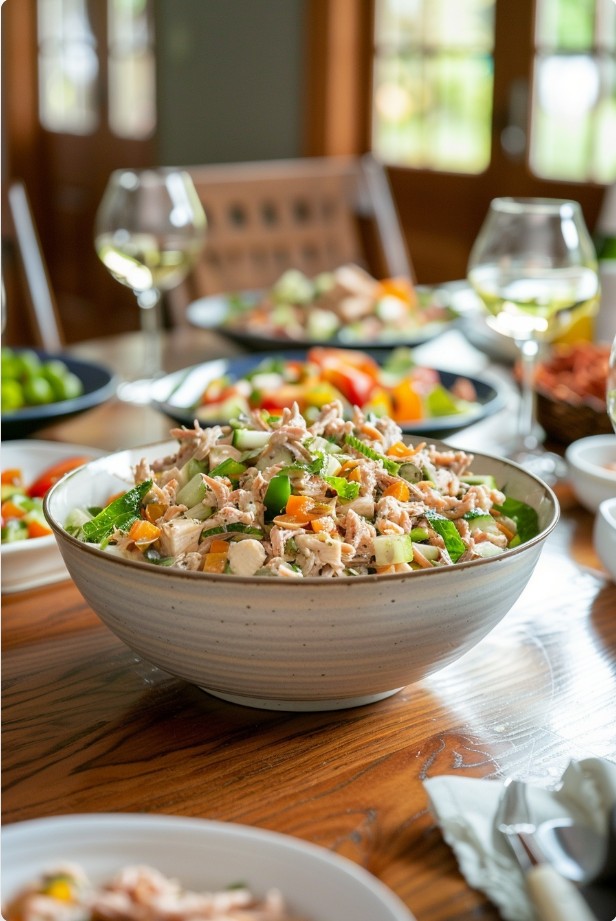
Texture and water: how to keep flavor from ‘running away’
Aroma in salad isn’t only about spices. It also depends on the salad not turning into a wet mess. Water washes out smells, thins the dressing, and makes everything taste equally “raw.”
Juicy vegetables: manage their juice
Tomatoes, cucumbers, even canned corn—all release liquid. If you add them and immediately mix with tuna, 10 minutes later you’ll have a puddle at the bottom and a bland salad on top.
What I do: I salt chopped juicy vegetables separately with a small pinch of salt and leave them for 5 minutes. Then I drain off the excess juice (or use it in the dressing if it tastes good). One small step, totally different result.
Salad greens: drier greens = more flavor
Washed greens that aren’t dried are guaranteed to water things down. Not everyone has a salad spinner, and sometimes there’s no time. But even a clean kitchen towel, or letting greens sit in a colander for a bit, helps a lot.
At home it often looks like this: someone rinses iceberg, shakes it twice, tosses it into the bowl—and then wonders why the dressing slides off and the flavor disappears. Water does what water does.
Crunch and density: flavor feels stronger with contrast
This isn’t just “add croutons” (though sometimes that works). It’s about mouthfeel. When a salad has something crunchy (fresh cucumber, celery, radish, toasted seeds) and something soft (tuna, egg, avocado), your brain reads the flavor as brighter. Aroma has something to latch onto.
I once made tuna salad for a picnic and brought toasted seeds separately. I sprinkled them on at the last second, and it was the most aromatic version of the day. Not because the seeds smelled like tuna, but because they added a nutty aroma and crunch that lifted the whole bowl.
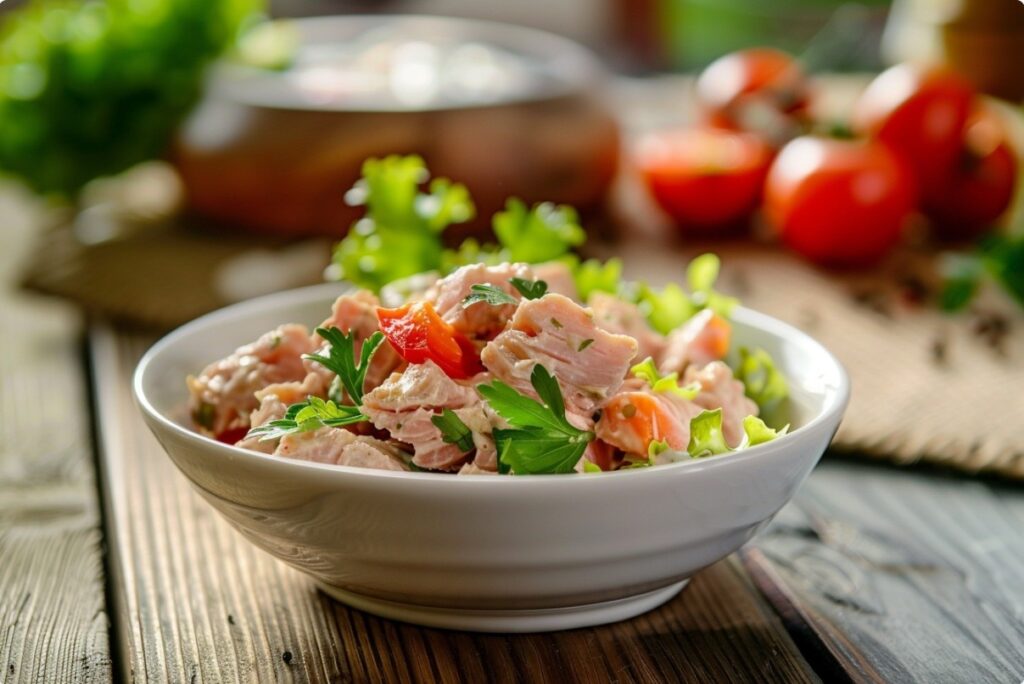
Temperature and timing: when to mix, and when to let it sit
Salad isn’t soup, but it still has a “mode.” Cold mutes aroma, and time can either help—or ruin the texture.
Don’t make everything ice-cold
If every ingredient comes straight from the fridge, the salad will smell weaker. I’m not saying to warm the tuna—no. But it helps if just one component isn’t icy: let the tuna sit at room temperature for 10 minutes, or don’t use a fridge-cold dressing. It makes the flavor feel more “alive.”
Mix in two phases
I like making tuna salad in two phases:
- First: tuna + dressing/acid/salt + aromatic accents (capers, mustard, zest). Let it sit 5–10 minutes.
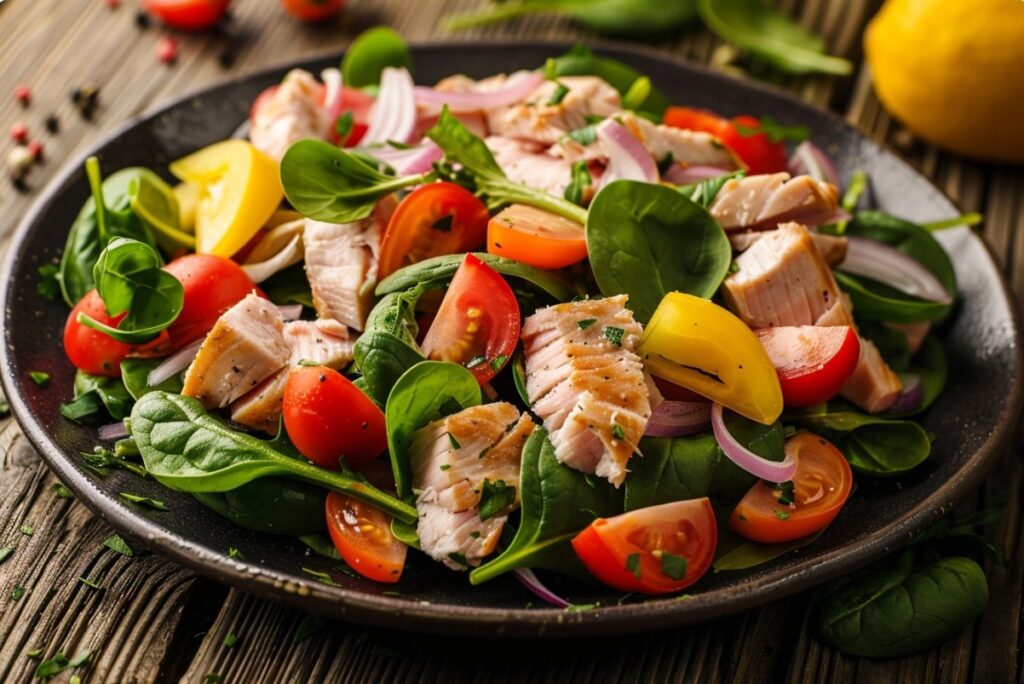
- Then: add delicate ingredients (greens, cucumber, tomato) and mix quickly.
You get deeper flavor without limp greens and watery vegetables.
How long can a finished salad sit?
If the salad has greens and juicy vegetables, I don’t like keeping it dressed for long. The aroma might get stronger, but the texture collapses—and with it goes the enjoyment. Better to let the tuna base “mature,” then add everything else right before serving.
Tip: if you’re prepping ahead, store the “aromatic base” (tuna mixed with dressing) separately from the vegetables/greens. Combine right before serving so the salad smells great instead of swimming.
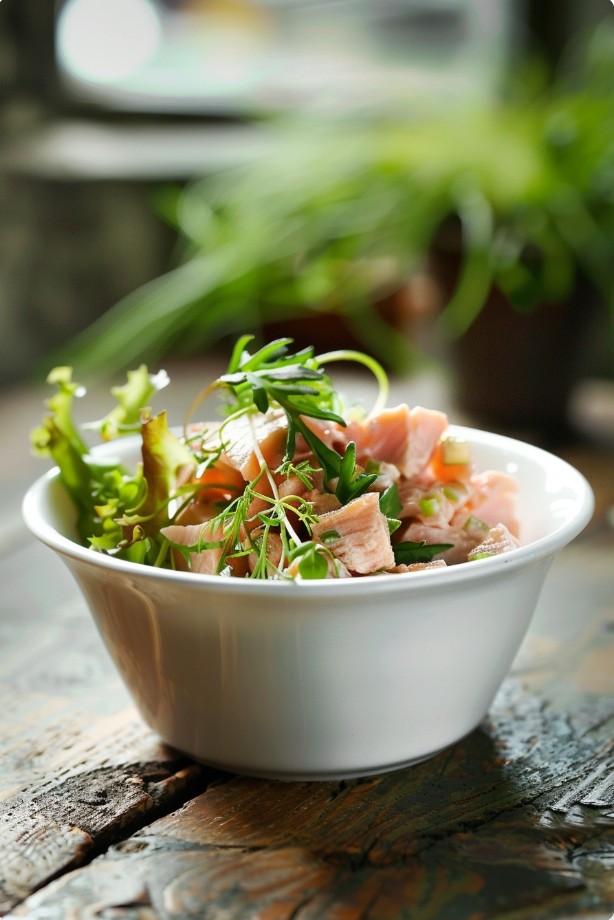
Common mistakes that kill flavor (and how I fix them)
I love this section because it takes the pressure off. Mistakes are normal. I’ve made all of them—especially when I was rushing.
Mistake 1: adding lots of mayonnaise “to make it tasty”
Mayo can be great, but too much of it blankets everything: tuna, herbs, acidity. The salad turns one-note and heavy.
Fix: add acid (a few drops of lemon/vinegar) and something aromatic (zest, herbs, capers). Then bring back texture—something crunchy restores that sense of freshness.
Mistake 2: not draining the tuna (or adding wet greens)
Extra water makes the salad taste bland even if you salted it. The aroma just dissolves.
Fix: drain the tuna, dry the greens, and if you already have a puddle—pour it off. Then rebalance: a little fat + a little acid + a pinch of salt, mix quickly.
Mistake 3: chopping herbs too finely (or adding them too early)
Finely minced herbs darken fast and can turn bitter. And if they sit in an acidic environment for too long, the aroma starts tasting “cooked.”
Fix: add some herbs to the base (for aroma) and some at the end (for freshness). Chop normally—so you can still recognize the leaves.
Mistake 4: using too many strong add-ins at once
Garlic + onion + capers + olives + mustard + lemon… and tuna is no longer the main character. It turns into noise.
Fix: pick 2–3 accents. For example: capers + zest + parsley. Or scallion + lemon + black pepper. Less, but on purpose.
What to do if the salad is already mixed and still tastes flat
This is the most common situation: the salad is “done,” you taste it, and it’s… nothing. Don’t toss it. You can usually fix it in 2–3 minutes.
Step 1: check the salt
Don’t salt blindly—do a tiny test. Take one spoonful of salad and add a literal pinch of salt to that bite. Taste. If it suddenly pops, the salad needed more salt (or a salty accent).
Step 2: add acid, but drop by drop
Acid is the fastest way to make tuna salad taste more aromatic. It’s also easy to overdo. I add a few drops, mix, taste. If you have capers or cornichons, sometimes a little brine works even better—it adds not just acidity, but personality.
Step 3: add a “top note” aroma
This is what you smell immediately: zest, fresh herbs, freshly ground pepper. Pepper only really works freshly ground—its essential oils are still alive. Pre-ground pepper that’s been sitting for months gives heat without fragrance.
Tip: if the salad tastes flat, don’t add more “stuff.” Add something on top—zest, pepper, herbs. It’s a finishing touch that lifts aroma without changing the structure.
Step 4: remove excess water
If there’s liquid at the bottom of the bowl, pour it off. Then restore balance: a drop of oil + a drop of acid + a pinch of salt, mix quickly.
Step 5: wait 5 minutes, then taste again
Sometimes the salad just needs a moment for the salt and acid to distribute. Not an hour—just a few minutes. I’ve caught myself “fixing” a salad, tasting immediately, and thinking nothing changed… then tasting again 5 minutes later and getting exactly what I wanted.
A flavorful tuna salad isn’t about stuffing the bowl with everything you can find. It’s about waking up the tuna, removing excess water, building the balance with three buttons (salt, fat, acid), and adding one or two precise aromatic accents. Once that clicks, the fear of “ruining it” disappears—because you’re actually in control.
How do you usually rescue tuna salad when it tastes bland—lemon, pepper, something pickled, or do you have your own little trick? I’m genuinely curious what works in your kitchen.
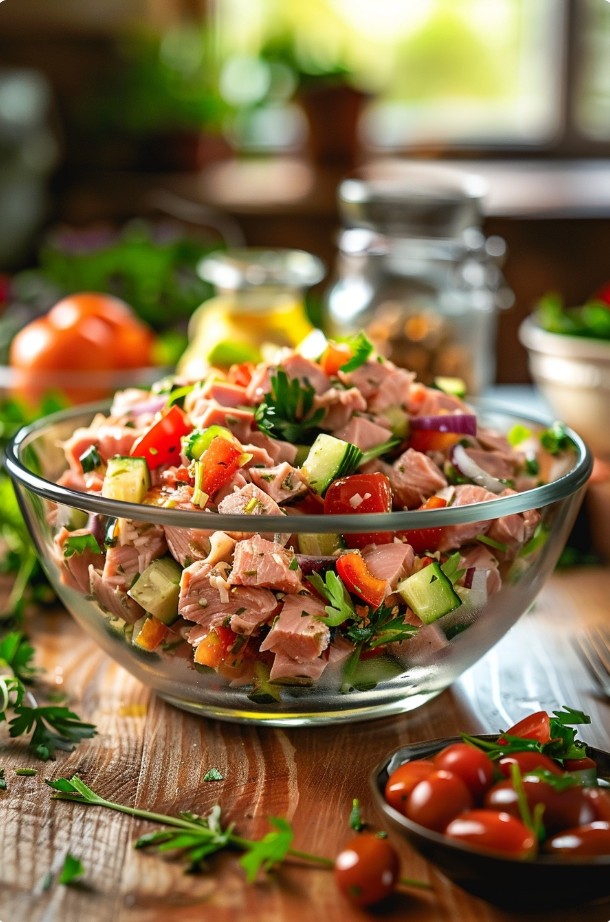
If you want more ideas for quick, tasty meals, take a look at the tuna and egg salad classic recipe—it’s a solid base you can easily tweak to match your taste (and make even more flavorful).
FAQ
Why does tuna salad often taste bland?
It’s usually a balance problem: not enough acid and/or not enough fat, plus too much water from tuna packed in water or juicy vegetables. Cold ingredients can also mute aroma.
What dressing works best with tuna salad?
A simple olive oil + lemon juice + a little mustard dressing boosts tuna without overpowering it and keeps the salad light but flavorful.
How can I make tuna salad more aromatic without fancy ingredients?
Use fresh herbs (dill, parsley, scallions) and a pinch of lemon zest. Freshly ground black pepper also adds a noticeable “top note.”
Should I add something crunchy?
Yes. Crunch (cucumber, celery, radish, toasted seeds) makes the salad feel fresher and helps the overall flavor come through more clearly.
How do I improve the taste of canned tuna?
Drain it well, flake it (don’t mash), then mix with a pinch of salt and a few drops of lemon juice or pickle/caper brine and let it sit 5–10 minutes before adding the rest.
Can I make tuna salad more filling and rich?
Add hard-boiled eggs, avocado, or a bit of cheese if it fits your salad style. These add body and make the salad more satisfying.
What spices go well with tuna?
Freshly ground black pepper, a little mustard, and a small amount of garlic (best mixed into the dressing) work well—just don’t overpower the tuna.