How to Prep Tuna for Pasta Salad

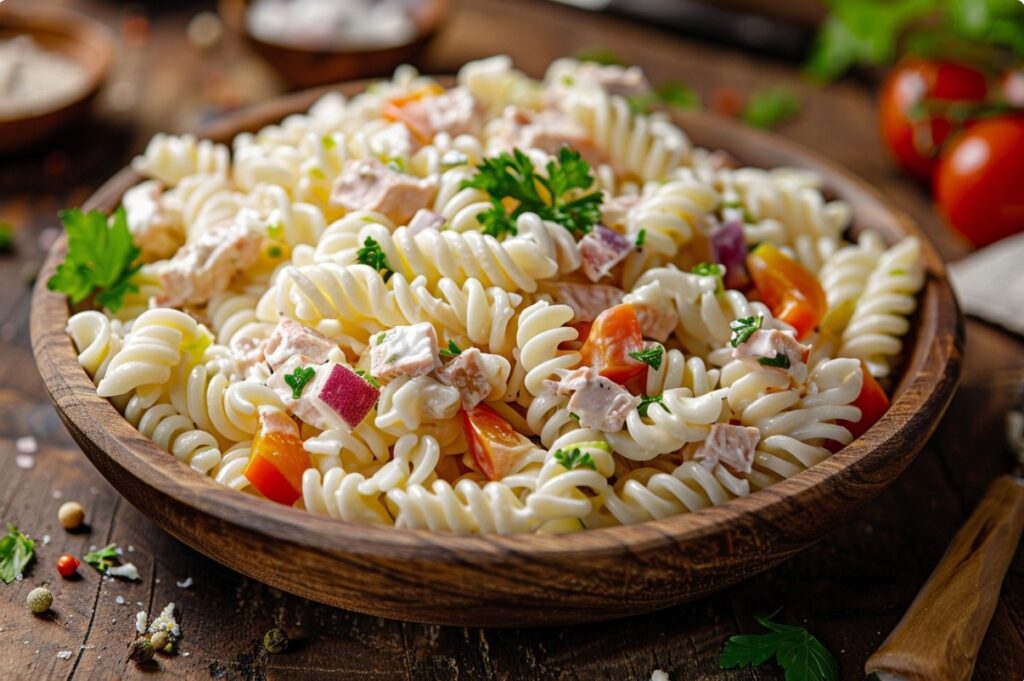
Some salads look almost laughably easy: pasta, tuna, something green—done. And then you crack open a can or pull fish out of the fridge and suddenly it’s not so simple. The smell is sharp, the pieces are dry, and in your mouth it’s more like cotton than tender fish. Instant mood killer, because you weren’t trying to cook anything complicated—you just wanted a decent lunch.
Tuna is funny like that: it’s either fantastic or “fishy” in the worst way. And the problem isn’t always the tuna itself. More often it’s the prep—temperature, extra moisture, the wrong kind of fat, overly aggressive flavors nearby, or just rushing. In a home kitchen it looks like this: the pan is already hot but the fish is still fridge-cold; or the can gets opened and dumped straight into the bowl with the pasta, and all that oil/brine makes the salad heavy.
I like thinking of tuna for salad not as an “ingredient,” but as a tiny process. Do it gently and it gives you tenderness, a clean ocean-y taste, and that satisfying protein hit we love in pasta salads. Do it carelessly and it steals everything—aroma, texture, even your appetite.
Below is my no-drama guide to prepping tuna so it smells fresh, eats tender, and stays delicate in a pasta salad—whether you’ve got a can, a frozen steak, or fresh fish from the store.
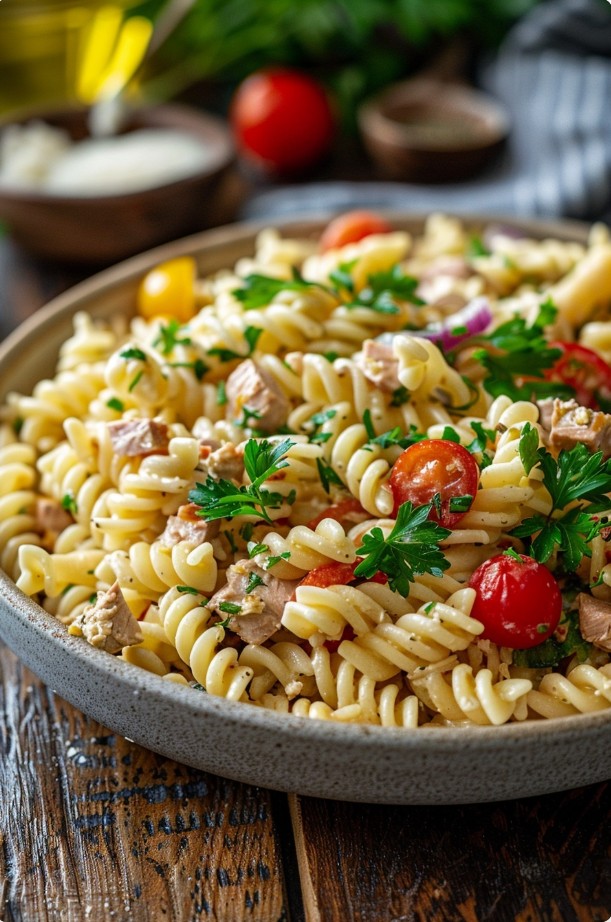
Which tuna to choose for pasta salad: canned, fresh, or frozen
I’ll start with the honest truth: pasta salad is most often made with canned tuna. That’s totally fine. Canned doesn’t mean “bad”—it’s just a different product with its own rules. Fresh or frozen tuna can be great too, but it’s easier to overcook and end up with “a steak that forgot it’s supposed to be in a salad.”
To avoid disappointment, I mentally split tuna into three categories—and each one needs slightly different prep.
Canned: fast, but you need to remove the extra
In a can, tuna is already cooked. Its main enemies are excess liquid, that sharp “can” aroma from brine/oil, and dry fibers—especially if you aggressively mash it with a fork until it turns into pâté.
What I look for at the store: if I have a choice, I buy tuna in chunks, not “shreds.” Chunks are much easier to keep tender. Oil-packed vs water/brine-packed depends on the salad you like. Oil-packed is softer and more flavorful, but it’s easy to make the salad feel heavy. Tuna in its own juices is lighter, but you’ll want to add a bit of fat in the dressing—otherwise it can taste dry.
Frozen: affordable, but thawing matters
Frozen tuna can be really good if you thaw it properly. The most common mistake is thawing on the counter or in warm water. The outside turns soft and starts smelling fishy while the center is still icy. Then you cook it and get dry edges with a barely-thawed middle. In a salad that’s especially annoying—you want even, tender pieces.
Fresh: the most delicate, but it punishes mistakes fast
Fresh tuna is often sold as steaks. It’s gorgeous, firm, almost meat-like. And that firmness is exactly why it can turn into shoe leather in a heartbeat. For salad, I like cooking it very briefly, letting it rest, then pulling it into big juicy flakes. But if you’re not confident about the fish or you don’t feel like juggling temperatures, canned tuna is the more reliable, consistent choice.
Freshness and smell: how to tell tuna will be mild, not harsh
Smell is your first signal. Not “fishy” in general—sharp, heavy, lingering. Good tuna smells restrained: sea air, a little iodine, sometimes a faint sweetness. Bad tuna smells like “canned fish from childhood,” metal, sourness, or that kind of odor you want to attack with lemon before you’ve even started cooking.
A quick story from my kitchen: years ago I bought a “great deal” can of tuna for a big bowl of pasta salad for friends. I opened it and immediately knew the whole salad would smell like the can, not like food. I tried to rescue it with lemon and pepper. The result smelled like lemon and can at the same time—somehow worse. The takeaway is simple: if the smell is unpleasant right out of the gate, don’t try to mask it. Swap the product or change the plan (and yes, pasta salad will highlight that aroma).
For canned tuna: what to do about that “can” aroma
One nuance: even decent canned tuna has a slight “canned” note. Not a tragedy. You can soften it if you:
- drain it carefully and let it sit in a sieve for 3–5 minutes (not an hour—just long enough to drip);
- don’t mash it into mush: bigger flakes smell nicer and feel more tender;
- use a “rounder” dressing instead of a lemon punch: a little good olive oil, mild mustard, a drop of honey, or a pinch of sugar in the dressing (not to make it sweet—just to take the edge off).
Quick fix: if your brine-packed tuna smells a bit too sharp, I sometimes rinse it for literally 2–3 seconds under cold water in a sieve, then shake it well and blot with paper towels. I don’t do this every time, but as an emergency move it works. Just remember: after rinsing, give the tuna some richness back with the dressing, or it’ll taste dry.
For fresh/frozen tuna: signs the fish won’t let you down
Raw tuna should look clean (no slime), with an even color (depending on the type and processing it can range from pink to deep red). But I’m not going to pretend you can always “read” a steak at home like a fishmonger. The most reliable tools are smell and touch: the aroma is light, the flesh is springy, not falling apart, and not tacky.
If tuna already smells strong when it’s raw, it’ll smell even stronger after cooking. Pasta salad won’t forgive it.
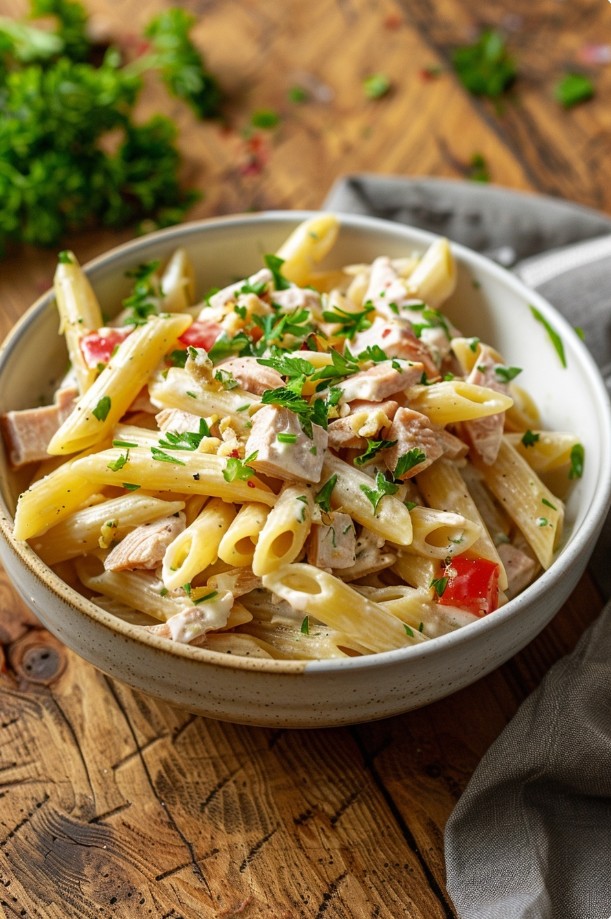
The tenderness mechanics: why tuna turns dry (and how to prevent it)
Tuna has dense muscle fibers—closer to meat than to delicate white fish. It’s less forgiving with temperature. Overheat it and the proteins tighten, moisture gets pushed out, and you’re left with dry strands. In a salad it’s twice as noticeable: pasta absorbs moisture on its own, and serving it cold makes dryness stand out even more.
Temperature: your main lever
With fresh/frozen tuna, the key isn’t “how many minutes,” it’s “what doneness.” For salad tenderness, you don’t need it cooked all the way to grey. You want fish that holds its shape but stays juicy inside. Even if you don’t like a very pink center, aim for “just barely pink” or “almost done,” but not overcooked.
Tip: before cooking, let the steak sit at room temperature for 10–15 minutes (as long as your kitchen isn’t hot). It reduces the gap between a cold center and a hot surface. On a home stove it often goes like this: the pan is hot, you drop in an icy steak, it sears outside while the inside stays cold. You keep cooking “to be safe” and the edges dry out.
Resting after heat: not a fancy thing, just physics
After a quick cook, tuna (like meat) needs a short rest. Give it a couple of minutes and the juices redistribute, the texture evens out. Slice or flake it immediately and some moisture ends up on the cutting board—leaving you with drier fish in the salad.
Another small story: I used to laugh at “resting” fish until I started making tuna for multiple salad portions. When I rushed and pulled apart a hot steak right away, the salad seemed fine at first—but 15 minutes later the tuna felt noticeably drier. When I gave it 5 minutes, the difference was obvious even without taking “tasting notes.”
Fat and moisture: why tuna needs a little “insurance”
In pasta salad, tuna is the protein, but the “glue” for tenderness is fat (olive oil, a touch of mayo-style dressing, yogurt plus oil, avocado—whatever you like). If the tuna is a bit dry, the right dressing won’t make it wet, but it will make it feel softer. The goal isn’t to drown the salad—just a thin coating that ties pasta and fish together.
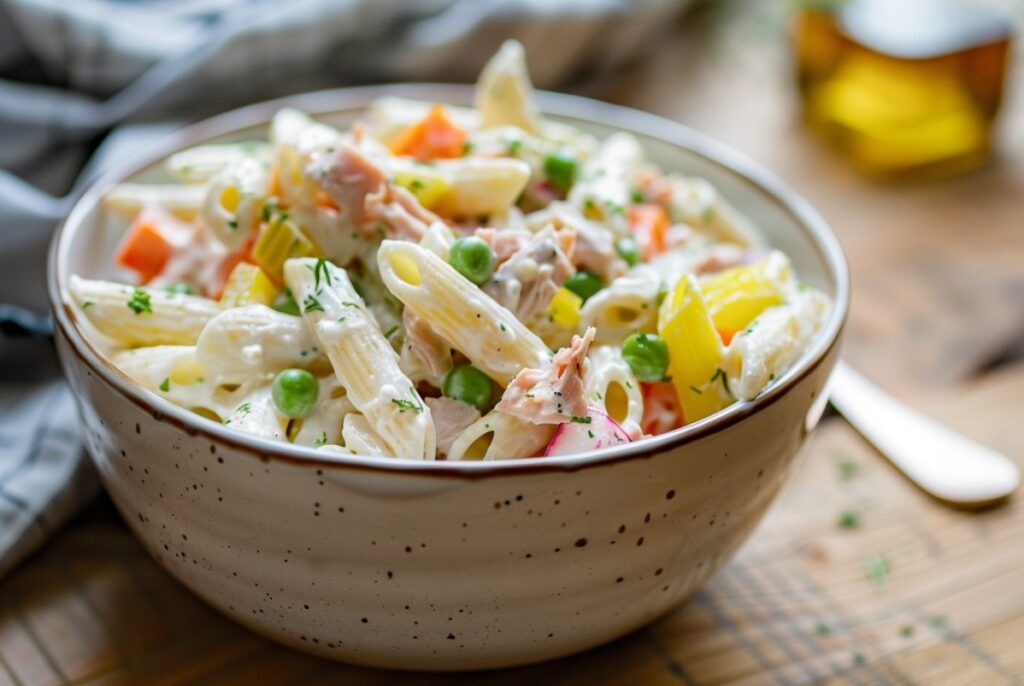
Prepping canned tuna: draining, blotting, flaking
Canned tuna is the most common pasta-salad guest—and it’s also the one people ruin with tiny details. I see three classic scenarios: the tuna gets dumped in with all the liquid, or it gets drained until it’s bone-dry, or it gets stirred so hard it turns into paste.
How to drain the liquid (and why not “to the last drop”)
If the tuna is oil-packed, I drain most of it but leave about 1 teaspoon per can—not to make it greasy, but so the fibers don’t feel dry. If it’s packed in its own juices, I drain almost all of it because that liquid often makes the salad watery. Then I let it sit in a sieve for a couple of minutes.
Tip: don’t press tuna with a spoon in the sieve unless you want dry fibers. Let it drip on its own—it won’t take it personally.
Blotting: when it actually matters
If you’re making a salad that should be creamy and hold its shape, extra liquid is the enemy. In that case, I spread the tuna on a paper towel for 30–60 seconds and gently blot the top. No squeezing—just removing surface moisture.
Tip: if the pasta is still a bit warm (not hot) and you add tuna, the aroma can suddenly get stronger. I like both the pasta and the tuna to be at least room temperature before mixing. The smell stays even and mild.
Flaking into pieces: how to keep it tender
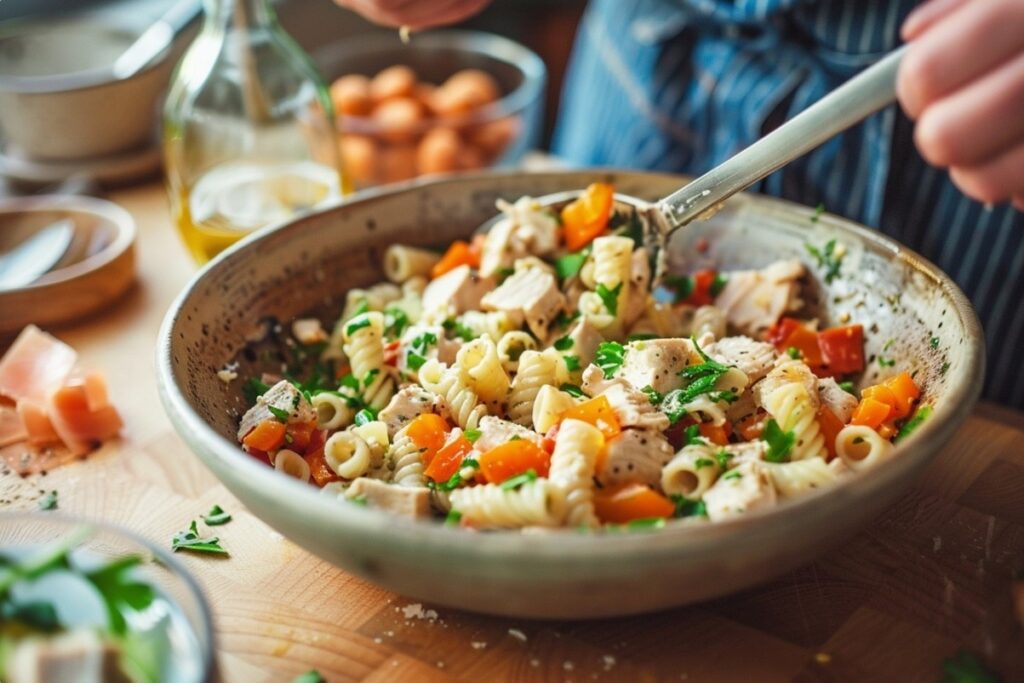
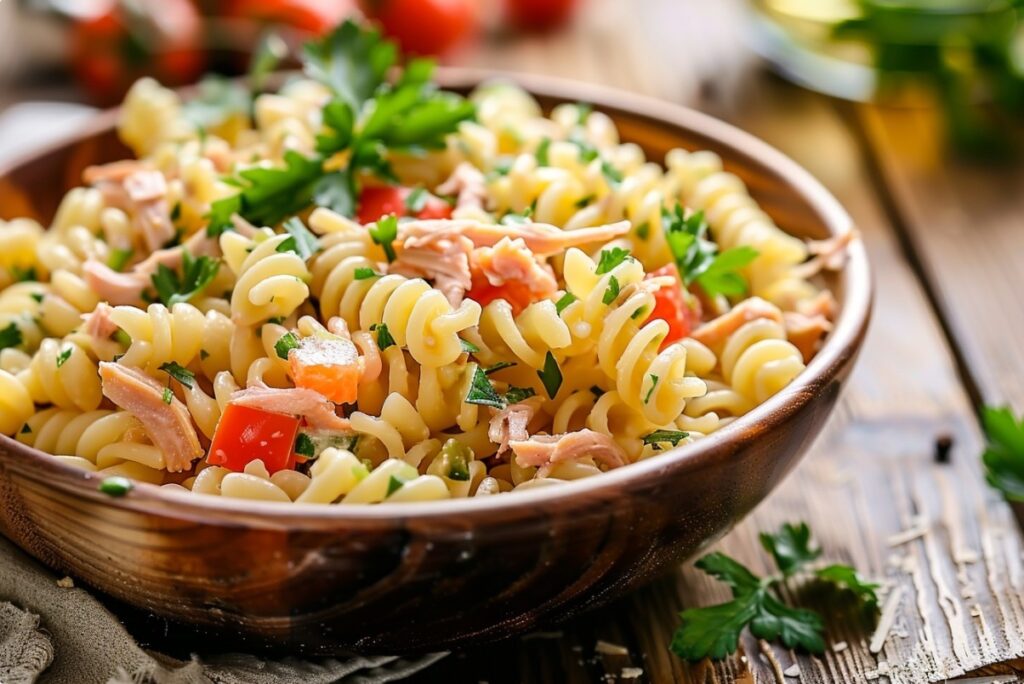
Instead of stirring in circles with a fork, I do this: put the tuna in a bowl and use two forks—or clean fingers—to pull it into big flakes. Bigger pieces feel juicier in the salad and are simply nicer to eat. Plus, you can spot any tough bits if they show up.
A small story: I had a friend who insisted on mixing tuna “until uniform” because it was “more convenient.” Then he complained it always tasted dry. We made the same salad but kept the tuna in flakes—and he was shocked that nothing changed except the texture, yet it tasted completely different. Texture is half the flavor.
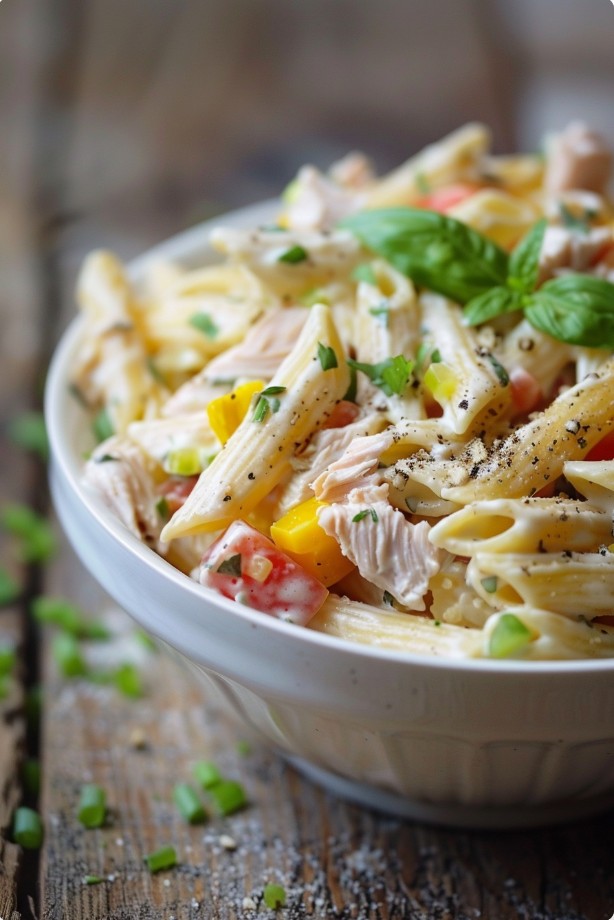
How to prep fresh or frozen tuna: gentle cooking for salad
I’m not going to give you a “recipe with exact grams” here, but I will give you a clear process. The goal is tuna that flakes easily into juicy pieces and doesn’t turn dry once it cools in the salad.
Thawing without losing texture
Best option: thaw slowly in the fridge. If you’re short on time, you can put the sealed steak in a bowl of cold water, changing the water—but don’t use warm water. Warm water speeds up surface spoilage and encourages that fishy smell.
After thawing, I always pat the surface dry. A dry surface browns better and “steams” less in its own moisture.
Pan, oven, or water: what works best for salad
For salad, I usually choose a pan or the oven—not because it’s the only “right” way, but because it’s easier to control doneness. Poaching/boiling can cook tuna evenly, but it often washes out flavor and can make the smell stronger, especially if you overcook it.
On the stovetop, two things matter: a properly hot surface and short contact time. You don’t need a long fry. You want a quick sear on the outside while keeping the inside juicy.
Doneness cues: eyes, fingers, sound
I like to rely on signs, not just time:
- Side color: as tuna cooks, you can see the color change from raw to lighter along the bottom/side. When that “cooked band” rises to about half the thickness, it’s time to flip or pull (depending on your method).
- Springiness: a gentle press (through a spatula/tongs) should feel firm but not rock-hard. If it’s very hard, you’re heading into dry territory.
- Smell: as soon as you get a pleasant warm sea aroma without harshness, that’s often your cue to stop. If it turns “sharp fishy,” you’re overheating it.
- Sound: you want a confident sizzle, not a swampy simmer. If lots of liquid pools around the fish and it starts bubbling, the pan wasn’t hot enough or the fish was wet.
Tip: pull tuna a little earlier than you think is “perfect.” It will finish on residual heat, and the salad will cool it down anyway. Overcooked tuna gets noticeably drier once chilled.
Cooling before the salad: a small detail that matters
Don’t toss hot tuna into a bowl of pasta. First, it will “sweat” and release moisture; second, warm juices/fat can make pasta slick and the aroma sharper. I let the fish cool to warm or room temperature, then flake and mix.
One time I rushed and mixed warm tuna with pasta because “it’ll cool anyway.” It did cool. But the texture got weird: the pasta felt like it had a thin film on it, and the tuna lost juiciness faster. Since then I just build a 10-minute pause into the process—life is easier.
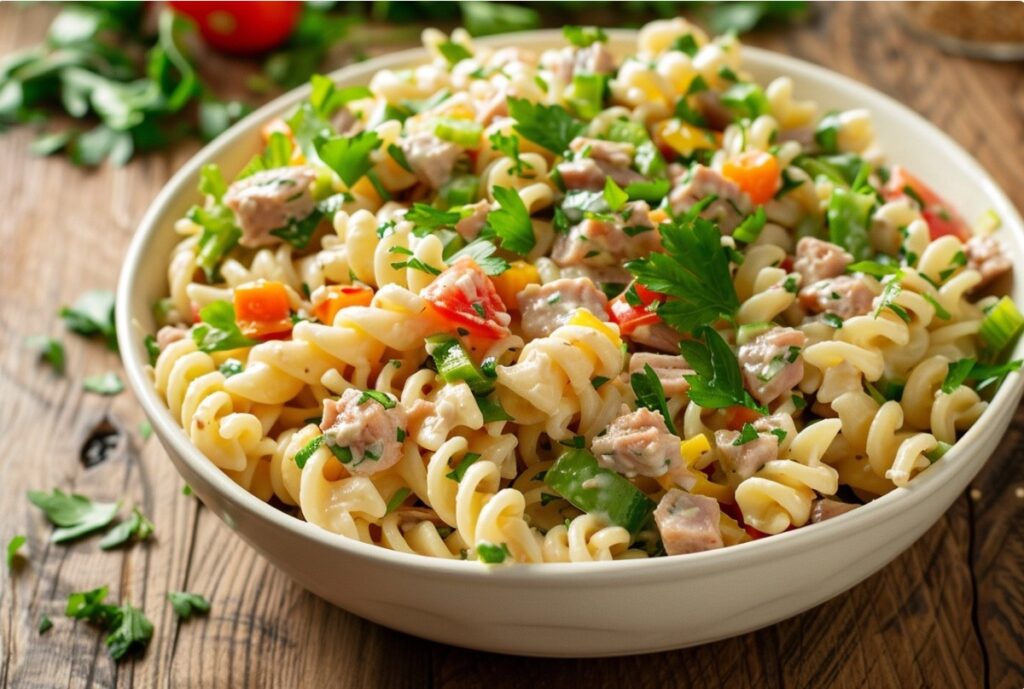
Aroma balance in salad: how not to drown tuna in onion, lemon, and spices
Tuna is “delicate” not because it’s a fragile little fish, but because its aroma is easy to cover up—or make harsh. Pasta salad often includes onion, garlic, lemon, capers, olives, mustard, and each of those can either lift the tuna or turn it into “canned fish with onion.”
Acid: freshens, but can highlight “metal”
Lemon juice is classic, but with canned tuna it can sometimes emphasize a metallic note. What helps me is “acid in the dressing, not on the fish.” In other words: don’t squeeze lemon directly over the tuna in the bowl. Balance the acid with fat and salt in the dressing first, then mix.
Tip: if you want citrus without the sharpness, lemon zest (finely grated) often works better, or just a few drops of juice paired with oil. The aroma reads “fresh,” not “sour.”
Onion: how to make it gentler in salad
Raw onion is a common reason a salad smells like onion, not tuna—and it can sting your nose, too. If you like onion but want it more delicate, slice it very thin and soak it in cold water for 1–2 minutes, then dry it off. It stays crisp but loses the aggression.
Pepper and spices: less, but on purpose
Black pepper is great. But a lot of it can bulldoze tuna’s subtle aroma and make the salad feel “peppery” rather than balanced. I add pepper at the end, after mixing, and taste. Same with spices like smoked paprika: delicious, but it can steal the show.
One more small thing: if you’re adding very aromatic ingredients (olives, capers), mix them with the pasta and dressing first, then gently fold in the tuna flakes. The fish breaks less and doesn’t absorb one concentrated “hit” of sharp aroma.
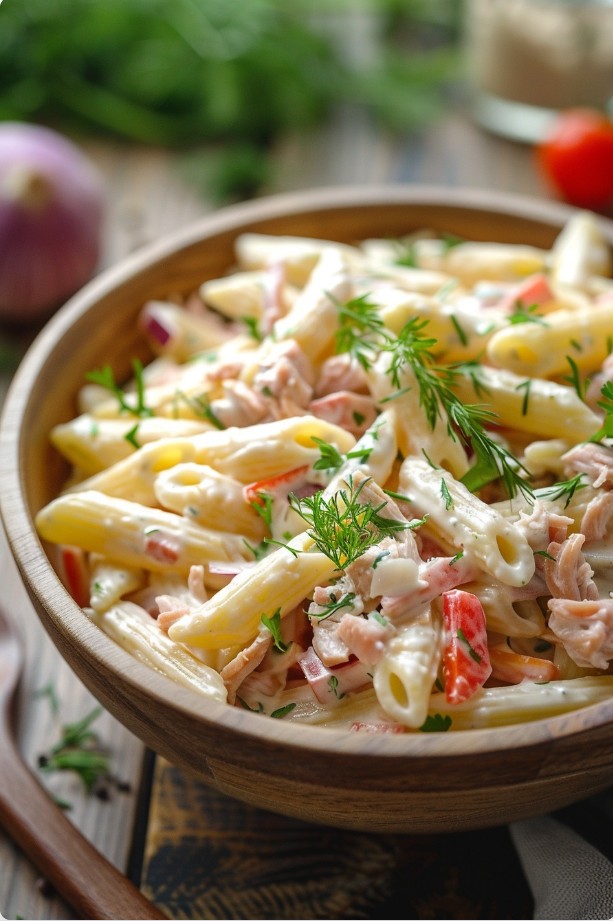
Common tuna pasta salad mistakes: how it should be vs how it often goes
Here are the mistakes I see most often. Not to scold anyone—I’ve done all of these myself. But once you know where the salad “breaks,” cooking gets a lot calmer.
Mistake 1: mixing tuna with pasta while everything is hot
How it often goes: pasta gets drained, it’s still steaming, straight into the bowl—and in goes the tuna. Fast, convenient.
How it should be: pasta should be at least warm, not hot. And the tuna shouldn’t be ice-cold from the fridge. When the temperatures are closer, the aroma stays smoother and the texture doesn’t suffer.
Mistake 2: keeping all the liquid from the can “for juiciness”
How it often goes: everything gets poured in because “that’s where the flavor is.”
How it should be: juiciness comes from a balanced dressing, not brine. Liquid from the can often dilutes flavor and makes pasta slick. Drain it, let it drip, then add richness back with something you control.
Mistake 3: mashing tuna into a paste
How it often goes: it gets mashed with a fork “so it distributes evenly.”
How it should be: flake it. Let the salad have pieces—looks better, eats better.
Mistake 4: overcooking fresh/frozen tuna “to make sure it’s done”
How it often goes: it stays on heat until the center turns grey.
How it should be: for salad, it’s better to pull it a little early, let it rest, then cool. Tenderness is temperature control, not cooking time.
Mistake 5: trying to cover an off smell with lemon and garlic
How it often goes: more lemon, more garlic—“it’ll cover it.”
How it should be: if tuna smells unpleasant on its own, the salad will only highlight it. Better not to waste ingredients (or your nerves). If the smell is just mildly “canned,” go gentle: drain, blot, and balance fat with acid.
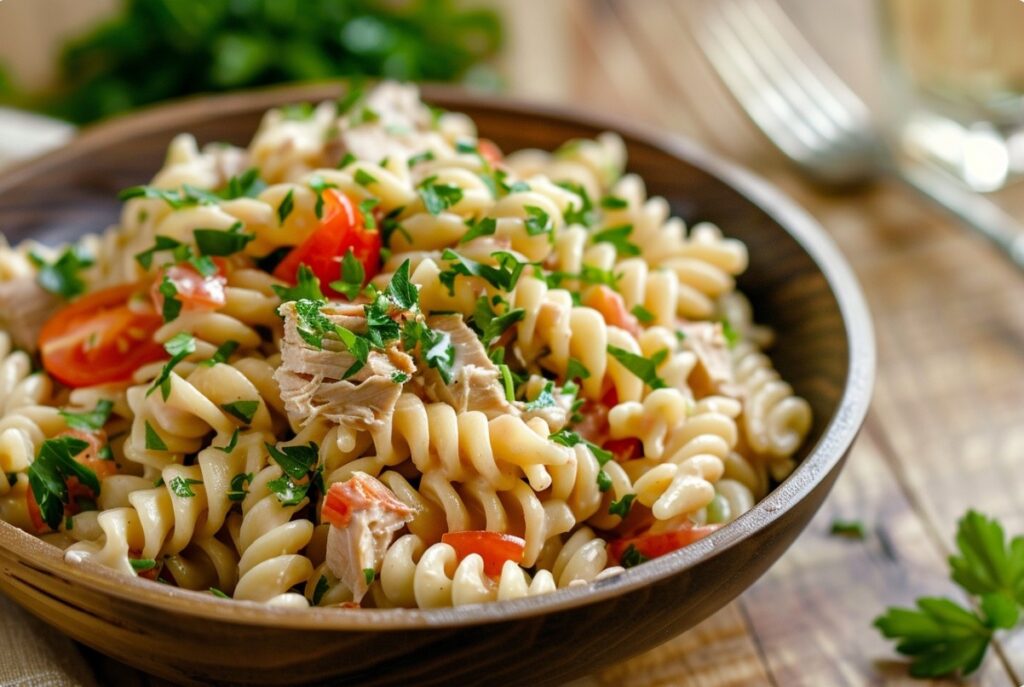
How to fix it when things go wrong: too dry, too smelly, falling apart
Even when you’re careful, tuna can still let you down. Not always your fault: the can might be a dud, the fish might have sat too long, your stove might heat unevenly. Here are a few ways to save the situation—no magic required.
If the tuna is dry
Dryness is more obvious in a salad than on its own. Here’s what I do:
- Don’t mix the tuna in completely. Leave some flakes on top—your brain reads it as juicier.
- Add a touch more fat to the dressing and something creamy (even 1 spoon of a thick sauce/yogurt base can change the mouthfeel). Not a lot—just enough to coat.
- Add something that brings moisture and crunch: cucumber, celery, salad greens, tomatoes—whatever fits your salad. It’s not “hiding,” it’s balancing textures.
Tip: if your pan-cooked tuna came out dry, next time pull it earlier and let it rest longer. This is one of those cases where 2 minutes changes everything.
If the smell is harsh
First, figure out which harsh you mean: “sharp and unpleasant” or just “very noticeable.” If it’s unpleasant, I wouldn’t risk it. If it’s noticeable but still normal, you can soften it by:
- making the dressing rounder: fat + a tiny sweet balance;
- adding fresh herbs (parsley, dill, basil—your call) not as “perfume,” but as a fresh background note;
- avoiding sharp garlic and lots of lemon—they often make the smell more insistent.
If the tuna fell into tiny crumbs
This happens with some brands of canned tuna, or if you mixed it too aggressively. The fix is to change the tuna’s role: let it become part of the dressing, but on purpose. Mix the crumbs with a small portion of the sauce so it turns creamy, then gently combine with the pasta. The salad will be more uniform, but not dry.
If your salad turned watery
Most often it’s liquid from the can, hot pasta, or juicy vegetables releasing their juices. What I do: let the salad sit for 5–10 minutes, then gently mix again. Often the pasta absorbs the extra. If there’s still a lot of liquid, add a bit of a dry component (more pasta, if you have it) or thicken the dressing. For next time: drain more thoroughly and cool components before mixing.
Prepping tuna for pasta salad comes down to small decisions: drain or leave a teaspoon of oil, flake or mash, mix warm or let it cool. It’s only a few minutes, but it’s the difference between a tender, fresh salad and one that’s heavy and “fishy.”
How do you like tuna in pasta salad—big flakes or almost creamy? And what goes wrong most often for you: smell, dryness, or that sudden watery puddle at the bottom of the bowl?
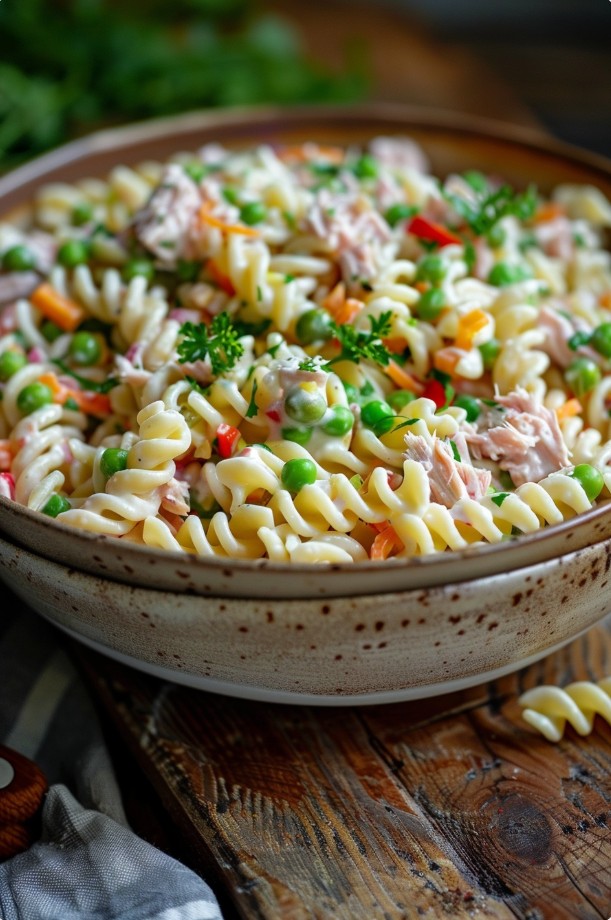
Pasta salads are easy to tweak based on what you have on hand. Tuna pairs beautifully with crunchy vegetables, eggs, corn, or a light creamy dressing. If you want more ideas along these lines, take a look at these pasta salad recipes—you’ll find different ingredient combos and ways to put together pasta salads.
Questions & answers
Який тунець найкраще використовувати для салату з макаронами?
Для салату з макаронами найчастіше використовують консервований тунець у власному соку або в олії. Він має ніжну текстуру і легко розділяється на шматочки. Перед додаванням у макаронний салат рідину потрібно злити, а сам тунець злегка розім’яти виделкою, щоб риба рівномірно розподілилася між пастою та іншими інгредієнтами.
Чи потрібно промивати тунець перед додаванням у салат?
Зазвичай тунець не промивають, оскільки це може зменшити його смак. Для салату з макаронами достатньо просто добре злити рідину з банки. Після цього тунець розділяють на невеликі шматочки і додають у макаронний салат, щоб він рівномірно поєднався з пастою, овочами та заправкою.
Коли додавати тунець у макаронний салат?
Тунець краще додавати після того, як макарони повністю або майже повністю охолонуть. Якщо змішувати рибу з гарячою пастою, вона може втратити текстуру. У холодному або злегка теплому салаті з макаронами шматочки тунця залишаються ніжними і добре поєднуються із соусом та іншими інгредієнтами.
Як зробити тунець більш ніжним у салаті з макаронами?
Щоб тунець у салаті з макаронами був ніжним, його варто розділити на невеликі пластівці виделкою. Така текстура дозволяє рибі рівномірно змішуватися з пастою та соусом. Іноді до тунця додають ложку кремової заправки перед змішуванням, щоб шматочки стали більш соковитими.
Які інгредієнти добре поєднуються з тунцем у макаронному салаті?
У салаті з макаронами тунець добре поєднується з огірками, кукурудзою, вареними яйцями, помідорами чері та свіжою зеленню. Також популярні комбінації з червоною цибулею або солодким перцем. Ці інгредієнти додають макаронному салату свіжості та роблять смак тунця більш виразним.
Який соус найкраще підходить для салату з макаронами і тунцем?
Для салату з макаронами і тунцем часто використовують кремову заправку на основі майонезу, йогурту або сметани. До соусу можна додати гірчицю, лимонний сік або чорний перець. Така заправка добре обволікає пасту і допомагає рівномірно поєднати тунець з іншими інгредієнтами.
Чи можна приготувати макаронний салат з тунцем заздалегідь?
Так, салат з макаронами і тунцем можна приготувати за кілька hours до подачі. За цей час паста вбирає частину заправки, а смаки інгредієнтів краще поєднуються. Перед подачею макаронний салат бажано ще раз акуратно перемішати і за потреби додати трохи соусу.
Скільки зберігається салат з макаронами і тунцем?
У холодильнику салат з макаронами і тунцем зазвичай зберігається до 24 hours у герметичному контейнері. Найкраще тримати його при стабільній низькій температурі. Перед подачею салат можна перемішати і, якщо паста стала трохи сухішою, додати невелику кількість заправки.